
2027 How to Become a Research Engineer: Education, Salary, and Job Outlook

Co-Founder and Chief Data Scientist
Research engineering is a practical career path for people who want to turn scientific ideas into working technologies, products, models, systems, or processes. Unlike many engineering roles focused mainly on production or maintenance, research engineers work closer to discovery, experimentation, prototyping, validation, and improvement. Their work can support advances in aerospace, software, artificial intelligence, biotechnology, energy, healthcare, manufacturing, defense, materials science, and other innovation-heavy fields.
If you are considering this career in 2026, the main decision is not simply whether you like engineering. It is whether you enjoy solving uncertain problems, testing ideas that may fail, analyzing evidence, documenting results, and collaborating with scientists, product teams, executives, clients, or public-sector stakeholders. This guide explains the credentials, skills, career path, salary factors, internships, workplaces, challenges, and fit questions that can help you decide whether becoming a research engineer is the right move.
What are the benefits of becoming a research engineer?
- The job outlook for research engineers is projected to grow by approximately 8% through 2027, reflecting steady demand in technology and innovation sectors.
- Average annual salaries for research engineers range between $85,000 and $110,000, with variations depending on specialization and experience.
- Pursuing this career offers opportunities to contribute to pioneering research, apply advanced technical skills, and impact diverse industries including aerospace, automotive, and biomedical engineering.
What credentials do you need to become a research engineer?
Most research engineer roles require at least a strong undergraduate background in engineering, computer science, applied science, mathematics, or a closely related technical field. The more specialized or independent the research work is, the more likely employers are to prefer a graduate degree, prior lab experience, publications, patents, or experience with advanced tools.
The right credential path depends on the industry. A software-focused research engineer may need deep programming, machine learning, and systems experience. A biomedical or materials research engineer may need laboratory methods, regulatory awareness, and graduate-level science training. A research engineer working on public infrastructure, safety-critical systems, or client-facing engineering approvals may also benefit from professional licensure.
- Bachelor's degree: A bachelor's degree in engineering or a closely related field such as computer science or applied sciences is usually the minimum credential for entry-level research engineering jobs. A four-year degree from an accredited institution helps establish the technical foundation employers expect in mathematics, design, experimentation, analysis, and discipline-specific engineering principles.
- Advanced degrees: A master's degree or Ph.D. is often preferred or required for roles involving independent research, advanced modeling, specialized laboratory work, technical leadership, or publication-quality research. Graduate education can be especially valuable in areas such as artificial intelligence, robotics, aerospace, biotechnology, energy systems, quantum computing, and advanced materials.
- Licensure: A Professional Engineer (PE) license is not required for every research engineer. However, it can be useful for senior roles, consulting work, public safety responsibilities, regulated engineering work, or positions where engineering decisions must be formally reviewed or approved. The usual pathway includes passing the Fundamentals of Engineering (FE) exam, gaining qualifying experience, and passing the PE exam. Requirements vary by state.
- Ongoing professional development: Research engineers must keep learning after graduation. Employers often look for evidence of current skills in programming, simulation, data analysis, statistical methods, laboratory procedures, technical writing, product development, or domain-specific tools.
When comparing programs, look beyond the title of the major. Review course sequences, lab access, undergraduate research opportunities, capstone projects, internship placement, faculty research areas, accreditation, and industry partnerships. Students still choosing an academic path can start by reviewing the types of college majors that align with engineering, computing, and applied science careers.
What skills do you need to have as a research engineer?
A strong research engineer combines technical depth with disciplined investigation. Employers want candidates who can frame a problem, design a test, build or model a solution, interpret results, and communicate what the evidence actually shows. Technical ability matters, but so does judgment: research engineers often work with incomplete information, changing assumptions, failed prototypes, and competing stakeholder priorities.
- Critical thinking: Research engineers must separate evidence from assumptions, identify weak points in a design or experiment, and make decisions based on data rather than preference.
- Technical proficiency: Many roles require competence with engineering software such as SolidWorks and MATLAB, programming languages including Python, C++, and R, and simulation or modeling technologies relevant to the field.
- Data analysis: Research engineers need to process, interpret, validate, and explain complex datasets. Depending on the role, this may include statistical analysis, machine learning, signal processing, computational modeling, or experimental data validation.
- Research methodology: Strong candidates understand how to design experiments, control variables, review technical literature, document methods, compare alternatives, and recognize the limits of a study.
- Report writing: Research findings are only useful when others can understand and act on them. Clear reports, methods sections, charts, executive summaries, and technical documentation are essential.
- Project management: Research projects still have schedules, budgets, deliverables, dependencies, and risks. Engineers who can manage scope and communicate delays are more valuable to teams.
- Communication: Research engineers must explain technical details to scientists, engineers, managers, clients, regulators, product teams, or nontechnical decision-makers.
- Creative problem-solving: Research work often requires building new approaches, improving existing systems, or finding a practical path when the first solution fails.
- Mathematical and scientific acumen: A solid foundation in algebra, calculus, statistics, physics, chemistry, biology, or other relevant sciences supports sound engineering judgment.
Skills that make candidates stand out
Beyond the basics, competitive candidates usually show proof of applied work. This can include research assistantships, internship projects, GitHub repositories, lab reports, prototypes, conference posters, publications, patents, simulation models, or strong capstone work. Hiring teams often want to see not only what tools you know, but what problems you have solved with them.
What is the typical career progression for a research engineer?
Research engineering careers usually progress from supervised technical support to independent research ownership and then to technical leadership or management. Advancement depends on performance, specialization, education, communication skills, and the ability to convert research into useful outcomes.
- Junior Research Engineer: Entry-level professionals usually support experiments, collect and clean data, run simulations, maintain lab or development environments, prepare reports, and learn team workflows. A bachelor's or master's degree and some project, internship, or research experience are common expectations.
- Research Engineer: At this stage, engineers take more ownership of research tasks or full projects. They may design experiments, develop prototypes, analyze results, collaborate with cross-functional teams, and contribute to publications, patents, internal reports, or product improvements.
- Senior Research Engineer: Senior professionals handle more complex technical problems, guide research direction, mentor junior staff, evaluate methods, and influence engineering or product strategy. A Ph.D. is common in some research-intensive environments, though not always required if the engineer has strong applied expertise.
- Research Team Lead or Director: Leaders manage people, budgets, research portfolios, timelines, partnerships, and organizational priorities. They must balance technical rigor with business, funding, regulatory, or mission requirements.
Some research engineers remain on an expert technical track rather than moving into people management. Others shift into Product Development Engineer, R&D Manager, Principal Engineer, Data Scientist, Systems Engineer, Technical Program Manager, or university-affiliated research roles. The best path depends on whether you prefer hands-on technical depth, applied product impact, academic-style research, or leadership responsibility.
Common specialization paths
- Artificial intelligence and machine learning: Focuses on algorithms, model development, data pipelines, evaluation, and deployment-related research.
- Materials science: Involves testing, modeling, and improving materials for manufacturing, electronics, aerospace, energy, or biomedical use.
- Robotics and control systems: Combines mechanical, electrical, software, sensing, and control theory work.
- Biomedical and biotechnology engineering: Supports medical devices, diagnostics, bioinformatics, laboratory automation, or health-related research systems.
- Energy and sustainability: Works on efficiency, storage, renewable systems, grid technologies, or industrial processes.
How much can you earn as a research engineer?
Research engineer pay varies widely because the job title appears across many industries, including software, aerospace, defense, healthcare, energy, academia, and manufacturing. Compensation is shaped by specialization, degree level, employer type, location, funding model, seniority, and whether the role is closer to academic research, product R&D, or commercial engineering.
Regarding research engineer salary in United States, the average annual income is approximately $137,563, with a salary range from $72,957 to $259,379, according to Indeed. PayScale reports a slightly lower average of $93,550, indicating variability depending on data sources and specialties. Entry-level research engineers may start around $89,527, while seasoned professionals with specialized skills or advanced degrees can earn $133,000 or more.
These figures should be used as reference points, not guarantees. Two jobs with the same title can pay very differently if one is in a university lab and another is in a high-demand private-sector software or aerospace R&D group. Total compensation may also include bonuses, stock awards, relocation support, publication incentives, patent-related recognition, or research funding, depending on the employer.
Factors that can raise earning potential
- Graduate education: A master's degree or Ph.D. can qualify candidates for senior, specialized, or independent research roles. For those considering doctoral study, exploring easiest doctorate programs may help clarify possible academic pathways, though program fit and research alignment should matter more than perceived ease.
- Specialized technical skills: High-demand areas such as software, control systems, machine learning, simulation, automation, robotics, and advanced analytics may improve compensation prospects.
- Industry choice: Private-sector R&D roles in technology, aerospace, defense, and advanced manufacturing may differ significantly from academic or nonprofit research roles.
- Location: The average research engineer salary in California tends to be higher than the national average, reflecting the state's robust technology sector. Cities like Pittsburgh and Palo Alto also offer competitive salaries.
- Evidence of impact: Patents, publications, deployed systems, successful prototypes, funded projects, or measurable product improvements can strengthen salary negotiations.
What internships can you apply for to gain experience as a research engineer?
Internships are one of the most effective ways to test whether research engineering fits your interests. They help you build technical evidence for your resume, learn how research teams operate, and decide whether you prefer academic labs, corporate R&D, government research, healthcare innovation, or nonprofit work.
Students seeking R&D internships for engineering students can look for opportunities in several settings:
- Corporations: Corporate R&D internships may involve product testing, prototype development, simulation, data analysis, technical documentation, automation, materials evaluation, or software experimentation. These roles are useful for students who want to see how research connects to commercial products and business deadlines.
- Government agencies: Agencies such as the Department of Energy or National Institutes of Health offer internships tied to scientific investigation, technology development, public missions, and regulatory or compliance considerations. These opportunities can provide exposure to large-scale research infrastructure and interdisciplinary teams.
- Nonprofits and healthcare providers: Research internships in these settings may focus on community health, medical technology, public interest research, data collection, statistical analysis, or pilot studies. They can be especially relevant for students interested in biomedical, environmental, or social-impact engineering work.
- Academic institutions and schools: Research assistantships with faculty can help students develop literature review skills, laboratory discipline, experimental design experience, scientific writing ability, and familiarity with publication standards.
How to choose the right internship
The strongest internship is not always the most recognizable brand name. Choose opportunities that let you do meaningful technical work, receive mentorship, document outcomes, and build evidence of your abilities. Before accepting a role, ask what tools you will use, what deliverables you will produce, who will supervise your work, and whether you can discuss non-confidential project outcomes in future interviews.
Students aiming to secure Research Engineer Internships in California may find opportunities across technology companies, universities, startups, laboratories, healthcare systems, and advanced manufacturing employers. Across all sectors, useful internships build technical expertise, collaboration habits, adaptability, and the ability to translate research questions into practical work.
For those weighing graduate study alongside internship planning, resources on the top paying master's degrees can help compare advanced degree options that may support specialized research engineering careers.
How can you advance your career as a research engineer?
Career advancement in research engineering usually comes from becoming more technically credible, more useful to strategic projects, and more visible to the people who make staffing and funding decisions. Promotions are not based only on years of experience. Employers look for engineers who can solve harder problems, guide others, reduce uncertainty, and connect research work to practical outcomes.
- Further Education: Advanced degrees or specialized programs in areas such as artificial intelligence, machine learning, robotics, materials science, data analytics, or systems engineering can strengthen qualifications for senior roles and complex projects.
- Professional Certifications: Credentials in niche areas such as systems engineering, machine learning, project management, safety, quality, or domain-specific tools can demonstrate focused expertise. Certifications are most valuable when they support the work you actually want to do.
- Networking: Professional societies, conferences, workshops, research collaborations, technical meetups, and publication venues can help you learn about emerging work and become known in your field. Presenting your work and contributing to technical discussions can be more valuable than simply attending events.
- Mentorship: A strong mentor can help you choose projects, understand promotion expectations, avoid common technical or political mistakes, and build a long-term strategy. Look for mentors inside your organization and across the broader research community.
Practical ways to move up
- Build a portfolio of outcomes: Track prototypes, models, patents, publications, performance improvements, cost reductions, validated methods, or successful experiments.
- Learn to write for decision-makers: Senior research engineers often influence funding, product direction, or technical strategy. Clear writing makes your work easier to trust and act on.
- Become reliable in ambiguous projects: Teams value engineers who can create structure when the problem is unclear.
- Mentor junior staff: Teaching others is often an early signal that you are ready for leadership.
- Understand the business or mission context: Research that cannot be funded, deployed, scaled, regulated, or maintained may have limited career impact.
Where can you work as a research engineer?
Research engineers work wherever organizations need technical investigation, experimentation, and innovation. The best workplace depends on whether you want commercial product development, long-term scientific research, public-sector missions, healthcare impact, startup speed, or academic collaboration.
- Major corporations: Companies like Google, Microsoft, Boeing, Lockheed Martin, and General Motors employ research engineers to work on technologies such as artificial intelligence, aerospace systems, automotive design, software platforms, manufacturing methods, and materials science.
- Academic institutions: Universities including Stanford University and MIT hire research engineers to support faculty research, manage laboratories, develop tools, run experiments, analyze data, and collaborate with interdisciplinary research groups.
- Government agencies: Organizations like NASA, the Department of Energy, and the National Institutes of Health employ research engineers to work on public-sector challenges such as space exploration, energy efficiency, biomedical innovation, national research priorities, and large-scale technical programs.
- Healthcare systems: Medical research hospitals such as Mayo Clinic and Cleveland Clinic may recruit research engineers to support medical devices, laboratory automation, imaging, bioinformatics, data-driven research methods, and clinical technology development.
- Nonprofit organizations: Research foundations and think tanks may hire research engineers for projects tied to environmental sustainability, public health, social impact, education technology, or policy-oriented technical analysis.
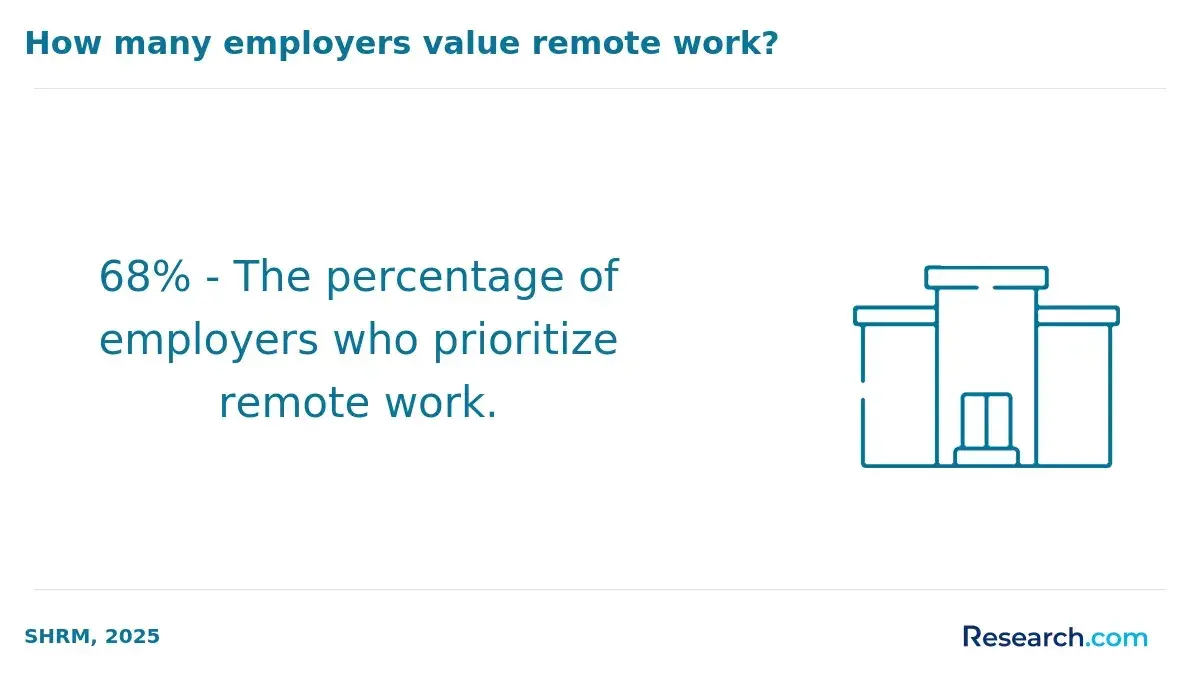
- Remote and hybrid work models: Remote and hybrid arrangements are more common in software, data science, modeling, and IT-adjacent research roles than in lab-dependent or hardware-intensive roles. Students comparing flexible education-to-career options may also review quick schooling for good paying jobs.
California research engineer jobs are common because of the state's technology, biotechnology, aerospace, software, and startup ecosystems. The San Francisco Bay Area engineering careers market also continues to attract candidates who want exposure to established firms, research labs, venture-backed companies, and advanced technical teams.
Location should not be the only factor. A strong role in a smaller market may offer better mentorship, broader responsibility, or more hands-on research ownership than a highly competitive job in a major hub.
What challenges will you encounter as a research engineer?
Research engineering can be highly rewarding, but it is not a predictable or low-pressure career. The work often involves uncertain results, shifting priorities, limited budgets, technical constraints, and pressure to produce useful outcomes from incomplete information. Engineers who succeed are comfortable with iteration and disciplined enough to document both successes and failures.
- Adapting to AI integration: With 90% of engineering teams employing AI coding tools, research engineers must learn how to use these tools responsibly while retaining the ability to verify outputs, understand underlying systems, and maintain core engineering judgment.
- Intense competition: Strong candidates often combine technical expertise with business awareness, stakeholder management, vendor coordination, budgeting, and the ability to explain why research matters.
- Talent shortage: The United States faces a deficit of qualified research engineers, which can increase pressure on existing professionals to take on broader responsibilities, support multiple projects, and mentor less experienced colleagues.
- Managing technical debt: Rapid AI-driven code generation can increase the volume of code. Research engineers must balance speed with maintainability, validation, documentation, security, and quality control.
- Operating in complex environments: Research engineers may need to coordinate with global teams, manage uncertain requirements, work within hardware or software constraints, and adapt to changing budgets or organizational priorities.
How to prepare for these challenges
Build habits that reduce uncertainty: keep clean documentation, validate assumptions, review code and methods carefully, communicate risks early, and learn how your organization defines success. The best research engineers are not just inventive; they are rigorous, transparent, and practical.
What tips do you need to know to excel as a research engineer?
To excel as a research engineer, you need more than technical talent. You need the discipline to test ideas carefully, the communication skills to explain results, and the persistence to keep improving when experiments fail or data is inconclusive. The strongest professionals combine curiosity with execution.
- Gain practical experience through internships, co-op positions, research assistantships, capstone projects, laboratory work, open-source contributions, or applied independent projects.
- Build a portfolio that shows what you can do. Include project goals, methods, tools, constraints, results, and what you learned.
- Develop critical analytical and problem-solving abilities so you can work through ambiguous, complex, or poorly defined technical challenges.
- Read research papers, technical standards, documentation, patents, and industry reports to understand the current state of your field.
- Learn to communicate technical results clearly to both technical and nontechnical audiences.
- Practice collaboration across disciplines. Research engineers often work with scientists, software developers, product managers, technicians, clinicians, executives, or external partners.
- Show creativity through improvements, prototypes, experiments, or alternative approaches that solve real problems.
- Network through conferences, workshops, professional associations, technical communities, and research collaborations.
- Pursue advanced education or specialized certifications when they clearly support your target role.
- Focus on translating research into real-world value, whether that means a better product, safer process, stronger model, validated method, cost savings, or scientific contribution.
- Stay organized. Good lab notes, version control, reproducible workflows, and clear documentation can separate strong research engineers from careless ones.
- Commit to lifelong learning, especially in fields affected by artificial intelligence, automation, advanced computing, materials innovation, and data-driven engineering.
A useful rule is to measure yourself not only by what you know, but by how reliably you can turn uncertainty into evidence, and evidence into better engineering decisions.
How do you know if becoming a research engineer is the right career choice for you?
Research engineering may be a strong fit if you enjoy difficult technical questions, can tolerate uncertainty, and want your work to support innovation rather than only routine operations. It may be a poor fit if you need quick answers, dislike documentation, avoid math or science, or become frustrated when experiments do not work on the first attempt.
Use the following research engineer career fit assessment to evaluate your alignment with the role:
- Curiosity and Motivation: You are motivated by unanswered questions, technical puzzles, and the possibility of improving how systems, products, materials, or technologies work.
- Analytical Skills and Resilience: You can interpret data, troubleshoot problems, repeat tests, revise assumptions, and keep working after failed experiments or unexpected results.
- Work Style: You like a mix of independent thinking and collaboration. Research engineering often requires deep focus as well as regular communication with multidisciplinary teams.
- Communication Skills: You can explain complex technical ideas clearly, write structured reports, and adjust your message for different audiences.
- Long-Term Career Goals: You understand that career stability can vary by employer, funding model, industry cycles, and grant funding fluctuations.
- Educational Background and Experiences: You enjoy science and math coursework, research projects, coding, laboratory work, design challenges, troubleshooting, or technical writing.
Questions to ask yourself before committing
- Do I enjoy exploring problems when the answer is not known in advance?
- Am I willing to keep learning new tools, methods, and technical concepts throughout my career?
- Do I want a role that may require graduate study or specialized training?
- Can I communicate technical findings without overstating what the data proves?
- Would I prefer a research-heavy job, a product-focused R&D role, or a management path?
For students wondering "is research engineering right for me," the best next step is to test the work through a research assistantship, internship, project-based course, or faculty-led lab. Students who want a broader academic foundation may also consider universities that offer double majors to combine engineering with computing, data science, business, biology, physics, or another complementary field.
What Professionals Who Work as a Research Engineer Say About Their Careers
- Bellamie: "Working as a research engineer has given me incredible job stability and a competitive salary that reflects my skills and dedication. The field constantly evolves, offering exciting challenges that keep me engaged every day. I truly appreciate the blend of innovation and security this career provides."
- Adon: "What I find most rewarding about being a research engineer is the unique opportunity to work on cutting-edge projects that have real-world impact. The industry demands continuous learning, which pushes me to grow professionally and stay ahead in my field. It's a challenging yet fulfilling journey."
- Martina: "The professional development opportunities in research engineering are outstanding, ranging from specialized training programs to collaboration with top experts worldwide. This career path has significantly expanded my technical expertise and leadership skills while allowing me to contribute meaningful innovations. It's a highly rewarding profession for growth-driven individuals"
Other Things You Should Know About Becoming a Research Engineer
Research engineering encompasses a broad range of specializations, including fields such as software, mechanical, electrical, aerospace, and biomedical engineering. Jobs can be found in academic institutions, government laboratories, private corporations, and independent research organizations. Each role typically focuses on developing new technologies, improving existing systems, or exploring scientific concepts to solve complex problems.
In 2027, continuing education is crucial for research engineers to stay updated with technological advancements and evolving industry standards. Engaging in workshops, certifications, and courses helps them enhance their skills and maintain competitive in an ever-evolving field.
In 2027, aspiring research engineers typically need at least a bachelor's degree in engineering or a related field. Many pursue a master's or Ph.D. for advanced research roles. Staying updated with continuous education, particularly in areas like AI and data science, is advantageous.
References
- 1.1.2.2 Research scientist vs. research engineer · MLIB https://huyenchip.com/ml-interviews-book/contents/1.1.2.2-research-scientist-vs.-research-engineer.html
- Research Engineer Skills in 2025 (Top + Most Underrated Skills) https://www.tealhq.com/skills/research-engineer
- Research Internships | The Grainger College of Engineering | Illinois https://grainger.illinois.edu/research/undergraduate/research-internships
- 10 essential engineering skills you can learn before university https://www.brighton.ac.uk/studying-here/subject-areas/architecture-technology-engineering/engineering/10-essential-engineering-skills-you-can-learn-before-university.aspx
- R&D Engineer Career Path https://4dayweek.io/career-path/rd-engineer
- How to Become a Research Engineer: Career Path & Guide | Himalayas https://himalayas.app/career-guides/research-engineer
- Career Map: Research Engineer | Department of Energy https://www.energy.gov/eere/wind/career-map-research-engineer
- What Makes a Good Research Engineer? | by HyunJae Lee | Medium https://medium.com/@hyunjae.lee410/what-makes-a-good-research-engineer-7dee98fc2dac
- RISE Internship/Practicum | Boston University Summer Term https://www.bu.edu/summer/high-school-programs/rise-internship-practicum/
- 11 Things About Being A Research Scientist That Drive Me Nuts | Blog | ZAGENO https://go.zageno.com/blog/11-things-about-being-a-research-scientist-that-drive-me-nuts


