2027 Online MS in Psychology - Forensic Psychology for Hospice Volunteers: What to Check Before Changing Careers
Audited and Verified:
Our Editorial and Data Verification Process
Research.com uses government datasets, official education statistics and primary institutional information to support its career and degree guides. Our review process checks factual accuracy, occupational definitions, source dates and the requirements associated with the credentials discussed.
How This Article Was Fact-Checked
Our editorial team verifies salary estimates, employment projections, education requirements and program information against original data providers and official organizations. Salary figures are checked against the relevant occupational definitions and reporting periods. Information about licensure, accreditation and required in-person training is reviewed separately.
Fact-checked and verified on:

Co-Founder and Chief Data Scientist
Hospice volunteering can build the listening, boundary-setting, and service skills that matter in work with vulnerable people. Moving into forensic psychology, however, means entering a different system: courts, corrections, victim services, or research involving legal questions. An online master's may help with that transition, but it may not be the most direct route to your intended job.
This guide helps hospice volunteers identify realistic roles, check what the degree actually qualifies them to do, and weigh its cost against more targeted training and experience.
Key Things You Should Know
- Hospice experience can support a move into victim services or justice-related program work, but employers may still require legal-system knowledge, documented casework, or a specific credential.
- An online forensic psychology MS does not, by itself, qualify you to practice as a licensed psychologist, conduct independent forensic evaluations, or provide therapy.
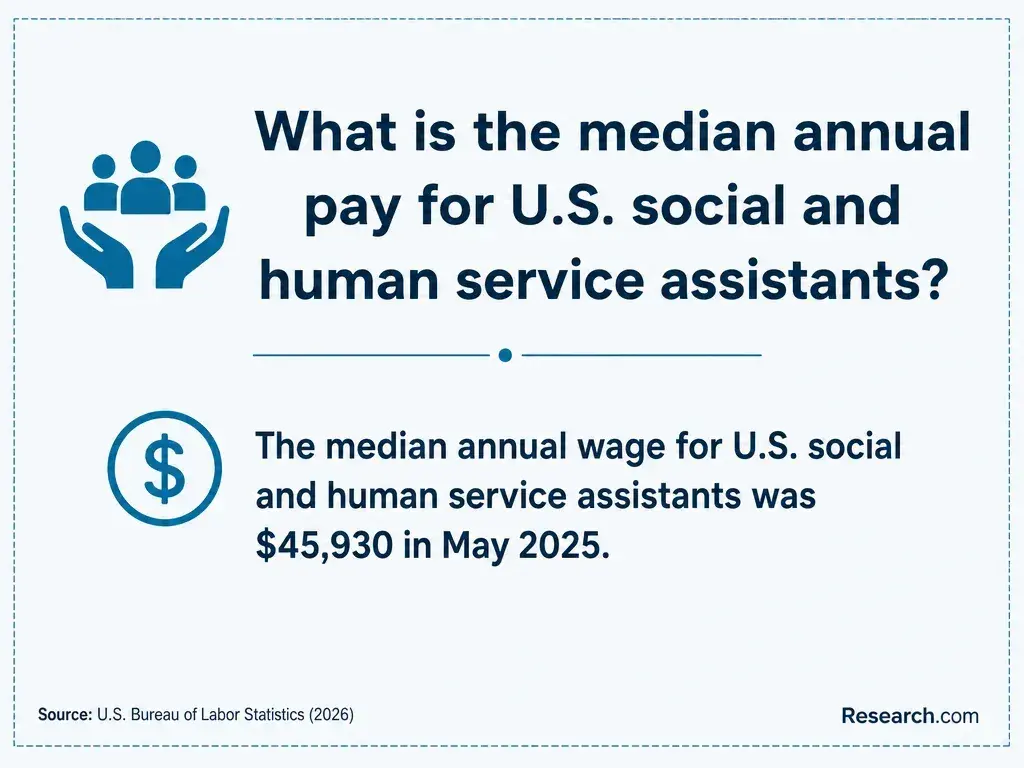
- Compare the total degree cost with the requirements of actual job postings first. For context, the US Bureau of Labor Statistics reported a May 2024 median wage of $45,120 for social and human service assistants - an occupation-wide figure, not an MS graduate salary.
What Is an Online Master's in Forensic Psychology?
An online master's in forensic psychology studies psychological science in legal and justice settings. Depending on the school, it may emphasize research, behavior in legal contexts, corrections, victimization, or justice-system services. "Online" describes how coursework is delivered; it does not establish that every meeting, project, or placement can be completed remotely.
For a hospice volunteer, the useful distinction is between understanding people affected by legal systems and qualifying to deliver regulated services. A forensic MS may develop the first without providing the second. If your main interest is continuing direct support for people facing illness or substance use, compare the graduate curriculum with a more targeted route, including addiction psychology bachelor's degree planning if you have not yet completed an undergraduate degree.
Can Hospice Volunteers Transition Into Forensic Psychology Careers?
Yes, especially into nonclinical support or program roles, but hospice volunteering is a starting point rather than a forensic qualification. You may already know how to listen without promising outcomes, recognize when to refer a concern, document approved activities, and work alongside staff. Justice settings add unfamiliar procedures: agency authority, victim rights, court processes, safety protocols, and rules for sharing information.
The size of the transition depends on the job. A victim-services volunteer or program assistant role may be closer to hospice support than a research analyst position requiring statistics or a corrections role requiring agency-specific training. Before paying for a degree, compare several local postings and ask a prospective supervisor which gaps matter most. If you prefer sustained, nonclinical support over legal-system work, recovery support career planning offers another comparison; check local credential and supervision rules for any role you pursue.
Does an Online Forensic Psychology Master's Lead to Licensure?
Usually not on its own. A degree titled "forensic psychology" is not a license, and online delivery does not change professional scope. Independent psychological assessment and practice as a licensed psychologist generally require doctoral-level professional training and other state-specific steps. Counseling and social-work licenses have their own qualifying education, supervised experience, and examination rules.
If your intended work is therapy for grieving families or justice-involved clients, ask the relevant state board whether the exact program meets its educational requirements before applying. Do not infer eligibility from courses on psychopathology, interviewing, or assessment. When comparing a licensure-oriented counseling route, use accreditation checks for accelerated counseling programs as a separate inquiry from evaluating a nonclinical forensic MS.
The better format is the one that lets you complete the work that matters for your target role. An online program may reduce commuting while you continue volunteering or working. A campus program may make faculty research, local agency relationships, or scheduled collaboration easier to access. Neither format guarantees a placement or employer connection.
Compare actual schedules rather than labels: live classes, group projects, faculty meetings, campus visits, and placement hours can limit an online student's flexibility. Ask whether the school approves justice-related sites near you and whether a hospice-based project would meet its rules; existing volunteer access is not automatic placement approval. If your goal is clinical counseling instead, fast-track mental health counseling master's planning involves different supervised-training obligations.
Curricula vary, but a useful program for this transition should connect psychological research methods and ethics with legal-system topics. Possible subjects include psychology and law, victimization, criminal behavior, correctional settings, statistics, and the limits of psychological evidence. A thesis or applied capstone may offer stronger evidence of analytical skill than coursework alone if research or evaluation is your goal.
Read course descriptions for what you will actually do. Studying interviewing is not the same as conducting a clinical assessment; studying trauma is not authorization to treat it. If your interests center on recovery services rather than legal questions, compare those courses with addiction counseling academic preparation and verify the credential rules for your state and intended job.
Schools set their own requirements. Expect to check for an accepted bachelor's degree, academic records, any minimum GPA, and requested statements or references. Some programs require or recommend prior psychology, statistics, or research-methods coursework; a non-psychology major does not automatically rule you out.
Use your application to explain precisely what hospice work taught you - such as referral boundaries or collaboration with a care team - without disclosing patient information or claiming clinical duties you did not perform. Ask admissions staff whether missing courses can be completed before or after admission and whether volunteer experience affects review. If you still need an undergraduate credential, settle that financing decision separately; paying for a substance abuse counseling bachelor's degree is a different question from funding a graduate MS.
Time depends on the required credits, course availability, enrollment pace, and whether a thesis or approved experience is required. Cost depends on more than advertised tuition: include mandatory fees, books or software, travel, placement-related expenses, and any income you would give up to complete required activities.
Request a written, term-by-term estimate from each school using the pace you can sustain. Compare that estimate with the wages and advancement requirements in jobs you would actually apply for, not a general claim about graduate-degree earnings. Psychology master's tuition comparisons can help you identify questions to ask, but confirm current charges and aid eligibility directly with each institution. A shorter certificate or relevant agency experience may be the better financial choice if target employers do not require an MS.
Potential nonclinical targets include victim-services coordination, justice-program support, corrections-related program administration, and research or evaluation assistance. Duties and hiring requirements differ substantially: one employer may value graduate research skills, while another prioritizes direct advocacy experience, a background check, or agency training. The MS alone does not confer investigative authority or qualify you as a forensic psychologist.
Test career fit by reading postings for tasks, not just titles. If they emphasize referrals, records, and service coordination, seek supervised experience in those functions. If they emphasize data analysis, build a methods project using authorized data. If your preferred work remains primarily substance-use support, compare relevant entry routes and costs through substance abuse counseling bachelor's fees and career prospects before assuming a forensic MS is necessary.
There is no single reliable salary for "forensic psychology graduates": pay follows the occupation, employer, location, experience, and required credential. The Bureau of Labor Statistics' May 2024 median of $45,120 for social and human service assistants describes workers in that broad occupation, including people without this MS. It is a reference point for some support roles, not a forecast of your pay or the return on a forensic degree.
For a useful estimate, collect salary ranges from current postings for jobs you meet or could realistically qualify for after graduation. Separate licensed positions from nonclinical ones and account for the additional education required for each. Comparisons framed around a short-duration counseling master's return on investment concern a different credential pathway; do not transfer those potential earnings to a forensic MS.
How Do You Choose an Accredited Forensic Psychology Program?
First, verify the institution's accreditation through its accreditor and current institutional records. Then verify the exact degree name, required courses, delivery schedule, and graduation requirements with the program. Institutional accreditation does not prove licensure eligibility, and APA accreditation should not be assumed for a general or nonclinical forensic psychology master's.
Make the final comparison against your intended work: ask the program for evidence of relevant faculty supervision, access to research or approved applied experiences, career support, and outcomes with clear definitions. Ask an employer whether its hiring requirements match what the program teaches. If a licensed counseling role is your real destination, compare a qualifying route and mental health counseling education costs after aid instead of selecting a forensic program for its name. Enroll only when the credential, practical experience, and full cost align with a role you want.
Other Things You Should Know About Psychology
Yes, if the program accepts professional references and the supervisor can describe observed skills, reliability, and boundaries. Give them the program's criteria; do not ask them to characterize volunteer work as clinical practice.
Describe what you learned about your responsibilities without details that could identify a patient or family. Follow your hospice organization's confidentiality policies, even when a story feels anonymous.
Continue if it remains manageable and meaningful, but consider adding approved justice-related experience if your target job requires it. Ask your coordinator before changing duties or seeking an academic project at the hospice.
It may. Requirements depend on the agency, role, and population served. Ask the host site and your program about screening, training, and approval before relying on a placement for graduation.
- Training, practice, and career considerations in forensic... - PMC https://pmc.ncbi.nlm.nih.gov/articles/PMC11638730/
- Accreditation in the U.S. | ed.gov http://www.ed.gov/laws-and-policy/higher-education-laws-and-policy/college-accreditation/accreditation-in-the-us
- Understanding U.S. Accreditation | EducationUSA https://educationusa.state.gov/understanding-us-accreditation
- Program Requirements | John Jay College of Criminal Justice https://www.jjay.cuny.edu/academics/graduate-programs/ma-forensic-psychology/program-requirements
- A Career in Forensic and Public Service Psychology | apa.org https://www.apa.org/education-career/guide/subfields/forensic/education-training
- Forensic Psychology, MS - ASU degree programs https://degrees.asu.edu/masters-phd/major/ASU00/ASFPSYMS/forensic-psychology-ms
- How to Become a Forensic Psychologist in California (2026) | Touro University Worldwide https://www.tuw.edu/psychology/how-to-become-a-forensic-psychologist-in-california/