
2027 Radiologic Technology Careers: 7 Reasons Why a 2-Year Degree is Worth It

Co-Founder and Chief Data Scientist
Did you know that most radiologic technologists enter the field with just a two-year degree, yet earn an average salary of more than $77,000 per year? In a healthcare system facing record-high staffing shortages, radiologic technology stands out as a fast, accessible pathway to a stable and rewarding career.
This article breaks down why a two-year degree in radiologic technology is worth pursuing, what you can expect in terms of costs, salaries, and job prospects, and how it sets you up for long-term growth.
Key Things You Should Know About Radiologic Technology Careers
- Radiologic technology is one of the fastest ways into a healthcare career, requiring only a two-year associate degree for entry-level practice. Most graduates become licensed technologists through ARRT certification, which is required by the majority of states for employment in hospitals, clinics, and imaging centers.
- The field offers competitive salaries despite the shorter educational path. According to the BLS, radiologic technologists earn about $77,660 annually, with MRI technologists earning even higher at $88,180. This income level makes the career appealing compared to other allied health professions requiring longer programs.
- Demand is strong and expected to grow. The BLS projects 5% employment growth from 2024 to 2034, adding roughly 15,400 new jobs. With about 14,000 annual openings due to retirements and workforce turnover, opportunities are plentiful across hospitals, outpatient centers, and specialized clinics.
- Why is a 2-year degree in radiologic technology worth it? Degree Value
- What jobs can I get after earning a 2-year radiologic technology degree? Available Jobs
- How much do radiologic technologists make with only an associate degree in 2027? Salary
- What are the costs and financial aid options for a 2-year radiologic technology program? Costs & Financial Aid
- What skills will I learn in a 2-year radiologic technology program? Core Skills
- How long does it really take to complete a 2-year radiologic technology degree? Completion Time
- What are the licensing and certification requirements after a 2-year radiologic tech degree? Licensing & Certification
- What are the working environments like for radiologic technologists with a 2-year degree? What are the working environments like for radiologic technologists with a 2-year degree?
- What are the job growth and demand trends for radiologic technologists through the next decade? What are the job growth and demand trends for radiologic technologists through the next decade?
- What are the pros and cons of choosing a 2-year program versus a longer degree path? What are the pros and cons of choosing a 2-year program versus a longer degree path?
Why is a 2-year degree in radiologic technology worth it?
For many people considering healthcare careers, the time and cost of schooling are the biggest concerns. A two-year radiologic technology degree strikes the right balance: it’s shorter than most healthcare programs, less expensive, and still leads to strong job prospects with competitive salaries. For those wondering why are for profit colleges good, many of these institutions offer accelerated programs and flexible scheduling, making it easier to complete a radiologic technology degree efficiently. Below are seven clear reasons why pursuing this degree in 2027 is a practical and rewarding choice.
1. Fast Entry Into the Workforce
A major advantage of a 2-year radiologic technology degree is the speed to employment. Unlike four-year programs, associate-level training allows students to enter the healthcare field in half the time. This faster turnaround makes it possible to start earning and gaining real-world experience sooner. For those exploring 1 year radiology tech programs as an even shorter option, a two-year path still provides more robust clinical training while maintaining a short timeline to licensure.
2. Strong Salary Potential
Graduates of associate programs earn salaries that compete with longer academic tracks. According to BLS , radiologic technologists make about $77,660 annually, while MRI technologists average $88,180. Considering the lower educational investment compared to many healthcare careers, the financial return is strong. Many allied health workers with longer schooling do not start with salaries this competitive, making the 2-year degree an attractive balance between affordability and earning potential.
3. High Demand for Skilled Technologists
Healthcare continues to expand diagnostic imaging services. The BLS projects 5% job growth for radiologic technologists from 2024 to 2034, adding about 15,400 jobs nationwide. Combined with turnover and retirements, that’s over 14,000 openings each year. A 2-year degree is the gateway to filling these roles quickly, ensuring graduates step into a job market where demand is consistently strong across hospitals, outpatient facilities, and private imaging centers.
4. Flexible Career Paths
A two-year foundation opens doors to specialized areas within imaging. Many technologists pursue advanced certifications in mammography, CT, or MRI after gaining experience. Some even continue into bachelor’s or master’s programs in healthcare leadership or radiation therapy. Starting with an associate degree doesn’t limit long-term growth—it creates a flexible entry point that can evolve with professional interests and employer needs. This adaptability ensures technologists can keep advancing while working.
5. Affordable Tuition Costs
Compared to four-year degrees, associate programs are significantly more affordable. Data from CollegeTuitionCompare shows the average cost for undergraduate radiologic technology programs at $9,427 in-state and $24,369 out-of-state. Vocational programs average $32,286. By completing training in two years, students avoid excessive debt while gaining the same core qualifications needed for licensure. The lower upfront investment combined with strong earning potential makes the associate pathway a financially smart choice.
6. Nationwide Program Availability
Radiologic technology associate programs are offered in hundreds of colleges, community colleges, and vocational schools across the United States. This wide availability means prospective students have access to training in most states, often close to home. Local options reduce relocation costs and allow students to balance school with personal responsibilities. Whether through community colleges or hospital-based programs, the accessibility of these degrees ensures opportunities are not limited to major universities.
7. Quick Path to Professional Licensure
Completing a 2-year degree provides eligibility to sit for the American Registry of Radiologic Technologists (ARRT) certification exam, a requirement in most states for employment. This credential signals competency and opens the door to a wide range of healthcare settings. By achieving licensure within two years, graduates bypass the longer delays associated with four-year programs, moving efficiently into stable, respected healthcare roles while building clinical experience sooner.
What jobs can I get after earning a 2-year radiologic technology degree?
A 2-year radiologic technology degree is more than just an entry point into healthcare—it’s a launchpad to diverse career opportunities. With the combination of classroom instruction, clinical training, and professional certification, graduates are equipped to step directly into specialized roles and command a competitive PM salary in hospitals, imaging centers, and outpatient facilities.
Many start as general radiologic technologists, but others pursue pathways in advanced imaging, management, or education, depending on their skills and long-term goals. This variety makes the degree appealing to those seeking both stability and upward mobility in healthcare.
- Radiologic Technologist/Technician: Operates diagnostic imaging equipment such as X-rays to capture images of bones and soft tissues, helping physicians diagnose and monitor patient conditions.
- MRI Technologist: Specializes in magnetic resonance imaging, producing detailed scans of organs and tissues using advanced imaging technology.
- CT Technologist: Performs computed tomography scans that create cross-sectional images, often used in trauma, oncology, or cardiovascular cases.
- Nuclear Medicine Technologist: Uses radioactive drugs and imaging equipment to study organ function and detect abnormalities at the molecular level.
- Diagnostic Medical Sonographer: Conducts ultrasound procedures to evaluate soft tissue, organ systems, and pregnancies, providing physicians with real-time imaging.
- PET/CT Technologist: Combines positron emission tomography with CT scanning to evaluate metabolic activity and anatomy, often in cancer diagnostics.
- Lead or Senior Radiologic Technologist: Experienced professionals who supervise imaging teams, train new technologists, and ensure quality standards are met in clinical practice.
- Clinical Instructor or Manager: Moves beyond patient care to focus on education, training, or overseeing imaging department operations.
- Laboratory Technician: Works in diagnostic labs, supporting imaging studies and handling related testing under physician supervision.
Graduates also have the option of moving into related areas of care. For example, some explore radiology nurse requirements if they’re interested in combining imaging expertise with direct patient care in interventional or diagnostic settings.
The chart below summarizes the most common career paths available after completing a 2-year radiologic technology degree. It also provides average salary data so readers can compare opportunities across different specialties and roles.
How much do radiologic technologists make with only an associate degree in 2027?
Radiologic technologists with only an associate degree earn an average annual salary of $50,916 in 2027. This makes the associate pathway a practical choice for students who want to enter the field quickly without committing to a 4-year program. While bachelor’s and master’s degree holders generally earn more, the associate credential remains the most common entry point into radiologic technology.
Data from Zippia shows that most technologists—nearly 69%—hold an associate degree. These graduates often earn competitive pay compared to peers with higher degrees, especially considering the shorter time to complete their training. By comparison, bachelor’s graduates average $58,905, while those with master’s degrees earn about $72,104 annually. This wage gap exists, but it is not always significant enough to outweigh the cost and time required for additional schooling.
For those unable to attend campus programs, accredited radiology technician online programs also provide affordable and flexible routes toward earning the associate credential.
The table below summarizes how salaries vary by education level. It highlights that an associate degree offers a strong balance of affordability, shorter completion time, and solid earnings potential in the healthcare field.
What are the costs and financial aid options for a 2-year radiologic technology program?
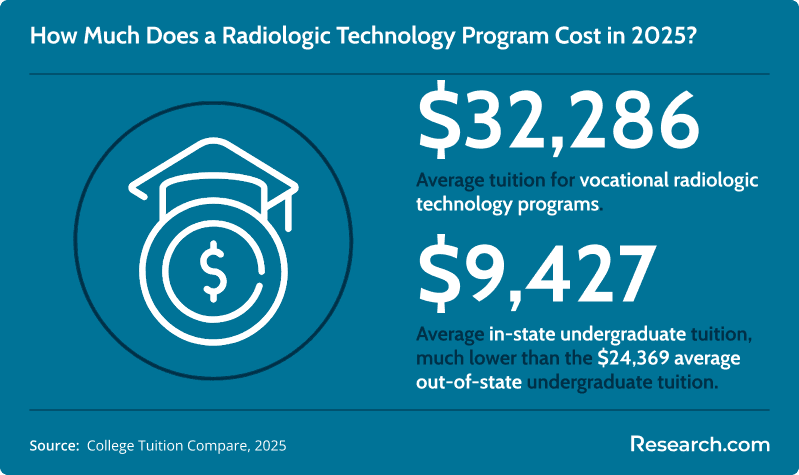
The cost of completing a 2-year radiologic technology program varies depending on the type of school and residency status. Vocational programs average around $32,286, while undergraduate tuition is approximately $9,427 for in-state students and $24,369 for out-of-state students.
Beyond tuition, students should also budget for textbooks, clinical fees, uniforms, exam preparation, and certification costs, including meeting CPH certification requirements, which can add several thousand dollars to the total expense.
To manage these costs, students often turn to financial aid options. Federal Pell Grants provide need-based funding that does not require repayment. Student loans remain a common choice, though they carry repayment obligations. Scholarships from professional organizations, such as the American Society of Radiologic Technologists (ASRT), offer competitive awards to eligible applicants. Many schools also offer work-study programs, allowing students to earn income while completing their degree. Finally, state-level grants and tuition assistance programs are available in many regions, reducing out-of-pocket expenses.
The infographic below provides a clear snapshot of tuition differences between vocational and undergraduate paths, giving prospective students a quick comparison of program costs in 2025.
What skills will I learn in a 2-year radiologic technology program?
A 2-year radiologic technology program equips students with both technical expertise and patient-centered skills needed to succeed in healthcare. Coursework combines classroom instruction, lab practice, and clinical rotations, ensuring graduates are prepared for real-world scenarios. In addition, students may gain knowledge relevant to revenue cycle management certification, giving them an edge in administrative and financial aspects of healthcare. These skills are highly transferable across healthcare settings, giving technologists flexibility in where and how they work.
- Radiographer Competency: Training covers image capture and positioning techniques, ensuring accurate diagnostic results while minimizing radiation exposure.
- Radiology Knowledge: Students develop a strong foundation in anatomy, physiology, and radiographic science, which is essential for safe and effective imaging.
- ARRT Preparation: Programs align with the standards required by the American Registry of Radiologic Technologists, helping students meet certification requirements.
- Diagnostic Imaging: Hands-on experience with X-rays, CT scans, and related imaging procedures prepares graduates for diverse clinical demands.
- Clinic Readiness: Clinical rotations give direct experience in hospitals and outpatient facilities, improving adaptability to fast-paced environments.
- Patient Care: Training emphasizes communication, empathy, and safety—critical for working with patients of all ages and conditions.
- Basic Life Support (BLS): Certification in BLS ensures technologists can respond effectively during emergencies.
- Radiation Safety: Programs teach strategies for protecting both patients and staff from unnecessary exposure, an essential part of compliance and professional responsibility.
Understanding these skills also clarifies the difference between professional paths—our radiographer and radiologist degree program comparison highlights how training focuses diverge.
The chart below shows which skills employers most often prioritize when hiring radiologic technologists, giving prospective students a sense of what matters most in today’s job market.
How long does it really take to complete a 2-year radiologic technology degree?
As the name implies, a 2-year radiologic technology degree typically takes about 24 months to complete, but the actual timeline can vary depending on program structure and student pace. Most associate degree programs are designed for full-time students who can commit to classroom instruction, lab training, and clinical rotations. However, some schools offer part-time or accelerated tracks that may extend the duration beyond two years or shorten it to as little as 18 months.
According to program data, clinical training is one of the most time-intensive components, requiring students to log hundreds of hours in real-world healthcare settings. This ensures graduates are prepared for the demands of imaging procedures and patient care from day one. Prerequisite coursework, such as anatomy and medical terminology, may also add to the overall timeline if not completed before program entry.
Ultimately, while most students finish in about two years, completion times can range based on personal schedules, transfer credits, or program flexibility.
What are the licensing and certification requirements after a 2-year radiologic tech degree?
Completing a 2-year radiologic technology degree is only the first step—graduates must meet licensing and certification requirements before entering the workforce. These credentials validate competence, protect patients, and ensure compliance with state and federal standards. While requirements differ by location, several common steps apply across the U.S., even for those who came from the easiest radiology programs to get into.
Licensing and Certification Requirements:
- ARRT Certification Exam: Most states require passing the American Registry of Radiologic Technologists (ARRT) exam, which assesses knowledge in imaging procedures, radiation safety, and patient care.
- State Licensure: Currently, more than 30 states require radiologic technologists to obtain state-specific licensure, which may include additional exams, fees, and background checks.
- Continuing Education: Certified technologists must complete continuing education credits to maintain their credentials, typically 24 CE hours every two years.
- Specialty Certifications: Professionals may pursue additional certifications in MRI, CT, mammography, or radiation therapy to broaden career options and qualify for higher-paying roles.
Meeting these requirements not only secures legal eligibility to practice but also signals professional credibility to employers. Graduates who prepare early for exams and continuing education requirements are more likely to transition smoothly into their careers.
What are the working environments like for radiologic technologists with a 2-year degree?
Radiologic technologists with a 2-year degree can work in a wide range of healthcare environments, each offering different daily responsibilities, patient interactions, and schedules. The work setting often influences stress levels, pay, and opportunities for specialization, making it an important factor to consider when entering the field.
Working Environments:
- Hospitals: The largest employer of radiologic technologists. Work here involves fast-paced imaging support for emergency rooms, operating rooms, and inpatient care, often requiring night, weekend, or holiday shifts.
- Outpatient Imaging Centers: Focused on scheduled diagnostic procedures such as X-rays, CT scans, or MRIs. These centers usually offer more predictable hours and less emergency-driven stress.
- Physician Offices and Clinics: Provide routine imaging for patient diagnosis and follow-up. Work is steadier and patient relationships may be longer term, though technology may be more limited than hospitals.
- Specialty Facilities: Includes orthopedic centers, cancer treatment facilities, or women’s health clinics. Technologists here develop expertise in specific imaging needs, such as mammography or radiation therapy.
- Mobile Imaging Services: Radiologic technologists travel to nursing homes, rural hospitals, or patients’ homes with portable imaging equipment. Flexibility is required, but the role increases access to care.
Overall, the choice of environment can shape not just work-life balance but also career advancement opportunities. Many technologists start in hospitals to build experience before moving into outpatient or specialty settings.
What are the job growth and demand trends for radiologic technologists through the next decade?
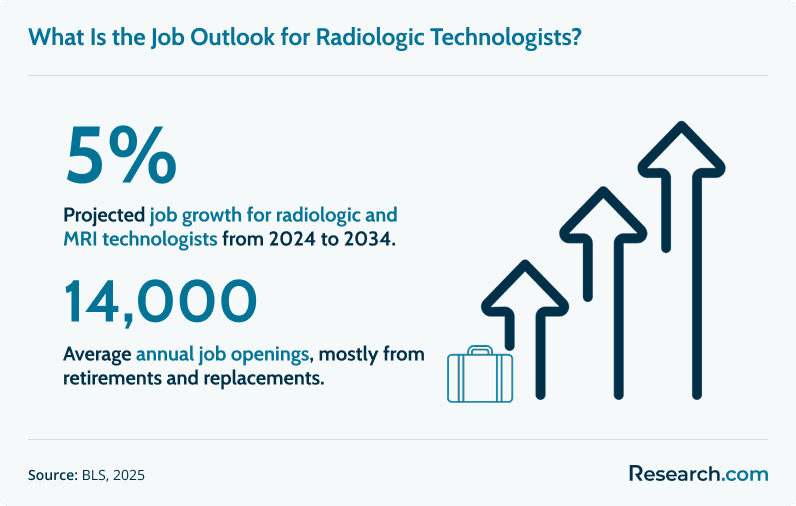
Radiologic technologists can expect steady demand in the coming decade, with employment projected to grow 5% from 2024 to 2034. This pace is on par with the national average for all occupations, showing that radiologic technology is a reliable and sustainable career path for those entering the healthcare field. The growth is largely driven by an aging population, higher demand for diagnostic imaging, and ongoing healthcare workforce shortages.
Beyond new job creation, annual job openings are expected to average around 14,000, primarily due to retirements and career shifts. This means that even when growth is modest, replacement needs ensure consistent opportunities for new graduates. Furthermore, advanced imaging technology, expanded use of MRI and CT scans, and evolving care models continue to widen the scope of radiologic technologists’ responsibilities.
Combined with competitive salaries and broad career options, these trends position radiologic technology as a career with long-term security and advancement potential.
The infographic below illustrates projected job growth and annual openings for radiologic technologists, highlighting why demand remains steady and why entering the field in 2027 offers promising prospects.
What are the pros and cons of choosing a 2-year program versus a longer degree path?
When deciding between a 2-year associate degree and a longer bachelor’s or advanced degree, students need to weigh time, cost, and career flexibility. A 2-year degree is often enough to enter the workforce quickly, but longer programs can open doors to advanced roles such as management or specialized imaging. Comparing the two paths helps clarify which direction best fits individual goals.
Pros of a 2-Year Degree:
- Faster entry into the workforce, with many graduates starting their careers in about two years.
- Lower upfront cost compared to four-year or graduate-level options.
- Strong salary potential relative to education length, with radiologic technologists earning competitive wages.
- Accessible to students seeking a shorter, career-focused program.
Cons of a 2-Year Degree:
- Limited advancement into supervisory or administrative roles without further study.
- Some hospitals or specialty facilities prefer bachelor’s-level graduates.
- May require additional certifications for competitive edge in advanced imaging fields.
Those considering long-term career growth might look at related fields like a healthcare administration degree, which prepares professionals for leadership roles across health systems. Still, for many students, the 2-year program balances affordability and opportunity in a way longer paths cannot.
Here's What Graduates Have To Say About Their Radiologic Technology Careers
- Marinel: "Studying radiologic technology online gave me the flexibility to balance work and school. Clinical rotations were demanding, but the online coursework let me set my own pace. Now I’m in a hospital role where my imaging skills make a direct difference for patients every day, and I feel like I chose the right path."
- Delvin: "The 2-year program surprised me with how thorough it was, even though much of it was online. Labs were interactive, and clinicals gave me real-world confidence. Entering the field so quickly, while peers in longer programs are still studying, showed me that the online route can be just as strong."
- Raya: "I worried that an online radiology program would feel isolating, but I found the opposite. Instructors were engaged, and discussion boards kept me connected. By the time I reached my externship, I felt prepared. The degree gave me both a career and a sense of pride in helping others."
Key Findings
- MRI technologists earn the highest average salary at $88,180, while radiologic technologists average $77,660.
- Radiologic technicians with an associate degree earn $50,916 annually on average.
- The average in-state tuition for undergraduate programs is $9,427, compared to $24,369 for out-of-state students.
- Radiologic and MRI technologists are projected to see 5% job growth from 2024 to 2034, with 14,000 job openings each year.
- Radiographer (17.52%) and radiology (13.07%) are the top skills employers seek in job postings.
- 66.1% of radiologic technicians are women, and the average age in the field is 43 years.
References:
- American Society of Radiologic Technologists (ASRT). 2023 Radiologic Sciences Workplace and Staffing Survey.
- American Society of Radiologic Technologists (ASRT). 2024 Consensus Committee on the Future of Medical Imaging and Radiation Therapy.
- American Society of Radiologic Technologists (ASRT). 2024 Enrollment Snapshot.
- American Society of Radiologic Technologists (ASRT). 2025 Staffing and Workplace Survey Summary.
- Bureau of Labor Statistics (BLS). Occupational Employment and Wages, Radiologic Technologists and Technicians.
- Bureau of Labor Statistics (BLS). Radiologic and MRI Technologists: Occupational Outlook Handbook.
- CollegeTuitionCompare. Radiologic Technology/Science - Radiographer Program 2025 Tuition.
- Philippine Society of Radiologic Technologists (PSRT). 2024 Radiology Jobs & Compensation Review.
- ZipRecruiter. Radiologic Technologist Resume Keywords and Skills.
- Zippia. Radiologic Technician Careers.
- Zippia. Radiologic Technician Demographics.
- Zippia. Radiologic Technician Education.
Other Things You Should Know About Radiologic Technology Careers
Yes, after earning a 2-year degree in radiologic technology, you can specialize further. Options include MRI, CT, or mammography certifications. Specializations can enhance career prospects and salary potential, making the initial 2-year degree a valuable foundation for advancement in the field.
To enroll in a 2-year Radiologic Technology program in 2027, candidates typically need a high school diploma or GED, completion of prerequisite courses in math and science, and possibly a passing score on an entrance exam. Specific requirements may vary by program.


![2027 Best Advanced Standing Online MSW Programs [CSWE Accredited] thumbnail](/uploads/Online_Advanced_Standing_MSW_301dbd5368.jpg)


