
2027 Project Manager Salary

Co-Founder and Chief Data Scientist
A project manager's salary reflects the weight of responsibility that comes with keeping teams aligned, budgets on track, and company goals delivered. Today, many professionals consider this role as one of the most appealing (and lucrative) career paths available.
Compensation, however, isn’t one-size-fits-all. Project manager salaries shift depending on location, industry, certifications, and experience levels. Understanding those variations is key to knowing your true earning potential.
In this guide, I will break down the numbers, the trends, and the factors that shape project manager salaries. You’ll see how pay stacks up across industries, states, and cities. Most importantly, you’ll learn what it takes to boost your income and maximize opportunities in this high-demand field.
Key Points to Know About Project Manager Salaries
- The top-earning project managers bring in around $146,000 per year, showing just how lucrative the role can be at higher levels (ZipRecruiter, n.d.)
- Job growth for project managers is projected at 6% from 2024 to 2034, outpacing the average for most careers and signaling steady demand (BLS, 2025).
- Project management skills transfer seamlessly across industries, from tech and finance to healthcare and construction, making it one of the most flexible career paths.
- How much does a project manager typically make? Earning Potential
- What are the factors that influence a project manager's salary? Salary Drivers
- How does a project manager’s salary compare with other management roles? How does a project manager’s salary compare with other management roles?
- What is the wage gap of project managers by education level? Wage Gaps
- How does a project manager's salary compare to the national average wage in the US? How does a project manager's salary compare to the national average wage in the US?
- What are currently the top-paying US companies for project managers? Top-Paying Companies
- What are the highest-paying states for project managers? Highest-Paying States
- What are the highest-paying cities for project managers? Highest-Paying Cities
- How can project managers increase their earning potential? Salary Boosters
- What is the job outlook for project managers? Job Outlook
- How can advanced education boost project management earning potential? How can advanced education boost project management earning potential?
How much does a project manager typically make?
Project managers aren’t just organizers; they’re the people keeping entire operations on track, and their paychecks reflect that responsibility. Their value shows up not only in outcomes delivered but also in the premium salaries they command across industries. Those exploring finance roles may also compare this with private equity accounting jobs, as understanding pay scales across project management and finance can help guide career decisions and expectations.
Here’s how project manager salaries typically break down:
- Top Earners: Bring in around $146,000 a year, reflecting the highest levels of experience, specialization, and responsibility.
- 75th Percentile: Earning about $123,000, these project managers often hold advanced certifications and manage large, complex projects.
- Average: At $102,682 annually, this is where most project managers land, balancing strong skills with steady demand.
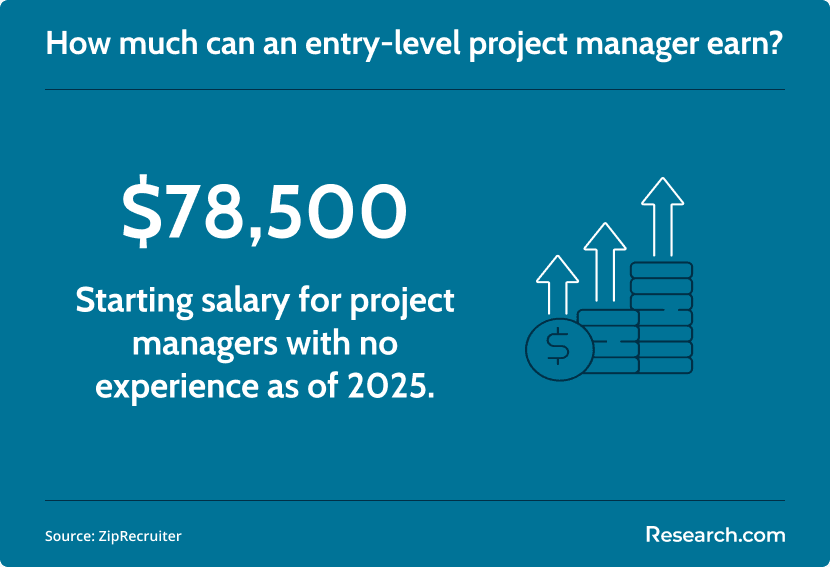
- 25th Percentile: Around $78,500, usually representing entry-level or less experienced project managers starting to build their careers.
Education can also accelerate your career trajectory. Advanced degrees and certifications show employers that you’re serious about mastering the craft. For example, pairing project management expertise with a masters in database management online can open the door to specialized, higher-paying roles at the intersection of leadership and technology.
What are the factors that influence a project manager's salary?
A project manager’s paycheck mirrors the scale of the projects they lead, the industries they navigate, and the skills they bring to the table. Managing a small internal rollout looks very different from overseeing a global product launch, and the salary reflects that gap. The more complex the challenge, the higher the reward. Professionals with complementary expertise, such as knowledge of public health certification requirements, may find opportunities in healthcare project management, which can further influence salary potential and career growth.
Here are the key factors shaping project manager salaries:
- Industry Impact: Project managers in IT and finance often oversee high-stakes, high-budget projects, which translates into stronger paychecks compared to sectors like education or nonprofit.
- Scope of Projects: Leading a cross-border software implementation or multimillion-dollar construction project pays more than coordinating small, short-term initiatives.
- Geographic Market: A project manager running teams in major hubs like San Francisco or New York can expect higher salaries than peers managing projects in smaller markets.
- Certifications in Practice: Credentials such as PMP or Agile Scrum Master aren’t just resume fillers; they often tip the scales in salary negotiations because they signal proven expertise in leading complex projects.
- Organizational Scale: Project managers at Fortune 500 companies or global consultancies usually command higher salaries than those at startups managing leaner budgets.
Aspiring project managers who combine technical fluency with leadership often stand out even more. If you’re interested in other relevant fields, explore this technology management degree salary guide to see how specialized expertise can boost earning potential.
How does a project manager’s salary compare with other management roles?
Project managers earn solid pay, but their salaries fall across a wide spectrum when placed alongside other management positions. Some roles demand higher strategic responsibility or direct revenue impact, while others focus more narrowly on operations. Comparing these salaries gives a clear picture of where project managers fit in the broader management landscape. Those exploring psychology license requirements can also see parallels in credentialing: just as specialized licensing impacts career opportunities in psychology, industry-specific expertise can influence management salary ranges.
Here’s how project manager pay measures up:
- Product Manager: Average salary of $159,405, reflecting direct impact on product revenue and growth.
- Program Manager: Around $107,460, slightly above project managers due to broader oversight of multiple projects.
- Operations Manager: About $63,456 per year, typically lower since the role centers on maintaining workflows.
- Business Analyst: Earning $98,662, a step below project managers, with focus on analysis rather than delivery.
- IT Manager: At $109,707, often higher than project managers, especially in tech-driven organizations.
For those considering career growth, see this list of doctor of business administration jobs to explore options that combine leadership, strategy, and top-tier earning potential.
What is the wage gap of project managers by education level?
Education plays a clear role in shaping project manager salaries. Those with a bachelor’s degree earn an average of $99,138, making it the baseline for most professionals entering the field. While this salary is strong, it leaves room for growth with advanced credentials. Similarly, individuals exploring radiologic tech associate careers can see how higher education and specialized training directly impact earning potential and career advancement opportunities.
Project managers who pursue a master’s degree see their earnings rise to about $109,564. The increase reflects the added value of deeper knowledge, advanced leadership skills, and specialized expertise. For many, the master’s degree provides both a salary bump and stronger career mobility.
At the top of the scale, a doctorate-level project manager earns around $114,985 annually. This level of education signals advanced research and leadership capacity, which employers reward with higher pay. The good news? Many universities now offer accelerated doctorate paths, including some of the shortest management DBA online programs.
Here’s a complete breakdown of the education wage gap for project managers:
How does a project manager's salary compare to the national average wage in the US?
Project managers earn well above the national baseline. With an average salary of $102,682, they take home substantially more than the US national average wage of $66,622. That gap underscores just how valued this role is across industries.
The difference is nearly $36,000 annually. That extra amount reflects the weight of responsibility project managers carry, from guiding cross-functional teams to delivering high-stakes outcomes. In short, the market rewards their ability to turn strategy into execution.
This earning advantage also makes project management a compelling career choice for professionals weighing their options. While the national average highlights steady but modest growth, project managers enjoy both strong pay and long-term demand.
Here's a visual breakdown to illustrate that gap:
What are currently the top-paying US companies for project managers?
Tech giants and global firms dominate when it comes to project manager salaries, setting a high bar for the rest of the market. These companies not only offer competitive pay but also provide the kind of complex, large-scale projects that demand top-tier talent.
Here are the current top-paying US companies for project managers:
- The Citadel: Based in Chicago, this global hedge fund pays an average of $153,774, rewarding project managers who thrive in high-pressure financial environments.
- Apple: Headquartered in Cupertino, California, Apple offers around $139,620, reflecting the scale of innovation and product complexity its project managers oversee.
- Meta: From its Menlo Park, California hub, Meta compensates project managers at $139,071, driven by massive, fast-moving digital initiatives.
- Reed Smith: With offices in Pittsburgh, Pennsylvania, this international law firm pays about $138,841, highlighting the value of project leadership even outside tech.
- Google: Known worldwide and headquartered in Mountain View, California, Google provides project managers with $136,483, tied to ambitious projects across software, hardware, and services.
Earning an advanced degree like a DBA can set you apart, especially if you’re aiming for leadership in fast-moving industries. With flexible DBA management online programs, professionals can build the expertise that opens doors to these high-paying project management careers.
What are the highest-paying states for project managers?
Project managers looking to maximize their earning potential may want to pay attention to geography. Certain states consistently stand out for offering salaries that soar above the national average, often thanks to strong industry hubs and competitive markets. These regions combine high pay with opportunities to lead complex, high-impact projects.
Below are the states where project managers earn the most, along with average annual salaries:
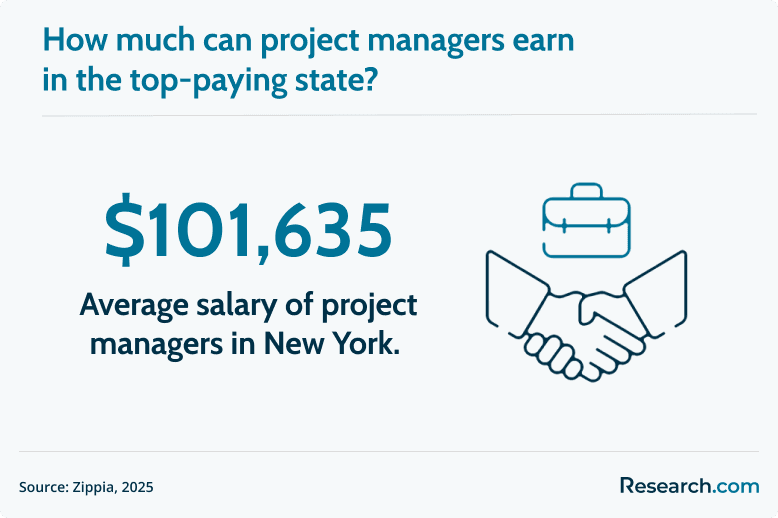
- California: At $101,635 per year, California leads the pack, driven by tech, entertainment, and biotech industries centered in cities like San Francisco and Los Angeles.
- Massachusetts: With an average salary of $99,738, Massachusetts offers strong demand fueled by its concentration of healthcare, finance, and higher education institutions, especially in Boston.
- New Jersey: Project managers here earn $98,945 annually, supported by a thriving pharmaceutical sector and close proximity to the New York City metro market.
- Connecticut: At $98,736 per year, Connecticut benefits from its robust insurance and financial services industries, particularly in Hartford.
- Rhode Island: Project managers in Rhode Island average $97,987 annually, reflecting opportunities in healthcare and education across this small but strategically located state.
Earning potential for project managers isn’t spread evenly across the map. By targeting states with strong industry hubs and higher average pay, professionals can position themselves for both financial growth and career advancement.
What are the highest-paying cities for project managers?
Project managers who plant their careers in certain metros can see their salaries stretch far beyond the national average. These cities combine booming industries with competitive demand for skilled leadership.
Here’s a look at the cities leading the pack:
- San Francisco, CA: Averaging $108,794 annually, project managers in San Francisco thrive in a tech-driven economy fueled by software, biotech, and startups.
- Boston, MA: With an average salary of $99,862, Boston offers strong demand in healthcare, education, and technology.
- Jersey City, NJ: Earning about $99,177 per year, professionals here benefit from opportunities tied to financial services, logistics, and fintech near Wall Street.
- Hartford, CT: An annual average of $98,841 reflects Hartford’s status as an insurance powerhouse with a growing healthcare and finance presence.
- New York, NY: At $95,322 annually, New York offers unmatched diversity across finance, media, real estate, and the arts.
High-paying cities often reflect where industries are expanding the fastest. For project managers, choosing the right location can be just as important as choosing the right role.
How can project managers increase their earning potential?
Salary growth in project management doesn’t happen by chance; it’s the result of strategy, skill, and smart career moves. The best-paid project managers are those who know how to stand out in competitive industries while keeping their expertise relevant and in demand. Building your income means investing in yourself and positioning yourself for leadership opportunities.
Here are some of the most effective ways to boost your earning power:
- Earn Advanced Certifications: Credentials like PMP, Agile, or PRINCE2 show proven mastery and often qualify project managers for higher-paying, senior-level positions.
- Specialize in High-Demand Industries: Sectors like tech, healthcare, and finance pay premium rates because projects are complex, time-sensitive, and directly tied to profitability.
- Pursue Higher Education: A master’s degree or DBA not only deepens your expertise but also signals readiness for executive roles with broader responsibilities and higher pay.
- Strengthen Leadership Skills: Employers pay more for project managers who can inspire teams, resolve conflicts, and deliver results in high-stakes environments.
- Expand Technical Knowledge: Developing fluency in data analytics, software platforms, or industry-specific tools makes you more versatile and harder to replace.
The key to a bigger paycheck lies in pairing strong management skills with continuous professional growth. The more value you bring to an organization, the more leverage you’ll have at the negotiation table.
What is the job outlook for project managers?
With industries relying heavily on skilled project managers to keep complex initiatives on track, demand is expected to keep rising. Over the next decade, project managers will see consistent opportunities to step into roles that shape businesses and drive innovation.
Here’s what the outlook looks like in numbers:
- Steady Growth: Employment of project managers is projected to increase 6% from 2024 to 2034, jumping from 1,046,300 jobs to 1,105,000.
- Annual Openings: Around 78,200 positions are expected to open each year, largely due to retirements and career shifts, keeping the pipeline of opportunities flowing.
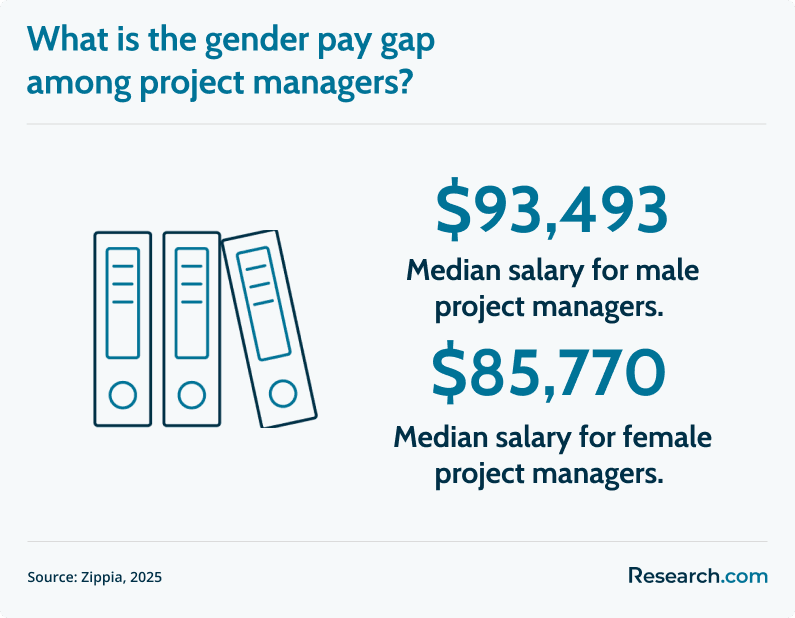
- Gender Pay Gap: Male project managers earn an average of $93,493, while female counterparts average $85,770, underscoring ongoing disparities in compensation.
- Cross-Industry Demand: From tech and healthcare to finance and construction, project managers are needed across nearly every major sector.
- Leadership Opportunities: As organizations expand, more senior-level project management roles will emerge, offering career paths into executive leadership.
The decade ahead looks promising for project managers, but the data shows growth must go hand in hand with progress on equity and inclusion. For ambitious professionals, this landscape offers not just job security but the chance to help define the future of the field.
Key Findings
- The average salary of a project manager is $102,682 annually, balancing strong skills with steady demand.
- Project managers earn about $99,138 with a bachelor’s, $109,564 with a master’s, and $114,985 with a doctorate, showing clear salary gains with higher education.
- Project managers earn an average of $102,682, nearly $36,000 above the national wage, reflecting the high value placed on their ability to lead teams and deliver results.
- At $101,635 per year, California leads the pack, driven by tech, entertainment, and biotech industries centered in cities like San Francisco and Los Angeles.
- San Francisco, CA is the highest-paying city at $108,794 and is a global tech capital where project managers command top salaries, driven by software, biotech, and venture-backed startups.
- Male project managers earn an average of $93,493, while female counterparts average $85,770, underscoring ongoing disparities in compensation.
How can advanced education boost project management earning potential?
An advanced degree directly elevates a project manager’s strategic insight and leadership capability, enabling professionals to command roles with greater complexity and higher remuneration. Expanding beyond technical and managerial skills, further education sharpens decision-making, risk management, and cross-functional communication—qualities highly valued in critical business environments. Moreover, pursuing a degree through flexible, cost-effective options like the cheapest accredited online MBA can provide a competitive edge without compromising work commitments.
References:
- APMG International. (n.d.). Agile project management (AgilePM®) certification. Apmg-international.com. Retrieved 23 September 2025.
- Axelos. (n.d.). PRINCE2 project management. Axelos.com. Retrieved 23 September 2025.
- Social Security Administration. (2024). Average wage index (AWI). Ssa.gov. Retrieved 23 September 2025.
- US Bureau of Labor Statistics. (2024). Project management specialists. U.S. Department of Labor. Retrieved 23 September 2025.
- ZipRecruiter. (n.d.). Business analyst salary. Ziprecruiter.com. Retrieved 23 September 2025.
- ZipRecruiter. (n.d.). IT manager salary. Ziprecruiter.com. Retrieved 23 September 2025.
- ZipRecruiter. (n.d.). Operations manager salary. Ziprecruiter.com. Retrieved 23 September 2025.
- ZipRecruiter. (n.d.). Product manager salary. Ziprecruiter.com. Retrieved 23 September 2025.
- ZipRecruiter. (n.d.). Project manager salary. Ziprecruiter.com. Retrieved 23 September 2025.
- Zippia. (2025). Project manager salary. Zippia.com. Retrieved 23 September 2025.
Other Things You Should Know About Project Manager Salaries
In 2027, nonprofit project managers generally earn less than their corporate counterparts. While the average salary for a corporate project manager can exceed $95,000, nonprofit project managers often see salaries closer to $70,000. However, these figures can vary significantly depending on experience and geographic location.
Certifications such as PMP (Project Management Professional) and PRINCE2 can significantly impact a project manager's salary in 2027. These credentials demonstrate expertise and can lead to higher earning potential by qualifying professionals for more advanced roles and responsibilities within the industry.
In 2027, project managers in the corporate sector typically out-earn their nonprofit counterparts. The average salary for corporate project managers is around $98,000 per year, whereas nonprofit project managers earn closer to $68,000 annually. The disparity often reflects budgetary constraints and funding models in the nonprofit sector rather than differences in skill or competence.


