
2027 Private Equity Careers for Finance or Accounting Degree Holders

Co-Founder and Chief Data Scientist
Private equity careers allow finance and accounting professionals to play a critical role in acquiring, managing, and growing companies, with opportunities to impact strategy and long-term value creation. The field is expanding rapidly, as global private equity assets under management are projected to surpass $8 trillion by 2028, reflecting strong demand for skilled professionals in this area.
This guide will walk you through the key roles, required skills, and career opportunities in private equity, helping you understand what to expect and how to leverage your finance or accounting degree to succeed in this competitive industry.
Key things you should know about private equity careers:
- Most professionals enter private equity with a strong background in finance or accounting, typically earned through a four-year bachelor’s degree.
- Breaking into private equity is highly competitive, often requiring prior experience in investment banking, consulting, or corporate finance.
- Careers in private equity offer lucrative compensation and growth opportunities, but the roles are demanding, with long hours and high-performance expectations.
- What is private equity, and how does it differ from investment banking? Private Equity vs Investment Banking
- Why pursue a career in private equity with a finance or accounting degree? Why pursue a career in private equity with a finance or accounting degree?
- What degree do you need to work in private equity? Required Degrees
- What are the pros and cons of working in private equity versus other finance careers? Pros and Cons
- How much can you earn working in private equity? Average Salary
- Which certifications help in private equity (e.g., CFA, CAIA, CPA)? Certifications
- What is the typical career path in private equity? Career Path
- What financial modeling and valuation skills are required for private equity jobs? Core Skills
- What other career paths can you pursue with a finance or accounting degree? What other career paths can you pursue with a finance or accounting degree?
- What is the demand for PE professionals in emerging markets? Job Outlook
What is private equity, and how does it differ from investment banking?
Private equity (PE) is a form of investment where firms pool capital from investors to acquire private companies or take public companies private, with the goal of improving their performance and eventually selling them for a profit. Finance professionals with private equity careers often work hands-on with portfolio companies, focusing on long-term growth, operational improvements, and strategic restructuring.
Investment banking (IB), on the other hand, primarily serves as an intermediary. Banks help companies raise capital through issuing stocks or bonds, advise on mergers and acquisitions, and facilitate large financial transactions. Unlike PE, investment bankers don’t typically manage or operate the businesses they work with; they structure deals and provide advisory services. Understanding what you can do with a radiologic technology associate degree can provide perspective on specialized technical careers and alternative paths outside of traditional finance roles.
Understanding what you can do with a radiologic technology associate degree can provide perspective on specialized technical careers and alternative paths outside of traditional finance roles.
For students wondering what is a good double major with accounting, pairing it with finance, economics, or data analytics can provide a strong foundation for a career in investment banking.
Key differences between private equity and investment banking include:
- Ownership: Private equity firms buy and own companies, while investment banks advise companies on financial transactions without ownership.
- Time Horizon: Private equity investments usually span several years, whereas investment banking deals are transaction-based and shorter-term.
- Role: PE professionals focus on improving operations and long-term value, while IB professionals focus on structuring deals and raising capital.
Why pursue a career in private equity with a finance or accounting degree?
A career in private equity offers a combination of financial analysis, strategic decision-making, and hands-on business management that few other careers provide.
Students with backgrounds in healthcare or social sciences may also consider public health concentrations, which can complement finance or accounting expertise when evaluating healthcare investments or managing portfolio companies in the health sector.
Here are some key reasons to pursue a career in private equity:
- Strong Foundation in Financial Analysis: A finance or accounting degree equips you with the skills to analyze financial statements, assess company performance, and evaluate investment opportunities. These analytical abilities are essential for identifying and managing profitable private equity deals.
- High Earning Potential: Private equity careers are known for offering some of the most lucrative compensation packages in finance. Professionals can benefit from competitive salaries, performance bonuses, and carried interest, which is a share of investment profits.
- Career Growth and Prestige: Working in private equity provides exposure to high-profile deals and interaction with senior executives, which can accelerate professional development. The prestige of the field also opens doors to leadership roles in finance, consulting, or entrepreneurship.
- Hands-On Business Impact: Unlike many finance roles, private equity professionals often work directly with portfolio companies to improve operations and drive growth. This allows you to see the tangible results of your efforts in creating long-term value.
Pursuing a career in private equity with a finance or accounting degree offers the opportunity to combine analytical rigor, strategic thinking, and hands-on business impact. The skills gained in these programs prepare graduates to evaluate investments, optimize portfolio performance, and contribute meaningfully to high-stakes deals.
For those looking to further strengthen their quantitative and analytical foundation, an online bachelor's degree in mathematics can provide additional expertise.
What degree do you need to work in private equity?
To work in private equity, your degree can influence how you enter the industry and the unique skills you bring. While there is no single required path, certain academic backgrounds align more closely with private equity’s analytical and strategic demands. Professionals in related fields should also be aware of psychology licensure requirements by state, as understanding credentialing standards can be valuable when evaluating healthcare or human capital investments in a PE portfolio.
- Finance Degree: A finance degree is the most direct path into private equity because it emphasizes valuation, corporate finance, and investment analysis. Graduates are well-prepared for financial modeling, deal structuring, and portfolio evaluation.
- Accounting Degree: An accounting degree is highly valued for its focus on financial statements, auditing, and cash flow analysis. This expertise is critical in due diligence and evaluating company fundamentals before investment.
- Economics Degree: An economics degree provides deep insights into market trends, competition, and macroeconomic cycles. These skills help professionals assess industries and forecast long-term investment opportunities.
- Business Administration Degree: A business administration degree offers broad exposure to strategy, management, and operations. This versatility allows graduates to contribute to both financial analysis and post-acquisition value creation, and selecting business law concentrations can further enhance understanding of regulatory compliance, contracts, and corporate governance in investment settings.
- STEM or Quantitative Degree: Degrees in mathematics, engineering, or computer science are increasingly sought after for their analytical and problem-solving focus. Graduates with technical expertise can enhance private equity teams with data-driven insights and advanced modeling.
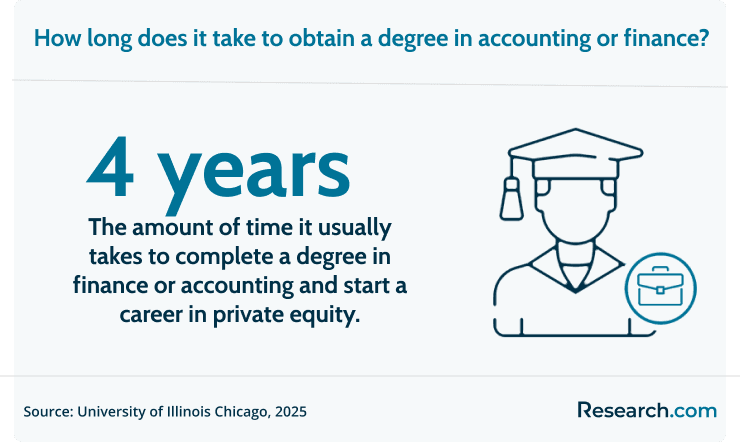
In most cases, you need at least a four-year bachelor’s degree to start a career in private equity. Employers typically expect candidates to hold a bachelor’s degree in finance, accounting, economics, or a related field before they are considered for entry-level analyst or associate roles.
What are the pros and cons of working in private equity versus other finance careers?
Private equity careers offer unique opportunities and challenges compared to other finance careers, making it important for aspiring professionals to weigh both the advantages and drawbacks. While the field can be highly rewarding, it also comes with intense demands that may not suit everyone. Those comparing compensation across professions may also look at postpartum nurse salary by state, as understanding earnings in healthcare versus finance provides perspective on lifestyle, work-life balance, and long-term financial goals.
Pros
- Lucrative Compensation: Private equity professionals typically earn higher salaries and bonuses than many other finance roles. The potential for carried interest, a share of investment profits, further boosts long-term earnings.
- Direct Business Impact: Unlike investment banking or corporate finance, private equity professionals often work closely with portfolio companies to improve operations and strategy. This hands-on involvement allows you to see measurable outcomes from your efforts.
- Fast Career Growth: Exposure to complex deals and senior-level decision-making can accelerate your learning and career progression. Many professionals transition into leadership roles or entrepreneurship after private equity.
- Diverse Skill Development: Working in private equity helps you develop a wide range of skills, including financial modeling, operational strategy, negotiation, and leadership. These skills also complement programs like a fast-track bachelor's in supply chain management online, providing a broader understanding of business operations and strategy.
- Networking Opportunities: Private equity offers exposure to senior executives, investors, and industry leaders. Building these relationships can create long-term career opportunities and open doors to high-profile positions.
Cons
- Intense Workload: Private equity is known for long hours, high expectations, and significant pressure to deliver results. Maintaining work-life balance can be challenging compared to other finance roles.
- Competitive Entry: Breaking into private equity is notoriously difficult, often requiring prior experience in investment banking, consulting, or top-tier finance roles. The limited number of positions makes it one of the most competitive fields in finance.
- High Risk and Pressure: Success in private equity depends on making profitable investments, which carry inherent risk. Poor performance can impact compensation and career stability more than in traditional finance careers.
How much can you earn working in private equity?
Private equity is one of the most lucrative career paths in finance, but earnings vary significantly depending on your seniority and the size of the firm. Compensation typically includes a competitive base salary, performance-based bonuses, and, at higher levels, profit sharing through carried interest, which can dramatically boost long-term earnings.
Below are the typical salary ranges you can expect across different private equity careers:
- Analyst ($100K–$150K): Analysts in private equity serve as the entry-level role that provides critical data and analysis that help senior team members make informed investment decisions.
- Associate ($150K–$300K): Associates take on greater responsibility in deal execution and portfolio company work, and they often coordinate due diligence, perform financial analysis, and support senior professionals in executing transactions.
- Senior Associate ($250K–$400K): Senior associates prepare investment memoranda, oversee financial models, and assist in guiding strategic decisions for portfolio companies, skills that can also be enhanced through programs like the shortest online master's of legal studies programs to gain a deeper understanding of corporate law and regulatory frameworks.
- Vice President (VP) ($350K–$500K): Vice presidents oversee full deal processes and manage relationships with portfolio companies while demonstrating leadership and strong investment judgment. They coordinate deal teams, negotiate terms, and ensure the successful execution of investments.
- Director / Principal ($500K–$800K): Directors or principals lead major deals, mentor teams, and play a direct role in shaping the firm’s investment strategy. They are responsible for sourcing opportunities, structuring transactions, and driving long-term value creation for the firm.
Overall, compensation in private equity rises steeply as professionals advance from entry-level positions to senior leadership roles. The real wealth-building potential comes at the senior levels, where carried interest and profit-sharing can dramatically increase total pay.
The chart below illustrates how salaries and bonuses grow across the private equity career ladder, highlighting the significant jumps at each stage.
Which certifications help in private equity (e.g., CFA, CAIA, CPA)?
Pursuing certifications can significantly enhance your credentials and marketability in private equity, as they demonstrate advanced knowledge in finance, investment analysis, and accounting. The right certifications can also help you develop specialized skills that are highly valued by private equity firms.
- CFA (Chartered Financial Analyst): The CFA designation provides in-depth knowledge of investment analysis, portfolio management, and financial modeling. It is highly respected in private equity for evaluating investments and performing due diligence.
- CAIA (Chartered Alternative Investment Analyst): The CAIA certification focuses on alternative investments, including private equity, hedge funds, and real assets. It is particularly useful for understanding the structures, strategies, and risk management techniques used in private equity.
- CPA (Certified Public Accountant): The CPA credential demonstrates expertise in accounting, auditing, and financial reporting. It is valuable in private equity for assessing company financials, conducting due diligence, and ensuring compliance.
- MBA (Master of Business Administration): While not a certification, an MBA from a top-tier school can provide strong financial, strategic, and leadership skills. It also offers networking opportunities that are critical for entering private equity.
- FRM (Financial Risk Manager): The FRM certification provides expertise in risk assessment and management, helping professionals identify and mitigate financial risks in portfolio companies.
What is the typical career path in private equity?
Private equity careers usually follow a structured progression, where professionals gain experience at each level before moving up to roles with greater responsibility and decision-making authority. Understanding the typical path helps finance and accounting graduates plan their skills development and career moves strategically.
- Analyst (0–2 years): Analysts are typically entry-level hires who support senior team members in evaluating potential investments and monitoring portfolio companies.
- Associate (2–4 years): Associates often manage analysts, coordinate due diligence processes, and begin to interact with company management teams.
- Senior Associate (4–6 years): Senior associates lead sections of deals and play a more active role in decision-making. They also mentor junior staff and deepen relationships with portfolio company management.
- Vice President (VP) (5–8 years): VPs serve as a bridge between senior leadership and junior team members, often taking on client-facing responsibilities.
- Principal / Director (7–10 years): Principals focus on sourcing new deals, structuring investments, and leading major strategic initiatives. They have significant influence over investment decisions and often manage deal teams.
- Partner / Managing Director (10+ years): Partners are responsible for the overall strategy, fundraising, and high-level investment decisions. They build relationships with investors, guide the firm’s vision, and ultimately share in the profits of successful deals.
What financial modeling and valuation skills are required for private equity jobs?
Strong financial modeling and valuation skills are essential for private equity professionals, as these tools allow them to evaluate potential investments, assess risk, and make informed decisions. Mastery of these skills ensures accurate analysis and helps firms maximize returns on their portfolio companies.
- Excel Proficiency: Advanced Excel skills are crucial for building complex financial models, performing sensitivity analyses, and creating dynamic reports. Private equity professionals rely on Excel to forecast company performance and evaluate investment scenarios.
- Discounted Cash Flow (DCF) Modeling: DCF modeling is used to estimate the intrinsic value of a company based on projected future cash flows. This technique helps professionals determine whether an investment is financially attractive.
- Comparable Company Analysis (Comps): Comps involve analyzing valuation multiples of similar publicly traded companies to estimate a target company’s market value. This approach provides a benchmark for pricing deals.
- Precedent Transaction Analysis: This method examines past M&A transactions to determine valuation trends and deal structures. It helps private equity teams assess what buyers have historically paid for similar companies.
- Leveraged Buyout (LBO) Modeling: LBO modeling is specific to private equity and projects returns based on debt-financed acquisitions. Professionals use these models to assess potential returns, optimize capital structure, and evaluate exit strategies.
- Scenario and Sensitivity Analysis: These techniques involve testing how changes in key assumptions, such as revenue growth or margins, affect investment outcomes. They help professionals understand risk and make data-driven decisions.
What other career paths can you pursue with a finance or accounting degree?
Graduating with a finance or accounting degree opens doors to a variety of careers beyond traditional accounting or financial analyst roles. Many private equity careers leverage your analytical, numerical, and strategic thinking skills while allowing you to explore different aspects of business, management, and consulting.
Here are some examples:
- Operations Manager ($107,464): Oversees day-to-day business activities, ensuring processes are efficient and cost-effective. They are responsible for managing teams, resources, and performance metrics to meet organizational goals.
- Financial Planner ($85,669): Helps individuals and businesses create long-term strategies for managing finances, including investments, retirement, taxes, and estate planning. They provide tailored advice to achieve financial goals.
- Management Consultant ($99,664): Advises organizations on improving efficiency, profitability, and overall performance. They analyze business practices, develop strategies, and implement solutions for operational and financial challenges.
- Risk Manager ($112,981): Identifies and evaluates financial and operational risks for companies. They develop risk mitigation strategies, monitor compliance, and implement controls to protect assets and revenue.
- Budget Analyst ($86,085): Assists organizations in planning their finances by preparing budget reports, monitoring spending, and evaluating financial efficiency. They ensure resources are allocated effectively.
- Internal Auditor ($92,813): Examines financial and operational processes to ensure accuracy, compliance, and efficiency. They identify discrepancies, recommend improvements, and safeguard company assets.
Whether you’re interested in management, consulting, risk assessment, or entrepreneurship, your skills in analysis, problem-solving, and financial strategy can open doors across multiple industries.
The chart below illustrates these career options, complete with typical salaries and role descriptions, giving you a clear snapshot of potential opportunities to consider as you plan your professional journey.
What is the demand for PE professionals in emerging markets?
As global investors diversify away from saturated markets like the U.S. and Western Europe, emerging markets in Asia, Africa, and Latin America are drawing more capital inflows. Rapid economic growth, expanding middle classes, and infrastructure development are creating new opportunities for buyouts, growth capital, and venture investments.
For instance, according to multinational professional services network EY, there were 67 PE-backed deals in Southeast Asia in 2024 totaling USD $15.8 billion, marking the region’s highest deal value since 2018. Deloitte reports similarly positive figures indicating that PE buyout investments reached USD $138 billion in 2024, a rise of 8.1% over 2023.
This shift translates into higher demand for skilled PE professionals who can identify undervalued opportunities, manage portfolio companies, and deliver returns in fast-changing economies.
Additionally, in April 2025, job postings across the top 100 PE firms spiked nearly fivefold year-over-year, signaling a robust appetite for talent in these emerging markets.
For students looking to capitalize on these trends by pursuing advanced education, online colleges that accept transfer credits can help with achieving specialized certifications or degrees.

Here’s what graduates have to say about their finance or accounting degree:
- Claudine: "Working in private equity has been an incredible journey, allowing me to see the direct impact of my financial analyses on real businesses. The combination of high-level strategy, hands-on portfolio management, and collaborative deal-making keeps every day challenging and rewarding. I’ve never felt more engaged in my work than I do now."
- Joseph: "The financial rewards in private equity are unmatched, but what truly excites me is the opportunity to shape companies’ growth trajectories. Being part of strategic decisions, operational improvements, and long-term value creation gives me a sense of accomplishment unlike any other finance role. This career has exceeded all my expectations."
- Tori: "Private equity pushed me to develop skills I never thought I would master, from complex financial modeling to leadership and negotiation. The fast-paced environment is intense, yet the mentorship, collaboration, and exposure to top executives have made it one of the most intellectually fulfilling careers I’ve ever pursued."
Key Findings
- It usually takes at least four years to obtain a degree in finance or accounting.
- Private equity hiring surged nearly 5× year-over-year in April 2025, indicating a strong demand for talent in the sector.
- Professionals in private equity can earn substantial compensation, with average pay rising to $1.4 million, driven by base salaries and performance bonuses.
- Top private equity firms have ramped up hiring in Q2 2025, peaking in April, signaling a strategic focus on talent acquisition to drive growth.
- Entry-level private equity associates earn base salaries ranging from $150,000 to $300,000, with total compensation often exceeding $300,000, depending on firm size and performance.
References:
- Aura. (2025). Private Equity Hiring Is the New Market Signal: Inside 2025’s Talent Surges. Aura
- DeChesare, B. (n.d.). Private Equity Salary, Bonus, and Carried Interest Levels: The Full Guide. Mergers & Acquisitions
- Deloitte. (2025, February 23). 2025 Asia Pacific private equity almanac. Deloitte
- Glassdoor. (2025). Salary: Operations Manager in the United States 2025. Glassdoor
- Indeed. (2025). Financial planner salary in the United States. Indeed
- Mah, S. (2025, February 24). Strong private equity (PE) deal performance across Southeast Asia in 2024. EY - US | Shape the future with confidence. EY
- University of Illinois Chicago. (2025). Bachelor of Science in Finance. UL Chicago
Other Things You Should Know About Private Equity Careers for Finance or Accounting Degree Holders
In 2027, finance or accounting graduates can enhance their appeal by gaining relevant internship experience, acquiring proficiency in financial modeling, and demonstrating an understanding of industry trends. Networking and pursuing certifications like CFA can also provide a competitive edge in private equity recruitment.
In 2027, finance or accounting graduates need to emphasize technological proficiency alongside traditional skills. Expertise in data analytics, financial modeling, and familiarity with AI tools are crucial as private equity firms increasingly rely on technology to drive investment decisions and streamline operations.


