2027 Online MS in Psychology - Forensic Psychology for Work in Insurance Fraud Research Teams: Compare Degree Fit and Hiring Requirements
Audited and Verified:
Our Editorial and Data Verification Process
Research.com uses government datasets, official education statistics and primary institutional information to support its career and degree guides. Our review process checks factual accuracy, occupational definitions, source dates and the requirements associated with the credentials discussed.
How This Article Was Fact-Checked
Our editorial team verifies salary estimates, employment projections, education requirements and program information against original data providers and official organizations. Salary figures are checked against the relevant occupational definitions and reporting periods. Information about licensure, accreditation and required in-person training is reviewed separately.
Fact-checked and verified on:

Co-Founder and Chief Data Scientist
An online MS in forensic psychology may sound like a direct route into insurance fraud research, but insurers hire for specific analytical and investigative tasks, not for a degree title alone. If you already work in claims, investigations, research, or a related field, the decision is whether graduate psychology training will fill a meaningful skills gap.
This guide compares degree content with hiring requirements, explains the limits of forensic credentials, and shows how to evaluate cost, format, and career outcomes before enrolling.
Key Things You Should Know
- An online forensic psychology MS can strengthen research and evidence-evaluation skills, but insurance fraud teams may place greater weight on claims knowledge, data analysis, investigative experience, and work samples.
- A forensic psychology master's does not confer investigative authority, clinical licensure, or the qualifications to act as a forensic psychologist.
- No reliable degree-specific salary or tuition figure applies across programs and fraud roles; compare each program's full cost with actual job postings and published occupational wage data before committing.
What Is an Online MS in Forensic Psychology for Insurance Fraud Research?
An online MS in forensic psychology is graduate study of psychological science in legal and investigative contexts. Depending on the program, it may emphasize research methods, decision-making, interviewing, ethics, or behavior in justice settings.
Insurance fraud research is not typically a named degree specialization. The useful question is whether a particular curriculum helps you examine claims data, evaluate evidence, and communicate defensible findings.
Research teams might study patterns in referred claims, assess the quality of investigative procedures, or evaluate whether a fraud-detection rule produces too many false positives. That work differs from diagnosing a claimant, deciding that a person is deceptive from their behavior, or conducting a criminal investigation.
If your immediate goal is an entry-level analyst role, an affordable bachelor's study in psychology online route or your existing bachelor's degree plus targeted quantitative training may be a better starting point than a second degree. An MS becomes easier to justify when its advanced methods and supervised projects address a documented gap.
Can an Online Forensic Psychology Master's Degree Lead to Insurance Fraud Careers?
Potential employers include insurers, third-party administrators, consulting firms, and organizations studying claims or investigation processes. They may have claims analytics, fraud strategy, research, or special investigation unit (SIU) teams. Titles and duties vary considerably.
A claims professional could use an MS project to demonstrate research design and clearer evidence interpretation. A psychology graduate with no insurance experience may instead need an entry role in claims operations, research support, or analytics to learn policy terms, claim workflows, and referral standards.
Browse graduate forensic psychology job options and qualifications as possibilities to check against actual postings, not as outcomes guaranteed by the degree.
For a career changer, the strongest application combines transferable experience with a relevant work sample: for example, a properly authorized analysis of aggregate referral patterns or a critique of a published detection study. Do not claim access to insurer records or present an academic exercise as a completed workplace investigation.
What Education and Hiring Requirements Do Insurance Fraud Research Teams Have?
There is no single hiring standard for an "insurance fraud researcher." Employers define jobs by function, and postings may accept backgrounds in statistics, insurance, business, criminal justice, computer science, psychology, or related fields. A bachelor's degree and relevant experience may suffice for some positions; advanced analytical or leadership roles may call for deeper technical training.
The comparison below separates roles that are often grouped under the word fraud. Use the employer's stated duties, not the title alone, to identify your qualifications gap.
| Team function | Typical work | Evidence of readiness to look for |
| Claims or fraud analyst | Reviews claim patterns, referral criteria, and reporting measures | Claims knowledge, SQL or comparable data skills, statistics, and documented analysis |
| SIU investigator | Develops leads, gathers records, interviews people, and documents investigations | Investigative experience, applicable employer or state requirements, and sound documentation |
| Research or evaluation specialist | Tests processes, studies outcomes, and explains methodological limitations | Research design, measurement, reproducible analysis, and clear writing |
A practical hiring check is to collect several postings for your preferred function and separate required qualifications from preferred ones. If they repeatedly request claims systems and SQL rather than graduate psychology, pursue that experience first.
If you lack a bachelor's degree, compare its value with graduate study before considering an MS; an substance abuse counseling bachelor's tuition and earning potential comparison concerns a different occupation and should not be used to estimate insurance fraud pay.
First, verify that the institution holds recognized institutional accreditation and that the accreditation covers the school awarding the degree. Then confirm the exact program name, degree level, delivery format, and any required in-person activities in the current catalog. A concentration, elective sequence, and separately awarded MS are not interchangeable.
Do not reject a nonclinical forensic psychology MS merely because it lacks American Psychological Association accreditation: APA accreditation applies to specified professional psychology training programs, not broadly to general or nonclinical master's degrees.
Conversely, institutional accreditation does not establish clinical licensure eligibility or prove that a program teaches insurance analytics. Use forensic psychology degree accreditation comparisons to frame questions, then confirm each answer with the institution and, for a regulated goal, the relevant licensing authority.
Prioritize a curriculum that teaches you to test a claim about evidence, not one that simply uses forensic terminology. Strong matches include research design, applied statistics, measurement, cognitive psychology, interviewing and memory, ethics, and clear reporting. Courses in data management, programming, or insurance operations may need to come from electives, another department, or employer training.
For example, a useful capstone might propose how to assess whether a referral rule identifies genuinely useful leads while accounting for selection bias and false positives. It should specify data permissions, outcome definitions, and limitations. Claims records may contain sensitive financial or health information; deidentification alone does not establish permission to use them. Ask about employer authorization and university review before starting.
Insurance investigations sometimes involve claims concerning substance use, but studying addiction does not authorize counseling or establish fraud expertise. If your actual goal is treatment rather than research, choosing an addiction counseling degree route is a different educational decision with different credential requirements.
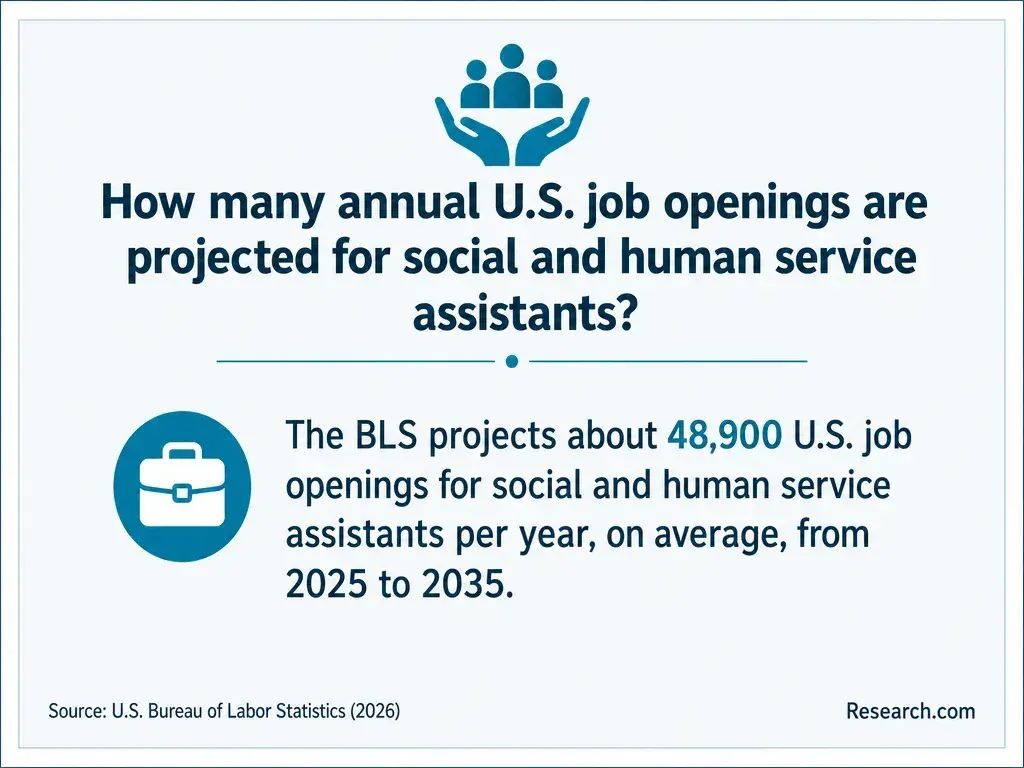
Online delivery can make graduate coursework feasible alongside claims or investigative employment. It does not guarantee an asynchronous schedule: live seminars, team projects, faculty meetings, residencies, and capstone deadlines may still constrain working hours.
Campus programs may offer easier access to in-person research teams, while online programs may allow a student to build an approved project around a current workplace.
Compare the formats on the experience you can actually complete: methods instruction, faculty feedback, access to suitable datasets, project supervision, and employer connections. Ask whether remote students may pursue the same thesis or research options as campus students and whether a workplace project needs prior approval.
Guides to accelerated forensic psychology graduate completion routes can identify scheduling questions, but faster completion is a poor trade if it removes the project or technical preparation you need to compete for research work.
Requirements differ by program. Check the current admissions page for acceptable bachelor's degrees, minimum academic standards, psychology or statistics prerequisites, transcripts, recommendations, writing materials, and any test or interview rules.
An undergraduate major outside psychology does not automatically disqualify you; quantitative, investigative, insurance, and research experience may be relevant, subject to the program's criteria.
Before applying, ask admissions to identify which missing courses are required before entry, which may be completed after admission, and which are merely recommended. Submit evidence of methods work and a clearly scoped research interest.
If you mainly need stronger quantitative preparation, compare the MS with individual courses or fast-paced master's study in psychology; speed alone does not resolve a prerequisite or create an insurance placement.
Completion time depends on required credits, course availability, enrollment pace, prerequisites, and whether a thesis or capstone has fixed milestones. Request a term-by-term plan for your intended start date rather than relying on an advertised minimum. Confirm whether a leave of absence, a missed course, or delayed project approval changes the plan.
For cost, obtain the current per-credit tuition and required fees, then account for the full credit load, technology or software charges, books, any travel, and extra terms if needed. Compare that total with a lower-cost route into the same target job, such as employer-sponsored analytics training.
Mental health counseling graduate study costs versus earnings address a separate, treatment-oriented career; do not use counseling earnings to calculate the return on a fraud-research degree.
Relevant jobs include claims or fraud analyst, research assistant, evaluation specialist, and, when the applicant meets investigative requirements, SIU investigator. A graduate may also pursue broader research or operations roles. None is an automatic outcome of the MS, and an SIU position is not the same as practicing forensic psychology.
There is no dependable salary figure for "online forensic psychology MS graduates working in insurance fraud research." For a pay comparison, identify the actual occupation in a target posting, its location, and experience level; then consult the latest appropriate US Bureau of Labor Statistics occupation data and local postings.
An occupation-wide median is not a new graduate's expected offer. Likewise, comparisons for lower-cost accredited counseling degree pathways concern a different labor market, not a shortcut to estimating SIU or analyst salaries.
Before enrolling, ask the program for outcomes specific to its graduates, including job titles, response rates, and how recently they were measured. If it cannot show relevant placements, weigh its curriculum and project opportunities against the cost without assuming a salary premium.
Does Insurance Fraud Research Require Licensure or Professional Certification?
Nonclinical fraud research generally does not require a psychology license. Specific investigative jobs may have state, employer, or contracting requirements; check the rules for the position and jurisdiction. Industry certifications can signal specialized knowledge when an employer values them, but they do not replace required experience, confer investigative powers, or authorize clinical services.
A forensic psychology MS alone does not permit diagnosis, psychotherapy, independent psychological assessment, or use of a protected psychologist title. If your intended work is providing treatment to claimants rather than analyzing fraud processes, investigate a qualifying professional pathway instead.
Online clinical counseling graduate completion options must be assessed against the licensing rules of the state where you intend to practice; they are not substitutes for insurance investigation training.
The decision is therefore role-specific: choose the MS when its methods training and feasible applied work fill gaps in your target postings. Choose targeted data or insurance training when those are the missing requirements, and verify any regulated duties before accepting them.
Other Things You Should Know About Psychology Programs
Yes, if its terms permit your use. Document the source, methods, and limitations, and avoid implying that a public dataset represents an insurer's live claims or confirms individual wrongdoing.
No. Obtain academic approval and employer permission before planning around workplace data. The program may require a different supervisor, deliverable, or review process.
No. A score reflects a model and its inputs, not proof of intent. Research teams must examine errors, bias, data quality, and how humans use the result.
Yes. Ask recruiters or team members which skills their analyst or research openings require, then compare those answers with the program's courses and project opportunities.
- The Science of Lie Detection by Verbal Cues - PMC - NIH https://pmc.ncbi.nlm.nih.gov/articles/PMC9037296/
- Fact Sheet #71: Internship Programs Under The Fair Labor Standards Act | U.S. Department of Labor https://www.dol.gov/agencies/whd/fact-sheets/71-flsa-internships
- Evaluating Truthfulness and Detecting Deception - LEB https://leb.fbi.gov/articles/featured-articles/evaluating-truthfulness-and-detecting-deception
- A Career in Forensic and Public Service Psychology | apa.org https://www.apa.org/education-career/guide/subfields/forensic/education-training
- Online Forensic Psychology Master's Degree | ASU Online https://asuonline.asu.edu/online-degree-programs/graduate/master-science-forensic-psychology/
- MA in Forensic Psychology | John Jay College of Criminal Justice https://www.jjay.cuny.edu/academics/graduate-programs/ma-forensic-psychology
- Clinical Forensic Psychology MA | Fairleigh Dickinson University https://www.fdu.edu/program/ma-forensic-psychology/
- Online MS in Forensic Psychology | Walden University https://www.waldenu.edu/online-masters-programs/ms-in-forensic-psychology
- Clinical and Forensic Evaluations: What's the Difference? | Palo Alto University https://paloaltou.edu/resources/translating-research-into-practice-blog/whats-the-difference-between-clinical-evaluations-and-forensic-evaluations/
- Investigation of Essential Skills for Data Analysts | sciencedirect.com https://www.sciencedirect.com/org/science/article/pii/S1062737523000240