2027 Online Urban Planning Degree Programs Costs: Tuition & Fees

Co-Founder and Chief Data Scientist
Choosing an online urban planning degree is partly an academic decision and partly a financial one. The program you select can affect your tuition bill, eligibility for aid, access to accredited planning credentials, and how quickly the degree may translate into better career options.
Online programs can reduce relocation, commuting, and campus-related costs, but they are not automatically inexpensive. Credit requirements, public or private school status, residency rules, technology fees, accreditation, and software needs can create large differences in total price. A program that looks affordable per credit may cost more if it requires additional credits, while a higher per-credit rate may be easier to budget if fees are included.
This guide explains the typical cost of an online urban planning degree, what tuition usually covers, which factors drive prices up or down, how online programs compare with campus programs, and what financial aid options may help reduce out-of-pocket costs.
Key Points About Online Urban Planning Degree Costs
- Average tuition for online Urban Planning degrees ranges from $15,000 to $45,000, varying by institution type and program length.
- Costs depend on residency status, credit load, technology fees, and available financial aid options.
- The investment often yields benefits like flexible learning, career advancement, and specialization in a growing field focused on sustainable development.
What Is the Average Cost of an Online Urban Planning Degree?
The cost of an online Urban Planning degree in 2025 varies widely. Total tuition expenses generally fall between $30,000 and $120,000, depending on the school, degree level, credit load, and fee structure. For a full master's program at accredited schools, the average total cost is about $66,340.
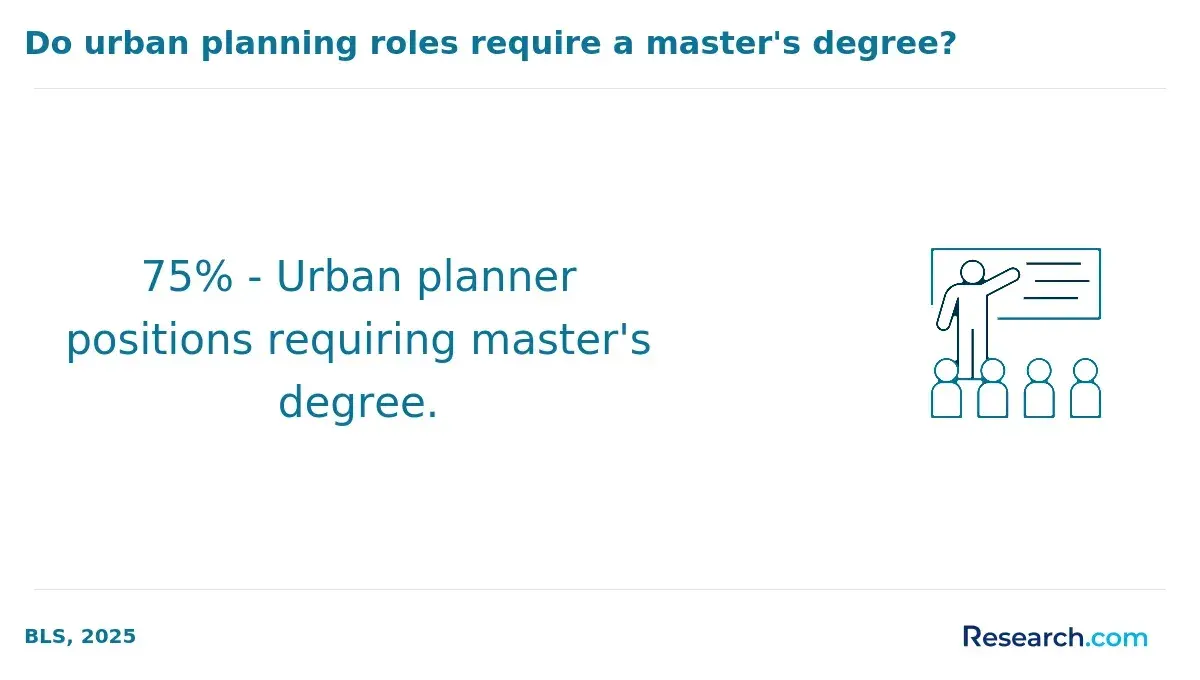
The master's degree is the most common credential for students preparing for professional urban planning roles, so most cost comparisons focus on graduate programs. Bachelor's degrees and certificate programs may cost less, but they are less common among professionals seeking advanced planning positions or specialized graduate-level training.
Program pricing is often driven by the number of required credits. For example, the University of Florida's online Master of Urban and Regional Planning (MURP) charges approximately $865 per credit hour for 52 credits, totaling around $44,980, inclusive of tuition and fees. Unity College is closer to $650 per credit hour, making it a lower-cost option among programs in this field.
Compared with related graduate fields such as public administration or environmental studies, online Urban Planning programs are generally priced in a similar range. The better question for most students is not whether urban planning is cheaper than every adjacent field, but whether the specific program's cost is justified by its accreditation, curriculum, flexibility, faculty expertise, and career relevance.
How to interpret the average cost
- Do not compare only per-credit tuition. A lower per-credit rate can still lead to a higher total cost if the program requires more credits.
- Confirm whether fees are included. Some programs bundle technology and online learning costs into tuition, while others charge them separately.
- Check accreditation and career fit. A cheaper program may be a poor value if it does not match your professional goals or lacks the recognition you need.
- Estimate total attendance cost. Include books, software, computer upgrades, and any required in-person activities when comparing schools.
What Is Typically Included in the Tuition for an Online Urban Planning Degree?
Tuition for an online urban planning degree usually covers instruction and access to the core digital learning environment. Many programs advertise a single per-credit price, which can make budgeting easier, but students should still verify what is included before enrolling.
For example, some universities use a flat per-credit structure, such as $865 at the University of Florida for a 52-credit master's program, without additional regional fees or surcharges. In that type of model, students can estimate tuition by multiplying the credit cost by the number of required credits.
Tuition commonly includes:
- Online course access: Students use learning management systems to view lectures, submit assignments, join discussions, and complete asynchronous coursework.
- Faculty instruction: Courses are taught by instructors with expertise in planning, policy, sustainability, transportation, land use, or related areas.
- Digital library access: Students usually receive access to academic databases, journals, e-books, and research tools needed for planning coursework.
- Technology support: Programs generally provide help with online platforms, login issues, and digital course tools.
- Academic services: Many schools include advising, registration support, and access to career or student success resources.
Tuition does not always include every cost. Students may still pay separately for textbooks, specialized software licenses for GIS or urban design, materials, and equipment. These additional expenses may add $1,000 to $2,000 each year.
Online students also need to look for excluded campus-based charges. Health insurance, parking permits, student activity fees, or campus service fees may not apply to fully online learners, but policies vary by institution. A typical 52-credit program may amount to around $45,000 in tuition alone, so even smaller annual costs can affect the final budget.
Questions to ask before accepting the listed tuition price
- Are technology fees, online learning fees, and student service fees included in the per-credit rate?
- Will I need paid GIS, mapping, design, statistics, or data analysis software?
- Are there required campus visits, studios, intensives, internships, or field experiences with separate costs?
- Does tuition change after a certain number of credits or academic years?
- Are books and materials estimated by term or by year?
What Factors Influence the Cost of Pursuing an Online Urban Planning Degree?
The total cost of an online Urban Planning degree depends on more than tuition. The school type, residency policy, credit requirements, fees, and level of student support can all change the amount you pay before graduation.
- Type of school: Public universities, private institutions, and for-profit colleges often use different pricing models. Liberty University charges $580 per credit for graduate students, while Georgetown University's fees range from $1,620 to $1,685 per credit. Some public universities, such as the University of Florida, use a flat tuition rate regardless of residency at $865 per credit hour.
- Residency status: Many campus-based public programs charge out-of-state students more, but some online programs remove this difference by offering one tuition rate to all distance learners. This can significantly affect urban planning degree tuition by state.
- Credit-hour requirements and program length: Online Urban Planning master's degrees usually require between 36 and 52 credit hours. Total costs can range from under $25,000 to over $70,000. A program with more required credits may cost more even if its per-credit rate is lower.
- Additional fees: Technology, platform, graduation, student service, and course-specific fees may increase the final cost. Some programs, including UF's, include certain fees in the per-credit rate, while others list them separately.
- Faculty credentials and student support: Programs with experienced faculty, strong advising, career services, studio support, and technical resources may charge higher tuition. Higher cost is not automatically better, but support quality can affect completion and career outcomes.
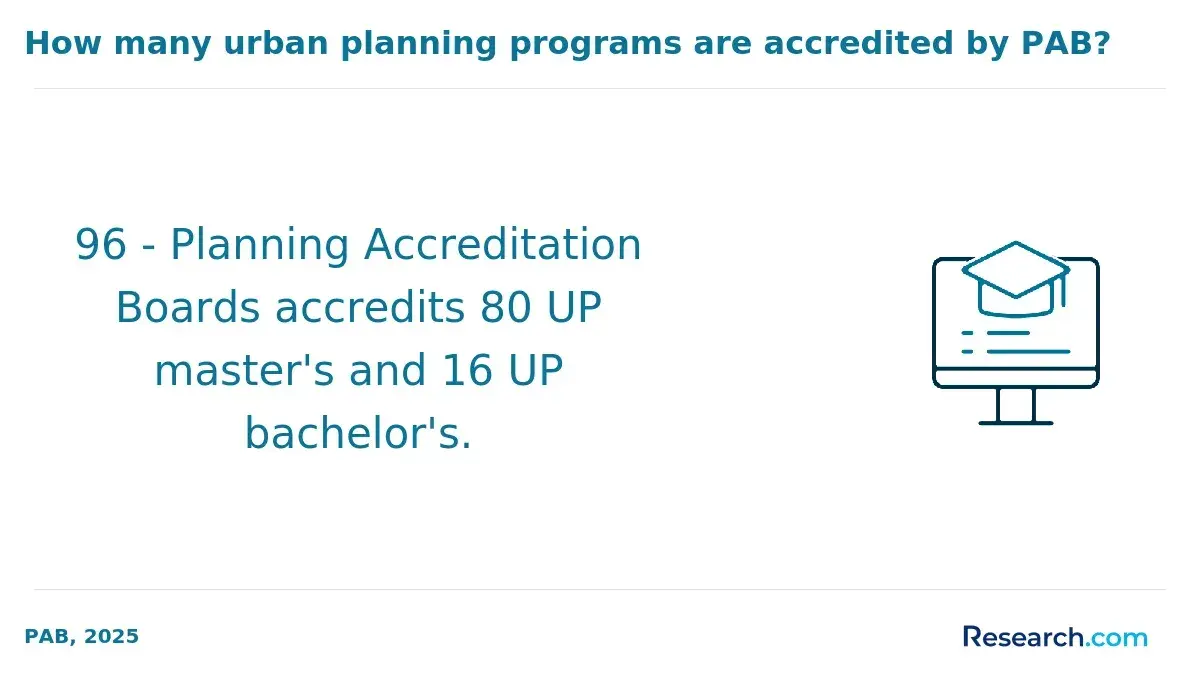
- Accreditation and professional alignment: Accreditation can influence program value, especially for students pursuing planning careers where recognized graduate training matters. A lower-cost program should still be evaluated for academic quality and professional relevance.
- Technology and materials: Urban planning coursework may require reliable hardware, mapping tools, design applications, data software, and high-speed internet. These costs are easy to overlook when comparing tuition pages.
Students comparing average tuition for online Urban Planning degree programs may also want to review flexible graduate formats, including 1 year masters programs, while keeping in mind that shorter timelines do not always mean lower total tuition.
Are Online Urban Planning Programs Cheaper Than Traditional Programs?
Online urban planning programs are often cheaper than traditional on-campus options, but the savings depend on the school and the student's living situation. The biggest advantage of online study is usually not tuition alone; it is the ability to avoid relocation, commuting, housing, and some campus-based expenses.
Online tuition rates can be as low as $730 per credit hour, such as the University of Washington's online Master of Infrastructure Planning & Management, totaling $32,850 for 45 credits. The University of Florida's online MURP charges around $865 per credit hour for 52 credits, totaling $44,980.
By comparison, on-campus programs at top universities may exceed $60,000 per year, with two-year totals often surpassing $120,000. For students who would need to move to attend a campus program, the total cost gap can become even larger once rent, transportation, meals, and local living expenses are included.
Where online programs can save money
- Housing: Students can often remain where they live instead of paying for housing near campus.
- Transportation: Online learners typically avoid commuting, parking, and relocation costs.
- Employment continuity: Many students continue working while enrolled, which can reduce opportunity cost.
- Flat-rate pricing: Some online programs charge the same tuition regardless of residency.
Where online programs may still add costs
- Technology: Students may need a computer upgrade, reliable internet, or specialized software.
- Course materials: Textbooks, GIS tools, and design resources may be billed separately.
- Accreditation trade-offs: Some private online options may lack PAB accreditation, so a low price should be reviewed carefully.
Accreditation matters in both formats. Online and traditional programs can offer Planning Accreditation Board (PAB) accreditation, which is important for professional certification pathways. When making a cost comparison online vs traditional Urban Planning degree, students should compare total tuition, fees, accreditation, curriculum, faculty access, internship expectations, and employer recognition.
Many affordable online Urban Planning programs in the US provide competitive rates, including options for military students. Students exploring accessible graduate pathways may also find it useful to review resources such as easiest masters degrees, while remembering that ease, affordability, and career value are separate considerations.
Are There In-state and Out-of-state Tuition for Online Urban Planning Programs?
Some online Urban Planning programs charge different tuition rates for in-state and out-of-state students, while others use one flat online rate for all students. Residency can therefore be a major cost factor at some schools and irrelevant at others.
The University of Florida is an example of a flat-rate model. It charges a uniform tuition of $865 per credit hour for its online Master of Urban and Regional Planning, regardless of residency. For students outside Florida, this type of pricing can make a public university more predictable and sometimes more affordable than a program with higher nonresident charges.
Other public institutions may still use residency-based pricing. Arizona State University, for example, may offer capped tuition rates for in-state students while charging higher per-credit fees for non-residents. In these cases, the same program can have very different total costs depending on where the student legally resides.
There are also exceptions and discounts. Regional tuition agreements may provide reduced rates for students from nearby states. Military members and certain affiliated groups may qualify for special tuition reductions, as seen in Liberty University's online offerings.
How to verify residency pricing
- Check whether the online program has a separate tuition schedule from the campus program.
- Confirm whether the listed rate applies to all online students or only residents.
- Ask whether tuition is locked in or subject to annual increases.
- Review eligibility rules for military, employer, regional, or institutional discounts.
- Request a full cost estimate from the program or financial aid office before committing.
Which Schools Offer the Most Affordable Urban Planning Degree Programs?
The most affordable online Urban Planning degree programs are usually those with lower per-credit tuition, reasonable credit requirements, limited add-on fees, and flexible online delivery. Price should not be the only filter, however. Students should also review accreditation, curriculum fit, faculty expertise, scheduling, and whether the degree supports their intended planning career.
Notable cost-conscious options include:
- Unity College: Unity College offers an online graduate degree in Urban Ecology and Sustainable Planning at $650 per credit hour, or $1,950 per 3-credit course. There is no difference in tuition for residents or nonresidents. Flexible start dates and small class sizes can appeal to working students who need a manageable schedule.
- University of Florida's Online Master of Urban and Regional Planning (MURP): The University of Florida offers the nation's first accredited online MURP program. Tuition is $865 per credit hour for a 52-credit degree. The program is fully online and uses asynchronous learning, so students do not need campus visits or extra travel fees.
- California State University-Northridge and San Jose State University: California State University-Northridge and San Jose State University offer some of California's cheapest online urban planning master's programs in the US. San Jose State charges $3,588 per semester for residents, making it a competitive option in this field.
How to choose among lower-cost programs
- Calculate total program tuition: Multiply the per-credit rate by the number of required credits, then add required fees.
- Review the delivery format: Asynchronous courses may be easier for working students, while synchronous sessions may offer more live interaction.
- Compare curriculum focus: Urban ecology, sustainable planning, transportation, land use, and regional planning programs may prepare students for different roles.
- Ask about career services: Affordable tuition is more valuable when the program also supports internships, portfolios, networking, and job preparation.
Students looking for affordable online master's programs should compare cost and quality together. The cheapest online urban planning master's programs in the US may be a strong choice for budget-conscious learners, but only if the program aligns with their professional goals.
Which Schools Offer the Most Expensive Urban Planning Degree Programs?
The most expensive urban planning programs are often associated with well-known universities, extensive faculty resources, strong professional networks, and rigorous curricula. A higher price can reflect institutional reputation and student support, but it does not automatically mean the program is the best fit for every online learner.
Students should distinguish between expensive online options and expensive on-campus planning programs. Some prestigious schools have high-cost planning degrees but do not typically offer fully online accredited master's options in urban planning.
- University of Florida: The Master of Urban and Regional Planning (MURP) program is fully online and accredited by the Planning Accreditation Board. At $865 per credit hour for 52 credits, the total tuition amounts to roughly $44,980, excluding additional fees and expenses. The program emphasizes customization and topics such as sustainable development and urban economics.
- Harvard University: Harvard is known for top-ranked urban planning faculty and specialized curriculum. Its on-campus graduate planning programs often exceed $40,000 per year. However, it typically does not provide fully online accredited master's options in urban planning.
- Massachusetts Institute of Technology (MIT) and University of California, Los Angeles (UCLA): MIT and UCLA both offer highly regarded urban planning degrees known for prestige and resource availability. Like Harvard, these programs generally have high tuition costs for on-campus students and rarely offer fully online Planning Accreditation Board-accredited degrees.
When a higher-cost program may be worth considering
- The program has the accreditation, specialization, or faculty expertise you need.
- The curriculum closely matches your intended planning sector, such as transportation, housing, sustainability, or regional development.
- The school offers strong advising, portfolio support, networking, or employer connections.
- You receive scholarships, employer funding, military benefits, or other aid that lowers the net cost.
Students researching the most expensive online urban planning degrees should look beyond posted tuition. Fees, materials, software, travel, and living costs can change the final price. Those also asking which online college is the cheapest should evaluate affordability alongside accreditation, outcomes, and program fit.
How Long Does It Take to See a Return on an Online Urban Planning Degree?
The return on an online Urban Planning degree depends on how much you pay, how much aid you receive, whether you borrow, and what salary you earn after graduation. For many graduates, the expected return on investment occurs between three to seven years after entering the job market.
Entry-level urban planners commonly earn between $55,000 and $63,000 annually. With experience, salaries rise, often reaching a median of around $83,720. Since average annual tuition fees range from $20,000 to $30,000, graduates who secure full-time employment in planning or a related field may recover their educational investment within the three to seven year window.
That timeline is not guaranteed. Students with higher loan balances, unpaid internships, lower starting salaries, or employment gaps may need longer. Graduates who receive scholarships, employer reimbursement, military benefits, or higher-paying roles may see a faster payoff.
Factors that can shorten the ROI timeline
- Lower net tuition: Grants, scholarships, assistantships, and employer assistance reduce the amount you need to recover.
- Continued employment while enrolled: Online study can help students keep earning while completing the degree.
- High-demand location: Salaries can be stronger in regions with more planning activity, infrastructure investment, or public-sector demand.
- Relevant experience: Internships, municipal work, GIS skills, policy experience, and portfolio projects can improve job competitiveness.
- Career advancement: Certifications, graduate training, and specialized planning skills may support promotion into higher-paying roles.
Factors that can delay ROI
- High tuition without financial aid
- Large student loan balances and interest costs
- Choosing a program that does not match your target role
- Living in a lower-paying regional job market
- Taking longer to complete the degree while tuition or fees increase
Before enrolling, estimate your likely debt, monthly loan payments, expected starting salary, and realistic job market. A degree with a lower sticker price is not always the best value, but a degree that requires heavy borrowing should have a clear career rationale.
Are Online Urban Planning Students Eligible for Financial Aid?
Online Urban Planning students are generally eligible for financial aid if they attend an accredited program and meet the aid provider's requirements. Federal financial aid for online Urban Planning degrees is usually available to eligible students who complete the Free Application for Federal Student Aid (FAFSA), meet citizenship or eligible noncitizen requirements, enroll in a qualifying program, and maintain satisfactory academic progress.
Financial aid can come from several sources. Some aid reduces tuition directly, while other aid must be repaid. Students should pay close attention to the difference between grants, scholarships, assistantships, loans, military benefits, and employer tuition assistance.
- Federal financial aid: Federal aid may include student loans and need-based grants available through the FAFSA. Eligibility depends on citizenship or eligible noncitizen status, enrollment in an accredited program, and satisfactory academic progress. Aid may cover a portion of tuition and living expenses.
- Scholarships for online Urban Planning students: Universities may offer merit-based scholarships and fellowships that cover partial or full tuition. Some programs also offer graduate assistantships or research positions with stipends and tuition remission, though these opportunities are competitive and may require part-time work.
- Military benefits and tuition assistance: Veterans and military-affiliated students may use GI Bill benefits and tuition assistance programs to offset costs. Employer tuition assistance may also be available for working professionals, depending on company policy.
- External funding: Professional associations, local planning organizations, foundations, and public-sector programs may offer grants or awards related to planning, sustainability, public policy, or community development.
To maximize funding, students should complete the FAFSA early, ask each program about internal scholarships and assistantships, and contact the financial aid office before enrollment. Aid amounts vary widely, and some fully funded programs may cover up to 80% or more of tuition costs.
Students comparing career paths and earnings may also review resources on top paying trades, but urban planning should be evaluated on its own education requirements, labor market, and long-term professional goals.
Are Online Urban Planning Program Costs Expected to Increase in the Coming Years?
Online Urban Planning program costs are expected to experience moderate increases in the coming years, consistent with broader trends in higher education. Students should not assume that today's tuition rate will remain unchanged throughout a multi-year program unless the school clearly offers a tuition lock or fixed-rate policy.
Current tuition rates vary by institution type and whether the program is public or private. Public universities generally provide more affordable options, with per-credit fees often lower than those at private institutions. Many programs charge by credit hour, typically ranging between $300 and $800 per credit, and the total cost depends on the program length and required credits.
Several pressures can contribute to tuition increases. Inflation, faculty and staffing costs, student support services, and technology enhancements for online delivery may all influence pricing. Online programs may also invest in improved platforms, digital resources, advising systems, and remote student services.
At the same time, some universities may use competitive pricing, scholarships, tuition discounts, or financial aid for online learners to keep programs accessible. This means the published tuition rate may rise, but a student's net cost can still vary based on aid eligibility.
How students can prepare for future cost increases
- Ask whether tuition is fixed for enrolled students or reviewed annually.
- Request a full program cost estimate, not just the current per-credit rate.
- Build a budget that includes books, software, fees, and technology needs.
- Apply for scholarships every year, not only before the first term.
- Consider course load carefully, since taking longer to finish may expose you to additional tuition increases.
What Students Say About The Cost of Pursuing Online Urban Planning Programs
- : "Pursuing my online Urban Planning degree was a game-changer; the program's affordable tuition made it possible to advance my career without overwhelming debt. At roughly $20,000 total, the investment feels minimal compared to the salary increase and new opportunities I've gained. I'm truly excited about where this degree will take me next. — Vicente"
- : "Reflecting on my decision, the cost of an online Urban Planning program-usually around $18,000 to $22,000-was significant but worth every penny. It allowed me to deepen my understanding and sharpen my skills while balancing work and family. The return on investment is evident as I contribute more impactful solutions in my urban development role. — Zane"
- : "Completing an online Urban Planning degree at a moderate cost provided a strategic advantage in my professional growth. Although the cost, near $20,000, was a careful consideration, the practical knowledge and credentials I gained have already opened doors to higher-level positions. The degree's value is clear in my enhanced marketability and confidence. — Gael"
Other Things You Should Know About Urban Planning Degree Program Costs
In 2027, online Urban Planning degree programs may require specific software like GIS tools, which can add several hundred dollars to your total expenses. However, some institutions offer discounts or include software costs in tuition, so it's important to verify these details with each program.
The projected tuition fees for online Urban Planning degree programs in 2027 vary widely but typically range from $10,000 to $30,000 per year. This range depends on the institution, program length, and residency status. Additional fees may apply for certain courses and materials.
Transferring previous college credits can reduce the number of courses needed and lower overall costs. However, some schools charge fees for credit evaluation or limit the number of transferable credits. It's important to verify credit acceptance policies early to avoid unexpected expenses.
References
- All Master's in Urban Planning Programs - GISDegree.org https://www.gisdegree.org/programs/masters-in-urban-planning/
- Bachelor of Urban Planning – Online Degree Program https://www.aiu.edu/program/bachelor-of-urban-planning/
- Factors Influencing Distance Education Costs: Key Insights - Distance Learning Institute https://distancelearning.institute/economic-perspective/distance-education-costs-factors-insights/
- Master's in Urban & Regional Planning Tuition & Financial Aid https://scs.georgetown.edu/programs/356/master-of-professional-studies-in-urban-regional-planning/tuition-financial-aid
- Financial Assistance | Department of Urban and Regional Planning https://dcp.ufl.edu/urp/admissions/financial-assistance/
- Top 25 Most Affordable Urban Planning Schools https://urbanplanningdegree.com/top-25-most-affordable-urban-planning-schools/
- Bureau of Labor Statistics. (2025, August 27). Urban and regional planners: Occupational outlook handbook. https://www.bls.gov/ooh/life-physical-and-social-science/urban-and-regional-planners.htm
- Planning Accreditation Board. (2025). Accredited programs overview. https://www.planningaccreditationboard.org/accredited-programs/all/
- Zippia. (2026). Urban planner demographics and statistics in the United States. https://www.zippia.com/urban-planner-jobs/demographics/