
2027 Online vs On-Campus Physics Degree Programs: Pros & Cons

Co-Founder and Chief Data Scientist
The increasing popularity of online physics degree programs reflects a significant shift in higher education, with recent data showing a 20% rise in online enrollment nationwide in 2023. Prospective students face an important decision when choosing between online and on-campus study formats. This article examines the key advantages and disadvantages of each option, focusing on flexibility, cost, learning experience, and career outcomes. By providing a clear comparison based on expert analysis, readers can make informed choices aligned with their personal and professional goals in the field of physics.
Key Benefits of Online vs On-Campus Physics Degrees
- Online physics degree programs offer flexible scheduling that accommodates work and family commitments, with studies showing 85% of students appreciate the ability to learn at their own pace.
- These programs often provide access to a wide range of resources and simulations that may not be available on campus, enhancing interactive learning and practical understanding.
- On-campus physics degrees benefit from direct hands-on laboratory experience, which 92% of employers consider crucial for skill development in scientific careers.
Are Online vs. On-Campus Physics Programs Structured the Same Way?
Online and on-campus physics degree programs are structured quite differently to meet the varying needs of their students. These differences largely stem from the demands of laboratory work and the flexibility online learners require. Below is a comparison of key structural elements in online versus on-campus physics programs that highlights how scheduling, course delivery, and student engagement vary between the two formats.
- Course Delivery: Online physics programs rely on video lectures, virtual labs, interactive simulations, and discussion forums, enabling students to access materials anytime and from anywhere. On-campus programs use face-to-face lectures and hands-on labs, which provide direct interaction and immediate feedback, supporting deeper understanding of complex concepts.
- Class Schedules: Online degrees are mostly asynchronous, allowing students to study at their own pace and balance education with other responsibilities. Conversely, on-campus programs have fixed class times, which promote routine and time management but offer less flexibility.
- Interaction and Collaboration: Online students engage through digital platforms like chats and video calls, fostering global connections but sometimes lacking personal touch and requiring greater self-discipline. On-campus students benefit from in-person interactions with professors and peers, facilitating spontaneous collaboration and stronger academic community bonds.
- Laboratory Experience: Virtual labs or brief residencies characterize online programs, providing essential practical exposure within a remote format. On-campus students have regular access to physical labs, allowing more comprehensive hands-on experiments and skill development.
- Student Engagement: Online learners often start with high intrinsic motivation, which can drive persistence despite limited campus interactions. Meanwhile, on-campus students experience richer engagement through extracurricular activities and face-to-face involvement, enhancing their overall academic experience.
Are Admission Requirements the Same for Online vs On-Campus Physics Degree Programs?
Colleges and universities generally maintain consistent academic standards for both online and on-campus physics degree programs, ensuring that graduates meet the same educational outcomes and rigor. However, differences can arise in how institutions evaluate an applicant's preparedness, particularly when considering the unique challenges of online learning environments.
Below is a comparison of key admission requirements for online and on-campus physics programs, outlining where they typically align and where distinctions occur.
- Academic Qualifications: Both program types usually require a high school diploma or its equivalent for undergraduate admission, or a relevant bachelor's degree for graduate study. For physics, strong foundations in mathematics and science are essential regardless of whether a student applies online or on campus, reflecting consistent admission requirements for online physics degree formats.
- Application Materials: Standard materials such as transcripts, letters of recommendation, and personal statements are universally required. However, on-campus vs online physics program eligibility may differ in the weight assigned to standardized test scores; many online programs place less emphasis on tests like the SAT or GRE, emphasizing holistic review in digital admissions processes.
- Technical Readiness: This criterion is more prominent in online admission, where applicants must demonstrate technological literacy and reliable access to hardware and internet suitable for remote coursework. On-campus applicants typically do not face this requirement, as in-person attendance is assumed.
- Work Experience: While undergraduate programs rarely require work experience, some online graduate physics programs prefer or require relevant research or professional backgrounds. This reflects the adult learner demographic often found in online cohorts and diverges from more traditional on-campus criteria.
- Language Proficiency: Both program types require non-native English speakers to provide proof of language skills through tests like TOEFL or IELTS. Online programs might additionally request virtual interviews or writing samples to assess communication abilities in a remote setting more rigorously.
- Residency and Lab Requirements: On-campus physics programs generally require hands-on, in-person lab attendance. Online programs may offer virtual labs or short on-site intensive sessions, but potential students need to confirm if lab components can be completed remotely or necessitate travel.
For students exploring their options, understanding these nuances can clarify admission requirements for online physics degree coursework and support informed decisions between on-campus vs online physics program eligibility. Additionally, those interested in alternative educational pathways may find value in exploring best 6 month certificate programs that pay well for expedited career advancement.
Do Online Physics Students Receive the Same Academic Support as On-Campus Students?
Universities have significantly expanded their academic support systems to ensure online physics students have access to resources and assistance comparable to those studying on campus. These enhancements reflect the growing need for flexible learning options without compromising educational quality.
Below is a comparison of the key academic support services typically available to both online and on-campus physics students, highlighting how each format facilitates student success:
- Tutoring Services: Both online and on-campus students benefit from individualized tutoring. Online tutoring often uses interactive whiteboards and recorded sessions for flexible scheduling, while on-campus tutoring offers face-to-face interaction preferred by some for hands-on learning.
- Faculty Interaction: Online students connect with instructors via email, discussion boards, and video calls, offering convenience but sometimes lacking spontaneous dialogue. In contrast, on-campus students attend in-person office hours that allow immediate feedback, though both formats maintain similar satisfaction when engagement is timely.
- Library Access: Digitized library resources provide online students with 24/7 access to journals and e-books, complemented by virtual librarian support. On-campus students enjoy physical collections and study spaces alongside these digital tools.
- Career Counseling: Career services include virtual workshops, resume reviews, and remote job fairs for online learners, alongside traditional in-person events available to campus students, ensuring both groups receive comprehensive professional guidance.
- Laboratory and Technical Support: Virtual simulations, remote labs, and mailed experiment kits help online students develop practical skills, while on-campus learners benefit from direct equipment access and peer collaboration, narrowing the gap between formats.
How Long Does It Take to Complete an Online vs an On-Campus Physics Degree?
The time it takes to complete a physics degree can vary widely depending on the program's delivery format, the student's pace, and the flexibility of scheduling options. While both online and on-campus programs generally aim for a four-year completion timeline for full-time students, individual circumstances and program structures often affect how long graduation actually takes.
Here is a comparison of the average completion time for online and on-campus physics degree programs, highlighting key differences and influencing factors:
- Online physics degree: Online programs typically target a four-year completion for full-time students but offer asynchronous courses and self-paced options, enabling students to tailor their progress to fit personal and professional commitments. Data shows graduates average about 49 months to finish, slightly over four years, though faster completion is possible by taking heavier course loads or transferring credits. Flexibility is a major advantage, especially for working adults, although some lab requirements might require occasional in-person attendance or at-home kits, which can impact scheduling.
- On-campus physics degree: These traditional programs are also designed as four-year paths for full-time students, but median completion time tends to be closer to 52 months. Campus students benefit from structured academic support, consistent face-to-face interaction, and ready access to labs, all of which can promote steady progress. However, fixed semester schedules and less flexibility often mean fewer opportunities to accelerate graduation compared to online counterparts.
One professional who completed an online physics degree shared insights from his journey, noting that the program took nearly four and a half years due to balancing coursework with a full-time job and family obligations. He emphasized how the ability to study asynchronously was critical in managing deadlines and maintaining steady progress without feeling overwhelmed. "It wasn't always easy," he reflected, "especially when lab assignments required scheduling around occasional on-site sessions, but having control over pacing made the difference." His experience illustrates how, despite slight variability in completion times, the adaptable structure of online programs can accommodate diverse life circumstances while still enabling successful degree completion within a reasonable timeframe.
Are Online Physics Programs Cheaper Than On-Campus Ones?
When comparing the average cost of online physics degree programs to traditional on-campus options, tuition, fees, and additional expenses often differ significantly. While some schools charge the same tuition for both formats, online students generally benefit from lower overall costs due to savings in various areas.
Below is a breakdown of the main cost factors influencing the total price of each learning format:
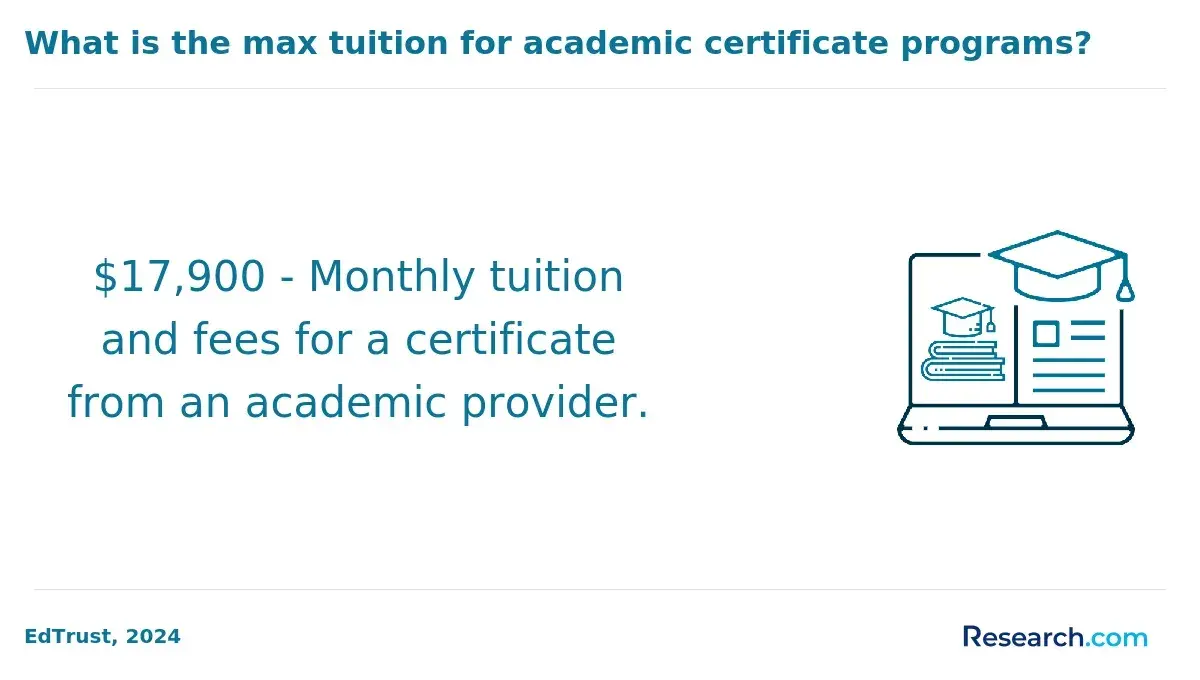
- Tuition and Fees: Many online physics programs offer lower tuition rates than their on-campus counterparts, with averages around $7,477 annually for online bachelor's degrees. In contrast, public on-campus programs tend to cost about $9,750 per year for in-state students, and private institutions can exceed $35,000. However, about 74% of colleges maintain the same tuition for both formats, making a tuition comparison online vs on-campus physics programs essential before enrolling.
- Living Expenses: Online students usually save considerably on housing, commuting, and meal plans since they can study from home. These living expense reductions can add up to thousands of dollars annually, making online study a more affordable option for many.
- Technology Costs: Although online students may incur extra expenses for technology fees, e-books, and specialized lab materials, these costs are generally lower than fees associated with maintaining campus facilities and resources.
- Financial Aid Availability: Accredited online physics students have access to federal aid, scholarships, and grants just like on-campus students. Some institutions even offer unique scholarships specifically for remote learners, although award amounts and eligibility vary.
- Employer Perception and Career Outcomes: Many employers increasingly recognize accredited online physics degrees, especially when graduates demonstrate strong earnings potential, with some programs reporting median salaries above $59,000. Nevertheless, hands-on experience from on-campus programs may still be preferred in some research-intensive areas.
For students seeking affordable and flexible education options, exploring easy masters degrees that pay well can be a useful step toward advancing careers in physics and related fields.
What Are the Financial Aid Options for Online vs On-Campus Physics Programs?
Both online and on-campus students pursuing physics degrees may qualify for various financial aid options, but eligibility and access often differ depending on whether the program is delivered online or in person and the policies of each institution. Understanding these differences can help prospective students identify the best funding opportunities for their educational path.
Here are the main financial aid options available to physics students, highlighting how each applies to online versus on-campus formats.
- Federal financial aid for online physics degree programs: Students in accredited programs, whether online or on-campus, can apply for federal aid such as Pell Grants, subsidized and unsubsidized loans, and work-study programs. However, eligibility for federal loans requires enrollment at least half-time, which can limit aid access for online students who more often study part-time. Pell Grants also adjust based on enrollment status, with online learners typically receiving less federal aid overall due to these enrollment patterns.
- State aid: State grants and scholarships tend to support residents attending public colleges regardless of modality, but some states restrict aid to on-campus or in-state online students. Online students studying out-of-state may find themselves ineligible for state-based financial assistance, unlike their on-campus counterparts.
- Scholarships for on-campus and online physics students: Institutional scholarships predominantly benefit traditional on-campus students, as many awards require full-time attendance or campus participation. While online students often have greater financial need, they may face challenges qualifying for these scholarships, limiting their access to this funding source.
- Employer tuition reimbursement: This option is generally accessible to both online and on-campus physics students when the program is accredited and relevant to the job. Online degrees often provide greater scheduling flexibility, making it easier for working professionals to utilize employer tuition benefits without compromising work commitments.
- Private student loans: Private loans are available to all physics students regardless of program format, though approval depends on the institution's accreditation and the student's creditworthiness. Lenders usually do not differentiate between online and traditional programs if the degree is recognized.
- Military and Veterans' Benefits (e.g., GI Bill): Both online and on-campus students qualify for GI Bill benefits, but online learners receive only half the national housing allowance compared to the full local rate given to on-campus students. This difference can represent a significant monthly financial gap for veteran students.
Online physics programs often cost less, averaging $12,216 annually compared to $18,981 for on-campus, but they generally offer fewer financial aid resources. Prospective students should carefully review each institution's policies and explore options to maximize aid, especially when considering the shortest online masters degree pathways that may offer additional flexibility or savings.
Are Online Physics Programs as Credible as On-Campus Ones?
Accreditation, faculty qualifications, and curriculum standards are fundamental to the credibility of both online and on-campus physics programs. Accredited online physics degrees recognized by bodies such as CHEA or the U.S. Department of Education ensure these programs meet rigorous academic requirements, allowing students to access federal financial aid and transfer credits reliably. Faculty teaching online generally possess the same academic credentials as their on-campus peers, maintaining consistency in instructional quality.
Curriculum standards are carefully aligned, covering core topics like classical mechanics, quantum physics, and thermodynamics through diverse methods including video lectures, virtual labs, and interactive assessments. This alignment means that, academically, properly accredited online programs offer a legitimacy and rigor comparable to traditional on-campus options.
Perceptions among employers, academic institutions, and licensing agencies have evolved substantially, with current trends indicating widespread acceptance of online physics degrees from accredited providers. Surveys and market research show employer acceptance is at an all-time high, particularly when degrees come from reputable institutions.
Online learning also presents cost advantages and heightened flexibility in scheduling, appealing to working professionals and others with commitments outside academia. Advances in virtual learning technologies, such as interactive simulations and remote lab kits, alongside expanding collaborations between universities and industry, are enhancing the practical value and credibility of online physics education. These developments increasingly position online programs as viable and respected pathways for students seeking rigorous training and competitive career opportunities in physics.
Do Employers Prefer Online vs On-Campus Physics Degrees?
Employers today generally regard online and on-campus physics degrees as equivalent, as long as the program is properly accredited and the institution is well-regarded. Studies, such as the National Association of Colleges and Employers (NACE) Job Outlook 2024 survey, reveal that 87.4% of employers have hired graduates holding online degrees, with no reported differences in starting salaries compared to traditional, in-person graduates. Hiring managers increasingly appreciate the skills that online learners develop, including self-discipline, time management, and the ability to work independently-qualities that are especially valued in today's evolving workplaces. Despite some lingering preference for face-to-face credentials, especially for advanced degrees, this bias is diminishing as online education gains acceptance and credibility. The reputation of the university and the accreditation status of the physics program remain key factors influencing employer decisions, often outweighing the mode of delivery.
Shifts toward remote and hybrid work models have further normalized online education in the eyes of employers, who now view online degrees as a sign that candidates can succeed in less structured environments. While on-campus programs may still offer distinct advantages such as in-person networking and hands-on laboratory experiences, online options provide significant benefits including greater flexibility and often substantial cost savings, sometimes reducing tuition expenses by half or more. Ultimately, employers prioritize the quality, relevance, and accreditation of a candidate's degree and the demonstration of applicable skills over whether the physics degree was earned online or on campus. This reflects a broader recognition that the evolving demands of the workplace favor adaptable, capable professionals regardless of how their education was delivered.
A professional who completed her physics degree online shared insightful perspectives on her job search experience. She noted that employers frequently asked about the rigor of her program and how she managed remote learning, which gave her an opportunity to highlight her self-motivation and problem-solving skills. Her ability to balance coursework with part-time work and collaborative projects online allowed her to confidently discuss time management and initiative during interviews. She recalled one hiring manager telling her, "Your online experience shows you can handle challenges independently and thrive in a dynamic work setting." This positive recognition helped her secure a position in a competitive physics-related field, reinforcing her belief that the substance of learning and personal growth gained through an accredited online program can be as compelling as traditional education paths.
Do Online vs On-Campus Physics Program Graduates Earn the Same Salaries?
Salary comparisons between online and on-campus physics graduates are increasingly shaped by various factors beyond just the learning format. Employer perceptions, program reputation, and individual career paths play a significant role in determining earning outcomes. The following outlines current salary trends and key factors influencing whether online and on-campus physics graduates earn comparable salaries.
Here are the main elements impacting salary outcomes for physics graduates regardless of their program format:
- Accreditation and Program Quality: Graduates from accredited online physics programs, such as those offered by top institutions, report median salaries close to traditional campus graduates. Employers emphasize accreditation and curriculum rigor over delivery mode, making quality online degrees competitive in the job market.
- Employer Perception: Although some employers once favored on-campus degrees, recent data shows reduced bias against online credentials in STEM fields. Hiring decisions now rely more on skills, research experience, and practical training rather than where the degree was obtained.
- Research and Laboratory Experience: On-campus programs typically provide more direct lab access, which can enhance resumes for research roles. However, leading online programs mitigate this through shipped lab kits and remote mentorship, helping to close the gap in hands-on experience.
- Networking and Academic Support: Traditional programs benefit from in-person networking and resources, potentially improving internship opportunities. Nevertheless, many online universities invest heavily in virtual platforms to connect students and support career placement.
- Cost and Flexibility: Online physics degrees usually offer lower tuition and flexible schedules, allowing students to work during studies. This financial advantage can reduce debt, indirectly influencing early career earnings by allowing quicker workforce entry.
- Career Path and Advanced Degrees: Salaries depend strongly on pursuing graduate education and specialization rather than program format. Physics majors advancing to MS or PhD levels generally see higher mid-career earnings, regardless of whether they studied online or on campus.
For those exploring educational options, resources like top accredited online universities offer insights about reputable online physics programs and their earning prospects. Overall, the average salary for online physics degree graduates is converging with that of traditional campus programs as program quality and career factors take precedence. Addressing concerns such as do employers pay less for online physics degrees requires focusing on accreditation, skills, and experience over format alone.
How Do You Decide Whether an Online vs On-Campus Physics Program Is Right for You?
Choosing between online and on-campus physics programs depends largely on your personal learning preferences, lifestyle demands, and long-term professional goals. Understanding these aspects will guide you in selecting the environment where you can thrive academically and personally. Below are key factors to consider that will help you compare on-campus vs online physics degrees and decide which format suits you best:
- Learning Style: If you prefer direct interaction with instructors and structured class times, an on-campus program may be more engaging. Conversely, online programs often require more self-motivation and discipline since much of the learning is independent and self-paced.
- Flexibility: Online physics degree programs offer significant flexibility by allowing you to study from anywhere and at your pace, ideal for students balancing work or family. On-campus programs usually have fixed schedules that may restrict work hours or travel during the semester.
- Budget: Typically, online programs are more cost-effective because they reduce expenses related to housing and commuting. You might want to explore the best affordable online colleges for working adults to find programs that fit your financial situation.
- Networking Opportunities: On-campus programs provide richer in-person networking through clubs and social events, beneficial for building professional relationships. Online students can access global virtual forums, but some may find these less satisfying for meaningful connections.
- Access to Campus Resources: Attending on campus grants you physical access to labs, libraries, and faculty, crucial for hands-on experience and research. Online students may rely on virtual labs and digital support, though some programs require occasional in-person residencies for practical work.
Weighing these aspects carefully will help you identify whether the best online physics degree programs in the US or traditional on-campus routes align better with your academic strengths and career aspirations.
Here's What Graduates of Online vs On-Campus Physics Programs Have to Say About Their Degree
- Aisen: "Completing my physics degree entirely online allowed me the flexibility to balance work, family, and study without compromising quality. The program's strong emphasis on virtual labs and interactive simulations really helped me grasp complex concepts even from a distance. This format opened doors for me to start my career in research data analysis while still studying, which wouldn't have been possible otherwise. I'm proud to say that my online degree gave me the foundation and confidence needed to excel professionally and personally."
- Jayvee: "Attending an on-campus physics program was transformational because it fostered a deep sense of community and hands-on engagement. Being physically present allowed me to collaborate closely with professors and peers, sparking my passion for experimental physics. This immersive experience prepared me well for a career in academia, where real-time problem solving and mentorship are crucial. I often reflect on the friendships and professional networks I built during those years that continue to enrich my work in education and outreach."
- Marcus: "The hybrid physics degree offered the perfect balance between flexibility and direct interaction. The ability to attend some classes online saved commuting time and let me work part-time, while in-person labs provided invaluable practical experience. This dual approach expanded my skill set, making me highly adaptable and ready for diverse career paths, from engineering roles to teaching. The hybrid program truly enhanced my professional development and gave me a broad network to support future goals."
Other Things You Should Know About Online & On-Campus Physics Degree Programs
On-campus physics programs in 2027 generally offer better networking opportunities. In-person classes, student organizations, and campus events facilitate direct interactions with professors, fellow students, and industry professionals, fostering valuable connections. Online programs may provide virtual networking, but physical presence often leads to stronger and more immediate relationships.
In-person labs are vital in 2027 for physics students to gain hands-on experience with experimental techniques. Online programs often provide virtual labs, but these can't fully replicate the tactile and collaborative learning environment found on-campus, which aids in developing critical scientific skills.
References
- Online Physics Course: 6 Helpful Considerations - Prereqcourses https://www.prereqcourses.com/online-physics-course/
- Is an Online Degree in Physics Right for Me? https://www.physicsforums.com/threads/is-an-online-degree-in-physics-right-for-me.976843/
- Why choose an online degree? - FutureLearn https://www.futurelearn.com/info/blog/why-choose-an-online-degree
- Physics MS https://online.usm.edu/graduate/physics-ms/
- Comparison of student performance between virtual and in-person modalities of introductory calculus-based physics I https://arxiv.org/html/2201.01809v3
- Online Bachelor of Science in Physics | Liberty University https://www.libertyuniversityonline.com/bachelor-of-science-in-physics/
- 🎒 Online Physics Undergraduate Tutors Spires™ | Is A Degree In Physics Worth It? https://spires.co/online-physics-tutors/undergraduate/is-a-degree-in-physics-worth-it
- Online Degree vs Traditional - College Search & Lists - College Confidential Forums https://talk.collegeconfidential.com/t/online-degree-vs-traditional/2003760
- Online Education vs. On-Campus Tuition: How ACE Online Degree Programs Help Keep Your Costs Down | ACE Blog https://ace.edu/blog/online-education-vs-on-campus-tuition-how-ace-online-degree-programs-help-keep-your-costs-down/
- Online and on-campus colleges | University of Phoenix https://www.phoenix.edu/blog/cost-of-online-vs-traditional-college.html


