2027 Regional vs Programmatic Accreditation for Environmental Science Master's Degrees

Co-Founder and Chief Data Scientist
Prospective students often face confusion when choosing between regionally and programmatically accredited master's degrees in environmental science. One major concern is whether their degree will be recognized by employers or qualify them for advanced certifications. Studies show that 68% of environmental science professionals prefer graduates from regionally accredited programs, citing broader acceptance and transferability of credits.
This scenario highlights potential obstacles in career advancement and further education for students unfamiliar with accreditation differences. This article explores the practical impacts of each accreditation type and guides readers to make informed decisions aligning with their academic and professional goals.
Key Things to Know About Regional vs Programmatic Accreditation for Environmental Science Master's Degrees
- Regional accreditation ensures broad academic recognition, critical for career advancement in environmental science, while programmatic accreditation targets specialized curriculum quality, enhancing technical skills.
- Employers often prefer degrees from regionally accredited institutions, but programmatic accreditation provides assurance of industry-relevant expertise for environmental science roles.
- Graduates from regionally accredited master's programs typically report higher earning potential, yet programmatic accreditation can offer niche opportunities in specialized environmental science sectors.
What is regional accreditation for an environmental science master's degree?
Accreditation acts as a primary indicator of academic quality and institutional integrity for any master's degree, including those in environmental science. Regional accreditation, granted by one of six bodies recognized by the U.S. Department of Education, evaluates entire institutions rather than individual programs.
Approximately 6,600 colleges and universities in the United States hold regional accreditation, making it the most widely accepted form of accreditation nationally. This status ensures that degrees meet rigorous standards and supports easier credit transfers and employer recognition. Below are key benefits and requirements of regional accreditation standards for environmental science master's degree programs.
- Comprehensive Curriculum: The program must offer a balanced and up-to-date curriculum aligned with current scientific and environmental standards, ensuring graduates are well-prepared for professional challenges.
- Qualified Faculty: Faculty members need appropriate credentials and must engage in continuous professional development to maintain instructional quality and relevance.
- Student Support Services: Accredited institutions provide dedicated advising, research opportunities, and career placement assistance to help students succeed academically and professionally.
- Quality Assurance: The institution conducts regular self-evaluation and participates in external reviews to uphold academic standards and promote continuous improvement.
- Financial Aid Eligibility: Regional accreditation enhances access to federal funding and financial aid options, which can be crucial for many graduate students.
For prospective students exploring options, including accelerated degrees, resources about the one year masters programs online could provide valuable insights on program rigidity and adaptability in environmental science graduate education.
What is programmatic accreditation for environmental science master's programs?
Programmatic accreditation for environmental science master's programs focuses on the specific curriculum and professional standards of the department or study area rather than the broader institutional quality measured by regional accreditation. There are fewer than 10 recognized specialized accrediting bodies relevant to environmental and natural sciences, underscoring the rigor of this targeted evaluation.
Approximately 20% of top-tier programs pursue this specialized recognition to affirm their commitment to professional readiness and academic excellence. The impact of programmatic accreditation can be significant for students and graduates, as outlined below.
- Enhanced Career Prospects: Employers often recognize programmatic accreditation as a mark of quality, which can lead to improved job placement rates for graduates and stronger confidence in their professional skills.
- Curriculum Relevance: This accreditation requires programs to regularly update their curriculum to address evolving environmental science challenges and maintain alignment with professional standards.
- Research Opportunities: Accredited programs typically offer abundant chances for students to engage with active research projects, fostering hands-on learning and skill development.
- Professional Networking: Accreditation bodies often create valuable connections between students, faculty, industry leaders, and academic professionals, enhancing future career pathways.
Unlike regional recognition of environmental science programmatic accreditation-which evaluates institutional integrity-programmatic standards ensure the specialized training meets industry expectations. For prospective students considering affordability along with quality, exploring cheapest online colleges that accept FAFSA can be a practical step in planning graduate education in this field.
Do you need both regional and programmatic accreditation for an environmental science master's degree?
Regional and programmatic accreditation often operate together to ensure a full and reliable educational experience for students pursuing a master's degree in environmental science. About 75% of top environmental science graduate programs hold both accreditations, reflecting their commitment to maintaining high academic and professional standards.
This dual-layer oversight plays an important role, especially when considering the distinctions between regional and programmatic accreditation for environmental science graduate programs. Below are key factors to consider regarding dual accreditation:
- Enhanced Credibility: Holding both accreditations signals to employers and academic institutions that the program and school adhere to rigorous standards, enhancing the value of your degree.
- Credit Transferability: Students benefit from smoother credit transfers between institutions that recognize both types of accreditation, reducing complications when changing programs or continuing education.
- Financial Aid Opportunities: Some scholarships, federal assistance, and research grants require enrollment in programs accredited both regionally and programmatically.
- Program Quality Assurance: Programmatic accreditation ensures the curriculum remains aligned with current industry practices and scientific developments in environmental science.
- Career Outcomes: Graduates from programs with dual accreditation often experience better job placement rates, reflecting employer confidence in their training.
Therefore, while not always mandatory, pursuing a master's degree from a program with both regional and programmatic accreditation can provide significant academic and professional advantages. For students prioritizing employment prospects, exploring the rankings of top paying degrees in related areas may also offer valuable insights.
Which accreditation is required for environmental science licensure?
State regulatory boards rely heavily on accreditation to verify a candidate's readiness for professional roles in environmental science. Approximately 85% of these boards require applicants to have degrees from regionally accredited institutions, underscoring the legal and professional risks of enrolling in programs without this recognition.
The following accrediting agencies establish the standards that most influence licensure eligibility.
- The Higher Learning Commission: This agency offers regional accreditation for degree-granting institutions primarily in the central United States. Its endorsement confirms institutional quality, which many state boards recognize for environmental science licensure requirements.
- The Middle States Commission on Higher Education: Providing regional accreditation to schools in the mid-Atlantic region, this body validates overall educational standards, ensuring candidates meet broad academic criteria essential for certification.
- The Accrediting Council for Independent Colleges and Schools: As a programmatic accreditor, this council focuses on technical and vocational training programs. While valuable for specific skills, it is less commonly accepted as a basis for licensure in environmental science.
- The Accreditation Board for Engineering and Technology (ABET): Specializing in programmatic accreditation, ABET evaluates engineering and applied science programs, including those related to environmental engineering. This accreditation supports professional recognition but does not replace regional accreditation for licensing purposes.
- The Council for Higher Education Accreditation: This organization monitors and recognizes both regional and programmatic accreditors, serving as a quality assurance resource. Its endorsement helps confirm the legitimacy of accreditation bodies involved in environmental science education.
Which accreditation is required for environmental science master's financial aid eligibility?
Federal financial aid for a master's degree in environmental science primarily requires that the institution hold regional accreditation, which serves as an essential prerequisite for accessing Title IV funding. Over $120 billion in federal student aid is awarded annually to students enrolled at regionally accredited universities, underscoring the scale of support tied to this standard. While programmatic accreditation provides specialized recognition for specific academic programs, it does not by itself confer eligibility for federal loans or grants.
Moreover, regional accreditation affects access to private scholarships and tuition reimbursement programs offered by employers, as many prefer degrees from institutions with this recognized credential. Together, these quality measures help secure both immediate financial aid and long-term value in the degree's affordability and professional acceptance.
When I spoke with a graduate of an environmental science master's program, he shared how navigating financial aid became clearer once he confirmed his university's regional accreditation. "Initially, I was overwhelmed trying to figure out what funding I qualified for," he explained, emphasizing the confusion often caused by the difference between institutional and programmatic accreditation.
He recalled the relief of qualifying for federal loans only after verifying the university's credentials, which made the financial burden manageable. His experience also highlighted how employers later recognized his degree for tuition reimbursement because it came from a properly accredited institution, a detail that influenced his decision to continue advancing in his career. "Knowing the accreditation status upfront saved me a lot of stress and uncertainty," he added.
Does online format affect regional vs programmatic accreditation status?
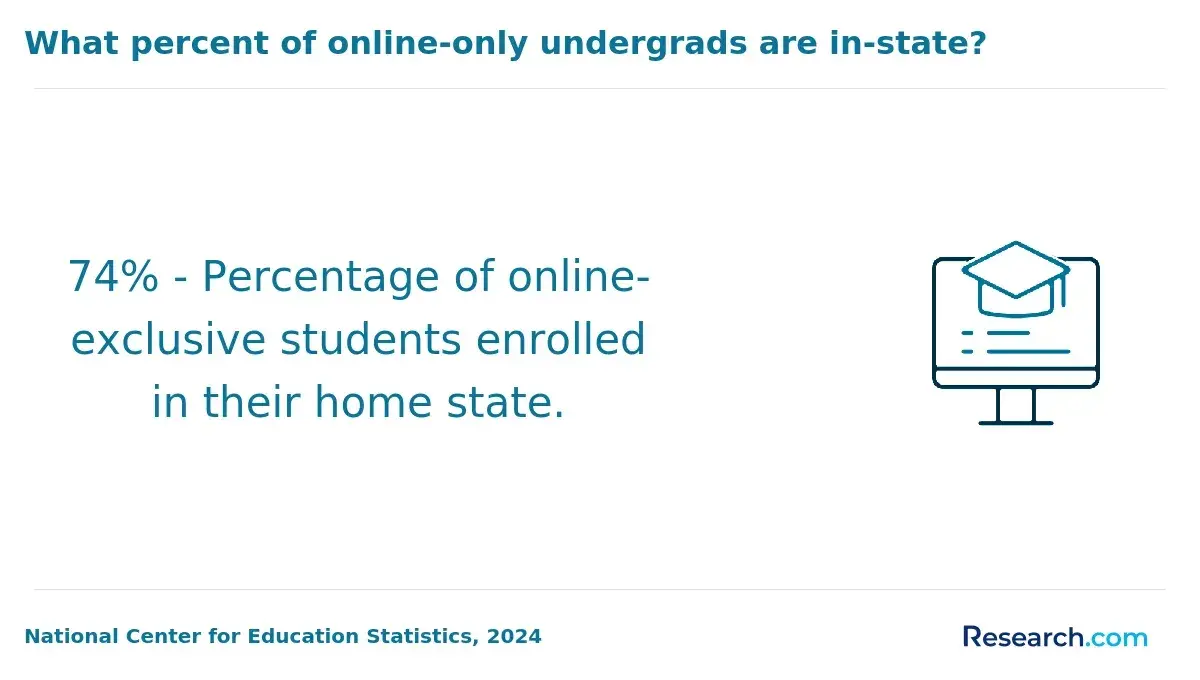
Reputable universities uphold identical accreditation standards for both online and on-campus master's degree programs in environmental science. Data from the National Center for Education Statistics shows that over 35% of graduate students have completed some or all coursework online recently, highlighting the growing recognition of distance learning. The following points clarify how accreditation applies to online environmental science degrees.
- Regional Accreditation: This institutional review covers the entire university and applies equally to all formats, ensuring online programs meet the same quality benchmarks as traditional courses.
- Programmatic Accreditation: Focused on specific subjects or departments, this form of accreditation maintains consistent evaluation criteria regardless of whether the program is online or on-campus.
- Evaluation Process: Online programs at accredited institutions undergo the same thorough assessments, including faculty credentials, curriculum strength, and student outcome measures.
- Verification Importance: Prospective students should confirm both regional and programmatic accreditation status to guarantee their degree is recognized by employers and professional organizations.
- Licensing Requirements: Certain certifications or professional licenses may mandate degrees from programs accredited regionally and programmatically, emphasizing the significance of accreditation regardless of delivery mode.
Do employers care about regional vs programmatic accreditation in environmental science fields?
Employers in environmental science fields generally accept both regional and programmatic accreditation, but programmatic accreditation often acts as a specialized "seal of approval" that goes beyond the baseline quality ensured by institutional accreditation.
According to a survey by the National Association of Environmental Professionals, 68% of employers prioritize programmatic accreditation when making hiring decisions, underscoring its growing significance in candidate evaluation. This distinction shapes employer expectations in several important ways.
- Candidate Credibility: Programmatic accreditation signals rigorous and relevant training tailored to the environmental science field, which boosts employer confidence in a candidate's preparedness.
- Job Market Competitiveness: Graduates from programmatically accredited programs frequently stand out due to the specialized nature of their education, making them more attractive in competitive applicant pools.
- Internship and Networking Opportunities: Accredited programs often have well-established industry connections, creating pathways for internships and professional relationships that benefit graduates.
- Professional Certification Eligibility: Many environmental science certifications require graduation from programmatically accredited programs, influencing employers who value these credentials.
- Employer Trust: Accreditation reassures employers of consistent program quality aligned with industry standards, fostering greater trust in hiring decisions.
Asked about whether employers care more about regional versus programmatic accreditation, a professional who graduated from a environmental science master's degree program shared her experience. She recalled facing early uncertainty about the value of her program's specialized accreditation when applying for jobs.
Over time, she noticed employers frequently referencing her program's recognized status during interviews. "It wasn't just a line on my resume," she explained, "it opened doors to roles and certifications that required that specific accreditation." This practical validation from hiring managers helped her navigate her career with increased confidence, illustrating how programmatic accreditation can significantly impact professional opportunities in this field.
Does Accreditation Type Influence Salary Potential in Environmental Science Careers?
There is a direct correlation between recognized academic quality and long-term earning power in environmental science careers. Data from the National Association of Colleges and Employers (NACE) indicates that graduates from regionally accredited institutions earn on average 5% to 10% more in their initial roles than those from non-regionally accredited schools.
This statistic underscores the financial impact of choosing a vetted program and highlights the impact of accreditation type on environmental science career salary. Below are specific ways accreditation influences compensation and return on investment (ROI).
- Employer Confidence: Degrees from regionally accredited schools carry greater credibility with employers, often resulting in better salary negotiation leverage and improved job prospects within environmental science.
- Specialized Credibility: Programmatic accreditation emphasizes academic rigor in specific environmental science disciplines, enhancing specialized knowledge but generally offering less influence on broad salary levels.
- Financial Aid Access: Eligibility for federal financial aid and scholarships typically depends on regional accreditation, making it easier for students to manage educational expenses and increasing the ROI of their degree.
- Career Advancement: Graduates from non-accredited programs often face limited recognition, which can restrict career advancement opportunities and slow salary growth in the environmental science field.
- Long-Term ROI: Regional accreditation fosters stronger alumni networks and internship opportunities, measurably improving the long-term return on investment for environmental science graduates.
Prospective students researching environmental science master's degrees should consider the differences between regional versus programmatic accreditation effect on environmental science earnings carefully. For those interested in furthering their education, exploring affordable options such as an EdD in education can also provide valuable insights into accredited program availability and associated financial benefits.
How do you check if an environmental science master's program has legitimate accreditations?
Using official government and non-profit databases is crucial to avoid falling victim to "accreditation mills," which offer fraudulent or unrecognized accreditations. According to the Council for Higher Education Accreditation (CHEA), approximately 73% of legitimate U.S. higher education institutions hold regional accreditation.
This highlights the need for prospective students to verify regional accreditation status for environmental science master's programs through trusted sources. The following steps help ensure a thorough accreditation verification process for environmental science degrees.
- Consult Official Databases: Begin with the U.S. Department of Education's Database of Accredited Postsecondary Institutions and Programs (DAPIP) and the CHEA database. These resources list recognized regional and programmatic accreditors for all legitimate U.S. educational institutions and programs.
- Confirm Regional Accreditation: Check if the school is accredited by a regional agency recognized by the Department of Education or CHEA, as regional accreditation generally applies to the entire institution, signaling broad institutional quality and credibility.
- Verify Programmatic Accreditation: Investigate whether the specific environmental science program has programmatic accreditation from specialized agencies related to science and environmental fields; this ensures the program meets industry-specific standards.
- Cross-Reference Information: Look for accreditation status on the school's official website but confirm this information against government databases to guard against misleading or outdated claims.
- Direct Contact: When online information is unclear, contact the accrediting body directly to confirm the accreditation status and scope of recognition.
To better understand program costs when comparing options, prospective students may find it helpful to explore resources such as online construction management degree cost data, which occasionally offer comparative insights into graduate program pricing across fields.
What are the pros and cons of regional vs programmatic accreditation for environmental science master's degrees?
Both regional and programmatic accreditation signal educational quality but serve different roles: regional accreditation confirms an institution's overall stability, while programmatic accreditation ensures the environmental science curriculum meets industry standards. Approximately 80% of U.S. colleges have regional accreditation, which is broadly accepted by employers and other schools.
Regional Accreditation
- Wide Recognition: Regional accreditation is well-known and accepted, facilitating credit transfers and graduate school admissions, which benefits students seeking flexibility.
- Financial Aid Eligibility: It qualifies students for federal financial aid programs, making graduate education more accessible for many.
- Institutional Stability: This accreditation evaluates governance and resources, signaling a financially sound and well-managed university environment.
- Limited Program Focus: It does not assess specific environmental science program content, so curriculum relevance to evolving industry needs may vary.
Programmatic Accreditation
- Specialized Curriculum Validation: This accreditation confirms that the environmental science program meets rigorous professional standards, enhancing readiness for sector-specific roles.
- Career Advantages: Graduates may have improved chances for licensure and employer preference due to alignment with industry expectations.
- Additional Complexity: Often held alongside regional accreditation, it requires more comprehensive evaluation, which can complicate student program comparisons.
- Rigorous Application: The process demands detailed evidence of program quality, which may increase institutional effort and affect program availability.
What Graduates Say About Regional vs Programmatic Accreditation for Environmental Science Master's Degrees
- Dana: "Choosing an Environmental Science master's program with regional accreditation was crucial for me because I wanted assurance of academic quality and recognition. The affordability of the program surprised me, given the high standards it maintained, which made my decision easier. Since graduating, the program's accreditation has opened many doors in environmental consulting and policy roles, validating my education in professional circles."
- Justine: "Reflecting on my time in the Environmental Science master's program, I realize how important programmatic accreditation was in shaping my specialized knowledge. Although the cost was slightly higher than other options, the focused curriculum and respected credentials justified every penny. Professionally, this accreditation has given me confidence and credibility, especially when presenting research to regulatory bodies and NGOs."
- Valerie: "When I was selecting my Environmental Science master's degree, regional accreditation was non-negotiable because it ensured my credits would transfer smoothly if needed. The program's reasonable cost made it manageable alongside my part-time job, which I greatly appreciated. As a professional now, I can attest that the accreditation significantly enhances my resume and trustworthiness in the job market."
Other Things You Should Know About Environmental Science Degrees
In 2027, faculty qualifications in regionally accredited environmental science programs often emphasize academic credentials. Meanwhile, programmatically accredited programs may focus on both academic and professional expertise, requiring faculty to possess industry experience in addition to advanced degrees, tailored to the program's specific accreditation standards.
Programmatic accreditation can influence the acceptance of transfer credits within specialized Environmental Science fields, as it ensures a consistent curriculum aligned with professional standards. However, transfer decisions often depend primarily on regional accreditation since it validates the institution's overall academic standing. Having programmatic accreditation may ease credit transfer between similarly accredited programs.
Yes, programmatic accreditation often enforces stricter faculty qualification requirements tailored to Environmental Science, such as subject-specific degrees or professional experience. Regional accreditation focuses on general faculty credentials and institutional capability. Therefore, programs with programmatic accreditation tend to maintain higher discipline-specific faculty standards.
References
- Regional vs National Accreditation: What This Means for You https://www.uopeople.edu/blog/regional-vs-national-accreditation-whats-the-difference/
- Regional Accreditation vs National: Understanding Key Differences and Benefits - The Scholarship System https://thescholarshipsystem.com/blog-for-students-families/regional-accreditation-vs-national-understanding-key-differences-and-benefits/
- Tuition and Financial Aid | Department of Environmental Sciences and Policy https://envsci.ceu.edu/ms-tuition-financial-aid
- Why Institutionally Accredited Matters | SNHU https://www.snhu.edu/about-us/newsroom/education/what-regionally-accredited-means
- Accreditations Impact on Employer Perception and Graduate Opportunities https://higheredme.com/accreditations-role-employer-perception-and-graduate-opportunities/
- Master of Environmental Studies Cost and Aid https://www.evergreen.edu/admissions-and-aid/graduate-student/cost-aid-mes
- Can an online degree through an accredited institution affect admissions into masters programs abroad? https://academia.stackexchange.com/questions/25667/can-an-online-degree-through-an-accredited-institution-affect-admissions-into-ma
- Understanding the Difference Between Regional and National Accreditation https://www.qahe.org/article/understanding-the-difference-between-regional-and-national-accreditation/