
2027 Sports Management Careers: Skills, Education, Salary & Job Outlook

Co-Founder and Chief Data Scientist
Choosing a sports management career means deciding whether you want to work at the business, operations, marketing, and leadership side of athletics—not just near the action, but responsible for making the action possible. The field can appeal to students, career changers, athletes planning a post-playing career, and professionals who want to combine business skills with the sports industry.
The path is competitive, and enthusiasm for sports is not enough. Employers typically look for business judgment, communication skills, event and operations experience, financial awareness, and a clear record of practical involvement through internships, campus athletics, volunteer roles, or entry-level jobs. A bachelor's degree is often the starting point, while graduate study, certifications, and strong professional networks can help with advancement.
This guide explains what sports management professionals do, the skills and education that matter, earning potential, job outlook, work environments, trade-offs, advancement options, and related careers to consider. Use it to decide whether the field fits your goals—and what steps can make you a stronger candidate.
Key Things You Should Know About Sports Management Career
- The typical earning potential for sports managers is around $84,900 per year, with experienced professionals earning well over $200,000 annually.
- Management roles in sports are expected to grow faster than the average for all occupations in the next decade, signaling strong job stability and opportunities.
- A bachelor's degree in sports management or a related field is usually required to start, while advanced degrees such as an MBA can open doors to higher-level positions.
- Success relies on a blend of business savvy, marketing and sponsorship know-how, public relations skills, budgeting expertise, and strong interpersonal communication.
- Career growth often leads to specialized roles like athletic administration or sports marketing, with potential progression into senior management or director-level operations.
What do Sports Management Professionals do?
Sports management professionals handle the business and operational work that allows teams, athletes, leagues, venues, athletic departments, and sports-related organizations to function. Their responsibilities may involve budgeting, marketing, sponsorships, event logistics, athlete support, facility operations, public relations, compliance, ticketing, travel, and staff coordination.
The role varies widely by employer. In college athletics, a sports management professional may focus on compliance, game-day operations, fundraising, or student-athlete services. In professional sports, the work may involve ticket sales, sponsorship activation, media relations, team operations, or player personnel support. In recreation, fitness, or event management, the emphasis may be on programming, customer experience, safety, and facility use.
A Day in the Life of Sports Management Professionals
A typical day can move quickly from planning to problem-solving. One morning may involve reviewing budgets, coordinating travel, preparing sponsor materials, or updating event schedules. Later in the day, the same professional may meet with coaches, vendors, athletes, broadcasters, marketing teams, or venue staff to make sure every detail is ready for an upcoming game or event.
The work is often collaborative and deadline-driven. During a season or major event, hours may extend into evenings, weekends, and holidays. Success depends on anticipating problems before they become visible to fans, athletes, sponsors, or media. People who enjoy variety, pressure, teamwork, and visible outcomes often find the environment energizing.
What are the key responsibilities of Sports Management Professionals?
Sports management professionals are responsible for turning strategy into smooth execution. Their work connects people, money, schedules, facilities, media, and fan experience. The exact duties depend on the role, but most positions require strong organization, sound judgment, and the ability to communicate with many groups at once.
- Coordinate schedules and logistics: Arrange team, athlete, staff, and event schedules, including travel, accommodations, practice times, meetings, and game-day responsibilities.
- Support financial operations: Help manage budgets, payroll, contracts, expense tracking, vendor payments, and revenue-related planning.
- Handle public relations and communications: Prepare press materials, support media availability, brief athletes or staff, and help protect the organization's public image.
- Plan and operate events: Coordinate venues, equipment, staffing, ticketing, security, concessions, signage, and contingency plans for games, tournaments, and special events.
- Assist with contracts and transactions: Support negotiations, player or personnel moves, sponsorship agreements, and vendor contracts while balancing performance goals and budget limits.
- Develop marketing and fan engagement initiatives: Promote teams and events, support sponsorships, contribute to ticket sales, and engage audiences through digital, social, and in-person channels.
The Most Challenging vs. The Most Rewarding Tasks
One of the hardest parts of sports management is making high-stakes decisions under public pressure. Contract negotiations, staffing changes, budget cuts, event disruptions, and media controversies can affect athletes, fans, sponsors, and organizational reputation. The work often requires balancing competing priorities: what ownership wants, what coaches need, what athletes expect, what fans demand, and what the budget allows.
The most rewarding moments usually come when careful planning produces a visible result: a successful event, a well-run season, a strong sponsorship activation, a meaningful community program, or a player move that improves team performance. For professionals who want to build advanced business and leadership skills quickly, 1 year online masters programs may be worth comparing with traditional graduate options.
What are the key skills for Sports Management Professionals?
Sports management requires more than sports knowledge. Employers look for professionals who can manage details, analyze information, communicate clearly, work across departments, and make practical decisions when time is limited. The strongest candidates combine business training with hands-on experience in athletics, events, recreation, marketing, or operations.
The essential sports management skills 2025 include both technical and interpersonal abilities. Hard skills help you manage the business side of sports. Soft skills help you work with athletes, coaches, sponsors, fans, vendors, executives, and media.
Hard Skills
- Financial analysis: Budget planning, expense monitoring, revenue tracking, and contract-related decision support.
- Marketing and promotion: Campaign planning, sponsorship support, ticket sales strategy, brand messaging, and fan engagement.
- Event planning and logistics: Venue coordination, staffing, transportation, equipment, timing, safety planning, and game-day troubleshooting.
- Data analysis: Using performance, attendance, sales, digital engagement, and fan behavior data to guide decisions.
Soft Skills
- Communication: Explaining expectations clearly to teams, staff, partners, athletes, and external audiences.
- Critical thinking: Solving problems quickly while considering risk, cost, timing, and public perception.
- Collaboration: Working across departments that may have different goals, timelines, and pressures.
- Leadership: Motivating people, setting priorities, making decisions, and staying calm when problems arise.
The One Overlooked Skill That Separates the Good from the Great
Business acumen is often the difference between someone who can complete tasks and someone who can lead. A strong sports management professional understands how daily decisions affect revenue, reputation, fan loyalty, athlete experience, and long-term organizational goals.
For example, a manager who recognizes a shift in fan behavior can adjust sponsorship packages, digital campaigns, or event programming before competitors do. That kind of judgment helps prevent costly mistakes and can position a professional for higher-responsibility roles, especially in competitive areas such as spectator sports. If you are still building an academic foundation, an easy associates degree can be one way to begin developing transferable business and communication skills.
Sports Management Careers: A Step-by-Step Guide to Getting Started
Getting into sports management is easier to plan when you treat it as a sequence: learn the field, build credentials, get experience, develop a network, and specialize. The most common mistake is waiting until graduation to look for industry exposure. Because sports organizations often value proven commitment, early experience matters.
- Explore the field before choosing a direction. Learn the differences among team operations, athletic administration, sports marketing, sponsorships, event management, facility operations, athlete representation, recreation, and sports media. The right niche affects the degree, internships, and skills you should prioritize.
- Complete relevant formal education. A sports management, sports business, business administration, marketing, communications, or related degree can help you build the foundation employers expect.
- Gain practical experience early. Apply for internships, campus athletics roles, volunteer event positions, recreation jobs, ticketing roles, or entry-level operations work. Experience shows employers that you understand the pace and expectations of the industry.
- Build professional skills and relationships. Strengthen communication, budgeting, leadership, scheduling, customer service, and data skills. Stay connected with supervisors, professors, alumni, coaches, and industry contacts.
- Add credentials or specialization when they support your goal. Certifications, graduate certificates, master's programs, or an MBA concentration can be valuable when they align with a specific career path, such as analytics, facility management, athlete representation, or executive leadership.
These steps to start a sports management career help you move from general interest to a credible professional profile. Progress is usually cumulative: each role, project, contact, and credential should make your next opportunity more attainable.
What education, training, or certifications are required?
The most common entry qualification for a career in sports management is a bachelor's degree. Many professionals earn a Bachelor of Science (B.S.) or Bachelor of Arts (B.A.) in Sports Management. Related options such as Sports Business or Business Administration with a sports focus can also be relevant, especially for students interested in operations, marketing, finance, or leadership roles.
Programs often include coursework in sport law, ethics, marketing, finance, management, event planning, facility operations, communications, and analytics. Hands-on learning is especially important. Internships, practicums, volunteer assignments, and capstone projects help students apply classroom knowledge and make industry contacts. Unlike clinical professions, sports management does not typically involve formal residency requirements, but many bachelor's programs require experiential learning before graduation.
Certifications can add credibility when they match your intended role. Examples include the Certified Sports Manager (CSM) from the Global Association for Quality Management (GAQM) and the Sports Management Specialist Certification from the International Fitness Professionals Association (IFPA). These credentials should be evaluated carefully for relevance, employer recognition, cost, and the skills they actually verify.
Are advanced degrees or niche certifications worth the investment?
Advanced degrees can be useful, but they are not automatically necessary for every sports management job. A Master of Science (M.S.) in Sports Management or an MBA with a sports concentration may help professionals pursue leadership, analytics, agency, collegiate athletics, or executive roles. Graduate certificates and niche credentials, such as the Certified Performance & Sport Scientist (CPSS), may also support specialized career goals.
The key question is return on investment. Before enrolling, compare tuition, time commitment, opportunity cost, alumni outcomes, internship access, employer connections, and whether the credential is valued in your target segment. For some mid-level roles, strong experience and a proven network may matter more than an additional degree. For leadership or specialized roles, graduate education can help signal readiness and deepen business expertise.
Choose education based on the job you want, not simply the title of the program. If you are comparing broader academic options and long-term earning potential, reviewing which majors make the most money can provide useful context.
What is the earning potential for Sports Management Professionals?
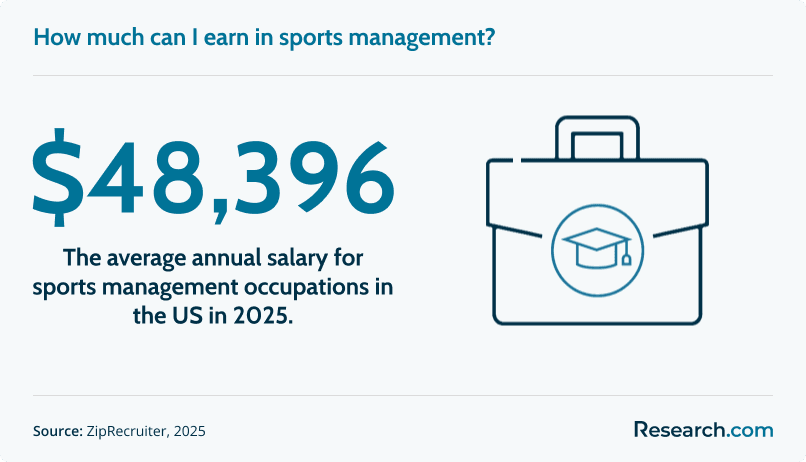
The median annual salary for a sports management professional is $84,900. Earnings can vary widely, with entry-level pay around $47,000 per year and top salaries exceeding $200,000 annually. Where you fall in that range depends on experience, employer type, role, location, education, specialization, and the revenue scale of the organization.
Higher-paying sports management jobs often include roles such as sports marketing manager, director of operations, and sports agent. Experienced professionals in these areas can earn well above $100,000 per year, particularly when they manage major revenue streams, negotiate contracts, lead departments, or work in highly competitive markets.
Location can also affect compensation. States such as Connecticut, New York, and New Jersey are associated with stronger earning opportunities in the field. Industry segment matters as well: spectator sports, major events, agencies, collegiate athletics, and large entertainment organizations may offer different pay structures, schedules, and advancement paths. When evaluating a job offer, look beyond salary and consider bonuses, travel expectations, benefits, relocation needs, season workload, and long-term promotion potential.
What is the job outlook for Sports Management Professionals?
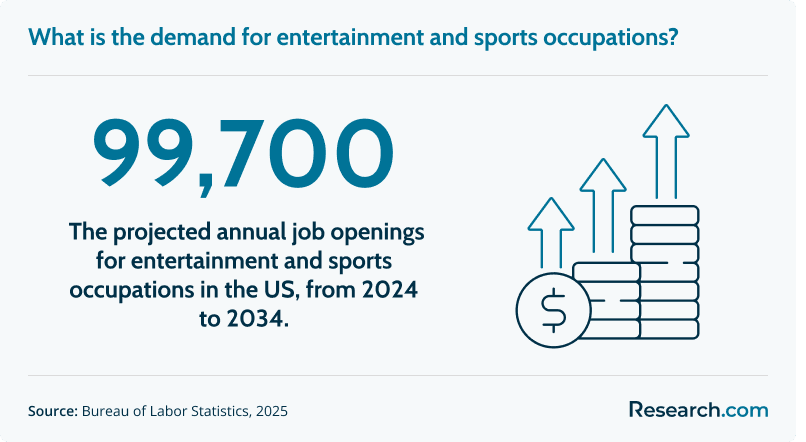
The job outlook for sports management professionals is strong, with employment expected to grow faster than the average for all occupations. Around 108,900 new openings each year indicate continued demand across sports, recreation, entertainment, education, and related business settings.
Demand is supported by the continuing popularity of sports as entertainment, the expansion of live and digital fan experiences, and the growing business complexity of athletic organizations. However, desirable roles can still be competitive, especially with professional teams, major college athletic departments, agencies, and high-profile event organizations.
The Key Factors Shaping the Future Outlook
Technology is changing the skill set. Employers increasingly value knowledge of data analytics, digital marketing, social media, fan engagement platforms, ticketing systems, and performance-related data. Professionals who can translate data into business decisions may have an advantage.
The industry is diversifying. Opportunities now extend beyond traditional team sports. E-sports, fitness, recreation, sports tourism, youth sports, and event-based entertainment create additional paths for management professionals.
Audience behavior is evolving. Fans engage through live events, streaming, social platforms, fantasy sports, digital communities, and in-venue experiences. Sports organizations need professionals who understand how to build loyalty across these channels. If cost is a major factor in your education plan, a cheap online degree may help you enter the field while controlling expenses.
What is the typical work environment for Sports Management Professionals?
The sports management work environment is usually tied to offices, athletic departments, arenas, stadiums, recreation facilities, training centers, event venues, or sports business organizations. Many professionals split time between desk-based planning and on-site execution. During events, the job may involve walking venues, coordinating staff, responding to issues, and communicating with multiple teams in real time.
Common industries include spectator sports, which employs about 27% of the field, followed by arts, entertainment, and recreation at 17%, and educational services at 16%. These environments can be exciting, but they are not always predictable. Workload often rises during seasons, tournaments, recruiting periods, major events, or sponsorship deadlines.
The sports management job schedule is frequently irregular. Evening, weekend, and holiday work is common because games and events happen when audiences are available. Travel may be required for team operations, scouting, recruiting, tournaments, conferences, or client support. Remote or hybrid work may be possible in some marketing, analytics, administrative, or consulting roles, but many positions require physical presence at events or facilities.
What are the pros and cons of Sports Management Professional careers?
Sports management can be highly rewarding for people who enjoy competition, teamwork, business strategy, and fast-moving environments. It can also be stressful, schedule-heavy, and difficult to break into. A realistic view of the trade-offs can help you decide whether the career fits your personality and life goals.
Pros
- Meaningful connection to sports: You contribute to events, teams, athletes, and fan experiences without needing to be an athlete yourself.
- Varied work: Daily responsibilities may involve operations, marketing, finance, media, sponsorships, travel, and problem-solving.
- Visible results: Successful events, strong attendance, smooth logistics, and positive athlete or fan experiences provide immediate feedback.
- Relationship-building: The field offers regular interaction with coaches, athletes, executives, sponsors, media, vendors, and community partners.
- Room to specialize: You can move toward marketing, operations, analytics, facilities, athlete representation, communications, or administration.
Cons
- High pressure: Mistakes can be public, especially during games, negotiations, media events, or crisis situations.
- Demanding hours: Seasons and events can require long days, nights, weekends, holidays, and frequent multitasking.
- Competing priorities: Owners, athletes, coaches, fans, sponsors, and administrators may want different outcomes.
- Career instability: Team performance, leadership changes, budgets, and relocations can affect job security.
- Competitive entry points: Many applicants are passionate about sports, so practical experience and networking are important differentiators.
Choosing this career means accepting both the excitement and the pressure. If you want a broader academic base for leadership, business, or law-adjacent roles in sports, comparing dual degree colleges may help you evaluate more flexible education pathways.
What are the opportunities for advancement for Sports Management Professionals?
Advancement in sports management usually comes from a combination of experience, results, relationships, and specialization. Early roles often involve coordination and support. Mid-level roles add people management, budgets, partnerships, and operations responsibility. Senior roles focus on strategy, revenue, leadership, and organizational direction.
Clear Advancement Paths
- Entry-level roles: Event coordinator, ticket sales associate, sports marketing assistant, athletic operations assistant, recreation coordinator, or athletic administration support roles can build practical experience.
- Mid-level roles: Team manager, sports marketing manager, facility operations manager, sponsorship coordinator, compliance professional, or department manager positions often involve larger budgets and staff oversight.
- Senior and executive roles: Athletic director, director of operations, general manager, agency principal, senior marketing leader, or executive administrator roles require strategic leadership and strong decision-making.
Opportunities for Specialization
- Sports Marketing & Sponsorships: Lead campaigns, promote teams and events, manage brand partnerships, and help generate revenue.
- Athlete Representation & Sports Agency: Support contracts, endorsements, negotiations, and long-term athlete career planning.
- Event & Facility Management: Oversee venue operations, event staffing, safety planning, equipment coordination, and game-day execution.
- Sports Media & Communications: Work in broadcasting, journalism, public relations, digital media, content strategy, or crisis communications.
- Sports Tourism & Hospitality Management: Coordinate travel, lodging, visitor experience, and event services connected to major competitions and fan travel.
Sports management professional development should be intentional. Keep a record of measurable results, such as revenue supported, events managed, partnerships activated, budgets handled, attendance improved, or operational problems solved. Those outcomes are often more persuasive than job titles alone.
What other careers should you consider?
If you are interested in sports management but want to compare adjacent paths, consider roles that use similar skills in marketing, operations, representation, communications, or consulting. These careers may offer different schedules, earnings patterns, education requirements, or levels of travel.
- Sports Marketing Manager: Plans and manages promotional campaigns for teams, leagues, events, athletes, or sports organizations. This path suits people with strengths in branding, audience engagement, sponsorships, and campaign strategy.
- Sports Agent: Represents athletes or other sports professionals in contract negotiations, endorsements, and career decisions. This role requires business judgment, relationship-building, negotiation skills, and legal awareness.
- Director of Operations (Sports): Oversees daily functions such as staffing, logistics, facilities, travel, event execution, and budget coordination. This path fits detail-oriented leaders who can manage complex systems.
- Public Relations Manager (Sports): Manages public image, media relationships, announcements, crisis communication, and stakeholder messaging. Strong writing, composure, and judgment are essential.
- Sports Consultant: Advises teams, athletes, venues, brands, or organizations on performance, operations, marketing, strategy, or business improvement. This career often rewards specialized expertise and a strong professional reputation.
To choose among these options, compare your strengths with the daily work. If you enjoy persuasion and audience behavior, marketing may fit. If you like logistics and systems, operations may be better. If you are drawn to negotiation and athlete advocacy, agency work may appeal. If you communicate well under pressure, public relations could be a strong match.
Here's What Professionals Say About Their Sports Management Careers
- Billy: "When I started out, I was the one washing uniforms, organizing equipment rooms, and running errands for the team. It wasn't glamorous, but it grounded me in humility and grit-two things that every sports management professional needs. Handling those behind-the-scenes tasks taught me to respect every role involved in making an event successful. Seeing the impact my small actions had on the larger operation made me proud of the steady growth I continued to achieve."
- Felix: "Balancing graduate courses while managing a collegiate soccer team pushed me beyond what I thought was possible. There were nights I was exhausted, managing schedules and travel logistics after studying late, but every challenge made the victories sweeter. I remember the moment I graduated and accepted my first role in sports management-feeling like all the late nights and pressure had truly paid off. It's hard work, no doubt, but it transforms how you appreciate the sport's community and the opportunities to lead."
- Aleya: "Sports management lets me channel a real passion for change. I want my work to go beyond the field by uniting people and shining a light on issues that matter, like social justice. It's powerful to be involved in something where every game and event can inspire progress and community connection. Knowing that I contribute to creating spaces where everyone feels included is what drives me every day."
Key Findings
- Sports management combines business, operations, marketing, communications, finance, and sports-specific knowledge.
- A bachelor's degree is the common starting point, while internships, practicums, volunteer work, and entry-level roles are critical for building credibility.
- The median annual salary for a sports management professional is $84,900, with entry-level earnings around $47,000 per year and top salaries exceeding $200,000 annually.
- Higher-paying paths can include sports marketing manager, director of operations, and sports agent, especially for experienced professionals.
- The job outlook is strong, with employment expected to grow faster than the average for all occupations and around 108,900 new openings each year.
- Work schedules are often irregular because games, events, travel, and peak seasons frequently require evenings, weekends, and holidays.
- Advancement depends on experience, measurable results, professional relationships, and specialization in areas such as marketing, sponsorships, operations, athlete representation, media, or sports tourism.
Other Things You Should Know About Sports Management
In 2027, top universities renowned for sports management programs include the University of Florida, Ohio University, and the University of Massachusetts Amherst. These institutions offer comprehensive curriculums and robust industry connections, preparing graduates for diverse careers in sports management.
In 2026, sports management professionals face challenges including adapting to technological advancements, managing athlete mental health, and navigating increased globalization. Staying current with technology impacts fan engagement and data analytics, while prioritizing athlete well-being becomes essential. Additionally, professionals must adeptly handle cross-cultural interactions amid expanding global markets.
References
- Career prospects in the sports management industry - UCFB https://www.ucfb.ac.uk/your-career/careers-in-football-and-sport/career-prospects-in-the-sports-management-industry/
- Career Paths in Sports Management https://www.unwsp.edu/blog/career-paths-in-sports-management/
- Sports Brand Management: Top 10 Roles & Career Paths https://www.yellowbrick.co/blog/sports/sports-brand-management-top-10-roles-career-paths
- Sports Management Job Outlook https://online.maryville.edu/online-bachelors-degrees/sport-business-management/careers/sports-management-job-outlook/
- Top Career in Sports for Non-Athletes: 10 Options https://www.mindler.com/blog/10-lucrative-off-field-careers-in-sports-for-non-athletes/
- Exploring Sports Management Jobs: Your Ultimate Guide - ICMS https://www.icms.edu.au/degree-discovery/sports-management-jobs/
- How to Prepare for a Career in Sport Management https://www.dean.edu/news-events/dean-college-blog/story/how-prepare-career-sport-management/
- Why Study a Sports Management Degree in 2025 (and Careers to Choose after Graduation) | Mastersportal https://www.mastersportal.com/articles/2724/why-study-sports-management.html
- Top 5 Careers You Can Launch with a Sports Management Diploma - eta https://etacollege.com/top-5-careers-you-can-launch-with-a-sports-management-diploma/


