
2027 Urban Planning Degree vs. Certificate: Which Should You Choose?

Co-Founder and Chief Data Scientist
Today's students and professionals face important decisions when choosing between earning a degree or a certificate in urban planning. Both options can advance a career in this evolving field, which is projected to grow by 3% over the next decade. However, they differ in duration, depth of study, and potential career outcomes, making the choice dependent on individual goals.
A degree in urban planning offers comprehensive education and greater job opportunities, while certificates provide targeted skills suitable for quick career shifts or specialization. Understanding these distinctions is key. This article compares their core differences to help readers select the best path for their career and lifestyle.
Key Points About Urban Planning Degree vs. Certificate Programs
- Degree programs offer comprehensive training and often lead to higher salary potential, with median incomes around $75,000, compared to $50,000 for certificate holders.
- Certificates provide focused skill development and faster completion, ideal for professionals seeking specific expertise or career pivots within urban planning.
- Degrees support broader professional growth with eligibility for leadership roles and licensure, while certificates emphasize practical knowledge suited to immediate job demands.
What Are the Differences Between Urban Planning Degree and Certificate Programs?
Both urban planning degrees and certificate programs offer valuable career paths but differ significantly in several aspects. Understanding these differences allows prospective students to select the option that best aligns with their goals and time constraints.
Below is a comparison of the primary distinctions between urban planning degrees and certificates.
- Depth of Learning: Degree programs provide comprehensive knowledge, covering theoretical concepts, practical skills, and policy analysis, ideal for those seeking a thorough understanding and long-term career growth. Certificates focus on specific skills or topics, suited for professionals wanting targeted expertise or a quick update.
- Time Commitment: Degrees typically require multiple years of study, suiting learners ready for an extensive academic investment. Certificates offer shorter durations, making them attractive for busy professionals or those exploring the field.
- Career Advancement: Degrees often open doors to advanced roles and leadership positions requiring formal credentials. Certificates may enhance current employment opportunities or facilitate transitions but usually have less influence on upward mobility.
- Flexibility: Certificate programs often provide more flexible schedules and online options, appealing to working individuals. Degree courses might demand a full-time commitment and in-person attendance.
- Cost and Commitment: Pursuing a degree generally involves higher costs and greater dedication, reflecting its extensive scope. Certificates require less financial and time investment, ideal for quick skill enhancements without long-term obligations.
How Long Does It Take to Complete a Urban Planning Degree vs. a Certificate Program?
Completion time is one of the most important factors for students choosing between an urban planning degree vs. certificate. Understanding the typical duration, flexibility, and factors influencing how long it takes to complete each option helps prospective students make informed decisions aligned with their career goals and schedules.
- Typical Duration: A bachelor's degree in urban planning generally requires four to five years of full-time study, influenced by institution specifics and any co-op or internship components. Master's programs usually take about two years full-time, with some part-time options extending to three or four years. In contrast, urban planning certificate programs can range from just a few hours online to several months if offered by universities, with some graduate-level certificates lasting a semester or two. This stark difference explains why many ask about the urban planning degree program duration versus certificate timelines.
- Flexibility: Degree programs typically offer both full-time and part-time enrollment, allowing students to balance work and personal commitments, but even part-time degrees still extend over several years. Certificates, especially online ones, are often self-paced, providing greater flexibility for professionals seeking to complete shorter courses quickly. This difference in pacing flexibility directly impacts how long to get an urban planning certificate compared to earning a degree.
- Factors Affecting Timeline: Program structure, such as integrated work experience or co-op elements, can lengthen degree completion times. Prior coursework or transfer credits may shorten degree durations. Admission requirements differ; degrees usually require a high school diploma and sometimes a bachelor's for graduate study, while certificates often only require high school completion. For students exploring their options, understanding these aspects is critical.
For those comparing options and aiming to choose the best route, exploring the best college degrees to get offers additional insights into planning an educational path that matches their timeline and career aspirations.
Can You Complete a Urban Planning Degree or Certificate Entirely Online?
The rapid growth of online education has expanded access for students and professionals aiming to earn credentials in urban planning from across the United States. Many institutions, including Claremont Lincoln University and the University of Texas at El Paso, offer 100 percent online urban planning certificate programs that require no on-campus attendance.
These programs are flexible and typically can be completed remotely within a year. In contrast, accredited online urban planning degree programs, such as master's degrees, are growing in availability but often include hybrid elements like in-person workshops or fieldwork, reflecting the demands of accreditation and professional standards.
When deciding between an online urban planning degree or certificate, it is important to consider requirements such as practicums, internships, and licensure preparation, which tend to be more common in degree programs. Certificates usually emphasize theoretical knowledge and practical skills without mandatory hands-on experience, appealing to working professionals aiming for quick career advancement.
Those seeking comprehensive training and formal credentialing might prefer degrees that include supervised experiences. Prospective students should carefully assess which online format aligns best with their career objectives and life schedules, also exploring best certificate programs that pay well as part of their research.
What Are the Admission Requirements for a Urban Planning Degree vs. a Certificate Program?
Admission requirements are a critical consideration when choosing between an urban planning degree and certificate program, as they affect eligibility, the application process, and how quickly you can start. Understanding these requirements helps you decide which path aligns best with your background and career goals.
Below is a side-by-side comparison of typical admission requirements for each option.
Admission Requirements for Urban Planning Degree Programs
- Educational Background: Most degree programs, such as bachelor's or master's in urban planning, require a completed undergraduate degree from an accredited institution. Some undergraduate programs accept transfer students with at least 30 college credits and prerequisite courses like microeconomics, statistics, and sociology.
- Minimum GPA: A minimum GPA-often around 3.0 on a 4.0 scale for graduate degrees-is typically required. Some universities may accept lower GPAs with additional qualifications or on a provisional basis.
- Transcripts: Official transcripts from all previously attended institutions must be submitted for review to evaluate academic history.
- Letters of Recommendation: Usually two or three letters are required, preferably from academic or professional references familiar with the applicant's qualifications and potential.
- Personal Statement: Applicants submit a statement outlining their career goals, motivation for urban planning, and relevant experience.
- Resume or CV: A current resume detailing academic achievements, work experience, and relevant skills is generally requested.
- English Proficiency (for International Applicants): Non-native speakers must demonstrate proficiency via tests like TOEFL or IELTS, reflecting the program's academic rigor.
Admission Requirements for Urban Planning Certificate Programs
- Educational Background: Most certificate programs require a high school diploma or equivalent. Some may prefer or require college coursework but generally do not demand a bachelor's degree.
- Professional Experience: Many certificate programs focus on working professionals and may require relevant work experience in planning or related fields.
- Transcripts: Some programs request unofficial or official transcripts, usually with less stringent criteria than degree programs.
- Personal Statement or Statement of Interest: A brief statement describing interest in urban planning and objectives for the certificate is often required.
- Letters of Recommendation: Less commonly required; when needed, often one professional or academic letter suffices.
- English Proficiency (for International Applicants): Proof of English ability may be necessary but typically with lower standards compared to degree programs.
Choosing between an urban planning degree admission requirements and an urban planning certificate program application process depends largely on your academic background and career aspirations. For insights into economic returns of different fields, consider exploring the best major to make money.
How Many Credits Do You Need to Complete a Urban Planning Degree vs. a Certificate?
Knowing the number of credits required helps students realistically map out their educational journey and understand the time commitment involved in urban planning studies. This clarity supports better decision-making between pursuing a full degree or a certificate.
Here's a straightforward comparison of credit expectations for urban planning degree and certificate programs:
- Degree programs: These usually range from about 48 credits at the master's level to around 120 credits for a bachelor's degree, reflecting the broader and deeper study required.
- Certificate programs: Typically involve 12 to 18 credits, offering a focused curriculum designed for those seeking specialized skills without a lengthy commitment.
When I spoke with a student completing an urban planning certificate, he shared how balancing work and studies shaped his experience. "Taking just 12 credits allowed me to dive deeply into key topics without the overwhelming pressure of a full degree," he explained.
He appreciated that the certificate program was intensive but manageable, giving him practical know-how that he could immediately apply on the job. "I wasn't ready for the huge time investment a degree asks for, and the certificate felt like the perfect fit for my career goals," he added thoughtfully. This approach gave him confidence and flexibility, illustrating the real-life impact of credit requirements on educational choices.

What Is the Average Tuition for a Urban Planning Degree vs. a Certificate?
Tuition costs play a crucial role when deciding between pursuing a degree or a certificate in urban planning, as they affect both immediate affordability and long-term financial outcomes. Comparing the average tuition for each option can help students and professionals align their investment with career goals and budget constraints.
Below is a detailed comparison of the average tuition ranges for urban planning degrees versus certificates, highlighting key cost factors to consider.
Average Tuition for Urban Planning Degree Programs
- Tuition Range: Graduate urban planning degrees in the United States typically range between $13,000 and over $70,000 per year, varying widely by school and residency status.
- Public vs. Private: Public universities usually offer lower tuition rates, especially for in-state students, often between $13,000 and $22,000 annually, whereas private schools can charge upwards of $60,000 to $70,000 per year.
- Degree Level: Master's programs generally cost more than undergraduate degrees, with total tuition for a two-year master's often falling between $40,000 and $140,000+.
- Program Length: Most master's degrees require two years, so the cumulative tuition reflects this duration.
- Additional Costs: Tuition estimates usually exclude fees, housing, and materials, which may add $10,000 to $30,000 annually.
Average Tuition for Urban Planning Certificate Programs
- Tuition Range: Certificate programs typically have a much lower cost, with total tuition often ranging from $1,000 to $10,000, depending on the provider and length.
- Program Length: Certificates are generally short-term, lasting from several weeks up to a year, which results in lower overall tuition.
- Format and Institution: Online and community college certificates tend to be more affordable than on-campus university certificates, which are usually more expensive.
- Financial Aid: Compared to degrees, certificates often have limited financial aid options, impacting out-of-pocket expenses.
- Stackability: Some certificates offer credits that can be applied toward future degree programs, potentially offsetting costs if you later pursue a degree.
For those considering either option, evaluating the average tuition for urban planning degree programs in the United States alongside the urban planning certificate cost comparison is essential. Additionally, exploring alternative study formats like 2 year PhD programs online may provide flexible and cost-effective pathways for further education in related fields.
Can You Transfer Certificate Credits Toward a Urban Planning Degree Later On?
Yes, you can often transfer credits earned from an urban planning certificate toward a related degree, but it depends on several factors. Each university has its own policies about which certificate credits qualify for transfer, and only those from accredited institutions with relevant courses usually count.
Course alignment with the degree's curriculum is crucial; schools typically accept credits that fit their specific requirements. Transfer approval generally requires formal admission into the degree program as well.
Other important considerations include limits on the number of transferable credits-many programs allow between 12 and 18-and minimum grade standards, often requiring a B or higher. Because these criteria vary across schools and may change, it's essential to verify transfer rules with the institution before enrolling. Doing so ensures that credits earned during a certificate program will effectively contribute to your degree pursuit, protecting your investment in education.
Reflecting on this, a student who completed an urban planning certificate shared that the transfer process was complicated but rewarding. She initially faced uncertainty about which credits would apply and had to work closely with advisors to map her certificate courses onto the master's degree requirements.
"It was reassuring once I got approval that a large portion of my certificate credits would count," she said, highlighting how critical clear communication and persistence were during the transition. Her experience underscores the value of thoroughly understanding credit transfer policies before and after completing a certificate program.
Are Certificate Programs Accredited the Same Way as Urban Planning Degrees?
Certificate programs in urban planning are generally not accredited through the same specialized process as degree programs. In the U.S., bachelor's and master's degrees in urban planning receive accreditation from the Planning Accreditation Board (PAB), which enforces strict standards and collaborates with organizations like the American Planning Association and the American Institute of Certified Planners.
As of early 2025, PAB accredits numerous degree programs across many universities. Urban planning certificate programs, however, typically lack PAB accreditation and instead rely on broader institutional accreditation, such as regional accreditation for the university offering them. These certificates do not go through the rigorous evaluation that PAB applies to degree programs.
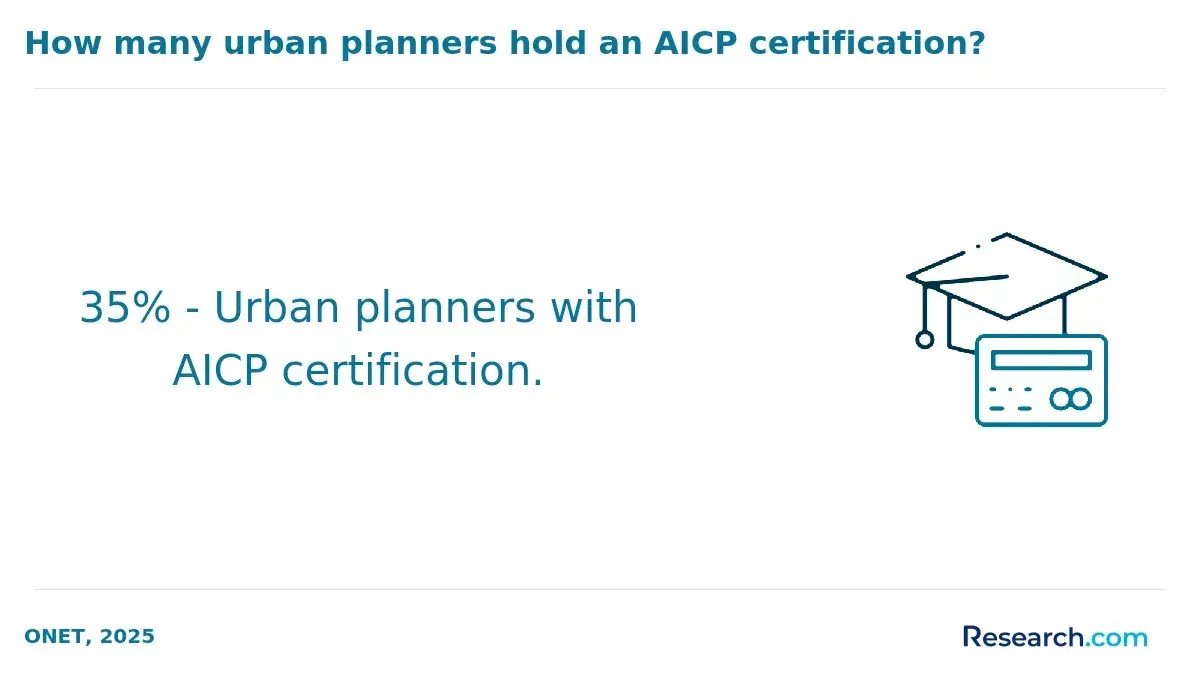
Accreditation holds significant value because it helps assure students and employers of a program's educational quality and relevance to professional standards. Graduates from PAB-accredited degrees usually require less professional experience to qualify for AICP certification, an important credential in the field.
Employers often prefer candidates with accredited degrees, influencing job opportunities and career growth. When choosing programs, students should verify that degrees have PAB accreditation and that certificate programs come from regionally accredited institutions. It's also wise to check how well a program's curriculum matches career goals and whether it supports further certification. Confirming accreditation through recognized bodies is essential before enrolling in any urban planning educational program.
What Jobs Can You Get with a Urban Planning Degree vs. a Certificate?
Both an urban planning degree and a certificate can open doors to careers in the field, but they often prepare graduates for different roles and levels of responsibility. Understanding the specific job opportunities associated with each credential can help you decide which path aligns with your career goals.
Below is a comparison of typical positions available to holders of each qualification.
Jobs You Can Get with a Urban Planning Degree
- Urban planner: Develops plans for land use, focusing on creating sustainable and functional communities, often working for government agencies or private firms.
- Regional planner: Coordinates development projects across larger geographic areas to balance growth, transportation, and environmental concerns.
- Transportation planner: Designs and improves transportation systems to meet community and regional mobility needs.
- Environmental planner: Integrates environmental conservation and impact assessments into planning projects.
- Community development specialist: Works to enhance social, economic, and physical aspects of neighborhoods and cities, often with nonprofits or local governments.
- Planning analyst: Conducts research and analyzes data to support planning initiatives and policy development.
Jobs You Can Get with a Urban Planning Certificate
- Planning assistant: Provides administrative and technical support to planners, assisting with project coordination and documentation.
- Planning technician: Helps prepare maps and reports, often using GIS technology, to support planning tasks.
- GIS technician: Manages geographic data and creates spatial analyses for planning projects.
- Zoning assistant: Supports zoning compliance and processes permits under the guidance of senior planners.
- Permit specialist: Reviews and processes permits related to land use and construction, ensuring regulatory adherence.
What Is the Average Starting Salary for a Certificate vs. Urban Planning Degree Graduates?
Salary potential often varies significantly between those holding an urban planning certificate and graduates with a full urban planning degree. This gap reflects differences in qualifications, roles, and career opportunities available within the field.
Below is a side-by-side comparison of average starting salaries and other key factors for each type of credential.
- Typical Salary Range: Graduates with an urban planning degree typically start around $55,000 to $66,000 annually, while entry-level urban and regional planners with bachelor's or master's degrees have a median wage near $83,720.
- Certificate Starting Salary: Those with just a certificate usually begin in assistant or technician roles earning between $40,000 and $50,000, supporting planners rather than leading projects.
- Influencing Factors: Education level is a major driver-higher degrees yield better pay. Experience such as internships and industry expertise also play a significant role.
- Industry and Location: Private sector, government, and nonprofit salaries differ, and metropolitan areas, especially California and the Northeast, offer higher wages.
- Career Outlook: Degree holders enjoy stronger advancement prospects and higher long-term earning potential compared to certificate holders.
For those weighing options, researching affordable pathways can help balance cost and value; options include most affordable online colleges for working adults.
Here's What Graduates of Urban Planning Programs Say About Their Degree or Certificate
- Vicente: "Choosing the urban planning certificate program was the perfect fit for me because of its faster pace and focused curriculum. It allowed me to gain practical skills quickly without the higher cost and time commitment of a full degree. For anyone weighing options, the certificate offers a solid entry into the field without sacrificing career impact. "
- Zane: "Opting for the urban planning degree program gave me a comprehensive learning experience, blending theory with hands-on projects over several years. Though it was a bigger financial and time investment, the broader scope and depth opened more advanced career opportunities. It's ideal if you want a thorough foundation and long-term growth in urban planning. "
- Gael: "Having completed both the urban planning certificate and degree programs, I truly appreciate the distinct benefits of each. The certificate provided a quick, cost-effective introduction, perfect while I worked full-time, while the degree later expanded my expertise and credential value. Deciding between the two should depend on your career goals, time availability, and budget. "
Other Things You Should Know About Urban Planning Degrees
In 2027, an urban planning degree primarily focuses on comprehensive academic education, covering broad theoretical and technical aspects. In contrast, a certificate program often emphasizes practical skills and specific areas of urban planning, providing targeted expertise with a shorter time commitment.
Many institutions allow students to transfer credits earned from an urban planning certificate program toward a related degree, depending on the school's policies. Typically, these credits cover foundational courses and may reduce the time needed to complete a degree. It is important to verify transferability with the academic institution before enrolling in a certificate program.
Degree holders in urban planning often have access to more advanced leadership roles and higher salary brackets compared to those holding only certificates. Certificates can enhance career growth by providing additional skills but are rarely sufficient alone for senior planning positions. Employers frequently prefer degree holders for roles involving policy development, project management, or research.
In 2027, urban planning degree programs typically offer more comprehensive practical experience, including internships and project work, compared to certificate programs. While some certificates may include hands-on components, degree programs generally provide more in-depth exposure to real-world scenarios.
References
- Certificates https://www.bu.edu/cityplanning/programs/certificates/
- All Accredited Programs | Planning Accreditation Board https://www.planningaccreditationboard.org/accredited-programs/all/
- Urban Planning Courses https://www.open.edu.au/study-online/architecture-construction/urban-planning
- University Accreditation - Professional Standards Board https://psb-planningcanada.ca/university-accreditation/
- Urban and Regional Planners https://www.bls.gov/ooh/life-physical-and-social-science/urban-and-regional-planners.htm
- Urban Planning Certificate https://spaa.ku.edu/urban-planning-certificate
- Graduate Certificate in Urban Planning and Design https://studyonline.uts.edu.au/online-courses/graduate-certificate-urban-planning-and-design
- ONET OnLine. (2025). Summary for 19‑3051.00 Urban and regional planners. National Center for ONET Development. https://www.onetonline.org/link/summary/19-3051.00
- Infinity Market Research. (2025, September 26). Global urban planning service market growth and outlook 2025-31. https://infinitymarketresearch.com/report/urban-planning-service-market/9138
- ZipRecruiter. (2025). Urban planner salary in the United States. https://www.ziprecruiter.com/Salaries/Urban-Planner-Salary


