
2027 What Does a Corporate Paralegal Do: Responsibilities, Requirements, and Salary

Co-Founder and Chief Data Scientist
A corporate paralegal career is for people who want legal work connected to how businesses operate: contracts, filings, governance, compliance, transactions, and company records. It can be a strong option if you like precise document work, legal research, organized systems, and business-facing responsibilities but do not plan to become an attorney.
The role is also broad. A corporate paralegal in a law firm may support many business clients across transactions and governance matters. An in-house corporate paralegal may focus on one company’s contracts, subsidiaries, board materials, regulatory obligations, or internal legal operations. As organizations expand their legal workload, 29% of legal department leaders have reported plans to hire more paralegals to meet growing demands.
This guide explains what corporate paralegals do, what education and skills employers typically expect, where they work, how much they earn, and how to enter or advance in the field. It is written for students, career changers, legal assistants, and working professionals comparing corporate paralegal roles with other legal, compliance, and business operations careers.
Key Things You Should Know About What Does a Corporate Paralegal Do
- Corporate paralegals can advance into senior paralegal roles, specialize in areas such as mergers and acquisitions, or transition into legal management positions.
- The average corporate paralegal in the U.S. earns approximately $80,694 per year, or around $ 38.50 per hour, although salaries vary by experience and location.
- Employment for corporate paralegals is strong, with demand projected to grow 14% from 2018 to 2028 due to increasing legal needs in corporate settings.
What does a corporate paralegal do?
A corporate paralegal helps attorneys, executives, and legal departments handle the legal work required to form, maintain, document, and protect a business. The work is detail-heavy and deadline-driven. Corporate paralegals do not provide legal advice, but they prepare the records, research, drafts, checklists, and filings attorneys rely on to advise business leaders and complete legal matters.
Common responsibilities include:
- Preparing and revising legal documents: Corporate paralegals draft and edit contracts, agreements, bylaws, board consents, resolutions, certificates, and related corporate documents. They check entity names, dates, defined terms, exhibits, signature blocks, and required approvals.
- Supporting corporate compliance: They help companies maintain good standing, meet filing deadlines, follow governance procedures, and document internal policies. This business-focused compliance work differs from public-sector legal roles; readers comparing regulated legal careers may review probation officer qualifications to see how legal-adjacent duties vary by setting.
- Conducting legal and regulatory research: Corporate paralegals research statutes, regulations, agency rules, corporate records, filing requirements, and industry standards. Their findings help attorneys identify risks, prepare filings, and respond to business questions.
- Assisting with transactions: During mergers, acquisitions, financings, restructurings, and securities-related matters, paralegals organize due diligence materials, maintain closing checklists, circulate documents, track approvals, and coordinate signatures.
- Maintaining corporate records: They update minute books, ownership records, entity charts, annual reports, meeting minutes, resolutions, and governance files so key information is accurate and easy to locate.
- Coordinating communication: Corporate paralegals often serve as the operational link among attorneys, executives, outside counsel, clients, vendors, registered agents, and government agencies.
The exact role depends on the employer. In a small company, one paralegal may handle contracts, entities, compliance calendars, and records. In a large company or law firm, the work may be divided among teams focused on governance, securities, contracts, litigation support, intellectual property, or legal operations.
What are the educational requirements to become a corporate paralegal?
Most corporate paralegal jobs require formal education in paralegal studies, legal studies, business, or a related field. Employers tend to value candidates who understand both legal procedure and business operations because corporate work involves companies, contracts, filings, governance, and risk management.
Common education pathways include:
- Associate degree in paralegal studies: This is a practical entry route for students who want focused legal training and a shorter path into legal assistant, junior paralegal, or records support roles.
- Bachelor’s degree: Many larger law firms and corporate legal departments prefer or require a bachelor’s degree in legal studies, business administration, political science, or a related field, especially for roles involving contracts, compliance, or transactions.
- Paralegal certificate program: Candidates who already hold a degree in another field often complete a paralegal certificate to gain training in legal research, writing, ethics, procedure, and document preparation. If cost is a major concern, comparing the cheapest aba-approved paralegal programs can help you identify lower-cost options that still meet a recognized program standard.
- Corporate law coursework: Useful subjects include contracts, business organizations, mergers and acquisitions, corporate governance, securities regulation, compliance, legal research, legal writing, and professional ethics.
- Internships or practicums: Experience in a law firm, corporate legal department, compliance office, or government agency helps students learn how deadlines, filings, document systems, and attorney communication work in practice.
- Continuing legal education: Corporate rules, filing practices, legal technology, and compliance expectations change. Ongoing training helps paralegals stay current and qualify for more specialized responsibilities.
Overall, 26% of corporate paralegals major in legal support services, while 14% major in business. That mix reflects the role’s dual focus: paralegals need legal training, but they also need to understand how companies operate. Students who want a business-facing legal career may also explore business law courses and concentrations to build knowledge in contracts, organizations, and commercial regulation.
The chart below highlights the most common degrees pursued by aspiring corporate paralegals.
What are the required skills to become a corporate paralegal?
Corporate paralegals need a mix of legal, business, technology, and communication skills. The best candidates can manage detailed documents, protect confidential information, track deadlines, and communicate clearly with attorneys, business teams, clients, and agencies.
Technical Skills Required for Corporate Paralegals
Technical skills allow corporate paralegals to produce accurate, reliable legal work. Key skills include:
- Legal research: Corporate paralegals should know how to research laws, regulations, entity rules, agency requirements, and corporate statutes using tools such as LexisNexis or Westlaw. This is among the most common skills, with 6.1% of corporate paralegals emphasizing it as essential.
- Document preparation: Drafting contracts, board resolutions, consents, certificates, closing documents, and compliance materials requires careful formatting, consistent defined terms, accurate cross-references, and strong version control.
- Data and document management: Corporate legal teams depend on organized digital records. Paralegals may manage contract databases, entity management platforms, shared drives, due diligence folders, document management systems, and e-signature workflows.
- Corporate filing knowledge: Entity formations, annual reports, SEC filings, amendments, foreign qualifications, registered agent records, and governance updates must be prepared and tracked correctly. Corporate governance expertise is also critical, cited by 7.2% of corporate paralegals.
- Litigation support awareness: Even in a corporate role, paralegals may help with disputes, investigations, subpoenas, discovery, or litigation holds. Litigation support is highlighted by 9.4% of corporate paralegals.
Soft Skills Required for Corporate Paralegals
Soft skills determine whether a paralegal can apply technical knowledge consistently under business pressure. Employers look for professionals who can be trusted with sensitive information, multiple deadlines, and high-value documents.
- Attention to detail: A wrong legal name, missing signature, incorrect filing date, or incomplete exhibit can delay a transaction or create legal risk.
- Written and verbal communication: Corporate paralegals must summarize research, request information, report document status, and communicate clearly with attorneys, executives, outside counsel, and agencies.
- Time management: Corporate legal work often includes urgent transactions and recurring compliance deadlines. Strong paralegals prioritize without losing track of routine filings and recordkeeping.
- Critical thinking: Paralegals need to spot inconsistencies, missing information, procedural problems, and possible risks before they become larger issues.
- Confidentiality and integrity: Corporate paralegals may handle board materials, acquisition documents, employment matters, financial information, and privileged communications. Ethical judgment is essential.
A useful self-check is whether you enjoy precise, deadline-based work. If you prefer courtroom advocacy or open-ended client counseling, another legal path may be a better fit. If you like contracts, organization, research, and business operations, corporate paralegal work may align well with your strengths.
Where do corporate paralegals work?
Corporate paralegals work in organizations that need legal support for business operations. Some work for law firms that represent corporate clients; others work directly for companies as part of in-house legal, contracts, compliance, or legal operations teams.
Common workplaces include:
- Professional services firms: About 33% of corporate paralegals work in law firms, consulting firms, or other professional services settings. These roles may involve client contracts, mergers, entity maintenance, governance, and compliance support.
- Fortune 500 companies: Large corporations employ 13% of corporate paralegals to support contracts, intellectual property, subsidiary management, board materials, regulatory compliance, and internal legal operations.
- Finance and banking: Around 9% work in banks, investment firms, or insurance companies, where legal support may focus on financial regulations, transactions, securities compliance, and risk documentation.
- Manufacturing: Approximately 6% are employed in manufacturing, assisting with vendor agreements, supply contracts, entity records, and regulatory requirements.
- Technology: About 6% work in tech companies, where responsibilities may include intellectual property support, software agreements, vendor contracts, privacy-related documentation, corporate policies, and entity management.
- Other industries: The remaining 33% work in health care, retail, telecommunications, and other sectors with legal documentation, compliance, and corporate governance needs.
Corporate paralegal jobs are spread across sectors, with 33% in public professional services and 66% in private industries. A law firm role may provide broader exposure to different clients and transactions, while an in-house role may provide deeper knowledge of one company’s operations, systems, and risk profile.
How much do corporate paralegals earn?
Corporate paralegals in the United States earn an average of $80,694 per year, or approximately $39 per hour. Actual pay can vary based on experience, location, education, employer type, industry, and the complexity of the work assigned.
Important salary factors include:
- Experience level: Pay generally increases as paralegals take on more responsibility. Entry-level corporate paralegals average $77,515, while expert-level positions average $84,923 annually.
- Location: Geography can significantly affect compensation. California averages $89,005 annually, Massachusetts $87,819, and New Jersey $87,464, while lower-cost states like Mississippi average $71,963.
- Education: Higher educational attainment may improve competitiveness and earning potential. Corporate paralegals with a bachelor’s degree earn around $80,300, while those with a master’s or advanced degree can earn upwards of $82,200.
- Company size and industry: Large organizations and high-revenue industries often pay more. Fortune 500 companies may offer higher compensation, and salaries range from $101,078 to $127,121 in top-paying biotech firms.
- Scope of responsibility: Paralegals who manage complex transactions, support specialized filings, coordinate due diligence, supervise others, or handle high-risk legal work often have stronger compensation potential.
Base salary is only one part of an offer. Corporate paralegals often receive benefits that increase total compensation, with social security benefits contributing approximately 5.4% to overall compensation. When comparing jobs, review salary alongside health coverage, retirement contributions, paid time off, overtime expectations, hybrid or remote flexibility, professional development support, and opportunities for advancement.
How to Start Your Career as a Corporate Paralegal
Starting a corporate paralegal career requires more than earning a credential. You need to show employers that you can handle legal documents, deadlines, research, confidentiality, and communication in a business environment.
- Choose a relevant education path: Enroll in an associate or bachelor’s degree program in paralegal studies, legal studies, business, or a related field. If you already have a degree in another subject, a paralegal certificate can provide targeted legal training.
- Prioritize corporate law coursework: Look for classes in contracts, business organizations, legal research, corporate governance, compliance, legal writing, securities regulation, and ethics.
- Gain practical experience: Apply for internships, externships, or part-time roles with law firms, corporate legal departments, compliance teams, regulatory agencies, or records departments. Experience with document organization, filing deadlines, research, and contract review can strengthen your resume.
- Build job-ready technical skills: Learn legal research platforms, document management practices, spreadsheet tracking, e-signature workflows, contract administration basics, and calendar systems for recurring deadlines.
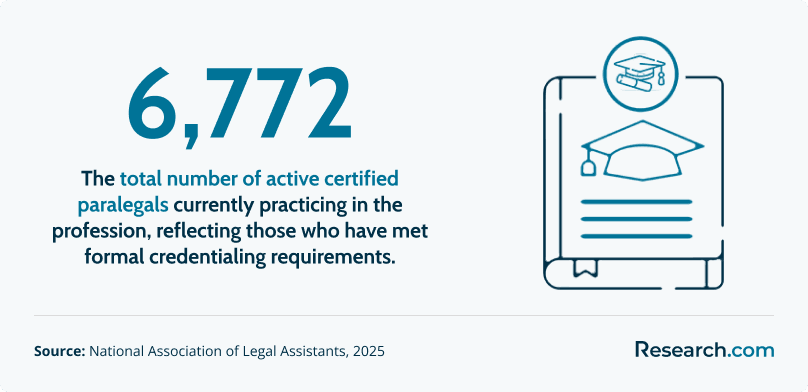
- Consider professional certification: Certifications such as the Certified Paralegal (CP) or Professional Paralegal (PP) designation can demonstrate commitment and may help candidates stand out for corporate or specialized roles.
- Apply strategically for entry-level roles: Search beyond the title “corporate paralegal.” Entry titles may include junior paralegal, legal assistant, corporate legal assistant, contracts assistant, compliance assistant, records assistant, or entity management assistant.
- Evaluate advanced education carefully: A bachelor’s or master’s degree in business, corporate law, legal studies, or a related area may support advancement, but it should match your career goals and budget. Some professionals compare flexible graduate options, including the most affordable online criminal justice degree pathways, when considering broader legal or justice-focused education.
- Keep learning after you are hired: Take continuing education courses in corporate law, compliance, contract management, legal technology, and industry-specific regulation. Ongoing learning can help you move from routine support work into more specialized assignments.
A common mistake is applying only to roles with the exact title “corporate paralegal.” Many professionals enter through legal assistant, contracts, compliance, records, or administrative legal roles and then move into formal paralegal positions after gaining relevant experience.
What are common career advancement opportunities for paralegals?
Corporate paralegals can advance by becoming more specialized, more efficient, and more trusted with complex legal work. Advancement does not always mean leaving the paralegal field. Many professionals grow into senior paralegal, contracts, compliance, legal operations, or legal management roles.
Useful advancement strategies include:
- Specialize in a high-value area: Expertise in mergers and acquisitions, securities, intellectual property, compliance, privacy, corporate governance, or contracts can make a paralegal more competitive for senior assignments.
- Build a professional network: Paralegal associations, legal conferences, local bar events, mentors, and internal company relationships can lead to referrals, training opportunities, and visibility with attorneys or hiring managers.
- Develop leadership and management skills: Supervising junior staff, training new hires, coordinating closing teams, or leading legal operations projects can show readiness for senior paralegal or legal manager roles.
- Document your impact: Track filings managed, contracts supported, entities maintained, projects completed, systems improved, and deadlines met. Specific examples strengthen performance reviews and salary discussions.
- Seek recognition through writing or speaking: Internal trainings, articles, presentations, or panel participation can help build credibility in a specialty area.
- Pursue continuing legal education: Staying current on corporate law, compliance trends, and regulatory changes supports long-term growth. Some professionals also review criminal law paralegal career requirements to compare practice areas and broaden their legal knowledge.
Career growth is often tied to the work you volunteer to handle. Paralegals who take on entity management, due diligence coordination, contract process improvements, compliance calendars, or technology upgrades may become more visible than those who perform only isolated administrative tasks.
What is the job outlook for corporate paralegals?
The job outlook for corporate paralegals is positive because companies and law firms continue to need cost-effective legal support for contracts, compliance, governance, transactions, and records management. Demand for these professionals is projected to grow 14% from 2018 to 2028, significantly faster than the average for all occupations.
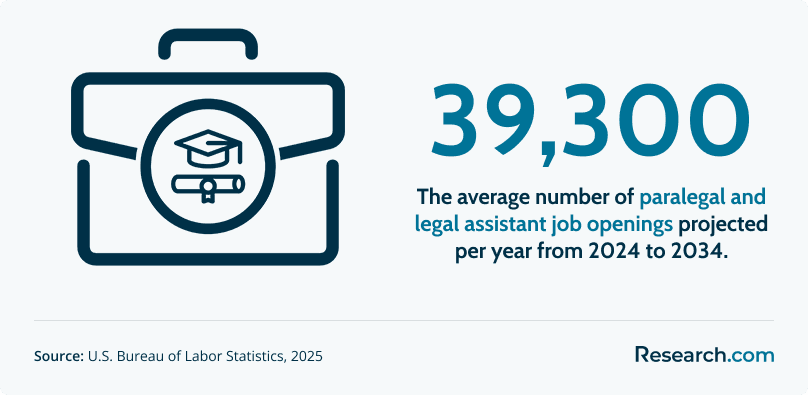
On average, about 39,300 openings for paralegals and legal assistants are projected each year over the decade. These openings may result from business growth, turnover, retirements, and the continuing need for legal support across industries.
The strongest opportunities are likely to favor candidates who combine traditional paralegal skills with business awareness, technology comfort, and specialized knowledge in contracts, compliance, entity management, intellectual property, or transactions. Higher-paying in-house and senior corporate roles may be competitive, so practical experience and specialization matter.
What challenges do corporate paralegals typically face?
Corporate paralegal work can be stable and intellectually engaging, but it is also demanding. The main challenges involve heavy workloads, tight deadlines, changing regulations, complex transactions, and limited advancement structures in some organizations.
Heavy Workload and Tight Deadlines
About 79% of corporate legal departments reported increased workloads over the past year, while staffing levels remained flat or decreased. This can mean competing priorities, longer hours, and pressure to move quickly without sacrificing accuracy. Reliable calendars, matter trackers, checklists, and early communication with attorneys are essential.
Rapidly Changing Regulations
Only 36% of legal departments reported increasing technology budgets to manage evolving laws. When legal requirements change but tools and staffing do not, paralegals may spend more time monitoring rules, updating records, and tracking compliance manually.
Complex Corporate Transactions
In large law firms, paralegals account for 9% or more of total billed hours in around 23% of firms. Transaction work can involve many parties, document versions, signature packets, closing checklists, due diligence requests, and filing deadlines. Small errors in names, dates, exhibits, or approvals can delay a closing or create legal risk.
Career Growth and Advancement Challenges
Approximately 46% of paralegals report working extra hours without overtime pay, reflecting the pressure many legal support professionals face. Advancement may be slower without specialization, certification, technology skills, or a clear path into senior paralegal, compliance, contracts, or legal operations roles.
Maintaining Accuracy Under Pressure
Paralegals spend nearly 70% of their day on non-billable administrative tasks, which can contribute to stress and burnout when workloads are not managed well. Accuracy remains critical even during routine tasks because corporate records, filings, and contracts can have long-term legal consequences.
The best way to manage these challenges is to build repeatable systems. Use checklists, naming conventions, version-control practices, calendar reminders, status trackers, and clear escalation rules. These habits reduce preventable errors and help paralegals work more effectively under pressure.
What are the alternative career options for corporate paralegals?
Corporate paralegal experience can transfer into several legal, compliance, contracts, business operations, and management roles. The best alternative depends on whether you prefer regulation, contracts, intellectual property, litigation, or team leadership.
1. Corporate Compliance Specialist
Corporate compliance specialists help organizations follow regulatory requirements and internal policies. They may assist with audits, training materials, risk assessments, policy updates, investigations, and compliance reporting. This path can suit corporate paralegals who enjoy rules, process improvement, and risk management.
Median salary: $57,330 per year
2. Contract Manager
Contract managers oversee the drafting, review, negotiation, execution, storage, renewal, and performance tracking of business agreements. The role often involves coordination with sales, procurement, finance, legal, and operations teams. Professionals interested in law, government, and policy may also compare options such as a fast track bachelor’s in political science online when planning broader education goals.
Median salary: $106,034 per year
3. Intellectual Property Paralegal
Intellectual property paralegals assist with trademarks, patents, copyrights, licensing records, portfolio monitoring, filings, renewals, and correspondence with regulatory agencies. This path may fit paralegals who enjoy detailed docketing, brand protection, technology, creative industries, or innovation-focused legal work.
Median salary: $122,606 per year
4. Corporate Litigation Paralegal
Corporate litigation paralegals support attorneys in civil and commercial disputes. Their work may include discovery, pleadings, evidence organization, deposition preparation, trial materials, and settlement support. This option may be better for paralegals who prefer investigations, disputes, and case strategy over transactional work.
Median salary: $68,496 per year
5. Senior Paralegal / Legal Manager
Senior paralegals or legal managers supervise paralegal teams, coordinate complex legal projects, improve workflows, train junior staff, and help legal departments operate more efficiently. This path can suit experienced paralegals who want leadership responsibility while staying close to legal operations.
Median salary: $74,187 per year
Here’s What Graduates Have to Say About Their Corporate Paralegal Careers
Graduate experiences can help prospective students understand how corporate paralegal training may translate into workplace skills. These accounts point to common reasons people choose the path: flexibility, confidence with legal documents, career mobility, and preparation for corporate legal settings.
- : "Pursuing my corporate paralegal credential online gave me the flexibility I needed while juggling a full-time job. I was able to dive deep into corporate law topics and gain practical knowledge that directly applies to the work I do now. The program really helped me build confidence in handling complex legal documents and contracts. I feel prepared to step into challenging roles in corporate law settings. — Patrick"
- : "My company encouraged us to grow our skill sets, and I chose the corporate paralegal program to advance my career. The online learning modules were concise but packed with useful information, and I could immediately apply what I learned to my daily tasks. Within months, I felt more confident handling contracts and compliance matters. It was exciting to see tangible results from my efforts. — Benson"
- : "Switching from retail management to a legal career seemed impossible until I found this online program. It let me learn in the evenings and weekends, which kept me from sacrificing income. The assignments and case studies were engaging and mirrored what happens in real corporate law offices. Finishing the program gave me the credentials to start fresh in a field I love. — Danica"
Key Findings
- Corporate paralegals support business legal work, including contracts, compliance, corporate governance, filings, records management, and transaction coordination.
- Common education paths include an associate degree, bachelor’s degree, paralegal certificate, corporate law coursework, internships, and continuing legal education.
- The role requires both technical and soft skills, including legal research, document preparation, filing knowledge, attention to detail, communication, time management, critical thinking, and confidentiality.
- Corporate paralegals work across many sectors. About 33% work in professional services firms, 13% in Fortune 500 companies, 9% in finance and banking, 6% in manufacturing, and 6% in technology.
- Corporate paralegals in the United States earn an average of $80,694 per year, or approximately $39 per hour. Pay is affected by experience, location, education, employer size, industry, and responsibility level.
- The job outlook is favorable, with demand for corporate paralegals projected to grow 14% from 2018 to 2028 and about 39,300 openings for paralegals and legal assistants projected each year over the decade.
- The work can be demanding because of heavier workloads, tight deadlines, changing regulations, complex transactions, limited advancement paths, and the need to maintain accuracy under pressure.
- Corporate paralegal experience can lead to related roles such as corporate compliance specialist, contract manager, intellectual property paralegal, corporate litigation paralegal, or senior paralegal/legal manager.
Other Things You Should Know About Becoming a Corporate Paralegal
In 2027, corporate paralegals primarily support legal teams by managing and drafting documents, conducting legal research, handling regulatory filings, and ensuring corporate compliance. They play a key role in facilitating mergers and acquisitions, and they often assist with the preparation of shareholder agreements and board meeting documents.
In 2027, a corporate paralegal typically needs a bachelor's degree and a paralegal certificate. Some positions may require relevant work experience within corporate legal departments. Continued professional development is often encouraged to keep up with evolving legal practices and technologies.
References
- Bureau of Labor Statistics. (2023). May 2023 OES paralegals and legal assistants. Retrieved from BLS
- Bureau of Labor Statistics. (n.d.). Paralegals and legal assistants. Retrieved from BLS
- Complex Discovery. (2022). Report: LegalVIEW insights, Vol. 4 – Statistical differences in law firm staffing ratios. Retrieved from Complex Discovery
- Data USA. (n.d.). Paralegals and legal assistants. Retrieved from Data USA
- Indeed. (n.d.). Intellectual property paralegal salaries. Retrieved from Indeed
- Legal.io. (n.d.). Corporate law departments confront rising workloads, flat resources. Retrieved from Legal.io
- Minutebox. (n.d.). How to help your paralegal team avoid feelings of burnout. Retrieved from Minutebox
- NALA – The Paralegal Association. (2023a). 2020 utilization and compensation survey. Retrieved from NALA
- NALA – The Paralegal Association. (2023b). CP certification activities, May 2025. Retrieved from NALA
- Salary.com. (n.d.). Corporate paralegal salary. Retrieved from Salary.com
- ZipRecruiter. (n.d.-a). Contract manager salary. Retrieved from ZipRecruiter
- ZipRecruiter. (n.d.-b). Litigation paralegal salary. Retrieved from ZipRecruiter
- ZipRecruiter. (n.d.-c). Senior paralegal salary. Retrieved from ZipRecruiter
- Zippia. (n.d.-a). Compliance specialist salaries. Retrieved from Zippia
- Zippia. (n.d.-b). Corporate paralegal jobs. Retrieved from Zippia


