
2027 What Does a Family Law Paralegal Do: Responsibilities, Requirements, and Salary

Co-Founder and Chief Data Scientist
Family law paralegal work is for people who want a legal career that combines careful documentation, client contact, deadlines, and emotionally sensitive case support. These professionals help attorneys handle divorce, child custody, adoption, domestic violence, support, and property division matters, but they do not practice law or give legal advice.
This guide explains what family law paralegals do, where they work, how they differ from lawyers, what education and certification options can help, and what salary range is commonly associated with the role. It is designed for students, career changers, and legal support professionals deciding whether family law is the right paralegal specialty for them.
Key Benefits of Learning About Family Law Paralegal Responsibilities, Requirements, and Salary
- Understanding what family law paralegals do clarifies whether you’d enjoy working in areas like divorce, custody, or adoption law before committing to a paralegal degree or certification.
- A paralegal degree can lead to roles in private law firms, legal aid organizations, or family courts—offering stable employment and room for growth in a field with consistent demand.
- According to the U.S. Bureau of Labor Statistics, paralegals earn a median annual salary of around $60,970, with family law specialists often earning more as they gain experience or certification.
- Many accredited schools offer online paralegal programs, allowing you to study flexibly, balance work and family, and prepare for a career in family law without relocating.
What are the main responsibilities of a family law paralegal?
A family law paralegal supports attorneys with the legal, administrative, and client-service work required in family-related cases. The role is detail-heavy and deadline-driven. It also requires discretion, because clients often share financial records, parenting concerns, medical information, and other sensitive details.
Family law paralegals usually work under attorney supervision and help move cases from intake through settlement, hearing, or trial preparation. Their core responsibilities include:
- Preparing legal documents: Drafting petitions, motions, affidavits, financial disclosures, parenting plans, settlement agreements, discovery requests, and other documents used in divorce, custody, support, adoption, and protection order matters.
- Managing court filings and deadlines: Filing documents with the court, tracking service of process, calendaring hearings, monitoring response dates, and helping attorneys avoid missed procedural deadlines.
- Communicating with clients: Collecting documents, answering procedural questions, providing case updates, and helping clients understand what information the attorney needs. Paralegals must be clear and empathetic without giving legal advice.
- Organizing case files and evidence: Maintaining pleadings, financial records, correspondence, exhibits, witness information, parenting schedules, and discovery materials so attorneys can quickly prepare for negotiations or hearings.
- Conducting legal and factual research: Reviewing family law statutes, local court rules, prior rulings, and case facts to support attorney strategy and document preparation.
- Assisting with hearings and trials: Preparing exhibits, summarizing depositions or interviews, coordinating witnesses, assembling trial binders, and helping attorneys stay organized during court proceedings.
- Handling administrative support: Scheduling meetings, maintaining billing records, coordinating with courts and opposing counsel, and keeping the case management system current.
The best family law paralegals are organized, calm under pressure, precise with language, and able to work professionally with clients who may be experiencing conflict, grief, financial stress, or fear.
How is a family law paralegal different from a family lawyer?
A family law paralegal and a family lawyer may work on the same cases, but they do not have the same authority. The lawyer is responsible for legal advice, strategy, negotiation, court representation, and professional accountability. The paralegal supports that work but must operate under attorney supervision.
- Education and credentials: A family lawyer must earn a Juris Doctor (JD) degree and pass the state bar exam to practice law. A family law paralegal typically holds an associate degree, bachelor’s degree, or certificate in paralegal studies or a related field. For a broader look at paralegal work, see what a paralegal does.
- Legal authority: Lawyers can give legal advice, represent clients in court, sign legal pleadings where permitted, negotiate on behalf of clients, and make legal arguments. Paralegals cannot give legal advice, set legal strategy, represent clients, or appear as the client’s advocate in court.
- Daily duties: Lawyers focus on case strategy, client counseling, settlement negotiations, hearings, and trial advocacy. Paralegals focus on document preparation, research, file organization, discovery support, scheduling, and client follow-up.
- Client contact: Paralegals may communicate with clients frequently about paperwork, deadlines, and case logistics. Lawyers handle legal recommendations, risk analysis, settlement decisions, and representation in contested matters.
- Responsibility for final work product: A paralegal may draft documents, but the supervising attorney reviews and approves legal work before it is used or filed.
The simplest distinction is this: a family lawyer decides and advocates; a family law paralegal prepares, organizes, researches, and supports.
Where do most family law paralegals work?
Most family law paralegals work in private law firms that handle divorce, custody, adoption, support, domestic violence, and related domestic matters. These employers range from solo practices to larger firms with dedicated family law teams. Some students enter the field through accelerated paralegal programs that can shorten the training timeline for entry-level legal support roles.
Common work settings include:
- Private family law firms: The most common setting. Paralegals may handle intake, pleadings, discovery, court filings, trial preparation, and client communication across many active cases.
- Legal aid organizations: These roles often involve helping low-income clients with custody, protection orders, support issues, housing-related family matters, or access to public benefits connected to family stability.
- Government agencies: Family law paralegals may work with state or county family courts, child protective services, prosecutor offices, public defender offices, or child support enforcement units.
- Nonprofit advocacy groups: Some paralegals support organizations focused on domestic violence, child welfare, guardianship, immigration-related family matters, or mediation services.
- Corporate legal departments: This is less common, but some large employers may use legal support staff for employee-related legal documentation or benefit-related family matters.
- Remote or freelance legal support: Experienced paralegals may assist attorneys with document drafting, research, file organization, and case management on a contract or remote basis. These roles usually require strong judgment and prior office experience.
The best setting depends on your priorities. Private firms may offer faster exposure to litigation and higher caseloads. Legal aid and nonprofit work may offer more mission-driven client service. Government roles may provide structured procedures and predictable workflows.
How much does a family law paralegal make per year?
The average family law paralegal salary in the U.S. typically ranges from $50,000 to $70,000 per year, depending on location, experience, education, certification, employer type, and caseload complexity.
Several factors have the biggest effect on pay:
- Experience level: Entry-level family law paralegals usually earn between $40,000 and $50,000 annually. Those with five or more years of experience or advanced certifications can earn $70,000 or more.
- Location: Paralegals in major cities like New York, Los Angeles, or Washington, D.C. tend to earn more because of higher living costs and stronger demand. Smaller cities and rural areas generally pay less.
- Employer type: Private law firms often pay more than nonprofit or government agencies, especially when the firm handles high-volume litigation or complex divorce and custody matters.
- Education and certification: A bachelor’s degree or a professional credential from organizations such as NALA (National Association of Legal Assistants) or NFPA (National Federation of Paralegal Associations) can improve competitiveness for better-paid roles.
- Specialized case experience: Paralegals with experience in high-asset divorce, contested custody, adoption, protective orders, or complex discovery may be more valuable to employers.
According to the U.S. Bureau of Labor Statistics (BLS, 2024), the median annual wage for all paralegals and legal assistants was about $60,970, which includes family law paralegals across various settings.
When comparing job offers, look beyond the base salary. Benefits, overtime expectations, billable-hour pressure, hybrid work options, training, and attorney support can make a major difference in overall job quality.
How do you start a career as a family law paralegal?
Starting a career as a family law paralegal usually means combining formal legal training with practical experience in document preparation, client communication, and court procedures. You do not need to become a lawyer, but employers generally expect you to understand legal terminology, deadlines, confidentiality, and professional ethics.
- Choose the right education path: Most employers prefer candidates with an associate degree, bachelor’s degree, or certificate in paralegal studies. If you want a program that follows recognized quality standards, compare aba approved paralegal programs online before enrolling.
- Take family law–related courses: Prioritize coursework in family law, legal research, legal writing, civil procedure, ethics, litigation, and legal technology. These subjects connect directly to divorce, custody, support, adoption, and domestic violence cases.
- Build practical document skills: Learn how to draft pleadings, discovery requests, affidavits, financial disclosure forms, parenting plans, and correspondence. Accuracy and formatting matter because family law documents are often filed with courts and reviewed by judges.
- Gain hands-on experience: Look for internships, externships, legal assistant roles, or entry-level positions in family law firms, courts, legal aid offices, or nonprofit organizations. Practical exposure helps you understand client intake, deadlines, and case flow.
- Consider certification: Certification is optional in many places, but credentials from groups such as NALA or NFPA can strengthen your résumé and show commitment to the profession.
- Develop client-facing skills: Family law clients may be anxious, angry, or overwhelmed. Strong communication, patience, confidentiality, and emotional boundaries are essential.
- Apply strategically: Entry-level titles may include paralegal assistant, legal secretary, family law clerk, litigation assistant, or legal assistant. These roles can lead to full paralegal responsibilities as you gain experience.
Before accepting a role, ask about training, attorney supervision, caseload size, billable expectations, court filing systems, and whether you will interact directly with clients. These details shape how quickly you learn and how manageable the job will be.
What career advancement opportunities exist for family law paralegals?
Family law paralegals can advance by gaining experience, improving technical legal skills, earning credentials, and developing judgment in complex or sensitive cases. Advancement does not always mean leaving family law; many professionals grow by becoming more specialized within it.
- Senior or lead paralegal: Experienced paralegals may manage complex files, train junior staff, review case workflows, coordinate discovery, and work closely with attorneys on high-conflict or document-heavy cases.
- Paralegal manager or office administrator: Paralegals with strong leadership and systems skills may supervise support staff, manage calendars and procedures, coordinate billing workflows, and improve firm operations.
- Specialist in complex family law matters: Some paralegals build expertise in high-asset divorces, child custody disputes, adoption, guardianship, protective orders, or mediation support. Specialization can make a paralegal more valuable to firms with demanding caseloads.
- Freelance or contract paralegal: Experienced professionals may provide document drafting, research, file organization, or litigation support to attorneys on a project basis. This path can offer flexibility but usually requires strong experience, technology skills, and careful compliance with rules on attorney supervision.
- Further education and law school: Some paralegals later decide to become attorneys. Others strengthen their credentials through continuing education or a paralegal certificate online to qualify for more specialized roles.
- Teaching or training: Experienced paralegals may teach paralegal studies, train new legal support staff, lead workshops, or create practice resources for law firms and education programs.
To advance, keep a record of the work you can document: types of pleadings drafted, court systems used, discovery handled, case management tools mastered, and specialty areas supported. Concrete experience is often more persuasive than a generic job title.
What degree do you need to become a family law paralegal?
To become a family law paralegal, you typically need at least an associate degree in paralegal studies, a bachelor’s degree in legal studies or a related field, or a paralegal certificate if you already have college education in another discipline. Requirements vary by employer and state, but formal training is strongly preferred because family law work involves court procedure, legal writing, deadlines, and confidential client information.
- Associate degree in paralegal studies: This is a common entry route for new paralegals. It takes about two years to complete and usually covers legal research, writing, ethics, civil litigation, legal technology, and introductory family law concepts. Students who need flexibility may consider a paralegal studies online degree.
- Bachelor’s degree in legal studies or a related field: A four-year degree can provide broader preparation and may help with competitive firms, supervisory roles, or future law school plans. Relevant majors may include legal studies, criminal justice, political science, psychology, sociology, or social work, especially when paired with paralegal coursework.
- Certificate in paralegal studies: A certificate can be a practical option for people who already hold a college degree and want targeted training in legal research, writing, ethics, and litigation support. A post-baccalaureate certificate usually takes six months to one year.
- ABA-approved programs: Many employers prefer graduates of American Bar Association (ABA)-approved paralegal programs because they meet national standards for curriculum quality, legal ethics, and professional preparation.
A degree is not always legally required, but relying only on informal training can limit your options. Family law employers often look for candidates who can draft accurately, follow court rules, handle confidential information, and communicate professionally with clients from the first weeks on the job.
How long does it take to become a family law paralegal?
Becoming a family law paralegal typically takes two to four years, depending on your education path, prior college credits, and how quickly you gain practical legal experience. Some people enter faster through certificate programs, while others choose a bachelor’s degree for broader preparation.
- Associate degree path (2 years): An associate degree in paralegal studies takes about two years and is one of the most direct routes into entry-level paralegal work.
- Bachelor’s degree path (4 years): A bachelor’s degree in legal studies, criminal justice, or a related field usually takes four years and may offer more depth, stronger advancement potential, and broader career flexibility.
- Certificate program (6 months to 1 year): If you already have a college degree, a paralegal certificate can provide focused training in legal research, writing, ethics, and family law basics in less than a year.
- On-the-job transition: Some legal assistants, receptionists, or administrative staff move into paralegal roles after gaining law office experience, though this path is less common today and may depend heavily on employer training.
Most people can qualify for an entry-level family law paralegal job within about two years if they choose an accredited associate program and pursue internships or legal assistant experience while studying. The timeline can be shorter for degree holders completing a certificate and longer for students attending part time.
What is the difference between a certified and non-certified paralegal?
The difference between a certified and non-certified paralegal is professional credentialing, not legal authority. Neither certified nor non-certified paralegals can practice law, give legal advice, represent clients, or replace attorney supervision.
- Certified paralegal: A certified paralegal has passed an exam or met credentialing requirements through a recognized organization such as NALA, NFPA, and NALS. These credentials show that the paralegal has met defined standards in legal knowledge, ethics, and professional skills. To compare credentialing paths, review the requirements for paralegal certification.
- Non-certified paralegal: A non-certified paralegal may still have a degree, certificate, or substantial legal experience but has not earned a professional certification. Certification isn’t required in most states, so many non-certified paralegals work legally and effectively.
- Employer perception: Certification can make a candidate more competitive, especially for firms that handle complex or high-volume family law cases. It can also help career changers prove competency when they have limited legal work history.
- Continuing education: Certified paralegals usually must complete continuing education to maintain their credential. Non-certified paralegals do not have that formal requirement unless imposed by an employer.
- Scope of work: Both certified and non-certified paralegals can perform core paralegal duties under attorney supervision, including research, drafting, filing, discovery support, and client communication.
Certification is best understood as a career signal. It does not expand legal authority, but it can improve credibility, demonstrate commitment, and support advancement.
How can certification improve job prospects and salary?
Certification can improve a family law paralegal’s job prospects by giving employers evidence of tested knowledge, ethical awareness, and professional commitment. It is especially useful when applying to competitive firms, seeking promotion, or moving into specialized family law work.
- Stronger professional credibility: Credentials from organizations such as NALA, NFPA, or NALS show that you have met recognized standards rather than relying only on a job title or informal experience.
- More competitive applications: Some law firms, government agencies, and corporate legal departments prefer or require certified paralegals for roles involving complex document preparation, litigation support, and client-facing responsibilities.
- Higher earning potential: Certified paralegals typically earn 10%–20% more than their non-certified peers. Employers may value certification because it can reduce training needs and signal readiness for more complex work.
- Better advancement options: Certification can support movement into senior paralegal, lead paralegal, paralegal manager, or specialized family law roles.
- Specialization opportunities: Continuing education tied to certification can help paralegals build knowledge in family law, estate planning, mediation support, litigation, or other related areas.
- Professional networking: Certifying organizations often connect members to continuing education, events, legal updates, and peer networks that can lead to job leads or mentorship.
Certification is not a guarantee of a higher salary, but it can strengthen your bargaining position when paired with relevant experience, strong references, and measurable family law skills.
Here's What Family Law Paralegals Have To Say About Their Career
- : "Studying family law paralegal gave me the confidence to work directly with clients going through some of the hardest times in their lives. The coursework taught me how to manage sensitive cases with empathy and professionalism, which I now use every day in my job at a family law firm. — Jessica"
- : "The family law paralegal program opened my eyes to how much impact paralegals have in real legal outcomes. Learning to draft court documents, research laws, and assist attorneys in custody and adoption cases made me feel like an essential part of the justice process. — Marcus"
- : "I chose to study family law because I wanted a career that combined legal knowledge with helping people. The program’s focus on communication and case management prepared me for fast-paced work while keeping the human side of every case in perspective. — Elena"
Key Findings
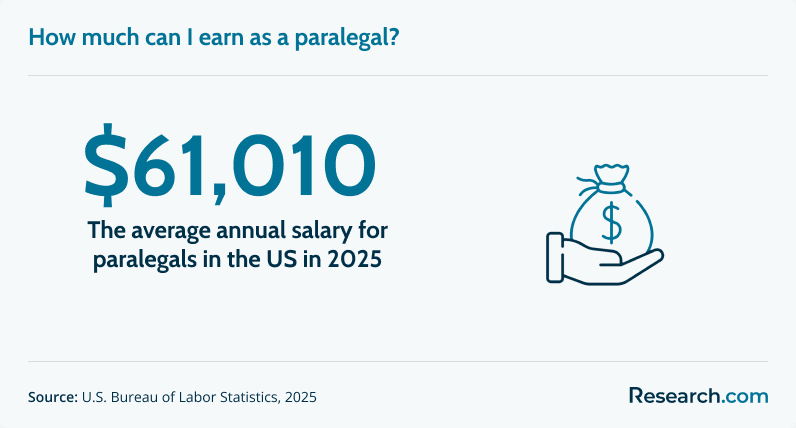
- As of May 2024, the median annual wage for paralegals and legal assistants was $61,010.
- The United States employs more than 376,200 paralegals nationwide.
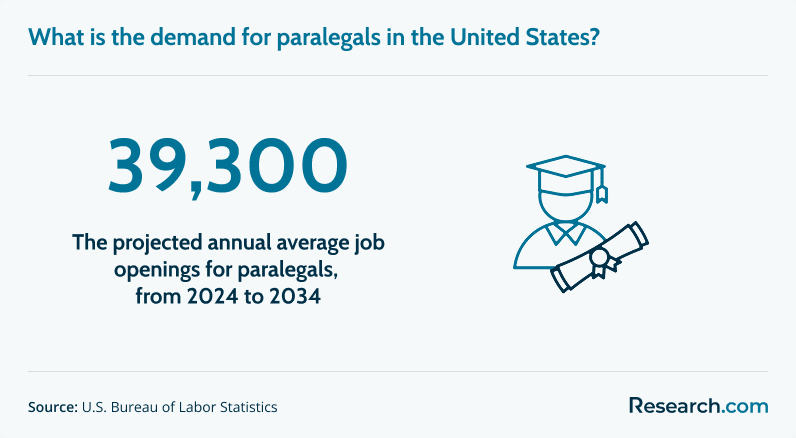
- Each year, an average of 39,300 new job openings for paralegals and legal assistants are projected over the decade.
- Paralegals working in the software industry earn an average annual wage of $123,720.
- Around 51% of paralegals hold a bachelor’s degree.
Other Things You Should Know About Family Law Paralegal Responsibilities, Requirements, and Salary
In 2027, family law paralegals support attorneys by drafting legal documents, organizing case files, conducting client interviews, and managing court filings. They also research relevant legal precedents and assist in preparation for hearings or trials, ensuring a seamless workflow within the legal team.
In 2027, family law paralegals are typically required to have at least an associate degree in paralegal studies or a related field. Many employers prefer candidates with a bachelor's degree and certification from a reputable paralegal organization, which demonstrates proficiency and dedication to the field.
In 2027, family law paralegals can pursue certifications like the Paralegal Advanced Competency Exam (PACE) and the Certified Paralegal (CP) credential. These certifications, often offered by national associations, enhance credibility and job prospects by validating specialized skills and knowledge.
References
- American Bar Association. (n.d.). What paralegals do. Retrieved from https://www.americanbar.org/
- Bureau of Labor Statistics. (2024). Paralegals and legal assistants: Occupational outlook handbook. U.S. Department of Labor. Retrieved from https://www.bls.gov/ooh/legal/paralegals-and-legal-assistants.htm
- National Association of Legal Assistants (NALA). (n.d.). About paralegals and the paralegal profession. Retrieved from https://nala.org/
- National Federation of Paralegal Associations (NFPA). (n.d.). What is a paralegal? Retrieved from https://www.paralegals.org/
- Indeed Editorial Team. (2023. What does a family law paralegal do? (With skills and salary). Indeed Career Guide. Retrieved from https://www.indeed.com/career-advice/


