
2027 What Does an Application Security Engineer Do: Responsibilities, Requirements, and Salary

Co-Founder and Chief Data Scientist
The increasing reliance on custom software and cloud-native applications makes the Application Security Engineer a critical role in modern technology. The employment projection for Information Security Analysts shows this demand, expected to grow 29% from 2024 to 2034, significantly outpacing the average for all occupations (Bureau of Labor Statistics, 2025). This rapid growth confirms the industry's need for specialists to integrate security throughout the development process.
In this article, I will explain the main duties that define the Application Security Engineer role and how it differs from a general Cybersecurity Analyst. I will also review the essential technical skills, discuss the most valued certifications, and outline the typical career steps for advancement. Finally, we will look at the average national salary and job outlook, including which major U.S. technology hubs pay the highest compensation.
Key Things You Should Know About Being an Application Security Engineer
- Key AppSec duties include performing code reviews, managing vulnerabilities, and developing secure coding standards for development teams to follow.
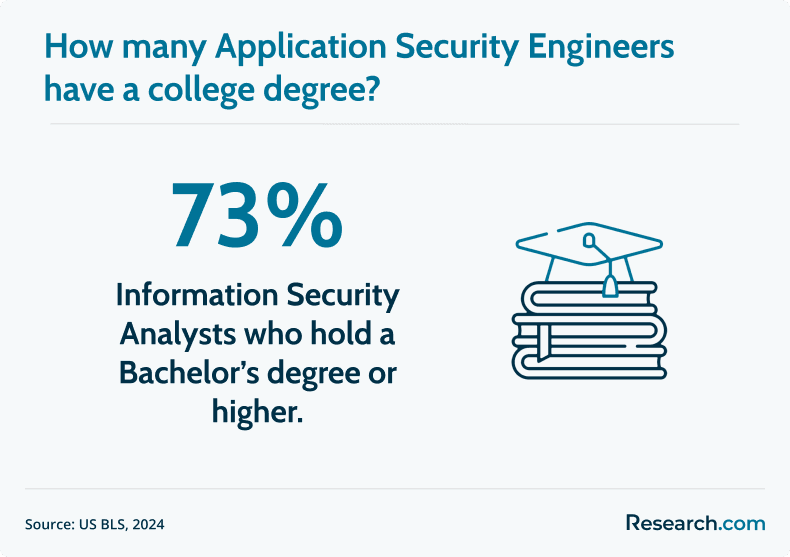
- A Bachelor of Science in Computer Science is preferred for Application Security Engineers, with 73% holding a bachelor's degree or higher according to BLS data.
- The national average base salary for an Application Security Engineer is approximately $138,117, coming from $132,000 at entry-level to $172,000 with four to six years of experience.
What main duties define the job of an Application Security Engineer?
Application Security Engineers, or AppSec Engineers, proactively embed security into the development process rather than treating it as a reactive measure. These professionals bridge development and cybersecurity teams, serving as experts on secure design and code-level vulnerabilities.
Their responsibilities cover the entire Software Development Lifecycle (SDLC), from initial architecture reviews through post-deployment monitoring. Their primary duties include:
- Performing Threat Modeling and Risk Assessment: Engineers examine application designs and architectures to identify potential attack vectors and prioritize risk mitigation efforts before development begins.
- Integrating Security Automation (DevSecOps): They build and maintain automated security testing tools, such as Static Analysis Security Testing (SAST) and Dynamic Analysis Security Testing (DAST), directly into the Continuous Integration/Continuous Delivery (CI/CD) pipelines.
- Conducting Code Review and Vulnerability Management: They perform in-depth manual and automated code reviews to find and track security flaws, then collaborate with developers to remediate vulnerabilities and follow security best practices.
- Defining and Enforcing Secure Coding Standards: A key duty is developing and communicating secure coding policies and providing training to foster a security culture among development teams.
- Leading Security Incident Response: In an application-level breach, the Engineer assists in response and recovery, helping to investigate the cause and applying forensic analysis to prevent future recurrence.
This comprehensive set of duties requires a unique blend of development proficiency, knowledge of hacker tactics, and systems-level critical thinking.
How does this engineer differ from a general Cybersecurity Analyst?
Application Security Engineers secure application design and code, while general Cybersecurity Analysts monitor network, system, and infrastructure.
Analysts maintain a reactive position, monitoring Security Information and Event Management (SIEM) tools, investigating alerts, and responding to real-time network incidents as they arise. They analyze existing systems for weaknesses and are often the first line of defense.
Conversely, AppSec Engineers are proactive designers and architects of security solutions. They build and implement protective systems, creating security controls for software and working to eliminate source code vulnerabilities before deployment. Engineers often design the security architecture that the analysts later monitor.
What technical skills and languages are essential for application security?
Effective AppSec professionals must possess expertise in three distinct areas to secure software throughout the development process: programming languages, cloud technologies, and advanced security testing methodologies.
A deep understanding of the SDLC is also essential to ensure security is integrated from the start. Engineers use these skills to build and maintain automated security pipelines (DevSecOps) and proactively identify threats.
What programming languages are necessary for this role?
Application Security Engineers require proficiency in multiple programming languages to understand code base intricacies and inherent security flaws. This fluency is essential for conducting manual code reviews, collaborating with developers, and building custom security tools.
The most necessary programming languages for AppSec Engineers include:
- Python: This is a fundamental language for most cybersecurity roles, valued for scripting, task automation, and developing tools used in security assessments and penetration testing.
- JavaScript: Essential for modern application security, as it is the language of the web. Expertise in JavaScript is critical for identifying and mitigating client-side vulnerabilities like Cross-Site Scripting (XSS) in web applications.
- Java and C#: Important for those working in enterprise environments, where these languages are widely used to build complex, business-critical applications. AppSec Engineers must understand the security pitfalls unique to these virtual machine and object-oriented environments.
- Go or Rust: Knowledge of these lower-level, memory-safe languages is increasingly valuable for infrastructure and secure system development, which helps prevent memory corruption vulnerabilities that plague older languages.
Because multiple languages are often used by professionals, the following chart shows usage popularity of programming, scripting, and markup languages among professional developers.
What specific knowledge of cloud platforms is required?
Most modern software is built and deployed in cloud environments so AppSec engineers must understand how to secure native cloud services, configuration management, and the architectural differences across major providers.
The specific cloud knowledge required focuses on several critical areas:
- Major Cloud Ecosystems: Engineers must be proficient in at least one leading platform, such as Amazon Web Services (AWS), Microsoft Azure, or Google Cloud Platform (GCP).
- Identity and Access Management (IAM): Understanding IAM models is crucial for controlling who or what can access application resources and services within the cloud environment.
- Cloud-Native Network Security: Knowledge of cloud firewalls, security groups, and virtual private clouds (VPCs) is required to segment and protect applications from unauthorized access.
- Secure Configuration and Compliance: AppSec Engineers must understand secure default configurations for cloud resources and ensure deployments meet industry compliance standards (e.g., SOC 2, HIPAA).
- Infrastructure as Code (IaC) Security: Proficiency in securing IaC tools like Terraform or CloudFormation is necessary to prevent vulnerabilities from being provisioned into the cloud infrastructure automatically.
Which security testing methodologies should you master?
AppSec Engineers must master multiple testing techniques integrated throughout the SDLC to detect vulnerabilities in code, configurations, and third-party components.
The essential security testing methodologies to master include:
- Static Application Security Testing (SAST): This white-box technique analyzes the source code before execution to detect coding flaws and provide early feedback to developers.
- Dynamic Application Security Testing (DAST): This black-box technique tests the running application to identify vulnerabilities that surface in a live environment, such as configuration or session handling flaws.
- Software Composition Analysis (SCA): This essential tool scans open-source components and third-party dependencies to identify known vulnerabilities and licensing risks. Platforms such as Aikido provide this scanning.
- Manual Penetration Testing: Ethical hackers manually simulate real-world attacks to uncover logic flaws, complex business risks, and misconfigurations automated tools often miss.
The best CCSP certification training online courses often offer extensive and practical training in these methodologies.
What degrees are common for entry-level Application Security Engineer positions?
The bachelor's degree is the most common and preferred educational requirement for entry-level Application Security Engineer roles. According to BLS data, 73% of Information Security Analysts hold a bachelor's degree or higher. These degrees provide the core foundation in computer science, system architecture, and programming essential for understanding and securing complex applications.
The depth of skill required necessitates formal training in areas like data structures, algorithms, and networking. The most common degrees found among entry-level AppSec Engineers include:
- Bachelor of Science in Computer Science (BSCS): This degree is highly valued for providing the strongest foundation in fundamental programming, software architecture, and secure coding principles.
- Bachelor of Science in Cybersecurity or Information Security: These specialized degrees offer direct training in security policy, risk management, and ethical hacking methodologies.
- Bachelor of Science in Information Technology (BSIT) or Engineering: These degrees are accepted when supplemented with specialized certifications or strong self-study in development principles.
- Bachelor of Science in Electrical Engineering: This degree is also accepted when applicants demonstrate additional expertise in software security and development principles.
- Bachelor of Science in Software Engineering: This degree is highly relevant and accepted, providing core software development life cycle knowledge crucial for the AppSec role.
- Degrees in Mathematics or Physics: These degrees are accepted when candidates combine their analytical and problem-solving skills with hands-on coding experience and technical security certifications.
The shortest CCSP training online programs can also provide certifications that serve as an equivalent to a degree for applicants with demonstrated coding experience, allowing faster career entry.
How important is a Master's for career advancement in Application Security?
A master's degree is primarily for career acceleration into management and senior architectural roles. A graduate degree provides the advanced theoretical understanding, strategic planning skills, and policy knowledge necessary for leadership. A master's degree in cybersecurity is ideal for roles focused on strategic planning, policy development, and risk management.
The degree's value is tied directly to high-paying, specific career paths. Roles like Security Architect or Security Manager often require or prefer a master's degree. Many job postings for these advanced positions explicitly list graduate-level education as necessary. Professionals with a cybersecurity master's degree consistently earn higher wages, with the median salary often surpassing $110,000 annually in the U.S.
The degree provides a crucial advantage in the competitive landscape of senior leadership. A master's degree significantly fast-tracks career progression and is frequently a prerequisite for executive positions like Chief Information Security Officer (CISO).
What certifications are most valued for this job?
Since AppSec spans coding, cloud, and enterprise risk, the most valued credentials fall into three strategic categories: advanced leadership, secure software, and cloud security. These credentials often lead to increased earning potential, with holders reporting high average salaries.
The most valued certifications for career advancement in Application Security include:
- Certified Information Systems Security Professional (CISSP): This credential is globally recognized and often the most requested in job openings. Many professionals take a CISSP certification course online, to achieve high average salaries, often exceeding $147,000.
- Certified Secure Software Lifecycle Professional (CSSLP): This certification is highly focused on AppSec, validating expertise in incorporating security practices into every phase of the SDLC. CSSLP holders in North America report an average salary of over $147,000.
- Certified Cloud Security Professional (CCSP): This credential assures employers that the holder has the advanced technical knowledge required to design, manage, and secure data, applications, and infrastructure in the cloud. CCSP holders in North America also report average salaries exceeding $148,000.
- Vendor-Specific Cloud Certifications: Certifications like Google Cloud Certified – Professional Cloud DevOps Engineer are valuable as they focus on securing applications within specific platforms (AWS, Azure, or GCP), which is crucial for deployment security.
These industry credentials are vital for AppSec professionals, providing a pathway to high-level technical and managerial roles with significantly increased earning potential.
The graph below shows the technical skills hiring and non-hiring managers are constantly on the lookout for in applicants.
What professional skills should you develop to advance your career?
Professional skills advance Application Security Engineers into management and architectural leadership. Technical skills secure entry, but non-technical abilities lead cross-functional teams and articulate risk to business stakeholders.
The industry needs professionals with the following skills to translate complex technical details into business value:
- Communication and Interpersonal Skills: Articulating complex security requirements, explaining vulnerabilities, and advocating for investments to technical and non-technical stakeholders is vital. Clear, concise writing is also necessary for reports and policies.
- Strategic Thinking and Business Acumen: Leaders must understand how vulnerabilities translate into business risk and align security strategies with organizational goals. Strategic thinking involves anticipating threats and designing long-term solutions.
- Collaboration and Teamwork: Security initiatives require collaboration with development teams, IT staff, and management. Success hinges on building consensus and coordinating duties across departments.
- Problem-Solving and Critical Thinking: Engineers must systematically analyze unique and complex security challenges, determine root causes, and devise innovative solutions. Critical thinking is key for assessing impact and evaluating security measures.
- Continuous Learning and Adaptability: The cybersecurity threat landscape, technologies, and practices evolve constantly, making specialized training, such as those from top online CyberOps training bootcamps, vital in keeping skills current.
These non-technical skills differentiate AppSec professionals for senior leadership and executive positions.
What are the typical career ladder steps for an Application Security Engineer?
The career trajectory for an Application Security Engineer (AppSec) follows a structured progression, moving from technical execution to strategic leadership. This path emphasizes gaining deep technical mastery before advancing to architectural design and management.
The typical entry point is the Associate or Junior Application Security Engineer (0–3 years experience). Here, the focus is on performing basic SAST, triaging low-level vulnerabilities, and supporting code reviews under supervision.
The next major step is the Mid-Level/Senior Application Security Engineer (3–7 years), which involves independent project leadership and deep technical mastery. At this stage, the engineer performs complex threat modeling, drives DevSecOps automation, and mentors junior staff.
The final advancement leads to Principal Engineer, Security Architect, or Security Manager roles (7+ years). The ultimate executive step beyond this level is the Chief Information Security Officer (CISO), focusing on enterprise-wide security governance, risk, and compliance for the entire organization.
What is the average national salary for an Application Security Engineer?
The salary for an Application Security Engineer (AppSec Engineer) is highly competitive due to the specialized nature of securing software code and architecture. The national average base salary for an AppSec Engineer is approximately $138,117 annually, with the average for the broader Security Engineer role standing at $130,139. This compensation often includes a significant range, with salaries for the 75th percentile reaching around $157,000.
Salaries rise predictably with experience and responsibility. An entry-level security engineer (0–1 year of experience) can expect to earn a median total pay of approximately $132,000, which typically increases to $172,000 for those with four to six years of experience. This growth reflects the transition from supporting code reviews to independently designing and managing security solutions.
For a comparable perspective, the median annual wage for the broader occupational group, Information Security Analysts, was $124,910 in May 2024, with the top 10% earning more than $186,420. AppSec Engineers typically exceed this median due to the blend of development and cybersecurity expertise required.
Which major U.S. technology hubs pay the highest salaries for this role?
Salaries for Application Security Engineers are heavily influenced by the high competition for technical talent in major technology hubs and high cost-of-living areas. These regions reflect a high density of large technology and financial firms, elevating compensation well above the national average.
The major U.S. technology hubs and locations that offer the highest average salaries include:
- California (Bay Area): Cities like San Francisco, Cupertino, and Berkeley consistently show top earnings, with average annual compensation for Security Engineers reaching around $180,000-$190,000. Salaries for specialized AppSec roles can be 40% higher than the national average in San Francisco.
- New York City Metro Area: As a world capital for finance and technology, New York City commands high compensation, with Application Security Engineer salaries 39% higher than the national average.
- Nome, Alaska: This region reports one of the highest national average salaries for Security Engineers, reaching approximately $189,514, reflecting unique location incentives and cost-of-living adjustments.
- Washington (Seattle/Redmond Area): The strong presence of major tech employers ensures very competitive pay, contributing to the elevated compensation found across the Pacific Northwest.
- Colorado and Wyoming: Cities like Colorado Springs and Wyoming also report high average salaries for the broader Security Engineer role, often exceeding $170,000.
These high-cost markets often provide overall compensation packages that include substantial stock options, further increasing the total value of the AppSec role.
The graph below shows the cities with the highest average annual salaries for application security engineers.
How do salaries for this role in remote work compare to in-office pay?
Salaries for Application Security Engineers in remote positions often include a salary discount compared to in-office pay in high-cost metropolitan areas. Data for similar technical roles shows that office workers earn a median of $178,500, which is approximately 8% more than remote workers, whose median salary is $164,000. Hybrid roles typically fall between these figures.
This difference stems from employers using geo-differentials, where pay is adjusted based on the employee’s local cost of living, even for fully remote work. For instance, the average remote Security Engineer earns approximately $178,307. However, senior engineers at major companies often breach the $250,000 to $300,000 total compensation threshold through equity, regardless of their remote status.
What is the job outlook for Application Security Engineers?
The job outlook for Application Security Engineers is exceptionally strong. This role belongs to the broader category of Information Security Analysts, a field projected to grow 29% from 2024 to 2034, which is significantly faster than the average for all occupations. This growth rate is expected to generate approximately 52,100 new jobs over the decade.
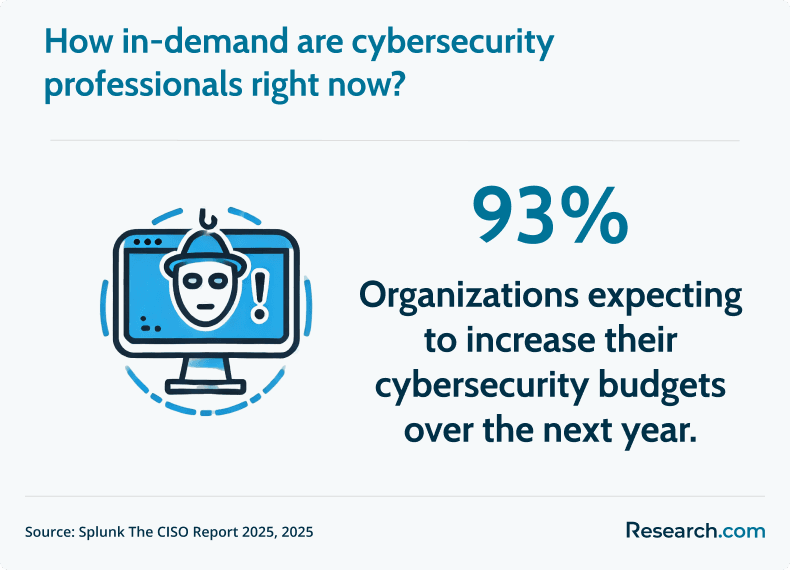
Demand for AppSec Engineers is fueled by several key market factors. Organizations are heavily investing in security to counter increasingly sophisticated attacks, especially as compliance requirements (like GDPR and SEC disclosures) force companies to staff up their cybersecurity teams.
Furthermore, the shift-left security trend, DevSecOps integration, and the widespread adoption of cloud computing and IoT devices, are expanding the attack surface. This makes skilled engineers essential for building secure applications from the ground up.
To capitalize on this growth and move into high-level roles, specialized management training is invaluable. An accelerated preparation course, such as fast-track online CISM certification training, helps professionals quickly gain expertise in governance, risk, and program management, setting them up for senior and executive advancement.
Which sectors show the strongest job growth for Application Security Engineers?
The job growth for Application Security Engineers is concentrated in sectors that rely heavily on proprietary software, data processing, and cloud migration. Since the role focuses on securing the application layer, demand aligns with industries expanding their digital footprint and managing critical, sensitive data.
The strongest job growth and demand for AppSec Engineers are found in the following sectors:
- Computer Systems Design and Related Services: This is the largest employer of Information Security Analysts, holding 22% of the total jobs, as it includes consultancies specializing in software development and security architecture.
- Finance and Insurance: High demand exists due to strict regulatory compliance and the necessity of protecting customer financial data, accounting for 16% of all Information Security Analyst jobs.
- Information Sector: This includes software publishing, data processing, hosting services, and web platforms, which require AppSec expertise to secure their core digital products.
- Professional, Scientific, and Technical Services: This sector, projected to grow 7.5% overall, includes research and consulting that drives the development of new secure applications.
- Healthcare and Social Assistance: Growth is sustained by the expansion of electronic medical records and the need to assure patient privacy, creating specialized application security needs.
These sectors are the largest and fastest-growing employers, offering high-value roles across the Application Security field.
Here’s What Graduates Have to Say About Being an Application Security Engineer
- David: "Transitioning from pure development to AppSec was the smartest career move I made. The daily work now focuses on solving architectural puzzles, not just coding new features, which is far more strategic. The salary bump was significant, and I feel I own a critical part of our product's security posture."
- Sanjay: "The focus on the Secure SDLC made the biggest difference in my career. I stopped chasing bugs and started designing secure frameworks. My company recognized this quickly, promoting me to Senior Engineer within three years. That accelerated path was purely due to AppSec specialization."
- Rich: "My prior experience as a DevOps Engineer was the perfect foundation. I already knew the CI/CD pipeline inside and out, which allowed me to integrate SAST and DAST tools much faster than my peers. That foundational knowledge saved me years of ramp-up time."
Key Findings
- Application Security requires expertise in programming languages like Python and JavaScript, major cloud platforms (AWS, Azure, GCP), and the Secure Software Development Lifecycle (SDLC).
- Holding certifications like CISSP, CSSLP, and CCSP is vital for Application Security Engineers, with holders of these credentials reporting average salaries exceeding $147,000 annually.
- Salaries for AppSec Engineers are highest in major tech hubs, with the Bay Area and New York City reporting average compensation around 40% higher than the national average.
- Remote Application Security Engineers often see an approximate 8% salary discount compared to in-office counterparts, from geo-differentials based on local cost of living.
- AppSec Engineer jobs are projected to grow 29% from 2024 to 2034 and generate approximately 52,100 new openings.
- The strongest job growth is in Computer Systems Design and Finance and Insurance, sectors accounting for 38% of Information Security Analyst jobs.
Other Things You Should Know About Being an Application Security Engineer
Certifications like Certified Information Systems Security Professional (CISSP) and Certified Ethical Hacker (CEH) help verify skills, making candidates more competitive. With the growing focus on cloud security, certifications like Certified Cloud Security Professional (CCSP) are increasingly valuable in 2027.
In 2027, industries like finance, healthcare, and technology are prominently hiring Application Security Engineers. These sectors need experts to protect sensitive data, comply with regulatory standards, and safeguard their growing digital infrastructures against cyber threats.
References
- Bureau of Labor Statistics. (2025). Information Security Analysts: Occupational Outlook Handbook. U.S. Department of Labor. https://www.bls.gov/ooh/computer-and-information-technology/information-security-analysts.htm
- Bureau of Labor Statistics. (2024). Information Security Analysts: Occupational Employment and Wage Statistics. U.S. Department of Labor. https://www.bls.gov/oes/current/oes151212.htm
- Destination Certification. (2025). Application Security Engineer Career Path | Career Guide. https://destcert.com/career-guide/application-security-engineer-career-path/
- Expertia AI. (2024). Essential Professional Skills for Advancing in Application Security. https://www.expertia.ai/career-tips/essential-professional-skills-for-advancing-in-application-security-57768t
- ISC2. (2024). 2024 ISC2 Cybersecurity Workforce Study. https://www.isc2.org/Insights/2024/10/ISC2-2024-Cybersecurity-Workforce-Study
- ISC2. (2025). CCSP Salary. https://www.isc2.org/certifications/ccsp/ccsp-salary
- ISC2. (2025). CSSLP Salary. https://www.isc2.org/certifications/csslp/csslp-salary
- Schwartz, P. (2024, September 10). What’s the most popular programming language on CodeSignal? CodeSignal. https://codesignal.com/blog/most-popular-programming-languages/
- Splunk. (2025). Splunk The CISO Report 2025. Splunk. https://www.splunk.com/en_us/campaigns/ciso-report.html
- Teal. (2025). Application Security Engineer Skills in 2025 (Top + Most Underrated Skills). https://www.tealhq.com/skills/application-security-engineer
- Stack Overflow. (2025). 2025 Stack Overflow Developer Survey. https://survey.stackoverflow.co/2025/technology
- ZipRecruiter. (2025). Application Security Engineer Salary: Hourly Rate (USA). https://www.ziprecruiter.com/Salaries/Application-Security-Engineer-Salary


