
2027 What Does an Instructional Designer Do: Responsibilities, Requirements, and Salary

Co-Founder and Chief Data Scientist
Instructional designers play an important role in shaping how people learn across academic institutions, organizations, and online educational platforms. They combine educational theory, technology, and creativity to design effective training programs and learning materials. Whether developing eLearning courses or corporate training modules, instructional designers ensure that content is engaging and accessible.
To help aspiring instructional designers get started on their careers, I created this in-depth guide that explores what instructional designers do, including their key responsibilities, essential skills, and career pathways. It also covers the educational requirements and expected salary range to help you determine if this rewarding profession is the right fit for you.
What are the benefits of becoming an instructional designer?
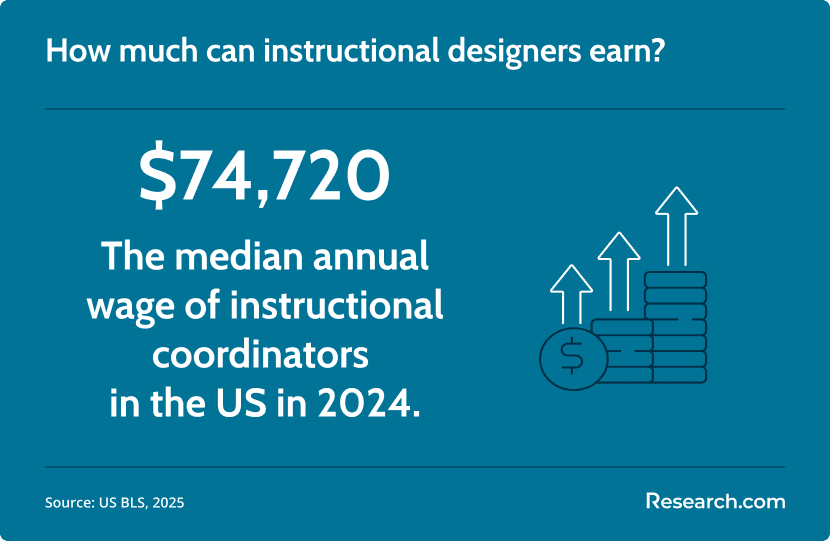
- In May 2024, instructional coordinators working in the US had a median annual wage of $74,720 (US BLS, 2025).
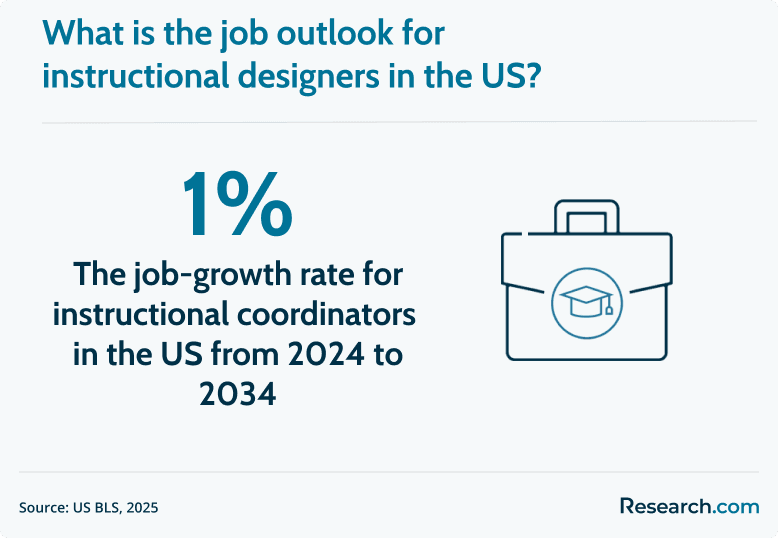
- From 2024 to 2034, employment for instructional coordinators in the US is expected to increase by 1%, which is slower than the average job-growth rate for all US occupations (US BLS, 2025).
- Alternative professions for instructional designers include teacher assistants, career and technical education teachers, and postsecondary teachers. Notably, some alternative jobs may require additional training and certifications.
What does an instructional designer do on a typical workday?
A typical workday for an instructional designer involves balancing creativity, collaboration, and technical tasks to develop effective learning experiences. They often begin by meeting with subject matter experts to understand learning objectives and audience needs, then move on to designing, testing, and refining educational content. Key responsibilities include the following:
- Conducting Needs Analysis: They identify learning gaps and define objectives to ensure that training programs meet organizational goals.
- Designing Instructional Materials: They create storyboards, lesson plans, and multimedia content tailored to learners’ preferences.
- Developing eLearning Modules: They use authoring tools to produce interactive courses for online or blended learning environments.
- Collaborating with Teams: They work with educators, graphic designers, and developers to align design and delivery.
- Evaluating Effectiveness: They collect feedback and analyze data to measure learning outcomes and improve future materials.
What educational background is required for an instructional designer role?
Most instructional designers hold at least a bachelor’s degree in education, instructional design, educational technology, or a related field. This foundational education provides knowledge in learning theories, curriculum design, and assessment strategies.
Notably, many employers prefer or require a master’s degree in instructional design or learning technologies, which can be earned through some of the best online master's in instructional design degree programs available today. Advanced programs focus on eLearning development, adult learning principles, and instructional design models, such as Analyze, Design, Develop, Implement, and Evaluate (ADDIE) or the Successive Approximation Model (SAM).
Coursework often includes instructional media, project management, and user-experience design. Additionally, some professionals enhance their qualifications through certifications from organizations, such as the Association for Talent Development (ATD) or Learning Guild, which strengthen technical expertise and industry credibility.
What specializations exist within instructional design?
Instructional design offers specializations that enable professionals to focus on specific learning environments, technologies, or audiences. These specializations help instructional designers align their expertise with industry needs and career goals. Many students pursue these pathways through affordable low cost master's in instructional design online programs, which provide flexibility and accessible training for career advancement.
Common specializations include the following:
- eLearning Design and Development: This specialization focuses on creating interactive online courses using authoring tools, multimedia elements, and learning management systems (LMS) to engage remote learners effectively.
- Corporate Training and Development: This area centers on designing professional development programs that enhance employee performance, leadership, and compliance within organizations.
- Higher Education Instructional Design: This specialization involves collaborating with faculty to design online or hybrid college courses that integrate pedagogy, accessibility, and digital learning tools.
Each specialization requires a blend of creativity, technological skill, and understanding of learner behavior to deliver impactful, results-driven educational experiences.
What skills do you need to have as an instructional designer?
To succeed as an instructional designer, professionals need a combination of technical, analytical, and interpersonal skills to create effective and engaging learning experiences. The following are three major skills essential to the field:
- Instructional and Learning Design: Understanding learning theories, curriculum design, and instructional models helps designers create structured, goal-oriented learning solutions.
- Technology and Multimedia Proficiency: Instructional designers must be skilled in using authoring tools, learning management systems (LMS), and multimedia software to develop interactive, visually appealing courses.
- Communication and Collaboration: Strong interpersonal and project management skills are crucial for working with subject matter experts, educators, and developers to ensure content accuracy and learner engagement.
Together, these skills enable instructional designers to produce learning experiences that are both pedagogically sound and technologically innovative. Many professionals strengthen these competencies through an accelerated master's degree in instructional design and technology online, which provides advanced, flexible training for career growth.
What is the typical career path for an instructional designer?
The typical career path for an instructional designer in the US often begins with an entry-level role, such as training specialist, eLearning developer, or curriculum designer. With experience and advanced education, professionals can progress to higher-level positions, such as senior instructional designer or learning experience designer, where they lead projects and mentor junior team members.
Professionals with strong management or strategic skills may advance to training manager, learning and development (L&D) director, or chief learning officer (CLO) roles. Some instructional designers also transition into consulting or freelance work, supporting multiple organizations.
Career growth depends on a blend of technical expertise, leadership ability, and ongoing professional development.
What is the average salary for an instructional designer?
In the US, instructional designers earn competitive salaries that vary based on education, experience, and industry. In May 2024, instructional coordinators working across the country had a median annual wage of $74,720 (US BLS, 2025).
For those wondering, “What can you do with a master's degree in instructional design?”, higher education can open doors to senior roles, leadership positions, and specialized fields that often command higher pay. Notably, the highest 10% of these professionals earned over $115,410 (US BLS, 2025). Meanwhile, the lowest 10% of instructional coordinators in the US in terms of wage earned less than $46,560.
Factors influencing salary include educational background, certifications, years of experience, and specialization in high-demand areas, such as eLearning or corporate training. Geographic location also plays a role, with instructional designers in major cities or tech hubs generally earning higher wages.
What is the job outlook for an instructional designer?
Employment for instructional designers and related professionals is expected to increase from 2024 to 2034, as organizations continue to invest in digital learning and employee development. Key roles include the following:
- Instructional Coordinators: Instructional coordinators develop educational curricula, design training materials, and ensure that instructional content aligns with learning standards and organizational objectives. From 2024 to 2034, an average of about 21,900 annual job openings are expected to be available for these professionals in the US (US BLS, 2025).
- Training and Development Specialists: These specialists assess training needs, deliver workshops, and evaluate the effectiveness of programs across corporate, nonprofit, and educational settings. From 2024 to 2034, an average of about 43,900 annual job openings are expected to be available for these professionals in the US (US BLS, 2025).
- Training and Development Managers: These managers oversee entire learning departments, design strategic training initiatives, and ensure that all programs support organizational and workforce development goals. From 2024 to 2034, an average of about 3,800 annual job openings are expected to be available for these professionals in the US (US BLS, 2025).
The increasing demand for eLearning solutions and continuous skill-building drives job growth in these professions, offering strong career stability and advancement opportunities in various industries, such as education, healthcare, and technology.
The chart below provides a visualization of the job outlook for professionals in the fields of instructional design and training and development between 2024 and 2034, according to 2025 data from the US BLS.
What are the alternative careers for an instructional designer?
Instructional designers have transferrable skills that can lead to several alternative careers in education and training. These roles allow them to apply their expertise in curriculum design, assessment, and learner engagement in new ways. Some professionals even transition into teaching through related degree programs, such as an online elementary education degree program, which prepares them for classroom-based instructional roles.
Common alternative careers include the following:
- Teacher Assistants: Teacher assistants support lead teachers in classroom instruction, help students understand lessons, and assist in developing and organizing educational materials.
- Career and Technical Education (CTE) Teachers: CTE teachers educate students on practical skills in different fields, such as business, technology, or healthcare. They may design hands-on learning experiences that prepare learners for specific careers.
- Postsecondary Teachers: Postsecondary teachers educate college or university students, develop course content, and conduct research in their field of expertise. They combine instructional design principles with academic teaching.
The chart below provides a visualization of the 2024 median annual wages of professionals in the fields of instructional design and training and development, according to 2025 data from the US BLS.
What are the biggest challenges instructional designers face?
Instructional designers today face several challenges as technology, learning needs, and workplace expectations continue to evolve. To stay effective, they must adapt to new tools, diverse learners, and changing organizational goals. Major challenges include:
- Keeping Up with Rapid Technological Changes: With constant advancements in eLearning tools and platforms, instructional designers must continually update their technical skills to create engaging, accessible content.
- Designing for Diverse Learners: Instructional designers must ensure that materials are inclusive, culturally sensitive, and adaptable to various learning styles, backgrounds, and accessibility needs.
- Measuring Learning Effectiveness: Proving the impact of instructional programs through measurable outcomes and data analytics can be difficult, especially when learning success depends on multiple external factors.
How do you know if becoming an instructional designer is the right career choice for you?
Deciding if instructional design is the right career depends on your interests, strengths, and passion for learning. This field suits individuals who enjoy combining creativity with analytical thinking to solve educational challenges. If you find satisfaction in developing training materials, designing engaging lessons, or improving how people learn, instructional design could be a great fit.
Strong communication, organization, and problem-solving skills are also key indicators of success in this profession. Additionally, those who enjoy working with technology, collaborating with teams, and continuously learning new tools or strategies often thrive as instructional designers in both educational and corporate environments.
What Professionals Who Work as Instructional Designers Say about Their Careers
- Anne: "As an instructional designer, I get to blend creativity with strategy. I turn complex ideas into engaging learning experiences that truly help people grow. Each project gives me the chance to make education more accessible and impactful for diverse learners."
- Greg: "I love how instructional design challenges me to think like a teacher and a storyteller. Seeing learners succeed because of my designs is incredibly rewarding. The role keeps me innovative, constantly pushing me to find better ways to make learning interactive and meaningful."
- Joyce: "Working in instructional design has allowed me to collaborate across industries while continually learning new tools and trends. It’s a career that continues to evolve. I enjoy knowing that my work directly supports organizations in improving training outcomes and employee development."
Key Findings
- A typical workday for an instructional designer involves balancing creativity, collaboration, and technical tasks to develop effective learning experiences. They often begin by meeting with subject matter experts to understand learning objectives and audience needs, then move on to designing, testing, and refining educational content.
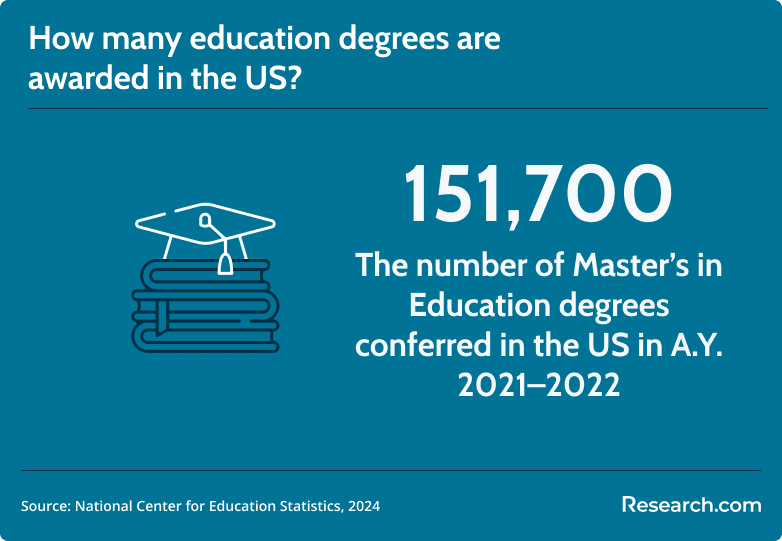
- In the academic year 2021–2022, 151,700 master’s degrees in education were conferred in the US (National Center for Education Statistics, 2024).
- Most instructional designers hold at least a bachelor’s degree in education, instructional design, educational technology, or a related field. This foundational education provides knowledge in learning theories, curriculum design, and assessment strategies.
- In May 2024, the lowest 10% of instructional coordinators in the US in terms of wage earned less than $46,560 (US BLS, 2025).
- From 2024 to 2034, an average of about 21,900 annual job openings are expected to be available for instructional coordinators in the US (US BLS, 2025).
Other Things You Should Know about Becoming an Instructional Designer
Most instructional designers need at least a bachelor’s degree in education, instructional design, or a related field. Some professionals also pursue specialized certifications or graduate programs to enhance their skills and job prospects.
In 2027, the highest salary for an instructional designer can exceed $100,000 annually, depending on factors such as industry, location, and experience. Senior instructional designers in tech companies, for example, may command salaries well above this range.
References
- National Center for Education Statistics. (2024, May). Graduate Degree Fields. Condition of Education. U.S. Department of Education, Institute of Education Sciences. https://nces.ed.gov/programs/coe/indicator/ctb/graduate-degree-fields
- US Bureau of Labor Statistics. (2025, August 28). Career and Technical Education Teachers. Occupational Outlook Handbook. https://www.bls.gov/ooh/education-training-and-library/career-and-technical-education-teachers.htm
- US Bureau of Labor Statistics. (2025, August 28). Instructional Coordinators. Occupational Outlook Handbook. https://www.bls.gov/ooh/education-training-and-library/instructional-coordinators.htm
- US Bureau of Labor Statistics. (2025, August 28). Postsecondary Teachers. Occupational Outlook Handbook. https://www.bls.gov/ooh/education-training-and-library/postsecondary-teachers.htm
- US Bureau of Labor Statistics. (2025, August 28). Teacher Assistants. Occupational Outlook Handbook. https://www.bls.gov/ooh/education-training-and-library/teacher-assistants.htm
- US Bureau of Labor Statistics. (2025, August 28). Training and Development Specialists. Occupational Outlook Handbook. https://www.bls.gov/ooh/business-and-financial/training-and-development-specialists.htm
- US Bureau of Labor Statistics. (2025, August 28). Training and Development Managers. Occupational Outlook Handbook. https://www.bls.gov/ooh/management/training-and-development-managers.htm


