
2027 What Prerequisites Do You Need for a Management Degree? Entry Requirements, Credits & Eligibility Rules

Co-Founder and Chief Data Scientist
Applying to a management degree program is often less about finding one universal checklist and more about matching your background to the requirements of a specific school. Some applicants are ready to start immediately. Others need an economics course, a statistics class, a transcript evaluation, English proficiency documentation, or additional college credits before they can enroll.
The stakes are practical: unclear prerequisite rules can delay admission, increase costs, or cause students to repeat courses they may have been able to transfer. Research indicates that approximately 40% of applicants to U. S. management programs struggle to meet foundational coursework requirements, leading to delays or rejections.
This guide explains the common academic, technical, credit-transfer, testing, international, and experience-related prerequisites for management degree programs. It is designed for high school students, transfer students, working adults, online learners, and international applicants who want to understand what to prepare before applying.
Key Things to Know About the Prerequisites for a Management Degree
- Most management degree programs require foundational courses in economics, statistics, and business principles to ensure readiness for advanced study.
- A minimum GPA of 2.5 to 3.0 on a 4.0 scale is typically expected, reflecting academic competence and commitment.
- Programs often require completion of 60 to 90 undergraduate credits and may favor applicants with leadership experience or relevant internships.
Do Management Programs Require Specific High School Prerequisites?
Most undergraduate management programs do not require a rigid set of high school courses in the way engineering, nursing, or laboratory science programs often do. Admissions offices usually look first at overall academic performance, course rigor, GPA, and evidence that the student can handle college-level reading, writing, math, and analysis.
That said, students who plan ahead can make the first year of a management degree easier by taking courses that build business readiness. These subjects are commonly recommended because they connect directly to early college coursework in accounting, economics, statistics, marketing, and organizational behavior.
- Mathematics: Algebra and statistics are useful preparation for budgeting, business analytics, forecasting, financial decision-making, and introductory quantitative courses.
- Economics: Economics or social studies courses help students understand markets, incentives, competition, labor, and consumer behavior before they encounter these topics in business courses.
- English: Strong reading and writing skills matter in management programs because students complete reports, case analyses, presentations, discussion posts, and persuasive business communication assignments.
- Computer Science: Courses in computer science or information technology can help students become comfortable with spreadsheets, databases, presentations, collaboration tools, and digital business systems.
According to data from the National Association for College Admission Counseling (NACAC), about 70% of business and management guides recommend completing at least Algebra II and an introductory economics course for students preparing to meet management degree entry requirements for high school students.
Students who did not take these courses in high school should not assume they are ineligible. Many colleges allow students to complete missing preparation through placement courses, community college classes, summer coursework, or first-year general education requirements. Working adults and returning students may also compare flexible pathways such as accelerated online degree completion programs for working adults when they need a faster or more adaptable route.
The best approach is to review the admission page and degree plan for each target school. A university may admit students generally but require certain math, writing, or business courses before they can enter upper-division management classes.
What College-Level Prerequisites Are Required Before Starting a Management Degree?
College-level prerequisites depend on whether you are entering as a first-year student, transferring from another college, or applying to an upper-division business school within a university. Many management programs allow students to begin as pre-business or general studies majors, then require specific lower-division courses before full admission to the management major.
Common prerequisites are designed to confirm that students can handle quantitative analysis, professional communication, and basic business concepts before moving into advanced management coursework.
| Prerequisite area | Why it matters for management students | What to check before enrolling |
| Introductory management or business principles | Introduces organizational structures, leadership concepts, business functions, and core terminology used throughout the major. | Whether the course must be completed before admission to the major or simply before upper-level courses. |
| Statistics | Builds skills in data interpretation, risk analysis, forecasting, and evidence-based decision-making. Over 60% of bachelor's programs include this prereq to strengthen analytical aptitude. | Whether business statistics is required or if a general statistics course will transfer. |
| Writing and communication | Prepares students for reports, presentations, proposals, group projects, and professional workplace communication. | Whether placement scores, transfer credits, or first-year composition courses satisfy the requirement. |
| Lab sciences or economics | Strengthens analytical thinking and, in the case of economics, builds understanding of markets, supply and demand, pricing, and organizational strategy. | Whether the program requires a specific economics sequence or accepts broader general education science courses. |
Students should pay close attention to grade requirements. A course may count as completed for general university credit but not satisfy a business-school prerequisite if the grade is below the program’s minimum. Transfer students should also confirm whether a course is equivalent to the school’s required version, especially for statistics, accounting, economics, and business law.
Prerequisites can also affect course sequencing. For example, a student who has not completed statistics may be blocked from taking analytics, operations, finance, or research methods courses. Completing prerequisites early reduces the risk of paying for extra semesters caused by scheduling delays.
Students who want to build marketable skills while completing degree requirements may also compare online certification courses that pay well, but certifications should be treated as supplements rather than replacements unless the college confirms they carry transferable academic credit.
How Many Credits Can You Transfer Into a Management Degree?
Students can generally transfer between 30% and 75% of the total credits required for a management degree, but the exact amount depends on the school, accreditation rules, course equivalency, grade requirements, and residency policy. The most important point is that transfer credit is not just about how many credits you have earned; it is about whether those credits fit the new degree plan.
Most accredited colleges require a minimum of 25 to 30 credits to be completed onsite before they will award the degree. Many also require students to complete around 40% to 50% of core management courses at the awarding institution. These residency rules are intended to ensure that graduates complete enough of the major through the school granting the credential.
Transfer credits are most likely to apply when they match courses in the management curriculum, such as accounting, economics, marketing, business law, finance, organizational behavior, or statistics. General electives may transfer more easily as credits but may do less to shorten the path to graduation if the student still lacks required business courses.
What usually affects transfer credit decisions
- Accreditation of the previous institution: Courses from regionally accredited schools are more commonly accepted.
- Minimum grade: Many programs require grades of C or higher for transfer coursework.
- Course equivalency: A course must usually match the level, content, and credit value of the receiving institution’s requirement.
- Age of credits: Some schools limit older credits, especially in fast-changing subjects such as technology, analytics, or information systems.
- Credit type: Pass/fail, incomplete, remedial, experiential learning, CLEP exams, and nontraditional credits may be limited or reviewed separately.
- Major residency rules: Even if many credits transfer, students may still need to complete a set portion of the management major at the new school.
The safest strategy is to request an official transfer evaluation before committing to a program. Students should submit transcripts early, keep syllabi from prior courses, and ask whether credits will apply to the major, general education, electives, or only total graduation credit. A program that accepts many credits on paper may still require additional semesters if the credits do not satisfy required management courses.
A student transferring into a management program described the process as “both exciting and overwhelming” because she had to wait weeks for advisors to compare prior courses with the new curriculum. Her experience highlights a common issue: students often do not know which classes count until after a formal evaluation. Early communication with academic advisors can prevent duplicate coursework and help students build a realistic graduation plan.
Do You Need SAT or ACT Scores to Get Into a Management Degree Program?
Many management degree programs in the U.S. use test-optional or test-free admissions policies as of 2026, meaning SAT or ACT scores are often not required. This shift is part of a broader trend among over 1,700 colleges and universities that have reduced reliance on standardized testing in undergraduate admissions.
However, applicants should not assume test scores are irrelevant everywhere. Some competitive universities, public university systems, honors programs, direct-admit business schools, and merit scholarship programs may still request or consider SAT or ACT results. In those cases, test scores can serve as an additional academic indicator, especially when applicants come from schools with different grading systems or limited advanced coursework.
When submitting scores may help
- Your scores are strong compared with the school’s admitted student profile: Scores can reinforce academic readiness when they are clearly competitive.
- You are applying for merit aid: Some scholarships may still use standardized test scores as part of eligibility or ranking.
- Your transcript has gaps: Strong scores may help offset limited access to advanced math, economics, or business courses.
- The program is highly selective: Competitive management or business programs may use every available metric during review.
For test-optional programs, admissions committees often place more weight on GPA, course rigor, prerequisite completion, essays, recommendations, leadership activities, work experience, and evidence of communication or quantitative ability. A student who does not submit scores should make the rest of the application specific and credible, especially when explaining interest in management, leadership experience, or career goals.
The practical rule is simple: read each school’s testing policy carefully. “Test-optional” may mean scores are not required for admission but still considered for scholarships, placement, honors programs, or direct admission to a business major.
What Essential Skills Do You Need Before Enrolling in a Management Degree Program?
Students do not need to be business experts before enrolling in a management degree, but they should be ready for reading-heavy assignments, quantitative reasoning, group work, presentations, and technology-supported analysis. Management programs combine theory with applied decision-making, so students benefit from both academic discipline and practical workplace habits.
The most useful preparation falls into five areas.
- Foundational academic abilities: Reading comprehension, note-taking, basic math, and the ability to interpret charts, tables, and written cases are essential for understanding management theory, financial information, and business scenarios.
- Technical proficiency: Students should be comfortable with spreadsheets, presentation software, word processing, file sharing, and basic data organization. Microsoft Excel is especially important because many courses use spreadsheets for budgets, projections, and analysis.
- Analytical and problem-solving skills: Management coursework often asks students to diagnose problems, compare options, assess trade-offs, and justify recommendations using evidence rather than opinion.
- Communication skills: Clear writing, professional email habits, presentation skills, active listening, and constructive participation in group projects are central to both coursework and management careers.
- Field-specific readiness: Prior exposure to economics, accounting, marketing, or business terminology can make early courses easier, though most programs teach these topics from the beginning.
How to prepare before classes start
- Review basic algebra, percentages, ratios, and graph interpretation.
- Practice spreadsheet tasks such as formulas, sorting, filtering, charts, and simple financial calculations.
- Read business news or case studies to become familiar with management vocabulary.
- Practice concise writing by summarizing a business problem and recommending a solution.
- Set up a weekly study schedule if you will be balancing school with work or family responsibilities.
A graduate who prepared before enrollment said that learning Excel and reviewing basic statistics initially felt overwhelming, especially while balancing part-time work. He found that identifying weak areas before the semester began made the transition easier. His experience reflects a common pattern: students who strengthen technical and analytical skills early are often better prepared for the pace of management coursework.
Do You Need Professional Experience to Enter a Management Degree Program?
Professional experience is usually not required for undergraduate management degrees. Most bachelor’s programs focus on academic preparation, general education readiness, transfer credits, and, where applicable, test scores or prerequisite coursework. Students can often enter directly from high school or after completing community college credits.
Experience matters more at the graduate level. MBA, executive MBA, and some specialized master’s programs often prefer or require applicants who have already worked in business, operations, healthcare, supply chain, technology, nonprofit administration, or another organizational setting. Typically, applicants with 2 to 5 years in roles like team leadership, supervision, or project management present stronger applications.
Professional experience helps admissions committees evaluate whether an applicant can connect theory to practice. It also improves classroom discussion because experienced students can draw from real organizational problems, workplace communication challenges, budgeting decisions, and leadership responsibilities.
| Program type | Is experience usually required? | How experience is evaluated |
| Associate or bachelor’s in management | Usually no | Work experience may strengthen an application but is rarely a formal requirement. |
| Traditional MBA | Often preferred | Admissions committees may look for career progression, leadership potential, and practical business exposure. |
| Executive MBA | Commonly expected | Programs often target applicants with substantial professional responsibility and leadership experience. |
| Specialized management graduate programs | Varies | Healthcare, supply chain, or operations tracks may value industry-specific experience. |
The level of competition also shapes expectations. Top-ranked programs often expect stronger professional backgrounds, while some research-oriented or early-career graduate programs may admit students based primarily on academic performance and potential. According to industry data, nearly 70% of MBA programs prefer applicants with relevant work experience, underscoring its importance in admissions.
If you lack formal management experience, highlight transferable evidence: leading a student organization, coordinating a volunteer project, supervising coworkers, managing schedules, handling customer issues, organizing events, or improving a process. Admissions committees are often interested in responsibility and growth, not only job titles.
What Tech Prerequisites Must You Meet Before Starting an Online Management Degree?
Online management programs require more than basic internet access. Students need reliable technology because coursework often includes video meetings, learning management systems, spreadsheet assignments, digital presentations, group projects, proctored exams, and real-time collaboration.
The most common tech prerequisites for online management degrees in 2026 include:
- Hardware specifications: A computer with at least a dual-core processor and 8 GB of RAM is necessary to run software for simulations, video lectures, browser-based assignments, and multitasking.
- Internet connectivity: High-speed internet with a minimum of 25 Mbps download speed supports streaming, online discussions, group meetings, and presentations.
- Familiarity with learning platforms: Students should be able to navigate learning management systems such as Canvas, Blackboard, or Moodle to access readings, assignments, grades, announcements, and discussion boards.
- Software tools: Microsoft Office Suite, especially Word, PowerPoint, and Excel, is commonly used for reports, presentations, and data analysis. Video conferencing tools such as Zoom or Microsoft Teams are also standard.
- Digital literacy skills: Students should know how to manage files, submit assignments in required formats, use email professionally, protect passwords, troubleshoot basic issues, and participate respectfully in online discussions.
Common online learning mistakes to avoid
- Relying only on a phone or tablet for courses that require spreadsheets, papers, or proctored exams.
- Waiting until the first deadline to test logins, webcam access, or required software.
- Using unstable public Wi-Fi for exams, presentations, or live group meetings.
- Ignoring file naming, version control, and backup habits for team projects.
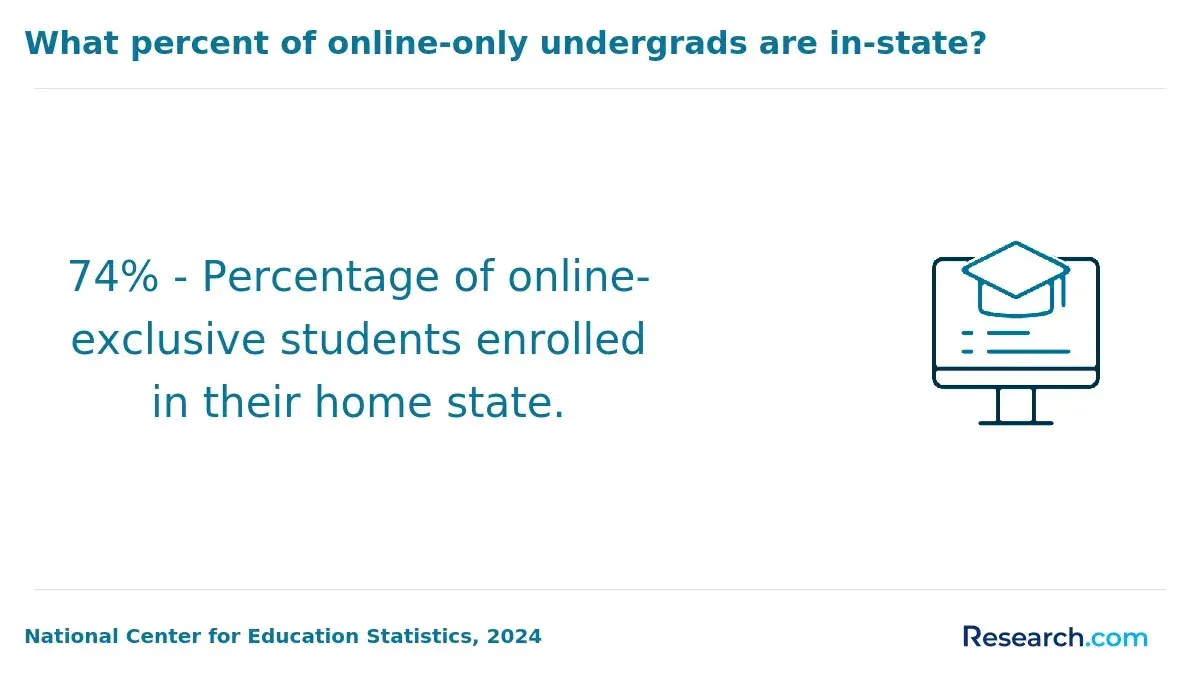
These required technical skills for online management programs in 2026 matter because management education often depends on collaboration, presentations, business simulations, and data-supported problem-solving. According to the National Center for Education Statistics (NCES), over 35% of all management-related degrees at the undergraduate level are pursued online, reflecting the growing need for strong technology readiness.
Students planning beyond the bachelor’s level may also compare the most lucrative masters degree options, but they should first confirm that their online undergraduate program meets the technical, accreditation, and academic standards needed for future study.
What Prerequisites Do International Students Need for Management Programs?
International students usually complete the same academic prerequisites as domestic applicants, but they often have additional documentation and eligibility steps. These requirements help U.S. institutions confirm academic equivalency, English-language readiness, financial capacity, and legal eligibility to study in the United States.
Common prerequisites for international students include:
- Language proficiency: Most U.S. institutions require international students to demonstrate English proficiency through tests like TOEFL or IELTS so they can participate in lectures, discussions, written assignments, and presentations.
- Academic transcript evaluation: Applicants usually submit prior academic records for evaluation to determine whether their coursework is equivalent to U.S. education standards and whether they meet undergraduate or graduate management admission requirements.
- Standardized test scores: Some graduate-level management programs ask for GRE or GMAT scores to evaluate analytical, quantitative, and verbal readiness.
- Visa eligibility: International students must secure an F-1 visa, requiring proof of acceptance and financial stability. Visa requirements should be handled early because admission alone does not guarantee the ability to study in the United States.
- Credit transfer policies: Students transferring credits from international institutions should ask each school how foreign coursework is reviewed and whether credits apply to general education, electives, or management major requirements.
International applicants should start by comparing the admissions requirements for each target institution rather than relying on general rules. Policies can differ by university, business school, degree level, and state. Schools in states like California or New York frequently attract a global pool of applicants, but each institution still sets its own documentation and evaluation process.
Practical preparation steps
- Request official transcripts early and confirm whether certified translations are required.
- Check which transcript evaluation agencies the university accepts.
- Confirm English proficiency exemptions if prior education was completed in English.
- Ask whether international credits can satisfy prerequisites such as economics, statistics, or accounting.
- Plan for financial documentation needed for visa processing.
Students considering research-focused or advanced study after management education may review options such as 1 year online doctorate programs, but international applicants should verify accreditation, recognition, and visa implications before choosing any program.
How Do Program-Specific Prerequisites Differ from General University Requirements?
General university requirements determine whether you can be admitted to the institution. Program-specific prerequisites determine whether you can enter, progress in, or graduate from the management major. This distinction matters because a student may be accepted to a university but still need additional courses or documentation before becoming a full management major.
Distinguishing General University Admission Requirements
- Minimum GPA: Most universities require a GPA around 3.0 or higher, reflecting a baseline academic standard for acceptance into management programs.
- English Proficiency: Non-native English speakers typically must submit TOEFL or IELTS scores to demonstrate communication skills needed for academic success.
- General Education Coursework: Completion of foundational courses in humanities, social sciences, writing, and basic mathematics is commonly expected before or during specialized study.
Management Program-Specific Prerequisites for 2026
- Required Coursework: Programs often require prior classes in introductory economics, statistics, and accounting to build essential management knowledge.
- Skill Competency: Quantitative and analytical skills may need validation through standardized tests, placement results, or previous academic performance in relevant subjects.
- Professional Experience: Especially for MBA or executive tracks, business schools increasingly look for a minimum of two years of work experience, as noted by the Graduate Management Admission Council in 2023.
- Portfolio Submissions: Certain specialized concentrations ask applicants to submit leadership or project management portfolios that showcase practical abilities.
The key risk is assuming that university admission equals major admission. At some schools, students first enter as pre-business students and must complete prerequisite courses with required grades before they can declare management. At others, students are admitted directly to the business school but must still complete a structured sequence before taking upper-level courses.
Applicants should review both sets of requirements side by side: the university admissions page and the management program’s degree plan. This is especially important for transfer students, adult learners, international applicants, and students comparing affordability. Those evaluating lower-cost pathways may find it useful to review what is the cheapest online bachelor degree while also checking whether the program’s credits and prerequisites align with long-term goals.
Meeting program-specific prerequisites early can prevent delayed graduation, missed course sequences, and unexpected tuition costs. When requirements are unclear, ask an academic advisor for a written degree plan before enrolling.
Do You Need to Pay for Prerequisite Courses Before Applying to a Management Program?
Yes, students usually pay for prerequisite courses before enrolling in or advancing through a management program, although the cost depends on where the courses are taken and whether they qualify for financial aid or transfer credit. Prerequisite costs are often separate from full management program tuition, especially when students complete them at a community college, online provider, or another institution.
For example, public two-year colleges had average annual fees around $4,000 in 2023, significantly lower than four-year schools averaging about $11,500. Some students also use online platforms such as Coursera or edX, where courses may be free to audit but charge for certificates, typically costing a few hundred dollars. However, students should not assume that a certificate or noncredit online course will satisfy a college prerequisite unless the management program confirms it in writing.
Ways to reduce prerequisite costs
- Use an accredited community college: Community colleges can be a cost-effective option if the receiving school has approved transfer equivalencies.
- Ask about financial aid: Aid may sometimes apply when prerequisites are taken through the institution where the student is enrolled.
- Transfer prior coursework: Official transcript evaluation can prevent students from repeating courses they already completed.
- Check employer tuition assistance: Working adults may be able to use employer benefits for business, management, communication, or technology courses.
- Confirm credit before paying: The cheapest course is not a good deal if the management program will not accept it.
Income-share agreements offered by some schools may also be an option, but students should read repayment terms carefully. Any financing arrangement should be compared with traditional tuition, grants, scholarships, employer support, and lower-cost transfer pathways.
The most financially efficient strategy is to map prerequisites before enrolling in them. Ask the target management program which course numbers satisfy each requirement, what grade is needed, whether online courses are accepted, and whether there is a time limit on older credits.
What Graduates Say About the Prerequisites for Their Management Degree
- Jon: "Getting into the management degree program became much easier once I finished the prerequisite courses. They gave me the academic foundation I needed before the major coursework began. The program's cost was a serious factor, averaging around $20,000 per year, but the degree helped me move into a leadership role I care about and gave me more confidence in my decisions."
- Darwin: "The admission requirements pushed me to strengthen my writing, communication, and business skills before I started the management curriculum. Cost was a concern, but scholarships and careful budgeting made it manageable. Professionally, the degree helped me understand business dynamics more clearly and contribute more strategically to my team."
- Issa: "Completing the prerequisites first made the management degree more manageable because I was better prepared for the coursework. The expense, averaging just under $25,000 annually, was significant, but the career progress I have made since graduation helped justify the investment. The program gave me practical leadership skills that accelerated my growth in the corporate world."
Other Things You Should Know About Management Degrees
Some universities may require standardized tests like the GMAT or GRE for admission into a 2027 management degree program. Check the specific requirements of each institution, as these requirements can vary significantly between programs and locations.
In 2027, foreign language courses are not typically a core prerequisite for management degree programs but can enhance a candidate's application by demonstrating cultural awareness and communication skills. Their value may vary by institution and program focus.
References
- How Many Credits Do You Need to Graduate College? | SNHU https://www.snhu.edu/about-us/newsroom/education/how-many-credits-to-graduate-college
- Your Management Experience Can Qualify You For The MBA https://www.aib.edu.au/blog/mba/management-experience-qualify-mba/
- Business Management - BComm (Hons) - Programs - Toronto Metropolitan University (TMU) https://www.torontomu.ca/programs/undergraduate/business-management/
- How Many Credits for Business Management Degrees Explained https://smartbizmanagement.com/finance/how-many-credits-for-business-management-programs-2/
- Anything I need to know going into a business management degree? https://www.thestudentroom.co.uk/showthread.php
- 15 Business Management Skills Companies Want https://online.champlain.edu/blog/top-business-management-skills
- Other Admissions Tests - Esade Bachelors https://www.esade.edu/bachelor/en/degrees/admissions/other-admissions-test
- Bachelor's in Management studies in Warsaw | Poland | Europe - SWPS University https://english.swps.pl/academics/warsaw/ba-programs/ibm
- Technical Requirements for AC Online Courses https://www.algonquincollege.com/online/technical-requirements/
- Study Business & Management Studies, why & how to study https://www.thecompleteuniversityguide.co.uk/subject-guide/business-and-management-studies


