2027 What Requirements Do You Need for an Online Physical Education Bachelor's Degree? Admission Rules, Credits & Eligibility

Co-Founder and Chief Data Scientist
Many prospective students face uncertainty about qualifying for an online physical education bachelor's degree, especially when balancing prior unrelated degrees and work commitments. With 35% of physical education graduates moving into specialized fitness or coaching roles within two years, understanding admission criteria and credit transfer policies is crucial.
This uncertainty can delay or derail career transitions into the physical education sector. Navigating these requirements effectively is essential to maximizing educational investment and career outcomes. This article clarifies the key admission rules, credit requirements, and eligibility factors, providing a clear roadmap for those seeking a flexible, accredited physical education degree online.
Key Benefits of Preparing for Online Physical Education Bachelor's Degree Requirements
- Choosing accredited online physical education programs ensures your degree meets industry standards and improves employment prospects.
- Maximizing transfer credits, often up to 75%, reduces time and tuition costs, accelerating degree completion.
- Completing an accredited degree opens doors to careers in teaching, coaching, and wellness, with 8% job growth expected through 2030.
What Are the Basic Eligibility Requirements to Apply for an Online Physical Education Bachelor's Degree?
Eligibility in undergraduate online admissions means meeting the minimum qualifications to submit an application for a program, distinct from acceptance or enrollment. For online physical education bachelor's degrees, accredited institutions require applicants to fulfill baseline criteria before review. According to the U.S. Department of Education and various schools' admissions pages, foundational eligibility often includes a high school diploma or GED equivalent, a minimum age (usually 17 or 18), and verification of citizenship or residency status.
These requirements ensure academic preparedness and compliance with legal and financial aid policies. Prospective students should also be aware of transfer credit policies and enrollment eligibility for an online physical education bachelor's program, as these can impact the overall duration and cost of completing the degree.
Students often ask about the minimum GPA and test score requirements for an online physical education bachelor's degree. Many programs expect a high school GPA of around 2.0 to 2.5, though standardized test scores such as the ACT or SAT may be optional at some institutions.
English language proficiency is required for non-native speakers, typically demonstrated through exams like the TOEFL or IELTS. Admissions offices provide critical guidance on deadlines, required documents, and credit transfer rules. Exploring affordable pathways and credit-efficient options can enhance degree completion, so applicants might consider programs similar to accelerated medical assistant programs as examples of streamlined certificates or degrees.
Confirming all eligibility rules directly with each school remains essential, given the variety of policies across institutions offering physical education degrees. Here are common requirements:
- High School Diploma or GED Equivalent: Completion of secondary education or an equivalent credential is mandatory to ensure applicants possess the foundation for college-level work.
- Minimum Age Requirement: Most programs require students to be at least 17 or 18 years old to meet legal and financial aid criteria.
- Citizenship or Residency Status: Schools verify legal status to determine eligibility for federal aid and enrollment; U.S. citizens and permanent residents usually qualify.
- Minimum GPA and Standardized Tests: A minimum GPA of about 2.0 to 2.5 is typical; some schools also consider ACT or SAT scores depending on specific policies.
- English Language Proficiency: Non-native English speakers must demonstrate proficiency through recognized exams to ensure academic success in online courses.
What Is the Minimum GPA Required for Admission to an Online Physical Education Bachelor's Degree Program?
Minimum GPA requirements for online physical education bachelor's programs can vary significantly depending on the institution. Many schools accept a baseline cumulative high school GPA of 2.0, while more selective programs may require 2.5 or higher. This criterion is only one aspect of a more comprehensive admissions assessment that also includes factors such as class rank, standardized test scores, and letters of recommendation.
Applicants should also be aware that some institutions consider weighted GPAs, giving extra points for honors or advanced coursework, while others use unweighted GPAs. Students with borderline GPAs may still gain entry through conditional or probationary admission, allowing them to demonstrate academic success early in their program.
Additionally, candidates should inquire about transfer credit policies, English language proficiency requirements, and financial aid opportunities to better position themselves for enrollment. For affordable options, researching the cheapest DNP online programs can offer insights into cost-effective pathways that may also align with your academic goals.
- Variation By Institution: GPA thresholds differ across schools, with some programs requiring only a 2.0 and others demanding at least a 2.5, reflecting program competitiveness and rigor.
- Holistic Admission Process: Admission committees assess GPA alongside class rank, test scores, and recommendation letters to form a well-rounded view of the applicant's readiness for success.
- Weighted Versus Unweighted GPA: Schools may weigh advanced courses differently, influencing eligibility and applicant comparisons across diverse academic backgrounds.
- Conditional Admissions: Students with GPAs below the standard minimum might still start coursework under probationary status, demonstrating their ability to succeed later.
- Accurate GPA Reporting: Careful calculation and honest reporting of GPA, with attention to grading scales and all coursework, helps avoid discrepancies in applications.
2026 Update: Check In-Person Fieldwork and Clearance Requirements
For 2026, this section adds a practical check on non-online requirements that can affect eligibility after admission, especially for physical education students preparing for coaching, teaching, or supervised activity settings.
- Whether the program requires in-person fieldwork, practicum hours, student teaching, or local site observations
- If students must secure their own approved placement site near where they live
- Background check, fingerprinting, or child-safety clearance requirements before working with minors
- CPR, first aid, or wellness certification expectations tied to activity-based coursework
- Any physical activity, skills assessment, or fitness participation requirements within online courses
- State-specific teacher licensure rules if the degree is intended for K–12 physical education teaching
Reviewing these requirements early helps students avoid delays, confirm that an online format fits their location and schedule, and choose a program aligned with their career goal.
Do Online Physical Education Bachelor's Degree Programs Require SAT or ACT Test Scores?
Many online bachelor's degree programs in physical education, especially those created for adult learners, have adopted policies allowing applicants to apply without submitting SAT or ACT scores. This shift has accelerated since 2020 as institutions adjusted to changing testing availability and student needs. Yet, standardized test scores can still be necessary in certain circumstances, such as for merit scholarships, admission to honors programs, or particularly competitive physical education tracks.
Schools that do require test scores often look for a range around 1200 to 1300 on the SAT or a composite ACT score between 25 and 28. These benchmarks indicate a solid academic standing suitable for selective programs. Because admissions policies are frequently updated and vary between institutions, it is crucial for applicants to review the specific requirements on each program's website before applying.
- Test-Optional and Test-Free Policies: Many programs prioritize GPA, recommendations, and essays over standardized test results, providing more flexible admissions for non-traditional students.
- Situations Requiring Scores: Applicants aiming for scholarships, honors tracks, or programs with limited slots may still need to submit SAT or ACT scores to remain competitive.
- Score Benchmarks: Generally, SAT scores near 1200-1300 and ACT scores of 25-28 meet the expectations of selective physical education programs.
- Variability Across Programs: Admission standards differ widely, so checking each school's latest policies is essential for accurate information.
- Ongoing Trends: Data from the National Center for Education Statistics shows that over 70% of four-year colleges embraced test-optional admissions by 2024, highlighting this widespread evolution.
A professional who enrolled in an online physical education bachelor's degree program to facilitate a career change shared that the process was both reassuring and challenging. "I wasn't sure at first if I'd need to send in my SAT scores since I had graduated many years ago," he recalled.
After speaking with admissions counselors, he learned the test was optional for his program but submitting strong recommendations and detailed personal statements became vital. "Navigating these requirements felt daunting initially, but the flexibility made continuing my education accessible without the stress of retaking exams." This experience reflects how evolving admissions criteria continue to shape adult learners' journeys in physical education.
How Many Total Credit Hours Are Needed to Complete an Online Physical Education Bachelor's Degree?
Online physical education bachelor's degrees typically require about 120 semester credit hours, though certain programs may demand up to 128 or 130 credits depending on specialization. These credits are usually divided among general education, core major courses, electives, and practical components like capstone projects or practicum hours to ensure comprehensive preparation.
General education often accounts for 40 to 50 credit hours, covering essential subjects such as sciences and communication. Core physical education coursework typically involves 40 to 60 credits, including anatomy, kinesiology, and exercise science.
Electives and hands-on experiences fill out the remaining credits. It's important to note that semester credit hours (SCH) differ from quarter credit hours, with one SCH usually equaling 1.5 quarter credits. Students transferring between systems should confirm how credits convert to understand total requirements accurately.
Many online physical education degree programs accept prior learning credits, including Advanced Placement (AP) exam scores or College-Level Examination Program (CLEP) results. This acceptance can reduce the total credit hour requirements and shorten the path to degree completion, making education more affordable and time-efficient.
- Total Credit Hour Requirements: Most programs demand between 120 and 130 credit hours, varying by institution and focus area.
- Credit Distribution: Credits are allocated to general education, core physical education classes, electives, and practical capstone or practicum work.
- Semester vs. Quarter Credits: Understanding the difference between semester and quarter systems is crucial for accurate credit calculation and transfers.
- Prior Learning Credits: Many schools accept AP, CLEP, or transfer credits, reducing the total credits needed for degree completion.
- Practicum and Capstone Credits: These hands-on requirements may increase total credit hours slightly beyond traditional baselines.
Prospective students should research admission standards and consider questions about transfer policies and credit acceptance to find the most credit-efficient and affordable path to their physical education degree. For those balancing cost concerns, exploring options like the cheapest MHA programs online healthcare may provide useful financial planning insights.
What High School Courses or Prerequisites Are Required Before Enrolling in an Online Physical Education Bachelor's Degree?
Applicants usually must complete certain high school courses before starting an online physical education bachelor's degree. Core subjects commonly required include English composition, biology or other science classes, and math up to Algebra or Geometry. These classes build essential skills like critical reading, writing, and analytical thinking necessary for success in health and exercise-related studies.
- Core Subject Requirements: Completion of English, biology or general science, and math courses is generally mandatory to meet foundational academic standards.
- Additional Recommended Courses: Classes such as anatomy and physiology, psychology, physical education, and social studies are helpful but usually not required, offering useful background knowledge that can strengthen an application.
- Transferable Credits: Dual enrollment or community college courses taken during high school often count toward prerequisites, enabling students to accelerate their degree path and reduce costs.
- Bridge and Remedial Options: Some programs provide remedial or bridge courses to address missing prerequisites; however, these can extend the time needed to graduate since they typically don't count toward the major.
- Required Documentation: Official transcripts from high school and any college-level credit reports should be submitted, and prospective students should consult admissions counselors about waivers, credit transfers, and placement assessments.
A professional who established her career after completing an online physical education bachelor's degree recalled how navigating prerequisite requirements was a balancing act. She shared that "not having every science or math course initially posed a worry," but recognizing the availability of bridge courses eased her concerns.
She emphasized how proactive communication with admissions helped her clarify credit transfers and avoid unnecessary classes. Reflecting on her journey, she noted, "It took some extra effort upfront, but understanding these requirements early meant I could focus fully on my studies later without surprises." This approach shaped a smoother transition and a more confident start in her studies.
Can Transfer Credits Count Toward an Online Physical Education Bachelor's Degree, and How Many Are Accepted?
Most accredited institutions limit transfer credits for a bachelor's degree to between 60 and 90 credits, but this maximum varies by school. Credits exceeding these limits usually won't shorten your degree completion time.
- Transfer-Friendly Schools: Community colleges often have 2+2 articulation agreements with universities, allowing students to earn an associate degree first and then transfer credits smoothly into a physical education bachelor's program.
- Restrictive Policies: Some colleges accept fewer transfer credits or only those closely aligned with their physical education curriculum, which safeguards academic standards but can extend the length of study.
- Transcript Evaluation: Registrars carefully review transcripts to verify course content, credit hours, and grades. They determine if completed courses match program requirements and reject those that don't align academically with physical education.
- Course Equivalency: Transfer approval depends on the similarity between prior coursework and the required physical education classes. General education credits are more likely to transfer, while specialized or outdated courses may be declined.
- Official Evaluation Request: It's important to ask for an official transfer credit evaluation early in the admissions process to understand exactly which credits apply and how much coursework remains.
According to a recent National Student Clearinghouse report, around 40% of students pursuing a bachelor's degree transfer at least once, highlighting the need for clear and flexible credit transfer policies.
Does Accreditation Status Affect Admission Requirements for an Online Physical Education Bachelor's Degree?
Accreditation status plays a critical role in admission requirements and long-term value for an online Physical Education bachelor's degree. Institutional accreditation is awarded by regional or national agencies recognized by the Council for Higher Education Accreditation (CHEA) or the U.S. Department of Education. This type of accreditation guarantees the overall educational quality of the college or university, influencing both credit transfer and how employers view your degree.
Programmatic accreditation, on the other hand, is specific to Physical Education and related disciplines. It is granted by specialized accrediting bodies that set additional standards, including admission prerequisites or coursework, to ensure professional readiness. Some licensure and certification pathways require graduation from a programmatically accredited program to qualify.
- Institutional Accreditation: Confirms an institution's general quality, facilitating smoother credit transfers between accredited schools. Degrees from regionally accredited schools are more widely recognized by employers and graduate programs.
- Programmatic Accreditation: Focuses on the specialized quality of Physical Education curricula. Meeting these standards may mean extra admission requirements but often leads to better career and certification opportunities.
- Credit Transferability: Credits earned at regionally accredited institutions are more likely to transfer and count toward your degree. Attending an unaccredited school risks denied transfer requests and limited professional mobility.
- Graduate School and Licensing: Degrees from unaccredited institutions may not be accepted by graduate schools or licensing boards, potentially blocking career advancement.
Recent data shows about 85% of employers prefer or require degrees from accredited institutions, underscoring the value of thoroughly verifying accreditation before enrolling. Prospective students should gather documentation and ask admissions representatives clear questions about their Physical Education program's accreditation status to secure an affordable and efficient path to graduation.
What Documents Do You Need to Apply for an Online Physical Education Bachelor's Degree Program?
Applying to an online bachelor’s degree program usually requires submitting a standard set of documents that help schools evaluate your academic background and readiness. Knowing what to prepare in advance can make the application process smoother and help you stay organized.
- Official Transcripts: Most programs require official high school transcripts to verify your academic record. If you have prior college coursework, official college transcripts are also necessary. These transcripts must be sent directly from the issuing institution to ensure authenticity, unlike unofficial copies often used for initial review. Gathering these is a key step in fulfilling the required application documents for online physical education degrees.
- Government-Issued ID: A valid identification form, such as a passport or driver's license, is required to confirm your identity and eligibility for enrollment. International applicants often need to provide a passport alongside visa documentation, ensuring compliance with enrollment standards.
- Application Essays: Many programs ask for a personal essay or statement outlining your motivation, goals, and suitability for the program. Tailoring this essay to specific school prompts can strengthen your application and demonstrate your commitment to the field.
- Additional Documents: Selective online physical education programs may request supplementary materials such as a portfolio illustrating relevant experience, letters of recommendation from teachers or employers, or a résumé detailing your work and volunteer history. These help highlight your skills and character beyond transcripts and essays.
- Official vs. Unofficial Documents: Unofficial transcripts and documents may be acceptable during initial application phases, but official versions are mandatory before final enrollment. International students must provide certified translations of any non-English documents, which should be notarized or verified by the issuing institution to meet admission standards.
- Timing and Preparation: Start collecting all required materials at least three to six months before your target enrollment date. Applications often follow rolling or semester-based deadlines, so early preparation eases timely submission. This schedule allows sufficient time for transcripts and recommendations, which can take several weeks to process.
If you are exploring pathways to affordably complete your degree, research available options such as online radiology tech programs that illustrate credit-efficient approaches to degree progression.
Are There English Language Proficiency Requirements for Non-Native Speakers Applying to an Online Physical Education Bachelor's Degree?
Most accredited U.S. online physical education bachelor's degree programs require non-native English speakers to demonstrate English language proficiency. This typically means submitting scores from widely recognized exams such as the TOEFL iBT, IELTS Academic, or the Duolingo English Test. For undergraduate programs, minimum TOEFL scores commonly range from 61 to 80, while IELTS band scores usually fall between 6.0 and 6.5.
- Common Score Requirements: Undergraduate admissions often require TOEFL iBT scores between 61 and 80, IELTS bands from 6.0 to 6.5, or comparable Duolingo English Test scores. These thresholds vary among institutions but generally stay within these ranges.
- Exemptions: Applicants from English-speaking countries or those who completed multiple years at English-medium educational institutions may qualify for waivers. Verification is usually done through academic transcripts or citizenship documentation.
- Conditional Admission Options: Several online physical education programs permit conditional admission for students who do not meet language proficiency scores. These students typically enroll in ESL bridge courses designed to enhance their skills before beginning the full degree curriculum.
- Check Specific Policies: Requirements and exemptions differ greatly between schools. It's essential to examine program websites or consult admissions directly to identify available ESL support or test score waivers.
Prospective students gathering documents for their application should factor in these language proficiency rules alongside other eligibility criteria to strengthen their candidacy. This detailed attention helps streamline the admission process for an online physical education bachelor's degree.
For those exploring degree options, especially international students balancing English requirements, reviewing the best online post master's PMHNP programs can offer valuable insight into structured, flexible pathways that accommodate diverse educational backgrounds.
Do Online Physical Education Bachelor's Degree Programs Accept CLEP Exams or Prior Learning Credits?
The College-Level Examination Program (CLEP) allows students to earn undergraduate credits by scoring at least 50, a benchmark recommended by the American Council on Education (ACE). More than 2,900 colleges recognize CLEP credits, but acceptance, especially in physical education programs, varies by school. Some institutions apply CLEP results to a wide range of course requirements, while others restrict credits mostly to general education.
In addition to CLEP, other prior learning assessments (PLA) like DANTES/DSST exams, portfolio evaluations, and credits from military service, professional certifications, or relevant work experience can also count toward your degree. These options can help reduce both the time and cost needed to complete a physical education bachelor's degree.
Contacting the registrar's or admissions office early in the process is crucial to understanding how your chosen school handles CLEP and PLA credits. Early discussions can help you plan your course load more efficiently and maximize credit transfer, potentially saving money and shortening your time in school.
- CLEP Exam Recognition: Over 2,900 colleges accept CLEP with a minimum score of 50, offering a convenient way to earn college credit pre-enrollment or during your studies.
- Institutional Variation: Some physical education programs accept CLEP broadly, while others limit it to general education courses, impacting how credits apply.
- Additional PLA Options: Military training, certifications, and portfolio assessments provide alternative credit pathways that may accelerate degree completion.
- Early Registrar Contact: Engage early with your school's registrar to clarify credit transfer policies and optimize your academic planning.
Are There Residency or In-State Tuition Requirements That Affect Enrollment in an Online Physical Education Bachelor's Degree?
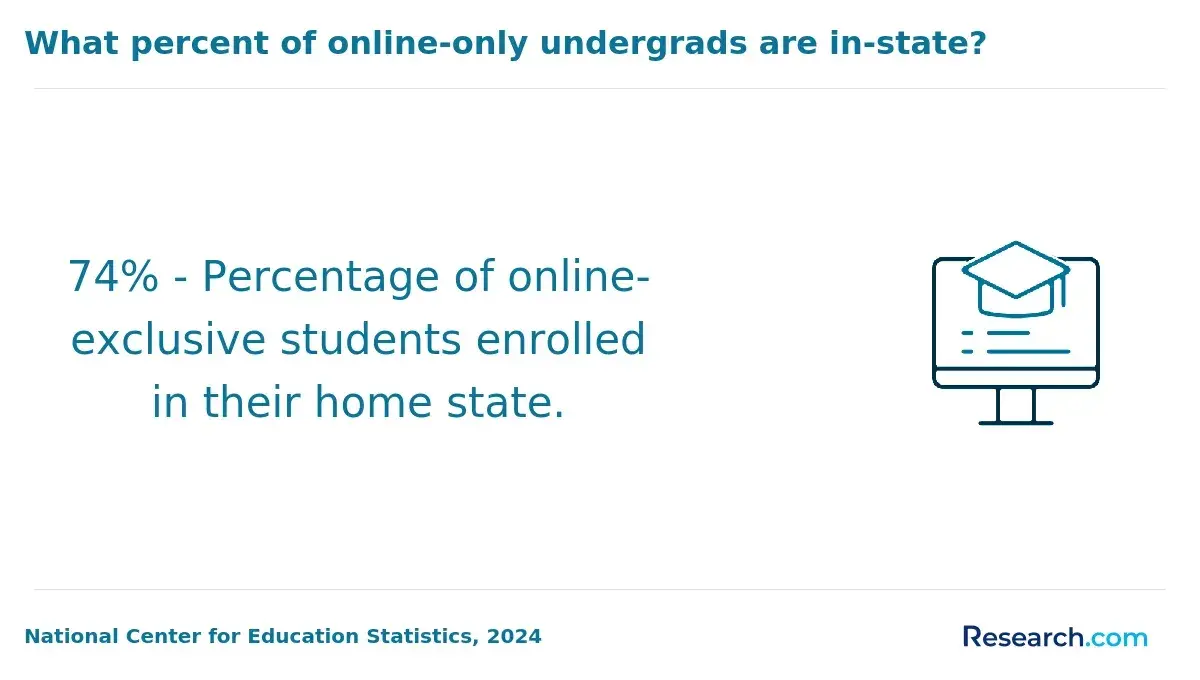
Many public universities offer in-state tuition rates to online students regardless of where they live, often through state authorization reciprocity agreements (SARA). SARA is a collaborative initiative among states that simplifies regulatory requirements by allowing institutions in participating states to provide online programs to out-of-state students without needing multiple state approvals. This helps avoid complex compliance issues and broadens student access nationwide.
However, some schools may still apply out-of-state tuition fees for online degrees. It is essential to confirm the exact tuition policies with the admissions or financial office of any physical education program before enrolling to avoid unexpected costs.
- SARA Membership: States in SARA adhere to unified standards, enabling universities to offer online programs to students across member states without separate authorization processes.
- Tuition Differences: Though many SARA institutions provide in-state rates for online learners, some retain distinct out-of-state pricing which can affect the overall expense of earning a degree.
- Residency Proof: Students attempting to qualify for in-state tuition may need to submit documents such as utility bills, voter registrations, or driver's licenses to verify residency status.
- Verification Steps: Contacting the program's admissions or financial office before enrollment ensures clarity on residency rules and tuition costs, helping students secure the most affordable options.
What Graduates Say About Preparing for the Online Physical Education Bachelor's Degree Requirements
- Charlotte: "Pursuing my online physical education bachelor's degree was a game-changer because I took the time upfront to understand the exact admission requirements. This saved me months of guesswork and ensured I met every criterion cleanly. Knowing the credit policies helped me transfer relevant coursework seamlessly, which accelerated my path to graduation and opened doors to coaching opportunities I hadn't imagined before."
- Elliot: "Reflecting on my journey, I realize how crucial it was to grasp the eligibility criteria before applying. The program's clear guidelines on credits and prerequisites made it easier for me to plan and stay motivated. Today, that degree isn't just a paper; it's the foundation of my career in sports management, proving that careful preparation pays off."
- Belinda: "From a professional standpoint, understanding admission requirements and credit policies was key to getting accepted into the program without delays. The structure of the online physical education bachelor's degree allowed me to balance work and study effectively. I'm now in a leadership role in athletics, and this degree truly launched my career to the next level."
Other Things You Should Know About Physical Education Degrees
In 2027, admission to an online physical education bachelor's degree typically requires a high school diploma or equivalent, minimum GPA, and possibly SAT/ACT scores. Eligibility may include submitting transcripts, letters of recommendation, and a personal statement.
Students typically need a reliable computer with internet access capable of streaming video, accessing course materials, and using virtual classroom platforms. Many programs recommend or require updated browsers and software like word processors and presentation tools. Some courses may also require specialized software for fitness tracking or data analysis relevant to physical education.
Some programs offer flexible admission criteria for adult learners or working professionals, such as accepting prior college credits, work experience, or offering application fee waivers. These applicants may also have access to tailored advising services and flexible course schedules designed to accommodate their responsibilities. It's advisable to check each institution's policies as requirements vary widely.
References
- Foreign Educated Physical Therapists https://www.fsbpt.org/Free-Resources/Foreign-Educated-PTs-and-PT-Assistants/Other-Requirements-for-FEPTs-PTAs
- Online Physical Education Degree | Forest Trail Academy https://foresttrailacademy.com/exploring-an-online-physical-education-degree-and-its-benefits-for-high-school-students/
- HHP: Physical Education Concentration | EOU Online https://online.eou.edu/programs/bachelors-health-human-performance/physical-education/
- Physical Education Degree Online | Sheffield State University https://www.sheffieldstateuniversity.com/physical-education-degree-online/
- In-State Tuition Residency Requirements https://www.accesslex.org/in-state-tuition-residency-requirements
- State Residency Requirements for In-State Tuition https://www.savingforcollege.com/article/state-residency-requirements-for-in-state-tuition
- Bs In Physical Education And Sport In Sport Administration Track https://www.gotouniversity.com/programs/bachelors/united-states-of-america/education/physical-or-health-or-fitness-education/indiana-university-of-pennsylvania/bs-in-physical-education-and-sport-in-sport-administration-track
- World's Largest platform as University Common Application https://www.planstudyabroad.uniagents.com/course-details.php
- Education https://www.ohsu.edu/education/oregon-residency-state-tuition