2027 BCBA Bridge Programs for Psychology Majors: Fast-Track Options

Co-Founder and Chief Data Scientist
Psychology majors who want to become Board Certified Behavior Analysts face a specific decision: how to turn a broad behavioral science background into coursework, supervised fieldwork, and exam readiness that meet Behavior Analyst Certification Board requirements. A BCBA bridge program is meant to close that gap without forcing every student to start over academically.
The choice matters. In 2024, the Behavior Analyst Certification Board (BACB) reported that 9,911 first-time BCBA exam candidates registered, but only 54% passed on their first attempt. That pass rate makes program quality, verified coursework, supervision access, and exam preparation more than administrative details; they can affect your timeline, cost, and likelihood of earning the credential.
Demand is also a major reason psychology graduates are exploring this path. With employment for BCBAs projected to grow by around 25%, employers increasingly look for candidates who have completed a strong verified course sequence (VCS), documented fieldwork correctly, and can apply behavior-analytic principles in schools, clinics, homes, and organizational settings. This guide explains what BCBA bridge programs are, what psychology majors should verify before enrolling, how long the process can take, what it may cost, and what career outcomes may follow.
Key Things You Should Know About BCBA Bridge Programs for Psychology Majors
- BCBA bridge programs are designed to help psychology majors leverage their existing knowledge in research methods, behavior theory, and statistics while fulfilling specific BCBA coursework requirements.
- In addition to coursework, bridge programs require psychology majors to complete supervised fieldwork hours, often in applied settings like schools, clinics, or hospitals.
- BCBA bridge programs are increasingly competitive, requiring strong preparation for both coursework and the certification exam.
What is a BCBA bridge program for psychology majors?
A BCBA bridge program for psychology majors is a post-bachelor or graduate-level pathway designed to help students meet the behavior-analytic coursework expectations tied to BCBA certification. It is most useful for psychology graduates whose degrees included research methods, statistics, developmental psychology, learning theory, or clinical foundations but did not include the full set of applied behavior analysis courses required for certification eligibility.
In practical terms, the bridge fills coursework gaps in areas such as behavior principles, measurement, experimental design, assessment, intervention planning, ethics, and supervision. Depending on the school, the bridge may be structured as a graduate certificate, a post-baccalaureate sequence, a set of gap-filling courses, or part of a master’s degree plan.
Psychology majors often enter with relevant strengths: they may already understand research design, human development, cognition, psychopathology, or behavioral science. However, BCBA preparation requires a more specialized focus. Students must learn to define behavior operationally, collect and interpret behavioral data, conduct functional assessments, design behavior-change procedures, monitor treatment integrity, and follow the BACB ethics framework.
A good bridge program should not simply add random ABA courses to a psychology transcript. It should clearly map prior education to current BACB-aligned requirements and show which courses are still needed. For example, students may need dedicated instruction in ethics, concepts and principles, research methods, behavior assessment, behavior-change procedures, and personnel supervision. The goal is to move from general psychology preparation to behavior-analytic competence while avoiding unnecessary duplicated coursework where possible.
What are the prerequisites for enrolling in a BCBA bridge program for psychology majors?
Prerequisites vary by institution, but most BCBA bridge programs expect applicants to show both academic readiness and a realistic plan for completing certification requirements. Psychology majors should distinguish between admission requirements for the bridge program and final eligibility requirements for the BCBA credential; they are related but not always identical.
- A relevant academic background. Applicants usually need a bachelor’s degree in psychology or a closely related field. Some pathways are designed for students who are entering graduate study, while others are built for candidates who already hold a master’s degree.
- A graduate-level degree in a qualifying field for BCBA eligibility. Programs commonly remind students that BCBA eligibility requires a master’s degree or higher in behavior analysis, psychology, education, or a closely related field, consistent with Behavior Analyst Certification Board expectations.
- Readiness for graduate-level behavior-analytic coursework. Bridge programs often expect prior exposure to research methods, statistics, learning theory, developmental psychology, or behavioral science. These courses help students handle advanced ABA content, but they typically do not replace required behavior-analytic coursework.
- Completion or planned completion of required behavior-analytic coursework. The bridge should cover core areas such as ethics, behavior change, assessment, measurement, research design, and supervision in a way that aligns with BACB graduate-level coursework expectations.
- A fieldwork plan. Coursework alone is not enough for certification. Students should be prepared to complete supervised fieldwork, commonly 1,500–2,000 hours, before they can become eligible for the certification exam.
- Coursework from an acceptable institution or verified sequence. Students should confirm whether the program is delivered through an accredited institution and whether the coursework follows a Verified Course Sequence (VCS) or another recognized pathway that will count toward eligibility.
Before applying, ask the program for a written evaluation of your transcript, a course-by-course plan, and a clear explanation of whether supervision is included, arranged, or left to the student to secure independently.
How long does it typically take to complete the coursework for a BCBA bridge program?
The coursework portion of a BCBA bridge program often takes around 18 to 24 months for students who already have relevant preparation and can study full time. The timeline can be shorter or longer depending on the number of missing courses, the program calendar, and whether courses are offered every term or only once per year.
Part-time students, working professionals, and students who must complete prerequisite courses may need 2–3 years or more. The total path to certification can also extend beyond coursework because supervised fieldwork may run at a different pace. Some students overlap fieldwork with classes; others finish coursework first and then complete the remaining hours.
When comparing timelines, do not look only at the advertised program length. Ask these questions:
- How many courses will I personally need? Psychology majors may have different gaps depending on prior coursework.
- Can fieldwork begin during the program? If not, your certification timeline may be longer than the academic calendar suggests.
- Are courses asynchronous, synchronous, hybrid, or campus-based? Format affects how easily students can work while enrolled.
- Are all required courses offered on a predictable schedule? Missing a course that is offered only once per year can delay completion.
- Does the program include exam preparation? A shorter program is not always better if it leaves students underprepared for the BCBA exam.
Students looking for flexible or lower-cost options can compare BCBA degree online programs, but they should still verify eligibility alignment, supervision support, and course sequencing before enrolling.
What specific courses are required in BCBA bridge programs for psychology majors?
BCBA bridge programs usually focus on the behavior-analysis courses that psychology majors did not complete in their undergraduate curriculum. These courses are designed to align with the 2022-25 requirements and will shift further again in 2027, so students should confirm that the curriculum matches the eligibility rules in effect for their planned application date.
- Ethics and Professional Conduct (45 hours). This course covers the BACB Ethics Code, professional boundaries, documentation, consent, supervision ethics, disciplinary processes, cultural responsiveness, and decision-making when client welfare, payer rules, school policies, or family preferences create tension.
- Concepts & Principles of Behavior Analysis (90 hours under 5th ed., with 45 hrs in a freestanding course). Students study reinforcement, punishment, extinction, stimulus control, motivating operations, verbal behavior, generalization, maintenance, and the philosophical assumptions of behavior analysis. This is where psychology students move from broad behavioral theory to the technical language and logic used in ABA practice.
- Measurement, Data Display & Interpretation; Experimental Design (45 hours). Students learn to define behavior precisely, select measurement systems, calculate interobserver agreement, create visual displays, interpret trends and variability, and use single-case research designs to evaluate whether an intervention is producing meaningful change.
- Behavior Assessment (45 hours). This coursework addresses functional behavior assessment, preference assessment, skill assessment, indirect and direct assessment methods, baseline measurement, and selection of socially significant goals.
- Behavior Change Procedures: Selecting & Implementing Interventions (60 hours). Students learn to design, implement, monitor, and revise interventions using behavior-analytic principles such as reinforcement, prompting, shaping, chaining, differential reinforcement, antecedent strategies, and consequence-based procedures.
- Personnel Supervision and Management (30 hours). This course prepares future BCBAs to train staff, supervise Registered Behavior Technicians and BCaBAs, monitor treatment fidelity, provide performance feedback, manage teams, and maintain ethical service delivery across settings.
Psychology majors should ask whether each course is graduate level, whether it is part of a verified sequence, and how the school documents completion for certification purposes. A course title that sounds relevant is not enough; the content hours and eligibility alignment matter.
Where can psychology majors complete fieldwork for their BCBA bridge program?
Psychology majors can complete BCBA fieldwork in many settings, provided the work involves behavior-analytic services, appropriate supervision, and accurate documentation. The BACB describes a client as “a person or a group of people who receives behavior-analytic services in any setting (e.g., an older adult in an assisted living facility or a group of employees in a corporate office).” That broad definition gives students flexibility, but not every human-services job will automatically qualify.
Common fieldwork settings include:
- Clinic-based ABA agencies. These settings often provide structured supervision, established data systems, treatment protocols, and opportunities to observe multiple clients. Students may gain experience with skill acquisition programs, behavior reduction plans, caregiver training, and technician supervision.
- School and educational settings. Trainees may support behavior intervention plans, classroom consultation, staff training, data collection, and small-group interventions. These placements can be a strong fit for psychology majors interested in child development, special education, or school-based consultation.
- Home-based and community programs. In-home services, community behavioral health programs, and adult support programs can expose students to natural-environment intervention, caregiver collaboration, generalization planning, and real-world barriers that are less visible in clinics.
- Organizational behavior settings. Some students complete qualifying activities in workplaces or systems-level environments when the services are behavior analytic and supervision meets BACB expectations. These experiences may appeal to psychology majors interested in organizational behavior management.
The most important factor is not the setting name but the quality of supervision and the type of activities performed. Students should confirm who the BCBA supervisor is, how often supervision occurs, what activities count as restricted and unrestricted hours, how documentation is maintained, and what happens if a supervisor leaves the organization.
A common mistake is accepting a job that offers “ABA experience” without confirming whether the hours meet current BACB fieldwork rules. Before counting any hours, get written confirmation of the supervision structure, activity expectations, and documentation process.
What skills do psychology majors gain in a BCBA bridge program?
A BCBA bridge program helps psychology majors convert their understanding of human behavior into measurable, intervention-focused practice. The strongest programs build both technical ABA competence and the professional judgment needed to work with clients, families, schools, staff, and interdisciplinary teams.
- Behavior measurement and data interpretation. Students learn to select measurement systems, collect frequency, duration, latency, interval, and permanent-product data, graph results, and make treatment decisions based on patterns rather than impressions.
- Functional assessment and problem analysis. Psychology majors learn to identify environmental variables that may maintain behavior, conduct direct and indirect assessments, interpret baseline data, and choose intervention goals that are socially meaningful.
- Behavior-change planning and implementation. Students learn to design plans using reinforcement, prompting, shaping, chaining, differential reinforcement, antecedent modifications, and skill-building strategies while monitoring whether the intervention is actually working.
- Ethical and professional decision-making in ABA. Programs emphasize scope of competence, documentation, consent, confidentiality, multiple relationships, cultural and individual diversity, and client-centered practice under the BACB ethics framework.
- Collaborative communication and stakeholder training. Future BCBAs must explain data and recommendations in plain language, train caregivers and staff, respond to concerns, and coordinate with teachers, clinicians, administrators, and families.
- Supervision and leadership. Students learn to train technicians, monitor treatment fidelity, give performance feedback, evaluate outcomes, and manage service quality across programs or teams.
These skills are different from general counseling, case management, or psychological assessment. A BCBA is expected to design, supervise, and evaluate behavior-analytic services using observable data and ethical decision-making.
How does a BCBA bridge program prepare students for the certification exam?
A BCBA bridge program prepares students for the certification exam by organizing coursework around the BACB’s required content areas and helping students connect terminology, concepts, and applied decision-making. Strong programs do more than cover material; they require students to practice applying concepts to assessment scenarios, intervention design, ethics questions, data interpretation, and supervision problems.
Effective exam preparation usually includes several layers:
- Coursework aligned with the Test Content Outline. Students should encounter the core domains repeatedly, not as isolated lectures.
- Frequent practice questions. Item-style practice helps students learn how exam questions test application, not just memorization.
- Mock exams and timed review. Timed practice can reveal weak areas and help students manage the pressure of the exam format.
- Feedback on applied reasoning. Students need to understand why an answer is correct, why the alternatives are wrong, and how ethics or data should guide the decision.
- Integration with fieldwork. Supervised practice helps students connect classroom concepts to real cases, which can strengthen retention and judgment.
The 54% first-time pass rate reported for 2024 first-time BCBA exam candidates shows why students should look closely at exam support before enrolling. Ask programs for their pass-rate information, how exam preparation is embedded, whether review materials are included in tuition, and what support is available if a graduate does not pass on the first attempt.
What is the average cost of a BCBA bridge program for psychology majors?
The cost of a BCBA bridge program for psychology majors generally falls within the broader graduate-level ABA education range, often between $15,000 and $40,000+, depending on the institution, program format, number of credits, tuition model, and whether students are paying in-state, out-of-state, or private university rates.
Because a bridge program may focus only on missing behavior-analytic coursework rather than a full master’s degree, some psychology majors may complete the academic portion for closer to $10,000–$20,000, especially when prior credits apply or the institution offers discounts. However, the lower figure is not guaranteed; students must compare the full cost of attendance, not just headline tuition.
Costs that may affect the total include:
- Tuition and mandatory fees. Per-credit pricing can make two programs with similar course lists cost very different amounts.
- Supervision fees. Some programs include supervised fieldwork support; others require students to pay separately or secure employment that provides supervision.
- Books, technology, and learning materials. Online programs may still charge platform, resource, or proctoring fees.
- Exam preparation resources. Review courses, mock exams, and study materials may be bundled or purchased separately.
- Travel or placement expenses. Students in hybrid or fieldwork-dependent programs may face commuting, relocation, or site-related costs.
Before committing, ask for a written cost estimate that separates tuition, fees, supervision, exam preparation, and any required campus visits. Students comparing affordability can also review cheapest BCBA online program options, while still confirming that the coursework and fieldwork structure fit certification requirements.
What factors should psychology majors consider before committing to a BCBA bridge program?
Psychology majors should evaluate BCBA bridge programs the way they would evaluate a professional licensure or certification pathway: by asking whether the program will actually move them closer to eligibility, competence, and employment. A program can be convenient or inexpensive and still be a poor choice if it lacks verified coursework, supervision support, or transparent outcomes.
- Accreditation and VCS approval. Confirm whether the coursework meets BACB Verified Course Sequence expectations or another acceptable pathway. BCBA accredited programs can reduce the risk that you complete courses that do not count toward eligibility.
- Transcript fit. Ask the school to review your psychology coursework and identify exactly what you still need. Do not assume that courses in learning, research methods, or abnormal psychology automatically satisfy ABA-specific requirements.
- Fieldwork and supervision arrangements. Find out whether the program helps students secure supervised fieldwork, whether supervision is included in tuition, and whether placements support the required 1,500–2,000 hours. Supervision is often the biggest bottleneck in the certification timeline.
- Curriculum alignment with your career goal. A student aiming for school consultation may need different fieldwork exposure than one targeting clinic leadership, adult services, telehealth, or organizational behavior management.
- Time and workload. Accelerated pathways can be efficient but demanding. Students working full time should ask how many hours per week are expected for classes, assignments, supervision, and fieldwork.
- Total cost, not just tuition. Include fees, textbooks, supervision, exam prep, technology costs, and travel. A low-tuition program may not be the cheapest option if it leaves students to purchase supervision separately.
- Exam pass rates and graduate outcomes. Ask for BCBA exam pass-rate information, employment outcomes, and examples of where graduates work. Strong outcomes do not guarantee individual success, but they help you judge whether the program is preparing students effectively.
- Student support and advising. Look for programs that provide clear advising on BACB timelines, documentation, course sequencing, and exam planning. Poor advising can create avoidable delays.
A useful test is simple: after speaking with admissions, you should know what you need to take, how long it will likely take, what it will cost, how you will complete fieldwork, and what evidence the program has that graduates pass the exam and find relevant jobs.
What types of jobs can I get after completing a BCBA bridge program?
Completing a BCBA bridge program is one step toward the credential; the jobs below typically require earning the Board Certified Behavior Analyst credential and meeting any employer, state, payer, or licensure requirements. Once credentialed, psychology majors can pursue roles across clinical, educational, community, and organizational settings.
- Clinical Behavior Analyst in ABA therapy settings. BCBAs in clinics, homes, and community programs conduct assessments, design behavior intervention plans, supervise Registered Behavior Technicians, review data, train caregivers, and adjust programs based on client progress.
- School or district behavior consultant. These professionals work with teachers, special education teams, administrators, and families to create behavior support plans, improve classroom systems, train staff, and support students with behavioral needs.
- Organizational behavior management (OBM) specialist or corporate consultant. OBM roles apply behavior-analytic principles to workplace performance, safety, training, productivity, employee behavior, and systems change. This path may appeal to psychology majors interested in business, leadership, and performance improvement.
- Program supervisor or clinical manager. Experienced BCBAs may oversee teams, manage caseloads, review treatment quality, train staff, ensure documentation standards, and coordinate services across sites.
- Researcher or academic in behavior analysis. Psychology graduates with research interests may move into teaching, training, publishing, program evaluation, or doctoral study, especially if they want to contribute to the science and education of behavior analysis.
- Independent consultant or private practice owner. Some BCBAs build independent practices offering family consultation, school consultation, specialty behavioral services, tele-ABA, adult services, or staff training. This path requires strong clinical judgment, business planning, compliance knowledge, and awareness of state rules.
Job titles differ by employer and state. Some states or payers may require additional licensure, background checks, or documentation before a BCBA can practice independently or bill for services.
How much can I expect to earn after completing a BCBA bridge program?
After completing a BCBA bridge program and earning the Board Certified Behavior Analyst credential, psychology majors may qualify for roles with competitive pay, but earnings vary widely. National averages in the United States show BCBAs earning around $89,075 per year as of late 2025, with differences by location, experience, employer type, specialization, and supervisory responsibility.
Several factors have a direct effect on salary:
- Geographic region and cost of living. Areas with higher service demand or higher living costs may offer higher salaries. Some states exceed $100K annually for BCBAs, while others are markedly lower.
- Experience level. Entry-level BCBAs may start in the $60K–$70K range in some areas, while experienced clinicians, supervisors, directors, or specialists may earn $100K or more.
- Setting and employer type. Clinic-based agencies, schools, hospitals, community programs, telehealth providers, and consulting firms may use different pay structures and benefits.
- Scope of responsibility. Supervising staff, managing programs, overseeing multiple sites, training teams, or handling complex cases can increase compensation.
- Additional credentials or specialized expertise. Experience in severe behavior, school systems, adult services, OBM, supervision, or program leadership may affect earning potential.
Students should treat salary averages as planning tools, not guarantees. Before enrolling, look at job postings in your target region and compare required credentials, salary ranges, caseload expectations, billable-hour requirements, benefits, and supervision responsibilities.
Students who want to strengthen their qualifications can compare BCBA masters programs online, especially if they still need the graduate degree component for eligibility.
What is the job demand for BCBA-certified professionals?
Job demand for BCBA-certified professionals is strong and has grown quickly. According to the Behavior Analyst Certification Board, job postings requiring or preferring the BCBA or BCBA-D credential increased by 58% from 2023 to 2024. Five states—California, Massachusetts, Texas, New Jersey, and Florida—accounted for 40% of national demand.
This demand reflects the wider use of behavior-analytic services in healthcare, education, home and community programs, and organizational settings. Schools need behavior support specialists, clinics need supervisors and treatment designers, families need evidence-based intervention services, and organizations increasingly use behavioral strategies to improve performance and systems.
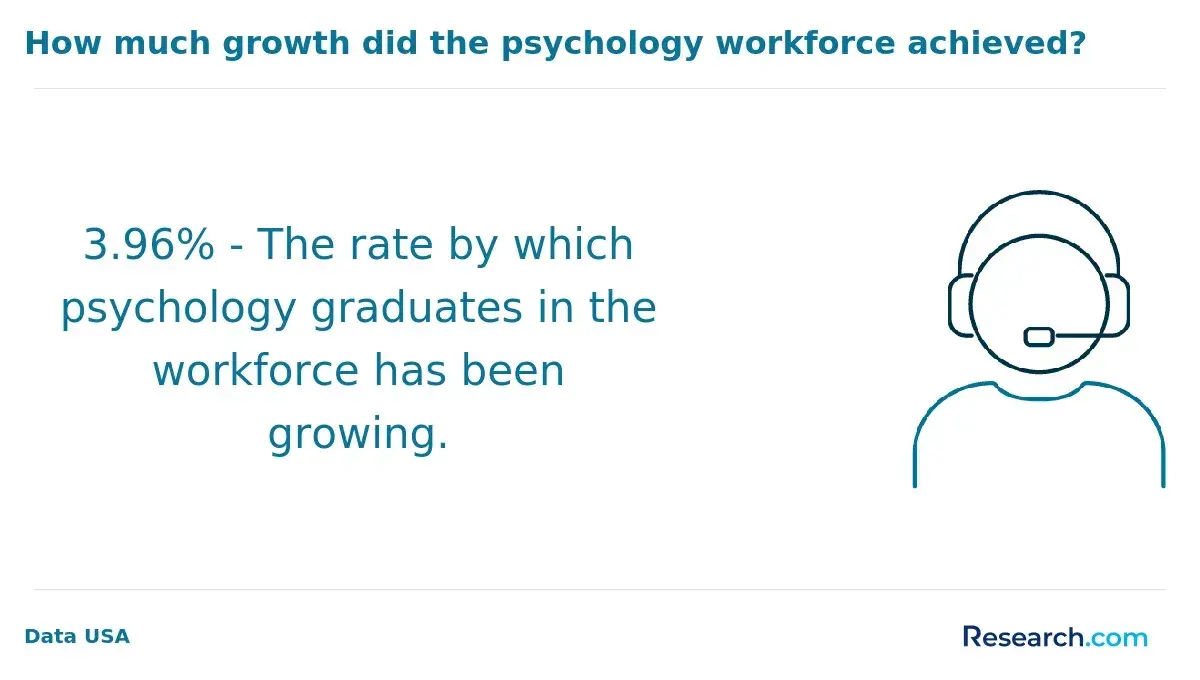
Looking ahead, multiple sources project job growth for BCBAs at 20% or more over the next 8–10 years, significantly above the national average for most occupations. Demand can still vary by region, funding environment, state requirements, and employer type, so students should research their local market rather than relying only on national trends.
For psychology majors, the opportunity is clear: a BCBA bridge pathway can lead into a field with strong demand, but the best outcomes usually come from choosing a program with verified coursework, reliable fieldwork support, ethical supervision, and strong exam preparation. The credential is valuable, but the quality of your preparation will shape how ready you are to use it.
References
- APA. (n.d.). Bridge to baccalaureate: Seek the paths of least resistance. Retrieved November 7, 2025, from APA.
- Apricott. (n.d.). Rate of Job Growth for BCBAs. Retrieved November 7, 2025, from Apricott.
- Attentive Autism Care. (n.d.). The Rate of Job Growth for BCBAs. Retrieved November 7, 2025, from Attentive Autism Care.
- BACB. (n.d.). Annual Data Report. Retrieved November 7, 2025, from BACB.
- Hollander, A. (2024, October 3). ABA Therapy Job Outlook. Retrieved November 7, 2025, from Bridge Care ABA Therapy.