2027 What to Look For in an Online BCBA Program Before Enrolling

Co-Founder and Chief Data Scientist
Choosing an online BCBA program is not just a tuition decision. The program must help you meet certification requirements, complete appropriate graduate coursework, secure qualified supervision, and build the applied skills needed to work responsibly with clients, families, schools, and organizations. A program can be convenient and affordable, yet still be a poor fit if it lacks clear fieldwork guidance, transparent outcomes, or strong faculty support.
Online pathways are now common in BCBA preparation. According to recent data, 43.58% of BCBA credential-holders reported that their graduate program was online. That growth gives prospective students more options, but it also makes careful comparison more important. Applicants should look beyond marketing language and verify how each program handles coursework, supervision, exam preparation, student support, and career readiness.
This guide explains what an online BCBA program includes, what accreditation and BACB-related verification to check, how support and fieldwork work in a remote format, what costs to expect, and what jobs may be available after certification. Use it as a practical checklist before applying or enrolling.
Key Things You Should Know About What to Look For in an Online BCBA Program Before Enrolling
- Most online BCBA programs take 12–24 months to complete, with accelerated or part-time options available depending on student needs.
- Tuition ranges widely, typically from $15,000 to $35,000, with some programs offering bundled supervision or financial assistance for affordability.
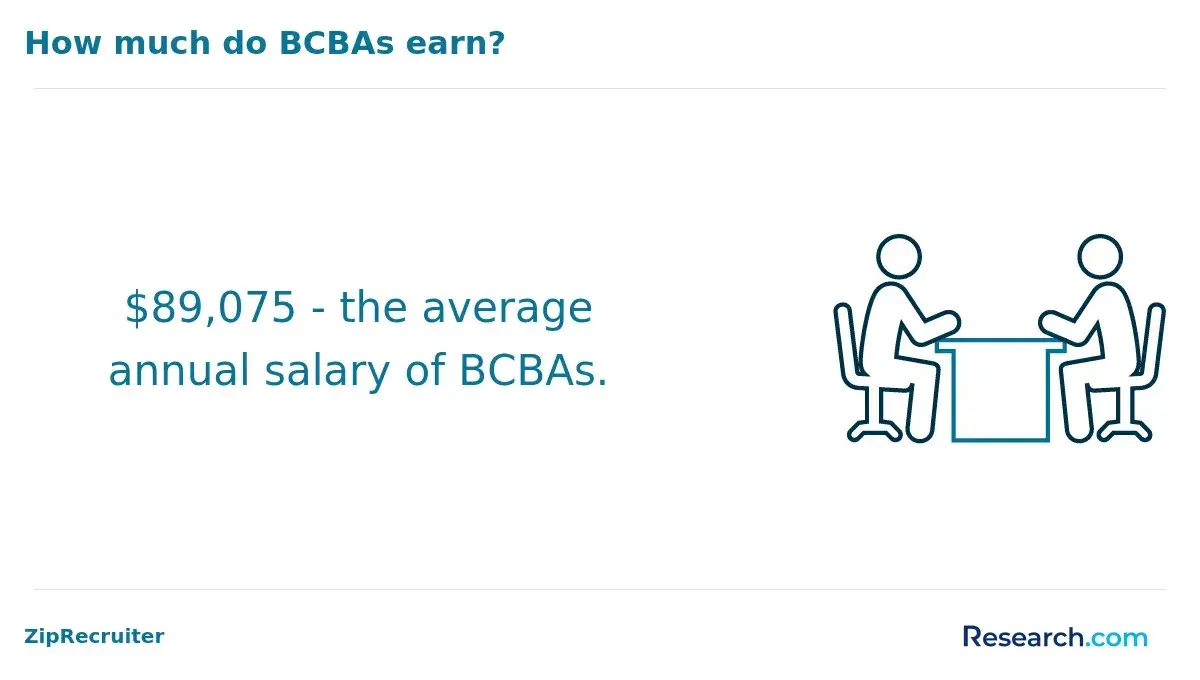
- Graduates pursue roles in clinical, school, or organizational settings, with median salaries ranging from $65,000 to $80,000, demonstrating strong career prospects for BCBA-certified professionals.
What is an online BCBA program?
An online BCBA program is a graduate-level pathway that prepares students to pursue Board Certified Behavior Analyst certification through coursework in applied behavior analysis, supervised fieldwork, and professional skill development. The online format allows students to complete lectures, readings, assignments, discussions, and sometimes supervision-related activities remotely, while still working toward the academic and practical requirements associated with BCBA eligibility.
These programs are most often designed for students who want to work in behavior analysis, autism services, education, developmental disability services, behavioral health, organizational behavior management, or related settings. Some students enroll while already working in ABA roles; others use the program to transition into the field.
Strong online programs do more than deliver recorded lectures. They help students connect theory to practice, use data to make clinical decisions, understand ethical obligations, and prepare documentation for supervised experience. Programs such as BCBA master's programs may combine asynchronous coursework, live class meetings, case-based assignments, competency checks, and fieldwork planning.
Core parts of an online BCBA program
- Graduate coursework: Students study behavior principles, assessment, measurement, intervention design, ethics, supervision, research methods, and data-based decision-making.
- BACB-aligned or verified coursework: The course sequence should clearly map to current certification requirements so students know whether the academic portion supports exam eligibility.
- Supervised fieldwork: Students complete applied experience under qualified supervision, usually in a clinical, school, home-based, community, or organizational setting.
- Practice-based assignments: Quality programs require students to analyze behavior data, write intervention plans, evaluate case scenarios, and practice professional documentation.
- Faculty and supervisor feedback: Students should receive regular feedback on academic performance, ethical reasoning, data interpretation, and fieldwork competencies.
- Certification preparation: Programs may include exam review tools, practice questions, study plans, and guidance on the certification application process.
The best fit depends on your current education level, work schedule, access to fieldwork sites, preferred learning style, and need for structured support. Before enrolling, confirm that the program’s online flexibility does not come at the expense of supervision quality or certification planning.
What accreditation and BACB verification should you check for?
Before applying to an online BCBA program, verify two separate issues: the institution’s accreditation and the program’s alignment with BACB requirements. These are related, but they are not the same. Institutional accreditation speaks to the school’s overall academic standards, while BACB-related verification or coursework alignment helps determine whether the program supports the education requirements for certification.
Do not rely only on phrases such as “BCBA track,” “ABA concentration,” or “certification-ready.” Ask the program to show exactly how its coursework maps to current BACB requirements and whether students are responsible for finding their own fieldwork supervisors.
What to verify before enrolling
- Institutional accreditation: Confirm that the college or university is accredited by a recognized accrediting body. This matters for transferability, employer recognition, financial aid eligibility, and graduate-level credibility.
- BACB coursework alignment: The program should clearly state whether its course sequence is verified or otherwise designed to satisfy BACB coursework requirements. Ask for documentation, not just a general assurance.
- Degree level and program type: Make sure the degree or certificate level matches your certification pathway. Some students need a full graduate degree, while others may already have an eligible degree and need only additional ABA coursework.
- Fieldwork guidance: Coursework alone is not enough. Ask whether the program provides supervised fieldwork, helps students locate supervisors, reviews fieldwork documentation, or leaves the process entirely to students.
- Licensure considerations: Some states have separate behavior analyst licensure rules in addition to BCBA certification. Ask whether the program provides state-specific guidance, especially if you plan to practice in a regulated state.
- Transparent policies: Review policies for course substitutions, transfer credits, program changes, supervision documentation, academic standing, and graduation requirements.
Questions to ask an admissions advisor
- Is the course sequence currently verified or formally aligned with BACB coursework requirements?
- Where can I find the official course sequence, course numbers, and requirement mapping?
- Does the program include supervised fieldwork, or must I arrange it independently?
- Who signs off on fieldwork documentation, and how does the program help students avoid documentation errors?
- Does the program publish exam pass rates, graduation outcomes, or student support metrics?
- Will this program meet requirements in the state where I plan to work?
A credible program will answer these questions directly and provide written information. If a school cannot explain its accreditation status, coursework verification, or fieldwork expectations clearly, treat that as a warning sign.
What types of academic support are available in online BCBA programs?
Academic support can make a major difference in an online BCBA program because students must master complex concepts while often balancing work, fieldwork, and family responsibilities. Strong support systems help students stay on pace, understand certification steps, and apply ABA principles correctly in real settings.
When comparing programs, look for support that is proactive and specific to ABA training—not just general online student services. A good program should help you identify problems early, connect coursework to fieldwork, and prepare for the BCBA exam in a structured way.
Common support services to look for
- Academic advising: Advisors help students plan course sequencing, understand prerequisites, monitor graduation requirements, and avoid delays.
- Certification planning: Programs should explain the steps toward BCBA eligibility, including coursework, fieldwork, documentation, and exam preparation.
- Faculty access: Look for regular office hours, prompt email responses, feedback on assignments, and opportunities to discuss case examples or ethical questions.
- Tutoring and writing support: Students may need help with research interpretation, data analysis, professional writing, and behavior intervention plan development.
- Technical support: Reliable IT support is essential for online exams, learning platforms, recorded lectures, virtual meetings, and fieldwork tools.
- Peer interaction: Discussion boards, group projects, study groups, and cohort models can reduce isolation and strengthen professional reasoning.
- Progress monitoring: Programs should track academic performance and help students address weak areas before they affect graduation or exam readiness.
- Exam preparation resources: Practice questions, review sessions, study guides, workshops, and content-area diagnostics can help students prepare more strategically.
Students considering affordable online ABA master’s programs should pay close attention to support quality, not only tuition. A lower-cost program may be a good value if it offers clear advising and strong faculty access. It may become more expensive in practice if students must pay separately for supervision help, exam prep, repeated courses, or extended enrollment.
Signs of weak support
- Advisors cannot explain the BCBA pathway in detail.
- Students receive little guidance on fieldwork documentation.
- Faculty interaction is limited to automated feedback or delayed email replies.
- The program does not offer structured exam preparation.
- Online students have fewer services than campus-based students.
For working adults, support availability also matters. Ask whether advising, office hours, and live sessions are offered outside standard business hours if you plan to study after work.
How can I determine the reputation of an online BCBA program?
You can evaluate the reputation of an online BCBA program by looking at verifiable evidence rather than relying on rankings, testimonials, or promotional claims alone. A reputable program should be transparent about accreditation, coursework alignment, faculty qualifications, supervision expectations, student outcomes, and graduate preparation.
Start with the basics: confirm the school’s accreditation, review the program curriculum, and examine whether the program clearly supports BCBA eligibility. Then look at quality indicators such as faculty experience, student support, employer connections, and graduate outcomes.
Reputation factors that matter
- Accreditation and verification: Confirm that the institution is accredited and that the ABA coursework is properly aligned with certification requirements.
- Faculty expertise: Review faculty bios for BCBA credentials, applied experience, research activity, clinical leadership, school-based experience, or organizational behavior management expertise.
- Outcome transparency: Look for published information on graduation rates, exam preparation, fieldwork support, and alumni career paths when available.
- Fieldwork reputation: Ask whether students have access to qualified supervisors and whether the program has relationships with clinics, schools, agencies, or community providers.
- Student feedback: Read reviews carefully, but focus on repeated themes: responsiveness, course quality, supervision help, workload, and exam preparation.
- Professional connections: Programs connected to professional organizations, practicum sites, research activity, or employer networks may offer stronger career preparation.
How to research a program before applying
- Review the program website for accreditation, curriculum, faculty, admissions, cost, and fieldwork details.
- Ask admissions for written confirmation of how the program supports BCBA coursework requirements.
- Request to speak with a current student, graduate, faculty member, or program coordinator.
- Search for independent student reviews, but separate individual complaints from consistent patterns.
- Compare at least three programs using the same criteria so you can judge value, not just reputation.
Be cautious with programs that emphasize speed or convenience but provide limited information about supervision, student outcomes, or certification planning. In BCBA training, reputation is built on preparation quality and ethical practice, not just name recognition.
What are the admission requirements for online BCBA programs?
Admission requirements vary by school and program type, but online BCBA programs generally expect applicants to show readiness for graduate-level study and a clear interest in applied behavior analysis. Some programs are full master’s degrees, while others are graduate certificate or coursework-only pathways for students who already hold an eligible graduate degree.
Before applying, confirm whether the program is intended for your current education level. Applying to the wrong pathway can delay certification planning and increase costs.
Typical admission requirements
- Bachelor’s degree: Applicants typically need a bachelor’s degree from an accredited institution. Common backgrounds include psychology, education, special education, human services, social work, or related fields.
- GPA standards: Many programs require a minimum GPA, typically around 3.0, although policies differ by institution.
- Prerequisite coursework: Some programs may require or prefer prior coursework in psychology, behavior analysis, statistics, research methods, education, or developmental studies.
- Letters of recommendation: Academic or professional references can help demonstrate readiness, work ethic, communication skills, and suitability for behavior-analytic training.
- Personal statement or essay: Applicants usually explain their interest in ABA, career goals, relevant experience, and reasons for choosing the program.
- Resume or CV: Experience in ABA therapy, education, disability services, mental health, childcare, research, or related areas may strengthen an application.
- Interview: Some programs use interviews to assess professionalism, communication skills, ethical awareness, and fit for the field.
Applicants to BCBA master’s programs should prepare materials that show both academic ability and practical readiness. ABA work requires careful documentation, collaboration, ethical judgment, and comfort using data. Admissions committees may look for evidence that you understand the demands of the profession, not just the credential.
How to strengthen your application
- Describe specific experience with learners, clients, students, families, or behavior support teams.
- Explain why ABA fits your career goals and the population you hope to serve.
- Ask recommenders who can comment on your reliability, professionalism, and ability to handle graduate work.
- Address any academic weaknesses directly if the application allows an optional statement.
- Confirm application deadlines early, especially if you need transcripts from multiple institutions.
How long does it take to complete an online BCBA program?
An online BCBA program typically takes 12 to 24 months to complete, depending on whether the student enrolls full-time or part-time, whether the pathway is a full master’s degree or a shorter graduate sequence, and how quickly the student can complete supervised fieldwork. Coursework pace and fieldwork pace are related, but they are not always the same.
Students in accelerated programs may finish the academic portion more quickly, but that does not automatically mean they will be ready for certification at the same time. Fieldwork hours, supervisor availability, worksite opportunities, and documentation quality can affect the overall timeline.
Factors that affect completion time
- Enrollment status: Full-time students usually progress faster, while part-time students may need additional terms to finish coursework.
- Program structure: Some programs use fixed cohorts, while others allow more flexible pacing.
- Prerequisites: Students who need prerequisite courses may extend their timeline before beginning advanced ABA coursework.
- Fieldwork access: Students who already work in an approved or appropriate ABA setting may have an easier time coordinating experience hours.
- Supervisor availability: Delays can occur if students struggle to find qualified supervision or if supervision schedules do not align with work hours.
- Personal commitments: Work, caregiving, and other responsibilities may make a slower pace more realistic.
Programs such as ABA online programs often appeal to working adults because they offer flexible schedules. However, flexibility should be balanced with structure. Students who need accountability may benefit from cohort deadlines, regular live sessions, and built-in advising checkpoints.
Planning tip
Ask each program for a sample completion plan for full-time and part-time students. Then ask how fieldwork fits into that plan. A realistic timeline should show when courses are taken, when supervision begins, and what happens if a student needs to pause or reduce enrollment.
What is the cost of an accredited BCBA program online?
The cost of an accredited online BCBA program can vary widely by institution, degree type, credit load, and included services. On average, tuition ranges from $15,000 to $35,000, with additional fees for materials, supervision, and exam preparation. Some programs offer payment plans, scholarships, employer tuition assistance options, or bundled supervision packages.
When comparing cost, calculate the full price of completion rather than looking only at tuition per credit. A program with lower tuition may not be the lowest-cost option if students must pay separately for supervision, exam preparation, repeated courses, technology fees, or extended enrollment.
Costs to include in your budget
- Tuition: Compare total program tuition, not just the per-credit rate.
- University fees: Online course fees, technology fees, graduation fees, and student service fees may add to the total cost.
- Books and materials: ABA textbooks, assessment tools, software, and research resources may be required.
- Supervision-related costs: Some students pay separately for fieldwork supervision, especially if it is not included through an employer or program partnership.
- Exam preparation: Review courses, practice exams, study materials, and workshops may be optional but useful.
- Lost time or reduced work hours: Students should consider whether coursework and fieldwork will affect income or scheduling.
How to judge value, not just price
- Does the program clearly support certification eligibility?
- Is supervision included, coordinated, or left entirely to the student?
- Are faculty responsive and experienced in applied settings?
- Does the program provide exam preparation and academic support?
- Can students complete the program without unnecessary delays?
- Are costs and refund policies clearly published?
Before enrolling, request a written cost breakdown from the school. Ask what is included, what is optional, and what students commonly pay outside tuition. This helps prevent surprises and makes it easier to compare programs fairly.
What core subjects are required in an online BCBA curriculum?
An online BCBA curriculum should give students a strong foundation in applied behavior analysis and prepare them to make ethical, data-based decisions in practice. The strongest programs connect each subject to real cases, supervision experiences, and professional responsibilities.
Although course titles differ by school, most curricula cover the same major competency areas. Students should review the course sequence carefully and confirm that it aligns with current certification requirements.
Core curriculum areas
- Foundations of behavior analysis: Introduces core concepts, terminology, learning principles, and the philosophical assumptions behind behavior analysis.
- Behavior assessment: Covers functional assessment, indirect and direct assessment methods, environmental variables, and hypothesis development.
- Measurement and data collection: Teaches students how to define behavior, select measurement systems, collect reliable data, graph results, and evaluate progress.
- Intervention design: Focuses on selecting evidence-based strategies, writing behavior intervention plans, teaching replacement skills, and adjusting plans based on data.
- Ethics and professional conduct: Prepares students to handle consent, confidentiality, scope of competence, conflicts of interest, supervision duties, and client rights.
- Research methods and analysis: Covers single-case design, experimental logic, interpretation of behavior-analytic research, and practical use of evidence.
- Supervision and management: Helps students learn how to train staff, monitor implementation, provide feedback, and support treatment fidelity.
- Fieldwork integration: Connects classroom learning with supervised practice so students can apply assessment, intervention, documentation, and ethical decision-making skills.
What to look for in course design
- Assignments that require real data analysis rather than only discussion posts.
- Case studies that include ethical and cultural considerations.
- Opportunities to practice writing assessment summaries and intervention plans.
- Clear alignment between courses and fieldwork competencies.
- Regular feedback from faculty with behavior-analytic expertise.
A curriculum should prepare students for more than an exam. It should help them become careful practitioners who can define problems clearly, choose appropriate interventions, monitor outcomes, and revise plans when data show that changes are needed.
How does fieldwork supervision work in online BCBA programs? –
Fieldwork supervision gives students the applied experience needed to develop BCBA-level skills under the guidance of a qualified supervisor. In online BCBA programs, coursework is delivered remotely, but fieldwork usually occurs in real service settings such as clinics, schools, homes, community programs, or workplaces. Supervision may include live meetings, observation, video review, performance feedback, case discussion, and documentation review.
The most important point is that students must understand who is responsible for arranging fieldwork. Some programs help place students or have employer partnerships. Others provide coursework only and expect students to locate their own supervised experience.
Common supervision models
- Employer-based supervision: Students complete fieldwork at their current workplace under a qualified supervisor. This can be convenient, but students should confirm that their duties meet fieldwork expectations.
- Program-connected placements: Some schools help students connect with clinics, agencies, or schools that offer supervised experience.
- Independent supervision: Students may contract with a supervisor outside the university or employer. This requires careful attention to qualifications, documentation, and cost.
- Remote or hybrid supervision: Supervisors may use video observation, teleconferencing, recorded sessions, and online documentation tools when appropriate.
What supervisors typically review
- Behavior assessment activities and interpretation of findings.
- Intervention plan design and implementation quality.
- Data collection systems, graphs, and progress monitoring.
- Ethical issues, client dignity, and professional boundaries.
- Caregiver, teacher, staff, or team consultation skills.
- Documentation accuracy and timely completion of fieldwork records.
Good supervision should be structured, consistent, and skills-focused. Students should not view fieldwork as simply accumulating hours. The goal is to demonstrate increasing competence in assessment, intervention, data analysis, collaboration, and ethical practice.
Questions to ask about fieldwork
- Does the program provide fieldwork placements or only coursework?
- Can I complete fieldwork at my current job?
- Who verifies that my fieldwork activities are appropriate?
- How often will I meet with a supervisor?
- Are supervision fees included in tuition?
- What happens if my supervisor leaves or my job changes?
Clear answers to these questions can prevent delays, extra costs, and documentation problems later in the certification process.
What jobs can you get after earning a BCBA certification?
After earning BCBA certification, professionals may work in clinical, educational, community, organizational, research, and supervisory roles. The right job depends on the population you want to serve, the setting where you prefer to work, your tolerance for travel or caseload demands, and whether you want to focus on direct clinical practice, consultation, leadership, or research.
BCBAs often work with individuals with autism, developmental disabilities, behavioral challenges, learning needs, or skill deficits. They may also support staff training, school behavior systems, workplace performance, and program evaluation. Salary can vary by location, employer, experience, setting, and responsibility level, so the figures below should be treated as reference points rather than guaranteed earnings.
1. Clinical Behavior Analyst
Clinical behavior analysts usually work in private clinics, hospitals, therapy centers, home-based programs, or community agencies. They assess client needs, design intervention plans, supervise implementation, train technicians or caregivers, monitor progress, and adjust plans based on data.
Median Salary: $73,000 per year
2. School-Based BCBA
School-based BCBAs support students with behavioral, learning, developmental, or communication needs. They may conduct functional behavior assessments, help develop behavior intervention plans, train teachers and paraprofessionals, consult on individualized education program strategies, and support classroom systems.
Median Salary: $68,000 per year
3. Organizational Behavior Consultant
Organizational behavior consultants apply behavior-analytic principles in workplace and business settings. Their work may involve staff training, performance improvement, safety systems, productivity analysis, leadership coaching, or process improvement.
Median Salary: $80,000 per year
4. Early Intervention Specialist
Early intervention specialists work with young children, often from birth to age five, to build communication, social, adaptive, play, and early learning skills. They may provide services in homes, clinics, preschools, or community settings and often collaborate closely with families and caregivers.
Median Salary: $65,000 per year
5. Research and Academia
Some BCBAs work in research, higher education, training, or program evaluation. They may study intervention effectiveness, teach future behavior analysts, publish research, supervise graduate students, or help agencies evaluate service outcomes.
Median Salary: $75,000 per year
How to choose a career direction
- If you want direct client impact: Consider clinical ABA, early intervention, or school-based work.
- If you enjoy systems and staff training: Consider school consultation, program leadership, or organizational behavior consulting.
- If you prefer research and teaching: Consider academia, research organizations, or doctoral study.
- If you need schedule predictability: Compare school, clinic, and home-based roles carefully because hours and travel expectations can differ.
Before accepting a role, review caseload size, supervision responsibilities, travel expectations, documentation requirements, billable-hour expectations, and opportunities for mentorship. A first BCBA job should support ethical practice and continued professional growth, not just offer the highest salary.
Other Things You Should Know About What to Look For in an Online BCBA Program Before Enrolling
Many online BCBA programs in 2027 offer career placement assistance, often through partnerships with organizations in applied behavior analysis and via online job boards and alumni networks to help graduates connect with potential employers.
Ethical training is integrated throughout online BCBA programs via coursework on the BACB Professional and Ethical Compliance Code, case studies, and supervised practice. Students learn to identify and resolve ethical dilemmas, implement evidence-based interventions responsibly, and maintain client confidentiality. Supervision sessions reinforce ethical decision-making, helping students apply professional standards consistently in real-world ABA practice.
In 2027, online BCBA programs may have partnerships with local agencies to facilitate practicum placements. Students should verify whether programs have resources to assist in finding placements and whether they offer remote supervision options to accommodate various geographic locations.
References
- Association for Behavior Analysis International. (n.d.). Verified course sequence directory. Retrieved from ABAI
- Behavior Analyst Certification Board. (2022, January). BCBA Handbook. Retrieved from BACB
- Behavior Analyst Certification Board. (2022, January). BCBA compliance code and code enforcement system. Retrieved from BACB
- Bureau of Labor Statistics. (n.d.). Substance abuse, behavioral disorder, and mental health counselors. Retrieved from BLS
- Conners, B., Johnson, A., Duarte, J., Murriky, R., & Marks, K. (2019). Future directions of training and fieldwork in diversity issues in applied behavior analysis. Behavior Analysis in Practice, 12(4), 767‑776. Retrieved from PMC
- Zippia. (n.d.). Behavior analyst demographics and statistics in the US. Retrieved from Zippia