2027 BCBA Programs for Career Changers: Flexible Learning Paths

Co-Founder and Chief Data Scientist
Changing careers into behavior analysis requires more than choosing an online graduate program. You need to confirm that your degree, coursework, supervised fieldwork, exam timing, and state-level practice requirements line up before you invest time and tuition.
This guide is for professionals who are considering a move into Board Certified Behavior Analyst (BCBA) roles while balancing work, family, and prior career obligations. It explains the current certification pathway, how online programs differ, what costs and salaries may look like, how to secure fieldwork, and how to use your existing skills in a BCBA career. Newly certified BCBAs typically earn an average starting salary of $80,000 to $89,000 annually, but the return on investment depends heavily on choosing an eligible program, completing supervised hours efficiently, and entering the right job market.
Key Things You Should Know About BCBA Programs for Career Changers
- The certification path requires an accredited master's degree with a BACB-Verified Course Sequence (VCS)—a mandatory component after January 1, 2026—and the completion of roughly 2,000 hours of supervised fieldwork before taking and passing the BCBA exam.
- The average total cost of an online BCBA master's program ranges from $15,000 to $25,000, offering a positive Return on Investment (ROI), as newly certified BCBAs earn an average starting salary of $80,000 to $89,000 annually.
- Online programs offer flexibility and fieldwork placement assistance for working career changers, allowing them to leverage transferable skills in a high-demand job market projected to grow by 22% over the next decade across diverse fields beyond traditional settings.
What are the latest BACB certification requirements for BCBA, specifically for career changers?
For career changers, the BCBA pathway is manageable but highly rule-driven. As of 2025, candidates must meet four core requirements: graduate education, approved behavior-analytic coursework, supervised fieldwork, and a passing BCBA exam score. The most important decision early on is whether your program clearly satisfies BACB eligibility rules, because fixing coursework problems later can delay certification.
- Graduate education: Candidates must hold a master's or doctoral degree in behavior analysis, education, or psychology from an accredited university. Career changers with unrelated bachelor's degrees can still pursue the BCBA route if they complete an eligible graduate program.
- Approved coursework: Coursework must come from a BACB-verified course sequence (VCS) or meet the BACB's 5th Edition Task List requirements. Coursework older than 10 years is no longer accepted, so returning students should not assume previous graduate credits will count.
- Supervised fieldwork: Candidates typically complete 2,000 hours over a minimum of 12 months under a qualified BCBA supervisor. Some intensive practicum models may reduce the required hours to 1,500 or 750 hours, but only when the program and supervision structure meet the required criteria.
- BCBA exam: Candidates must pass the BCBA exam, which includes 185 multiple-choice questions based on the BCBA 5th Edition Task List. The exam is administered through Pearson VUE, and candidates must earn a passing scaled score of 400 or higher.
- Application and certification: After meeting education and fieldwork requirements and passing the exam, candidates submit certification documentation and required fees to the BACB.
Career changers should verify three items before enrolling: whether the degree is eligible, whether the coursework is approved for the certification pathway they plan to use, and whether the program helps students arrange fieldwork. A program that is convenient but not aligned with BACB rules can create costly delays.
What are the steps to apply for the BCBA exam, and what are the application deadlines?
The BCBA exam application process is not based on a single annual deadline. The BACB reviews applications on a rolling basis, so your timing depends on when you complete your coursework and supervised fieldwork, how quickly your documentation is ready, and how long application review takes.
- Read the BCBA Handbook and confirm eligibility. Review the education, coursework, and supervised fieldwork rules before applying. Do not rely only on program marketing language; your application is judged against BACB requirements.
- Gather documentation. Prepare transcripts, supervision forms, fieldwork records, and any other required materials. Career changers should be especially careful if they completed education at more than one institution.
- Create or access your BACB online account. Submit the BCBA certification application through your account and pay the application fee.
- Wait for BACB review. The BACB reviews applications in the order received. As of November 7, 2025, the board is working through applications submitted by November 4, 2025.
- Receive Authorization to Test. If your application is approved, you will receive an Authorization to Test (ATT) email.
- Schedule through Pearson VUE. Use the ATT to choose an exam date and testing location through Pearson VUE.
- Take the BCBA exam. The exam consists of 185 multiple-choice questions based on the BACB 5th Edition Task List.
There is no fixed application deadline, but waiting until the last minute can create problems if your paperwork is incomplete or if exam appointments are limited in your preferred location. Applicants are encouraged to apply well in advance of their intended exam date.
Once approved, candidates have a two-year window to take and pass the exam. Because the exam is offered year-round at testing centers worldwide, most candidates can build a study schedule around work obligations, but they should still allow enough time for retakes if needed.
What is the difference between a Verified Course Sequence (VCS) and a non-VCS BCBA program pathway eligibility?
The practical difference is certainty. A Verified Course Sequence (VCS) gives students a clearer route to meeting BACB coursework requirements, while a non-VCS pathway requires additional documentation and carries more eligibility risk.
A Verified Course Sequence is a set of courses verified by the Association for Behavior Analysis International (ABAI) as meeting the required coursework content, hours, and faculty standards set by the BACB. Completing a VCS directly fulfills the Pathway 2 behavior-analytic coursework requirements for BCBA exam eligibility, without requiring students to prove course content individually later.
Non-VCS programs are not pre-verified by ABAI. Students who complete coursework outside a VCS must have the university verify the coursework through a Non-Verified Course Content Attestation completed by a program official, such as a department chair. This attestation confirms that the coursework meets BACB requirements.
The key risk is timing: the non-VCS attestation pathway will no longer be accepted after January 1, 2026. For students starting or changing programs near that date, a VCS or accredited program is the safer choice for BCBA eligibility.
- Choose a VCS if: you want a lower-risk certification pathway, need clear documentation, or are changing careers and do not want to interpret coursework rules on your own.
- Be cautious with non-VCS coursework if: you may not complete requirements before January 1, 2026, or if the school cannot clearly explain how it verifies eligibility.
- Ask before enrolling: whether the program is VCS-approved, who confirms eligibility, how fieldwork is supported, and what happens if BACB rules change while you are enrolled.
What is the average total cost of an online BCBA master's program?
The average total cost of an online BCBA master's program typically ranges between $15,000 and $25,000. Many programs charge around $400 to $600 per credit hour, and total credit requirements commonly fall between 30 and 45 credits. Some affordable programs cost about $20,000 in total, while others may be lower, around $15,000 to $19,000, depending on credit hours and per-credit tuition.
Tuition is only one part of the full cost. Students should also budget for textbooks, technology fees, background checks if required by fieldwork sites, exam preparation materials, and certification-related fees. Textbooks and exam preparation materials can add roughly $1,000 on top of tuition. More expensive programs may charge over $1,000 per credit, which can raise total cost significantly.
When comparing online BCBA master's programs, do not choose only by sticker price. A low-cost program can become expensive if it lacks fieldwork support, does not meet BACB pathway requirements, or causes delays in exam eligibility. A stronger affordability review should include:
- Total tuition: multiply per-credit tuition by the total number of required credits.
- Program eligibility: confirm that the coursework supports the BCBA pathway you plan to use.
- Fieldwork support: ask whether the school helps identify supervisors or approved sites.
- Schedule fit: verify whether courses are asynchronous, synchronous, full time, or part time.
- Financial aid: review scholarships, federal aid eligibility, payment plans, and employer tuition assistance.
For students aiming for affordability without compromising accreditation, affordable BCBA certification programs can help reduce financial barriers while still meeting BACB requirements.
What are the long-term return on investment (ROI) and average starting salary for a newly certified BCBA?
The long-term ROI of becoming a BCBA is generally positive when the certification leads to roles with higher pay, stronger job stability, and advancement options compared with non-certified behavioral health or education positions. The return is strongest for students who control tuition costs, complete fieldwork efficiently, and enter regions or employer settings with high demand.
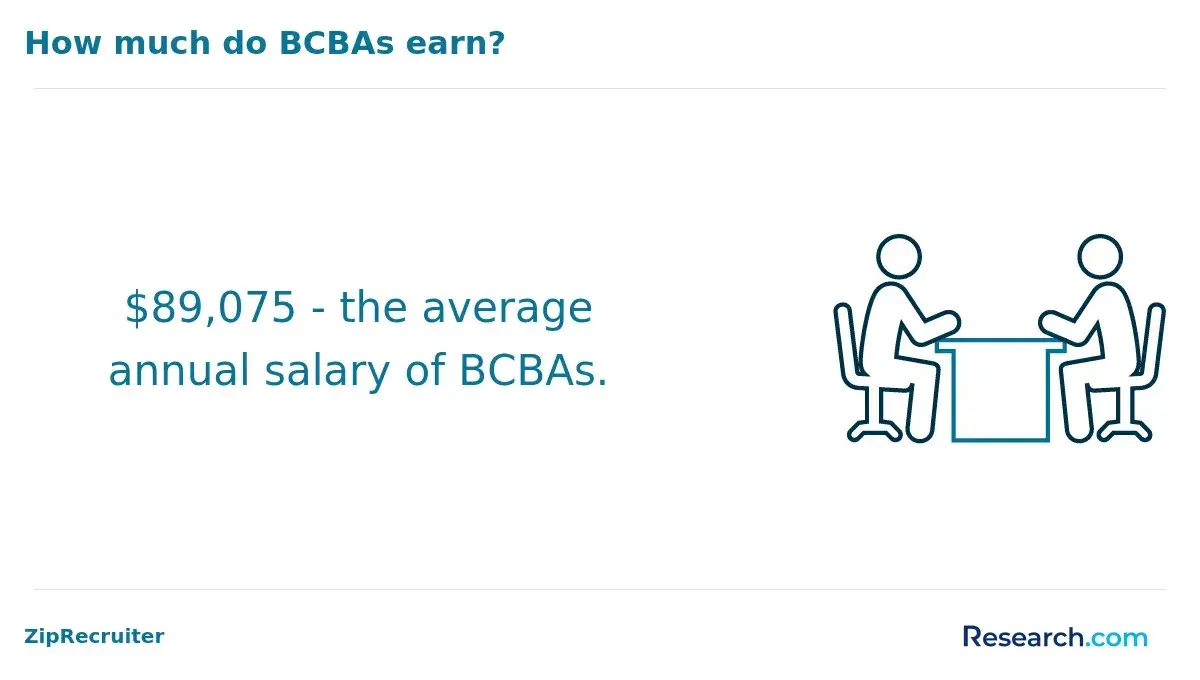
Newly certified BCBAs in the United States can expect to earn approximately $80,000 to $89,000 per year, with entry-level hourly rates around $42.82. Actual pay varies by location, employer, work setting, population served, and prior experience. Career changers with leadership, education, healthcare, or data-analysis backgrounds may be able to present a stronger case for supervisory or specialized roles after certification.
The upfront investment includes graduate tuition, books, exam preparation, application costs, and continuing education. Over time, certification can improve access to clinical leadership roles, school-based positions, telehealth opportunities, consulting work, and private practice pathways. Employers increasingly require or value BCBA certification, which can strengthen long-term employability.
To evaluate ROI realistically, compare the total cost of your program with your likely first-year salary, the time needed to finish fieldwork, and whether you can keep working while enrolled. A lower-cost program with strong fieldwork alignment may produce a better return than a higher-priced program that delays certification.
How can a career changer secure a qualified BCBA supervisor and a suitable fieldwork site while maintaining their current job?
Career changers should treat fieldwork planning as early career planning, not as a task to handle after coursework begins. The main challenge is finding a qualified supervisor and enough client-facing or behavior-analytic hours without leaving your current job too soon.
- Clarify your fieldwork needs before contacting supervisors. Know your target schedule, population interests, location limits, and whether you need evening, weekend, remote, or hybrid supervision.
- Use formal and informal networks. Search the BACB Certificant Registry, local ABA agencies, school districts, clinics, hospital programs, professional associations, LinkedIn, and ABA-focused groups. Ask programs directly whether they maintain supervisor lists.
- Interview more than one supervisor. Compare availability, supervision style, fees, documentation practices, ethical expectations, and experience with career changers. A supervisor who is technically qualified may still be a poor fit if scheduling or feedback practices do not match your needs.
- Ask whether your current job can count. If your current role includes applied behavior analysis work under qualified supervision, such as RBT or BCaBA responsibilities, some hours may count toward supervised fieldwork. This is sometimes described as "double dipping," but it must comply with supervision contracts and BACB requirements.
- Look for flexible fieldwork sites. Some agencies offer part-time, evening, weekend, or telehealth-supported options. Others may require daytime availability, which can be difficult for full-time workers.
- Put expectations in writing. Confirm supervision frequency, observation procedures, documentation responsibilities, fees, cancellation policies, and what happens if the supervisor leaves the organization.
- Track hours carefully from the start. Poor documentation can jeopardize eligibility even when the actual work was completed. Career changers balancing multiple roles should create a weekly tracking routine.
The best setup is one where your coursework, supervisor, and fieldwork site reinforce each other. If those pieces are disconnected, you may still qualify, but you will need to manage communication and documentation more carefully.
Do online BCBA programs offer fieldwork placement assistance or mentorship support for career changers?
Yes, many online BCBA programs offer some form of fieldwork placement assistance or mentorship, but the level of support varies widely. Some programs provide structured guidance, supervisor directories, advising, and fieldwork planning. Others expect students to secure their own sites and supervisors independently.
Programs such as the University of Washington’s online ABA curriculum and other online offerings may guide students in identifying approved sites and qualified supervisors. For career changers, this support can make the difference between a smooth certification timeline and months of delay.
Before enrolling, ask specific questions rather than accepting a general promise of "support":
- Does the program place students at sites, or only provide suggestions?
- Are supervisors employed by the program, affiliated with partner sites, or found independently by students?
- Can students complete fieldwork near where they live?
- Is remote supervision available, and under what conditions?
- Does the program help students who work full time find flexible options?
- Who reviews fieldwork documentation before students apply for the exam?
Adult learners can also benefit from online ABA certificate programs that combine coursework with remote supervision options and professional mentorship. The strongest choice is a program that is transparent about what it does and does not provide for fieldwork.
How can transferable skills from my previous career be leveraged in a BCBA role?
Career changers often bring strengths that translate directly into BCBA responsibilities. The key is to connect your previous experience to behavior-analytic work such as assessment, intervention planning, data review, caregiver training, staff supervision, and ethical decision-making.
- Communication: Strong writing and speaking skills support behavior intervention plans, caregiver meetings, clinical documentation, staff training, and collaboration with teachers, physicians, therapists, and families.
- Data analysis and problem-solving: Experience interpreting trends, diagnosing operational issues, or testing solutions can support functional behavior assessments, progress monitoring, and intervention adjustments.
- Leadership and supervision: Management, coaching, mentoring, and delegation experience can help BCBAs supervise technicians, train staff, manage cases, and move into clinical leadership roles.
- Project management: Skills in scheduling, prioritization, budgeting, compliance, and coordination are useful when managing caseloads, treatment plans, team meetings, and documentation deadlines.
- Empathy and relationship-building: Emotional intelligence, conflict resolution, and trust-building help BCBAs work with clients, caregivers, school teams, and interdisciplinary providers.
- Technology and documentation: Experience with spreadsheets, data systems, reporting tools, or software platforms can improve behavioral data tracking, treatment documentation, and outcome reporting.
- Industry knowledge: Backgrounds in healthcare, education, social work, counseling, operations, or management can provide insight into client needs, funding structures, compliance issues, and service delivery systems.
When applying for BCBA roles, do not describe yourself only as "new to the field." Instead, show how your previous career helps you manage cases, communicate with stakeholders, interpret data, and lead teams. Career changers seeking formal credentialing may explore accredited ABA master's programs online to build the required academic foundation for certification.
What are the BCBA job market trends and demand predictions for career changers?
The BCBA job market remains strong for career changers because demand for behavior-analytic services continues across clinical, educational, healthcare, and community settings. Certification can open doors in autism services, schools, telehealth, developmental disability services, organizational behavior management, and leadership roles.
- Rapid job growth: The BCBA job market is projected to grow by 22% over the next decade, which is well above the average for other professions. The national average job growth is around 5%.
- Expanded opportunities: BCBA job postings increased by 800% from 2010 to 2022. Demand has been supported by increased autism diagnoses, legislative support for ABA services, and broader recognition of behavioral health needs.
- Broader work settings: The need for BCBAs extends beyond autism services to schools, healthcare organizations, telehealth platforms, and related service systems.
- Geographic hotspots: Demand is highest in states like California, which accounts for 31% of national demand, as well as Massachusetts, Texas, Florida, and Georgia.
- Shortage of qualified professionals: A nationwide shortage of certified BCBAs continues, with openings often close to or exceeding the number of credentialed clinicians. This creates opportunities for new entrants, including career changers.
- Career advancement: BCBAs can move into clinical director roles, specialize in areas such as organizational behavior management, or pursue private practice, depending on experience, state rules, and employer setting.
Career changers should still evaluate local demand before enrolling. Job availability, salary, supervision requirements, insurance rules, and state licensure expectations can vary by location. For professionals planning a transition, BCBA masters programs can provide structured training and mentorship for entering this growing market.
Are there BCBA exam prep courses or bootcamps specifically designed for professionals returning to school?
Yes. Many BCBA exam prep courses and bootcamps are designed for adult learners, career changers, and professionals returning to school after time away from formal study. These options can be especially helpful for candidates who need structure, accountability, and practice applying behavior-analytic concepts to exam-style scenarios.
Common exam prep options include:
- Structured review courses: Providers such as ABA Technologies and Study Notes ABA offer comprehensive review programs with organized lessons, content review, and practice activities. These can help returning students rebuild academic study habits.
- Bootcamp-style programs: Some companies provide intensive live or recorded sessions, mock exams, test-taking strategies, and targeted review of difficult topics. Pass the Big ABA Exam is a widely used service offering live and recorded sessions and tutoring for non-traditional and career-change students.
- Practice question banks and study guides: Affordable options such as ABA Study Guide provide mock questions, explanations, and study plans for candidates who want repeated practice and content reinforcement.
- Tutoring and coaching: Individual or small-group tutoring can help candidates who struggle with ethics scenarios, measurement concepts, experimental design, or applied interpretation questions.
- Peer study communities: Study groups, accountability partners, and mentor-supported communities can help career changers stay consistent while working full time.
When choosing a prep course, look for current alignment with the BCBA 5th Edition Task List, realistic practice questions, clear explanations, and scheduling flexibility. Avoid relying only on passive video watching; the exam requires application, interpretation, and decision-making under timed conditions.
What is the role of a BCBA in public health, government, or policy development, and what are the required specializations?
BCBAs are not limited to one-on-one clinical services. In public health, government, and policy settings, they apply behavioral science to improve systems, evaluate programs, influence service delivery, and support evidence-based decision-making at a larger scale.
- Public health: BCBAs may contribute to behavior-focused interventions related to vaccination uptake, substance abuse prevention, chronic disease management, and other population-level health behaviors. Their role often includes designing interventions, measuring outcomes, and improving implementation.
- Government agencies: BCBAs may help improve disability services, educational access, corrections programs, public benefits systems, or service efficiency. They can train staff, evaluate program performance, and recommend changes based on behavioral data.
- Policy development: BCBAs may evaluate or help draft legislation, regulations, service standards, ethical guidance, funding policies, and consumer protections related to behavior analysis, special education, autism services, and health behavior policy. Some contribute through advisory roles, expert testimony, or cost-benefit analysis.
Required Specializations
- Behavior analytic research: Strong research design, measurement, and program evaluation skills are important for collecting, interpreting, and presenting data in policy settings.
- Applied behavior analysis in systems: Experience in schools, healthcare organizations, government-run programs, or large service systems helps BCBAs understand how interventions work beyond individual cases.
- Public policy, advocacy, and ethics: Knowledge of legal, regulatory, funding, and ethical issues is important when shaping service delivery or advising decision-makers.
- Specialty populations: Expertise in autism spectrum disorders, intellectual and developmental disabilities, behavioral medicine, school-based services, or related areas is often valued.
Career changers with backgrounds in public administration, education leadership, healthcare operations, nonprofit management, law, or policy analysis may be well positioned for these nontraditional BCBA roles after completing the required behavior-analytic training and certification pathway.
Other Things You Should Know About BCBA Programs for Career Changers
2027 BCBA programs cater to career changers through flexible learning paths by offering online courses, weekend classes, and part-time study options. These paths allow individuals to balance their current jobs or personal responsibilities while acquiring the necessary skills and knowledge for a career in Board Certified Behavior Analysis.
Admission into a 2027 BCBA program often requires a bachelor’s degree in any field. Some programs may demand additional coursework in psychology or behavioral science and require a minimum GPA of 3.0. Consult individual programs for specific requirements.
References
- Association for Behavior Analysis International. (n.d.). Verified Course Sequence (VCS) information. https://www.abainternational.org/vcs/bacb.aspx abainternational.org
- Behavior Analyst Certification Board. (2022). BCBA handbook (3rd ed.). https://www.bacb.com/wp-content/uploads/2022/01/BCBAHandbook_250304-3.pdf Behavior Analyst Certification Board
- Behavior Analyst Certification Board. (2025, April). 2027 BCBA requirements (Version 9/26/2023). https://www.bacb.com/wp-content/uploads/2025/03/2027-BCBA-Requirements_250423-a.pdf Behavior Analyst Certification Board
- Behavior Analyst Certification Board. (2025, February). U.S. employment demand for behavior analysts: 2010–2024 (Lightcast report). https://www.bacb.com/wp-content/uploads/2025/02/Lightcast2025_250204-a.pdf Behavior Analyst Certification Board
- Indeed Career Guide. (2025, May). How to become a Board Certified Behavior Analyst (BCBA). https://www.indeed.com/career-advice/career-development/how-to-become-bcba
- Mayo, M. R., & Colleagues. (2024). A survey of the state of the field of applied behavior analysis. National Center for Biotechnology Information. https://pmc.ncbi.nlm.nih.gov/articles/PMC11219634/
- Mary Baldwin University. (2025, May 22). Growing demand for applied behavior analysis skills.https://online.marybaldwin.edu/applied-behavior-analysis-skills-demand