2027 BCBA Programs Without GRE Requirements: Top Picks

Co-Founder and Chief Data Scientist
If you want to become a Board Certified Behavior Analyst but do not want the cost, time, or uncertainty of taking the GRE, a no-GRE BCBA pathway can remove one major admissions barrier. These programs are especially useful for working professionals, career changers, educators, and psychology or human services graduates who already know they want graduate-level training in applied behavior analysis.
This guide explains how to compare BCBA master’s and post-graduate certificate programs without GRE requirements. It covers leading program options, common GPA expectations, undergraduate major flexibility, fieldwork integration, cost ranges, financial aid opportunities, exam pass-rate considerations, salary expectations, and states with strong employment prospects. Use it as a decision tool, then confirm each school’s current admissions rules, BACB eligibility alignment, tuition, and supervision requirements before applying.
Key Things You Should Know About BCBA Programs Without GRE Requirements
- BCBA programs without GRE requirements are widely available, including online master’s and post-graduate certificate programs, with most admitting students with a minimum 3.0 GPA and often accepting non-psychology bachelor’s degrees if prerequisite ABA coursework is completed.
- The most affordable no-GRE BCBA master’s programs average $420–$465 per credit hour, and students can access field-specific, institutional, and federal scholarships, while selecting programs with high BCBA exam pass rates ensures better certification outcomes.
- Graduates of no-GRE BCBA programs can expect varied salaries by setting—from $55,000 in schools to $125,000+ in remote or private practice roles—with top-paying states including Massachusetts, California, and New Jersey, and post-master’s certificates provide a faster route to BCBA certification.
What are the top 5 BCBA programs without GRE requirements?
The top no-GRE BCBA programs are generally those that combine accessible admissions with rigorous ABA coursework, practical fieldwork options, and clear preparation for BCBA exam eligibility. A no-GRE policy should not be the only reason to choose a school; applicants should also review curriculum fit, supervision structure, cost, format, faculty support, and published exam outcomes when available.
- University of South Florida (USF): USF offers an online MA in Applied Behavior Analysis with no GRE required. The program is ABAI verified and includes coursework and supervised fieldwork, making it a strong option for students who want an online route with a structured certification focus.
- Northeastern University: Northeastern provides a Master’s in Applied Behavior Analysis without the GRE. It is designed for working professionals and includes flexible online options and practicum integration, which can help students connect academic coursework with supervised practice.
- Purdue Global: Purdue Global features an online master’s in ABA with no GRE requirement. The program emphasizes accelerated coursework and fieldwork preparation for BCBA eligibility, which may appeal to students looking for a faster and more flexible graduate pathway.
- Arcadia University: Arcadia offers an MS in ABA with no GRE. Its curriculum emphasizes autism spectrum disorder interventions and practical experience, making it a relevant choice for students who want to work in autism services, schools, or clinical settings.
- National University: National University provides an MS in ABA with no GRE. The program is designed to prepare students for the BCBA exam through online coursework and supervision, which can benefit students balancing graduate study with employment or family responsibilities.
Before applying, compare each program’s current admissions requirements, whether coursework meets current BACB expectations, how supervision is arranged, and whether students must find their own fieldwork placement. A program that is easy to enter but difficult to complete or poorly aligned with your state licensing goals may not be the best value.
What minimum undergraduate GPA do accredited BCBA master's programs without GRE typically require for admission?
Accredited BCBA master’s programs without GRE requirements commonly look for a minimum undergraduate GPA of about 3.0 on a 4.0 scale. This is not universal, but it is the most common benchmark because schools still need evidence that applicants can handle graduate-level behavioral science, research, ethics, and applied practice coursework without relying on GRE scores.
Typical GPA expectations
- Most no-GRE BCBA master’s programs require or prefer at least a 3.0 GPA from an accredited bachelor’s degree program.
- Some programs may consider applicants with a lower GPA, such as 2.75, especially when the applicant has strong professional experience, relevant coursework, or evidence of readiness for graduate study.
- Conditional admission may be available at some schools, but it often comes with extra requirements, such as earning minimum grades in initial graduate courses.
How to strengthen an application with a lower GPA
- Highlight direct experience in ABA, special education, autism services, behavioral health, social services, or classroom support.
- Use the personal statement to explain academic improvement, professional maturity, and clear career goals.
- Submit strong recommendations from supervisors, faculty, or clinicians who can speak to your reliability, ethics, and ability to work with clients.
- Ask admissions staff whether GRE scores are waived only for applicants above a GPA threshold or whether the program is completely test-optional.
The key point is that “no GRE” does not mean “no academic standards.” Programs usually replace test scores with a closer review of GPA, transcripts, recommendations, experience, and fit for the field.
Do online BCBA programs without a GRE require an undergraduate degree in psychology or a related field?
Most online BCBA master’s programs without a GRE do not require every applicant to have an undergraduate degree in psychology or a closely related field. A bachelor’s degree from an accredited institution is usually the baseline requirement, while the admissions committee reviews whether the applicant has enough academic preparation, professional experience, and motivation to succeed in ABA graduate training.
Applicants with degrees in psychology, applied behavior analysis, education, special education, social work, human services, or communication disorders may have a more direct transition into the curriculum. However, students from other fields may still be admitted, particularly if they have relevant work experience or are willing to complete prerequisite coursework.
What applicants from unrelated majors should check
- Whether the program requires prerequisite courses in ABA, psychology, child development, research methods, or behavior analysis.
- Whether prerequisite courses must be completed before admission or can be taken after enrollment.
- Whether fieldwork placement sites prefer applicants with prior experience in schools, clinics, or human services.
- Whether the program’s pace is realistic for students new to behavioral science terminology and research.
Common admissions materials
- A completed bachelor’s degree from an accredited institution.
- An undergraduate GPA commonly around 3.0.
- Official transcripts, letters of recommendation, and a statement of purpose.
- Relevant professional or volunteer experience, when available.
If your degree is outside psychology or education, contact admissions before applying. Ask whether your transcript meets the program’s expectations and whether additional coursework could improve your chances.
Are post-graduate BCBA certificate programs without GRE an option for individuals who already hold a master's degree?
Yes. Post-graduate BCBA certificate programs without GRE requirements are a practical option for individuals who already hold a qualifying master’s degree and need ABA-specific coursework for BCBA eligibility. These programs are usually more focused than a full master’s degree because they are built for students who have already completed graduate study.
A post-master’s certificate can be a better fit than a second master’s degree if you already meet the degree requirement and only need the behavior-analytic coursework and supervised experience pathway. These programs often cover core ABA concepts, assessment, intervention, ethics, measurement, research-based practice, and professional standards.
Who should consider a post-graduate BCBA certificate?
- Teachers, school psychologists, counselors, social workers, or clinicians who already hold a master’s degree and want to add ABA expertise.
- Professionals who want a shorter and more targeted academic route than completing another full graduate degree.
- Applicants who need online or hybrid coursework that fits around full-time employment.
- Students who are confident that their prior master’s degree meets the relevant BCBA eligibility requirements.
What to verify before enrolling
- Whether the certificate coursework aligns with current BACB requirements.
- Whether the school provides supervision support or expects students to arrange fieldwork independently.
- Whether credits can transfer into a master’s program if your plans change.
- Whether your state has separate licensure rules for behavior analysts beyond BCBA certification.
These programs usually require official transcripts showing the earned master’s degree, but many waive the GRE when the applicant already satisfies the graduate-degree expectation.
What is the average cost per credit hour for the most affordable BCBA master's programs without a GRE requirement?
The most affordable BCBA master’s programs without a GRE requirement generally fall in the $420 to $465 per-credit range. This range is useful for quick comparison, but total cost depends on the number of credits required, university fees, books, technology charges, supervision costs, travel for any in-person requirements, and whether the school charges different rates for online, in-state, or out-of-state students.
- Purdue University Global: Offers an ABA M.S. at about $420 per credit with no GRE required, with a 1-year completion average.
- National University: Charges around $464 per credit for its Master of Science in Applied Behavioral Analysis, with no GRE needed for students with a GPA over 2.5.
- Southeast Missouri State: Offers credits as low as about $427 per credit for a master’s in ABA without a GRE.
Other no-GRE BCBA programs cost more, often around $600 to $750 per credit hour or higher. The $420 to $465 range is representative of the most affordable BCBA master’s programs without GRE requirements as of 2025.
How to compare real program cost
- Multiply the per-credit price by the total required credits, not just the advertised tuition rate.
- Ask whether supervision is included, optional, or billed separately.
- Check whether institutional scholarships apply to online graduate students.
- Confirm whether accelerated formats reduce living costs or increase course-load pressure.
- Compare completion time, because a cheaper per-credit program may not be cheaper overall if it requires more credits.
For many students, the best-value program is not simply the lowest per-credit option. It is the program that combines manageable cost, strong academic support, appropriate fieldwork access, and a realistic path to exam readiness.
What scholarship or grant opportunities are available for students enrolling in no-GRE BCBA master's programs?
Students entering no-GRE BCBA master’s programs can look for scholarships and grants from professional associations, universities, education-focused organizations, employers, and private foundations. Because ABA overlaps with psychology, education, special education, autism services, and behavioral health, applicants may qualify for funding from more than one category.
Common funding sources
- Field-specific awards: American Psychological Foundation grants of around $1,000 and larger fellowships such as the Elizabeth Munsterberg Child Psychology Graduate Student Award of up to $25,000 may support psychology or education students pursuing ABA-aligned pathways.
- Education-related aid: The federal TEACH Grant and scholarships such as the Dorothy B. Lewis Special Education Scholarship may be relevant for students whose ABA goals connect with special education or school-based services.
- Institutional aid: Universities may offer need-based scholarships, institutional grants, tuition remission, graduate assistantships, or program-specific awards. National University offers the NU Key Grant and other substantial aid options, while some schools such as Capella University provide awards such as a $2,500 master’s scholarship.
- Private and organizational scholarships: Some awards are tied to ethnicity, gender, income, location, disability advocacy, autism services, or community involvement.
- Employer support: Many students use employer tuition reimbursement, especially if they already work in schools, clinics, human services agencies, or behavioral health organizations.
Application tips
- Apply early, because graduate scholarship deadlines may occur before admission decisions are finalized.
- Ask whether scholarships are renewable or one-time awards.
- Confirm whether aid can be used for online programs, certificate programs, or only degree programs.
- Combine smaller awards when possible; several modest scholarships can meaningfully reduce out-of-pocket cost.
- Contact the financial aid office and the program department, because each may know about different funding sources.
Students should also complete any required financial aid forms and ask programs for a full cost estimate before committing. A no-GRE program can reduce application burden, but financial planning still matters.
What is the significance of a BCBA program's BCBA exam pass rate when choosing a no-GRE option?
A BCBA program’s exam pass rate is one of the most important quality signals to review when comparing no-GRE options. It can indicate how well the program prepares graduates for the certification exam, but it should be interpreted carefully and alongside other measures such as curriculum, supervision quality, student support, and completion outcomes.
A higher pass rate may suggest that the coursework is well aligned with exam expectations, that faculty provide effective preparation, and that students receive enough academic structure before testing. It can also reflect the strength of admissions standards, advising, and practicum support.
Why pass rates matter
- They help applicants judge whether the program has a record of preparing students for exam success.
- They may signal strong curriculum design and consistent coverage of BACB-related content.
- They can reduce the risk of delayed certification, repeated exam fees, and postponed career advancement.
- They may influence employer perceptions, especially in competitive clinical or school-based markets.
How to read pass-rate data responsibly
- Check whether the rate reflects first-time test takers or all test attempts.
- Look at the number of graduates included; a high percentage based on a small group may be less reliable.
- Compare pass rates with student support services, advising access, and fieldwork quality.
- Avoid choosing a program based only on no-GRE admissions if its exam outcomes or student supports are unclear.
The best no-GRE BCBA programs make admission more accessible without lowering the academic preparation needed for certification and professional practice.
Are there BCBA master's programs without GRE that integrate fieldwork for a streamlined certification process?
Yes. Some BCBA master’s programs without GRE requirements integrate fieldwork into the program design, which can make the certification process more organized. These programs may combine ABAI-verified coursework with supervised practicum or concentrated supervised fieldwork so students can connect theory, ethics, assessment, and intervention skills with real client or educational settings.
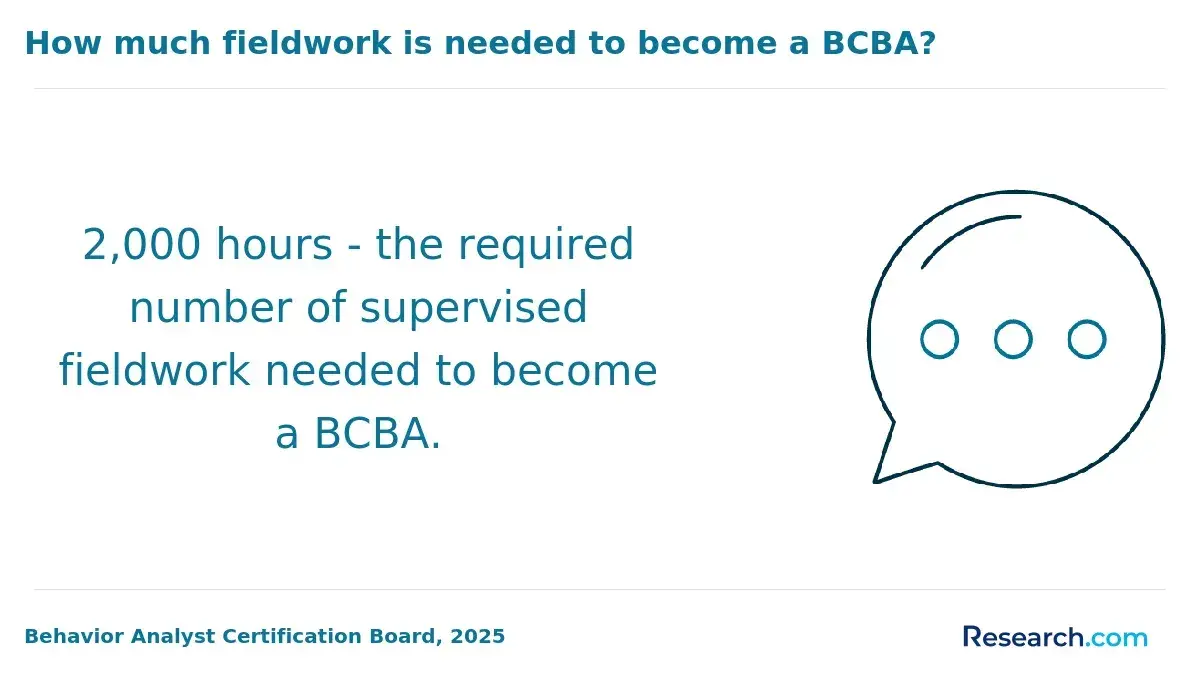
This structure can help students accumulate the necessary 1,500 hours of supervised experience required to sit for the BCBA exam while completing academic coursework. However, “integrated fieldwork” can mean different things at different schools. Some programs place students directly; others provide supervision while students secure their own approved site.
Examples of no-GRE programs with fieldwork integration
- University of South Florida: Its online MA in Applied Behavior Analysis includes an integrated practicum with supervision and regular collaboration to prepare students for the BCBA exam.
- Northeastern University: Its MS in Applied Behavior Analysis offers hands-on fieldwork options through the program’s concentrated supervised fieldwork track.
- Purdue Global: Its online ABA master’s program includes fieldwork integration combined with 9 courses to prepare students strategically for certification.
- Arcadia University and Russell Sage College: These programs also emphasize practical experience within no-GRE master’s ABA pathways.
Questions to ask before enrolling
- Does the program guarantee fieldwork placement, or must students find their own site?
- Who provides supervision, and is supervision included in tuition?
- Can working students complete fieldwork at their current employer?
- Are evening, weekend, or remote supervision options available?
- What happens if a placement ends before the required hours are completed?
Students can also explore specialized options such as masters in ABA online programs, which combine online coursework with practical experience to satisfy BCBA eligibility requirements efficiently.
Are there dual-degree options or concentrations available in universities with no GRE?
Yes. Some universities with no-GRE BCBA pathways offer concentrations, specializations, or related graduate routes that let students focus their training on a specific population or practice setting. These options can be useful if you already know you want to work in autism services, schools, mental health, organizational behavior management, or special education.
- Simmons University: Offers an MS in Behavior Analysis with no GRE requirement, including practicum and thesis options.
- National Louis University: Provides an M.S. or Ed.S. in Applied Behavior Analysis with no GRE and a blended learning format.
- Bowling Green State University: Offers an M.Ed. in Special Education with a Concentration in Applied Behavior Analysis.
- Endicott College: Its MS in Applied Behavior Analysis features multiple concentrations, including autism, childhood clinical disorders, mental health, and organizational behavior management.
- PennWest Global: Offers an M.Ed. in Special Education with an Applied Behavior Analysis concentration and options for an ABA and Autism concentration.
- Russell Sage College: Offers an MS in Applied Behavior Analysis and Autism with no GRE, including coursework and a practicum.
- UNC Charlotte: Has an M.Ed. in Special Education and Child Development with an ABA concentration.
- University of Massachusetts Global: Provides an online Master’s in Special Education with ABA emphasis, no GRE required.
How to choose a concentration
- Choose autism or special education if you plan to work primarily with children, schools, or developmental services.
- Choose organizational behavior management if your goal is workplace performance, staff training, or systems-level behavior change.
- Choose a clinical or mental health emphasis if you want broader behavioral health exposure, while confirming scope-of-practice limits.
- Choose a thesis option if you may pursue doctoral study or research-focused work later.
Prospective students can compare these with broader ABA masters programs to find programs that match their career ambitions, learning style, and desired level of fieldwork integration.
How do BCBA salary expectations vary across different settings?
BCBA salary expectations vary by work setting, region, caseload, level of responsibility, years of experience, and whether the role includes supervision or leadership. As of 2025, clinical, travel, private practice, and leadership roles often offer higher pay, while school and nonprofit roles may provide steadier schedules or mission-driven work with somewhat lower salary ranges.
- Clinical settings: BCBAs in clinics or behavioral health centers generally earn approximately $65,000 to $85,000 annually. These roles often involve direct client intervention, treatment planning, supervision, caregiver training, and progress monitoring.
- Educational settings: BCBAs in schools or universities often earn around $55,000 to $75,000, depending on location and experience. These roles may focus on behavior intervention plans, teacher consultation, student support, and collaboration with special education teams.
- Private practice: BCBAs in private practice or ownership roles may exceed $90,000 annually, especially with established caseloads and additional certifications. Income can be higher, but so can administrative, billing, compliance, and business responsibilities.
- Government or nonprofit roles: Salaries in nonprofit organizations or government agencies usually fall in the $60,000 to $80,000 range, varying by funding availability and region.
- Remote or travel roles: Travel BCBAs working across multiple sites or through telehealth can earn from $75,000 to over $125,000, reflecting demand for flexible professionals in underserved areas.
- Senior and leadership positions: Clinical directors, program managers, or senior BCBAs can earn upwards of $90,000 to $135,000 or more because these roles include supervision, compliance, operations, staff development, and program accountability.
Salary trade-offs to consider
- Higher-paying roles may require travel, productivity targets, evening hours, or larger supervision responsibilities.
- School-based roles may offer predictable schedules but can have salary structures tied to district pay scales.
- Private practice can offer income growth but requires business management and risk tolerance.
- Leadership roles usually require strong clinical judgment plus staff management and documentation skills.
Many students first gain foundational knowledge through ABA undergraduate programs online before advancing to graduate-level programs to position themselves for higher-paying BCBA roles.
Which states offer the best job outlook and highest BCBA salaries for graduates of no-GRE programs?
Graduates of no-GRE BCBA programs can find strong opportunities in states with large healthcare systems, active school-based service networks, autism service demand, and major metropolitan job markets. Salary also depends on cost of living, employer type, caseload demand, insurance reimbursement conditions, and whether the role is clinical, school-based, remote, travel-based, or managerial.
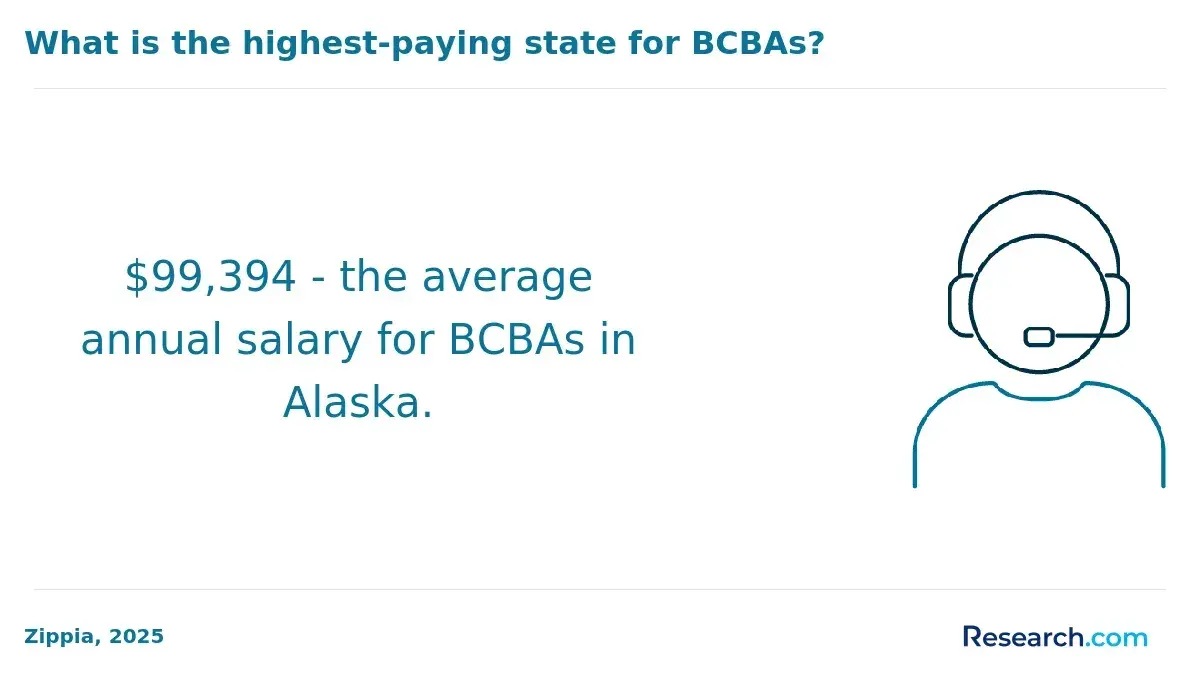
- Massachusetts: Known for high BCBA salaries often exceeding $90,000 to $110,000 annually and strong demand for behavior analysts in healthcare and education.
- California: Offers top-tier salaries generally ranging from $85,000 to $105,000, with numerous job opportunities across clinical, private, and educational settings.
- New Jersey: Provides competitive pay around $85,000 to $100,000 plus strong job prospects, especially in autism and school-based programs.
- New York: Has a strong market with salaries typically between $75,000 and $95,000 and diverse demand in urban centers.
- Illinois: Shows reliable demand in healthcare and nonprofit sectors, with salaries averaging $70,000 to $90,000.
- Texas and Florida: Both have rapidly growing demand, with salaries varying widely from $60,000 to $90,000 depending on location, and increasingly competitive markets due to workforce growth.
- Washington and Oregon: Offer higher than average pay of $80,000+ and growing job markets, especially for ASD services and community programs.
How to evaluate a state before relocating
- Compare salary against housing, commuting, taxes, and insurance costs.
- Check whether the state has separate behavior analyst licensure requirements in addition to BCBA certification.
- Review demand across multiple settings, not just one employer type.
- Look for supervision and advancement opportunities if you are early in your BCBA career.
- Consider telehealth and travel roles if you are open to flexible service models.
For those seeking accessible and affordable options, BCBA school online programs provide flexible, high-quality pathways to certification while meeting the needs of working professionals.
Other Things You Should Know About BCBA Programs Without GRE Requirements
Top BCBA programs in 2027 that waive the GRE requirement include Arizona State University, the University of Cincinnati, and Ball State University. These institutions focus on flexible learning options and meet the coursework requirements set by the Behavior Analyst Certification Board (BACB).
Yes, many BCBA programs in 2027 that waive the GRE offer part-time study options. These flexible schedules cater to working professionals, allowing them to balance career commitments while completing the required coursework, which typically spans over 2 to 3 years.
Most BCBA programs in 2027 without a GRE requirement still require a bachelor's degree in a related field such as psychology or education. Additionally, applicants typically need to have completed certain coursework in behavior analysis or a related area and may need relevant work or volunteer experience in the field.
References
- Behavior Analyst Certification Board. (2024). University examination pass rates for university training programs — 2024 BCBA & BCaBA examination pass rates (PDF). https://www.bacb.com/wp‑content/bcba‑pass‑rates‑2024/
- Behavior Analyst Certification Board. (2025). 2024 annual data report (Certification‑related & testing data). https://www.bacb.com/about/bacb‑certificant‑annual‑report‑data/
- Kansas Board of Regents. (2025). WSU M.Ed. ABA 2025 program approval. https://www.kansasregents.gov/resources/WSU_MEd_ABA_2025_Final.pdf kansasregents.gov
- Mayo, M. R., & Baires, N. A. (2023). Pay equity among behavior‑analytic practitioners who hold BCBA/BCBA‑D credentials. Frontiers in Behavioral Neuroscience, 17. https://doi.org/10.3389/fnbeh.2023.9848708
- U.S. Bureau of Labor Statistics. (2024, May). Substance abuse, behavioral disorder, and mental health counselors: Median annual wage and projected employment growth (Occupational Employment and Wage Statistics). https://www.bls.gov/ooh/community-and-social-service/substance-abuse-behavioral-disorder-and-mental-health-counselors.htm
- University of South Florida. (2025). Online MA in Applied Behavior Analysis – cost/financial aid.https://www.usf.edu/cbcs/cfs/academics/aba/online-ma/tuition-financial-aid.aspx