2027 Online ABA Certification vs. BCBA Certification: Key Differences

Co-Founder and Chief Data Scientist
Choosing between an ABA certification and BCBA certification is really a choice between two career levels in behavior analysis. One path is designed for professionals who want to deliver behavior-support services under supervision; the other prepares practitioners to assess clients, design intervention plans, supervise teams, and practice with far greater independence.
This distinction matters because the two credentials differ in education requirements, supervised experience, exam difficulty, cost, salary potential, and long-term career mobility. A shorter ABA certification can be a practical entry point into schools, clinics, autism services, and early intervention settings. BCBA certification requires a larger investment, but it can lead to clinical leadership, consulting, program management, and state licensure opportunities in many jurisdictions.
This guide compares ABA vs. BCBA certification across the decision points that matter most: purpose, eligibility, training, exam structure, program costs, career scope, salary outlook, renewal rules, and overall fit. Use it to decide whether you should start with an ABA-focused role, pursue BCBA preparation, or build a staged plan that moves from technician-level work into graduate-level behavior analysis.
Key Points You Should Know About Online ABA Certification vs. BCBA Certification
- ABA certification is typically entry-level, while BCBA requires a graduate degree and board examination.
- According to BACB data, the number of certified BCBAs has grown by 23% annually since 2018.
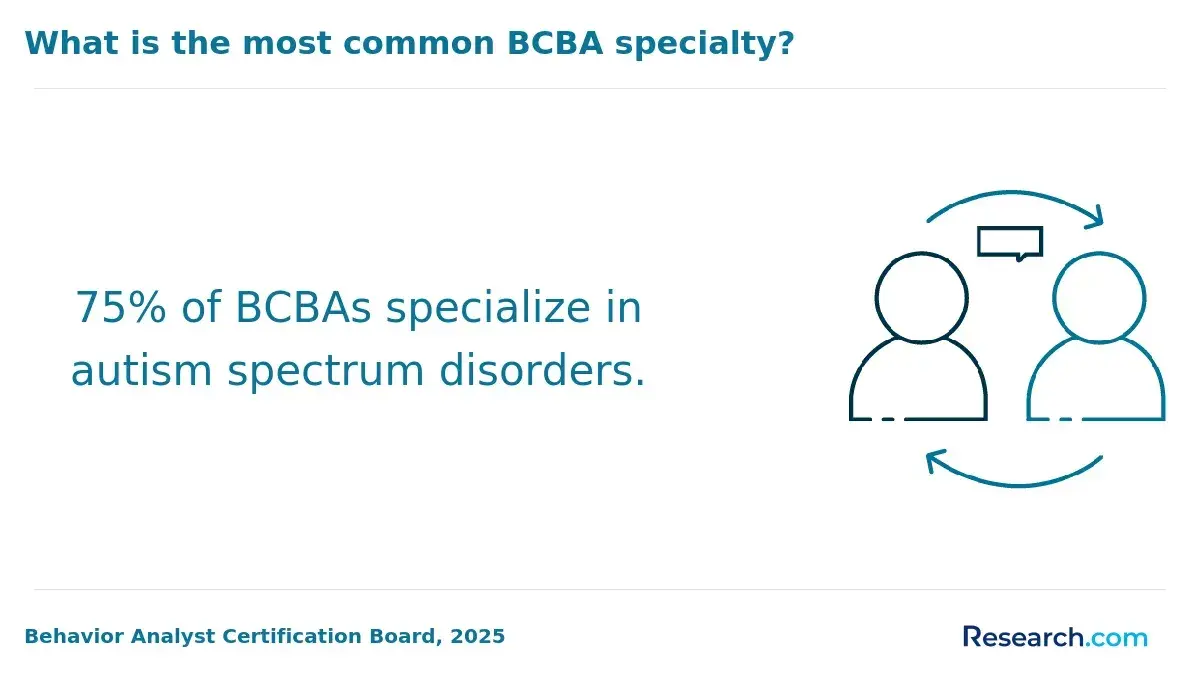
- Around 85% of BCBA-certified professionals work with individuals with autism, reflecting a strong demand in clinical and educational settings.
How do ABA vs. BCBA Certifications differ in purpose?
ABA certification and BCBA certification both relate to applied behavior analysis, but they serve different professional purposes. ABA certification usually prepares someone for an entry-level or paraprofessional role that focuses on implementing behavior plans. BCBA certification identifies a graduate-trained practitioner who can assess behavior, design interventions, analyze data, supervise staff, and take responsibility for clinical decision-making.
The simplest distinction is this: ABA-certified professionals commonly help carry out behavior intervention plans, while BCBAs are qualified to create, monitor, and adjust those plans. That difference affects daily work, accountability, supervision requirements, and career advancement.
ABA certification is generally implementation-focused
Professionals with an ABA-focused certification often work directly with clients in structured settings such as clinics, schools, homes, and early intervention programs. Their work may include collecting behavior data, following a treatment protocol, supporting skill acquisition, and reporting progress to a supervisor. The role is hands-on and client-facing, but it is typically performed under the direction of a BCBA or another qualified clinician.
BCBA certification is assessment- and leadership-focused
BCBAs have a broader scope of responsibility. They conduct behavioral assessments, identify intervention targets, build data-driven treatment plans, train staff, supervise technicians, communicate with families and interdisciplinary teams, and evaluate whether interventions are working. Because BCBAs are expected to make independent professional judgments, the credential carries higher education, fieldwork, ethics, and exam requirements.
For someone testing the field or seeking direct-service experience, ABA certification can be a practical first step. For someone who wants long-term autonomy, supervisory authority, research involvement, consulting work, or program leadership, BCBA certification is usually the stronger credential.
How does the education requirement differ in ABA vs. BCBA Certification?
The education requirement is one of the clearest differences between ABA and BCBA certification. ABA certification may require a high school diploma, undergraduate coursework, or a short training sequence, depending on the credential and employer. BCBA certification requires a master’s degree in behavior analysis, psychology, education, or a closely related field that meets Behavior Analyst Certification Board standards.
That higher academic threshold reflects the difference in responsibility. ABA-certified staff are usually trained to implement established procedures accurately. BCBAs must understand behavioral theory, experimental design, measurement, assessment, ethics, supervision, and intervention design at a graduate level.
Typical ABA education path
ABA certification programs are often built around practical instruction. They may appear as standalone certificate programs, employer-based training, associate-level options, or bachelor’s-level coursework. The curriculum usually emphasizes basic behavioral principles, data collection, ethical conduct, and how to implement skill-building or behavior-reduction procedures safely and consistently.
Typical BCBA education path
Students pursuing BCBA certification must complete graduate-level coursework aligned with BACB expectations. Common topics include behavioral assessment, single-case research methods, ethics, measurement, intervention design, supervision, and behavior-change systems. Many students complete these requirements through BCBA accredited programs that combine the required academic sequence with preparation for supervised fieldwork.
If you do not yet have a bachelor’s degree or are unsure whether behavior analysis is your long-term career, an ABA certification can help you enter the field sooner. If you already know you want to become an independent behavior analyst, you should evaluate graduate programs early and confirm that the coursework supports BCBA eligibility.
What are the eligibility criteria for ABA vs. BCBA Certification?
Eligibility for ABA certification is usually more accessible than eligibility for BCBA certification. ABA-focused credentials commonly require approved training, supervised practice, and a competency assessment. BCBA candidates must meet more extensive requirements, including a qualifying graduate degree, approved coursework, and 1,500–2,000 supervised fieldwork hours.
The eligibility gap exists because the credentials prepare professionals for different levels of responsibility. Entry-level ABA staff need to show that they can apply procedures correctly and work ethically under supervision. BCBA candidates must show that they can evaluate complex behavior patterns, select appropriate interventions, supervise others, and make independent decisions based on data.
Common ABA eligibility factors
- Minimum education: Often a high school diploma or undergraduate coursework, depending on the credential and employer.
- Training: Completion of approved instruction in behavioral principles, ethics, documentation, and direct-service procedures.
- Supervision: Practical experience under a qualified supervisor before or during employment.
- Competency assessment: A skills-based review showing that the applicant can perform core tasks safely and accurately.
Common BCBA eligibility factors
- Graduate degree: A qualifying master’s degree in behavior analysis, psychology, education, or a related area.
- Verified coursework: Faculty-verified coursework sequences that align with BACB requirements.
- Supervised fieldwork: Completion of 1,500–2,000 supervised fieldwork hours under an appropriate BCBA supervisor.
- Exam readiness: Eligibility to sit for the BCBA exam after education and fieldwork requirements are documented.
Students should map eligibility requirements before enrolling in a program. A common mistake is assuming that any psychology, education, or counseling degree automatically satisfies BCBA requirements. It may not. If your goal is BCBA certification, confirm coursework, supervision options, and fieldwork documentation policies before you commit.
For many students, ABA certification functions as a stepping stone into graduate-level BCBA or ABA master’s programs. It can also help you decide whether the day-to-day work of behavior analysis is a good fit before investing in a longer degree path.
How do training and practicum requirements vary in ABA vs. BCBA Certification?
Training requirements differ because ABA-certified professionals and BCBAs are trained for different levels of practice. ABA certification often involves basic supervised experience, typically ranging from 40 to 100 hours. BCBA certification requires intensive graduate-level fieldwork with structured supervision, detailed documentation, and opportunities to practice assessment, analysis, intervention planning, and supervision.
ABA training usually focuses on correct implementation: following protocols, recording data, responding to client behavior, and communicating with supervisors. BCBA fieldwork goes further by requiring trainees to interpret data, design interventions, evaluate outcomes, train staff, and apply ethical decision-making in complex cases.
- Fieldwork hours: BCBAs complete 1,500–2,000 verified hours; ABA technicians complete far fewer.
- Supervision ratio: BCBA trainees receive 5% supervision per 100 hours, ensuring direct observation.
- Skill application: ABA focuses on intervention implementation; BCBA emphasizes assessment and analysis.
- Documentation: BCBA training requires detailed data logging and progress evaluation.
- Mentorship quality: BCBA trainees often work closely with board-certified supervisors across varied settings.
What to look for in supervised training
Whether you pursue ABA or BCBA preparation, supervision quality matters. Strong supervision should include direct observation, feedback on performance, ethics discussion, review of documentation, and exposure to different client needs. For BCBA candidates, it is especially important to find fieldwork settings that provide more than repetitive direct-service hours. You need experience with assessment, plan development, data analysis, caregiver or staff training, and case conceptualization.
Before enrolling, ask whether the program helps students secure practicum placements, whether supervision is included in tuition, and how fieldwork hours are tracked. These details can affect both cost and completion timeline.
Rigorous practicum experience can also strengthen applications to advanced programs, including online ABA master’s programs with clinical or fieldwork components.
How does the exam format and difficulty compare in ABA vs. BCBA Certification?
ABA certification exams are generally shorter and more focused on entry-level practice. They test whether candidates understand core behavior principles, ethical guidelines, documentation expectations, and common intervention procedures. Passing scores vary depending on the certifying body.
The BCBA exam is more demanding because it evaluates graduate-level knowledge and independent clinical judgment. Administered by the BACB, the BCBA exam consists of 185 multiple-choice questions across content areas such as measurement, assessment, intervention, ethics, supervision, and behavior-change procedures. It is widely regarded as more challenging, with pass rates averaging around 65%.
Why the BCBA exam is harder
The BCBA exam does not simply ask for definitions. Candidates must apply principles to client scenarios, evaluate data, choose ethically appropriate actions, and distinguish between similar intervention options. The difficulty reflects the credential’s professional scope: a BCBA may be responsible for designing treatment, supervising staff, and making decisions that affect client outcomes.
How to prepare strategically
- Start with the task list: Use the official content areas as your study framework instead of relying only on class notes.
- Practice application questions: Scenario-based items are essential for BCBA preparation.
- Review ethics repeatedly: Ethics appears across real-world decision-making, not just as a separate topic.
- Use mock exams carefully: Treat them as diagnostic tools, not as proof that you are ready.
- Connect coursework to fieldwork: The strongest candidates can link concepts to actual assessment and intervention decisions.
Because of the exam’s complexity, many aspiring analysts use formal coursework, review modules, supervision feedback, and practice tests. Some candidates choose online BCBA programs when they need flexible graduate study that still supports exam preparation.
What are the cost differences between ABA vs. BCBA Certification programs?
ABA certification is usually much less expensive than BCBA preparation because it does not require a full graduate degree. Tuition for ABA certification programs typically ranges from $2,000 to $5,000, depending on program length and delivery format. BCBA preparation, which requires graduate-level education, may cost between $20,000 and $40,000.
The price difference is not only about tuition. BCBA candidates may also face additional costs for supervision, exam preparation materials, application fees, textbooks, background checks, and travel to practicum sites. ABA candidates may have lower direct costs, and some employers provide or subsidize entry-level training.
- Education costs: Graduate tuition significantly raises BCBA expenses.
- Exam fees: ABA exams average $100–$200, while BCBA exams cost $245–$350.
- Supervision fees: BCBA candidates often pay additional supervision costs.
- Time investment: BCBA programs take two years; ABA programs can be completed within months.
- Return on investment: BCBAs typically earn 40–60% higher salaries than ABA technicians.
How to evaluate total cost
When comparing programs, look beyond advertised tuition. Ask whether the program includes supervision, whether fieldwork placement is guaranteed or self-arranged, how many terms are required, and whether online students pay additional technology or residency fees. For BCBA programs, supervision costs can materially change the final price if they are not built into the degree.
From a financial planning perspective, ABA certification may be a lower-risk way to enter the field and earn experience quickly. BCBA certification requires more upfront investment, but it is tied to a broader scope of practice and stronger long-term earning potential.
How does the career scope differ for professionals with ABA vs. BCBA Certification?
ABA-certified professionals usually work in direct-service roles under supervision. BCBAs work in roles that involve assessment, treatment planning, supervision, program leadership, consultation, and in some settings, private practice. The key difference is professional independence.
For ABA-certified staff, the work is often structured around implementing a plan that someone else designed. For BCBAs, the work includes deciding what should be measured, why behavior is occurring, which intervention is appropriate, how staff should implement it, and whether the plan is producing meaningful progress.
- ABA roles: Registered Behavior Technician, classroom aide, early intervention assistant.
- BCBA roles: Clinical Director, Behavior Analyst, Organizational Consultant, or Program Supervisor.
- Work settings: ABA professionals serve in schools or therapy centers, while BCBAs may work in hospitals, universities, or private practice.
- Advancement path: ABA technicians often pursue graduate study to transition to BCBA-level work.
- Licensure impact: BCBAs are eligible for higher-level state licensure in many jurisdictions.
Which path offers more mobility?
BCBA certification generally offers more mobility because it supports supervisory, analytical, and leadership responsibilities. BCBAs may move across clinical services, school consultation, staff training, organizational behavior management, program evaluation, and research-related roles. ABA-certified professionals can build valuable experience, but advancement is often limited without additional education and certification.
That does not mean ABA certification is a weak choice. It can be the right fit for someone who wants direct client contact, a faster entry into the workforce, or a way to confirm interest before committing to graduate school. The stronger long-term option depends on whether you want to remain in direct implementation or move into independent clinical decision-making.
What are the salary and employment outlook differences in ABA vs. BCBA Certification careers?
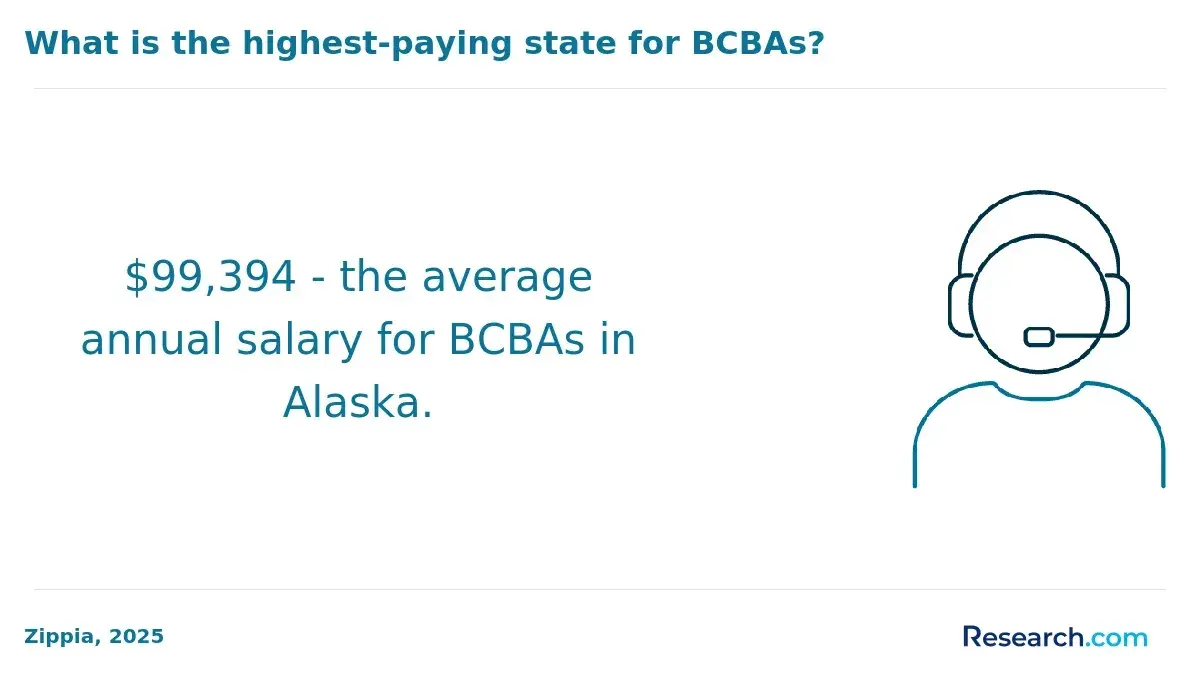
Salary potential is typically higher for BCBAs because they meet graduate-level education, fieldwork, and examination requirements and can take on more complex responsibilities. The U.S. Bureau of Labor Statistics classifies BCBAs under “psychologists, all other,” with median annual wages around $78,000. ABA technicians typically earn between $40,000 and $50,000 annually.
Employment for BCBAs is projected to grow 22% over the next decade, driven by increasing demand in schools, clinics, and telehealth environments. ABA technician positions are also expanding but remain more localized and hourly-based.
How to interpret the salary gap
The salary difference reflects more than job title. BCBAs may supervise teams, design behavior plans, manage caseloads, consult with schools or organizations, and hold responsibility for clinical outcomes. ABA technicians typically provide direct services within a plan created by a supervisor, which limits independent billing, leadership duties, and compensation growth.
Actual earnings can vary by state, employer type, experience level, caseload, funding source, licensure requirements, and whether the role is full-time, part-time, hourly, or salaried. Candidates should compare local job postings and ask employers how supervision, travel time, documentation, cancellations, and benefits are handled.
For students prioritizing long-term stability and upward mobility, BCBA certification usually offers stronger growth potential. A common career path is to begin in an ABA role, gain supervised experience with clients, and then pursue graduate training for BCBA certification.
How do renewal and continuing education requirements differ in ABA vs. BCBA Certification?
Both ABA and BCBA credentials require ongoing professional development, but BCBA renewal standards are more demanding. This makes sense because BCBAs are responsible for assessment, intervention design, ethics compliance, supervision, and clinical decision-making.
Renewal requirements also help employers and clients verify that practitioners remain current with ethical expectations, research-informed practice, documentation standards, and supervision responsibilities.
- Renewal cycle: ABA certificates renew every 2–3 years; BCBAs renew every 2 years.
- CE requirements: BCBAs must complete 32 CEUs, including ethics; ABA renewals require fewer.
- Ethical audits: BCBAs may face random audits by the BACB for compliance.
- Professional membership: BCBAs often maintain BACB membership for updates and networking.
- Verification systems: Online portals allow easy CE tracking and reporting.
What renewal means in practice
For ABA-certified professionals, renewal is usually manageable alongside full-time work, especially when employers provide required training. For BCBAs, continuing education should be treated as part of professional practice rather than an administrative task. Ethics, supervision, assessment, and new intervention research can directly affect service quality and risk management.
Keep documentation organized throughout the renewal cycle. Waiting until the deadline can create problems if CE records are incomplete, if a provider does not meet requirements, or if an audit occurs. Active certification also supports credibility with employers, families, schools, funders, and licensing boards where applicable.
Which is the better fit for your career goals: ABA vs. BCBA Certification?
The better choice depends on where you are now and what kind of responsibility you want later. ABA certification is usually the better fit if you want a faster, lower-cost entry into direct behavioral support. BCBA certification is the better fit if you want to assess clients, design interventions, supervise staff, qualify for higher-level roles, and build a long-term career in behavior analysis.
Choose ABA certification if you want to:
- Enter the field quickly without committing to a graduate degree.
- Work directly with clients in schools, clinics, homes, or early intervention programs.
- Gain practical experience before deciding on graduate study.
- Build a foundation in behavioral principles and ethical direct service.
- Keep initial education costs and time commitments lower.
Choose BCBA certification if you want to:
- Practice with greater independence and clinical responsibility.
- Conduct assessments and design data-based intervention plans.
- Supervise ABA technicians or other direct-service staff.
- Pursue leadership roles such as Behavior Analyst, Program Supervisor, Clinical Director, or consultant.
- Increase long-term earning potential and eligibility for higher-level state licensure in many jurisdictions.
If you are early in your education or unsure about the field, starting with ABA certification can be a practical way to test your interest and build experience. If you already have a clear goal of becoming an independent behavior analyst, plan directly for BCBA eligibility by choosing the right graduate program, arranging high-quality supervision, and budgeting for the full credentialing process.
Both pathways can contribute to meaningful behavioral health, education, and disability-support services. The right credential is the one that matches your timeline, academic background, financial readiness, and desired level of professional autonomy.
Other Things You Need to Know About Online ABA vs. BCBA Certification
ABA certification requires fewer supervised fieldwork hours than BCBA certification. In 2027, BCBA certification mandates 2,000 hours of supervised practice, while ABA certification varies by program, typically ranging from 1,000 to 1,500 hours under the supervision of certified professionals.
Yes, obtaining an ABA certification can be a stepping stone to BCBA certification. ABA certification provides foundational principles and practical experience, which are useful when pursuing the more advanced BCBA certification, encompassing broader responsibilities and a higher level of expertise.
References
- GoldenStepsABA. (n.d.). BCBA duties and responsibilities. https://www.goldenstepsaba.com/resources/bcba-duties-and-responsibilities
- National Center for Education Statistics. (2023). Report on the condition of education 2023 (NCES 2023-144). U.S. Department of Education. https://nces.ed.gov/pubs2023/2023144.pdf
- U.S. Bureau of Labor Statistics. (2024). Substance abuse, behavioral disorder, and mental health counselors [Occupational Outlook Handbook]. https://www.bls.gov/ooh/community-and-social-service/substance-abuse-behavioral-disorder-and-mental-health-counselors.htm
- Zippia. (2025). Behavior analyst salary: How much does a behavior analyst make? Zippia.com. https://www.zippia.com/salaries/behavior-analyst/
- ZipRecruiter. (2025). BCBA salary in the United States. https://www.ziprecruiter.com/Salaries/Bcba-Salary