
2027 Best PsyD Programs in Wisconsin: APA Accredited Online & Campus

Co-Founder and Chief Data Scientist
Wisconsin faces a growing demand for licensed psychologists, with the U.S. Bureau of Labor Statistics projecting a 14% employment increase in the state by 2030. Choosing an APA-accredited PsyD program, whether online or on-campus, ensures quality education, licensure eligibility, and career mobility.
This article reviews the best accredited options in Wisconsin, offering a clear, expert-backed roadmap to selecting the right program. Practical, step-by-step guidance helps prospective students navigate admissions, curriculum, and clinical training effectively.
Key Benefits of APA Accredited PsyD Programs in Wisconsin
- Online APA-accredited PsyD programs offer flexible scheduling, allowing students to balance work and study without relocating, crucial for busy professionals.
- These programs maintain rigorous standards, with 95% of graduates passing licensure exams, ensuring online learning does not compromise quality.
- On-campus programs provide direct access to clinical practicum sites and in-person mentorship, enhancing hands-on experience essential for licensure and career readiness.
- How many APA accredited PsyD programs are available in Wisconsin?
- What are the best APA accredited PsyD programs in Wisconsin?
- Who is eligible to apply to APA accredited PsyD programs in Wisconsin?
- What are the requirements to get into an APA accredited PsyD program in Wisconsin?
- What PsyD specializations are available in Wisconsin?
- What courses are typically included in APA accredited PsyD programs in Wisconsin?
- How do PsyD students find internships in Wisconsin?
- What are the pros and cons of online and campus PsyD programs in Wisconsin?
- What jobs can you get with a PsyD in Wisconsin?
- What is the average salary of PsyD graduates in Wisconsin?
How many APA accredited PsyD programs are available in Wisconsin?
As of late 2025, Wisconsin offers only one APA-accredited PsyD program, which is campus-based at the Wisconsin School of Professional Psychology (WSPP) in Milwaukee. There are currently no APA-accredited online or hybrid PsyD programs originating from Wisconsin institutions. The APA accreditation process involves a thorough evaluation of doctoral programs, including faculty qualifications, curriculum, student outcomes, and institutional resources to ensure rigorous professional training.
The accreditation is crucial for licensure eligibility, as most states require graduation from an APA-accredited program to sit for the psychology licensing exam. Additionally, it enhances professional credibility and access to accredited clinical internships necessary for completing clinical hours. For those unable to enroll in a PsyD program, Wisconsin offers reputable APA-accredited alternatives, such as the PhD in Counseling Psychology at the University of Wisconsin-Madison, the PhD in Clinical Psychology at Marquette University, and a postdoctoral Health Psychology specialization at the Medical College of Wisconsin.
Doctorate psychology education in Wisconsin is adapting to national trends, including growing interest in online program formats, although fully APA-accredited online PsyD options remain limited due to necessary in-person clinical training. Demand for licensed clinical psychologists is rising statewide, reflecting expanded mental health awareness and healthcare coverage.
Meanwhile, WSPP maintains its accreditation status without new accredited PsyD programs emerging in Wisconsin. All doctoral programs in the state emphasize hands-on clinical experience and preparation for licensure, ensuring practical readiness for professional practice.
What are the best APA accredited PsyD programs in Wisconsin?
Students can identify top APA-accredited PsyD programs in Wisconsin by evaluating faculty expertise, research opportunities, clinical training partnerships, and successful student outcomes. APA accreditation guarantees the program adheres to national standards for quality education and licensure preparation.
- Wisconsin School of Professional Psychology (WSPP) - Campus-based in Milwaukee, this full-time five-year program emphasizes individualized mentorship and hands-on clinical training, leading to strong internship placement rates.
- Marquette University - Also in Milwaukee, Marquette combines clinical practice with research, offering diverse practicum sites and high licensure pass rates supported by experienced faculty.
- National University (Online/Hybrid) - Designed for working professionals, this flexible APA-accredited program allows remote coursework with local practicum options, maintaining competitive graduation and licensure outcomes.
- Liberty University Online - Tailored for adult learners, this online PsyD program meets APA standards and provides embedded clinical training to prepare students for internships and licensure.
- Grand Canyon University (Online/Hybrid) - Offering a mix of virtual classes and in-person clinical experiences, this program is recognized for affordability and accessibility, especially for students outside metropolitan areas.
For those weighing career options after graduation, understanding what jobs can you get with behavioral psychology degree will clarify how these programs align with professional goals.
Who is eligible to apply to APA accredited PsyD programs in Wisconsin?
Students best suited for on-campus APA-accredited PsyD programs in Wisconsin often include recent graduates holding bachelor's or master's degrees in psychology or related fields. These applicants typically seek direct mentorship and value hands-on clinical training embedded in the curriculum, which allows them to develop essential professional skills through supervised experiences.
Many are career changers aiming to obtain clinical licensure and benefit from immersive learning environments that foster collaboration with faculty and peers. The structured schedules and face-to-face interaction help these students stay engaged and build strong professional networks that support their career goals. Those who prefer traditional academic settings and thrive on in-person engagement tend to find this route most effective for their needs.
In contrast, online and hybrid APA-accredited PsyD programs attract working professionals, caregivers, and students living far from Wisconsin's accredited institutions who require greater flexibility. These programs offer rigorous training designed to maintain the same APA accreditation standards while accommodating self-directed learning styles and remote supervision.
Students drawn to this format often juggle personal and professional responsibilities and rely on digital platforms to engage with coursework and clinical components. For those wondering if it is getting an applied behavior analysis online certification worth it, the adaptability of online PsyD programs can provide a practical path to fulfilling licensure requirements without relocating or pausing their careers.
What are the requirements to get into an APA accredited PsyD program in Wisconsin?
APA-accredited PsyD programs in Wisconsin require specific academic and professional standards to prepare students for doctoral-level clinical psychology training. Meeting these requirements ensures applicants are well-equipped for the demands of both online and campus-based PsyD programs in the state.
- Educational Background: A bachelor's degree from a regionally accredited institution is essential; the degree need not be in psychology, but non-psychology majors must complete prerequisite courses for foundational knowledge.
- Minimum GPA: Most programs expect a minimum undergraduate or graduate GPA of 3.0 on a 4.0 scale, with higher GPAs improving competitiveness in applicant pools.
- Prerequisite Coursework: Required courses often include statistics, human development, and personality or abnormal psychology, especially for those without a psychology degree.
- Relevant Experience: Research, clinical, or volunteer experience in psychology-related fields is highly valued to demonstrate familiarity with psychological practice and research.
- Standardized Tests: Many Wisconsin PsyD programs do not require GRE General or Psychology Subject Tests, but applicants should confirm program-specific policies.
- Letters of Recommendation: Typically, at least three letters are needed from individuals who can attest to academic and professional potential.
- Personal Statement: Applicants must articulate their interest in psychology, career goals, and motivation for pursuing a PsyD.
- Interview or Assessment: Selected candidates participate in interviews assessing interpersonal skills, motivation, and readiness for clinical training.
Students wondering if is getting applied behavior analysis degree hard can often apply some of this experience toward PsyD admission preparation.
What PsyD specializations are available in Wisconsin?
Choosing a PsyD specialization is a crucial decision that shapes both your educational journey and future career trajectory in psychology. It ensures your training aligns with the populations and settings you aim to serve, helping develop targeted skills for licensure and practice. Here is an overview of common PsyD specializations offered in Wisconsin to consider when planning your path.
- Child and Adolescent Psychology: Focuses on working clinically with children, adolescents, and families, emphasizing developmental assessment, diagnosis, and evidence-based interventions. Students gain experience with family systems, school-based support, and trauma-informed care. Graduates often work in private practice, schools, hospitals, or community mental health centers.
- Adult Clinical Psychology: Centers on diagnosing and treating psychological disorders in adult populations using approaches such as cognitive-behavioral therapy and psychodynamic methods. Advanced practicum placements include outpatient clinics and forensic settings. Graduates become licensed clinical psychologists serving diverse adult clients.
- Forensic Psychology: Integrates psychology with legal systems, covering forensic assessment, expert testimony, and ethical issues. Students prepare for roles in correctional institutions, courts, or private forensic consulting. This specialization is embedded within the broader PsyD curriculum with no standalone online option.
- Health Psychology: Although not a specialization on its own, coursework in health psychology is required, focusing on behavioral health integration in medical environments. Training includes psychopharmacology and neuropsychology, preparing students for primary care and integrated health teams.
While Wisconsin's APA-accredited PsyD program is primarily on campus at the Wisconsin School of Professional Psychology, some residents pursue hybrid or fully online programs from out-of-state institutions combined with local practicum hours for flexibility.
What courses are typically included in APA accredited PsyD programs in Wisconsin?
Examining the coursework of Wisconsin's APA-accredited PsyD programs reveals how students develop essential clinical, research, and professional skills required for licensure and effective practice. Course offerings combine theory with practical training, preparing students to deliver competent care and contribute to psychology's knowledge base. Below are core and common courses found in traditional and hybrid PsyD programs, highlighting their focus and relevance to clinical or research work.
- Professional Issues in Clinical Psychology: Covers ethical practice and professional roles, fostering understanding of standards essential for clinical work.
- Clinical Assessment and Diagnosis: Teaches administering and interpreting psychological tests, critical for accurate client evaluation and treatment planning.
- Intervention: Building Effective Relationships: Develops communication and empathy skills crucial for therapeutic alliances, often emphasized in on-campus settings.
- Research Methods and Statistics: Focuses on designing studies and analyzing data, enabling students to integrate research into clinical decisions.
- Ethics in Psychology: Addresses APA guidelines and legal standards, foundational for licensure and professional integrity.
How do PsyD students find internships in Wisconsin?
Clinical internships are essential for PsyD students in Wisconsin, serving as practical training grounds that fulfill APA accreditation and state licensure requirements. These placements develop critical skills, bridging academic knowledge with real-world clinical practice. To successfully secure internships, students use a variety of targeted strategies and resources tailored to their program type and career goals.
Here are some effective approaches PsyD students in Wisconsin rely on to find internships:
- APPIC Match System: This centralized application platform is the primary route to APA-accredited internships nationwide. Students typically apply to 15-18 sites, using the APPIC Directory to research fit and historical acceptance trends, which improves their chances of matching, especially in competitive Wisconsin settings.
- Faculty and Clinical Directors: Working closely with program advisors and Directors of Clinical Training helps students identify local internship opportunities. These faculty often have established partnerships with Wisconsin sites like University of Wisconsin-Madison and Mendota Mental Health Institute, providing personalized guidance and advocacy.
- Networking with Alumni and Local Experts: Connecting with former students and practicing psychologists offers insider perspectives on site culture and interview preparation. This is particularly valuable for online and hybrid learners who may have fewer in-person networking opportunities.
- State and National Directories: Consulting directories from the APA and Wisconsin Department of Health Services helps students locate specialized placements statewide, including options in forensic and health psychology.
- Professional Workshops and Career Fairs: Attending virtual or in-person events hosted by universities or professional groups allows direct interaction with internship representatives, enabling early relationship-building and clearer application insights.
What are the pros and cons of online and campus PsyD programs in Wisconsin?
Both online and campus-based PsyD programs in Wisconsin present unique advantages and challenges for students seeking APA-accredited doctoral training. Understanding these differences enables applicants to select the format that best aligns with their professional objectives, learning preferences, and personal schedules.
Pros and Cons of Online PsyD Programs in Wisconsin
- Flexibility: Online and hybrid programs allow remote coursework completion, accommodating students with work or family commitments, and especially benefiting those in rural areas distant from Milwaukee.
- Local Practicum Placements: Students can secure practicum experiences locally, reducing relocation costs and fostering regional professional connections.
- Hybrid Residency Options: Many online programs incorporate short, intensive residencies that blend in-person skill development with remote learning convenience.
- Accessibility: Online formats provide access to nontraditional and disabled students who may face challenges with frequent travel or relocation.
- Limited APA-Accredited Options: Wisconsin lacks fully online APA-accredited PsyD programs; most options are hybrid and may limit local program support.
- Residency Requirements: Periodic on-campus residencies are mandatory, which might pose travel challenges for some students.
- Potential Isolation: Reduced face-to-face interaction can impact mentorship and cohort cohesion crucial for clinical training.
- Variable Clinical Support: Students often need to be proactive in arranging practicum sites, leading to potential inconsistency in training quality.
Pros and Cons of Campus-Based PsyD Programs in Wisconsin
- Comprehensive Clinical Training: Campus programs, like the Wisconsin School of Professional Psychology, provide extensive supervised practicum hours and high internship match rates.
- Personalized Mentorship: Small cohorts and on-site faculty foster strong professional relationships and peer support networks.
- Urban Clinical Access: Proximity to Milwaukee's hospitals and mental health centers offers diverse, hands-on practicum opportunities.
- Established Local Reputation: Graduates benefit from recognized networks and employer familiarity within Wisconsin's professional community.
- Geographic Limitations: The single Milwaukee-based program necessitates relocation for many students, increasing costs and life disruption.
- Lower Flexibility: Full-time, in-person attendance challenges students balancing employment or family responsibilities.
- Higher Tuition: Annual tuition, for example $48,750 at WSPP, can be significant, although most students receive financial aid.
- Competitive Admissions: Small cohort sizes heighten competition for limited seats in these programs.
What jobs can you get with a PsyD in Wisconsin?
A PsyD prepares graduates for clinical, counseling, and assessment-focused careers across both traditional settings like hospitals and schools, as well as emerging areas such as telehealth. APA-accredited PsyD programs in Wisconsin, whether online or campus-based, ensure students develop the clinical competencies necessary for licensure and advanced professional roles.
- Licensed Clinical Psychologist: These professionals provide psychotherapy, psychological assessments, and diagnoses in private practices, hospitals, and community mental health centers. Licensure requires graduation from an APA-accredited program, supervised experience, and passing the EPPP exam.
- School Psychologist or Educational Psychologist: Working throughout Wisconsin's K-12 school districts, PsyD holders conduct assessments and interventions to support students' behavioral and mental health needs. Some positions require additional certification but emphasize evidence-based approaches.
- Behavioral Health Administrator or Clinical Supervisor: PsyD graduates can oversee clinical operations and supervise clinicians in mental health organizations, ensuring compliance with regulations while advancing evidence-based practices.
- Forensic or Correctional Psychologist: These psychologists serve in correctional facilities, courts, or law enforcement settings, conducting competency evaluations and risk assessments to address justice-involved individuals' mental health.
- Emerging Roles: Telehealth and Integrated Care Psychologist: The expansion of telepsychology in Wisconsin offers new opportunities for remote therapy and assessments. Integrated care teams in hospitals and clinics increasingly include psychologists to provide holistic patient care, aligned with trends seen in doctoral programs in applied behavior analysis.
What is the average salary of PsyD graduates in Wisconsin?
PsyD-trained psychologists in Wisconsin earn annual salaries typically ranging from $93,681 to $128,193, with clinical psychologists averaging between $96,100 and $200,643. Counseling and general psychologists report salaries from about $93,681 up to $233,449. Notably, there is no significant salary difference between online and on-campus PsyD alumni from APA-accredited programs, as salary outcomes depend more on licensure and career path.
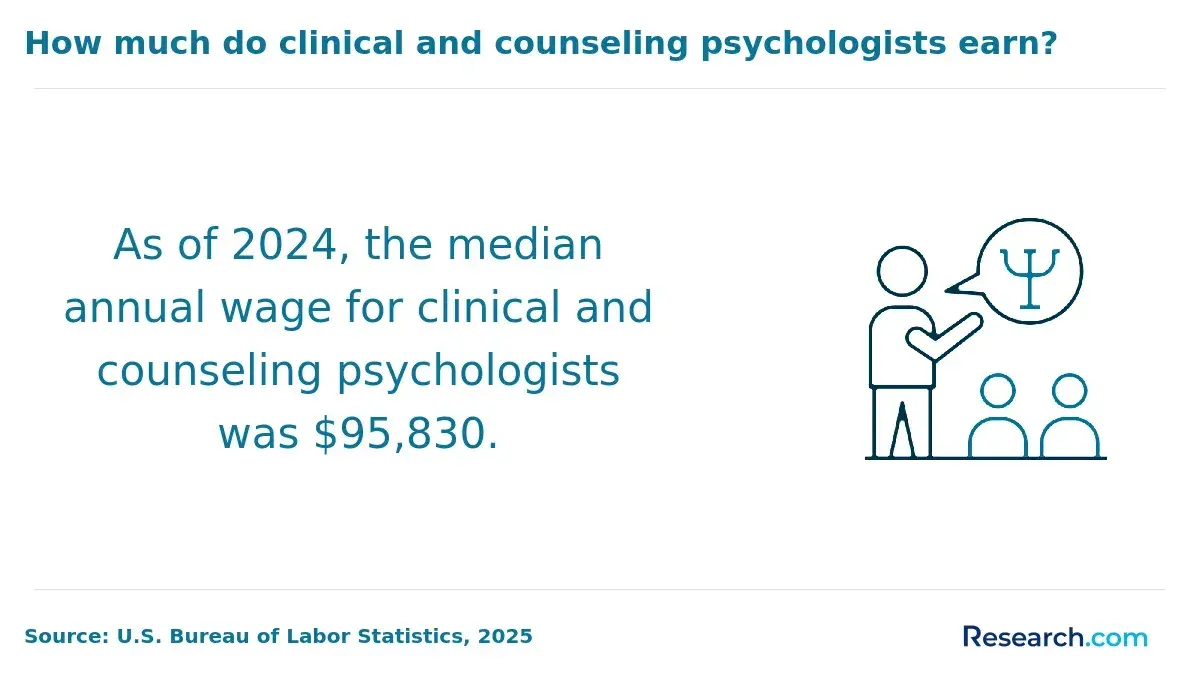
National benchmarks such as the U.S. Bureau of Labor Statistics and APA workforce data show the national mean salary for clinical and counseling psychologists is approximately $106,600, placing Wisconsin at or above this level given its moderate cost of living.
- Licensure Status: Full licensure in Wisconsin allows independent practice and access to higher-paying roles in private practice, hospitals, and leadership positions.
- Years of Experience: Entry-level salaries start around $65,000-$85,000, with significant growth after five years, reaching $110,000-$150,000 or more for seasoned professionals.
- Specialization: Fields like neuropsychology and forensic psychology offer premium salaries due to specialized skills and higher demand.
- Employer Type: Private practice and healthcare organizations typically offer the highest salaries, followed by hospitals and outpatient clinics; academic and community roles may pay less but offer other benefits.
- Regional Demand: Urban areas such as Milwaukee and Madison provide more opportunities and higher pay, while rural areas may present incentives like loan repayment.
For those interested in expanding their career options, exploring jobs you can get with masters in applied behavior analysis can provide valuable pathways complementary to PsyD qualifications.
What APA Accredited PsyD Graduates in Wisconsin Say About Their Degree
- The online PsyD program at the University of Wisconsin was a transformative experience that allowed me to balance my family life while pursuing my passion for psychology. The flexibility of the program meant I could engage deeply with coursework and apply new skills directly in a local school setting where I began my career. I truly value how the curriculum integrated Wisconsin's unique cultural aspects, preparing me to serve a diverse community effectively. This program not only expanded my professional horizons but also fueled my commitment to fostering student well-being across the state. Rene
- Completing my PsyD through Northern Wisconsin University's traditional program gave me the foundation I needed to thrive in an educational environment. The rigorous academic standards were matched by the warm community, which reinforced my resolve to make a positive impact on local youth. Wisconsin's rich environment offered countless opportunities to understand community dynamics deeply, which has been crucial in my work. Reflecting on my journey, I feel proud of how my education has empowered me to support students' mental health and growth effectively. Niana
- The online PsyD program at Marquette University provided a unique blend of professional development and personal growth tailored to Wisconsin's distinct cultural setting. Pursuing my degree remotely allowed me to maintain my local responsibilities while absorbing a curriculum grounded in current psychological practices. Starting my career in a nearby school gave me a firsthand view of the challenges and rewards of supporting young people in this region. The experience reinforced my dedication to contributing positively to community mental health and career advancement in educational settings. Carlito
Related Articles for Nearby States
- 2027 Best PsyD Programs in Minnesota: APA Accredited Online & Campus
- 2027 Best PsyD Programs in Iowa: APA Accredited Online & Campus
- 2027 Best PsyD Programs in Illinois: APA Accredited Online & Campus
- 2027 Best PsyD Programs in Michigan: APA Accredited Online & Campus
- 2027 Best PsyD Programs in Indiana: APA Accredited Online & Campus
- 2027 Best PsyD Programs in Missouri: APA Accredited Online & Campus
- 2027 Best PsyD Programs in Ohio: APA Accredited Online & Campus
- 2027 Best PsyD Programs in South Dakota: APA Accredited Online & Campus
- 2027 Best PsyD Programs in Nebraska: APA Accredited Online & Campus
- 2027 Best PsyD Programs in Kentucky: APA Accredited Online & Campus
References:
- PsyD Salary Guide 2025: Earnings by Specialization ($67K-$169K) https://psydprograms.org/salary-outlook-psyd-degree/
- non-apa accredited internships: how much do they REALLY limit future career options? | Student Doctor Network https://forums.studentdoctor.net/threads/non-apa-accredited-internships-how-much-do-they-really-limit-future-career-options.1362280/
- Doctor of Psychology (PsyD) in Clinical Psychology with Health Emphasis https://shs.touro.edu/programs/doctor-of-psychology/
- APA Accredited PsyD Programs with No GRE Requirements - Counseling Degrees Online https://www.counselingdegreesonline.org/apa-accredited-psy-d-programs-with-no-gre-requirements
- 2026 Best Psychology Programs in Wisconsin - Online & Affordable Options https://www.counselingpsychology.org/psychology/schools/wisconsin/
- WSPP - PsyD in Clinical Psychology | APA-Accredited Graduate Program | Wisconsin School of Professional Psychology https://www.wspp.edu/
- List of APA-Accredited Counseling Psychology PhD and PsyD Program https://www.div17.org/list-of-apa-accredited-counseling-psychology-phd-and-psyd-programs
- Support and Mentorship Programs – Graduate School Guide for Careers in Psychology https://wisc.pb.unizin.org/gsguidecareersinpsych/chapter/support-and-mentorship-programs/
- LocumTenens.com - The industry's largest job board and full-service healthcare staffing agency. https://www.locumtenens.com/psychology-jobs/wisconsin/
- How to Become a Psychologist in Wisconsin https://careersinpsychology.org/how-to-become-a-psychologist-in-wisconsin/
Other Things You Should Know About PsyD Programs in Wisconsin
Wisconsin PsyD programs, both online and campus-based, typically offer robust support for securing local practicum placements. This includes providing access to a network of approved sites and offering guidance through faculty advisors to ensure practical clinical training aligns with professional goals.
The average class size for PsyD programs in Wisconsin varies by institution but typically ranges from 10 to 20 students. Smaller cohorts allow for personalized attention from faculty and better opportunities for networking with peers, enhancing the overall educational experience.


