2027 How to Compare Online BCBA Programs Like a Pro

Co-Founder and Chief Data Scientist
Choosing an online BCBA program is not just a question of convenience. The program you select can affect whether your coursework supports BCBA exam eligibility, whether you can complete supervised fieldwork efficiently, how much you pay, and how prepared you feel when you begin working with clients, schools, families, or organizations.
Online programs can be a strong fit for working professionals, career changers, educators, and psychology or human services graduates who want a flexible route into applied behavior analysis. However, flexibility should not be the only deciding factor. Applicants should compare accreditation, curriculum alignment, supervision support, faculty qualifications, cost, technology, and career outcomes before committing.
This guide explains what to review when comparing online BCBA programs, including admission requirements, accreditation, tuition, course formats, fieldwork supervision, exam preparation, support services, and career options after certification.
Key Benefits of Comparing Online BCBA Programs
- Comparing programs helps you identify which options provide the strongest preparation for the BCBA exam.
- Evaluating different programs allows you to match course delivery and fieldwork opportunities with your personal schedule and learning style.
- Reviewing multiple programs gives insight into potential career outcomes, including salary expectations and employment opportunities.
What are the prerequisites for enrolling in online BCBA programs?
Prerequisites for online BCBA programs vary by institution, but most schools look for applicants who have the academic foundation, professional maturity, and technical readiness to complete graduate-level behavior analysis coursework. Before applying, confirm both the school’s admission requirements and the current certification requirements tied to BCBA eligibility.
Most applicants should be prepared to provide or demonstrate the following:
- Bachelor’s degree: Many programs require a bachelor’s degree from an accredited institution. Common backgrounds include psychology, education, social work, human services, counseling, or a related field.
- Minimum GPA: A cumulative GPA around 3.0 is commonly expected, though some schools may review applicants holistically if other parts of the application are strong.
- Foundational coursework: Programs may expect previous coursework in behavior analysis, psychology, statistics, research methods, education, or human development. If you lack prerequisites, ask whether bridge or leveling courses are available.
- Professional experience: Some programs prefer applicants who have worked in ABA therapy, schools, clinics, behavioral health, developmental disability services, or related settings. Experience is especially helpful when arranging fieldwork.
- Letters of recommendation: Schools often request recommendations from professors, supervisors, or professional mentors who can speak to your academic ability, ethical judgment, communication skills, and readiness for applied work.
- Statement of purpose: A personal statement usually explains why you want to pursue BCBA certification, which populations or settings interest you, and how the program fits your career plans.
- Technical requirements: Online students need reliable internet, a computer that can run required software, access to video conferencing, and comfort using learning management systems, digital libraries, and online submission tools.
Before enrolling, ask the admissions office whether the program’s coursework is designed for students seeking BCBA certification and whether the school helps students understand fieldwork and exam requirements. A program may admit you academically while still requiring you to take additional steps before becoming eligible for certification.
Why is program accreditation important when comparing online BCBA programs?
Accreditation is one of the first items to verify because it speaks to program quality, institutional credibility, and whether the coursework is structured around recognized standards in behavior analysis. For students pursuing certification, the key question is not simply whether a school is legitimate, but whether its BCBA-related coursework supports the pathway you plan to use for exam eligibility.
- Certification planning: Accreditation and verified curriculum alignment help students avoid enrolling in coursework that may not support BCBA exam eligibility. Always confirm requirements directly with the program and the relevant certifying body before enrolling.
- Quality assurance: Accreditation indicates that the institution or program has undergone review for academic standards, student support, faculty qualifications, and administrative practices.
- Curriculum consistency: Strong programs organize coursework around core behavior analysis content areas, including assessment, measurement, intervention, ethics, and research-based practice.
- Fieldwork expectations: Programs with clear standards help students understand how supervised experience should be documented, reviewed, and connected to professional competencies.
- Employer confidence: Employers may view graduates of recognized programs as better prepared, especially when hiring for clinical, educational, supervisory, or service-delivery roles.
When comparing accredited BCBA programs, look beyond a general claim of accreditation. Ask which accrediting body is involved, whether the coursework is designed for BCBA preparation, how recently the curriculum was reviewed, and what documentation graduates receive. This due diligence can prevent expensive delays if you later discover that a program does not fit your certification route.
How flexible are online BCBA programs for working professionals?
Online BCBA programs can be flexible, but the level of flexibility depends on course format, fieldwork requirements, pacing, and how often students must attend live sessions. A program that looks convenient on paper may still be difficult to manage if it requires frequent synchronous meetings, daytime supervision, or rigid assignment schedules.
Common online formats include fully asynchronous courses, synchronous online classes, and hybrid models that combine recorded lessons with scheduled virtual meetings. Asynchronous coursework gives students more control over when they watch lectures and complete assignments. Synchronous courses can offer stronger interaction with faculty and classmates but require students to be available at specific times.
Working professionals should also compare enrollment pace. Part-time enrollment can reduce weekly workload, but it may extend the time needed to finish coursework and fieldwork. Full-time enrollment may be faster, but it can be difficult for students who already work in schools, clinics, or human services settings.
Important flexibility features to review include:
- Asynchronous access: Recorded lectures and flexible deadlines can help students study around work schedules and family responsibilities.
- Evening or weekend meetings: Live sessions outside standard work hours may be more manageable for full-time employees.
- Part-time pathways: Reduced course loads can make the program more sustainable, especially while completing supervised fieldwork.
- Fieldwork coordination: Programs that help students identify eligible settings or supervisors can reduce delays.
- Virtual supervision options: Some board certified behavior analyst programs online may include virtual supervision structures, which can reduce travel and scheduling barriers while still requiring careful compliance with supervision rules.
- Extended completion windows: Longer timeframes can help students manage life changes, work demands, or difficulty securing fieldwork hours.
The best fit is usually the program whose schedule matches your real weekly availability, not the one that simply advertises itself as flexible. Before enrolling, ask for a sample course calendar, expected weekly hours, live meeting requirements, and fieldwork expectations by term.
What is the average tuition for online BCBA programs?
Online BCBA program tuition typically ranges from $10,000 to $25,000 in total tuition, though some programs may exceed this range depending on the institution, program length, faculty resources, and included student services. Cost should be evaluated as a total investment, not just a per-credit rate.
Tuition may or may not include expenses such as textbooks, assessment tools, software, technology fees, background checks, liability insurance, supervision-related costs, exam preparation materials, or graduation fees. These additional costs can add several hundred to over a thousand dollars to the overall price of completing the program.
When comparing program costs, ask each school for a written estimate that includes:
- Total tuition: Confirm the full program cost based on required credits, not only the advertised per-credit rate.
- Mandatory fees: Review technology, student services, online course, library, graduation, and administrative fees.
- Books and materials: Ask whether textbooks, journal access, assessment materials, or exam review tools are included.
- Fieldwork costs: Determine whether supervision is included, arranged separately, or paid directly to an outside supervisor or employer.
- Time-to-completion costs: A lower-cost program may become more expensive if delays require extra terms, repeated courses, or additional supervision arrangements.
Financial support varies by school. Some institutions offer merit- or need-based scholarships, while others may provide discounts for early applicants, alumni, military-affiliated students, or full-time students. Federal financial aid may be available for eligible programs offered through accredited schools, but students should verify aid eligibility before applying.
Employer tuition reimbursement can also reduce out-of-pocket costs, particularly for employees in education, healthcare, autism services, behavioral health, or therapy organizations. If you are already working in the field, ask your employer whether tuition assistance is available and whether you must remain employed for a certain period after receiving reimbursement.
How do online BCBA programs differ in course structure?
Online BCBA programs differ in how courses are sequenced, how quickly students progress, whether coursework is synchronous or asynchronous, and how fieldwork is integrated with academic learning. These structural differences can affect workload, retention, exam preparation, and how easily students connect classroom concepts to client-facing practice.
Most strong programs organize coursework so that students build from foundational principles to assessment, intervention, ethics, and supervised application. A poorly sequenced program may leave students trying to complete fieldwork before they fully understand measurement, assessment, or behavior-change procedures.
Core courses in accredited BCBA programs generally cover the following areas:
- Principles of Behavior Analysis: Introduces the concepts, terminology, and theoretical foundations used in applied behavior analysis.
- Measurement and Data Collection: Teaches students how to define behavior, collect accurate data, display results, and use data to guide decisions.
- Experimental Analysis of Behavior: Covers research design and analytic methods used to evaluate whether interventions are working.
- Behavior Assessment: Focuses on functional behavior assessment, skill assessment, environmental variables, and data-based planning.
- Behavior Change Procedures: Examines evidence-based strategies for teaching new skills, increasing adaptive behavior, and reducing harmful or interfering behavior.
- Ethics and Professional Conduct: Reviews ethical responsibilities, client rights, supervision standards, documentation, confidentiality, and professional boundaries.
- Supervised Fieldwork Practicum: Connects coursework to applied experience under qualified supervision and helps students develop professional judgment in real settings.
Applicants should compare whether courses are offered in a fixed sequence or with multiple start dates, whether prerequisites control course order, and whether students can pause without disrupting progress. Also review the balance between discussion posts, exams, case studies, data-analysis assignments, video demonstrations, and field-based projects. The strongest course structure is one that supports both certification preparation and competent practice, rather than treating coursework and fieldwork as separate obligations.
How do online BCBA programs provide mentorship and fieldwork supervision?
Mentorship and fieldwork supervision are central to BCBA preparation because behavior analysis is an applied profession. Coursework can teach concepts, but supervised fieldwork helps students learn how to assess behavior, design interventions, evaluate data, communicate with stakeholders, and make ethical decisions in real situations.
Online programs support supervision in different ways. Some have faculty-supervised practicum structures, some help students locate approved fieldwork sites, and others expect students to secure supervision independently. This distinction matters because fieldwork delays can slow your path to certification even if you complete coursework on time.
Students typically complete between 1,500 and 2,000 hours of supervised practicum, depending on BACB requirements, so the supervision model should be clear before enrollment. Ask whether hours can be completed at your current workplace, whether supervisors meet required qualifications, and how the program verifies documentation.
- Mentor feedback sessions: Regular meetings with supervisors or faculty help students review cases, receive corrective feedback, and develop professional judgment.
- Virtual observation tools: Some programs use video submissions, live remote observation, or online platforms so supervisors can evaluate performance from a distance.
- Structured learning modules: Coursework may be coordinated with fieldwork so students apply assessment, measurement, intervention, and ethics concepts in sequence.
- Progress documentation: Strong programs teach students how to track supervision hours, document activities, monitor competencies, and maintain records needed for certification review.
Many institutions offering an online masters degree in applied behavior analysis build mentorship and supervised practice into the curriculum. Even so, students should verify whether supervision is included in tuition, whether external supervision is allowed, and what happens if a supervisor or placement becomes unavailable.
A good supervision model should provide more than signed hours. It should help you learn how to work with clients, caregivers, teachers, technicians, and interdisciplinary teams while making defensible, ethical, data-based decisions.
How do online BCBA programs prepare students for the BCBA exam?
Online BCBA programs prepare students for the BCBA exam by aligning coursework with exam content, reinforcing concepts through applied assignments, and giving students repeated opportunities to practice analysis and decision-making. Exam preparation should be built throughout the program, not added only at the end.
Effective programs introduce the BACB’s task list early so students understand how each course connects to certification competencies. Students then revisit key topics through quizzes, case scenarios, data-interpretation exercises, mock assessments, and faculty feedback.
Common exam-preparation supports include:
- Exam-aligned curriculum: Courses are mapped to major behavior analysis content areas so students can see how assignments connect to tested competencies.
- Frequent knowledge checks: Low-stakes quizzes and practice questions help students identify weak areas before high-stakes exams.
- Case-based learning: Applied scenarios require students to choose assessments, interpret data, recommend interventions, and evaluate ethical issues.
- Practice exams: Simulated exams can help students build timing, endurance, and familiarity with question formats.
- Faculty review sessions: Review meetings or office hours allow students to clarify difficult concepts and get guidance on study strategies.
- Peer learning: Discussion boards, study groups, and cohort-based assignments can strengthen retention and reduce isolation in online programs.
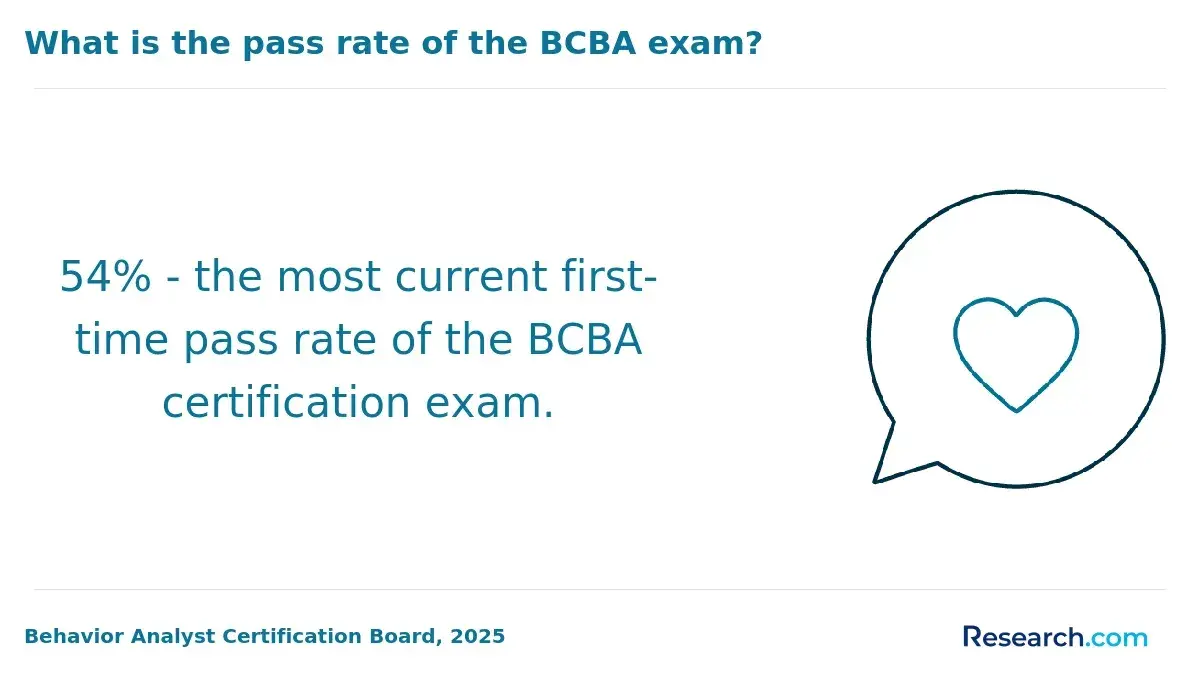
Students should ask programs for BCBA exam pass-rate information when available, but pass rates should not be the only measure of quality. Also consider admission standards, student support, course rigor, fieldwork integration, and whether the program offers structured review before graduation.
The best exam preparation combines conceptual fluency with practical application. Students who only memorize terms may struggle with scenario-based questions, while students who connect principles to real cases are often better prepared for both the exam and professional practice.
What kind of tech support should you look for in online BCBA programs?
Technology support matters because online BCBA students rely on digital systems for lectures, assignments, exams, fieldwork documentation, supervision meetings, library research, and communication with faculty. Weak technology can create avoidable stress and may interfere with learning or supervision documentation.
Before enrolling, review both the tools the program uses and the support available when something goes wrong. Students who work full time or study outside normal business hours should pay particular attention to evening, weekend, and emergency support options.
- Learning management system access: The LMS should be reliable, easy to navigate, and organized around modules, deadlines, assignments, grades, and instructor feedback.
- Technical support services: Responsive IT help should be available for login problems, software issues, browser errors, video access, and exam platform concerns.
- Video conferencing tools: Stable video platforms are important for live classes, office hours, group work, virtual supervision, and recorded demonstrations.
- Digital fieldwork tracking: Fieldwork platforms or documentation systems can help students log hours, monitor supervision activities, and reduce recordkeeping errors.
- Resource libraries: Online access to journals, e-books, databases, research guides, and multimedia materials supports coursework, intervention planning, and exam preparation.
Ask whether the program provides an orientation to online learning tools, whether faculty use consistent course layouts, and whether tech support can assist with accessibility needs. If exams require proctoring software, confirm the hardware, privacy, and scheduling requirements in advance.
What other factors should you look into when comparing online BCBA programs?
After confirming accreditation, coursework, cost, flexibility, and supervision, compare the factors that influence student experience and career outcomes. Two programs may appear similar but differ significantly in advising quality, faculty involvement, practicum support, and employer reputation.
Students who have completed an online bachelors in applied behavior analysis or a related degree should pay close attention to how the next program builds on prior coursework. Some students may need a graduate-level pathway, while others may need specific coursework or supervised experience to match their certification goals.
Key factors to review include:
- Program outcomes: Ask about graduation rates, BCBA exam pass rates, student retention, and alumni employment outcomes when available.
- Faculty expertise: Review instructor credentials, clinical backgrounds, research interests, supervision experience, and involvement in behavior analysis practice.
- Student support: Confirm access to academic advising, career services, writing support, library help, disability services, and exam preparation resources.
- Fieldwork opportunities: Determine whether the program helps students find supervision, whether placements match your interests, and whether your current workplace can count toward fieldwork.
- Program reputation: Look for feedback from alumni, employers, professional networks, and behavior analysis communities rather than relying only on marketing claims.
- Career alignment: Choose a program that supports your intended setting, such as autism services, schools, early intervention, behavioral health, organizational behavior management, or research.
- Communication quality: Pay attention to how quickly admissions, advising, and faculty respond to questions. Poor communication before enrollment can signal problems later.
- Policies and transfer rules: Review policies on course transfers, leaves of absence, repeated courses, supervision changes, academic standing, and time limits for completion.
A strong comparison process should end with a short list of programs that fit your certification route, budget, schedule, and preferred practice area. Avoid choosing based only on speed or cost if the program does not provide the support needed to complete fieldwork and prepare for the exam.
What career opportunities exist after completing online BCBA programs?
Graduates of online BCBA programs can pursue roles in applied behavior analysis across clinical, educational, home-based, community, organizational, and research settings. Entry-level salaries typically range from $60,000 to $75,000 per year, depending on geographic location, employer type, experience, caseload, and work setting.
Higher salaries may be available for professionals who move into supervisory, leadership, consulting, program management, or specialized clinical roles. Compensation can also vary depending on whether a BCBA works for a school district, clinic, hospital system, private practice, nonprofit organization, university, or service agency.
- Clinical Behavior Analyst: Provides assessment, intervention planning, data review, and supervision in clinics, therapy centers, or private practice settings.
- School-Based Behavior Specialist: Works with teachers, administrators, families, and support teams to develop behavior intervention plans and improve student outcomes.
- Early Intervention Consultant: Supports infants, toddlers, young children, and families through developmental and behavior-focused services.
- Organizational Behavior Consultant: Applies behavior analysis principles to staff training, workplace performance, safety, productivity, and systems improvement.
- Research and Academic Roles: Contributes to studies, evaluates interventions, trains future practitioners, or teaches in colleges, universities, and professional programs.
- Autism Support Coordinator: Designs, monitors, and supervises individualized programs for clients on the autism spectrum in home, school, clinic, or community settings.
The job outlook for BCBAs remains strong, with demand expected to grow faster than average for most occupations over the next decade. Growth is supported by expanded awareness of applied behavior analysis, continued need for early intervention services, and demand for qualified professionals in schools, clinics, and private practice.
Completing an online program can lead to the same professional goals as an on-campus pathway when the program meets certification needs, provides rigorous training, and supports supervised experience. The strongest career outcomes usually come from combining the credential with high-quality mentorship, ethical practice, strong data skills, and experience with the populations or settings you want to serve.
Other Things You Should Know About Online BCBA Programs
When comparing online BCBA programs in 2027, you should look into whether your state has additional licensure requirements beyond BCBA certification. Some states may have distinct licensure exams or additional supervision requirements, so understanding your state's regulations will ensure compliance and facilitate a smooth transition to your professional practice.
Key considerations include ensuring the program is accredited by a recognized body, aligns with BACB standards, offers flexible fieldwork opportunities, and provides access to experienced faculty. Confirming the technology used for virtual learning and student support services is also essential.
References
- Behavior Analyst Certification Board. (n.d.). BCBA certificant data. Retrieved from https://www.bacb.com/BACB-certificant-data
- Behavior Analyst Certification Board. (n.d.). Board Certified Behavior Analyst (BCBA). Retrieved from https://www.bacb.com/bcba/
- Behavior Analyst Certification Board. (2025, March 1). 2027 BCBA eligibility requirements [PDF]. https://www.bacb.com/wp-content/uploads/2025/03/2027-BCBA-Requirements_250423-a.pdf
- Psychology Today. (n.d.). What is a board certified behavior analyst (BCBA)? Retrieved from https://www.psychologytoday.com/us/therapy-types/applied-behavior-analysis
- U.S. Bureau of Labor Statistics. (2024, May). Psychologists: Occupational Outlook Handbook. U.S. Department of Labor. https://www.bls.gov/ooh/life-physical-and-social-science/psychologists.htm