2027 BCBA vs BCaBA vs RBT: Career & Salary Comparison

Co-Founder and Chief Data Scientist
If you are considering a career in Applied Behavior Analysis, the first decision is not simply whether ABA is a good field. It is which credential fits your goals: Registered Behavior Technician (RBT), Board Certified Assistant Behavior Analyst (BCaBA), or Board Certified Behavior Analyst (BCBA). Each role can be meaningful, but they differ sharply in training time, supervision, independence, pay, and long-term career ceiling.
The distinction matters because ABA work is structured around scope of practice. RBTs provide direct services under supervision. BCaBAs take on more case-support and supervisory duties but still work under a BCBA. BCBAs hold the highest level of clinical responsibility among the three credentials and can design, oversee, and lead behavior-analytic programs. The Behavior Analyst Certification Board (2025) reports a 58% increase in demand for BCBAs from 2023 to 2024 alone, making it especially important to choose a path that matches both current opportunity and your future plans.
This guide compares BCBA vs BCaBA vs RBT roles in practical terms: career outlook, job responsibilities, education and certification requirements, salary expectations, supervision rules, work settings, and how to decide which ABA career path is right for you.
Key Benefits of Becoming a BCBA vs BCaBA vs RBT
- The national averages of salaries are $89,075 for BCBAs, $70,884 for BCaBAs, and $56,657 for RBTs.
- Capitalize on a job market where demand for BCaBAs surged 131% and for BCBAs by 58% in a single year, ensuring strong employment opportunities.
- Evaluate the distinct requirements for each credential, from a 40-hour training course for RBTs to a master's degree and 2,000 fieldwork hours for BCBAs.
What is the 2025 career and salary outlook for ABA professionals?
The 2025 outlook for ABA professionals is strong, especially for people who earn BACB-recognized credentials and can work in clinical, school-based, home-based, or supervisory roles. Demand is being driven by broader awareness of ABA services, expanding service models, and continued need for trained professionals who can support clients with behavioral, developmental, and learning needs.
The market is especially favorable for BCaBAs and BCBAs because these credentials allow professionals to take on more responsibility than entry-level technicians. BCBAs, in particular, are positioned for leadership roles because they can conduct assessments, develop treatment plans, supervise staff, and oversee clinical quality. For candidates who already know they want the BCBA credential, an accelerated BCBA program may shorten the time needed to move into higher-responsibility roles.
A Market Defined by High Demand
BACB demand data points to a national need for qualified ABA professionals, with several states accounting for a large share of job postings. Location still matters: wages, caseload expectations, commute demands, payer mix, and licensing rules can vary by state and employer.
- Top states for BCBA demand: California, Massachusetts, Texas, New Jersey, and Florida. These five states represent 40% of all BCBA job postings.
- Top states for BCaBA demand: California, Florida, Texas, Virginia, and Michigan. These states account for nearly half of the demand for assistant behavior analysts.
For career planning, the main takeaway is simple: RBT is the fastest way to enter the field, BCaBA can expand responsibility with a bachelor's-level pathway, and BCBA offers the strongest long-term market position for those willing to complete graduate-level preparation.
How do the core job responsibilities compare?
The biggest difference among RBT, BCaBA, and BCBA roles is decision-making authority. RBTs implement behavior plans and collect data. BCaBAs help manage cases and supervise direct staff but must work under a BCBA. BCBAs are responsible for assessment, treatment design, clinical decisions, supervision, and overall program quality.
This structure protects clients by matching responsibility to training level. It also gives professionals a clear career ladder: direct service experience can lead to assistant-level responsibilities, and graduate education can lead to independent clinical practice.
Scope of Practice at a Glance
- RBT (Registered Behavior Technician): Provides direct one-on-one services, implements skill-acquisition and behavior-reduction plans, follows treatment protocols, records session data, and communicates observations to supervisors. RBTs do not independently create or change treatment plans.
- BCaBA (Board Certified Assistant Behavior Analyst): Supports assessment and intervention planning, reviews data, helps train RBTs, monitors treatment implementation, and may manage parts of a case. A BCaBA’s behavior-analytic work must be supervised by a BCBA.
- BCBA (Board Certified Behavior Analyst): Conducts comprehensive assessments, including functional behavior assessments (FBAs), designs treatment programs, analyzes data, makes clinical modifications, supervises RBTs and BCaBAs, trains caregivers or staff, and carries ultimate responsibility for behavior-analytic services.
What the Differences Mean in Daily Work
- If you like direct client interaction: RBT work may be the best fit because most of the role is hands-on service delivery.
- If you want more leadership without graduate school: BCaBA can be a practical middle step, especially for those interested in supervising technicians and supporting case management.
- If you want clinical authority: BCBA is the path that allows the most independence, advanced assessment work, and program leadership.
What are the differences in educational and certification requirements?
Education and certification requirements become more demanding as responsibility increases. The RBT credential is designed as an entry-level pathway and does not require a college degree. The BCaBA credential requires a bachelor's degree and behavior-analytic coursework. The BCBA credential requires graduate-level education, advanced coursework, supervised fieldwork, and a comprehensive certification exam.
Before choosing a pathway, consider three factors: how quickly you want to start working, how much education you are prepared to complete, and whether your long-term goal is direct service, mid-level supervision, or independent clinical practice. If your goal is the BCBA credential, comparing the best BCBA programs can help you identify programs aligned with certification preparation and career goals.
A Comparative Look at Certification Pathways
- RBT: Requires a high school diploma or equivalent, completion of a standardized 40-hour training program, a competency assessment, and passing the RBT certification exam.
- BCaBA: Requires a bachelor's degree from an accredited university, completion of a BACB-Verified Course Sequence (VCS), a defined period of supervised fieldwork, and passing the BCaBA certification exam.
- BCBA: Requires a master's degree or Ph.D., completion of a VCS, a minimum of 2,000 hours of supervised fieldwork, and passing the comprehensive BCBA certification exam.
How to Think About the Investment
The RBT pathway is best for fast entry and practical exposure to ABA. The BCaBA pathway is more demanding but can open the door to supervision and case-support duties. The BCBA pathway takes the most time and education, but it also offers the greatest clinical autonomy and the broadest set of advancement options.
A common mistake is choosing a credential based only on salary. A better approach is to ask whether you want to be the person implementing a plan, supporting and supervising implementation, or designing and taking responsibility for the plan itself.
What is the 2025 salary comparison for RBT vs. BCaBA vs. BCBA?
The 2025 salary comparison shows a clear earnings ladder: the national average for a BCBA is approximately $89,075, the national average for a BCaBA is approximately $70,884, and the national average for an RBT is approximately $56,657 per year, based on national data from ZipRecruiter. These differences reflect education level, supervision requirements, scope of practice, and employer demand.
Salary should be viewed alongside cost and time to credential. RBT certification is the quickest and least academically demanding option, but the role has the lowest ceiling of the three. BCaBA can provide a salary increase and more responsibility for those with a bachelor's degree. BCBA requires the most education and fieldwork, but it is associated with the highest average salary and the strongest leadership pathway.
National Average Salaries for 2025
- BCBA: The national average salary is approximately $89,075 per year, with a typical range between $74,500 and $104,500. Top earners can exceed $132,500 annually.
- BCaBA: The national average salary is approximately $70,884 per year, with a common salary range of $58,500 to $81,000.
- RBT: The national average salary is approximately $56,657 per year, which typically translates to an hourly wage between $20 and $33.
What Can Affect Your Actual Pay
- Credential level: Higher credentials generally allow broader responsibilities and higher compensation.
- Location: Pay can vary significantly by state, metro area, and local demand.
- Setting: Clinics, schools, in-home providers, hospitals, and consulting organizations may use different pay structures.
- Schedule and employment type: Some RBT roles are hourly, while many BCBA roles are salaried; benefits and billable-hour expectations can change the real value of an offer.
- Experience and specialization: Supervisory experience, parent training skills, assessment expertise, and experience with specific populations can affect competitiveness.
When comparing offers, look beyond the headline salary. Ask about supervision quality, caseload size, paid documentation time, travel expectations, cancellation policies, benefits, and opportunities for promotion.
What are the supervision requirements for each role?
Supervision is one of the clearest differences among the three ABA credentials. RBTs and BCaBAs must work under supervision. BCBAs are independent practitioners and commonly serve as supervisors for RBTs and BCaBAs. This supervision structure is central to ethical practice because it helps ensure that interventions are appropriate, monitored, and adjusted by qualified professionals.
In practical terms, supervision affects how much independence you have, who is accountable for clinical decisions, and what kinds of tasks you can perform without approval. Anyone comparing BCBA vs BCaBA vs RBT should understand these rules before investing in training.
Autonomy and Oversight Protocols
- RBTs: Must receive ongoing supervision for a minimum of 5% of the total hours they spend providing direct behavior-analytic services each month. This supervision must include at least two face-to-face meetings per month with a qualified supervisor.
- BCaBAs: Must also receive ongoing supervision from a qualified BCBA for all behavior-analytic work they perform, as they are not authorized to practice independently. They can, however, provide supervision to RBTs.
- BCBAs: Are considered independent practitioners and are not required to be supervised in their clinical practice. Instead, they provide supervision to BCaBAs and RBTs, and must meet specific BACB requirements to do so effectively.
Why Supervision Quality Matters
Good supervision is not just a compliance requirement. It affects client outcomes, staff retention, ethical decision-making, and professional growth. RBTs should look for supervisors who provide timely feedback and clear modeling. BCaBAs should look for supervision that builds assessment, data-analysis, and case-management skills. Aspiring BCBAs should seek fieldwork settings where supervision includes meaningful training rather than only paperwork review.
How do you become a Registered Behavior Technician (RBT)?
Becoming an RBT is the most accessible entry point into ABA because it does not require a college degree. It is a practical choice for people who want to start working directly with clients, confirm whether ABA is a good career fit, or gain experience before pursuing a BCaBA or BCBA credential.
The initial requirements are straightforward: candidates must be at least 18 years old and have a high school diploma or equivalent. They must then complete a standardized 40-hour training program that covers the RBT Task List (2nd ed.). The training must be completed within a 180-day window and is designed to prepare candidates for direct implementation of behavior-analytic services.
Final Steps to Certification
After training, the candidate must pass an RBT Competency Assessment administered by a qualified BCBA. This practical assessment requires the candidate to demonstrate core skills such as data collection, implementing behavior-support procedures, and using reinforcement strategies appropriately. The final steps are passing a criminal background check and the RBT certification exam, a multiple-choice test covering foundational ABA concepts.
Best Fit for the RBT Path
- People who want to enter the ABA workforce quickly.
- Students exploring psychology, education, special education, or behavioral health careers.
- Professionals who prefer direct service delivery over program design.
- Future BCaBA or BCBA candidates who want hands-on experience before committing to more education.
How do you become a Board Certified Assistant Behavior Analyst (BCaBA)?
The BCaBA pathway is designed for professionals who want more responsibility than an RBT but are not pursuing, or are not yet ready to pursue, the BCBA credential. It can be a strong option for people with a bachelor's degree who want to supervise RBTs, support behavior plan development, and take on more case-management duties while still working under a BCBA.
To become a BCaBA, candidates need a bachelor's degree from an accredited institution and must complete a BACB-Verified Course Sequence (VCS). The coursework focuses on behavior-analytic principles, measurement, assessment, intervention, supervision, and ethics at a level appropriate for assistant behavior analysts.
Supervised Fieldwork and Certification
The supervised fieldwork requirement is where BCaBA candidates learn to apply coursework in real settings. Under BCBA supervision, candidates build skills in data review, treatment support, staff training, and client service coordination. This step is essential because BCaBAs must be prepared to make practical contributions while staying within a supervised scope of practice.
The Certification Examination
After completing the degree, coursework, and supervised fieldwork requirements, candidates must pass the BCaBA certification exam. The exam assesses whether the candidate can apply behavior-analytic principles to case support, RBT supervision, data interpretation, and ethical practice. Passing the exam grants the BCaBA credential and authorizes the individual to practice under BCBA supervision.
How do you become a Board Certified Behavior Analyst (BCBA)?
Becoming a BCBA is the most rigorous of the three pathways because it prepares professionals for independent behavior-analytic practice. The credential is best suited for people who want to conduct assessments, design treatment plans, supervise teams, make clinical decisions, and take responsibility for client outcomes.
The primary educational requirement is a master's or doctoral degree in a relevant field, such as psychology or education, from an accredited university. The graduate program must include a BACB-Verified Course Sequence (VCS) so the curriculum aligns with board expectations. Many candidates consider affordable online ABA master's programs when they need a flexible route that includes the required coursework.
The fieldwork requirement is a major part of the BCBA pathway. Candidates must complete 2,000 hours of supervised independent fieldwork, gaining experience with assessment, intervention design, data analysis, caregiver or staff training, and clinical decision-making. Strong fieldwork supervision can make a significant difference in how prepared a candidate is for independent practice.
Passing the Board Exam
The final step is passing the BCBA certification examination. This exam evaluates knowledge across the full scope of behavior analysis, including foundational principles, assessment, intervention, supervision, ethics, and applied decision-making. Passing the exam indicates that the individual has met the requirements to practice as an independent behavior analyst and lead behavior-analytic services.
When the BCBA Path Makes Sense
- You want the highest level of clinical autonomy among the three credentials.
- You are willing to complete graduate education and extensive supervised fieldwork.
- You want to supervise RBTs, BCaBAs, or clinical teams.
- You are interested in leadership, consultation, program development, or advanced assessment work.
What are the typical work environments for each credential?
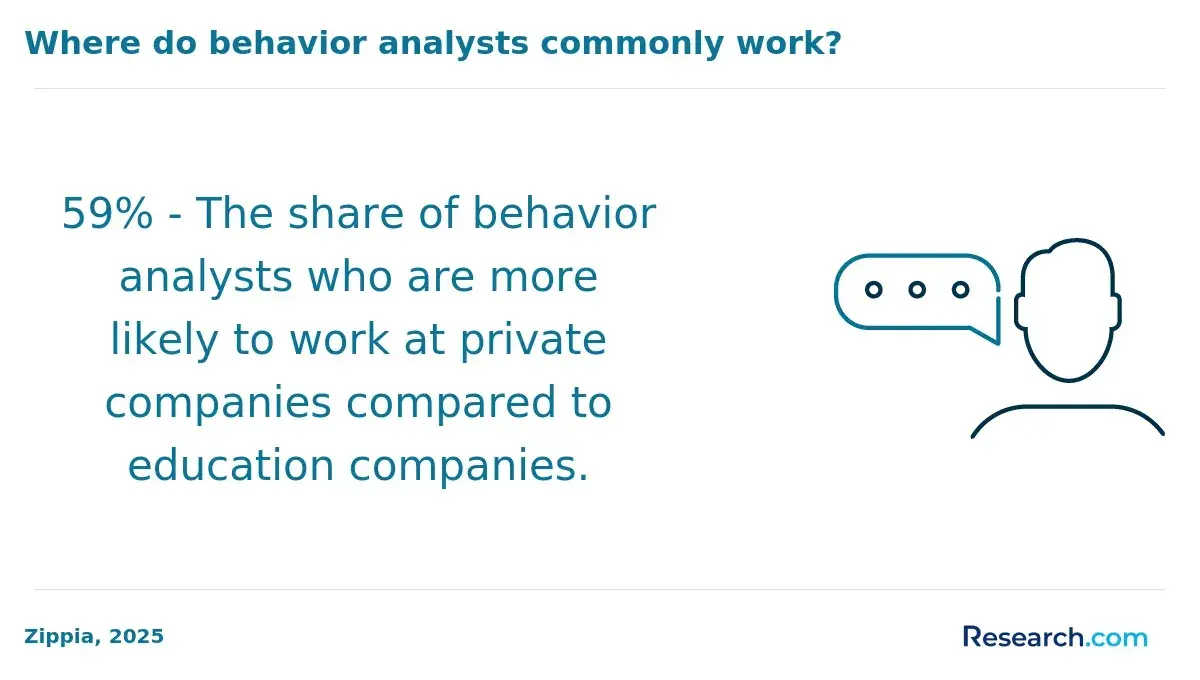
ABA professionals work in clinics, schools, homes, community settings, and increasingly in roles that include telehealth-supported supervision or consultation. The work environment affects daily schedule, documentation demands, collaboration, travel, client population, and the level of support available from supervisors and peers.
RBTs are most often in direct-service settings. BCaBAs may split time between direct observation, staff support, data review, and supervision tasks. BCBAs often move between assessment, treatment planning, parent or staff training, supervision, and administrative responsibilities. Professionals interested in remote or hybrid service models may look into ABA online training options to strengthen skills related to digital service delivery, remote supervision, and caregiver consultation.
Common Employment Settings
- Clinical or center-based programs: RBTs provide direct one-on-one therapy, BCaBAs often help supervise RBT teams and monitor implementation, and BCBAs conduct assessments, design programs, supervise staff, and oversee clinical quality.
- School districts: RBTs may serve as behavioral aides or support students in special education classrooms. BCaBAs and BCBAs may consult with teachers, develop Behavior Intervention Plans (BIPs), complete Functional Behavior Assessments (FBAs), and train school staff.
- In-home services: RBTs work directly with clients and families in natural environments. BCaBAs and BCBAs provide supervision, parent training, treatment updates, and clinical oversight.
- Telehealth-supported services: BCBAs and, in some cases, BCaBAs may use remote tools for supervision, caregiver coaching, meetings, and data review, depending on employer policies and applicable requirements.
Choosing a Work Setting
Ask prospective employers how caseloads are structured, how often supervision occurs, whether travel time is paid, how cancellations are handled, and what training is provided. A higher hourly or salary offer may be less attractive if it comes with excessive travel, limited supervision, or unrealistic productivity expectations.
Which ABA career path is the right choice for you?
The right ABA path depends on your current education, desired responsibility level, tolerance for additional schooling, and long-term career goals. RBT is best for fast entry and direct service. BCaBA is best for bachelor's-level professionals who want more responsibility while remaining supervised. BCBA is best for those who want independent clinical authority, leadership, and the highest earning potential among the three.
If you are new to ABA, starting as an RBT can be a smart way to learn the field before committing to a degree pathway. If you already have a bachelor's degree and want a step between direct service and graduate-level practice, BCaBA may be worth considering. If you want to design interventions, supervise others, and build a long-term career with the broadest opportunities, BCBA is the strongest credential.
Committing to Clinical Leadership
The BCBA credential is the clearest route for professionals who want to lead treatment planning, supervise teams, and make independent clinical decisions. It requires the greatest investment, but it also offers the strongest combination of salary potential, professional autonomy, and career mobility.
A Practical Decision Guide
- Choose RBT if: You want to enter ABA quickly, work directly with clients, and learn the field from the ground up.
- Choose BCaBA if: You have or plan to complete a bachelor's degree and want supervision or case-support responsibilities without becoming an independent practitioner.
- Choose BCBA if: You are prepared for graduate study, want clinical authority, and plan to pursue leadership, consultation, supervision, or advanced practice roles.
For many professionals, the best path is progressive: begin as an RBT, use that experience to decide whether ABA is a long-term fit, then move toward BCaBA or BCBA certification if your goals require greater responsibility and independence.
Other Things You Should Know About BCBA vs BCaBa vs RBT
In 2027, BCaBAs must be supervised by a BCBA or equivalent, while RBTs require supervision from a certified BACB supervisor. Supervision ensures quality practice and adherence to ethical guidelines, influencing professional development in applied behavior analysis.
In 2027, BCBAs typically earn higher salaries than BCaBAs and RBTs due to advanced responsibilities and requirements, including a master's degree. BCaBAs, with a bachelor’s degree, earn less but more than RBTs, who usually require only high school level education and offer support-level assistance. Each role provides distinct career advancement potentials.
References
- Behavior Analyst Certification Board. (2025). RBT handbook. Retrieved November 10, 2025, from BACB.
- Behavior Analyst Certification Board. (2025). BCBA handbook. Retrieved November 10, 2025, from BACB.
- Behavior Analyst Certification Board. (2025). US employment demand for behavior analysts: 2010–2024. Retrieved November 10, 2025, from BACB.
- ZipRecruiter. (2025). BCBA salary. Retrieved November 10, 2025, from ZipRecruiter.
- ZipRecruiter. (2025). BCaBA salary. Retrieved November 10, 2025, from ZipRecruiter.
- ZipRecruiter. (2025). RBT salary. Retrieved November 10, 2025, from ZipRecruiter.