
How to Become an Agile Project Manager? Inside the Role of the Next-Gen Leaders.

Co-Founder and Chief Data Scientist
In a rapidly changing business environment, you may find yourself wondering: What exactly does an Agile project manager do? As industries move away from rigid plans toward iterative improvement, they quickly realize that success depends not just on what they deliver but on how they deliver it. That’s where Agile project managers come in.
The Agile Project Manager has emerged as a crucial bridge between leadership vision and on-the-ground execution. At its core, this role is about guiding a project from inception to delivery while embracing change, fostering team autonomy, and aligning closely with business value.
If you are considering a career in project management or are already working in a dynamic business environment, understanding what an Agile project manager does is essential. This article is your handbook for what it takes to succeed in this evolving profession.
What Is an Agile Project Manager?
An Agile project manager helps define the project’s scope (while acknowledging change), identifies risks and dependencies, allows the team to self-organize around delivery, obtains feedback (internal and external), and ensures that outcomes align with business and client needs. They may also support the organization’s Agile transformation initiatives, coach teams and stakeholders, and use Agile tools to keep the delivery engine running smoothly.
Unlike most traditional project managers, the Agile project manager operates differently - they serve as an enabler of agility, a link between strategy and execution, and a facilitator of cross-functional collaboration.
According to research from the Project Management Institute (PMI), only 48% of projects were considered successful globally, with 12% outright failures and 40% in a “grey zone” of partial success. That highlights the importance of having project leadership that can deal with change, complexity, and value delivery - exactly where an Agile project manager steps in.
What Are the Main Functions of an Agile Project Manager?
When you step into the role of an Agile Project Manager, your work stretches beyond task coordination. You act as a facilitator, coach, and connector, ensuring that collaboration, adaptability, and value delivery remain at the heart of every project.
Below is a consolidated overview of your core responsibilities and what the role truly entails.
1. Creating an Agile Environment
Your first responsibility is to establish a foundation that allows Agile principles to thrive. This means setting up the right culture, mindset, and tools to support iterative delivery, transparency, and collaboration. You help define working agreements, promote shared ownership, and ensure teams use tools that enhance visibility and alignment with business goals.
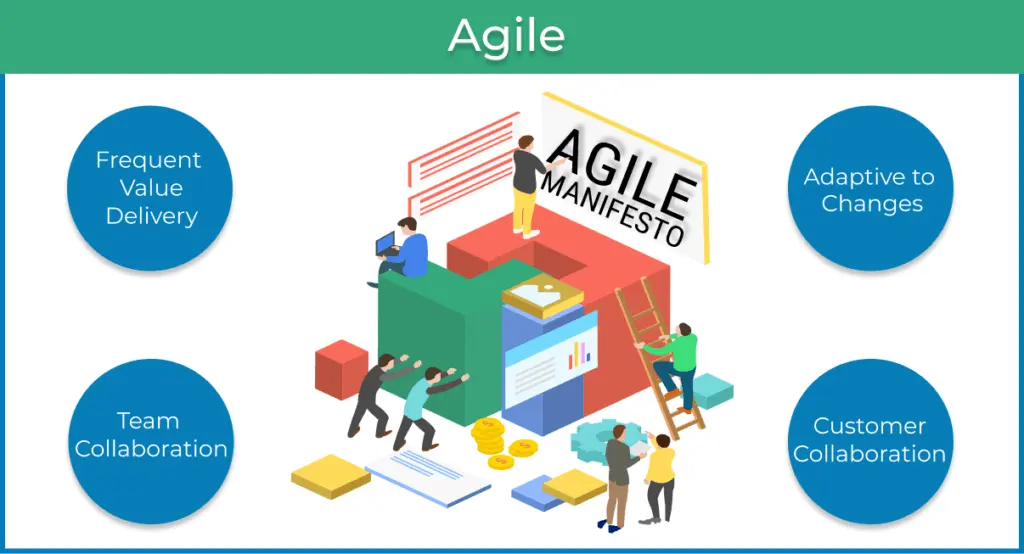
Image Credit: Businessmap.io
2. Facilitating Collaboration and Feedback
Instead of directing from above, you encourage horizontal collaboration and maintain continuous feedback loops - both internally (through retrospectives, peer reviews, demos) and externally (through stakeholder reviews or customer input). This ongoing dialogue ensures the project stays aligned with evolving needs, and the success rate of Agile transformations is higher compared to organizations that don’t rely on strong feedback practices.
3. Empowering Teams to Self-Organize
As an Agile PM, you lead by enabling rather than controlling. You empower teams to self-organize around their strengths, define workflows, make collective decisions, and optimize for value delivery rather than individual output. This approach strengthens accountability, adaptability, and innovation - key drivers of Agile success.
4. Acting as the Link between Strategy and Execution
Agile project managers play a vital bridging role between strategy and execution. You translate the organization’s high-level plans into day-to-day operations, ensuring continuous alignment between business priorities and team execution. Your goal is to keep everyone focused on delivering measurable value, not just outputs.
5. Managing Scope, Change, and Uncertainty
While you still manage project scope, you recognize that change is a constant. Rather than resisting it, you embrace it. You reprioritize based on value, adapt plans as new data emerges, and help the team navigate ambiguity.
6. Mitigating Risks and Managing Dependencies
Agile doesn’t eliminate risks - it changes how they’re handled. You identify potential risks early, promote visibility, and facilitate mitigation strategies. In many teams, you help members take ownership of risk tracking, fostering a shared sense of responsibility and resilience.
7. Reporting, Governance, and Stakeholder Communication
Stakeholders still need visibility into progress, budget, and performance. Your task is to bridge Agile metrics (like velocity or lead time) with traditional governance expectations. You communicate in a way that ensures transparency and trust, translating iterative progress into business terms that executives and sponsors can act on.
8. Driving Continuous Improvement
Finally, you act as a change agent. You facilitate retrospectives, gather improvement suggestions, and ensure lessons learned turn into real process changes. You help your teams evolve their practices, improve flow efficiency, and adapt tools or behaviors over time.
Agile Qualities & Skills of a Successful Agile Project Manager
To be effective in this role, you’ll need a range of skills - both behavioral and technical. Below are the key ones you should develop.
- Big-picture thinking and prioritization: You should understand the strategic objectives and help align the work accordingly, rather than get bogged down in micro-tasking.
- Emotional intelligence and active listening: You’ll be dealing with stakeholders, team dynamics, conflict, change resistance, and shifting priorities; being adept at listening, feeling the team’s pulse, and guiding culture is vital.
- Excellent communication across hierarchies: Because you bridge the team, stakeholders, and sponsors, you must be comfortable translating between technical, business, and executive language.
- Risk identification and adaptive leadership: You simultaneously identify risks, help the team respond dynamically, and lead without heavy command-and-control. You support rather than direct.
- Continuous improvement mindset: You encourage experimentation, retrospectives, process tweaks, and learning from failures.
- Motivating and mentoring teams: You energize the team, promote autonomy, recognize contributions, coach individuals, and help them grow.
- Strong familiarity with Agile values, mindset, and methodologies: You should understand Agile principles deeply (e.g., from the Agile Manifesto), know frameworks (Scrum, Kanban, SAFe), and be able to tailor practices appropriately.
- Business acumen: According to PMI’s 2025 Pulse report, business acumen (understanding the broader business environment) is a key differentiator of successful project managers.
- Tool and data fluency: Being able to use Agile project management tools (e.g., digital boards, dashboards, remote collaboration tools) and interpret metrics (velocity, burn-down, cycle time, value delivered) is essential - especially in hybrid/remote environments.
Agile Project Managers at Different Levels
In practice, you’ll find that the role of an Agile project manager can manifest differently depending on context, scale, industry, and organizational maturity. Here are a few variations to be aware of:
- Team-level Agile PM: In smaller teams (e.g., one scrum team), the Agile project manager might act similarly to a Scrum Master but with added responsibilities around stakeholder management, value alignment, and reporting.
- Program/Portfolio Agile PM: In larger enterprises with multiple teams, you might manage a portfolio of projects, coordinate dependencies between teams, and align multiple value streams while still embracing agility.
- Transformation Agile PM: Focused on leading the organization’s shift to Agile ways of working - you coach, train, introduce frameworks, drive cultural change, and help implement Agile methodology across teams, often at enterprise level.
- Hybrid Agile PM: In organizations using both Agile and predictive (Waterfall) models (a hybrid approach), you act as a bridge - you understand both worlds and help tailor process, tools, and governance to fit the hybrid environment.
Agile Project Manager vs. Traditional Project Manager
Understanding the differences between Agile and traditional project management roles helps clarify what you should emphasize in an Agile role.
| Dimension | Traditional Project Manager | Agile Project Manager |
| Planning style | Heavy upfront planning, fixed scope, linear phases | Iterative planning, evolving scope, incremental delivery |
| Leadership style | Command-and-control, assigning tasks, monitoring individuals | Facilitator/ coach, empowering teams, promoting self-organization |
| Scope management | Scope defined early and changes minimized | Scope evolves, changes are expected and embraced |
| Stakeholder engagement | Periodic status updates, formal review meetings | Constant feedback loops, team, and stakeholder collaboration |
| Risk handling | Identify risks upfront, mitigate early | Continuous risk monitoring, adaptively managing as team delivers |
| Value focus | Delivery of outputs (on time, on budget) | Delivery of outcomes and business value, alignment with strategy |
In essence, if you’re moving into an Agile project manager role, you shift from being a driver of tasks and schedules to being a guide of value, a coach of team autonomy, and an advocate of change.
Agile Project Manager vs. Scrum Master vs. Lean Project Manager
In modern adaptive organizations, you’ll often hear the titles Agile Project Manager, Scrum Master, and Lean Project Manager used interchangeably. While they share similar foundations in flexibility, collaboration, and continuous improvement, their focus, scope, and influence differ significantly. Understanding these distinctions helps you choose the right career path, or the right leadership approach, for your organization.
So, how do you distinguish the roles? Let’s find out.
Scrum Master: The Process Guardian
The primary goal of Scrum Masters is to help teams apply Scrum principles correctly and continuously improve their delivery process. They are responsible for facilitating scrum ceremonies (daily stand-ups, sprint planning, retrospectives, etc.), removing bottlenecks that slow down processes, and coaching teams on Agile principles.
Scrum Masters are team-centric and process-oriented. They don’t typically manage budgets, define scope, or communicate with executives. Their success is measured by how smoothly the team collaborates and how consistently it delivers value.
Agile Project Manager: The Strategic Connector
Agile Project Managers’ focus expands beyond the team level to the strategic and cross-functional level. They act as the connector between business goals and delivery execution, ensuring projects align with broader organizational outcomes. They often oversee budget, timelines, and value stream performance across projects and teams.
Not only do they embrace Agile principles, but they also handle strategic oversight that the Scrum Master role typically avoids. In many organizations, they operate across multiple Scrum or Kanban teams, ensuring business objectives and operational execution work in sync.
Lean Project Manager: The Efficiency Architect
The Lean Project Manager shares many values with Agile but draws its philosophy from Lean manufacturing and Lean thinking - centered on eliminating waste, maximizing value, and continuous flow improvement. Among the core accountabilities of such managers are to map value streams and optimize end-to-end delivery, eliminate non-value-added activities, use Lean metrics (cycle and lead time, throughput) to measure efficiency, and coach teams to adopt a mindset of experimentation and incremental improvement.
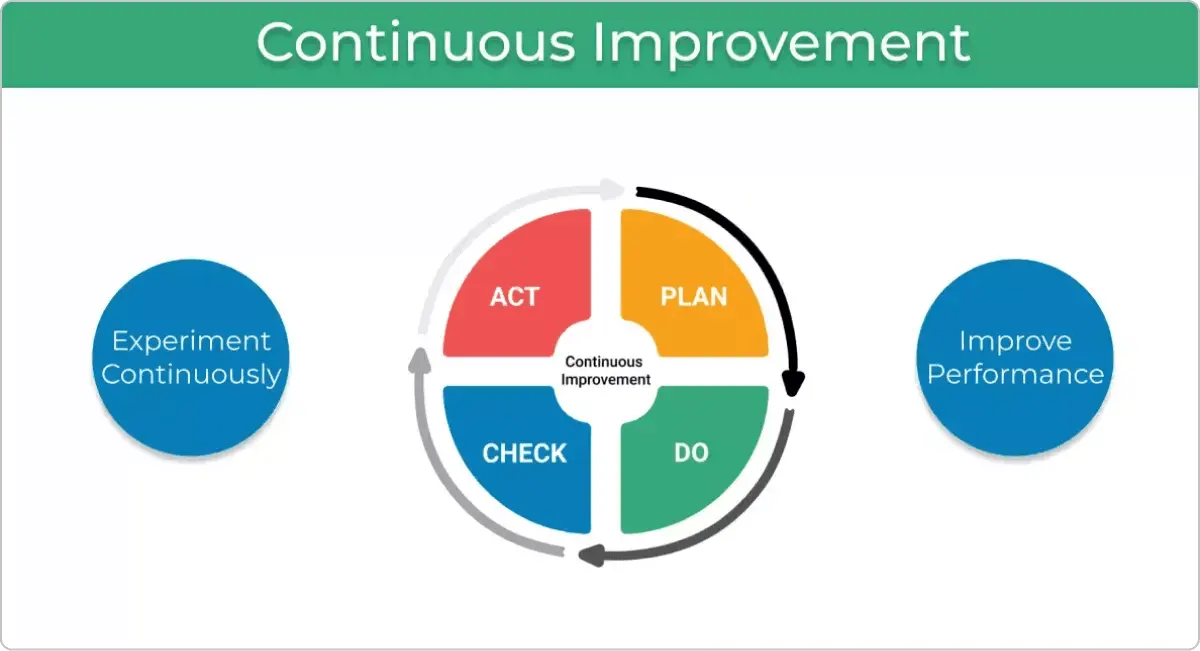
Image Credit: Businessmap.io
The Lean PM emphasizes efficiency and value flow, ensuring that processes are not only adaptive but also economical and scalable.
To summarize the above in a few words:
- Scrum Masters enable teams to apply Agile correctly.
- Agile Project Managers ensure strategic alignment and delivery success.
- Lean Project Managers drive efficiency and continuous process optimization.
How Does an Agile Project Manager Measure Success?
Measuring success shifts from purely cost/schedule/scope to more value-centric metrics. Here are typical measures:
- Business/ Customer value delivered – e.g., customer satisfaction, revenue impact, product/feature adoption.
- Time-to-market/cycle time – how quickly the team can deliver usable increments.
- Team productivity and flow – e.g., velocity, lead-time, blockers removed, throughput.
- Adaptability to change – e.g., how well scope can shift, priority resets, and feedback incorporation.
- Quality and predictability – e.g., defect rates, delivered value per iteration, reliability of plans.
- Stakeholder engagement and satisfaction – how well the team collaborates, how visible and aligned the stakeholders feel.
- Continuous improvement – how often retrospectives lead to meaningful process change, increases in team maturity, and self-organization.
Common Challenges Every Agile Project Manager Faces
Stepping into the role of an Agile Project Manager means navigating a dynamic, fast-paced environment that is often still in transition. While Agile promises flexibility and collaboration, putting those principles into practice can present real challenges.
Below are some of the most common hurdles you may face, along with what they mean for your day-to-day work.
Cultural Resistance to Change
Moving from traditional project management to Agile is rarely just a process shift - it’s a cultural transformation and a mindset shift. Resistance to change, existing command-and-control traditions, and lack of leadership buy-in can hamper your efforts. Your role often includes acting as a change agent - educating, facilitating dialogue, and demonstrating the value of new ways of working.
Scaling Agile Across Multiple Teams
When you work across multiple teams, coordinating dependencies, aligning teams, managing cross-team risk, and maintaining flow become complex. Large-scale Agile requires different tools and a governance model. You’ll need strong facilitation skills and cross-team communication mechanisms to maintain transparency.
Balancing Governance and Flexibility
One of the most challenging balancing acts Agile project managers perform is between organizational governance and Agile flexibility. Executives still expect predictable budgets, compliance reports, and audits - while Agile teams thrive on adaptability, experimentation, and quick feedback loops.
As an Agile PM, your task is to bridge those worlds: provide transparency through metrics and dashboards while protecting your team’s ability to adapt without bureaucratic slowdown.
Hybrid Environments
Many organizations adopt a hybrid model. You’ll need fluency in both and the ability to tailor processes to the right context.
Demonstrating Measurable Value
Delivering features isn’t enough anymore; you need to prove impact. That means measuring business outcomes such as customer satisfaction, revenue contribution, or time-to-market improvement. This often requires more advanced metrics, linking outcomes to strategic goals, and communicating effectively with senior leaders.
Maintaining Collaboration in Distributed Teams
With remote and hybrid work now standard, Agile collaboration can be harder to sustain. You’ll need to leverage tools that enhance visibility and real-time communication and foster psychological safety so that distributed teams can raise issues and share feedback openly.
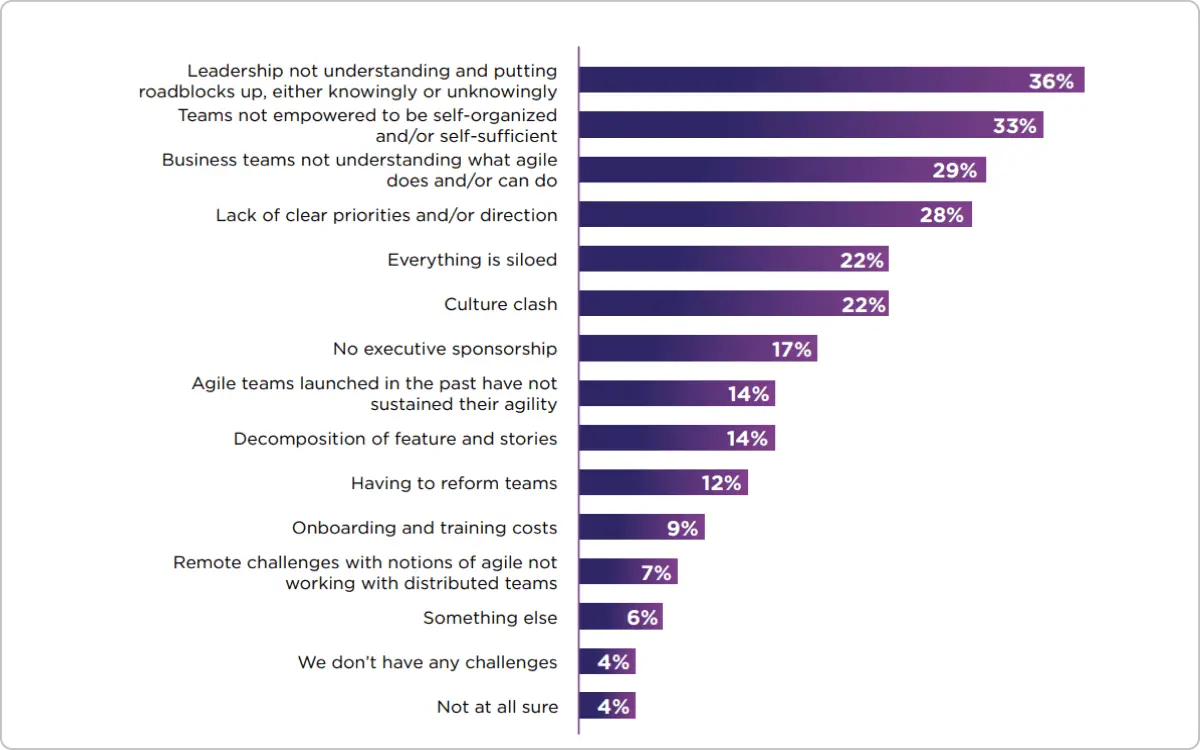
Challenges when adopting and scaling Agile practices according to the 17th Annual State of Agile Report
Signs It’s Time to Hire an Agile Project Manager
The need for an Agile Project Manager becomes clear as an organization grows in scale, complexity, and ambition. The breaking point for an organization to hire a manager is when:
- Projects become complex or uncertain: involving evolving requirements, multiple teams, or interdependent workflows.
- Agile practices are expanding: moving beyond team-level agility toward coordinated program or portfolio management.
- Rapid value delivery is a priority: requiring faster adaptation to market shifts, stakeholder feedback, and customer needs.
- Teams work in silos: leading to visibility gaps, unmanaged dependencies, or coordination bottlenecks.
- Stakeholder expectations rise: with demands for transparency, frequent updates, and measurable progress.
Can an Agile Manager Work in Every Industry?
Agile project management has evolved far beyond its software roots. Today, its principles are applied across sectors such as finance, healthcare, manufacturing, aviation, and even construction. While the core mindset remains universal, the implementation always depends on context.
In highly regulated or hardware-heavy industries, Agile methods may need to coexist with strict governance and longer planning cycles. In more dynamic sectors, you’ll lean on rapid iteration and customer feedback. Many large enterprises now use hybrid models, combining Agile with traditional approaches to balance adaptability and compliance.
Ultimately, an Agile Project Manager can thrive in virtually any industry. Your effectiveness depends less on the framework itself and more on your ability to adapt Agile principles to each environment’s unique constraints and opportunities.
Career Outlook for Agile Project Managers
If you’re considering a career as an Agile project manager (or pivoting into one), the outlook is highly promising.
Education and Pathways
Universities increasingly recognize Agile as a critical skill for modern project leaders. Many now offer dedicated modules or degrees in Agile project leadership, digital transformation, and change management, often embedded within broader project management programs. Beyond academia, professional certifications such as the PMI Agile Certified Practitioner (PMI-ACP®) provide credible pathways for demonstrating your expertise.
Demand & Growth
Job prospects for Agile project professionals continue to expand. The U.S. Bureau of Labor Statistics projects employment for project management specialists to grow 6% from 2024 to 2034, faster than the average across occupations.
Globally, PMI forecasts that by 2027, the economy will require nearly 88 million professionals in project-oriented roles, with roughly 2.3 million new positions opening each year through 2030.
What This Means for the Next Generation PM Professionals
- You have a strong career proposition: as companies adopt Agile and digital transformation accelerates, people who can lead Agile delivery and manage change will be in demand.
- Professionals who combine traditional project management strengths such as governance, budgeting, and risk control with Agile capabilities like facilitation, feedback integration, and adaptive planning will remain in high demand.
- Certifications, continuous learning, and business acumen will accelerate your career and growth.
- Agile talent is now sought far beyond IT: industries from finance to healthcare to marketing increasingly value hybrid project managers who can navigate both structured and adaptive delivery models.
What’s Next for Agile Project Managers
Looking ahead, here are some of the key trends you should be aware of as an Agile project manager or aspiring one:
Growing Hybrid Delivery Models
More organizations are adopting hybrid models that blend Agile and other frameworks to fit context. As this trend continues, you will need fluency in multiple approaches and an ability to tailor delivery frameworks to the situation.
According to PMI’s Future of Project Work report, hybrid models are gaining ground, with 73% of organizations expecting their use to increase over the next five years.
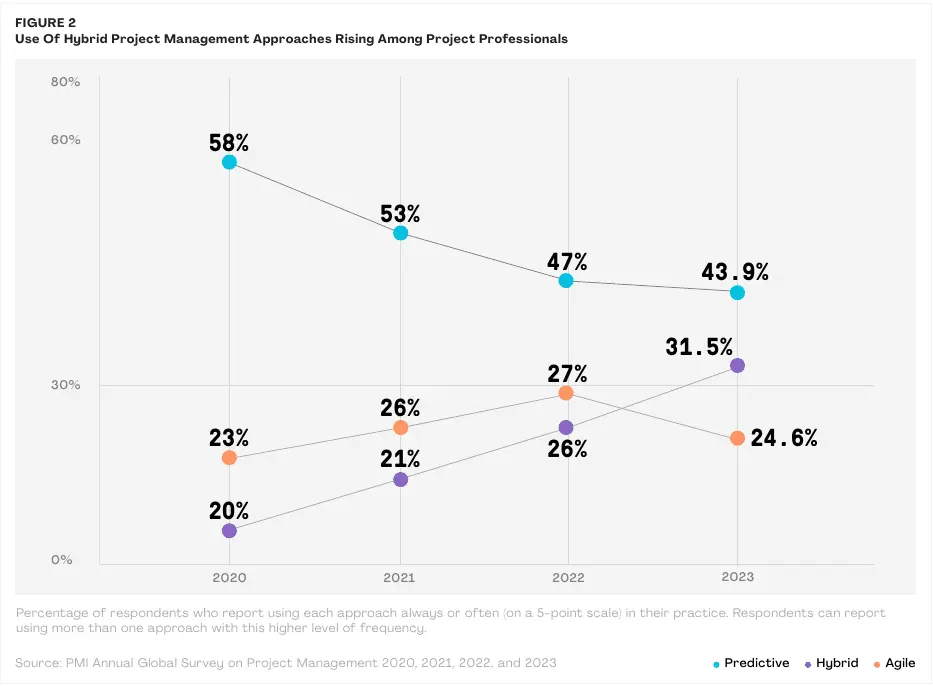
Source: PMI Pulse of Professional Report 2024
Increased Emphasis on Power Skills
Reports indicate that 9 out of 10 project professionals agree that “power skills” (such as leadership, communication, adaptability) help them work smarter.
Value-Driven Delivery Over Traditional Metrics
Organizations are shifting focus from simply delivering on time and on budget to delivering value and business outcomes. PMI notes that teams focusing on business outcomes rather than just deliverables are more likely to succeed. As Agile project managers, you’ll need to tie execution to strategy and demonstrate value rather than just output.
Digital & Remote Work Environment
Remote/ hybrid work and reliance on digital collaboration tools are now standard. As an Agile project manager, you’ll increasingly rely on virtual boards, remote retrospectives, digital dashboards, and tools that support distributed teams.
AI and Automation’s Impact
The future of project work (as outlined by PMI) emphasizes adaptability in the face of AI-led productivity breakthroughs. As AI takes over repetitive tasks, you’ll focus more on strategic thinking, stakeholder alignment, change leadership, and value delivery.
The Evolving Role of the Agile Project Manager
If you take on the role of an Agile project manager, you position yourself at the intersection of strategy, execution, and change - a vital role in modern organizations navigating uncertainty and transformation. Your success will depend not just on applying frameworks, but on fostering the right culture, empowering teams to self-organize, managing value, and continuously adapting.
The demand for such skills is strong and growing, the career path spans industries and geographies, and the tools and metrics of success are evolving. For you, success will mean shifting from being a task-master to becoming a change-agent, from focusing on deliverables to focusing on outcomes, and from controlling to enabling.
Embrace the Agile mindset, equip yourself with both technical and power skills, and prepare to lead in an era of transformation and continuous learning.


