
2027 Certified Nurse Aide (CNA) License Education Requirements in Wyoming

Co-Founder and Chief Data Scientist
Wyoming's healthcare sector shows a growing demand for Certified Nurse Aides (CNAs), with the Bureau of Labor Statistics projecting a 12% employment increase through 2030. This growth reflects expanding eldercare and rehabilitation services. Pursuing a CNA license in Wyoming provides access to stable employment in nursing homes, hospitals, and home health settings, making it a practical career choice for many.
This article details the education requirements necessary to obtain a CNA license in Wyoming. Prepared by career planning experts, it offers clear, data-backed guidance to help prospective candidates understand the training, certification, and testing involved to enter this vital healthcare role.
Key Things to Know About CNA License Education Requirements in Wyoming
- Wyoming requires completion of a state-approved CNA training program with a minimum of 75 hours, including 16 hours of clinical practice, to ensure adequate hands-on experience.
- Programs focus on core competencies such as patient care, safety protocols, and communication skills, reflecting Wyoming's emphasis on preparing CNAs for diverse healthcare settings.
- Upon training completion, candidates must pass the state competency exam, with Wyoming boasting a 77% first-time pass rate, aligning with national averages.
- What are the education requirements to become a CNA in Wyoming? CNA Requirements
- What subjects are taught in CNA classes in Wyoming? What subjects are taught in CNA classes in Wyoming?
- What steps are required to get a CNA license in Wyoming? CNA Licensing
- How long does it take to receive a CNA license in Wyoming? How long does it take to receive a CNA license in Wyoming?
- How often do you need to renew your CNA license in Wyoming? How often do you need to renew your CNA license in Wyoming?
- What continuing education is required for CNAs in Wyoming? What continuing education is required for CNAs in Wyoming?
- Can out-of-state CNAs transfer their license to Wyoming? Can out-of-state CNAs transfer their license to Wyoming?
- What additional certifications can boost a CNA's career in Wyoming? What additional certifications can boost a CNA's career in Wyoming?
- Which employers hire newly certified nurse aides in Wyoming? Which employers hire newly certified nurse aides in Wyoming?
- What is the average salary for CNAs in Wyoming? Salary
- How can CNAs in Wyoming advance to higher nursing roles? How can CNAs in Wyoming advance to higher nursing roles?
What are the education requirements to become a CNA in Wyoming?
Formal education and training are critical in preparing Certified Nurse Aides (CNAs) in Wyoming to deliver safe, effective, and compassionate care across hospitals, long-term care facilities, and home health environments. These preparation steps ensure CNAs possess both the technical skills and professional judgment required for diverse patient needs. Below is an outline of the minimum education and training criteria expected of aspiring CNAs in Wyoming.
- High School Diploma or GED: Candidates must have a high school diploma or GED to qualify for CNA programs, ensuring foundational competencies in literacy and numeracy needed for healthcare instruction and duties.
- Minimum Age Requirement: Most programs require students to be between 16 and 18 years old. This age limit safeguards maturity levels appropriate to manage responsibilities and comply with work regulations.
- Wyoming State-Approved CNA Courses: Enrollment in a state-approved CNA training program is mandatory. These programs integrate classroom learning with clinical practice to teach fundamental nursing skills, infection control, and effective communication.
- Clinical Training Component: A minimum of 16 hours of supervised clinical experience in a long-term care facility is required. This hands-on training builds practical skillsets and confidence before direct patient care.
- Health and Background Screening: Applicants must clear health screenings such as tuberculosis testing and immunization verification, alongside passing federal and state background checks to maintain patient safety standards.
- Passing the Competency Exam: Completion of the National Nurse Aide Assessment Program exam, which tests both written knowledge and practical skills, is essential to confirm competency for certification.
For aspiring healthcare professionals curious about career advancement, exploring the highest paying nursing career options can provide valuable perspective on long-term opportunities within nursing and related fields.
What subjects are taught in CNA classes in Wyoming?
Certified Nurse Aide (CNA) training programs in Wyoming are carefully structured to provide students with the essential knowledge and practical skills necessary to deliver high-quality, compassionate care in diverse healthcare settings. These programs balance classroom theory with hands-on clinical experience to ensure students are well-prepared for the demands of patient care. Below are the primary subjects covered in a typical CNA course curriculum in Wyoming.
- Basic Nursing Skills: This subject teaches foundational caregiving tasks such as assisting with daily activities, measuring vital signs, and monitoring patient comfort. These skills are critical for supporting patients in clinical and long-term care environments.
- Anatomy and Physiology: Students learn the basic structure and functions of the human body and major organ systems. This knowledge helps CNAs recognize medical conditions and communicate effectively with healthcare teams.
- Infection Control: Training includes universal precautions, hand hygiene, proper use of personal protective equipment (PPE), and cleaning protocols. Infection control is vital to prevent disease transmission and protect patients and staff.
- Communication Techniques: Emphasis is placed on developing effective verbal and nonverbal communication, including documentation and reporting. Strong communication fosters patient safety and teamwork.
- Patient Safety Procedures: Coursework covers fall prevention, patient identification, safe transfer methods, and emergency response. These procedures reduce risks and ensure adherence to healthcare standards.
- Nutrition and Hydration: This area teaches dietary basics, feeding assistance, and monitoring intake. Proper nutrition and hydration are key to patient recovery and well-being.
- Personal Care and Hygiene: Students learn to assist with bathing, grooming, oral care, and toileting while respecting patient dignity and preventing infections.
- Mental Health and Dementia Care: Curriculum addresses recognizing mental health concerns and managing dementia-related behaviors. Wyoming offers advanced certification in dementia care to enhance elder care quality.
- Ethical and Legal Responsibilities: Instruction covers patient rights, confidentiality, professional boundaries, and reporting laws. Understanding these ensures ethical practice and legal compliance.
- End-of-Life Care: Courses prepare CNAs to provide compassionate support during the dying process, focusing on pain management, emotional care, and cultural sensitivity.
- Clinical Experience: A minimum of 16 hours of supervised clinical training in a care facility allows students to apply their knowledge practically and qualify for the state exam.
The described subjects form the core of subjects covered in Wyoming nurse aide training, ensuring graduates can effectively contribute to the healthcare workforce. For those curious about related healthcare paths, understanding how much does it cost to become a forensic nurse can also provide valuable insights.
What steps are required to get a CNA license in Wyoming?
Completing the licensing process for Certified Nurse Aides (CNAs) in Wyoming ensures that individuals meet rigorous standards for knowledge, skills, and legal clearance crucial to patient safety. The state regulations, enforced by the Wyoming Department of Health, establish a framework to verify that nurse aides can competently support healthcare delivery across various settings. Below are the essential steps required to obtain CNA licensure in Wyoming.
- Meet Eligibility Requirements: Candidates must be at least 18 years old and have a high school diploma or GED. They must also provide proof of lawful presence, complete a physical examination, submit immunization records, and undergo tuberculosis screening to confirm medical fitness.
- Complete a State-Approved CNA Training Program: Wyoming requires 75 hours of training, including 16 hours of supervised clinical practice, through approved providers such as community colleges or healthcare organizations. This program covers infection control, patient safety, communication, and residents' rights.
- Pass the Wyoming CNA Competency Exam: Administered by Headmaster, the exam consists of a written or oral knowledge test and a practical skills assessment. A minimum score of 70% is required, with candidates allowed up to five retakes.
- Undergo a Criminal Background Check: Applicants must submit fingerprints and pay fees for state and national background checks. Approval is mandatory before certification issuance to maintain workplace safety.
- Apply for State Certification: After meeting training, exam, and background requirements, candidates submit an application to the Wyoming Department of Health to be listed on the Nurse Aide Registry, enabling legal employment in the state.
How long does it take to receive a CNA license in Wyoming?
The total time required to obtain a Certified Nurse Aide (CNA) license in Wyoming varies widely due to several factors, including the duration of the training program, availability of exam dates, and the speed of state processing. Variations in individual circumstances, such as scheduling flexibility and background check timelines, can also impact the overall licensing period.
Typically, CNA training programs in Wyoming require at least 75 hours and are structured to be completed within three to eight weeks, depending on whether students enroll full-time or part-time. Following training, candidates must pass the National Nurse Aide Assessment Program (NNAAP), which includes both a written or oral exam and a clinical skills test. Most examinees can schedule and complete these assessments within a few weeks after finishing their coursework. Once the exams are passed, applicants submit their certification paperwork to the Wyoming State Board of Nursing, where processing, including background check clearance, usually takes up to 14 business days. Some candidates face delays due to limited testing slots or slow background checks, but the overall process from program start to licensure generally spans six to twelve weeks.
When discussing how long it takes to receive a CNA license in Wyoming, a certified nurse aide from a local school shared his experience. He described the journey as a period of anticipation and patience, mentioning that while the academic portion went smoothly within the expected timeframe, scheduling the skills exam was challenging due to limited local testing dates. He noted that waiting for the official certification felt like "an anxious pause" but appreciated the thoroughness of the background check process, which ensured safety and professionalism. In reflecting on the entire experience, he stated, "It was a rewarding process that required commitment, but knowing the state verified everything carefully made the wait worthwhile." This personal insight underscores that while the timeline is generally predictable, individual experiences can differ based on logistical variables.
How often do you need to renew your CNA license in Wyoming?
Renewing a Certified Nurse Aide (CNA) license in Wyoming is a vital process to maintain certification, ensure clinical competency, and comply with healthcare regulations. Regular license renewal protects patient safety and guarantees that CNAs remain knowledgeable about current healthcare standards. Below are the key details surrounding CNA license renewal requirements in Wyoming.
- Renewal Frequency: CNA licenses must be renewed every two years, aligning with Wyoming's biennial nursing credential cycle. This regular interval ensures that CNAs periodically confirm their eligibility and competency.
- Renewal Deadline: The renewal deadline is December 31 of every even-numbered year. CNAs should submit their renewal applications before this date to avoid lapses in licensure and potential interruptions in their ability to work.
- Renewal Fees: While specific fees for CNAs are not explicitly stated, renewal generally requires a fee payment upon application. For comparison, Registered Nurses in Wyoming pay approximately $90 per renewal cycle. Prospective applicants should verify current fee details with the Wyoming State Board of Nursing.
- Work Requirement: To qualify for renewal, CNAs must have worked at least 400 hours as a nurse aide within the previous two years. This requirement demonstrates practical experience and active engagement in the nursing field.
- Continuing Education: If the 400-hour work threshold is not met, CNAs may need to complete continuing education courses. Although Wyoming does not mandate CEUs for those meeting the work hour requirement, some providers offer 24 hours of state-approved instruction for those needing to supplement their credentials.
- Application Process: Renewals are completed online through the Wyoming Nurse Portal, where CNAs update personal and employment data and confirm compliance with work or educational prerequisites. Documentation supporting these claims should be retained for possible audits.
- Late Renewal and Reinstatement: CNAs can renew late within one year after the deadline but cannot practice until the renewal is finalized. After one year, reapplication and retesting are required, restarting the certification process.
For CNAs considering advancing their career, exploring options like the best BSN to NP degree program can provide a valuable pathway beyond initial certification.
What continuing education is required for CNAs in Wyoming?
Continuing education is vital for certified nurse aides (CNAs) in Wyoming to maintain their licenses while enhancing patient care skills and staying current with evolving healthcare practices. This continuous learning process helps CNAs adapt to regulatory changes and advances in clinical techniques. Below is a summary of the core Wyoming CNA CEU requirements that guide CNAs in fulfilling these obligations.
- Hours Required Based on Employment: CNAs renewing their certification every two years must complete continuing education depending on their work hours. Those working at least 400 hours in certified roles are exempt from CEUs; if employed between 200 and 400 hours, 15 CEUs are required; fewer than 200 hours mandates 30 CEUs.
- Approved Training Topics: Wyoming CNA continuing education requirements allow CNAs to select relevant topics such as infection control, dementia care, patient safety, and communication skills. All courses must be approved by the Wyoming State Board of Nursing to ensure they meet standards tied to direct patient care.
- Acceptable Course Formats: Education can be acquired via approved online platforms, in-person workshops, or employer-provided in-service training. Online options, including programs that offer unlimited Board-approved CEUs for a fee, provide flexible learning for working CNAs.
- Recordkeeping Expectations: CNAs must maintain proof of completion for all continuing education hours for a minimum of four years. Documentation is necessary to verify compliance during audits or renewal reviews by the Board.
For CNAs considering further advancement, exploring whether are online MSN programs easy to enter can be an efficient next step in their career development.
Can out-of-state CNAs transfer their license to Wyoming?
Wyoming allows certified nurse aides (CNAs) from other states to transfer their licenses through a process called endorsement or reciprocity. Applicants must hold an active, unencumbered CNA certification in good standing and meet clinical experience requirements, such as completing between 200 to 400 hours of CNA work with accompanying continuing education units if under 400 hours. Essential steps include submitting an application to the Wyoming State Board of Nursing (WSBN), paying a $120 fee, and providing verification of certification and employment. A criminal background check involving FBI fingerprint cards is mandatory. No additional competency exam is required. Processing typically takes 45 to 60 days once all documentation is received, enabling eligible CNAs to practice legally throughout Wyoming.
When I spoke to a certified nurse aide who graduated from a local Wyoming school, she shared that while her initial certification was straightforward, transferring her colleague's out-of-state license was more detailed. She mentioned, "The fingerprinting was a bit of a hurdle since it had to be done locally and sent directly to the board, which delayed the timeline." However, she appreciated how clear the application guidance was and noted, "Knowing there's no extra exam made the process less stressful for her friend." Her reflections highlight that although the steps are specific, reciprocity offers a reliable pathway for CNAs relocating to Wyoming.
What additional certifications can boost a CNA's career in Wyoming?
CNAs aiming to expand their professional scope in Wyoming may enhance their skill set with targeted certifications that complement their clinical experience. Pursuing additional credentials—such as medical assisting—can open doors to specialized patient care roles and broaden opportunities in both clinical and administrative functions. For instance, certification in medical assisting builds on foundational patient care expertise, allowing professionals to engage in an array of healthcare tasks that require both technical skills and decision-making acumen. Consider reviewing guidelines and accredited programs, including information on how to become a medical assistant in Wyoming, to determine if this pathway aligns with your career goals.
Which employers hire newly certified nurse aides in Wyoming?
Newly certified nurse aides in Wyoming find employment opportunities across diverse healthcare settings that require direct patient care and support for licensed nursing staff. The demand for entry-level CNAs remains strong due to ongoing needs for quality long-term and acute care services throughout the state. These positions often serve as foundational roles where new graduates can build clinical skills while contributing to patient well-being.
- Hospitals: Wyoming hospitals, including those in smaller communities like Cody and Sheridan, hire newly certified nurse aides to assist patients in telemetry, medical-oncology, and general care units. CNAs perform essential tasks such as aiding patients with daily living activities and maintaining safe environments under nurse supervision. Many hospital roles provide structured training and 12-hour shifts, facilitating skill development in fast-paced acute care settings.
- Nursing Homes and Long-Term Care Facilities: These establishments consistently seek CNAs to care for elderly and chronically ill residents. The role involves assisting with daily activities, monitoring health, and collaborating with clinical teams to meet resident needs. Some Wyoming facilities offer sign-on bonuses, like $1,000 incentives, highlighting their commitment to recruiting new graduates.
- Assisted Living Communities: CNAs in assisted living support residents in maintaining independence through personal care assistance, medication administration, and daily planning. These settings emphasize a home-like environment and frequently provide flexible schedules, accommodating new nurse aides as they advance their careers.
- Home Health Agencies: Positions in home health involve delivering individualized care to elderly and disabled clients in their residences. CNAs help with daily living activities and promote client autonomy. Some roles offer competitive pay rates up to $26 per hour and flexible scheduling options.
- Rehabilitation Centers and Outpatient Clinics: Specialized facilities such as radiation and medical oncology outpatient centers employ CNAs to escort patients, assist with therapies, and support medical procedures. These roles provide new CNAs exposure to specialized healthcare areas and patient populations.
What is the average salary for CNAs in Wyoming?
The CNA salary in Wyoming varies notably depending on factors such as experience, work setting, and geographic location. These differences highlight the importance of understanding pay trends when planning a career or evaluating job offers within the state. Insight into compensation helps CNAs identify opportunities for growth and more accurately assess their earning potential. Below are key salary insights for certified nurse aides in Wyoming.
- Average Hourly and Annual Pay: Certified nursing assistant salaries in Wyoming range roughly from $33,343 to $35,520 annually, corresponding to hourly wages between $16 and $20.23. Some reports indicate an average annual salary reaching $39,975, reflecting variability across data sources.
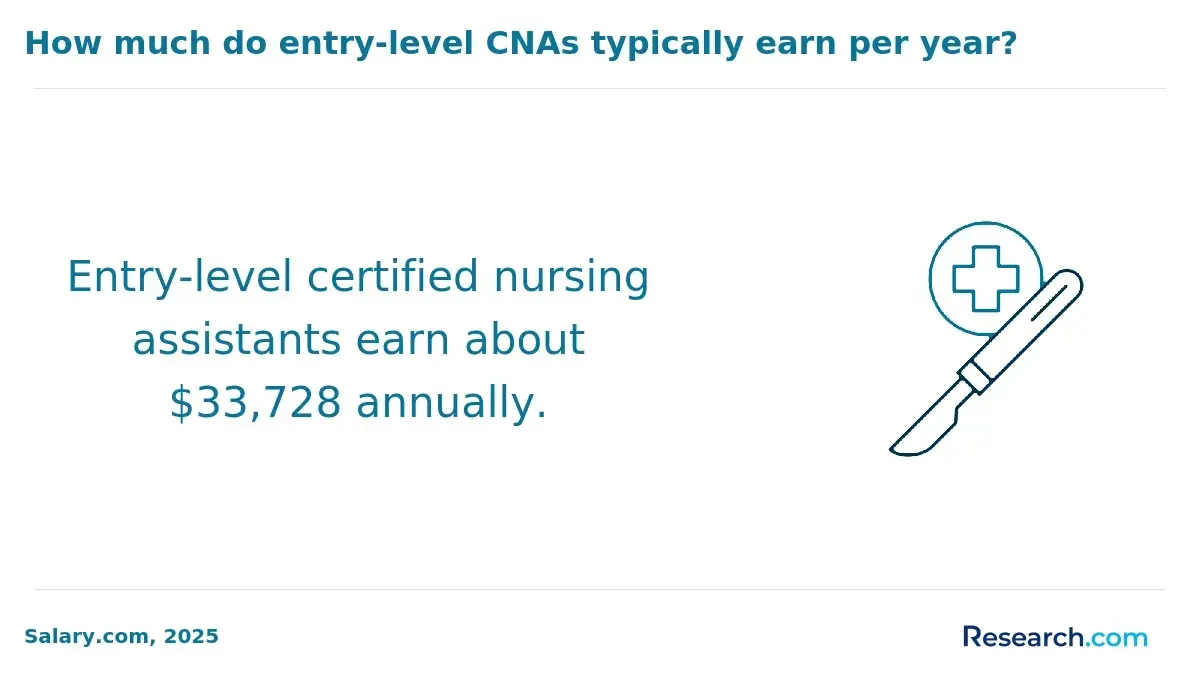
- Pay Variation by Experience Level: Entry-level CNAs generally earn about $33,280 per year, while more experienced CNAs may make up to $42,690 annually. Experience and advanced certifications tend to increase earning capacity significantly.
- Differences Across Healthcare Facilities: Hospital CNAs in Wyoming often receive higher compensation, averaging $22.29 per hour and about $46,361 annually. Conversely, CNAs working in nursing homes, assisted living, or home health agencies usually earn closer to the state average range.
- Regional Pay Trends within Wyoming: Geographic location influences wages; for example, CNAs in Laramie earn an hourly average of $17.71, slightly below the state mean. Urban areas with higher living costs may offer increased pay to attract qualified workers.
- Additional Factors Influencing Earnings: Overtime, shift differentials, and bonuses contribute roughly $4,500 extra annually for many CNAs. Employer type, specialized skills, and shift timing further impact total compensation.
- Advancement Opportunities: Progressing to Licensed Practical Nurse (LPN) or Registered Nurse (RN) roles can lead to substantial salary increases. Understanding the differences between np and pa can also inform career decisions and educational pathways within nursing professions.
How can CNAs in Wyoming advance to higher nursing roles?
Many certified nurse aides (CNAs) in Wyoming leverage their foundational healthcare experience as a stepping stone toward advanced nursing careers. Progression in this field typically requires additional education, certification, and hands-on clinical training to comply with state regulations. Below are common career advancement paths available to CNAs in Wyoming that detail necessary qualifications, course lengths, and potential salary benefits. Taking the affordable CNA programs online is also an option.
- CNA II (Advanced CNA): CNAs with 1,000 to 1,500 hours of work experience can enter a 4-week CNA II program, enhancing skills in direct patient care. This role usually offers modest pay increases and greater responsibilities.
- Medication Aide - Certified: After CNA II, CNAs may complete an 8-week Medication Aide course to administer medications under supervision, often earning $2-$3 more per hour than standard CNAs.
- Licensed Practical Nurse (LPN): Pursuing state-approved practical nursing programs lasting 12-18 months leads to LPN licensure and a median salary of approximately $54,000 annually.
- Registered Nurse (RN): Achieving an ADN or BSN degree followed by NCLEX-RN exam passage enables RN licensure, with median wages around $75,000 per year.
- Specialized Nursing Roles: Short-term certifications in dementia, wound, or hospice care provide specialization opportunities and potential pay increases.
- Apprenticeship and Bridge Programs: Wyoming's structured programs combine paid on-the-job training with coursework, facilitating smooth transitions to LPN or RN status.
What Do CNAs in Wyoming Say About Their Career?
- Laila: "Completing my Certified Nurse Aide program at Wind River Academy gave me the hands-on experience I needed to feel confident in my role. Starting my career working in a local school setting has been incredibly rewarding, especially knowing I'm making a positive impact on young students' health and well-being. Wyoming's close-knit communities and vast landscapes offer unique challenges but also opportunities to develop strong relationships with families and staff. The sense of stability and purpose in this career drives my passion every day. "
- Jose: "My journey began at the Teton Hills Healthcare Training Center, where the supportive instructors helped me build a solid foundation in patient care. Beginning work as a Certified Nurse Aide in a local academic environment allowed me to grow both personally and professionally, deepening my ability to connect with and support children's diverse needs. The rural and mountainous setting of Wyoming brings unique health concerns, which keeps my daily role dynamic and meaningful. I'm proud to contribute to the health of my community while advancing my skill set. "
- Naomi: "Graduating from High Plains Medical Academy was just the start of a fulfilling career as a Certified Nurse Aide in Wyoming. Working at a school has provided me with a profound sense of purpose, knowing that my efforts help create a safe and nurturing space for students. The professional development opportunities here are excellent, and I appreciate the chance to continuously improve my clinical and communication skills. Wyoming's strong emphasis on community wellness resonates deeply with me and fuels my commitment to this profession. "
Related Articles for Nearby States
- 2027 Certified Nurse Aide (CNA) License Education Requirements in Montana
- 2027 Certified Nurse Aide (CNA) License Education Requirements in South Dakota
- 2027 Certified Nurse Aide (CNA) License Education Requirements in Nebraska
- 2027 Certified Nurse Aide (CNA) License Education Requirements in Colorado
- 2027 Certified Nurse Aide (CNA) License Education Requirements in Idaho
- 2027 Certified Nurse Aide (CNA) License Education Requirements in Utah
- 2027 Certified Nurse Aide (CNA) License Education Requirements in North Dakota
- 2027 Certified Nurse Aide (CNA) License Education Requirements in Kansas
- 2027 Certified Nurse Aide (CNA) License Education Requirements in Iowa
- 2027 Certified Nurse Aide (CNA) License Education Requirements in Nevada
References
- CareerOneStop. (n.d.). Occupation profile for nursing assistants.
- CEUfast. (n.d.). Wyoming CEU requirements.
- Central Wyoming College. (n.d.). Certified Nursing Assistant.
- Northwest College. (n.d.). Nursing - Certified Nursing Assistant (CNA), S.C. | Academic Programs | Academics.
- NursingHome411. (n.d.). Wyoming CNA requirements.
- Ready Set Hire. (n.d.). Certified Nursing Assistant Salaries & Top Paying Companies in Wyoming, MI
Other Things You Should Know About CNA License Education Requirements in Wyoming
In Wyoming, if your CNA license application is denied, you will receive a written explanation outlining the reasons for denial. You may appeal the decision by submitting a request for a hearing within 30 days of receiving the denial notice. Consulting with the licensing board can offer guidance on rectifying any issues.
To renew an expired Certified Nurse Aide (CNA) license in Wyoming, individuals must first determine how long the license has been expired. If the license has been expired for less than two years, CNAs can typically renew by completing a renewal application and meeting state requirements, which may include continuing education or work verification. For licenses expired over two years, reactivation usually requires retaking both the written and skills competency exams. It is important to contact the Wyoming Board of Nursing directly for specific guidelines and to ensure all documentation is submitted correctly to avoid delays in the renewal process.
In 2027, Wyoming requires CNA candidates to complete a state-approved nurse aide training program, including at least 75 hours of training, with a minimum of 16 clinical hours. Additionally, candidates must pass the Wyoming CNA competency exam to be licensed.


