
2027 How to Become a Corporate Trainer: Salary & Career Paths

Co-Founder and Chief Data Scientist
With the dynamic business environment now, corporate trainers play a pivotal role in shaping an organization’s workforce by enhancing skills, boosting productivity, and fostering continuous learning. Understanding the career paths and salary prospects in this field is essential for anyone considering a future in corporate training. This article delves into the evolving significance of corporate trainers and highlights why knowledge of career trajectories and compensation structures can empower aspiring professionals to make informed decisions.
Key Things You Should Know About Becoming a Corporate Trainer
- Educational Background and Certification: While many corporate trainers come from various educational backgrounds, certifications in training, instructional design, or related fields can enhance credibility and career prospects.
- Career Paths and Opportunities: Corporate training offers diverse career trajectories. You might start as an entry-level trainer and progress to roles like Training Manager, Learning and Development Director, or even a consultant specializing in organizational development.
- Salary Considerations: Understanding compensation structures is key. Salaries vary based on experience, industry, location, and company size, making it important to research and set realistic career and income expectations.
- Continuous Learning: The field is constantly evolving with new technologies and training methods. A commitment to ongoing professional development is essential to stay competitive and effective.
- Networking and Mentorship: Building relationships within the industry and seeking mentorship can provide valuable insights, open doors to opportunities, and help navigate career challenges.
- What is a corporate trainer?
- What does a corporate trainer do?
- What are the steps to becoming a corporate trainer for 2027?
- Are there certifications you need to obtain to become a corporate trainer?
- What are the best programs or majors for becoming a corporate trainer?
- Where can you work as a corporate trainer?
- How much do corporate trainers earn?
- Are advanced education programs beneficial for corporate trainers?
- How can corporate trainers measure training effectiveness to maximize ROI?
- Can corporate trainers transition into strategic HR roles?
- How can corporate trainers harness data analytics to refine training strategies?
- What career advancement opportunities exist for corporate trainers?
- How can corporate trainers continuously update their skills to remain competitive?
- How do emerging digital trends impact corporate training effectiveness?
- What is the job outlook for corporate trainers?
- What are the alternative careers for corporate trainers?
- What common challenges do corporate trainers encounter?
What is a corporate trainer?
A corporate trainer is a professional responsible for designing, developing, and delivering training programs within an organization. Their role is vital to enhancing employee performance and driving organizational success.
Corporate trainers assess the training needs of an organization and craft programs that address these gaps. They conduct workshops, seminars, and online training sessions using a variety of instructional methods to accommodate different learning styles. Their primary aim is to boost employees' skills and knowledge. Whether it's soft skills, technical training, or leadership development, corporate trainers ensure that employees have the tools they need to excel in their roles.
Given the fast pace of business, corporate trainers continuously update their programs to reflect new technologies, industry trends, and evolving business strategies. This makes adaptability and lifelong learning key traits for success in this field. Beyond just imparting knowledge, corporate trainers facilitate an engaging learning environment. They encourage interaction, discussion, and practical application of new skills, fostering a culture of continuous improvement and collaboration.
The image below shows the projected growth of the global corporate training market.

What does a corporate trainer do?
A corporate trainer engages in a wide range of tasks designed to enhance employee performance and foster continuous learning within an organization. These are the specific tasks that a corporate trainer is expected to do:
- Conduct Training Needs Analysis: Evaluate the current skills and knowledge gaps within the organization by gathering data through surveys, interviews, or performance reviews.
- Communicate Training Needs to Management: Act as a liaison between employees and management by reporting on training gaps and proposing solutions to ensure the workforce stays up-to-date with industry standards.
- Design Customized Training Programs: Develop training curricula tailored to meet the specific needs of different departments or teams, ensuring that the content is relevant and effective.
- Develop Employee Training Schedules: Plan and organize training sessions by creating detailed schedules that align with the organization's operational needs and employee availability.
- Create Instructional Materials: Produce engaging resources such as slide decks, manuals, e-learning modules, and handouts to support the training sessions.
- Deliver Training Sessions: Lead workshops, seminars, and online classes, employing various teaching techniques (e.g., lectures, role-playing, group discussions) to engage participants and cater to different learning styles.
- Facilitate Interactive Learning: Use real-life scenarios, case studies, and interactive exercises to help learners apply new skills in practical settings.
- Coordinate Training Logistics: Manage venue arrangements and necessary equipment for in-person or virtual training sessions to ensure a smooth delivery.
- Monitor Training Costs: Track and manage expenses associated with training programs, ensuring that they remain within budget while still achieving desired outcomes.
- Evaluate Training Effectiveness: Implement post-training assessments and feedback surveys to measure the success of the training and identify areas for improvement.
- Update Training Content: Regularly revise training materials to reflect industry trends, new technologies, and evolving business practices.
- Provide One-on-One Coaching: Offer personalized support and mentorship to individuals who may need extra assistance in mastering new skills.
What are the steps to becoming a corporate trainer for 2027?
Becoming a corporate trainer involves a blend of formal education, hands-on experience, and continuous professional development. Here are the essential steps to kickstart your career in corporate training:
- Obtain a Relevant Educational Background: Start with a bachelor’s degree in fields such as human resources, business, or communications. An education degree is also a good option. A relevant degree provides a strong foundation in both business principles and effective communication.
- Develop Key Skills: Focus on honing skills in public speaking, instructional design, and adult learning theories. Participating in workshops, courses, or even joining a local Toastmasters club can boost your presentation and communication skills.
- Gain Practical Experience: Look for opportunities to lead training sessions, either within your current organization or through volunteer work. Internships, entry-level positions in human resources, or roles in customer service can provide valuable experience in teaching and coaching.
- Earn Professional Certifications: Certifications such as the Certified Professional in Learning and Performance (CPLP) or similar credentials can validate your expertise and make you more competitive in the job market. These programs often cover best practices in instructional design and training delivery.
- Build a Portfolio: Create a portfolio that showcases your training programs, lesson plans, and any feedback or results from your sessions. This portfolio will be invaluable when applying for positions, as it demonstrates your practical capabilities.
- Develop Employee Training Schedules and Manage Logistics: As you gain experience, take on responsibilities such as creating training schedules, coordinating logistics, and managing training budgets. This demonstrates your ability to handle not just content delivery, but also the operational aspects of training programs.
- Network and Seek Mentorship: Join professional associations or attend industry conferences to meet other trainers and learning and development professionals. Networking can lead to job opportunities, partnerships, and insights into emerging trends in corporate training.
- Stay Updated with Industry Trends: Continuously update your skills and knowledge through ongoing education, webinars, and reading industry literature. Keeping up with the latest training technologies and methodologies is crucial for long-term success in this field.
Are there certifications you need to obtain to become a corporate trainer?
While there is no single certification that is universally required to enter the field of corporate training, obtaining relevant credentials can significantly enhance your credibility and marketability. Here are some key points to consider:
- Industry-Recognized Certifications: Many professionals pursue certifications such as the Certified Professional in Learning and Performance (CPLP) offered by the Association for Talent Development (ATD). This certification demonstrates a high level of expertise in training design, delivery, and evaluation.
- Specialized Credentials: Other specialized certifications, like the Certified Professional in Training Management (CPTM) or certifications in instructional design, can be beneficial. These programs focus on the practical aspects of managing training initiatives and creating effective learning programs.
- No Mandatory Requirement: Although certifications are highly valued by employers, they are not legally mandated. Many successful corporate trainers build their careers through a combination of formal education, hands-on experience, and professional development.
- Continuous Professional Development: The field of corporate training is dynamic. Engaging in ongoing education through workshops, webinars, and additional online certifications helps you stay current with the latest industry trends and best practices.
- Enhanced Career Opportunities: Earning a certification not only validates your skills but also often leads to better job prospects and potentially higher salary ranges. Employers tend to favor candidates who have demonstrated a commitment to their professional growth through recognized certification programs.
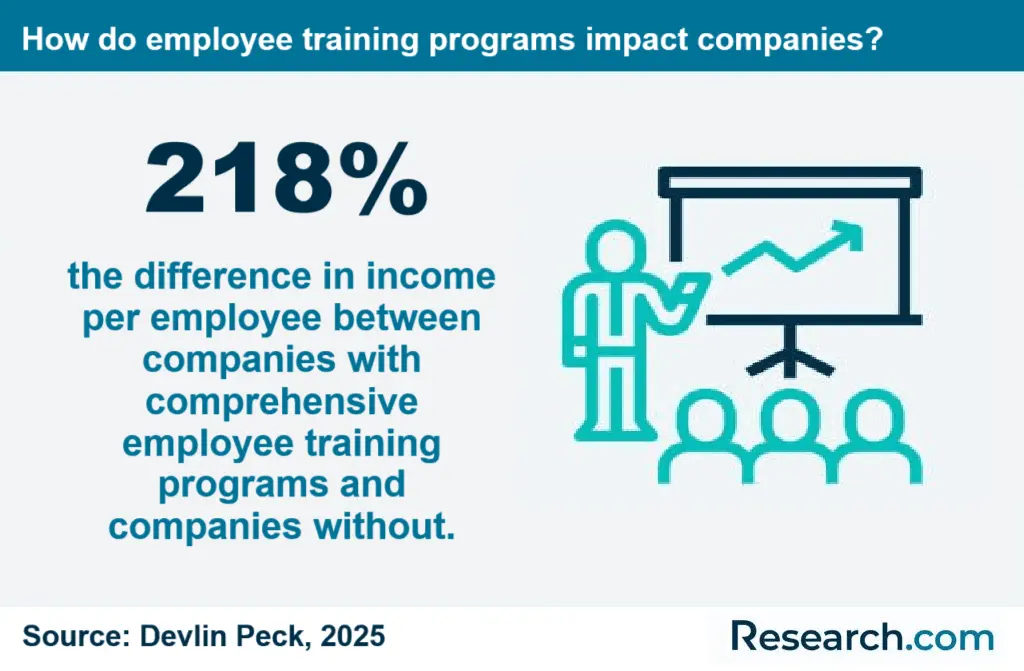
The image below shows that employee training programs positively impact companies.
What are the best programs or majors for becoming a corporate trainer?
While there is no single or specific degree required to become a corporate trainer, certain programs and majors can provide a strong foundation for success in this field. Here are some of the best degrees to get or best majors to pursue if you are considering a career in corporate training:
- Organizational Psychology: This field focuses on workplace behavior, motivation, and employee engagement, equipping trainers with insights on how to create programs that enhance productivity and job satisfaction.
- Human Resources (HR): A degree in human resources covers essential topics like talent development, employee training, and organizational behavior, all of which are critical for a corporate training role.
- Education, Curriculum, and Instruction: Degrees in education, particularly those focused on curriculum and instruction, provide valuable knowledge in teaching methodologies, curriculum design, and learning assessment—key components of effective corporate training.
- Communications or Public Speaking: Since corporate trainers must be skilled communicators, a degree in communications, public speaking, or media studies can help refine presentation and engagement techniques.
- Business Administration or Management: A traditional or online business degree helps trainers understand corporate structures, leadership development, and strategic workforce planning, making them more effective in designing training that aligns with business goals.
- Instructional Design and Technology: With the increasing demand for e-learning and digital training, degrees or certifications in instructional design provide expertise in developing engaging online courses and using learning management systems (LMS).
Where can you work as a corporate trainer?
Corporate trainers have versatile career options across a variety of industries and organizational settings. Here are some common workplaces for corporate trainers:
- Large Corporations and Multinationals: Many big companies have dedicated Learning & Development (L&D) departments that employ corporate trainers to upskill their workforce and drive organizational performance.
- Small and Medium Enterprises (SMEs): In smaller organizations, corporate trainers may handle multiple roles, from developing training materials to delivering sessions, often contributing directly to business growth.
- Training and Development Firms: Specialized training companies and consultancies hire corporate trainers to offer tailored training programs to a diverse range of clients across industries.
- Government Agencies: Federal, state, and local government bodies often require training programs for their employees, ranging from compliance to leadership development.
- Non-Profit Organizations: Non-profits may employ corporate trainers to enhance staff skills in areas such as project management, fundraising, and volunteer coordination.
- Freelance or Independent Consulting: Many experienced trainers work independently, offering consulting services and customized training solutions to organizations on a project basis.
The table below shows the industries with the highest levels of employment in training and development specialists, according to the U.S. Bureau of Labor Statistics.
| Industry | Employment |
| Restaurants and Other Eating Places | 28,490 |
| Management of Companies and Enterprises | 23,920 |
| Computer Systems Design and Related Services | 16,850 |
| Management, Scientific, and Technical Consulting Services | 14,450 |
| General Medical and Surgical Hospitals | 13,360 |
How much do corporate trainers earn?
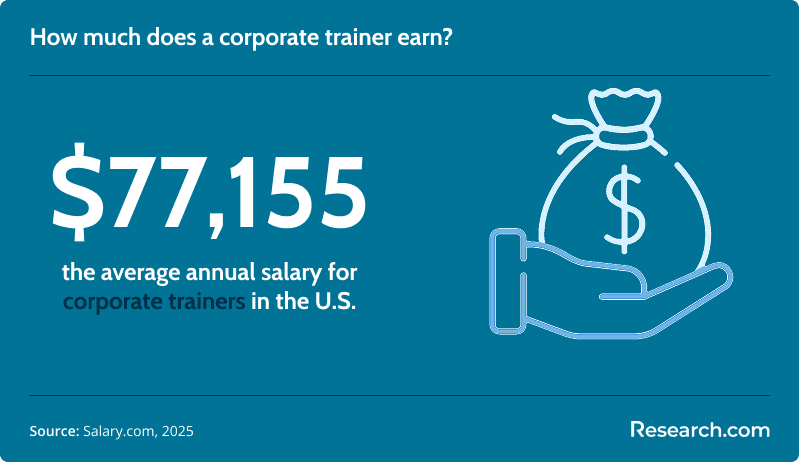
The average annual salary for corporate trainers in the United States, according to salary.com, is approximately $77,155.
Meanwhile, the United States Bureau of Labor Statistics reports that training and development managers earn an average of $138,450 a year, while training and development specialists earn an average of $71,980 a year.
BLS explains that training and development specialists plan and administer programs that improve the skills and knowledge of their employees. They work with people, give presentations, and lead training activities. Training and development managers, on the other hand, plan, coordinate, and direct skills-enhancement and knowledge-enhancement programs for an organization’s employees.
Generally, corporate trainer salaries can vary widely depending on several factors. While specific figures depend on factors like location, industry, and level of experience, here are some key points to consider:
- Experience Level: Entry-level trainers may start with a modest salary, whereas experienced trainers—especially those with a track record of successful training programs—often command higher wages.
- Industry and Company Size: Larger corporations and industries with a high demand for specialized skills (such as technology or finance) typically offer more competitive salaries. Conversely, smaller companies or non-profit organizations might offer lower compensation but provide unique growth opportunities.
- Geographic Location: Salaries can also be influenced by the cost of living and market demand in different regions. Corporate trainers in metropolitan areas or regions with a strong corporate presence often earn more than those in less densely populated areas.
- Freelance vs. In-House Positions: Freelance or independent corporate trainers can set their own rates, which might result in higher earning potential depending on the number of projects and clients. However, this comes with less stability compared to in-house roles.
- Additional Certifications and Specializations: Earning industry-recognized certifications and specialized credentials can boost earning potential, as these qualifications signal expertise and a commitment to professional development.
The image below shows the average annual salary for corporate trainers in the United States.
Are advanced education programs beneficial for corporate trainers?
Corporate trainers increasingly benefit from pursuing advanced education as the industry embraces a more strategic role in organizational development. Earning a relevant advanced degree enhances both theoretical and practical expertise in areas such as instructional design, leadership, and change management. These qualifications help professionals stand out in competitive markets and foster career progression through expanded skill sets. For instance, exploring options like the cheapest online master's in human resources provides a cost-effective pathway to further academic and professional development. Evaluating program alignment with career objectives and industry demands is essential for sustained success.
How can corporate trainers measure training effectiveness to maximize ROI?
A robust evaluation framework is essential for quantifying training outcomes and aligning them with strategic objectives. Corporate trainers can implement structured assessments by combining quantitative metrics—such as pre- and post-training performance indicators, engagement rates, and retention scores—with qualitative feedback from surveys and focus groups. This dual approach provides actionable insights that help optimize program designs and justify training investments. Leveraging specialized analytics tools can further refine these assessments, ensuring that training initiatives effectively support business goals. For professionals interested in deepening their strategic approach to human resources, consider pursuing an MBA human resources online.
Can corporate trainers transition into strategic HR roles?
Corporate trainers possess a strong foundation in communication, instructional design, and employee development—skills that are highly transferable to strategic roles within human resources. By leveraging their expertise, corporate trainers can move into positions that focus on talent management, organizational development, and strategic planning. This transition is supported by their ability to design impactful programs and measure training effectiveness, which are increasingly valued in HR functions. For professionals exploring this career pivot, acquiring targeted HR qualifications or certifications may further enhance their prospects. Explore additional possibilities at What jobs can you get with a HR degree?.
How can corporate trainers harness data analytics to refine training strategies?
Corporate trainers can integrate advanced data analytics tools to identify precise skill gaps and tailor learning interventions effectively. By leveraging real-time data from learning management systems, trainers can create dynamic content that adapts to evolving needs and predicts potential areas of improvement. Utilizing predictive analytics enables a personalized approach to training that aligns employee performance with organizational goals. For further professional development and to stay abreast of industry trends, professionals may consider exploring additional credentials, such as an HR associates degree online.
What career advancement opportunities exist for corporate trainers?
Corporate trainers who invest in continuous learning and certifications can transition into roles such as senior trainer, training manager, or director of learning and development. By specializing in emerging instructional technologies and data-driven evaluation methods, professionals can enhance their profiles and assume leadership roles that contribute to wider organizational strategy. Moreover, advanced studies—like those found in a master's degree in human resources jobs—can further broaden career prospects, linking technical expertise with strategic human resource management.
How can corporate trainers continuously update their skills to remain competitive?
Corporate trainers must proactively integrate emerging learning technologies and innovative instructional methods to stay ahead in a rapidly evolving market. They can enhance their competitiveness by engaging in targeted professional development, harnessing digital tools for interactive content delivery, and refining analytical skills to assess and adapt to training outcomes. Staying current with industry advancements—such as virtual reality learning environments and gamified training approaches—further ensures relevancy and adaptability. Additionally, pursuing advanced qualifications can provide strategic insights and broaden management perspectives; exploring our article on the advantages of MBA in HR is one such pathway.
How do emerging digital trends impact corporate training effectiveness?
Corporate trainers are increasingly integrating digital innovations—such as artificial intelligence, virtual reality, and real-time analytics—to elevate the personalization and responsiveness of training programs. These technologies facilitate the creation of interactive and adaptive content that aligns with individual learning behaviors while ensuring continuous program optimization. Furthermore, harnessing data-driven insights allows trainers to fine-tune instructional strategies and measure training effectiveness with greater precision. Integrating digital tools with a solid understanding of business fundamentals, as evidenced by how is a business administration degree good, enables professionals to formulate comprehensive training solutions that directly support evolving organizational needs.
What is the job outlook for corporate trainers?
The job outlook for corporate trainers is promising, driven by an increasing emphasis on employee development and a rapidly evolving business landscape. In fact, the global corporate training market was valued at $361.5 billion in 2023, and it is expected to reach $805.6 billion by 2035. This represents a compound annual growth rate (CAGR) of 7% from 2024 to 2035.
According to the BLS, the employment of training and development specialists is projected to grow 12% from 2023 to 2033, with about 42,200 openings for projected each year, on average, over this 10-year period. Meanwhile, the employment of training and development managers is projected to grow 7% from 2023 to 2033, with about 3,600 openings projected each year.
Here are some key factors shaping the future of this field:
- Growing Emphasis on Continuous Learning: With companies investing more in workforce development to remain competitive, the demand for effective training programs is rising. This trend is expected to boost opportunities for corporate trainers across various industries.
- Digital Transformation: The shift toward digital and remote work environments has accelerated the need for trainers who can deliver engaging virtual training sessions. As organizations continue to adopt new technologies, corporate trainers with expertise in digital learning tools are in high demand.
- Evolving Skill Requirements: Rapid technological advancements and changes in industry standards necessitate ongoing reskilling and upskilling initiatives. Corporate trainers play a critical role in helping employees stay current, further solidifying their position in the job market.
- Career Flexibility: The field offers diverse opportunities, from full-time in-house positions to freelance consulting roles. This flexibility allows trainers to adapt to market changes and explore different career paths within the broader learning and development sphere.
The chart below shows the job outlooks for training and development managers and specialists, business operations specialists, and operations specialties managers.
What are the alternative careers for corporate trainers?
While corporate training is a rewarding career path, there are several alternative roles that leverage similar skills and expertise in teaching, development, and organizational growth. Here are some alternative careers for corporate trainers:
- Learning and Development Manager: L&D Managers oversee the entire learning and development strategy within an organization. They design, implement, and assess training programs while managing teams of trainers. This role often involves higher-level strategic planning and decision-making.
- Instructional Designer: Instructional designers focus on creating effective learning materials and curricula for both in-person and online training. They apply learning theories and best practices to develop content that aligns with organizational goals. This role often involves working closely with subject matter experts and using specialized software to create training programs.
- Human Resources Specialist or Manager: HR professionals handle recruitment, employee relations, and performance management. Many HR roles involve training and employee development, making this a natural alternative for corporate trainers interested in a broader HR scope.
- Talent Development Specialist: Talent development specialists focus on identifying high-potential employees and creating development programs to help them advance within the organization. This role is more focused on leadership development and career pathing.
- Organizational Development Consultant: Organizational development consultants work with companies to improve their effectiveness by assessing and optimizing processes, culture, and employee engagement. This role often involves using training as one of the tools to implement broader organizational change initiatives.
- E-Learning Specialist: E-learning specialists develop and manage online courses, using digital platforms to deliver training remotely. They apply instructional design principles to create engaging and interactive learning experiences for remote teams.
- Coach and Mentor: Corporate trainers with a passion for one-on-one development can shift to coaching, helping individuals at all levels of an organization achieve personal or professional growth. This can range from executive coaching to mentoring junior employees.
- Public Speaker or Workshop Facilitator: Trainers who enjoy sharing knowledge with larger audiences may transition into roles as workshop facilitators or public speakers -- especially for those with a communications degree. They can deliver seminars, keynotes, and workshops for organizations, conferences, or other large groups.
What common challenges do corporate trainers encounter?
Corporate trainers play a crucial role in employee development, but their job comes with challenges that require adaptability and problem-solving skills. Here are some common challenges corporate trainers face:
- Engaging Diverse Learners: Employees have different learning styles, backgrounds, and levels of experience. Trainers must balance their teaching approach to ensure all participants stay engaged and absorb the material effectively.
- Keeping Training Relevant: Business trends, technologies, and industry standards evolve rapidly. Trainers must continuously update content to ensure it remains relevant and aligned with organizational goals.
- Time Constraints: Employees often have tight schedules, making it difficult to fit training sessions into their workday. Trainers must develop efficient programs that deliver value within limited time frames.
- Demonstrating ROI (Return on Investment): Organizations want to see measurable benefits from training programs. Trainers must assess and present data on how their sessions contribute to improved employee performance and business outcomes.
- Managing Resistance to Change: Some employees may be reluctant to adopt new skills, technologies, or processes. Trainers must address resistance by demonstrating the benefits of learning and creating an open, supportive environment.
- Limited Budgets and Resources: Not all companies allocate sufficient funds for training programs. Trainers often have to work with limited resources, which may require creative solutions like leveraging free digital tools or adapting existing materials.
- Adapting to Virtual and Hybrid Training: The shift to remote and hybrid work environments has increased the demand for online training. Trainers must learn to engage virtual learners effectively and navigate different learning management systems (LMS).
Here’s What Corporate Trainers Have to Say About Their Career
- Becoming a corporate trainer has been the most fulfilling decision of my career. I get to empower employees, shape company culture, and see the direct impact of my work on business success. The opportunities for growth are endless, and every day presents a new challenge to inspire and motivate others. Lisa
- Corporate training offers both financial stability and career flexibility. With experience and the right certifications, I’ve been able to increase my earnings while choosing whether to work in-house or as an independent consultant. It’s a rewarding path that combines strong earning potential with the joy of teaching and development. John
- I love that corporate training keeps me on my toes—there’s always something new to learn and teach. Whether it’s emerging technology, leadership development, or adapting to different industries, this career constantly evolves and challenges me to grow. It’s the perfect path for anyone passionate about learning and helping others succeed. Maria
Key Findings
- The average annual salary for corporate trainers in the United States is approximately $77,155.
- Employment for training and development specialists, including corporate trainers, is projected to grow 12% from 2023 to 2033, which is much faster than the average for all occupations.
- The global corporate training market was valued at $361.5 billion in 2023 and is expected to reach $805.6 billion by 2035, reflecting a compound annual growth rate (CAGR) of 7% from 2024 to 2035.
- Companies with comprehensive employee training programs have 218% higher income per employee compared to those without formalized training.
- When employees receive the training they need, companies experience a 17% increase in productivity.
- There are more than 7,600 corporate trainers currently employed in the United States.
References:
- Ford, P. (2025, January 9). Corporate Training Market Insights for 2025. edstellar.
- Peck, D. (2025, January 3). Employee Training Statistics, Trends, and Data in 2025. Devlin Peck.
- Salary.com. (2025, April 1). Corporate Trainer Salary in the United States. Salary.com.
- United States Bureau of Labor Statistics. (2024, April 3). Occupational Employment and Wage Statistics: 11-3131 Training and Development Managers. BLS.
- United States Bureau of Labor Statistics. (2024, April 3). Occupational Employment and Wage Statistics: 13-1151 Training and Development Specialists. BLS.
- United States Bureau of Labor Statistics. (2024, August 29). Occupational Outlook Handbook: Training and Development Managers. BLS.
- United States Bureau of Labor Statistics. (2024, August 29). Occupational Outlook Handbook: Training and Development Specialists. BLS.
- Zippia. (2022). Corporate Trainer Demographics and Statistics in the U.S. Zippia.com.
Other Things You Should Know About Becoming a Corporate Trainer
To become a corporate trainer in 2027, focus on earning a relevant degree, gaining experience through internships or related jobs, and obtaining certifications like the CPTM. Staying updated with industry trends and technology is also crucial.
In 2027, corporate training trends include the increased adoption of virtual reality for immersive learning experiences, personalized learning paths leveraging AI, and a focus on fostering soft skills such as emotional intelligence. Additionally, sustainability awareness and diversity training have become integral parts of corporate education programs.
In 2027, corporate trainers typically need a bachelor's degree in education, HR, or business. Relevant certifications like Certified Professional in Training Management (CPTM) can enhance job prospects. Additionally, skills in communication, content delivery, and learning management systems are crucial.


