
2027 How to Become a Licensed Pharmacist in Honolulu, HI: License Requirements

Co-Founder and Chief Data Scientist
Becoming a licensed pharmacist in Honolulu, HI, offers a potentially rewarding career path, blending healthcare expertise with community service. While some may assume that pharmacy roles are uniform nationwide, Honolulu's unique demographic and healthcare needs present distinct challenges and opportunities.
The city's growing population and emphasis on wellness create demand for skilled pharmacists, yet factors like cost of living and competitive job markets warrant careful consideration.
Exploring this career in Honolulu also means engaging with diverse patient populations and evolving pharmaceutical practices. This article aims to provide a balanced, comprehensive overview, helping readers critically assess whether pursuing pharmacy licensure here aligns with their professional goals.
Key Points About Becoming a Licensed Pharmacist in Honolulu, HI
- Licensing in Honolulu requires a PharmD degree, passing the NAPLEX, and Hawaii’s MPJE exam; consider how local regulations impact career entry compared to other states.
- Pharmacists in Honolulu earn an average salary near $130,000, but cost of living and job competition may influence net benefits and career satisfaction.
- Honolulu’s robust healthcare system offers diverse opportunities, yet prospective pharmacists should evaluate evolving industry demands and local healthcare trends critically.
- What are the educational requirements to become a licensed pharmacist in Honolulu, HI?
- Are there schools in Honolulu, HI that offer pharmacy programs?
- What skills do you need to become a licensed pharmacist in Honolulu, HI?
- What are the requirements for pharmacist licensure in Honolulu, HI?
- What is the licensing process for licensed pharmacists in Honolulu, HI?
- How long does it take to become a licensed pharmacist in Honolulu, HI?
- Will a pharmacist license from Honolulu, HI allow you to work in other states?
- How much do Honolulu, HI licensed pharmacists earn?
- Is there a demand for licensed pharmacists in Honolulu, HI?
- Is Honolulu, HI a good place to work as a licensed pharmacist?
- Can pharmacists pursue dual licensure to integrate pharmaceutical and counseling services in Honolulu, HI?
- What continuing education opportunities can enhance a pharmacist’s career in Honolulu, HI?
- Can pharmacists diversify their career paths in Honolulu, HI?
- How can pharmacists foster interprofessional collaborations in Honolulu, HI?
- What role can pharmacists play in supporting community mental health in Honolulu, HI?
What are the educational requirements to become a licensed pharmacist in Honolulu, HI?
To become a licensed pharmacist in Honolulu, HI, certain educational milestones must be met, reflecting national standards with some consideration of local healthcare needs. Understanding the pharmacy degree requirements in Honolulu HI is crucial for prospective students aiming for licensure in this field.
The process involves several key steps that ensure both academic preparation and practical experience. These requirements emphasize a comprehensive approach, blending theory with hands-on training to prepare candidates for the complexities of pharmacy practice.
- Possession of a high school diploma or equivalent: This is necessary to qualify for admission into a pharmacy school.
- Completion of an ACPE-accredited PharmD program: A Doctor of Pharmacy degree from an accredited institution is the minimum academic credential required for licensure.
- Fulfillment of supervised practical experience: Candidates must complete internships or clinical rotations, often totaling thousands of hours, to gain real-world training under licensed pharmacists.
- Adherence to standardized educational requirements: Honolulu follows the Accreditation Council for Pharmacy Education (ACPE) standards, aligning its criteria with other states, though local healthcare contexts may influence the practical training environment.
While these requirements are consistent nationwide, one might critically assess whether the uniformity fully addresses region-specific healthcare challenges or if additional localized training would better serve communities in Honolulu. For those interested in the duration and depth of study, reviewing the pharmacist degree length can provide further clarity on the time commitment involved in this career path. Understanding how to become a licensed pharmacist in Honolulu involves not only meeting these educational benchmarks but also considering how evolving healthcare needs might shape future requirements.
Are there schools in Honolulu, HI that offer pharmacy programs?
Prospective students exploring pharmacy schools in Honolulu HI should be aware that the city offers limited direct pathways to licensure as a pharmacist. While foundational education options exist, full professional programs culminating in a PharmD degree are not currently available within Honolulu itself. This gap requires careful consideration of educational and financial logistics for those seeking a pharmacy degree locally.
The following outlines the educational opportunities related to pharmacy degree programs in Honolulu, HI:
- University of Hawaii at Hilo: Offers a Bachelor of Science in Pharmaceutical Sciences focusing on pharmacology, medicinal chemistry, and drug development fundamentals. This undergraduate program does not meet the requirements for pharmacist licensure but provides essential preparatory coursework.
- No PharmD program directly available in Honolulu: Students must pursue accredited Doctor of Pharmacy degrees elsewhere, often on the mainland or via accredited online programs.
- Tuition at UH Hilo: Approximately $11,000 per year for in-state undergraduate students, which is relatively affordable but only covers the undergraduate portion of training.
This educational landscape raises critical questions about whether Honolulu’s current infrastructure adequately supports the increasing healthcare needs of Hawaii’s population. Many students may need to complete prerequisite courses locally before transferring to fully accredited pharmacy schools outside the city. The PharmD curriculum, essential for licensure, includes clinical practice, patient care, pharmacotherapy, and internships that Honolulu’s existing programs do not yet offer.
For those interested in alternative pharmacy-related careers or supplementary training, there are options such as pharmacy tech associate degree online USA programs. These can provide valuable credentials and experience in the pharmaceutical field without requiring relocation. Interested individuals can learn more about these options at pharmacy tech associate degree online USA.
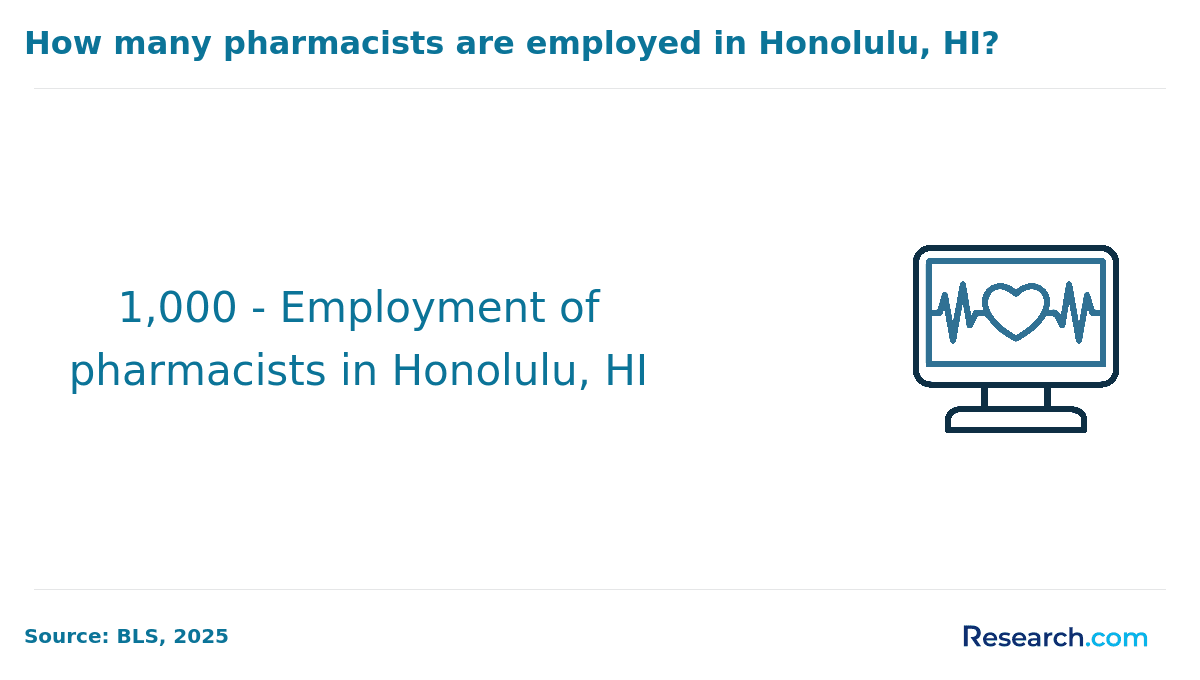
While Honolulu’s options for completing a full PharmD program are limited, the city still presents real opportunities for pharmacy professionals. As the data below shows, approximately 1,000 pharmacists are employed in Honolulu. This figure reflects a steady demand for pharmaceutical services within Hawaii’s capital, supported by hospitals, clinics, and retail pharmacies. For students willing to pursue a PharmD program outside the city, this employment number signals that returning to work in Honolulu after licensure is a viable and promising option.
What skills do you need to become a licensed pharmacist in Honolulu, HI?
Becoming a licensed pharmacist in Honolulu, HI requires more than just academic knowledge; it demands a set of refined skills tailored to the local healthcare environment. These competencies ensure pharmacists can navigate the complexities of medication management while addressing the unique needs of Hawaii’s diverse population.
- In-depth Pharmacological Knowledge: Mastery of drug mechanisms and precise pharmaceutical calculations is essential to dispense medications safely and accurately.
- Technological Proficiency: Familiarity with the pharmacy technologies used in Honolulu, including electronic health records and automated dispensing systems, is crucial for efficient workflow and error reduction.
- Prescription Analysis: The ability to critically evaluate prescriptions and detect possible drug interactions or contraindications is vital, especially in a setting with varied patient backgrounds and health conditions.
- Effective Communication: Pharmacists must excel in engaging with both healthcare professionals and patients, demonstrating cultural awareness and sensitivity to language differences prevalent in Honolulu.
- Regulatory Understanding: Comprehensive knowledge of Hawaii’s specific pharmacy laws and professional standards, as set by the Hawaii Board of Pharmacy, is necessary to maintain licensure and ethical practice.
What are the requirements for pharmacist licensure in Honolulu, HI?
An important part of the steps to become a pharmacist is licensing. Pharmacists seeking licensure in Honolulu, HI, must fulfill several requirements that ensure both professional competence and adherence to state-specific standards. These requirements encompass education, experience, examinations, and legal background checks, reflecting the complexity involved in becoming a licensed pharmacist.
Understanding the pharmacist licensure requirements Honolulu HI is essential, especially since Hawaii’s mandates may differ from other states in key ways. For instance, candidates should carefully consider how their prior training aligns with local prerequisites before pursuing licensure. Additionally, those interested in entering the field might explore affordable online pharmacy technician programs as a stepping stone toward their career goals.
- Completion of 1,500 hours of supervised practical experience: Hawaii requires this experiential component under a licensed pharmacist’s supervision, which aligns with national standards but may vary in timing or structure compared to other states.
- Passing the NAPLEX and Hawaii-specific MPJE: Candidates must pass the North American Pharmacist Licensure Examination (NAPLEX) for clinical competency and the Multistate Pharmacy Jurisprudence Examination (MPJE), which covers Hawaii’s unique pharmacy laws and regulations.
- Undergoing a comprehensive background check with fingerprinting: This step ensures candidates meet ethical and legal standards, emphasizing patient safety and professional integrity as critical concerns.
Given these requirements, aspiring pharmacists should critically evaluate how the specific demands of how to become a licensed pharmacist in Honolulu may impact their licensure timeline and career flexibility compared to other states, considering both the benefits and potential hurdles involved.
What is the licensing process for licensed pharmacists in Honolulu, HI?
Becoming a licensed pharmacist in Honolulu, HI, requires navigating a complex process that combines national examinations with state-specific requirements. This dual approach aims to ensure pharmacists meet broad professional standards while being well-versed in Hawaii’s unique legal framework and healthcare environment, though it also raises questions about efficiency and accessibility for candidates.
- National Competency Evaluation: Candidates must pass the North American Pharmacist Licensure Examination (NAPLEX), which tests their overall pharmaceutical knowledge and clinical skills.
- State Law Examination: Passing the Multistate Pharmacy Jurisprudence Examination (MPJE) tailored to Hawaii’s pharmacy laws is mandatory, reflecting the state’s distinct regulatory landscape.
- Practical Experience: Applicants are required to complete at least 1,500 hours of supervised practical training, providing essential hands-on exposure but potentially challenging to secure in Honolulu’s limited internship placements.
- Application Submission: The process includes submitting a comprehensive application with background checks to the Hawaii Board of Pharmacy, whose review timelines can be unpredictable and impact licensure waiting periods.
- License Issuance: After approval, candidates receive their pharmacist license, authorizing professional practice within the state.
When I spoke with a licensed pharmacist from Honolulu who graduated locally, they reflected on the licensing journey as both rigorous and rewarding. “The dual-exam system really pushed me to master not just the science but also the nuances of Hawaii’s pharmacy laws,” they said. They described how securing the required 1,500 hours was sometimes difficult due to limited preceptor availability but ultimately invaluable for building confidence. The uncertainty during the Board’s review period was a source of anxiety, yet they recognized it as part of ensuring public safety. “Working here means understanding the community deeply—this process prepares you for that,” they shared thoughtfully, emphasizing that the experience shaped their commitment to serving Hawaii’s diverse population with diligence and care.
Understanding the typical educational background of pharmacists can offer valuable context when navigating Hawaii’s licensing process. As shown below, while 55% of pharmacists hold a bachelor’s degree, 27% have earned a doctorate—usually a PharmD, which is essential for licensure in Hawaii. This data reinforces the importance of obtaining an advanced degree, especially given the state’s rigorous dual-exam and practical experience requirements. For Honolulu-based candidates, the path to licensure begins with education, and the PharmD remains the critical credential that unlocks the ability to practice professionally in Hawaii.
How long does it take to become a licensed pharmacist in Honolulu, HI?
Understanding the time to become a licensed pharmacist in Honolulu HI is essential for planning a career in this field. The pharmacist licensure process duration Honolulu Hawaii involves several key steps that extend beyond academic achievement.
- PharmD program: Approximately four years after completing undergraduate prerequisites, this professional degree forms the foundation of pharmacy education, though the length may vary by institution and student pace.
- Internship hours: A minimum of 1,500 internship hours is required by the Hawaii Board of Pharmacy, typically completed over 12 to 18 months, depending on the setting and weekly hours worked.
- Licensure exams preparation and completion: Candidates must pass the North American Pharmacist Licensure Examination (NAPLEX) and the Hawaii-specific Multistate Pharmacy Jurisprudence Examination (MPJE). Preparing for and completing these exams can take several additional months.
The entire process can take around six to seven years assuming steady progression. While some may consider accelerated pathways or concurrent internships, regulatory requirements and the need for thorough exam preparation often limit how much this timeline can be shortened. For those exploring alternatives in healthcare education, reviewing short medical certification programs could provide different entry points into the field.
Will a pharmacist license from Honolulu, HI allow you to work in other states?
Obtaining a pharmacist license in Honolulu, HI, does not guarantee the ability to practice in other states due to limited reciprocity agreements. Each state maintains its own licensing standards, often requiring pharmacists relocating from Hawaii to fulfill specific criteria such as:
- Submitting a formal application and associated fees
- Successfully passing the Multistate Pharmacy Jurisprudence Exam (MPJE) tailored to the new state
- Verifying graduation from an accredited pharmacy program alongside valid licensure in Hawaii
- Meeting any additional state-mandated requirements, including background checks
Although some states engage in reciprocity through the National Association of Boards of Pharmacy (NABP), Hawaii’s unique geographic and regulatory conditions limit this flexibility. This fragmented approach challenges the common assumption that pharmacist licenses are broadly transferable across states. Prospective pharmacists should critically evaluate each state’s licensing demands rather than presume universal portability, emphasizing the importance of deliberate planning for those aiming to practice in multiple jurisdictions.
How much do Honolulu, HI licensed pharmacists earn?
Licensed pharmacists in Honolulu, HI, generally earn between $110,000 and $140,000 annually, which is higher than the national average. However, these numbers should be considered carefully, as multiple factors influence compensation levels. For instance, pharmacists just starting their careers tend to be near the lower end of this pay range, whereas those with significant experience or leadership roles may reach or exceed the upper limits.
Specialization also plays a crucial role in salary differences. Pharmacists working in clinical settings, nuclear pharmacy, or specialized healthcare environments often receive more than their counterparts in retail pharmacies. This invites reflection on how local demand and the specific nature of pharmaceutical services in Honolulu shape these salary structures.
Additional variables to consider include:
- The high cost of living in Honolulu, which could affect how far a pharmacist’s salary goes in real terms.
- The work environment—whether in hospitals, community pharmacies, or research institutions—each has its own pay standards.
- Emerging trends in the pharmacy field, such as growth in pharmaceutical care and consulting, which might influence future earning potential.
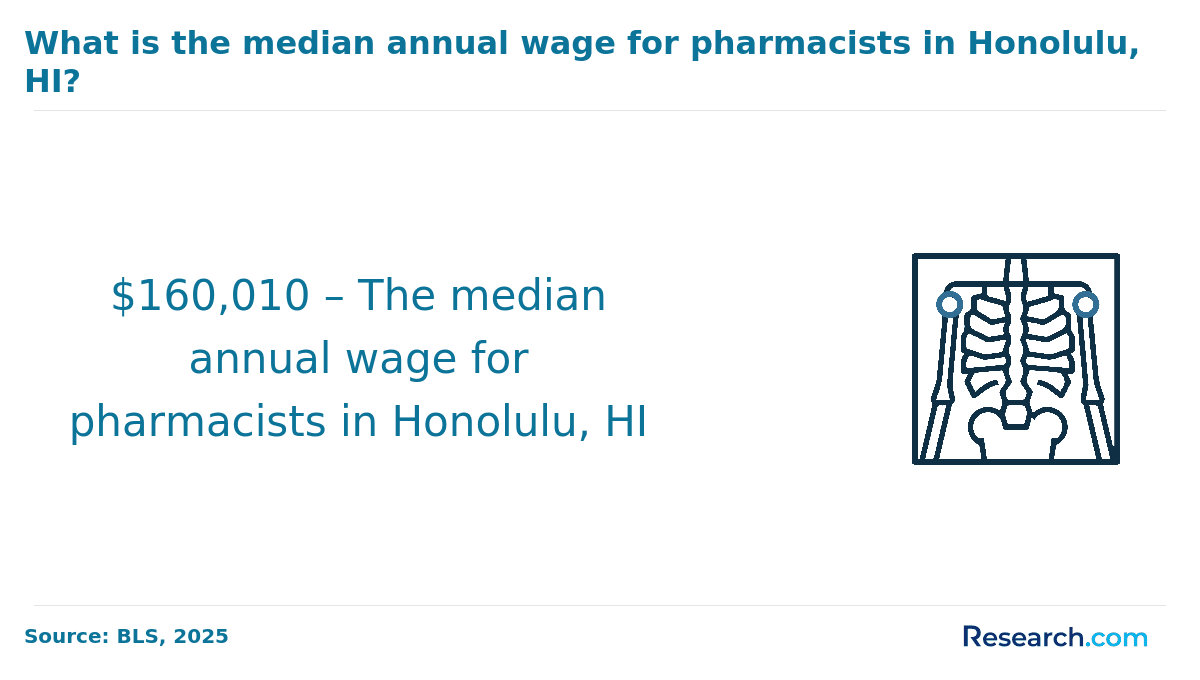
As aspiring pharmacists weigh the licensing process and educational investment, it’s important to consider the financial return. As shown below, the median annual wage for pharmacists in Honolulu is $160,010—one of the highest in the country. This competitive salary reflects the demand for pharmaceutical expertise in a geographically unique and healthcare-conscious market. While the cost of living in Honolulu is notably high, this elevated wage helps offset it and makes a pharmacy career in the city both financially attractive and professionally rewarding.
Is there a demand for licensed pharmacists in Honolulu, HI?
The demand for licensed pharmacists in Honolulu reflects a complex situation. While the national pharmacist job growth rate is expected to remain flat or show modest gains, Honolulu’s distinct healthcare environment—shaped by its island geography and tourism industry—creates specific workforce needs. There is a steady demand for community and hospital pharmacists, especially those experienced in geriatric and outpatient care, driven by an aging population and limited access to mainland resources. This local dynamic is a key factor in the pharmacist job outlook Honolulu HI.
However, it is important to question the assumption that demand is uniform across all pharmacist specialties. For instance, the need for clinical pharmacists specializing in oncology or infectious diseases may vary depending on local healthcare trends and funding priorities. Pharmacists working in Honolulu must often be flexible, adapting to roles in both retail and institutional settings to meet the diverse needs of the city’s patient population and healthcare infrastructure. For those considering advancing their career, exploring an online pharmd program may provide relevant education pathways tailored to these evolving demands.
Is Honolulu, HI a good place to work as a licensed pharmacist?
Evaluating Honolulu, HI as a workplace for licensed pharmacists involves balancing the city’s healthcare advantages against economic challenges. The local demand for pharmacists is influenced by a large and diverse population, including both residents and visitors, which supports a stable employment environment. Yet, the high living expenses compel careful consideration of whether compensation aligns with the cost of day-to-day life.
In contrast, the HVAC sector in Honolulu presents a different set of factors. The specialized nature of the island’s climate requires technicians to possess unique skills and certifications, making entry more complex. Additionally, HVAC job availability may fluctuate with seasonal demand, unlike the more constant need for healthcare professionals.
- Healthcare infrastructure support: Honolulu’s extensive medical facilities create ongoing demand for pharmacists, potentially offering job security.
- High cost of living impact: Elevated expenses for housing, transportation, and essentials may diminish the effective value of higher wages.
- Specialized HVAC requirements: Technicians must navigate specialized training and certifications tailored to the island’s climate, posing entry barriers.
- Employment stability contrast: Pharmacist roles tend to be more consistent, whereas HVAC positions may be subject to seasonal fluctuations.
While Honolulu offers appealing opportunities for pharmacists, it’s helpful to view those prospects within a national context. As the data below shows, the highest pharmacist employment levels are concentrated in large, mainland states like California, Texas, and Florida. Though Hawaii does not rank among these top five, its smaller population means that the 1,000 pharmacist positions in Honolulu represent a meaningful slice of the local healthcare landscape. This contrast underscores that while Hawaii may not offer the volume of positions seen in larger states, the demand is steady and the roles are vital—particularly in an island setting where healthcare access is a constant priority.
Can pharmacists pursue dual licensure to integrate pharmaceutical and counseling services in Honolulu, HI?
Pharmacists aiming to broaden their patient care expertise may consider obtaining an additional counseling license to complement their pharmaceutical credentials. By pursuing dual licensure, these professionals can address both medication management and behavioral health needs, thereby fostering a more comprehensive care approach in a culturally diverse environment. For those evaluating this pathway, assessing program structure, accreditation, and alignment with current pharmacy practice is essential. Interested candidates should review Honolulu LPC license requirements to gain insight into the process and prerequisites that underlie this integrated model of healthcare.
What do licensed pharmacists in Honolulu, HI say about their careers?
- Completing my pharmacy degree at the University of Hawaii at Hilo gave me a strong foundation tailored to the unique healthcare needs of our island communities. Starting my career in a local hospital allowed me to see firsthand how critical pharmacists are in providing care to diverse populations, especially with the challenges posed by geographic isolation. I’ve grown tremendously both professionally and personally by working alongside dedicated healthcare teams and learning to navigate the nuances of Honolulu’s multicultural environment. It’s incredibly rewarding to contribute to the well-being of my community in such a meaningful way. Kaia
- Graduating from the Daniel K. Inouye College of Pharmacy was a transformative experience that prepared me for a career full of growth and opportunity. Beginning my journey in a healthcare facility here in Honolulu, I quickly realized how dynamic and impactful the pharmacist’s role can be in patient care and medication management. The vibrant culture and resources unique to Hawaii bring exciting challenges and chances to innovate in how we serve our patients. This profession has not only allowed me to advance my career but also to make a positive difference in the lives of the people around me. Alanah
- My education at the Pacific University School of Pharmacy laid the groundwork for a career focused on community impact and lifelong learning. Starting work at a local hospital in Honolulu helped me appreciate the complexity of healthcare delivery in an island setting, where collaboration and cultural sensitivity are essential. The opportunity to engage with patients from various backgrounds fuels my passion for helping others and pushes me to continually develop my skills. Being a pharmacist here is both challenging and fulfilling, and I’m proud to be part of a profession that plays such a vital role in our community’s health. Jim
What continuing education opportunities can enhance a pharmacist’s career in Honolulu, HI?
Licensed pharmacists in Honolulu, HI, can benefit from targeted continuing education programs that address emerging clinical challenges and local healthcare trends. Specialized workshops, certification courses, and peer-led seminars offer advanced training in areas such as patient counseling, clinical therapies, and integrated care management. These initiatives promote adaptability and leadership, enabling practitioners to meet evolving community health needs. For instance, exploring opportunities on how to become a substance abuse counselor in Honolulu can provide additional expertise in addressing substance misuse—a concern that increasingly intersects with pharmaceutical care.
Can pharmacists diversify their career paths in Honolulu, HI?
Licensed pharmacists in Honolulu can expand their roles by exploring interdisciplinary avenues that complement traditional pharmacy practice. Diversification into areas such as management, academic research, and allied health services enables professionals to adapt to evolving healthcare needs. For instance, branching into non-clinical specialties like medical billing and coding can broaden career prospects and enhance operational insight. Interested professionals may review resources on how to become a medical biller & coder in Honolulu as a viable complementary pathway.
How can pharmacists foster interprofessional collaborations in Honolulu, HI?
Pharmacists in Honolulu can enhance patient care by actively engaging in multidisciplinary teams that include physicians, nurse practitioners, and other allied health professionals. Collaborating on treatment plans, sharing insights during case reviews, and participating in joint continuing education sessions can significantly improve medication safety and overall outcomes. Such interprofessional initiatives also provide opportunities to better understand service gaps and streamline processes, ultimately benefiting the diverse local population. For a complementary perspective on team-based care, consider exploring how to become a nurse practitioner in Honolulu.
What role can pharmacists play in supporting community mental health in Honolulu, HI?
Pharmacists in Honolulu can extend their impact by engaging in community mental health initiatives. Leveraging their expertise in medication management, they can collaborate with mental health professionals to enhance patient support, particularly for those managing chronic conditions with psychological components. This coordination may involve establishing referral pathways and contributing to patient education on both pharmacological and non-pharmacological interventions, ensuring that treatment plans address comprehensive wellness. For an integrated care perspective, pharmacists can consider exploring resources on how to become an MFT in Honolulu to better understand allied roles that enhance interdisciplinary collaboration.
Related Articles for Nearby Cities
- 2027 How to Become a Licensed Pharmacist in Reno, NV: License Requirements
- 2027 How to Become a Licensed Pharmacist in Oakland, CA: License Requirements
- 2027 How to Become a Licensed Pharmacist in Fremont, CA: License Requirements
- 2027 How to Become a Licensed Pharmacist in San Jose, CA: License Requirements
- 2027 How to Become a Licensed Pharmacist in Stockton, CA: License Requirements
- 2027 How to Become a Licensed Pharmacist in Sacramento, CA: License Requirements
- 2027 How to Become a Licensed Pharmacist in Fresno, CA: License Requirements
- 2027 How to Become a Licensed Pharmacist in Bakersfield, CA: License Requirements
- 2027 How to Become a Licensed Pharmacist in Long Beach, CA: License Requirements
- 2027 How to Become a Licensed Pharmacist in Los Angeles, CA: License Requirements
References:
- FreeCE. Hawaii Pharmacist & Pharmacy Technician CE Requirements.
- Harbor Compliance. Hawaii Healthcare and Pharmaceutical Licenses.
- Justia. Hawaii Revised Statutes § 461-8.5 (2024) - Reciprocity.
- Kaiser Permanente. PGY1 Pharmacy - Honolulu - Kaiser Permanente Pharmacy Residency Program.
- Pharmacist Migration. Pharmacist migrating to the USA.
- Pharmacy Schools. Hawaii Online PharmD Programs.
- PTBC Test Prep. Hawaii Pharmacy Tech License | 2025 State Requirements.
- U.S. Language Services. How to Work in the U.S. As a Foreign-Educated Pharmacist.
- University of Hawaii West Oahu. University of the Pacific.
- University of Hawaii. Explore Pharmacy – Pre-Health/Pre-Law Advising Center.
Other Things You Need to Know About Pharmacists in Honolulu, HI
To become a licensed pharmacist in Honolulu, HI by 2026, you must complete a Doctor of Pharmacy (Pharm.D.) program, pass the NAPLEX and MPJE exams, and apply for licensure with the Hawaii Board of Pharmacy, including a background check and submission of transcripts.
To become a licensed pharmacist in Honolulu, HI in 2027, you need to earn a Doctor of Pharmacy (Pharm.D.) degree from an accredited pharmacy school, complete an internship, and pass the North American Pharmacist Licensure Exam (NAPLEX) and the Multistate Pharmacy Jurisprudence Examination (MPJE) specific to Hawaii.


