
2027 How to Become a Medical Assistant in Indiana Online

Co-Founder and Chief Data Scientist
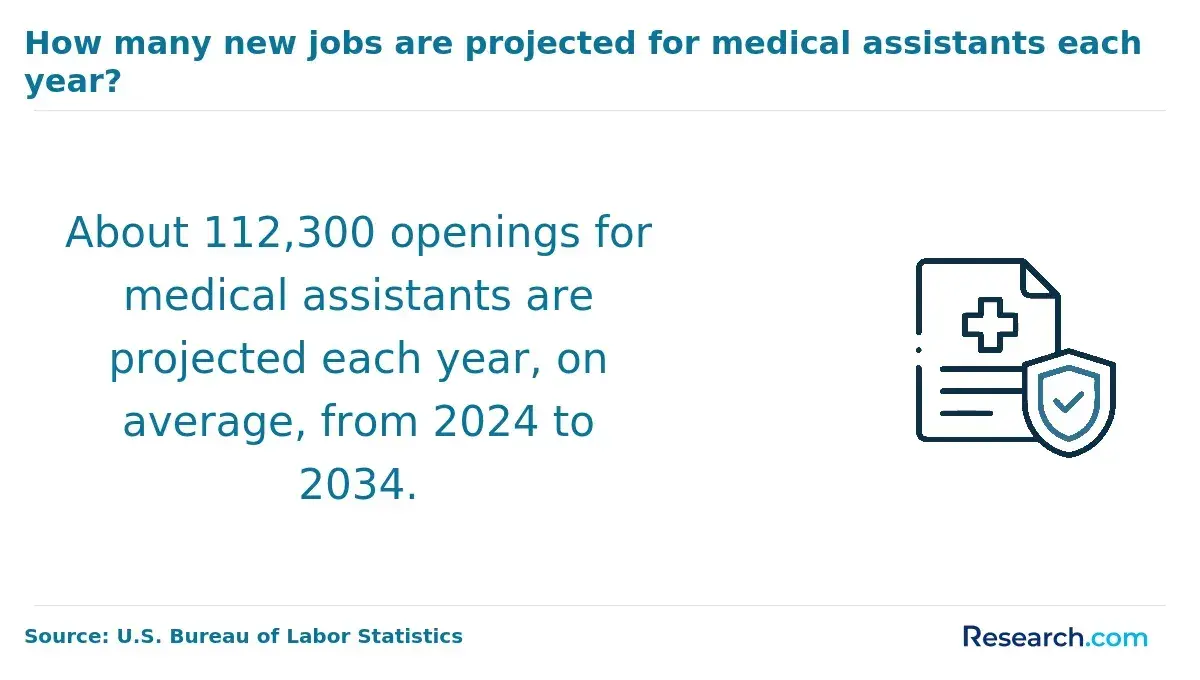
Becoming a medical assistant in Indiana online can be a practical route into healthcare if you choose the right kind of program. The key decision is not simply whether classes are online; it is whether the program includes accredited coursework, supervised clinical experience, and preparation for a recognized certification exam. Indiana’s healthcare sector is creating more need for trained support staff, with medical assistant roles growing 15% faster than the national average and demand projected to grow 19% by 2030.
This guide is for Indiana residents, working adults, career changers, and students comparing online and hybrid medical assistant training. It explains how online programs work, how long they take, what accreditation means, what certification involves, how much programs may cost, and how to judge whether a program is likely to help you get hired.
Quick Answer: Can You Become a Medical Assistant in Indiana Online?
Yes. You can complete much of your medical assistant training online in Indiana, but reputable programs still require in-person clinical practice. The strongest online options combine virtual coursework with local externships, labs, or supervised clinical hours so students can learn patient care, vital signs, injections, office procedures, and other hands-on skills employers expect.
- Online medical assistant programs can be a timely option in Indiana because demand is projected to grow 19% by 2030.
- Students who want eligibility for the Certified Medical Assistant exam should look for programs accredited by the Commission on Accreditation of Allied Health Education Programs (CAAHEP) or another recognized health education accreditor.
- Clinical experience is still essential. A credible online program should help students complete local externships or in-person practice requirements instead of relying only on virtual instruction.
- Can you become a medical assistant in Indiana through online programs?
- How long are online medical assistant programs in Indiana?
- Are online medical assistant programs in Indiana accredited?
- How do you get certified as a medical assistant in Indiana online?
- How long does it take to become a medical assistant in Indiana?
- How much does it cost to complete a medical assistant program in Indiana online?
- Can you get financial aid for online medical assistant training in Indiana?
- What factors should you consider when choosing an online medical assistant program in Indiana?
- What is the average salary for medical assistants in Indiana?
- Are online-trained medical assistants hired as often as campus-trained ones in Indiana?
- Do online medical assistant programs in Indiana lead to advanced healthcare careers?
Can you become a medical assistant in Indiana through online programs?
You can prepare for a medical assisting career through an online or hybrid program in Indiana, but the program should not be online-only if it claims to train you for clinical work. Medical assistants handle both administrative and patient-facing duties, so students need a mix of digital coursework, practice activities, and supervised in-person training.
A strong online medical assistant program usually includes several parts:
- Online coursework: Students study topics such as anatomy, medical terminology, patient communication, basic clinical procedures, and medical office workflows. Providers such as Stepful and U.S. Career Institute offer online lessons and interactive learning activities that let students build foundational knowledge without attending campus every day.
- Hybrid learning options: Some schools blend online classes with scheduled labs or on-site training. Herzing University and IU Health are examples of programs that use online instruction while still requiring students to participate in clinical or lab-based learning.
- Clinical training: Hands-on experience is the part that cannot be replaced by videos or readings. Credible programs require a practicum, externship, or similar supervised placement, often near the student’s local area. Some programs reference 160 hours of clinical experience, so students should confirm the exact requirement before enrolling.
- Certification preparation: Many online programs align their curriculum with exams such as the CCMA, CMA, or RMA. U.S. Career Institute, for example, promotes certification exam preparation as part of its online medical assistant pathway.
- Student support: Advising, tutoring, career coaching, externship coordination, and exam preparation support matter more in online programs because students do not have the same daily in-person access to instructors and classmates.
If you are comparing healthcare training paths, it may help to review how long does it take to become a medical biller and coder because medical billing and coding can offer a different timeline, work environment, and balance of clinical versus administrative duties.
How long are online medical assistant programs in Indiana?
Online medical assistant programs in Indiana vary from short certificate tracks to longer associate degree options. The right length depends on how quickly you want to enter the workforce, whether you want broader college credit, and how much time you can devote each week.
| Program type | Typical length stated | Best fit | Trade-off to consider |
| Accelerated certificate program | 9 Weeks–4 Months | Students who want the fastest route into entry-level medical assisting training | The pace can be demanding, and students must still complete required hands-on training. |
| Diploma program | 10–12 Months | Learners who want a more complete training experience without committing to a degree | It may take longer than a short certificate but can provide more time to build confidence. |
| Associate degree program | 16–20 Months | Students who want general education, broader healthcare preparation, and possible transfer value | The timeline is longer, and total cost may be higher depending on the school. |
Part-time enrollment, externship availability, work schedules, and family responsibilities can extend the timeline. Before choosing the shortest option, ask whether the program includes enough practice, exam preparation, and career support to help you compete for jobs. Students who are drawn to administrative healthcare work may also want to compare the required skills for a medical biller and coder with the hands-on patient care skills expected of medical assistants.
Are online medical assistant programs in Indiana accredited?
Some online medical assistant programs serving Indiana students are accredited, but not every program is. Accreditation matters because it indicates that an outside organization has reviewed the program’s curriculum, faculty qualifications, clinical training, and student outcomes. It can also affect whether graduates qualify for certain national certification exams.
Two major accrediting organizations appear most often in medical assistant education:
- Commission on Accreditation of Allied Health Education Programs: CAAHEP evaluates allied health programs, including medical assisting, against standards related to curriculum, faculty, clinical experience, and program effectiveness. Graduating from a CAAHEP-accredited program can support eligibility for certification options such as the CMA through the American Association of Medical Assistants.
- Accrediting Bureau of Health Education Schools: ABHES reviews health education programs and focuses on areas such as instruction, faculty credentials, resources, and measurable student outcomes. Completion of an ABHES-accredited program may support eligibility for credentials such as CMA and RMA.
Accreditation should be verified directly before you enroll. Do not rely only on marketing language such as “approved,” “recognized,” or “career-ready.” Ask the school which agency accredits the medical assistant program itself, not just the institution, and confirm how that accreditation affects certification eligibility.
| What to verify | Why it matters | Question to ask the school |
| Program-level accreditation | Certification eligibility may depend on the specific medical assisting program, not only the college’s general status. | “Is the medical assistant program accredited by CAAHEP, ABHES, or another recognized accreditor?” |
| Clinical placement support | Online coursework is not enough for hands-on competency. | “Will the school arrange my externship, or am I responsible for finding a site?” |
| Certification exam alignment | Employers may prefer candidates who have passed a national certification exam. | “Which exam does this program prepare graduates to take?” |
| Indiana employer connections | Local partnerships can make externships and hiring smoother. | “Which Indiana clinics, hospitals, or healthcare offices accept your students for training?” |
How do you get certified as a medical assistant in Indiana online?
Certification is a way to show employers that your training meets a recognized professional standard. While the coursework may be online, certification preparation usually depends on completing both academic requirements and in-person clinical practice.
- Choose an accredited online or hybrid program. Start with a program that teaches both administrative and clinical skills and clearly states which certification exam it prepares students for, such as CMA, RMA, or CCMA.
- Complete required clinical experience. Plan for an externship, practicum, lab, or supervised placement in a healthcare setting. This is where students practice patient interaction, vital signs, specimen handling, documentation, and office procedures under supervision.
- Use the program’s exam preparation resources. Many programs include study guides, practice tests, review modules, or exam vouchers. Confirm what is included before paying tuition.
- Apply for the certification exam. Follow the rules of the credentialing organization, submit required documentation, and schedule the exam through the available testing process. Some exams may offer remote proctoring or testing-center options.
- Keep the credential active. Certification usually requires renewal, which may involve continuing education or another recertification process. Check the requirements for the specific credential you choose.
The safest approach is to work backward from your target credential. Identify the exam you want, confirm its eligibility requirements, and then choose a program that meets those requirements before you enroll.
How long does it take to become a medical assistant in Indiana?
Most students can expect the full process to take several months to two years, depending on the program type and whether certification is completed right after graduation. Short certificate or diploma programs may focus on core administrative and clinical skills in nine to twelve months. Associate degree pathways add general education and broader healthcare coursework, which can extend the timeline to approximately eighteen to twenty-four months.
Certification preparation can add another one to three months, especially if you need time to study, gather documents, schedule the exam, and wait for results. Externship scheduling can also affect completion time because clinical sites may have limited openings or specific onboarding requirements.
| Step | Time factor | What can delay it |
| Program selection and enrollment | Varies by school admission cycle | Missing documents, unclear financial aid, or waiting for the next start date |
| Online coursework | 9 Weeks–4 Months, 10–12 Months, or 16–20 Months depending on credential | Part-time study, work conflicts, or falling behind in self-paced courses |
| Clinical training | May include 160 hours in some programs | Limited externship sites, background checks, immunization records, or scheduling conflicts |
| Certification preparation | One to three months may be needed after formal training | Exam availability, study time, retesting, or credentialing paperwork |
-
: "
“Balancing online classes with work and family responsibilities was not always easy. The flexible format helped me keep moving, but arranging clinical hours with a local site took more time than I expected. Once I finished those hours, I felt much more prepared for real patient care.”
"
How much does it cost to complete a medical assistant program in Indiana online?
The cost of online medical assistant training in Indiana depends on the school, credential level, program format, and what is included in tuition. A low advertised tuition price may not include books, supplies, lab fees, technology fees, background checks, or certification exam costs, so compare total cost rather than sticker price.
- Tuition: Some programs use a monthly payment model, such as about $79 per month over four months, while others charge a flat amount of around $1,000. Some training options may waive tuition but require a post-graduation work commitment.
- Application and registration fees: Students may pay non-refundable charges between $29 and $100 before classes begin. These fees are usually separate from tuition.
- Books, uniforms, and supplies: Textbooks, scrubs, stethoscopes, and other required materials can add from $140 to $250 unless the program bundles them into the published price.
- Lab and technology fees: Hybrid programs may charge lab fees, sometimes reaching $800. Online platform or technology access fees may also apply.
- Certification exam and test preparation: Some programs include a $259 exam fee, while others require students to pay separately, with exam-related costs ranging from $150 upward. Study materials may or may not be included.
| Cost item | Amount stated | How to compare programs |
| Monthly tuition model | About $79 per month over four months | Ask whether the monthly plan covers the full program or only part of the training. |
| Flat tuition option | Around $1,000 | Confirm whether books, supplies, labs, and exam fees are included. |
| Application or registration fees | $29 to $100 | Check whether the fee is refundable if you do not enroll. |
| Books and supplies | $140 to $250 | Ask for a complete supply list before committing. |
| Lab fees | Sometimes reaching $800 | Find out whether lab access is required and where it takes place. |
| Certification exam costs | $259 included in some programs; $150 upward if paid separately | Ask whether the exam voucher is included and which credential it covers. |
Before enrolling, request a written cost breakdown. Include commuting to clinical sites, immunization records, background checks, uniforms, and missed work time in your personal budget even if those items are not listed as tuition.
Can you get financial aid for online medical assistant training in Indiana?
Financial aid may be available for online medical assistant training in Indiana, but eligibility depends heavily on the school, program type, accreditation, and whether the program participates in federal or state aid systems. Short noncredit certificate programs may have different aid options than associate degree programs.
- Federal grants: Pell Grants may support eligible students in accredited associate degree programs, but many online certificate programs may not qualify. Confirm eligibility with the school’s financial aid office before enrolling.
- Federal student loans: Students in Title IV-approved programs may be able to use federal loans. These loans must be repaid, so compare expected costs with likely entry-level earnings.
- Indiana Workforce Ready Grant: This grant is designed for Hoosiers preparing for high-demand fields and may apply to medical assisting certificates at selected institutions. Availability and details vary by school.
- Institutional scholarships and grants: Schools such as Ivy Tech may offer aid based on need, merit, program, or student background. Ask whether scholarships apply to online or hybrid medical assisting students.
- Employer tuition assistance: Some Indiana healthcare employers may help workers pay for training or certification, often in exchange for a work commitment after completion.
When comparing aid packages, separate free aid from borrowed money. Grants and scholarships do not usually need to be repaid, while loans and employer-sponsored commitments come with obligations. Ask the financial aid office to explain what happens if you withdraw, fail to complete clinical training, or cannot pass the certification exam on the first attempt.
What factors should you consider when choosing an online medical assistant program in Indiana?
The best online medical assistant program is not always the cheapest or the fastest. It is the one that matches your schedule, prepares you for certification, includes legitimate hands-on training, and has enough support to help you complete the program and transition into employment.
| Selection factor | Why it matters | What to ask before enrolling |
| Accreditation | It can affect certification eligibility and employer confidence. | “Which organization accredits the medical assistant program?” |
| Externship placement | Clinical practice is central to job readiness. | “Do you place students in Indiana clinical sites, or must I find my own?” |
| Certification preparation | Credentials may strengthen applications for entry-level jobs. | “Which exam is built into the curriculum, and is the exam fee included?” |
| Total cost | Tuition alone may leave out major expenses. | “Can you provide a full written estimate of tuition, fees, books, supplies, labs, and exams?” |
| Schedule flexibility | Online students often balance school with work or caregiving. | “Are deadlines self-paced, instructor-led, or cohort-based?” |
| Career services | Job search help can be especially useful for career changers. | “Do you provide resume help, interview coaching, or employer referrals?” |
| Student support | Online students need reliable access to instructors and advisors. | “How quickly do instructors respond, and what tutoring support is available?” |
If you are still exploring healthcare roles, you may also want to review how to become an occupational therapist in Indiana to compare education length, clinical requirements, and long-term career direction.
Common mistakes to avoid when choosing a program
- Choosing based only on speed: A very short program may be appealing, but it still needs enough clinical preparation to make you employable.
- Ignoring accreditation: If the program does not meet the standards required for your target certification exam, you may have fewer credential options after graduation.
- Assuming online means no in-person work: Medical assisting is a hands-on role. Expect some form of supervised clinical training.
- Comparing tuition without fees: Books, uniforms, lab charges, technology fees, and exam costs can change the true price.
- Waiting too long to ask about externships: Clinical site availability can affect your graduation timeline.
- Relying only on school marketing: Ask for documentation on accreditation, certification outcomes, clinical requirements, and student support.
What is the average salary for medical assistants in Indiana?
Medical assistant pay in Indiana varies by experience, location, certification, and work setting. Employers generally care more about skills, credential readiness, and clinical experience than whether the classroom portion of your program was online or on campus.
| Salary level | Annual pay stated | What it usually reflects |
| Entry-level range | $33,800 to $35,930 | Typical 10th to 25th percentile earnings for new medical assistants or those with limited experience |
| Median wage | About $42,390, or roughly $20 per hour | A midpoint figure for medical assistants in Indiana |
| Experienced range | Up to $48,550 annually | Higher earnings often tied to experience, certification, specialized skills, or stronger local demand |
| Indianapolis median | $45,080 | A higher metro-area median compared with some smaller Indiana markets |
| Bloomington median | $39,160 | A lower stated median compared with Indianapolis |
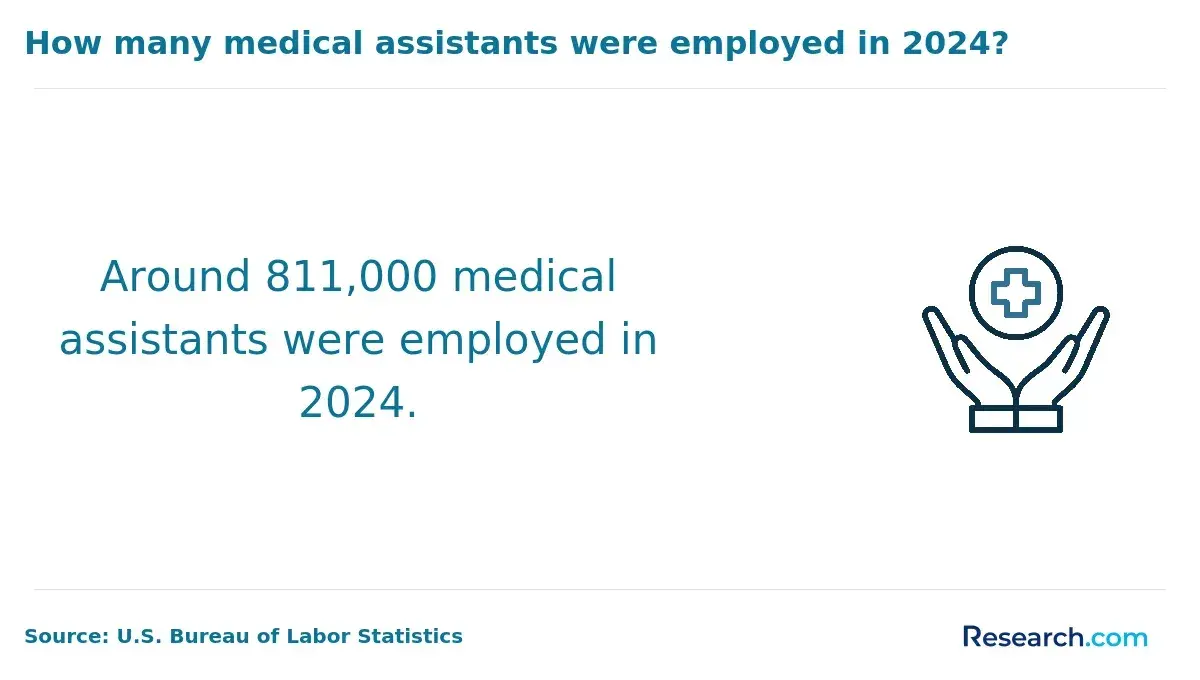
Use salary data as a planning tool, not a guarantee. A new graduate’s first offer may depend on externship performance, certification status, shift availability, specialty clinic needs, and local competition. Hospital systems and specialty practices in urban areas may pay differently from smaller clinics or private offices.
Are online-trained medical assistants hired as often as campus-trained ones in Indiana?
Online-trained medical assistants can be competitive for Indiana jobs when their programs include credible clinical training and certification preparation. Employers are less likely to focus on the delivery format alone and more likely to ask whether the graduate can perform safely, communicate professionally, document accurately, and handle both front-office and patient-care duties.
- Clinical proof matters most: Employers want evidence of supervised hands-on experience. A hybrid program with local externships is usually stronger than a program that offers only online simulations.
- Certification can strengthen applications: Credentials such as the Certified Clinical Medical Assistant can help employers compare applicants from different training backgrounds.
- Accreditation affects trust: Graduates from accredited or well-recognized programs may have an easier time explaining the quality of their preparation.
- Soft skills are still tested in interviews: Professionalism, patient communication, reliability, and adaptability are important in clinics, hospitals, school health offices, and specialty practices.
- Local healthcare connections can help: Programs with Indiana externship partners may give students a smoother path from training to entry-level employment.
If you prefer a less patient-facing healthcare path, medical billing and coding online programs may be worth comparing because they focus more heavily on records, coding systems, billing processes, and administrative accuracy.
Do online medical assistant programs in Indiana lead to advanced healthcare careers?
Medical assisting can be a starting point for broader healthcare careers, especially for students who want to gain patient-care exposure before committing to a longer degree. However, advancement usually requires additional education, certification, or specialized training. An online medical assistant certificate by itself should be viewed as an entry-level credential, not a substitute for nursing, therapy, or healthcare management education.
| Possible next step | How medical assisting can help | What additional preparation may be needed |
| Registered nursing | Medical assistants gain exposure to patient care, clinical routines, and healthcare teams. | An RN program and required nursing education are needed for nursing roles. |
| Healthcare administration | Front-office experience can build knowledge of scheduling, records, patient flow, and clinic operations. | Additional education in administration, management, or healthcare systems may be useful. |
| Specialized medical assisting | Experience in clinics can help students identify interests such as ophthalmology or cardiovascular care. | Specialized certifications or employer-based training may be required. |
| Advanced credentials | CMA, RMA, or similar credentials can signal professional commitment and may improve job mobility. | Graduates must meet exam eligibility, pass the exam, and maintain certification. |
| Medical billing and coding | Medical assistants already understand patient records, office workflows, and basic healthcare terminology. | Additional coding-focused training is typically needed. |
Students who enjoy the administrative side of healthcare can also explore online training courses for medical coders as a complementary or alternative career path.
What Do Medical Assistants in Indiana Say About Their Career
- Joey completed online medical assistant training through Hoosier Health Academy and found that the flexible schedule made it possible to study while managing family responsibilities. The in-person skills portion helped turn online lessons into practical confidence. Joey later began working in a local school health office and described the role as meaningful because it involves supporting students’ daily health needs. Joey
- Henrietta chose Indiana Online Medical Institute because the format fit her schedule while still offering a structured curriculum. Her first medical assistant role in an academic setting required strong communication, professionalism, and attention to the health concerns students bring to school. She sees school health services as a setting where continued learning and additional credentials can create room for growth. Henrietta
- Lauren’s experience with Bright Path Online Training helped her become interested in community health. Working in a school health office in Indiana introduced her to diverse student needs and regular interaction with families. She values the stability of the role and the chance to contribute directly to young people’s well-being. Lauren
Related Articles for Nearby States
- 2027 How to Become a Medical Assistant in Ohio Online
- 2027 How to Become a Medical Assistant in Illinois Online
- 2027 How to Become a Medical Assistant in Kentucky Online
- 2027 How to Become a Medical Assistant in Michigan Online
- 2027 How to Become a Medical Assistant in Wisconsin Online
- 2027 How to Become a Medical Assistant in Missouri Online
- 2027 How to Become a Medical Assistant in Tennessee Online
- 2027 How to Become a Medical Assistant in Iowa Online
- 2027 How to Become a Medical Assistant in West Virginia Online
- 2027 How to Become a Medical Assistant in Minnesota Online
References:
- What Skills Does a Medical Assistant Need in Indianapolis? https://indianapolismedicalassistantschool.com/blog/medical-assisting/what-skills-does-a-medical-assistant-need-in-indianapolis_/
- Medical Assisting - Ivy Tech Community College https://www.ivytech.edu/programs/all-academic-programs/school-of-health-sciences/medical-assisting/
- How to Become a Medical Assistant in Indiana https://medassisting.org/in/
- Medical Assistant Education Program | IU Health https://iuhealth.org/professional-education/health-sciences-education/medical-assistant-education-program
- 6 Medical Assistant Skills https://www.fortis.edu/blog/healthcare/6-medical-assistant-skills.html
- Indiana Online Medical Assistant Certificate Program | Self-Paced Course https://www.uscareerinstitute.edu/online-medical-assistant-school/indiana
- Medical Assistant | Online Certificate | Anderson University https://careeracceleration.anderson.edu/program/medical-assistant/
- Online Medical Assisting Programs for Indiana Residents https://www.herzing.edu/healthcare/medical-assisting/indiana
- Online Certified Clinical Medical Assistant (CCMA) (Voucher Included) from Indiana Tech https://careertraining.indianatech.edu/training-programs/certified_clinical_medical_assistant/
Key Insights
- Indiana students can train for medical assisting online, but the strongest programs are hybrid in practice because clinical skills require supervised in-person experience.
- Accreditation should be verified before enrollment. It can affect certification eligibility, employer confidence, and the long-term value of the credential.
- Program length varies widely: accelerated certificates may take 9 Weeks–4 Months, diploma programs often take 10–12 Months, and associate degree options may take 16–20 Months.
- Total cost is more than tuition. Compare books, supplies, lab fees, technology fees, registration charges, and certification exam costs before choosing a program.
- Online-trained graduates can compete for Indiana jobs when they have documented clinical training, certification preparation, and strong professional skills.
- Medical assisting can lead to broader healthcare opportunities, but advancement into nursing, administration, specialized assisting, or coding typically requires additional education or credentials.
Other Things You Should Know About Becoming a Medical Assistant in Indiana
To become a certified medical assistant in Indiana in 2027, complete an accredited medical assistant program, which can be done online. After graduation, pass a national certification exam, like the CMA or RMA. Ensure you meet Indiana's specific professional requirements, such as continuing education, for maintaining certification.
Online learning can offer flexibility, allowing you to learn at your own pace, which might reduce the overall time needed to complete a medical assistant program. However, the actual time to complete the program often depends on the specific institution's curriculum and requirements, including any required hands-on clinical training.
Prerequisites for online medical assistant programs in Indiana in 2027 typically include a high school diploma or GED. Some programs may require completion of specific courses in biology or health science. Check with the program for additional admission requirements, such as entrance exams or minimum GPA.


