
2027 How to Become a Mental Health Counselor in Anchorage, AK: Education Requirements & Certification

Co-Founder and Chief Data Scientist
Anchorage’s mental health landscape reflects a growing need for competent, licensed professionals. With 32.2% of adults in Alaska reporting symptoms of anxiety or depression—closely mirroring the national average (32.3%)—mental health support has never been more essential. Mental health counselors play a vital role in addressing these issues and improving the well-being of individuals and communities.
This guide outlines the steps to become a mental health counselor in Anchorage, including the academic and licensure requirements. To help aspiring professionals determine if this is a suitable career path, it also highlights key information about the field, such as projected salaries, job outlook, and common challenges.
Key Benefits About Becoming a Mental Health Counselor in Anchorage, AK
- Anchorage offers a strong job outlook for mental health counselors due to growing demand for behavioral health services and community support programs.
- The average salary for mental health counselors in Anchorage is higher than the national average, reflecting the city’s cost of living and professional demand.
- Anchorage’s diverse population and expanding healthcare infrastructure provide ample opportunities for career growth and specialization within mental health counseling.
- What are the academic requirements to become a mental health counselor in Anchorage, AK?
- Are there financial aid programs for mental health counselors in Anchorage, AK?
- What is the licensure process for mental health counselors in Anchorage, AK?
- Is there license reciprocity for mental health counselors in Anchorage, AK?
- What counseling certifications can you get in Anchorage, AK?
- What types of counseling specializations are in demand in Anchorage, AK?
- What professional development opportunities are available for mental health counselors in Anchorage, AK?
- How Can I Transition to Substance Abuse Counseling in Anchorage, AK?
- What are the MFT license requirements in Anchorage, AK?
- How much do mental health counselors typically earn in Anchorage, AK?
- Are mental health counselors in demand in Anchorage, AK?
- Where do mental health counselors typically work in Anchorage, AK?
- Is it challenging to become a mental health counselor in Anchorage, AK?
What are the academic requirements to become a mental health counselor in Anchorage, AK?
Aspiring mental health counselors in Anchorage must meet defined educational standards to ensure competency in this demanding profession. Candidates are required to complete specific academic steps before qualifying for licensure. The key educational requirements include the following:
- Bachelor’s Degree: Although Alaska does not mandate a particular undergraduate major, candidates often pursue degrees in psychology, social work, counseling, or related fields to prepare for graduate studies.
- Master’s Degree: A master’s in counseling or a closely related discipline such as psychology or social work is essential. The program must be regionally accredited or recognized by the Council for Accreditation of Counseling and Related Educational Programs (CACREP) and include at least 60 semester hours of graduate coursework.
- Core Coursework: Graduate studies must cover multiple critical areas, including human development, counseling theories, group dynamics, mental health diagnosis and treatment, assessment methods, family therapy, ethics, career development, cultural foundations, and research techniques.
- Accreditation Considerations: While CACREP accreditation is not strictly required for licensure, it can be important for eligibility in certain government reimbursement programs.
- Flexible Learning Options: Accredited institutions may offer coursework online. If the master’s degree is not specifically in counseling, applicants must demonstrate completion of the necessary content areas through documentation.
Are there financial aid programs for mental health counselors in Anchorage, AK?
Students pursuing mental health counseling in Anchorage can find various financial aid opportunities to help offset educational expenses. These options come from governmental, educational, and tribal sources and are designed to support those committed to serving local communities. The most reliable forms of financial aid include the following:
- K-12 Mental Health Scholarship: Provided by the U.S. Department of Education, this award grants between $1,500 and $5,000 annually to graduate students focused on mental health counseling careers.
- Alaska Mental Health Trust School Psychology Scholarship: This scholarship offers $1,000 to $2,000 per year to candidates dedicated to supporting Alaska’s youth, often requiring part-time service in Anchorage schools to gain practical experience.
- Graduate Student Assistantships at the University of Alaska Anchorage: Assistants receive tuition coverage for 9 credits each semester, graduate health insurance, and a $25 hourly stipend for work assisting faculty or engaging in research.
- Southcentral Foundation Clinical Initiatives Scholarship: Targeted at Alaska Native and American Indian students, this scholarship helps cover training costs to increase Indigenous representation in mental health professions.
To maximize support, applicants should also explore local and national scholarships through counseling offices or the Anchorage School District’s resources. Considering state and federal loan forgiveness programs is beneficial for those who plan to work in underserved areas.
Additionally, part-time employment or internships can provide both income and relevant experience. Specialized programs like the Alaska Behavioral Health Aide Program offer affordable training options, particularly for Alaska Native students.
Financial aid is an integral part of how to become a behavioral health counselor because it can considerably reduce education costs. Students are advised to go for multiple financial aid programs for better results.
What is the licensure process for mental health counselors in Anchorage, AK?
The mental health counselor licensure process in Anchorage involves completing several steps regulated by the Alaska Board of Professional Counselors. Candidates have to earn a degree, complete hours of supervised work, and pass an exam. To illustrate a clearer picture, here are the steps that candidates can follow:
- Obtaining a graduate degree with at least 60 credits in counseling or a related field from an accredited institution. If your degree is not strictly in counseling, you must submit a coursework verification with your application.
- Completing a minimum of 3,000 hours of supervised counseling experience over at least two years, including 1,000 hours of direct client interaction and 100 hours of face-to-face supervision by an approved supervisor.
- Passing a national exam within three years of applying, either the National Counselor Examination (NCE) or the National Clinical Mental Health Counseling Examination (NCMHCE), both overseen by the National Board for Certified Counselors.
- Submitting application materials such as official transcripts, a background check, and two recommendation letters to the Alaska Board of Professional Counselors.
- Maintaining licensure through continuing education credits, with at least 40 credits required in the past two years for those applying via credentials from another state.
Counseling aspirants who prefer to involve the Christian faith when conducting therapy should consider pursuing a program like a Christian counseling masters. The degree imparts knowledge of how scriptures relate to the daily life of people.
Is there license reciprocity for mental health counselors in Anchorage, AK?
Anchorage does not have formal license reciprocity for mental health counselors but permits licensure by credentials for those licensed elsewhere. To qualify, your existing license must be active and free of disciplinary issues. In addition, your previous state's requirements must be as rigorous or more so than Alaska’s; otherwise, you might need to take more units.
Before practicing, applicants must submit official transcripts showing a minimum of 60 graduate credits in counseling or a related area. Verification of your current licensure is also necessary, along with completing a criminal background check. Additionally, you must demonstrate completion of at least 40 continuing education credits earned within the last two years.
Finally, you need to complete the full Licensed Professional Counselor (LPC) application for Alaska. Since there are no reciprocal agreements, all applicants must prove their education and experience meet or surpass Alaska’s standards to practice legally in Anchorage.
What counseling certifications can you get in Anchorage, AK?
Mental health counselors in Anchorage can enhance their professional qualifications by pursuing additional certifications. These credentials broaden career options and strengthen expertise in various counseling settings. The most popular certifications in the city include the following:
- Licensed Professional Counselor (LPC): This essential license allows independent practice in Alaska. Applicants must hold a master’s degree in counseling or a related field with at least 60 semester hours and pass a national exam like the National Counselor Examination (NCE) or the National Clinical Mental Health Counseling Examination (NCMHCE) through the National Board for Certified Counselors (NBCC).
- Certified Rehabilitation Counselor (CRC): This credential, accepted by the Alaska Board of Professional Counselors as an alternative to the NCE or NCMHCE, focuses on working with individuals with disabilities. It is issued by the Commission on Rehabilitation Counselor Certification and supports careers in vocational rehabilitation and government agencies.
- Mental Health First Aid (MHFA) certification: Offered by the Alaska Area Health Education Center (AHEC), this training equips participants to identify and respond to early mental health challenges. While not a counseling license, MHFA certification enhances resumes and is valued by schools, nonprofits, and community health organizations for entry-level roles or supplemental professional development.
What types of counseling specializations are in demand in Anchorage, AK?
Anchorage presents diversified opportunities for those pursuing a career in mental health counseling. Some counseling programs offer specializations that foster mastery in a branch of the discipline, opening the door to more professional opportunities. Here are the most in-demand specializations in the city:
- Substance abuse counseling: With Alaska facing some of the nation’s highest substance use disorder rates, counselors focus on addiction treatment, relapse prevention, and recovery support. The ongoing opioid crisis and alcohol misuse particularly increase demand for addiction counseling jobs in Anchorage.
- Clinical mental health counseling: These professionals diagnose and treat mental health disorders such as anxiety, depression, and trauma. Anchorage’s isolated communities and diverse population create a pressing need for accessible mental health care, especially as pandemic-related stress has intensified.
- Family and couples counseling: Addressing relationship conflicts and family dynamics is critical in Anchorage, where domestic violence rates are high and many families face unique pressures. Counselors in this field promote healthier communication and resilience in families. Aspirants who prefer to focus on this branch of the discipline than mental health counseling can pursue the best online marriage and family counseling masters degree, which positions them for licensure.
- Crisis and trauma counseling: Trauma from domestic violence, natural disasters, and military service is common in the region. Crisis counselors provide immediate intervention and long-term coping strategies, playing a vital role in community mental health.
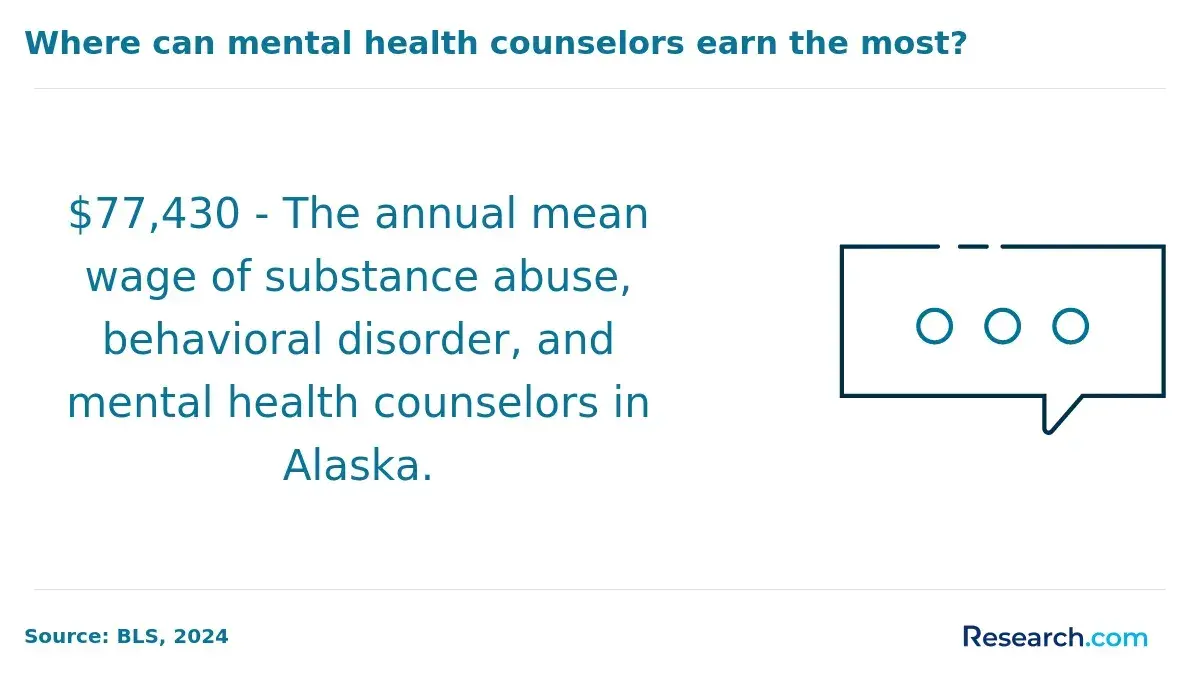
The chart below shows the highest-paying industries for mental health counselors.
What professional development opportunities are available for mental health counselors in Anchorage, AK?
Mental health counselors in Anchorage benefit from a range of ongoing professional development opportunities that foster skill enhancement and career advancement. Local continuing education courses, workshops led by industry experts, and specialized certification programs allow practitioners to stay current with evolving therapeutic methodologies. Participation in regional counseling associations and networking events also supports collaboration and knowledge sharing, ultimately strengthening professional practice. For guidance on advancing your counseling career and expanding your expertise, review how to become a therapist in Anchorage.
How Can I Transition to Substance Abuse Counseling in Anchorage, AK?
For professionals interested in broadening their practice, pursuing a transition to substance abuse counseling offers a specialized path that complements experience in mental health. This transition typically involves enrolling in focused coursework, obtaining additional clinical supervision, and meeting specific state certification requirements. Advanced training not only enhances therapeutic skills but can also open up new employment opportunities in both public and private sectors. For detailed steps and requirements, review how to become a substance abuse counselor in Anchorage.
What are the MFT license requirements in Anchorage, AK?
Marriage and Family Therapists (MFTs) in Anchorage must complete a specialized academic program that emphasizes family systems and relational dynamics. Candidates are required to accumulate state-mandated clinical supervision hours, which differ from general counseling supervision and focus specifically on family therapy contexts. After completing the educational and clinical components, applicants must pass a comprehensive exam that evaluates their aptitude in both theoretical and practical aspects of family therapy. For detailed state-specific guidance and further steps, please review the MFT license requirements in Anchorage.
How much do mental health counselors typically earn in Anchorage, AK?
The average licensed professional counselor pay in Anchorage is reported at around $106,371 annually, which exceeds the national average. Entry-level mental health counselors in Anchorage can expect salaries near $73,566, with the typical range extending up to $91,497 depending on expertise and employer.
Those with significant experience or specialized certifications, such as senior licensed professional mental health counselors working with agencies like the Department of Veterans Affairs, can earn between $100,204 and $130,271 per year. Some private clinics and telehealth positions in Anchorage advertise salaries reaching $120,000, reflecting strong demand for qualified counselors.
So, is getting a counseling degree worth it? It certainly is for aspiring mental health counselors in a high-paying state with decent demand like Alaska.
Are mental health counselors in demand in Anchorage, AK?
Demand for mental health counselors in Anchorage is projected to grow, fueled by increased public awareness and the need for accessible mental health services. Currently, there are dozens of openings for qualified professionals, making it a promising field for those with the right credentials. Competitive compensation and bonuses further reflect the importance of attracting skilled counselors to this region.
One counselor from Anchorage shared her experience about entering the local job market: “Finding the right position wasn’t straightforward. Many roles required specific licensure and clinical hours, so I focused on gaining diverse experiences while completing my credentials. The $10,000 signing bonus definitely helped during the transition.”
She noted that adapting to the community’s unique needs and building strong professional relationships were key factors in securing and succeeding in her role. “It’s a challenging but rewarding path, especially knowing the impact we have here,” she reflected.
The chart below shows which industries mental health counselors mainly work in.
Where do mental health counselors typically work in Anchorage, AK?
Mental health counselors in Anchorage work in diverse environments that address a wide range of community needs. Their roles often combine direct client care, assessment, and collaboration with other professionals to support mental wellness. Here are the common work settings:
- Healthcare Systems: Counselors in hospitals and medical centers, such as Providence Alaska Medical Center, collaborate with medical staff to provide crisis intervention, inpatient therapy, and support for acute psychiatric cases. They perform psychological evaluations, facilitate both individual and group therapy, and contribute to multidisciplinary treatment plans.
- Community Behavioral Health Organizations: Agencies like Alaska Behavioral Health offer outpatient and residential treatment for individuals facing various mental health issues, including anxiety, depression, and severe disorders. Counselors deliver individual, family, and group therapy, manage cases, and provide crisis response, often serving diverse age groups from children to adults.
- Educational Institutions: Schools and universities in Anchorage employ counselors who focus on students’ emotional and psychological health. These professionals conduct assessments, develop intervention strategies, and provide counseling to address academic, social, and behavioral challenges, playing a key role in early support and prevention.
Beyond direct counseling, professionals in Anchorage may engage in administrative tasks, training, and community outreach, reflecting the multifaceted demands of mental health care in the area.
Is it challenging to become a mental health counselor in Anchorage, AK?
The mental health counselor licensure process in Anchorage presents some difficulty for candidates. It involves earning a master's degree in counseling or a related field with at least 60 semester hours, covering essential subjects such as ethics, human development, and assessment.
After completing the degree, candidates must obtain 3,000 hours of supervised clinical work, including 1,000 hours of direct client interaction and 100 hours of face-to-face supervision, before qualifying to take the National Counselor Examination for Licensure and Certification.
The challenges of becoming a mental health counselor in Anchorage extend beyond these requirements. The city's remote location limits access to specialized training and peer support, which can hinder professional growth. Workforce shortages in Alaska increase caseloads and complicate referrals for specialized care, making it crucial for counselors to be resourceful and resilient.
Mental health counselor job difficulties in the city also include navigating the cultural diversity of the region. Counselors must be culturally competent to effectively serve Alaska Native communities and other groups. Alaska’s licensing process is notably strict, demanding extensive supervised experience and ongoing education, including 40 hours of continuing education every two years, which poses logistical challenges due to limited in-state training opportunities.
To partially overcome these hurdles, prospective counselors can explore programs that offer flexibility and affordability, such as those found in the ranking of affordable online masters in substance abuse counseling degrees. These programs reduce the need for travel and have cheaper costs than on-campus degrees.
What Mental Health Counselors in Anchorage, AK Say About Their Careers
"Choosing to work as a mental health counselor in Anchorage has been incredibly rewarding. The job stability here is impressive, with steady demand and competitive salaries that make it easier to focus on client care without financial stress. I truly appreciate the supportive community and the chance to make a real difference." – Olive
"The unique cultural diversity and vast wilderness in Anchorage present both challenges and opportunities in counseling. Every day brings new learning moments, and adapting to the community’s distinct needs has deepened my empathy and skills. It’s a fulfilling experience that constantly pushes me to grow professionally." – Zara
"Anchorage offers excellent professional development options, from workshops to collaborative networks with other mental health providers. These resources have propelled my career forward and helped me stay current with best practices. The environment here balances professionalism with a sincere passion for client well-being." – AJ
Related Articles for Nearby Cities
- 2027 How to Become a Mental Health Counselor in Seattle, WA: Education Requirements & Certification
- 2027 How to Become a Mental Health Counselor in Portland, OR: Education Requirements & Certification
- 2027 How to Become a Mental Health Counselor in Spokane, WA: Education Requirements & Certification
- 2027 How to Become a Mental Health Counselor in Boise, ID: Education Requirements & Certification
- 2027 How to Become a Mental Health Counselor in Reno, NV: Education Requirements & Certification
- 2027 How to Become a Mental Health Counselor in Sacramento, CA: Education Requirements & Certification
- 2027 How to Become a Mental Health Counselor in San Francisco, CA: Education Requirements & Certification
- 2027 How to Become a Mental Health Counselor in Oakland, CA: Education Requirements & Certification
- 2027 How to Become a Mental Health Counselor in Stockton, CA: Education Requirements & Certification
- 2027 How to Become a Mental Health Counselor in Fremont, CA: Education Requirements & Certification
References:
- Anchorage, AK Therapy & Counseling: Find a Therapist https://thriveworks.com/anchorage-counseling/
- Clinical Mental Health Counseling Master's Programs | Alaska https://www.uaf.edu/academics/programs/masters/clinical-mental-health-counseling.php
- Counseling State Licensure, Schools & Degree Programs in Alaska (AK) https://www.counselingschools.com/licenses/alaska
- Counselor Bios - Anchorage, AK https://www.counselingsolutionsak.com/anchorage-bios
- Federal Grants for Counseling https://www.counseling.org/advocacy/federal-issues/federal-grants-for-counseling
- Financial Aid & Scholarships | Alaska Pacific University https://www.alaskapacific.edu/admissions-aid/financial-aid-scholarships/
- Find Therapists Serving Anchorage - Therapy For Anchorage, Alaska https://www.betterhelp.com/therapists/ak/anchorage/
- Grants - Alaska Mental Health Trust - Improving the Lives of Beneficiaries https://alaskamentalhealthtrust.org/about/grants/
- Mental Health Grants in Alaska, Anchorage, Juneau, Fairbanks, Badger, College - GrantWatch https://alaska.grantwatch.com/cat/23/mental-health-grants.html
- Mental Health Treatment Center in Anchorage | Paying for Services https://alaskabehavioralhealth.org/client-resources/paying-for-services-2/
Other Things You Should Know About Becoming a Mental Health Counselor in Anchorage, AK
It typically takes about six to eight years to become a licensed mental health counselor in Anchorage, AK. This includes earning a bachelor’s degree, a master’s degree in counseling or a related field, and completing the required supervised clinical hours.
In 2027, to become a mental health counselor in Anchorage, AK, you must obtain a master’s degree in counseling or a related field. Additionally, you need to complete supervised clinical experience and pass a licensing exam to meet the state’s requirements.
In 2027, to be licensed as a mental health counselor in Anchorage, AK, applicants must hold a master’s degree in counseling or a related field, complete 3,000 supervised practice hours, and pass the National Counselor Examination. They must also adhere to a strict code of ethics stipulated by the Alaska Board of Professional Counselors.


