
2027 How to Become a Physical Education Teacher in Florida

Co-Founder and Chief Data Scientist
Florida is experiencing a growing demand for physical education teachers, with employment in this field expected to rise by over 10% in the next decade. This growth reflects increasing public focus on childhood health and active lifestyles. Choosing a career as a physical education teacher in Florida offers stable job prospects and the opportunity to impact youth physical wellbeing positively, aligning with future trends prioritizing holistic education and wellness programs in schools.
This article, prepared by experts in career planning, explores the essential steps to becoming a physical education teacher in Florida. It details certification processes, emerging educational standards, and resources tailored to help aspiring educators navigate this rewarding career path effectively.
Key Things to Know About Becoming a Physical Education Teacher in Florida
- Earn a bachelor's degree in physical education or a related field, meeting Florida’s state certification requirements for teachers.
- Pass the Florida Teacher Certification Examinations (FTCE), including the General Knowledge, Professional Education, and Physical Education tests.
- Complete a state-approved educator preparation program and acquire a teaching certificate, with future trends emphasizing digital fitness tools in curriculum development.
- What are the education requirements to become a physical education teacher in Florida? Educational Requirements
- What skills are essential for physical education teachers in Florida? Skills
- Do PE teachers in Florida need a teaching license? Do PE teachers in Florida need a teaching license?
- How do you get certified as a PE teacher in Florida? Certification
- Can out-of-state teachers transfer their license to Florida for PE teaching? Can out-of-state teachers transfer their license to Florida for PE teaching?
- How long does it take to become a PE teacher in Florida? How long does it take to become a PE teacher in Florida?
- How much does it cost to become a PE teacher in Florida? Costs
- Are there scholarships for physical education teaching students in Florida? Scholarships
- Is there demand for physical education teachers in Florida? Is there demand for physical education teachers in Florida?
- What is the average salary of a PE teacher in Florida? Salary
- What are the professional development opportunities for PE teachers in Florida? What are the professional development opportunities for PE teachers in Florida?
How to Become a Physical Education Teacher in Florida: Requirements, Certification, Cost, and Career Outlook
Becoming a physical education teacher in Florida means meeting state certification rules, completing supervised teaching experience, and proving that you can teach fitness, movement, health, safety, and inclusive participation to K–12 students. The path is straightforward for students who choose a physical education teacher preparation program early, but it can feel confusing for career changers, out-of-state teachers, or candidates comparing public, private, and charter school jobs.
This guide explains the education requirements, certification steps, costs, timeline, licensure rules, scholarships, salary factors, and job outlook for aspiring PE teachers in Florida. It is designed to help you decide whether this career path fits your goals, what route makes the most sense, and what mistakes to avoid before investing time and money in a program.
Quick answer: What does Florida require for PE teachers?
To teach physical education in Florida public schools, you generally need a bachelor’s degree in physical education, kinesiology, or a closely related field; completion of a Florida-approved teacher preparation program; supervised K–12 field experience; passing scores on required Florida certification exams; fingerprinting and background screening; and a state educator certificate. Private schools may have more flexible hiring rules, but state certification usually gives candidates broader job access.
Minimum education requirements for Florida PE teachers
Florida’s requirements are meant to ensure that PE teachers understand both movement science and classroom instruction. A strong candidate is not only athletic or interested in sports; they must be able to design safe lessons, adapt activities for different abilities, assess student progress, and support schoolwide wellness goals.
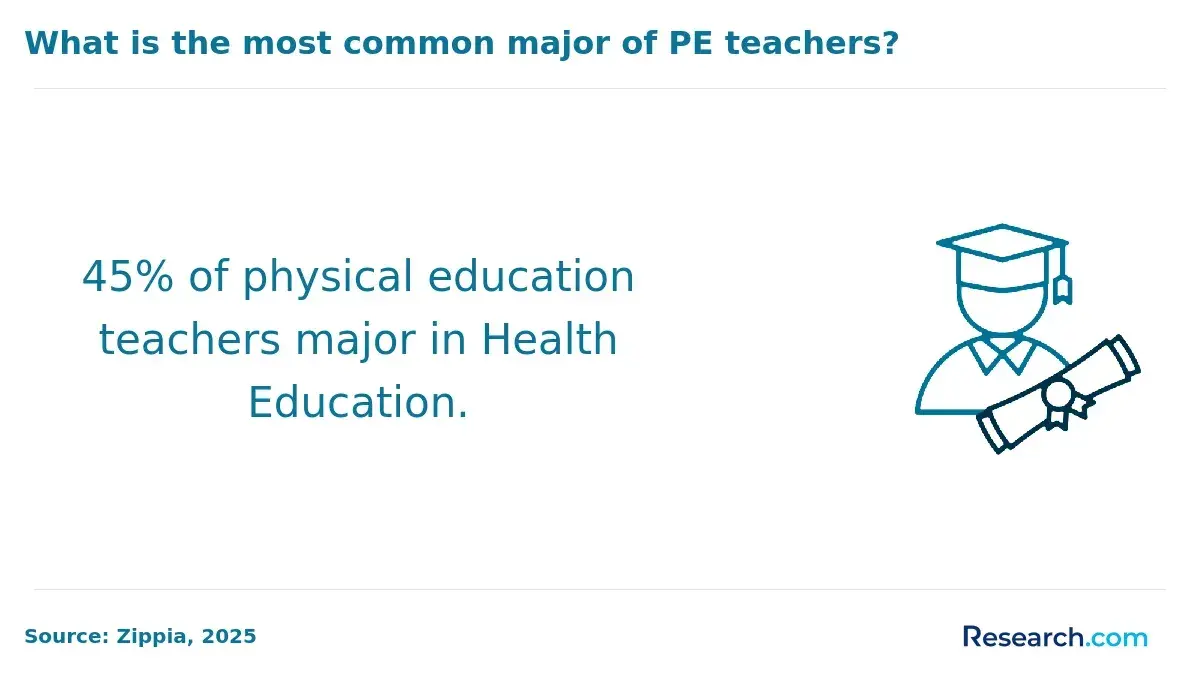
- Bachelor’s degree in physical education or a related field: Candidates typically need at least a bachelor’s degree with a major or substantial coursework in physical education, kinesiology, exercise science, or a similar discipline. These programs usually cover movement, fitness, health, motor learning, and teaching methods.
- Florida-approved teacher preparation program: Public school candidates must complete a state-approved preparation route. These programs combine education theory, lesson planning, assessment, classroom management, adaptive PE, and state-aligned K–12 physical education standards.
- Minimum GPA requirement: A minimum 2.5 GPA in relevant coursework is commonly required for certification eligibility and teacher preparation progression.
- Supervised field experience: Candidates must complete practical teaching experience, including an internship or student teaching placement of at least ten weeks in a K–12 setting.
- Core PE specialization coursework: Common subject areas include kinesiology, applied exercise physiology, motor development, adaptive physical education, injury prevention, coaching theory, health education, and assessment in physical education.
| Requirement | Why it matters | What to verify before enrolling |
| Bachelor’s degree | Provides the academic foundation for PE instruction and certification eligibility. | Confirm that the major or coursework aligns with Florida PE certification expectations. |
| Approved teacher preparation | Connects subject knowledge with classroom practice and state teaching standards. | Ask whether the program is approved for Florida educator certification. |
| Minimum 2.5 GPA | Shows that the candidate meets baseline academic standards for certification. | Check whether the GPA applies to overall coursework, major coursework, or both. |
| At least ten weeks of field experience | Gives candidates supervised practice teaching real K–12 students. | Ask where placements occur and whether they include elementary, middle, or high school settings. |
| PE-focused coursework | Builds knowledge in fitness, movement, safety, inclusion, and health-related instruction. | Review the course catalog for kinesiology, motor development, adaptive PE, and assessment content. |
Students who plan to move into leadership, curriculum design, or advanced education roles later may also compare graduate-level education pathways, including Research.com resources on high-paying master’s in education career options.
What skills do physical education teachers in Florida need?
Successful PE teachers in Florida need more than sports knowledge. They must keep students safe, manage active learning spaces, adapt instruction for different ability levels, and connect physical activity to long-term wellness. Because Florida schools serve students from many backgrounds and learning needs, communication and flexibility are especially important.
Essential skills for Florida PE teachers
- Clear communication: PE teachers must explain movement skills, safety rules, game procedures, and health concepts in language students can understand. They also communicate with families, administrators, classroom teachers, coaches, and support staff.
- Fitness, health, and movement knowledge: Teachers need a working understanding of anatomy, physiology, nutrition, exercise science, and safe physical activity. This helps them design lessons that are developmentally appropriate and reduce the risk of injury.
- Differentiated and adaptive instruction: PE classes include students with different fitness levels, disabilities, language backgrounds, confidence levels, and prior experiences. Strong teachers modify activities so students can participate meaningfully and safely.
- Classroom and activity management: PE spaces can include gyms, fields, tracks, weight rooms, courts, pools, and multipurpose areas. Teachers must manage transitions, equipment, behavior, group work, and safety in fast-moving environments.
- Motivation and relationship-building: Not every student enjoys physical activity at first. Good PE teachers create a respectful environment where students feel encouraged rather than embarrassed.
- Assessment and feedback: PE teachers evaluate effort, skill development, participation, fitness concepts, and understanding of health-related principles. Feedback should be fair, measurable, and supportive.
| Skill area | What it looks like in PE class | Why employers value it |
| Communication | Explaining drills, safety expectations, and learning goals clearly. | Reduces confusion and helps students stay engaged and safe. |
| Adaptive instruction | Changing rules, equipment, or intensity for students with different needs. | Supports inclusion and compliance with student support plans. |
| Leadership | Organizing teams, modeling sportsmanship, and setting expectations. | Creates a positive school culture around wellness and teamwork. |
| Health knowledge | Connecting exercise, nutrition, injury prevention, and lifelong fitness. | Helps schools address broader student wellness goals. |
| Technology use | Using fitness trackers, digital assessments, or online lesson tools when appropriate. | Supports modern instruction without replacing sound teaching judgment. |
If you are building a broader education skill set, Research.com also offers resources on instructional and information-focused programs such as online library science programs, which may be useful for educators exploring adjacent academic support roles.
Do PE teachers in Florida need a teaching license?
Yes. Physical education teachers in Florida public schools need a state-issued educator certificate. The certificate shows that the teacher has met Florida’s education, testing, background screening, and subject-area requirements for public school instruction.
The typical public school route includes a bachelor’s degree, a state-approved teacher preparation program, and passing certification exams such as the Florida General Knowledge Test and the Physical Education K–12 Subject Area Exam. Candidates must also complete fingerprinting and background checks before certification and employment.
Florida offers a Temporary Certificate and a Professional Certificate. A Temporary Certificate is valid for three years while a candidate completes remaining requirements. A Professional Certificate is renewable every five years and is the standard long-term credential for fully certified educators.
Private schools and some charter schools may have different rules. Some may hire candidates based on subject knowledge, coaching experience, prior teaching experience, or alternative credentials. However, many still prefer licensed teachers, and state certification can make a candidate more competitive and mobile across districts.
| School setting | Is Florida certification typically required? | What this means for candidates |
| Public schools | Yes | Certification is the clearest route to full eligibility and long-term employment. |
| Private schools | Not always | Hiring rules can vary, but certification may improve competitiveness. |
| Charter schools | Varies by school and role | Some positions may allow flexibility, but certified candidates often have more options. |
| Temporary certificate pathway | Available for eligible candidates | Can allow entry while remaining certification requirements are completed. |
The practical takeaway is simple: if you want the widest range of PE teaching opportunities in Florida, pursue state certification even if you are also considering private or charter schools.
How do you get certified as a PE teacher in Florida?
Florida PE teacher certification is a step-by-step process. The best path depends on whether you are starting college, already have a bachelor’s degree, or hold a teaching certificate from another state.
Steps to become certified in Florida physical education
- Earn a bachelor’s degree in physical education or a related field: Complete a degree with strong preparation in PE, kinesiology, exercise science, or a similar area. Candidates are commonly expected to have at least 30 semester hours in PE coursework and a minimum 2.5 GPA.
- Complete a Florida-approved teacher preparation program: Traditional undergraduate programs often include the preparation sequence within the degree. Candidates who already hold a bachelor’s degree may use a post-baccalaureate route or another approved pathway.
- Finish supervised student teaching: Complete the required field experience, including at least ten weeks in a K–12 classroom or school-based PE environment.
- Pass the required Florida certification exams: Candidates must pass required assessments, including the Florida General Knowledge Test and the Subject Area Knowledge Exam for physical education. Each requires a scaled score of 200 or above.
- Submit the certification application: File the official CG-10 application, provide transcripts, and pay the $75 fee.
- Complete fingerprinting and background screening: Florida requires background checks before certification and school employment.
- Maintain and renew certification: A Professional Certificate must be renewed every five years. Renewal requires at least six semester hours of college credit and ongoing professional learning.
| Candidate type | Most likely route | Best fit |
| High school student or first-time college student | Bachelor’s degree with an embedded teacher preparation program | Students who know early that they want to teach PE. |
| College graduate with a non-education degree | Post-baccalaureate or alternative preparation route | Career changers who already have a bachelor’s degree. |
| Certified teacher from another state | Florida reciprocity review | Teachers relocating to Florida with a current standard certificate. |
| Candidate still completing requirements | Temporary Certificate pathway, if eligible | Candidates who need time to complete testing or other requirements while working toward full certification. |
One Florida PE teacher described the student teaching stage as the point where the career became real. Coursework helped him understand lesson design and fitness science, but supervised teaching forced him to manage equipment, student behavior, safety, and pacing all at once. He said the exams and paperwork were stressful, but mentor feedback made the process manageable and helped him enter the classroom with more confidence.
Can out-of-state PE teachers transfer their license to Florida?
Florida provides a reciprocity pathway for many out-of-state teachers, including physical education teachers. If you hold a valid, standard teaching certificate from another state in a comparable subject area, you may be able to apply for a Florida Professional Certificate without completing additional coursework or testing.
This pathway may also apply to teachers certified by the National Board for Professional Teaching Standards. The central issue is comparability: the out-of-state certificate must be current and aligned closely enough with Florida’s subject and professional requirements.
If the certificate is expired, not comparable, or missing required documentation, Florida may direct the teacher toward a Temporary Certificate or require additional steps. Candidates should expect credential verification, fingerprinting, and background screening as part of the process.
What out-of-state PE teachers should do before moving
- Confirm that your current certificate is valid and standard, not provisional or emergency-only.
- Check whether your subject area matches Florida Physical Education K–12 expectations.
- Gather official transcripts, test records, certification documents, and employment verification early.
- Apply as soon as possible, because certification review and background screening can take time.
- Ask prospective districts whether they can hire you while your Florida certificate is pending.
For teachers relocating to Florida, reciprocity can prevent unnecessary repetition of coursework or exams. Still, it is wise to verify your status directly before accepting a position or assuming that your current license will transfer automatically.
How long does it take to become a PE teacher in Florida?
The timeline depends on your starting point. A traditional college student usually needs about four years to complete a bachelor’s degree and teacher preparation program. A person who already has a bachelor’s degree may qualify through an alternative or post-baccalaureate route in about 1–2 years, depending on remaining requirements.
| Step | Typical time | What happens during this stage |
| Bachelor’s degree in PE or related field | 4 years | Students complete general education, PE major coursework, education classes, and early field experiences. Florida has 36 state-approved programs. |
| Teacher preparation and student teaching | 1 semester | Candidates complete supervised teaching, including a minimum ten-week K–12 placement. |
| Florida certification exams | Several months | Candidates prepare for and complete required FTCE exams, including General Knowledge, Physical Education K–12, and Professional Education tests. |
| Certification application review | 1–3 months | The state reviews transcripts, exam records, fingerprints, and background screening. |
| Alternative pathway for bachelor’s degree holders | 1–2 years | Career changers may use an Educator Preparation Institute, post-baccalaureate route, or Temporary Certificate pathway. |
Several factors can lengthen the process: changing majors late, failing to confirm program approval, delaying exams, missing transcript documentation, or needing additional coursework. Candidates who plan early and take exams on schedule usually avoid the biggest delays.
Educators thinking beyond initial certification may also compare advanced leadership programs, including Research.com’s guide to affordable online EdD programs.
How much does it cost to become a PE teacher in Florida?
The cost of becoming a Florida PE teacher depends mainly on where you complete your degree, whether you attend full time, and whether you already have a bachelor’s degree. Tuition is usually the largest expense, but candidates should also budget for certification exams, application fees, books, study materials, fingerprinting, and transportation to field placements.
| Cost category | Estimated cost stated | What to consider |
| Bachelor’s degree tuition | Public universities in Florida generally charge from $6,000 to $25,000 per year for in-state students; private colleges may exceed $30,000 annually. | Compare total program cost, not just tuition per credit. Include fees, housing, transportation, and time away from work. |
| Teacher preparation program | About $2,600 plus fees for required coursework and materials. | Ask whether the preparation program is included in the bachelor’s degree or billed separately. |
| Certification exams | More than $400 for all required tests. | Budget for retakes if needed, but prepare carefully to avoid extra costs. |
| Initial educator certificate application | $75 per subject. | Make sure you apply for the correct subject area to avoid unnecessary delays or duplicate fees. |
| Books and study materials | $1,000 to $3,000. | Look for used textbooks, library copies, digital materials, or program-provided resources. |
| Fingerprint background check | $50 to $80. | This is usually required for certification and school placement eligibility. |
Ways to reduce the cost
- Start at a Florida community or state college if credits will transfer cleanly into an approved PE teacher preparation program.
- Confirm transfer credit policies before enrolling, especially if you already completed college coursework.
- Apply for federal, state, institutional, and teacher-specific aid early.
- Choose a program with local field placements to reduce commuting costs.
- Ask whether exam preparation is included in tuition or available through the department.
Students comparing online and flexible education pathways can review related Research.com degree resources, such as information on online bachelor’s degree requirements in early childhood education, to understand how program delivery models may differ across education fields.
Are there scholarships for physical education teaching students in Florida?
Yes. Aspiring physical education teachers in Florida may qualify for federal aid, state scholarships, institutional awards, teacher grants, and loan forgiveness programs. Availability depends on financial need, academic performance, enrollment status, school, service commitments, and program rules.
- Federal and state aid: FAFSA-based aid and the Florida Bright Futures Scholarship can help eligible students reduce tuition and education-related expenses.
- Institutional scholarships: Florida colleges and universities may offer awards for education majors, physical education students, students with financial need, or students with strong academic records.
- Teaching grants: Programs such as the TEACH Grant and apprenticeship-related initiatives may support candidates who commit to specific teaching service requirements.
- Loan forgiveness programs: Graduates who teach in eligible shortage areas or low-income schools may qualify for forgiveness that lowers long-term student loan debt.
Questions to ask financial aid offices
- Are there scholarships specifically for physical education, health education, kinesiology, or teacher preparation students?
- Can scholarships be used during student teaching, when work hours may be limited?
- Do grants require teaching in a specific school, subject, or high-need area after graduation?
- Will changing majors, dropping below full-time enrollment, or delaying graduation affect the award?
- Are certification exams, fingerprinting, or teacher preparation fees covered by any aid source?
A recent Florida PE graduate said scholarships mattered most during the internship semester, when earning income became harder. She described the financial aid process as confusing at first, but said an institutional scholarship helped cover expenses while she completed fieldwork and prepared for certification exams.
Is there demand for physical education teachers in Florida?
Florida continues to need qualified teachers across many school settings, and PE openings can depend heavily on district growth, retirements, school budgets, and local wellness priorities. Demand may be stronger in underserved, high-poverty, rural, or fast-growing districts where staffing is harder.
General physical education may not always appear at the top of statewide shortage lists, but candidates can improve their prospects by adding strengths in adaptive physical education, health education, coaching, wellness programming, behavior management, and working with diverse learners. Adaptive Physical Education can be especially valuable because it serves students with disabilities and requires teachers who understand inclusion and modification.
Where PE teacher demand may be strongest
- Public school districts with rapid enrollment growth.
- Schools serving students with high health, wellness, or adaptive PE needs.
- Rural or high-poverty communities with persistent hiring challenges.
- Schools seeking teachers who can also coach, sponsor wellness programs, or support extracurricular athletics.
- Districts replacing retiring educators or filling midyear vacancies.
Teachers who want to move into district leadership, curriculum coordination, or advanced instructional roles may eventually consider doctoral-level education options, including Research.com’s guide to the fastest online EdD programs.
What is the average salary of a PE teacher in Florida?
Physical education teachers in Florida earn an average salary of about $47,500, which is below the national average range of $54,000 to $61,000. Actual pay varies by district, school type, years of experience, education level, collective bargaining agreements, and extra duties such as coaching.
| Salary factor | Stated salary information | How it affects earning potential |
| Experience | Starting salaries are often around $47,500. Teachers with 10 or more years of experience may earn $55,000 or more. Those with over 20 years can exceed $65,000. | Most salary schedules reward years of service, although increases vary by district. |
| Education level | Teachers with master’s degrees or additional credentials often earn between $53,000 and $65,000+. | Advanced credentials may qualify teachers for salary supplements or leadership roles. |
| School type | Public school PE teachers average about $54,126, while private school peers make closer to $41,298. | Public schools often have formal salary schedules and benefits; private school compensation varies widely. |
| Location | Urban, higher-cost areas such as Miami-Dade may offer above-average pay compared with some rural districts. | Higher salaries should be weighed against housing, commuting, and cost of living. |
Salary should be evaluated alongside benefits, pension or retirement options, health insurance, job stability, coaching stipends, summer work opportunities, and advancement potential. No salary outcome is guaranteed, so candidates should review district salary schedules before accepting a job.
Is becoming a PE teacher in Florida worth it?
Becoming a PE teacher in Florida can be worth it for people who want a school-based career, enjoy working with children or teenagers, and care about fitness, health, inclusion, and student confidence. It may be less appealing for candidates who want high starting pay, dislike managing large groups, or are mainly interested in sports performance rather than teaching all students.
| This path may be a good fit if you... | Consider another path if you... |
| Want to teach K–12 students and promote lifelong wellness. | Prefer training athletes only or working in competitive sports full time. |
| Are comfortable managing active, noisy, fast-moving spaces. | Want a quiet classroom environment with limited movement and equipment. |
| Value job stability and school-year schedules. | Need higher short-term earnings than teaching commonly provides. |
| Can adapt lessons for students with different abilities and confidence levels. | Are uncomfortable modifying activities or working with diverse learners. |
| Are willing to complete certification, exams, and continuing education. | Want a role with minimal licensing or renewal requirements. |
Online vs. campus PE teacher preparation in Florida
Some education coursework may be available online or in hybrid formats, but PE teacher preparation still requires hands-on learning, movement-based instruction, and supervised school placements. Candidates should be cautious with fully online programs that do not clearly explain field experience or Florida certification alignment.
| Format | Advantages | Limitations | Best for |
| Campus-based program | Direct access to labs, gyms, faculty, peer practice, and local school partnerships. | Less flexible for working adults or students far from campus. | First-time college students and candidates who want structured support. |
| Hybrid program | Combines online coursework with in-person skill development and fieldwork. | Still requires travel for placements, labs, or assessments. | Students who need flexibility but still want practical PE preparation. |
| Online-heavy pathway | May reduce commuting and help career changers complete academic requirements. | Must still meet Florida field experience and certification requirements. | Degree holders completing alternative or post-baccalaureate requirements. |
Common mistakes to avoid
- Choosing a program without checking Florida approval: A degree alone may not qualify you for certification if the teacher preparation route is not recognized.
- Looking only at tuition: Exam fees, application fees, fingerprinting, books, transportation, and unpaid student teaching time can affect the real cost.
- Assuming private school rules apply everywhere: Public schools require state certification, even if some private schools are flexible.
- Waiting too long to take certification exams: Exam delays can postpone graduation clearance, certification, or hiring.
- Ignoring adaptive PE preparation: Inclusion is a major part of modern PE teaching, and adaptive skills can make you more employable.
- Assuming salary averages guarantee your pay: District salary schedules, experience credit, education level, and location all matter.
- Overlooking transfer credit policies: If you start at another college or already have credits, confirm how they apply before enrolling.
What do physical education teachers in Florida say about their career?
- Anthony: "My physical education training at Sunshine Academy changed how I thought about teaching. The practical assignments and faculty support helped me build stronger classroom management habits and design lessons for students with different needs. Teaching in a Florida school has been meaningful because I can help students build healthier routines while using outdoor activities throughout the year. The stability of the role and the professional learning available in my district keep me focused on improving."
- Lakshmi: "I first became interested in student fitness and wellness while working with young people at Palm Coast Charter School. Teaching in Florida gives me room to use the state’s outdoor spaces, including sports and water-based activities that fit the local environment. I also appreciate that families and school leaders value health. Leadership training has helped me take on more responsibility and contribute beyond my daily classes."
- Carlito: "After finishing my education at Coastal Prep School, I quickly learned that Florida’s diversity requires flexible teaching. My students bring different cultures, ability levels, and attitudes toward physical activity, so one lesson plan rarely works for everyone. The career has challenged me, but it has also allowed me to promote inclusion, confidence, and fitness in my community. Support from colleagues has made a major difference in my growth."
What professional development opportunities are available for PE teachers in Florida?
Professional development helps Florida PE teachers keep their certification current, improve instruction, and prepare for leadership roles. Useful areas include adaptive physical education, injury prevention, student assessment, classroom management, health education, coaching, technology-supported fitness tracking, and inclusive instruction.
Teachers may find training through school districts, universities, professional associations, online continuing education providers, and graduate programs. Some educators also pursue advanced degrees to move into curriculum leadership, administration, or teacher training. For a broader view of teacher preparation timelines in the state, see Research.com’s guide on how long it takes to become a teacher in Florida.
Related Articles for Nearby States
- 2027 How to Become a Physical Education Teacher in Georgia
- 2027 How to Become a Physical Education Teacher in Alabama
- 2027 How to Become a Physical Education Teacher in South Carolina
- 2027 How to Become a Physical Education Teacher in Mississippi
- 2027 How to Become a Physical Education Teacher in Tennessee
- 2027 How to Become a Physical Education Teacher in North Carolina
- 2027 How to Become a Physical Education Teacher in Louisiana
- 2027 How to Become a Physical Education Teacher in Kentucky
- 2027 How to Become a Physical Education Teacher in Arkansas
- 2027 How to Become a Physical Education Teacher in Virginia
Key insights
- Florida public school PE teachers generally need a bachelor’s degree, approved teacher preparation, student teaching, passing certification exams, background screening, and a state educator certificate.
- A Temporary Certificate can provide a shorter entry route for eligible candidates, but the Professional Certificate is the long-term credential and renews every five years.
- Traditional candidates should expect about four years for a bachelor’s degree, while candidates who already hold a bachelor’s degree may complete an alternative pathway in about 1–2 years.
- Costs vary widely. Tuition is the largest expense, but certification exams, the $75 application fee, fingerprinting, books, and field placement costs also matter.
- Average Florida PE teacher salary is about $47,500, but pay depends on experience, education level, school type, district, location, and extra duties.
- Certification is worth pursuing even if you are considering private or charter schools because it expands job options and improves portability across districts.
- The strongest candidates combine PE knowledge with adaptive instruction, safety awareness, communication, classroom management, and a clear commitment to student wellness.
References:
- Florida PE teacher job and certification requirements https://www.peteacheredu.org/florida/
- Florida Teachers of Tomorrow program pricing https://www.teachersoftomorrow.org/florida/program-pricing/
- Physical education degree options in Florida https://www.educationdegree.com/programs/physical-education/florida/
- Seminole State College physical teacher education pathway https://www.seminolestate.edu/catalog/programs/edu-phse
- Florida teacher certification types and requirements https://www.alleducationschools.com/teacher-certification/florida/
- Physical education teacher salary in Florida https://www.careerexplorer.com/careers/physical-education-teacher/salary/florida/
- Florida Department of Education physical education standards https://www.fldoe.org/academics/standards/subject-areas/physical-edu/
- University of West Florida Health and Physical Education B.S. https://uwf.edu/programs/ukcoh/health-physical-education-bs/
- Overview of becoming a physical education teacher https://www.graduateprogram.org/blog/how-to-become-a-physical-education-teacher/
- Valencia College teacher preparation and recertification information https://catalog.valenciacollege.edu/teacherpreparationrecertification/
Other Things You Should Know About Becoming a Physical Education Teacher in Florida
Aspiring physical education teachers in Florida must pass the Florida Teacher Certification Examinations (FTCE), which include the General Knowledge Test, Professional Education Test, and a Subject Area Examination specifically for physical education. These exams ensure candidates meet the state's educational standards.
In 2027, to become a physical education teacher in Florida, first earn a bachelor’s degree in physical education or a related field. Next, complete a state-approved teacher preparation program. Finally, pass the Florida Teacher Certification Examinations (FTCE) and apply for certification with the Florida Department of Education.


