
2027 How to Become a Physical Education Teacher in New Jersey

Co-Founder and Chief Data Scientist
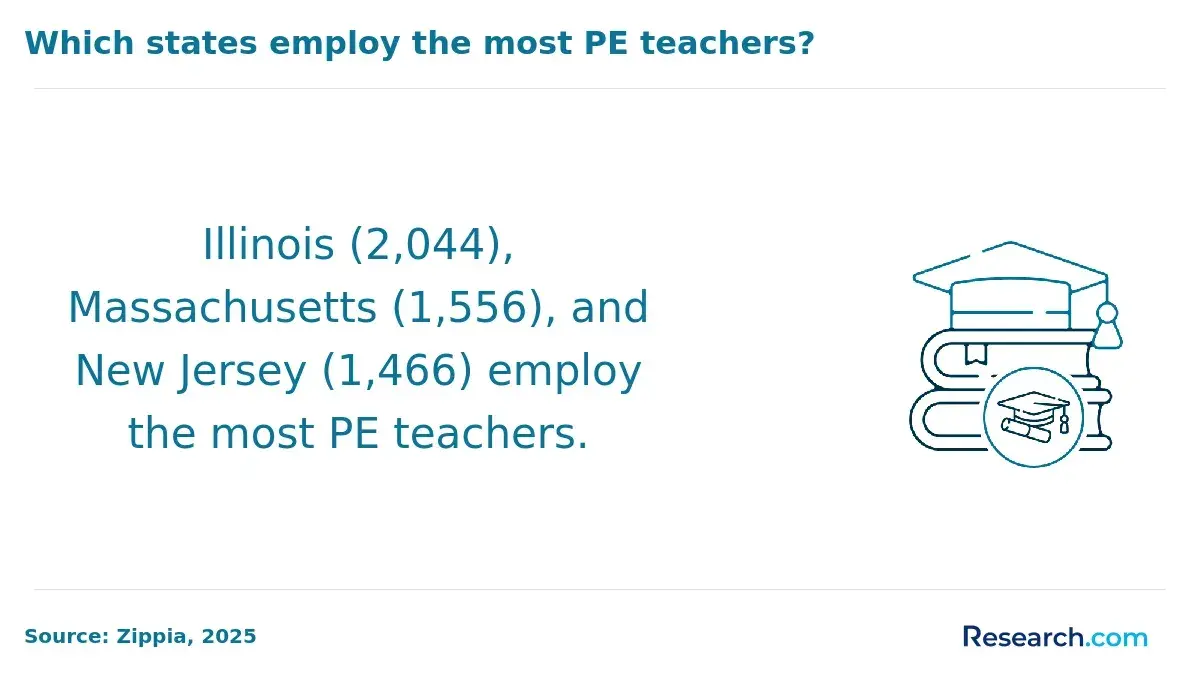
Becoming a physical education teacher in New Jersey is a smart move, especially since the state employs over 2,500 PE teachers and expects steady growth in this field. With an increasing focus on student health and wellness, PE teachers play a crucial role in shaping active lifestyles for youth.
New Jersey offers solid salaries and supportive school districts, making it an attractive career path for those passionate about fitness and education.
This article, prepared by career planning experts, breaks down everything needed to become a PE teacher in New Jersey. From educational requirements to certification tips, it guides readers step-by-step, ensuring they get accurate and useful info to launch their teaching journey with confidence.
Key Things to Know About Becoming a Physical Education Teacher in New Jersey
- Earn a bachelor’s degree with a focus on physical education or a related field; New Jersey requires you to complete an approved teacher prep program.
- Pass the Praxis exams, including the Core Academic Skills and Physical Education content test, to meet state certification standards.
- Complete a student-teaching internship, which gives you real classroom experience and is mandatory before receiving your teaching certificate in New Jersey.
- What are the education requirements to become a physical education teacher in New Jersey?
- What skills are essential for physical education teachers in New Jersey?
- Do PE teachers in New Jersey need a teaching license?
- How do you get certified as a PE teacher in New Jersey?
- Can out-of-state teachers transfer their license to New Jersey for PE teaching?
- How long does it take to become a PE teacher in New Jersey?
- What are the career advancement opportunities for PE teachers in New Jersey?
- How much does it cost to become a PE teacher in New Jersey?
- Are there scholarships for physical education teaching students in New Jersey?
- Is there demand for physical education teachers in New Jersey?
- What is the average salary of a PE teacher in New Jersey?
What are the education requirements to become a physical education teacher in New Jersey?
Getting the right formal education is key for anyone serious about becoming a physical education teacher in New Jersey. Good training helps you develop the skills and knowledge needed to design PE programs that keep students active, healthy, and motivated for life.
To meet the New Jersey physical education teacher certification requirements, there are some solid education steps you need to follow. Here’s a quick rundown of the typical minimum education requirements:
- Bachelor’s Degree from a Regionally Accredited Institution: You’ll need at least a bachelor’s degree, ideally in physical education, kinesiology, health, or a related field, from a regionally accredited college. This degree gives you a strong foundation in both general education and specialized physical education knowledge.
- Subject Matter Coursework in Physical Education and Health: New Jersey requires you to complete at least 30 semester credits in either health or physical education, with at least 12 credits at an advanced level. This coursework covers everything from team sports to individual activities, preparing you for the full range of PE teaching duties.
- Minimum Cumulative GPA: If you graduated after September 2016, you must have a GPA of 3.0 or higher. Those graduating earlier need at least a 2.75 GPA, although candidates with slightly lower GPAs might still qualify by scoring well on the Praxis II content exam.
- Completion of a State-Approved Teacher Preparation Program: You must complete a state-approved program that includes both professional education courses and student teaching experience. This ensures you gain practical skills in teaching methods, classroom management, and assessment specific to physical education.
If you’re exploring your options for the right degree, check out this list of the best bachelors in education online to find programs that fit your goals and lifestyle.
What skills are essential for physical education teachers in New Jersey?
To really connect with students, inspire healthy habits, and manage a busy gym or outdoor space effectively, physical education teachers in New Jersey need to bring a specific set of skills to the table. These skills help teachers engage kids of all backgrounds and abilities while keeping things running smoothly and safely.
Here’s a quick look at the essential skills for physical education teachers in New Jersey:
- Communication: It’s key to clearly explain activities, safety rules, and give helpful feedback, all while relating well to students, parents, and fellow staff. Great communication builds trust and makes learning fun and productive.
- Leadership: PE teachers need to motivate and lead by example, setting high standards for effort and behavior. This also means promoting teamwork and guiding students to always do their best, both physically and socially.
- Adaptability: No two students are the same, so being flexible and adjusting lessons for different skill levels and needs—especially when working with special education students—is a must. It keeps everyone included and engaged.
- Knowledge of Fitness and Health: Having a solid grasp of fitness, nutrition, and sports helps teachers plan lessons that meet state standards and encourage lifelong wellness. Plus, this expertise is a core part of New Jersey’s certification requirements.
For those looking to build these communication and classroom management skills for New Jersey PE teachers, exploring options at online colleges for teaching degrees can be a great place to start.
Do PE teachers in New Jersey need a teaching license?
Licensing requirements in New Jersey help make sure all students get solid teaching, especially when it comes to physical education. By setting clear standards, the state aims to keep teaching quality consistent and support better student outcomes across different schools.
If you want to teach PE in a New Jersey public school, having a state-issued teaching license is a must. Specifically, you need the Teacher of Health and Physical Education endorsement, which means earning a bachelor’s degree with a solid GPA, completing coursework focused on health or PE, passing the Praxis II test, and finishing a supervised teacher prep program.
These rules are pretty strict because the state wants well-trained, qualified teachers in public schools to ensure students receive the best education possible.
Private and charter schools in New Jersey don’t always require a state license for PE teachers, which makes things a bit more flexible. Some private schools still ask for state certification, but others might hire candidates with just a relevant degree or experience. Charter schools sometimes get waivers from state requirements, so the rules can vary.
This difference can really impact job options: licensed teachers often find it easier to land public school jobs with more stability and better pay, while those without licensure might have fewer chances and less job security, usually in private or charter settings.
How do you get certified as a PE teacher in New Jersey?
Getting certified as a physical education teacher in New Jersey is a key step to make sure you’re ready to help students stay active, healthy, and fit. The process is designed to equip you with the right knowledge and practical skills to run effective PE programs while keeping kids safe.
Here’s a straightforward look at the main steps you’ll need to take to earn your certification:
- Earn a Bachelor’s Degree: You need a bachelor’s degree from an accredited school, with at least 30 credits focused on health or physical education. Part of that has to include advanced classes and coverage of various sports.
- Meet GPA Requirements: A minimum GPA of 3.0 is required if you earned your degree after 2016. For those who graduated earlier, there’s some flexibility if you also meet exam scores.
- Complete a State-Approved Prep Program: You must finish a teacher preparation program approved by New Jersey, which includes real teaching experience like student teaching.
- Pass State Exams: The Praxis II test in Health and Physical Education is required, with official scores sent directly to the state’s education department.
- Fulfill Physiology and Hygiene Requirement: This can be satisfied by taking an approved college course or passing a state-administered online test.
- Apply for Certification: Submit your application through the NJEdCert system with all documents. You’ll then get a Certificate of Eligibility or a Standard Certificate depending on your background.
I spoke with a PE teacher from New Jersey who graduated locally, and he described the certification journey as “challenging but rewarding.” He mentioned that balancing coursework, exam prep, and the clinical experience felt overwhelming at times, but “knowing that each step was building towards being a qualified teacher kept me motivated.”
He also highlighted the importance of staying organized, especially during the application process through NJEdCert, where submitting all necessary documents correctly made a huge difference. Reflecting on the entire process, he said, “It gave me confidence not just to teach but to really support my students’ wellness in meaningful ways.”
Can out-of-state teachers transfer their license to New Jersey for PE teaching?
If you’re an out-of-state teacher wanting to transfer your physical education license to New Jersey, it’s not a simple swap. New Jersey doesn’t offer full reciprocity, meaning you can’t just hand over your old license and start teaching right away.
Instead, the state has a kind of partial reciprocity where your out-of-state credentials count, but you’ll usually need to jump through some hoops. That typically includes passing New Jersey’s specific subject matter test for physical education and completing a state-approved performance assessment called edTPA, unless you’ve already done these elsewhere.
You won’t generally have to go back to school for extra coursework, but if you’re seeking their Certificate of Eligibility with Advanced Standing, you do need to have finished student teaching. If you’ve been teaching effectively for at least two years in the past four, you might qualify for a Standard certificate by showing proof of your experience.
If you haven't completed the required performance assessment yet, New Jersey might issue you a provisional certificate while you get it done. Also, if you have National Board certification, you could be exempt from some of these steps.
These rules mean moving to New Jersey as a PE teacher isn’t always a quick or straightforward process. Even seasoned teachers from other states often find themselves taking New Jersey-specific tests or working under provisional licenses while finishing up requirements.
This can slow down your ability to start full-time teaching but ensures all PE teachers meet the state’s standards. For many out-of-state teachers, this extra effort is worth it to keep teaching in a state focused on quality and student wellness. Just be ready to carefully review what New Jersey asks for and plan ahead for testing and paperwork to make your transition smoother.
How long does it take to become a PE teacher in New Jersey?
The time it takes to become a physical education teacher in New Jersey depends on various factors like your educational path, the specific certification process, and hands-on teaching experience requirements. Most people follow a fairly standard timeline, but some choose alternative routes or part-time study, which can affect how long it all takes.
If you’re weighing options, it’s helpful to know roughly how long each step usually takes to plan your journey effectively.
- Bachelor’s Degree (4 years): Getting a bachelor’s degree is the foundation. Typically, this takes about four years at a regionally accredited college or university, with coursework focused on health or physical education. This stage builds the necessary background and credits needed before moving on to certification steps.
- Teacher Preparation Program (around 1 year): After or during your bachelor’s, you’ll complete an approved teacher prep program. If it’s separate from your degree, it often adds about a year of full-time study, combining education theory, practical methods, and supervised teaching.
- Testing and GPA Requirements (concurrent): Alongside your studies, you need to pass the Praxis II Health and Physical Education exam and maintain a minimum GPA, usually around 3.0. These often happen during the last year of your degree or certification program.
- Provisional Teaching and Induction (1 year): Once all academic and testing requirements are fulfilled, you work under a provisional certificate for a year. This mentored teaching year helps you gain real classroom experience and is required before earning your full certification.
- State Certification Processing (several months): After finishing the above, applying for your standard New Jersey teaching certificate can take a few weeks to a few months depending on the application process and paperwork.
All told, the typical PE teacher certification timeline New Jersey fits into about 5 to 6 years. This includes your degree, teacher prep, test passing, and provisional teaching. Some candidates stretch this longer, especially if studying part-time or entering through alternative routes.
For anyone curious about different educational paths, exploring the differences between education degrees can be a useful step in finding what's right for you.
What are the career advancement opportunities for PE teachers in New Jersey?
Physical education teachers in New Jersey can pursue growth by engaging in targeted professional development and exploring leadership roles within their districts. Many schools provide opportunities to advance through specialized endorsements, mentorship programs, and additional certifications that pave the way to roles such as department coordinators or athletic directors. Evaluating different pathways and aligning qualifications with district initiatives can further enhance job responsibilities and earning potential. For a clearer picture of the overall timeline for entering and progressing in the field, consider how long does it take to become a teacher in New Jersey.
How much does it cost to become a PE teacher in New Jersey?
Becoming a physical education teacher in New Jersey involves several expenses that add up, including tuition, exam fees, and certification costs. These costs can vary widely depending on where you study and the specific requirements you need to meet.
Here’s a simple breakdown of the key expenses you should plan for when considering the PE teacher certification fees in New Jersey:
- Bachelor’s Degree Tuition: You’ll need at least a bachelor’s degree focused on health, fitness, or physical education. Attending a public in-state university typically costs between $13,000 and $17,500 per year, while private schools can charge $35,000 or more annually, making the total tuition range over four years around $52,000 to $70,000.
- Teacher Preparation Program Expenses: After or during your degree, you must complete a state-approved teacher preparation program. These programs may cost anywhere from a few thousand dollars up to $10,000, depending on the structure and institution.
- Licensing and Exam Fees: Passing the Praxis II Health and Physical Education exam comes with a fee of about $130, plus around $170 for your New Jersey PE teaching certification. Additional costs include background checks and application processing fees.
- Books, Materials, and Background Checks: You’ll want to budget an extra $1,000 to $1,500 yearly for textbooks and supplies, plus around $65 to $75 for the required criminal background check.
Keep in mind that maintaining your certification involves continuing education, which might mean investing in courses or workshops regularly. If you’re also curious about affordable ways to further your education, check out options like a cheap masters in education to balance cost and career growth.
Are there scholarships for physical education teaching students in New Jersey?
Paying for physical education teacher training in New Jersey can add up fast, so scholarships and financial aid really come in handy. They help cover tuition and other costs, making it easier to focus on becoming a great educator without stressing about money.
- Federal and State Financial Aid: Programs like Pell Grants and New Jersey’s Tuition Aid Grant (TAG) help students based on need. NJ STARS even covers full tuition at community colleges for top students continuing their education in-state.
- Institutional Scholarships: Many colleges offer scholarships for education majors, especially those studying physical education, recreation, or health, often rewarding both merit and financial need.
- Teaching Grants and Loan Forgiveness: The federal TEACH Grant supports future teachers with up to $4,000 per year, while loan forgiveness programs reduce debt for those working in shortage areas or underserved communities.
When I talked to a PE teacher from New Jersey who graduated from a local university, she shared how scholarships were a game-changer. "I remember stressing over tuition each semester until I found a scholarship aimed at physical education majors like me. It wasn’t just the money—it felt like someone believed in my dream," she said.
Beyond that, she applied for a state teaching grant which eased the pressure during student teaching, allowing her to focus more on gaining hands-on experience without juggling multiple jobs. Her journey shows how these resources make a real difference, turning a dream into a career.
Is there demand for physical education teachers in New Jersey?
The demand for PE teachers in New Jersey is influenced by several factors like shifts in school enrollment, state-driven health and wellness programs, and the retirement of seasoned educators. As student numbers change and schools put more emphasis on physical health, the need for qualified teachers adjusts accordingly.
Plus, when experienced teachers retire, it opens the door for fresh talent to step in, maintaining a steady demand for physical education professionals.
When looking at the physical education teacher job market in New Jersey, public schools lead the way as the main employers, especially in urban districts like Newark, Camden, and Paterson. These areas tend to have the strongest demand because they often face challenges hiring and keeping certified PE staff.
Nationally, the job market is projected to grow by about 3.1% between 2022 and 2032, mostly due to retirements rather than new positions, and New Jersey’s trend matches or even exceeds that rate. This means there are consistent opportunities, particularly for those ready to bring special skills such as adaptive physical education or coaching.
For anyone wondering if are teaching degrees easy, it’s worth considering that this steady demand makes pursuing certification in this field a smart move for a reliable career.
What is the average salary of a PE teacher in New Jersey?
Thinking about becoming a physical education teacher in New Jersey? It helps to know that in New Jersey, PE teachers average about $61,120 a year, which is pretty close to the national average.
Salary really matters when you’re planning your career because it shows the value and rewards of the work you’ll be doing. In New Jersey, salaries can vary a lot, so it’s good to understand what drives those differences.
Here are the key factors that affect PE teacher pay in the Garden State:
- Years of Experience: More experience usually means a higher paycheck. Seasoned teachers who manage classrooms well and shape curriculums tend to earn more, with top salaries reaching up to $143,850 annually.
- Education Level: Holding a master’s degree can bump up your salary significantly. Advanced degrees often open doors to leadership roles or specialized jobs with better pay.
- School Type: Public schools generally follow set pay scales, while private schools’ salaries can vary widely, sometimes offering more in urban spots to attract talent.
- Geographic Location: Where you work in New Jersey matters. For example, PE teachers in Newark earn about $82,237 yearly, reflecting both cost of living and demand.
Overall, a PE teacher’s salary in New Jersey mirrors the real challenges of the job but also rewards those who dedicate themselves to shaping young minds through physical education.
What Do Physical Education Teachers in New Jersey Say About Their Career?
- Completing my physical education program at Ridgewood High School gave me a strong foundation that combined theory with practical experience. Starting my career in a local New Jersey school, I quickly realized the immense value of community involvement and the opportunity to shape healthy habits early on. The state's commitment to student well-being has made my job rewarding and stable, allowing me to focus on inspiring kids to find joy in movement. I appreciate the diverse student population here, which pushes me to constantly adapt and grow as an educator. Vanessa
- My journey through the Atlantic County Academy for Physical Education taught me not only the importance of physical fitness but also the vital role of empathy and resilience in teaching. Working in New Jersey’s schools presents unique challenges like balancing urban and suburban needs, but these have enriched my professional development immensely. There's a special sense of accomplishment knowing I contribute directly to students’ lifelong wellness while advancing my career through state-supported training programs. This path has deepened my passion for cultivating both physical health and confidence in young people. Arthur
- Graduating from Camden Sports Institute was a pivotal moment that led me into a fulfilling PE teaching career within New Jersey's dynamic school system. The state's diverse environment offers unique chances to incorporate local culture and outdoor resources into my lessons, which keeps things exciting for both students and me. Professionally, New Jersey's emphasis on continued education and career growth means I’m constantly learning new methods and techniques. Helping kids embrace active lifestyles here feels meaningful, as I witness firsthand their growth and the positive impact on our community. Johanna
Related Articles for Nearby States
- 2027 How to Become a Physical Education Teacher in Delaware
- 2027 How to Become a Physical Education Teacher in Pennsylvania
- 2027 How to Become a Physical Education Teacher in New York
- 2027 How to Become a Physical Education Teacher in Maryland
- 2027 How to Become a Physical Education Teacher in Connecticut
- 2027 How to Become a Physical Education Teacher in Rhode Island
- 2027 How to Become a Physical Education Teacher in Virginia
- 2027 How to Become a Physical Education Teacher in Massachusetts
- 2027 How to Become a Physical Education Teacher in West Virginia
- 2027 How to Become a Physical Education Teacher in Ohio
References:
- Physical education teacher salary in New Jersey ‐ CareerExplorer https://www.careerexplorer.com/careers/physical-education-teacher/salary/new-jersey/
- Salary: Physical Education Teacher in New Jersey 2025 | Glassdoor https://www.glassdoor.ie/Salaries/new-jersey-physical-education-teacher-salary-SRCH_IL.0,10_IS39_KO11,37.htm
- Physical Education Teacher Salary in New Jersey (October 01, 2025) | Salary.com https://www.salary.com/research/salary/recruiting/physical-education-teacher-salary/nj
- Salary: Physical Education Teacher in New Jersey 2025 | Glassdoor https://www.glassdoor.co.uk/Salaries/new-jersey-physical-education-teacher-salary-SRCH_IL.0,10_IS39_KO11,37.htm
- Certifications and Endorsements https://www.nj.gov/education/certification/certsandtitles/
- Physical Education (Post-Baccalaureate Teacher Certification) – Graduate Admissions - Montclair State University https://www.montclair.edu/graduate/programs-of-study/physical-education-post-baccalaureate-teacher-certification/
- NJ TEACHERS SEEKING ADDITIONAL https://csm.rowan.edu/departments/math/teacherinformation/NJ_TEACHERS_SEEKING_ADDITIONAL.html
- Clarifying teacher certification rules and processes - New Jersey Education Association https://www.njea.org/clarifying-teacher-certification-rules-and-processes/
- N.J. Admin. Code § 6A:9B-9.3 - Department-issued endorsements and authorizations | State Regulations | US Law | LII / Legal Information Institute https://www.law.cornell.edu/regulations/new-jersey/N-J-A-C-6A-9B-9-3
- Teacher Certification K-12 https://www.wpunj.edu/cosh/departments/kinesiology/teacher-certification-k-12.html
Other Things You Should Know About Becoming a Physical Education Teacher in New Jersey
In 2027, to become a Physical Education teacher in New Jersey, you must have a bachelor's degree in physical education or a related field, complete a state-approved teacher preparation program, and pass the Praxis exams in Health and Physical Education. Additionally, fulfilling student-teaching experience is a requirement before certification.
To obtain alternative certification in New Jersey, you typically need to have a bachelor’s degree, pass relevant subject assessments, and complete a state-approved teaching preparation program. The New Jersey Department of Education details specific steps and may require a Certificate of Eligibility to start teaching.
To become a certified PE teacher in New Jersey in 2027, earn a bachelor's degree in physical education or a related field, complete a state-approved teacher preparation program, and pass the Praxis exams. Apply for a Certificate of Eligibility with Advanced Standing (CEAS), and complete a teacher residency under the Provisional Teacher Program.


