2027 How to Become a Police Officer: Education Requirements in Georgia

Co-Founder and Chief Data Scientist
Georgia offers a growing demand for police officers, with over 25,000 active law enforcement professionals statewide. The state’s steady population growth fuels the need for well-trained officers, making it a stable career choice. Earning potential and the opportunity to serve diverse communities add to the profession’s appeal. Understanding the specific education requirements is critical before starting the training journey.
This article, crafted by career planning experts, provides clear, practical guidance on Georgia’s educational standards to help aspiring officers navigate their path efficiently and meet the state’s criteria for law enforcement employment.
Key Things to Know About Becoming a Police Officer in Georgia
- Applicants must have at least a high school diploma or GED to qualify for police academy enrollment in Georgia.
- A minimum of 20 weeks of training at a Peace Officer Standards and Training (POST) certified academy is required before certification.
- Many agencies prefer candidates with some college credits or an associate degree to improve job prospects and advancement opportunities.
- What is the minimum education requirement to become a police officer in Georgia?
- Which majors are most recommended for aspiring police officers in Georgia?
- What subjects are taught in Georgia police academy?
- Can military service replace education requirements for police officers in Georgia?
- How much does it cost to get a police officer education in Georgia?
- Are scholarships available for aspiring police officers in Georgia?
- What certifications benefit a police officer's career development in Georgia?
- What are the career advancement opportunities for police officers in Georgia?
- What roles can you get as a police officer in Georgia?
- What is the average salary of police officers in Georgia?
- What education trends are affecting law enforcement careers in Georgia?
What is the minimum education requirement to become a police officer in Georgia?
Education forms the backbone of competent law enforcement, equipping officers with essential knowledge and ethical guidelines. Since education requirements vary by state, it is important to know the specific mandates where you plan to serve. In Georgia, the minimum education credentials are clearly defined and strictly enforced by regulatory authorities. The minimum education requirement for a police officer in Georgia includes the following:
- High School Diploma or GED: Candidates must possess a high school diploma or its recognized equivalent, such as a General Educational Development (GED) certificate. This is the fundamental credential to be eligible for police certification in the state.
- Official Documentation: Applicants are required to submit verifiable proof of their diploma or GED, which is checked during both academy admission and POST certification. This step ensures all recruits meet the educational baseline before starting training.
- Universal Standard Across Agencies: This minimum applies statewide to all entry-level law enforcement positions without exception. Local police departments cannot alter this requirement, and it is uniformly enforced through the Georgia Peace Officer Standards and Training Council (POST).
Meeting the high school diploma police officer Georgia standard is mandatory before enrollment in the 20-week Basic Law Enforcement Training Program required for official certification. Those interested in the practical career pathways related to law enforcement and incident analysis may also explore criminologist qualifications as a complementary field. This consistent educational threshold supports a cohesive and professional police force across the state.
Which majors are most recommended for aspiring police officers in Georgia?
Choosing the right college major can significantly strengthen your qualifications and enhance opportunities for advancement within Georgia’s law enforcement community. Selecting a degree that develops critical thinking, legal understanding, and interpersonal skills helps set candidates apart and prepares them for various specialized roles. Below are the most recommended majors for aspiring police officers in Georgia:
- Criminal Justice: This major provides a thorough understanding of the criminal justice system, combining theory with practical training. Graduates often enter law enforcement ready to meet legal and ethical standards and may benefit from programs that offer P.O.S.T. certification integrated into the degree.
- Criminology: Focusing on the causes and patterns of crime, criminology equips officers with analytical tools to assess criminal behavior. This major is especially valued for investigative roles and positions requiring the application of sociological and psychological theories.
- Psychology: Psychology develops strong interpersonal and conflict-resolution skills, valuable for managing public interactions and behavioral health emergencies commonly encountered in Georgia policing.
- Sociology: By offering insights into social behavior, inequality, and community dynamics, sociology prepares officers for community policing and working effectively in diverse, multicultural environments.
- Political Science: This major deepens knowledge of government, policy, and the legal system, benefiting officers aiming for leadership, policy development, or federal agency roles.
- Law (Pre-Law): While not mandatory, pre-law studies or legal minors enhance understanding of constitutional rights and criminal law, empowering officers to navigate complex legal situations with confidence.
- Public Administration: Preparing candidates for supervisory and administrative duties, this major teaches organizational management and budgeting crucial for promotions within police departments.
- Forensic Science or Cybersecurity: With technology central to modern law enforcement, degrees in forensic science or cybersecurity are increasingly relevant. Georgia offers specialized programs for roles in digital forensics or cybercrime investigation, including recognized forensic science degrees.
What subjects are taught in Georgia police academy?
Police academy training in Georgia equips recruits with a broad set of skills and knowledge essential for effective law enforcement. The curriculum blends classroom instruction with practical exercises to prepare officers for the challenges they will face in diverse communities. The training emphasizes legal understanding, physical readiness, ethical conduct, and community engagement.
- Criminal Law and Procedure: Recruits learn Georgia’s criminal statutes, legal processes, and constitutional protections, ensuring they enforce laws correctly and respect citizens’ rights.
- Firearms Training: This includes instruction on the safe handling, maintenance, and accurate use of weapons, cultivating both skill and judgment needed in high-pressure situations.
- Defensive Tactics: Officers are taught self-defense and suspect control techniques that prioritize safety and effective, non-lethal responses during confrontations.
- Emergency Vehicle Operations (EVOC): Practical training focuses on safe high-speed driving and pursuit protocols, crucial for protecting the public during emergencies.
- Ethics and Professionalism: Courses reinforce integrity and accountability, preparing officers to make sound, ethical decisions and maintain public trust.
- Community Policing and Cultural Diversity: Training emphasizes building positive relationships and cultural awareness to serve diverse populations more effectively.
- Report Writing and Communication: Clear communication skills are developed for accurate reporting and professional interaction with the public and judicial system.
- First Aid and Health & Life Safety: Basic medical training equips officers to respond promptly to emergencies and maintain personal safety on duty.
- Traffic Enforcement and Accident Investigation: Officers learn to manage accident scenes and enforce traffic laws, promoting road safety and thorough investigations.
Can military service replace education requirements for police officers in Georgia?
In Georgia, military service cannot fully replace the education requirements to become a police officer, as the minimum standard statewide is a high school diploma or GED. However, prior military experience—especially for those who served as military police—can partially substitute for aspects of police academy training through the Equivalency of Training (EOT) process. Veterans who graduated from their branch’s Basic Military Police Course and were honorably discharged may bypass the entire basic law enforcement training, completing only specific state-required courses and firearms qualifications instead. This pathway recognizes relevant military law enforcement training and helps expedite the certification process with the Georgia Peace Officer Standards and Training (POST) Council.
Many Georgia police departments highly value military service when hiring, particularly candidates with backgrounds related to law enforcement or security, such as military police or Department of Defense uniformed police. Departments like the City of Marietta offer higher starting pay to officers with active-duty military experience, equating years of service to academic achievements like associate or bachelor’s degrees. For veterans planning to enter Georgia law enforcement, focusing on obtaining and documenting relevant military police training while meeting the basic educational standard is key. Leveraging this experience can improve hiring prospects and reduce academy time but does not waive the initial requirement of a high school diploma or GED.
I spoke with a Georgia police officer who began his career after graduating from a local police academy. He recounted the challenge of navigating the additional coursework despite his years in military police. “Having served in the Army’s military police was definitely an asset,” he said, “but I still had to meet the minimum education criteria and complete some academy training.” He described the EOT process as “a fair recognition of my service but not a shortcut to skipping all schooling.” This officer valued how his military discipline eased firearms qualification and tactical exercises, yet highlighted the emotional shift from military to civilian policing expectations. “It wasn’t just the skills—it was adapting to new rules and community roles. My experience gave me confidence, but the academy shaped me into the officer I am today.”
How much does it cost to get a police officer education in Georgia?
The cost to get a police officer education in Georgia varies depending on whether you choose to attend a police academy, enroll in a community college program, or pursue a university degree. Each path comes with different tuition rates and associated expenses, ranging from specialized academy fees to broader college tuition. Understanding these costs helps you plan your budget effectively before starting the training required to become a certified officer.
- Police Academy Tuition: The Georgia Public Safety Training Center (GPSTC) charges approximately $6,152 for the Basic Law Enforcement program, which spans 809 hours over about 20 weeks for pre-service candidates who are not agency-sponsored.
- Community College Tuition: Law enforcement certificate programs at Georgia community colleges typically cost between $3,000 and $4,000 for 40–50 credit hours, with examples like Savannah Technical College’s Basic Law Enforcement Certificate at around $3,750 for one semester.
- University Tuition: Annual in-state tuition for a criminal justice bachelor’s degree ranges from $5,000 to $10,000 at Georgia public universities, accumulating between $20,000 and $40,000 over four years for those seeking a degree before applying to police academies.
- Uniforms and Equipment: Expect to pay between $200 and $500 for required uniforms and personal equipment when attending a police academy, depending on the specific program requirements.
- Textbooks and Training Materials: Books and materials add $100 to $500 to your overall costs, varying by program length and content.
- Testing and Certification Fees: Fees for the Georgia Peace Officer Standards and Training (POST) certification exam usually range from $100 to $200, a necessary step to become licensed.
- Application and Administrative Fees: Some programs may charge $25 to $100 for administrative and application processing.
- Physical Fitness and Medical Exams: Fitness tests and medical examinations often cost between $100 and $300, depending on the providers.
- Additional Specialized Training: Advanced courses at GPSTC are billed at roughly $15 per course hour for students who do not qualify for free tuition, potentially increasing total expenses depending on additional certifications sought.
If you are considering broader education paths related to law enforcement, exploring psychology careers in the legal system may also provide useful insights into specialized fields that complement police officer roles.
Are scholarships available for aspiring police officers in Georgia?
Scholarships and financial aid play a vital role in reducing education and training costs for aspiring police officers in Georgia. These resources make pursuing law enforcement careers more attainable by covering tuition, fees, and related expenses. Several types of scholarships target different groups and needs, providing practical assistance to future officers.
- State-Funded Memorial Grants: Available to spouses and children of Georgia public safety officers disabled or killed in the line of duty, these grants cover tuition and related costs at eligible colleges and technical schools, easing the financial burden for affected families.
- Criminal Justice or Public Service Scholarships: Offered by institutions like Georgia Highlands College, these scholarships support students pursuing criminal justice degrees who demonstrate financial need and a commitment to law enforcement careers, often covering tuition, books, and fees.
- Law Enforcement Association Awards: Foundations such as the Torras Foundation provide scholarships for families of active officers or officers without tuition reimbursement, granting around $2,000 annually to encourage education and professional growth.
- University-Based Aid and Institutional Scholarships: Many Georgia colleges offer need- or merit-based financial aid packages including grants, work-study, and tuition waivers to help police officer candidates afford education-related expenses.
- Federal and State Grants (Including HOPE Scholarship): While HOPE Scholarship eligibility varies, other grants ensure access for students who do not qualify, broadening the financial support available for law enforcement education.
When I spoke with a police officer from Georgia who graduated from a local academy, she shared her experience navigating scholarship options. “I remember feeling overwhelmed by tuition costs,” she recalled, “but learning about different scholarships changed everything.” She applied for a criminal justice scholarship at her community college which covered a significant portion of her expenses. “That aid made it possible to focus on training instead of worrying about bills,” she explained. Reflecting on her journey, she emphasized how scholarships were not just financial help but also a strong encouragement to pursue and succeed in her career path. Her story highlights how committed officers can find real support through careful research and application for these resources.
What certifications benefit a police officer's career development in Georgia?
Specialized certifications greatly enhance a police officer’s abilities, job performance, and opportunities for advancement within Georgia law enforcement agencies. By earning a Georgia police officer advanced certification, officers demonstrate a higher level of expertise, often a key factor for promotion or transfer to specialized units. Structured programs ensure officers acquire critical skills needed today while preparing for leadership roles.
- Intermediate and Advanced Certifications: These form the foundation for career growth and include courses on criminal procedure, officer survival, and report writing. The intermediate certification for law enforcement in Georgia is especially valued by agencies as it reflects an officer’s commitment to professional development and readiness for more challenging responsibilities.
- Firearms Training Certification: Focused on tactical firearm use, safety, and legal considerations, this certification is essential for roles in tactical units or as firearms instructors. Mastery supports both officer and public safety, enhancing trust in the officer’s capabilities.
- Emergency Medical Response Certification: First responder training equips officers to deliver critical medical care in emergencies before EMS arrival, improving survival and community safety outcomes.
- Criminal Investigations and Crime Scene Technician Certification: This training emphasizes evidence collection and analysis, preparing officers for detective roles or specialized investigative work. Proficiency here is often required for advancement.
- Cybercrime and Digital Evidence Training: As technology-related crimes rise, these certifications enable officers to manage digital evidence and work in tech-focused task forces, increasing their value within departments.
- Crisis Intervention and Mental Health Response: Training in this area helps officers effectively handle mental health crises, fostering de-escalation skills and reinforcing community trust.
- Leadership and Supervisory Training: Essential for those aiming for senior positions, these courses cover personnel management and strategic planning, often delivered through programs like the DCS Executive Leadership Program.
For officers interested in broadening their technical expertise, pursuing online forensic science education can complement these certifications and open additional career pathways in criminal investigations and crime scene analysis.
What are the career advancement opportunities for police officers in Georgia?
Georgia law enforcement offers clear pathways for career progression through specialized units, supervisory roles, and lateral transitions into legal support functions. Focused professional training, targeted certifications, and structured mentoring programs enhance skill sets to meet evolving public safety challenges. Officers may pursue advanced operational or administrative positions that leverage continuous on‐the-job education while preparing for leadership responsibilities. Additionally, exploring alternative roles in legal support—such as learning how to become a paralegal in Georgia—can broaden career perspectives without overlapping established police duties.
What roles can you get as a police officer in Georgia?
Law enforcement careers in Georgia extend well beyond basic patrol duties, offering officers the chance to specialize in roles that align with their skills and interests. These varied positions help officers develop expertise while enhancing public safety throughout the state.
- Patrol Officer: The foundation of policing, responsible for law enforcement, emergency response, and crime deterrence, requiring basic POST-certified training and ongoing education.
- Detective / Criminal Investigator: Handles serious crime investigations with advanced training and analytical skills, usually after years of patrol experience.
- K-9 Unit Officer: Works with trained police dogs for searches and suspect apprehension, requiring specialized canine handling and tactical training.
- SWAT Team Member: Responds to high-risk incidents, trained extensively in tactics, weapons, and crisis negotiation.
- Community Outreach Officer: Builds public trust through education and programs, trained in public relations and conflict resolution.
- Traffic Enforcement Officer: Focuses on traffic law enforcement and accident investigation, with specialized traffic safety training.
- Training Instructor: Teaches recruits and officers in critical law enforcement skills, requiring instructor certification and substantial experience.
What is the average salary of police officers in Georgia?
The average police officer salary in Georgia varies significantly due to factors such as geographic location, years of service, rank, and educational background. Urban centers tend to provide higher pay, and officers with advanced ranks or degrees can expect better compensation.
- Entry-Level Police Officer: Starting salaries usually range from $38,000 to $53,772 annually. Larger departments, like Gwinnett County, offer the higher end of this scale with additional pay incentives for college degrees.
- Mid-Career Police Officer: Officers with several years of experience typically earn between $56,350 and $70,327 per year. This stage reflects progression within the pay system, with higher salaries in metropolitan areas.
- Senior Police Officer / Supervisor: Senior roles, including supervisory positions, receive salaries from $77,750 up to $88,987. These officers often benefit from education incentives and specialization bonuses.
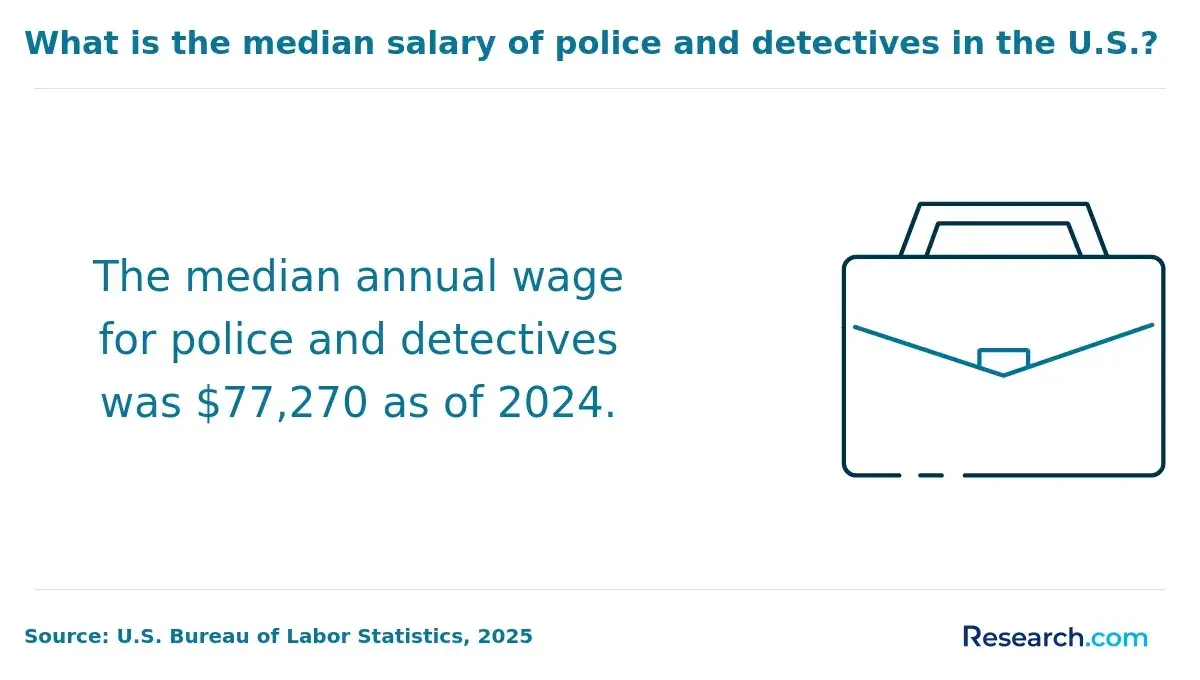
In Georgia, police officer pay by city shows clear variation, with metro areas such as Atlanta and Savannah offering competitive wages of around $60,900 annually, while some rural regions fall below $54,000. Beyond base pay, departments may provide benefits like health insurance and retirement plans to enhance total compensation. Educational attainment is a crucial driver; for instance, some agencies offer up to 6% extra for a bachelor’s degree, making it worthwhile to consider programs that support career advancement, such as the forensic science master’s program cost.
What education trends are affecting law enforcement careers in Georgia?
Evolving education expectations are significantly shaping law enforcement careers in Georgia, reflecting the need for officers to meet complex public safety demands with advanced skills and knowledge. While a high school diploma remains the baseline, many agencies increasingly prioritize higher education, specialized training, and ongoing professional development to ensure effective and adaptive policing.
- Rising Preference for College Degrees: Departments often offer higher starting salaries for candidates holding associate’s or bachelor’s degrees, such as Marietta’s 2025 hiring scale increasing pay from $51,000 for high school graduates to $53,547 for those with a bachelor’s degree.
- Value of Specialized Majors: Degrees in criminal justice, psychology, and cybersecurity are especially valued for equipping officers with critical skills needed to address cybercrime, behavioral health, and community relations.
- Expansion of Continuing Education and Advanced Training: Beyond the mandatory 809 hours of initial POST certification training, officers pursue advanced courses in legal updates, de-escalation techniques, and leadership to maintain certification and career growth.
Staying informed about these education trends is essential for aspiring and current Georgia police officers, as higher qualifications often translate into better pay and promotion prospects. Awareness of these evolving standards equips candidates to remain competitive and responsive within a dynamic policing environment.
What Do Police Officers in Georgia Say About Their Careers
- Completing the rigorous training at Augusta Technical College was truly transformative. The program equipped me with the practical skills and confidence needed to engage effectively with the diverse communities across Georgia. Starting my career as a police officer in a local school allowed me to see firsthand the critical role law enforcement plays in creating a safe learning environment. Being able to protect and mentor young students gives real meaning to my job, and I feel proud to contribute positively to their futures. Tyra
- My journey began at the Georgia Public Safety Training Center, and it profoundly shaped my approach to policing. Throughout the academy, I gained not only tactical expertise but an appreciation for Georgia's unique cultural and geographic challenges, from rural towns to bustling cities. Working in an academic institution initially helped me refine my communication and conflict resolution skills because I was engaging with youth during some of their most vulnerable moments. The sense of personal growth and community impact has been deeply rewarding and motivates me every day. Aki
- Attending the Columbus State Police Academy opened doors for me that I hadn’t imagined. The professional development programs there encourage continuous learning and career advancement, which is crucial in a state as dynamic as Georgia. Starting out in a school environment exposed me to the challenging task of balancing safety with sensitivity, especially in culturally diverse settings. This role reinforced my passion for public service and gave me unique insights into addressing the needs of Georgia’s youth and families. Allen
Related Articles for Nearby States
- 2027 How to Become a Police Officer: Education Requirements in South Carolina
- 2027 How to Become a Police Officer: Education Requirements in Florida
- 2027 How to Become a Police Officer: Education Requirements in Alabama
- 2027 How to Become a Police Officer: Education Requirements in Tennessee
- 2027 How to Become a Police Officer: Education Requirements in North Carolina
- 2027 How to Become a Police Officer: Education Requirements in Mississippi
- 2027 How to Become a Police Officer: Education Requirements in Kentucky
- 2027 How to Become a Police Officer: Education Requirements in Virginia
- 2027 How to Become a Police Officer: Education Requirements in Louisiana
- 2027 How to Become a Police Officer: Education Requirements in West Virginia
References:
- Public Service Memorial Grant | Georgia Student Finance Commission https://www.gafutures.org/hope-state-aid-programs/scholarships-grants/public-service-memorial-grant/
- Georgia’s Scholarship, Grant and Loan Programs | Georgia Student Finance Commission https://gsfc.georgia.gov/about-gsfc/georgias-scholarship-grant-and-loan-programs
- Scholarship Fund Program - Brookhaven Police Foundation https://brookhavenpolice.foundation/what-we-do/scholarship-fund-program/
- Fellowships and Scholarships - Andrew Young School of Policy Studies https://aysps.gsu.edu/admissions/fellowships-and-scholarships/
- Police/Law Enforcement Scholarships - Scholarships.com https://www.scholarships.com/financial-aid/college-scholarships/scholarship-directory/academic-major/police-law-enforcement
- Georgia Public Safety Memorial Scholarship - BigFuture Scholarship Search https://bigfuture.collegeboard.org/scholarships/georgia-public-safety-memorial-scholarship
- Best Criminal Justice Schools In Georgia https://www.criminaljusticedegreeschools.com/degree-by-state/georgia/
- 11 Best Criminal Justice Schools in Georgia for 2025 https://legalcareerpath.com/criminal-justice-schools-georgia/
- Careers - UGA Police Department https://police.uga.edu/careers/
- Online Bachelor of Science with a Major in Criminal Justice | UWG https://www.westga.edu/uwgonline/criminal-justice.php
Other Things You Need to Know About Becoming a Police Officer in Georgia
To apply for a police officer position in Georgia in 2027, applicants need to provide a certified high school diploma or GED, valid driver's license, birth certificate, and proof of U.S. citizenship. Also required are passing scores on the entrance exam and physical agility test, along with completed background check and drug screening reports.
Some police departments in Georgia may offer financial assistance or reimbursement programs for academy training, often contingent on a service commitment. However, this varies by department, so checking with specific departments for their policies is recommended.
To become a police officer in Georgia in 2027, candidates typically need at least a high school diploma or GED. While a college degree is not mandatory, it can be advantageous. Completion of law enforcement academy training, overseen by the Georgia POST, is essential.
In 2027, POST in Georgia oversees the certification and training standards for police officers. They ensure all candidates meet state requirements, including completing the Basic Law Enforcement Training Course and passing required examinations to maintain professional standards in law enforcement.