
2027 How to Become a Police Officer: Education Requirements in South Dakota

Co-Founder and Chief Data Scientist
South Dakota offers a promising career path in law enforcement, with over 3,500 active police officers serving communities statewide. The state’s low crime rate and strong community ties make policing a rewarding profession. Pursuing a career as a police officer in South Dakota combines public service with job stability and growth potential. Understanding the specific education requirements is essential for success.
This article, prepared by experts in career planning, details the education and training needed to join South Dakota's police force. It provides clear, actionable guidance to navigate the application process and meet state standards effectively.
Key Things to Know About Becoming a Police Officer in South Dakota
- Candidates must have a minimum of a high school diploma or GED, but many agencies prefer some college coursework or an associate degree.
- Completion of a Basic Law Enforcement Training (BLET) program at a state-certified academy is mandatory before hiring.
- Continuing education and specialized training are encouraged to advance careers, with South Dakota offering various in-service programs to maintain certification.
- What is the minimum education requirement to become a police officer in South Dakota?
- Which majors are most recommended for aspiring police officers in South Dakota?
- What subjects are taught in South Dakota police academy?
- Can military service replace education requirements for police officers in South Dakota?
- How much does it cost to get a police officer education in South Dakota?
- Are scholarships available for aspiring police officers in South Dakota?
- What certifications benefit a police officer's career development in South Dakota?
- Can advanced legal training enhance your policing career in South Dakota?
- What roles can you get as a police officer in South Dakota?
- What is the average salary of police officers in South Dakota?
- What education trends are affecting law enforcement careers in South Dakota?
What is the minimum education requirement to become a police officer in South Dakota?
Education plays a vital role in law enforcement by ensuring officers have the necessary skills for clear communication, ethical judgment, and effective problem-solving. However, the minimum education requirements for police officers in South Dakota are straightforward compared to some other states, focusing on core foundational qualifications to enter the field. When considering the South Dakota police officer high school diploma requirement, candidates benefit from knowing the precise educational standards expected by agencies across the state. Meeting these standards is the first step toward joining law enforcement in South Dakota.
- High School Diploma or Equivalent: Candidates must have graduated from an accredited high school or possess a recognized high school equivalency certificate, such as a GED acceptable to the state commission.
- No College Coursework Required: There is no mandate for college coursework or degrees, keeping the entry barrier accessible to those with a basic secondary education level.
- Basic Law Enforcement Training: After meeting minimum education requirements, candidates must successfully complete a state-approved basic law enforcement training course for certification.
For further academic advancement within forensic areas, aspiring officers might explore online forensic science master’s programs that can complement foundational knowledge once they begin their law enforcement careers.
Which majors are most recommended for aspiring police officers in South Dakota?
Choosing the right college major can significantly strengthen a candidate’s qualifications and open doors to advanced roles within law enforcement in South Dakota. Selecting a program that aligns with law enforcement demands helps applicants stand out in competitive hiring processes and prepares them for leadership opportunities.
- Criminal Justice: The best majors for police officers in South Dakota often include criminal justice degree programs South Dakota offers. This major covers essential topics like criminal law, policing, corrections, and judicial processes, giving students practical knowledge through internships and practicums. Graduates emerge ready to meet the expectations of agencies looking for candidates with direct law enforcement education.
- Criminology: This major delves into the causes and patterns of crime, equipping students with analytical skills crucial for modern policing strategies. Criminology graduates help agencies understand and respond to crime trends effectively, making their insights invaluable to law enforcement departments.
- Psychology: A psychology background enhances an officer’s ability to manage human behavior and mental health crises, key components in today’s community policing. Candidates trained in psychology improve communication and de-escalation tactics, meeting growing demands for mental health awareness in police work.
- Sociology: Studying sociology helps future officers understand social structures and cultural diversity, vital for building trust in diverse communities across South Dakota. Departments value sociology majors for their ability to develop community-oriented policing programs that foster cooperation.
- Political Science: This major provides insight into government and public policy, preparing officers for administrative and leadership roles by understanding lawmaking and civic engagement. Knowledge in this area supports career growth beyond entry-level positions.
- Law/Legal Studies: Candidates with legal studies expertise gain a strong command of constitutional rights and legal procedures. This knowledge is critical for roles like detectives or investigators, where detailed legal understanding enhances job performance.
- Public Administration: Public administration trains students in management and leadership within the public sector. Those aiming for supervisory roles find this major particularly useful in navigating organizational and policy challenges in law enforcement.
Prospective officers seeking comprehensive preparation may also consider programs such as the forensic science bachelor’s online to expand practical skills applicable to investigations. Overall, majors that combine practical law enforcement knowledge with social and administrative expertise offer the most direct path to meeting South Dakota’s evolving hiring preferences.
What subjects are taught in South Dakota police academy?
Police academy training in South Dakota equips recruits with essential skills, knowledge, and judgment vital for effective law enforcement. Through a practical and intensive curriculum, recruits develop competencies that prepare them for the challenges officers face in the field.
- Criminal Law and Procedures: This subject ensures recruits understand state laws, constitutional rights, and proper enforcement protocols. Mastery here is critical for making lawful decisions and protecting citizen rights.
- Firearms Training: Officers receive practical instruction on safely handling and maintaining firearms. This training enhances their ability to responsibly use force when necessary, while prioritizing personal and public safety.
- Defensive Tactics and Use of Force: Recruits learn techniques to safely control suspects and defend themselves within legal limits. Emphasizing restraint and sound judgment minimizes harm and improves outcomes in confrontational situations.
- Emergency Vehicle Operations: Training includes high-speed driving and pursuit methods designed to optimize response times. Officers learn to operate vehicles safely under pressure, reducing risks during emergencies.
- Community Policing and Multiculturalism: This area fosters skills to engage respectfully with diverse populations and build trust. Effective community interaction helps officers address underlying crime causes and supports cooperation.
- Ethics and Professionalism: Ethical training underlines integrity, accountability, and impartiality. These principles guide officers to maintain public confidence and make morally sound decisions.
- First Aid/AED and First Responder Training: Certification in lifesaving techniques prepares officers to provide immediate assistance during medical emergencies, bridging critical care before help arrives.
- Domestic Violence and Victimology: Instruction here focuses on recognizing abuse, legal responsibilities, and victim support. Officers become equipped to protect vulnerable individuals and facilitate access to community resources.
Can military service replace education requirements for police officers in South Dakota?
In South Dakota, military service can substitute for certain education requirements, though acceptance varies by agency. The statewide minimum is a high school diploma or GED, but departments like the Rapid City Police Department allow four years of honorable active duty, National Guard, or Reserve service to replace an associate degree or 64 college credits, recognizing veterans’ discipline and training as equivalent to formal education. Other agencies may review military service on a case-by-case basis, often requiring an honorable discharge and proof of continuous service. Regardless of background, all recruits must complete the South Dakota Law Enforcement Training Academy, ensuring a consistent foundation for policing while enabling veterans to transition their military skills—such as leadership, teamwork, and adaptability—into law enforcement careers.
When I asked a South Dakota police officer about his transition from military service to law enforcement, he reflected on the journey thoughtfully. Having graduated from a local police academy after serving four years in the National Guard, he described how his military experience was a key factor in meeting the department’s entry requirements without needing additional college credits. “It wasn’t just about ticking boxes,” he said. “The leadership and discipline I developed in the service really prepared me for the academy and on-the-job challenges.” He acknowledged some initial uncertainty about meeting all educational standards but found that his honorable discharge and documented service eased the process. “That blend of military background and formal police training made me confident and ready,” he shared, highlighting how this approach benefits veterans eager to serve their communities in a new capacity.
How much does it cost to get a police officer education in South Dakota?
The cost of obtaining police officer education in South Dakota depends largely on the path you choose, whether it's through a community college, a university degree, or police academy training. Each route involves varying tuition rates, fees, and additional expenses that should be carefully considered when planning your career in law enforcement.
- Community College Tuition: Programs like the Law Enforcement Associate Degree at Southeast Technical College typically charge around $278 per credit hour, with total tuition ranging from $16,000 to $17,000 for a 60-credit program.
- Technical College Tuition: For example, Lake Area Technical College offers law enforcement training at approximately $124 per credit hour, totaling about $7,400 for an associate degree, plus fees and materials.
- University Tuition: Public universities such as Northern State University charge around $8,845 annually, while the University of South Dakota estimates $4,500 to $6,000 yearly for law enforcement degrees based on credit hour rates.
- Police Academy Fees: If hired by a South Dakota law enforcement agency, you are typically sponsored to attend the LET Academy at no cost, covering mandatory certification training.
- Testing and Application Fees: Application fees at technical colleges are modest, often around $25, with some additional testing fees for reciprocity students unless hired by an agency.
- Uniforms and Equipment: Candidates should budget approximately $200 to $500 for uniforms and essential gear, which is usually not included in tuition.
- Textbooks and Course Materials: Expect annual costs ranging between $500 and $1,000 for required books and materials at South Dakota institutions.
- Certification and Licensing Fees: Certification fees can be about $50, partially supporting law enforcement officer training funds.
- Technology Requirements: For hybrid or virtual programs like Lake Area Tech’s Virtual Academy, a personal computer may be necessary, with one-time costs estimated between $400 and $1,000.
Choosing a cost-effective educational pathway involves balancing tuition and associated expenses with career goals. More comprehensive degrees may offer advancement opportunities, while police academy training remains the most affordable route if sponsored. For those interested in related fields, exploring criminal justice degree programs can provide additional career options alongside the traditional police academy training cost in South Dakota.
Are scholarships available for aspiring police officers in South Dakota?
Scholarships and financial aid in South Dakota help ease the considerable costs of education and training for those pursuing a career in law enforcement. These funds can cover tuition, fees, and related expenses, making it more affordable to enter police academy programs and criminal justice degrees.
- State-funded Law Enforcement Association Scholarships: Offered by groups like the South Dakota Peace Officers’ Association, these scholarships support members or their families with awards for tuition and educational expenses, reducing financial stress during training.
- Community College and University Scholarships: Many technical colleges provide scholarships targeting criminal justice and law enforcement students, such as memorial awards that recognize academic achievement and leadership while assisting with course fees and supplies.
- Public Service Scholarships: Programs like the Build Dakota Scholarship cover full tuition and fees for associate degrees in public service fields, including law enforcement, helping meet workforce demands and supporting students through their educational journey.
- Law Enforcement Conference and Professional Development Awards: Scholarships for attending conferences like the International Association of Chiefs of Police foster leadership growth and advanced training opportunities for current or aspiring officers.
- Local and Regional Scholarships: Awards administered by community foundations and local law enforcement organizations often focus on applicants demonstrating financial need, community involvement, and commitment to law enforcement careers, offering vital support tailored to area residents.
A South Dakota police officer shared reflections on her experience navigating these opportunities after graduating from a local academy. She recalled the challenge of balancing work and study while facing tuition costs that initially seemed overwhelming. “Applying for scholarships was a turning point,” she said, noting that the financial aid she received from both the statewide law enforcement association and her technical college’s memorial scholarships allowed her to focus on training without constant worry over expenses. “It felt like the community believed in my potential,” she added, emphasizing how these awards didn’t just ease financial burdens but also affirmed her commitment to public service. Her story illustrates how accessible scholarship programs can transform the path for aspiring officers, making education more attainable and encouraging dedication to law enforcement careers in South Dakota.
What certifications benefit a police officer's career development in South Dakota?
Earning advanced law enforcement certifications in South Dakota significantly enhances a police officer’s skills and effectiveness on the job, while also opening doors for career advancement within their departments. These certifications provide targeted training that hones specialized abilities needed to handle complex situations and meet evolving public safety challenges. Here are key certifications that benefit career growth through police officer training programs South Dakota offers:
- Basic Officer Certification: This foundational certification requires a 520-hour course covering police procedures, legal knowledge, firearms proficiency, and emergency response. It is mandatory for all officers to establish the essential skills needed for all subsequent specialized training.
- Firearms Training Certification: Focused on safety and tactical proficiency with service weapons, this certification is crucial for ensuring both officer and public safety during routine patrols or specialized assignments.
- Emergency Medical Response Certification: Equips officers with skills to provide critical medical care in emergency situations, enhancing their value as first responders, especially in rural settings where paramedic support may be delayed.
- Criminal Investigations Certification: Trains officers in advanced investigative techniques, including evidence handling and witness interviewing, often positioning them for detective roles and improving case resolution rates.
- Cybercrime Investigation Certification: Responding to digital threats, this certification develops expertise in handling computer-based crimes and digital evidence, a growing necessity for modern departments.
- Crisis Intervention Certification: Prepares officers to manage encounters involving individuals in crisis due to mental health or substance abuse, reducing use-of-force incidents and supporting community trust.
- Leadership and Supervisory Training: Prepares officers for promotion by teaching personnel management, ethics, and organizational skills essential for supervisory roles and departmental leadership.
For officers interested in expanding their knowledge beyond traditional law enforcement, pursuing a forensic psychology degree online can complement these certifications and provide valuable insights into behavioral assessment and criminal profiling.
Can advanced legal training enhance your policing career in South Dakota?
Exploring complementary legal training can offer significant advantages for law enforcement professionals. Gaining a deeper understanding of legal procedures, case documentation, and investigative compliance can improve decision-making and elevate career readiness. Officers who expand their expertise into legal disciplines may find that this additional perspective enhances evidence handling, courtroom collaboration, and overall investigative efficiency. For those interested in merging legal skills with law enforcement, consider reviewing how to become a paralegal in South Dakota to gain insights into cross-disciplinary training opportunities.
What roles can you get as a police officer in South Dakota?
Law enforcement careers in South Dakota offer a variety of specialized roles, allowing officers to focus on their strengths and interests. Beyond patrol duties, officers can advance into positions that require additional training and certifications, each playing a key role in community safety and law enforcement effectiveness.
- Patrol Officer: Responsible for enforcing laws and responding to calls, requiring basic law enforcement training and certification.
- Detective/Investigator: Handles major crime investigations after specialized training, crucial for solving cases and supporting prosecutions.
- K-9 Unit Officer: Works with trained police dogs for tasks like narcotics detection, needing handler certification to enhance department capabilities.
- SWAT Team Member: Executes high-risk operations, requiring advanced tactical training to ensure public and officer safety.
- Community Outreach Officer: Builds public trust through education and engagement, supported by training in communication strategies.
- Traffic Enforcement Officer: Focuses on traffic safety and accident investigation, trained in DUI enforcement and accident analysis.
- Training Instructor: Provides ongoing training to officers, maintaining high standards in firearms, tactics, and legal knowledge.
What is the average salary of police officers in South Dakota?
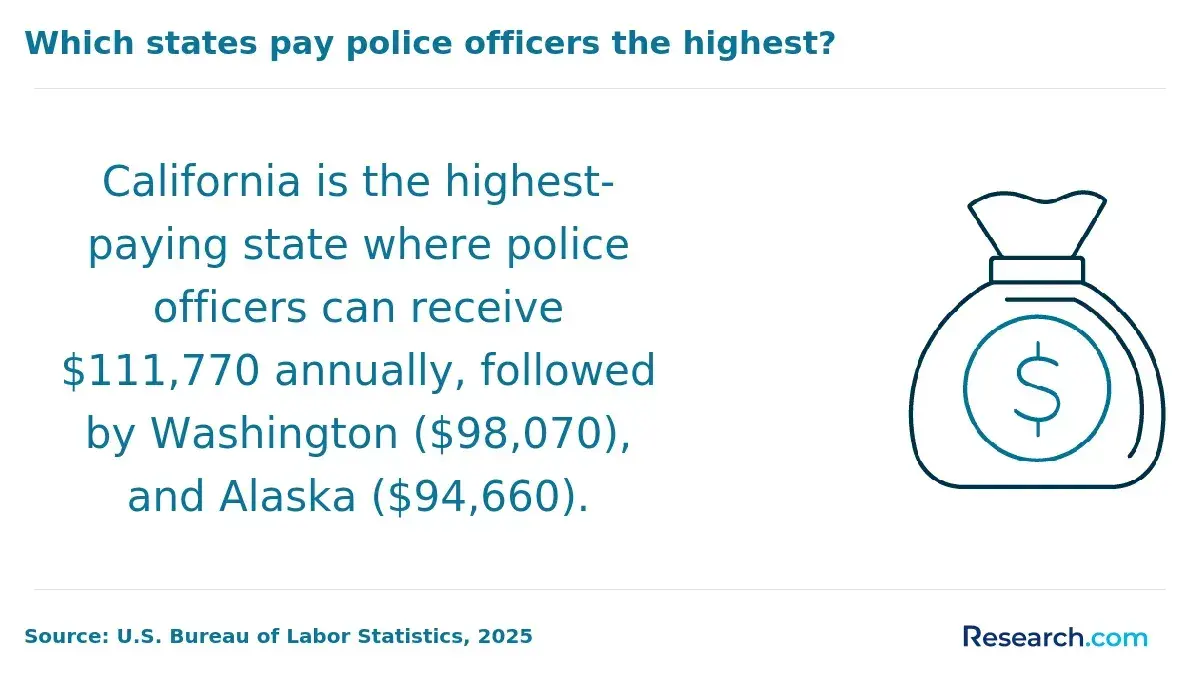
Police officer salary in South Dakota varies significantly depending on location, years of service, education, and rank. Larger cities like Sioux Falls typically offer pay closer to or above the state average. Officers with more experience or higher education tend to earn more, reflecting the value of advanced skills and responsibilities in law enforcement. The average annual salary for police officers in South Dakota breaks down as follows:
- Entry-Level Police Officer: New recruits or those with less than three years of experience usually earn between $48,500 and $56,000 annually, with starting salaries reflecting the lower 25th percentile across the state.
- Mid-Career Police Officer: Officers with four to ten years of experience earn around the state average of $62,148 per year, benefiting from experience, specialized training, and assignments.
- Senior Police Officer: Veterans with over 10–15 years of service or holding supervisory ranks can expect salaries from $74,500 up to $92,000, depending on their department and responsibilities.
South Dakota ranks low nationally for police officer pay, but this is somewhat offset by a lower cost of living. Education can influence earnings, as some departments provide incentives for college degrees related to criminal justice or specialized training. For those interested in law enforcement careers, exploring local police officer pay by city in South Dakota and considering professional development is essential. Additionally, exploring related fields through forensic psychologist training programs can open further opportunities in public safety and justice careers.
What education trends are affecting law enforcement careers in South Dakota?
Evolving education expectations are significantly shaping modern policing careers in South Dakota, reflecting a broader shift toward professionalism and specialized skill development. As law enforcement challenges grow increasingly complex, agencies prioritize higher education, expanded training, and multidisciplinary expertise.
- Rising Preference for College Education: Many agencies now require applicants to have an associate’s degree or at least 64 college credit hours, or equivalent military or law enforcement experience, shifting beyond the minimum high school diploma requirement.
- Value of Specialized Majors: Degrees in criminal justice, psychology, law enforcement, and cybersecurity are highly sought after as they develop critical thinking, behavioral analysis, and technology skills relevant to modern policing.
- Mandatory and Expanding Continuing Education: Certified officers must complete 40 hours of continuing education every two years, covering firearms, crisis intervention, and legal updates to maintain up-to-date knowledge and skills.
- Advanced and Specialized Training Programs: Field and probationary training, such as the 18-week Police Training Officer Program, alongside specialized courses in crisis negotiation and technology-enabled crime, enhance officer readiness and adaptability.
- Integration of Technology and Online Learning: The use of digital platforms and personal laptops in law enforcement education reflects the increased importance of technological fluency within the profession.
Staying informed about these evolving education trends is essential for aspiring and current South Dakota police officers. Understanding the increasing emphasis on formal education, continuous training, and specialized knowledge supports better preparation for recruitment, career advancement, and effective service in modern law enforcement environments.
What Do Police Officers in South Dakota Say About Their Career
- Completing my training at the South Dakota Law Enforcement Training Academy was a transformative experience. The curriculum combined rigorous physical training with real-world scenario simulations that prepared me incredibly well for the challenges on the job. Starting my career in a local school setting allowed me to engage directly with young people, helping foster a safer and more supportive environment. I truly appreciate the balance between professional growth and deeply meaningful community involvement that this career offers. Agnes
- Working as a police officer in a local school in South Dakota has been deeply rewarding. I graduated from the Northern Plains Police Academy, which emphasized ethical policing and community partnership. This role has allowed me to witness and contribute to the personal growth of students, while navigating unique cultural dynamics specific to our region. The opportunity for career advancement here is robust, with continual support for further education and specialized training. Sophia
- My journey started at the Black Hills Police Academy and led me to a fulfilling role serving in a local academic institution. South Dakota’s strong community ties and distinctive rural environment present unique challenges that have honed my problem-solving skills and adaptability. The most rewarding part is knowing the positive impact I make on young lives, ensuring they feel safe and protected. This profession has given me a profound sense of purpose and the chance to grow both personally and professionally. Dimas
Related Articles for Nearby States
- 2027 How to Become a Police Officer: Education Requirements in North Dakota
- 2027 How to Become a Police Officer: Education Requirements in Nebraska
- 2027 How to Become a Police Officer: Education Requirements in Minnesota
- 2027 How to Become a Police Officer: Education Requirements in Wyoming
- 2027 How to Become a Police Officer: Education Requirements in Iowa
- 2027 How to Become a Police Officer: Education Requirements in Montana
- 2027 How to Become a Police Officer: Education Requirements in Colorado
- 2027 How to Become a Police Officer: Education Requirements in Kansas
- 2027 How to Become a Police Officer: Education Requirements in Wisconsin
- 2027 How to Become a Police Officer: Education Requirements in Missouri
References:
- South Dakota Law Enforcement Job Openings | Go Law Enforcement https://golawenforcement.com/job-openings/south-dakota/
- Join our team! | Spearfish, SD https://www.spearfish.gov/822/Join-our-team
- Career Opportunities | Aberdeen, SD - Official Website https://www.aberdeen.sd.us/166/Career-Opportunities
- Jobs • Police Officer https://www.huronsd.gov/Jobs.aspx
- South Dakota Municipal League https://sdmunicipalleague.org/networking/apply_now.aspx
- Loading... | South Dakota Legislature https://sdlegislature.gov/Rules/Administrative/02:01
- Reciprocity Program - City of Sioux Falls https://www.siouxfalls.gov/government/careers/police-recruitment/reciprocity
- NDHP Trooper Qualifications and Requirements | North Dakota State Highway Patrol https://www.nd.gov/ndhp/careers/ndhp-trooper-qualifications-and-requirements
- Qualifications - Police Officer — Sioux City Police Department https://www.siouxcitypolice.com/qualifications
Other Things to Know About Becoming a Police Officer in South Dakota
In 2027, the South Dakota Law Enforcement Officers Standards and Training Commission, or POST, establishes regulations for the certification, training, and career development of police officers. This includes setting educational requirements and standards for law enforcement academy training.
Online degrees are increasingly recognized in South Dakota for those pursuing education to become police officers, though acceptance can vary by department. Many law enforcement agencies prioritize accredited degrees, whether earned online or in person, as long as the program meets state standards and includes relevant coursework. Prospective officers should ensure their online degree comes from a reputable institution with proper accreditation to avoid any hiring obstacles. Ultimately, candidates with quality online degrees remain competitive, but it’s advisable to verify specific requirements with individual police departments or state training academies to confirm acceptance of online credentials.


