2027 How To Become a Social Media Manager: Salary & Career Paths

Co-Founder and Chief Data Scientist
Embarking on a career as a Social Media Manager in the USA presents exciting opportunities, but also unique hurdles. Sifting through the noise to find reliable information about this dynamic field can feel overwhelming. Many resources offer generic advice, failing to address the specific challenges and nuances of the current job market. As an expert, I'm here to provide clarity. The social media landscape evolves rapidly, demanding continuous learning and adaptation. Identifying genuine trends from fleeting fads is crucial, as is understanding the ethical considerations surrounding online engagement. Let's explore how to cut through the clutter and build a successful career.
Key Things You Should Know About Becoming a Social Media Manager in the USA
- Education: While a bachelor's degree in marketing, communications, or a related field is preferred, practical experience and a strong portfolio are often equally valued.
- Skill Development: Develop essential skills in content creation, analytics, strategy development, and community management, which are highly sought after by US employers.
- Platform Proficiency: Become proficient in major social media platforms like Facebook, Instagram, Twitter, LinkedIn, and TikTok, as well as relevant analytics and management tools.
- Industry Trends: Stay updated on the latest social media trends, algorithm changes, and emerging platforms relevant to the US market.
- Networking: Build a professional network through online communities, industry events, and social media platforms to connect with potential employers and peers in the USA.
- Portfolio Building: Create a compelling portfolio showcasing successful campaigns, content samples, and measurable results to demonstrate your abilities to US-based employers.
- Certifications: Consider obtaining industry-recognized certifications, such as those from Hootsuite, HubSpot, or Google, to enhance your credibility in the US job market.
- Legal and Ethical Standards: Familiarize yourself with US-specific legal and ethical guidelines related to social media marketing, including privacy laws and advertising regulations.
- Communication Skills: Hone your written and verbal communication skills, as effective communication is crucial for interacting with clients and audiences in the USA.
- Compensation: Be aware that salaries for social media managers in the USA vary based on experience, location, and industry, with higher salaries typically found in major metropolitan areas. The salary range for social media managers typically spans from a minimum of around $24,500 to a maximum of $109,500 annually, with the median falling around $64,845 per year.
- Job Market: Understand that the US job market for social media managers is competitive, with a high demand for skilled professionals across various industries.
- Adaptability: Develop the ability to adapt to rapidly changing social media landscapes and client needs, which is essential for success in the dynamic US market.
- How can you become a social media manager for 2027?
- What does a social media manager do?
- What are the educational requirements for becoming a social media manager?
- What skills are required for social media managers?
- What is the certification and licensing process for social media managers?
- What ethical and legal guidelines should you observe as a social media manager?
- How much can you earn as a social media manager?
- How can supplemental education and professional networking boost career advancement?
- What is the job market like for a social media manager?
- What subspecialties and career paths are available for social media managers?
- What emerging trends are reshaping social media management?
- How do you measure social media campaign ROI effectively?
- How can project management strategies enhance social media effectiveness?
- How can building your personal brand accelerate your career as a social media manager?
- What challenges should you consider as a social media manager?
- How can a human resources perspective boost your social media management performance?
- Can an advanced business degree drive strategic innovation in social media management?
How can you become a social media manager for 2027?
Becoming a social media manager involves a combination of education, practical experience, and continuous learning. It's a field that rewards adaptability and creativity.
- Build a strong online presence: Showcase your skills by managing your own social media accounts effectively.
- Gain relevant experience: Internships, freelance work, or volunteer positions can provide valuable hands-on experience.
- Learn social media tools and platforms: Familiarize yourself with platforms like Facebook, Instagram, Twitter, LinkedIn, and analytics tools.
- Develop a portfolio: Create a portfolio showcasing successful campaigns, content creation, and analytics reports.
- Network with industry professionals: Attend industry events, join online communities, and connect with people in the field.
- Stay updated on industry trends: Social media is constantly evolving, so continuous learning is crucial.
Developing a robust skill set and a compelling portfolio are essential steps in establishing yourself as a competent social media manager. This profession is dynamic and demands continuous adaptation to the ever-changing digital landscape.
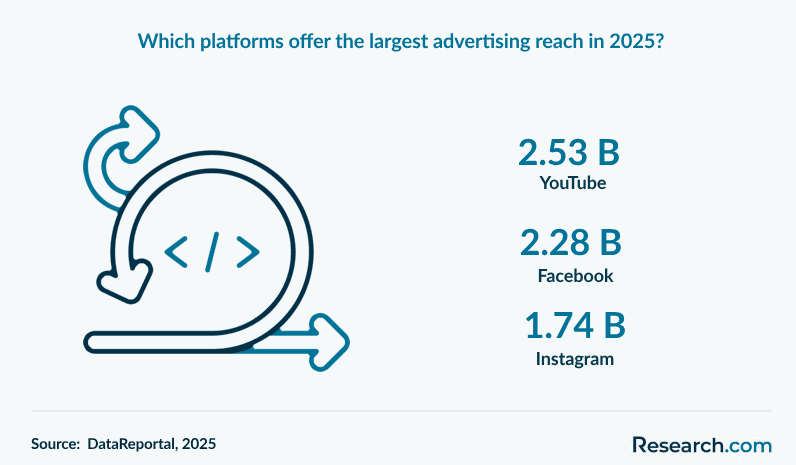
The potential advertising reach of various social media platforms, measured in billions of users, as of February 2025, is immense! YouTube exhibits the largest potential advertising reach, with 2.53 billion users, closely followed by Facebook at 2.28 billion. Instagram and TikTok maintain significant user bases, with 1.74 billion and 1.59 billion users, respectively. LinkedIn has a user base of 1.20 billion, while Messenger reaches 947 million users. Snapchat reports 709 million users, and Reddit reaches 606 million. X (formerly Twitter) shows a potential advertising reach of 586 million, and Pinterest has the smallest reach of the listed platforms, at 340 million.
The data, shown in the graphic below, reveals that video-centric platforms like YouTube and image-heavy platforms like Instagram have the largest potential advertising reach, while professional networking and niche platforms like LinkedIn and Pinterest have comparatively smaller user bases. This indicates that platforms with broad appeal and multimedia content generally attract larger audiences, which is crucial for advertising potential.
What does a social media manager do?
Social media managers are responsible for creating, managing, and analyzing a company's or brand's social media presence. Their role is multifaceted and requires a blend of creative and analytical skills.
- Content creation and curation: Developing engaging content that aligns with the brand's voice and goals. Some start off with online graphic design degree qualifications and progress to management positions later.
- Social media strategy development: Creating and implementing social media plans to achieve marketing objectives.
- Community management: Interacting with followers, responding to comments and messages, and building relationships.
- Social media analytics and reporting: Monitoring and analyzing social media metrics to track performance and identify areas for improvement.
- Campaign management: Planning and executing social media campaigns to promote products, services, or events.
- Staying up-to-date with social media trends: Researching and implementing new social media features and best practices.
Social media managers act as the voice of a brand online, cultivating relationships and driving engagement. Their work directly influences a brand's public perception and customer interaction.
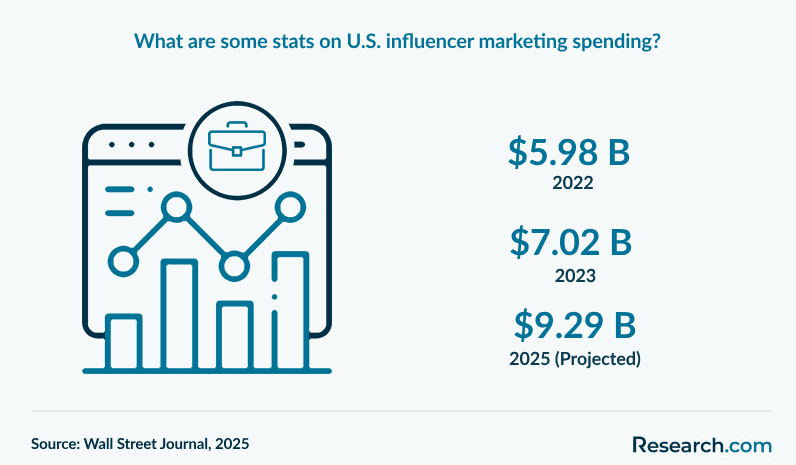
Marketers are increasingly partnering with individual content creators to connect with consumers, as many people are more inclined to trust and purchase from their favorite online influencers rather than traditional pop-up advertisements. In the U.S., spending on influencer marketing surged to $7.02 billion in 2023, reflecting a 17.4% rise from the previous year, and is expected to climb to $9.29 billion by 2025, as seen in the graphic below. This trend highlights the growing influence of digital personalities in shaping consumer behavior and brand engagement.
What are the educational requirements for becoming a social media manager?
While there isn't a strict educational requirement, having a relevant degree or certifications can significantly enhance your prospects. Employers often look for a combination of education and practical experience.
- Bachelor's degree in marketing, communications, or a related field: Provides a strong foundation in marketing principles and communication strategies.
- Associate's degree or certificate programs: Offers specialized training in social media management and digital marketing.
- Online courses and certifications: Platforms like Coursera, Udemy, and Google offer courses on social media marketing and analytics.
- Workshops and seminars: Attending industry events can provide valuable insights and networking opportunities.
- Practical experience: Internships, freelance work, and managing personal social media accounts can compensate for formal education.
- MBA degree: Offers higher-level skills, especially in management and strategic thinking. Explore some of our recommended online MBA programs for more information.
Formal education can provide a structured understanding of marketing principles, but practical experience and demonstrated skills are equally important. Continuous learning and adaptation are crucial in this ever-evolving field.
What skills are required for social media managers?
Social media managers need a diverse skill set to effectively manage a brand's online presence. These skills range from creative to analytical, and everything in between.
- Content creation: Writing, editing, and designing engaging content for various social media platforms.
- Communication: Effectively communicating with followers, clients, and team members.
- Analytical skills: Interpreting social media metrics and using data to inform strategy.
- Strategic thinking: Developing and implementing social media strategies that align with business goals.
- Project management: Organizing and managing multiple social media campaigns and projects. You can benefit from enrolling in online project management degree offerings to upgrade your skills in this area.
- Creativity: Developing innovative and engaging content that captures the audience's attention.
- Customer service: Addressing customer inquiries and resolving issues promptly and professionally.
A well-rounded social media manager possesses both creative and analytical capabilities, allowing them to craft compelling content and measure its impact. These professionals must also be adaptable and quick to learn new technologies.
What is the certification and licensing process for social media managers?
While there isn't a mandatory licensing process for social media managers, certifications can validate your skills and enhance your credibility. These certifications often demonstrate proficiency in specific areas of social media marketing.
- Hootsuite Social Marketing Certification: Validates skills in social media strategy and management using the Hootsuite platform.
- HubSpot Social Media Certification: Covers inbound social media strategies and best practices.
- Google Digital Marketing & E-commerce Certificate: Provides comprehensive training in digital marketing, including social media.
- Facebook Blueprint Certification: Demonstrates expertise in Facebook and Instagram advertising and marketing.
- Sprout Social Advanced Social Media Strategy Certification: Showcases an advanced understanding of strategic social media practices.
Also, check nationally accredited online universities to see if they have certificate programs in specific areas such as marketing, business, data analytics, and other areas. Certifications can bolster your resume and demonstrate your commitment to professional development. They serve as an indicator of acquired knowledge and proficiency in social media management.
What ethical and legal guidelines should you observe as a social media manager?
Social media managers must adhere to ethical and legal guidelines to maintain a brand's reputation and avoid legal issues. These guidelines ensure responsible and transparent communication.
- Transparency and honesty: Disclosing sponsored content and avoiding misleading information.
- Respect for privacy: Protecting user data and adhering to privacy policies.
- Copyright and intellectual property: Obtaining permission to use copyrighted material and respecting intellectual property rights. The cheapest paralegal certificate programs can help you in this important area.
- Avoiding defamation and libel: Ensuring that content is accurate and does not harm the reputation of others.
- Adherence to platform guidelines: Following the terms of service and community guidelines of each social media platform.
- Accessibility: Making content accessible to users with disabilities.
- Truth in advertising: Ensuring that all advertisements are truthful and not misleading.
Upholding ethical standards and legal compliance is crucial for building trust and maintaining a positive brand image. Social media managers must be vigilant in ensuring their content and practices are both responsible and lawful.
How much can you earn as a social media manager?
The salary for a social media manager can vary based on experience, location, and industry. Entry-level positions may offer lower salaries, while experienced managers in high-demand industries can earn significantly more.
- Entry-level positions: Typically offer lower salaries, often ranging from $40,000 to $50,000 per year.
- Mid-level positions: With a few years of experience, salaries can range from $50,000 to $70,000 per year.
- Senior-level positions: Experienced managers with a proven track record can earn $70,000 to $100,000 or more per year.
- Location: Salaries tend to be higher in major metropolitan areas with a high cost of living.
- Industry: Certain industries, such as technology and finance, may offer higher salaries.
- Freelance and consulting: Rates can vary widely based on experience and project scope, but may offer large one-time consult fees.
Data from Salary.com in 2025 for various marketing and content-related occupations are as follows, and shown in the graph below. Website content managers earn the highest average salary at $139,566, followed closely by brand managers at $136,054, and social marketing managers at $133,686. Content managers and public relations managers also command high salaries, at $131,779 and $129,286, respectively. Digital marketing managers and marketing communications managers show similar average salaries, at $126,519 and $126,816. Community managers and social media managers report moderately lower average salaries, with $117,700 and $114,340, respectively. Social media specialists have the lowest average salary within this group, at $74,150.
The data reveals a clear trend: managerial roles related to website content, branding, and social marketing command the highest average salaries, while specialized roles like Social Media Specialist earn significantly less. This indicates a strong correlation between management responsibility and compensation within the marketing and content field.
Social media management offers a range of earning potential, with higher salaries often tied to experience and specialized skills. The demand for skilled professionals continues to grow, potentially increasing earning potential.
How can supplemental education and professional networking boost career advancement?
Augmenting practical experience with advanced education and strategic networking can unlock new career opportunities. Pursuing specialized coursework or certifications in leadership and talent management cultivates skills that complement digital expertise. Engaging with industry-specific communities and participating in professional events not only broadens your perspective but also offers access to mentorship and emerging trends. For example, enrolling in a cheap online HR masters degree program can enhance your managerial acumen and provide a competitive edge in leading dynamic digital campaigns.
What is the job market like for a social media manager?
The job market for social media managers is robust and continues to grow as businesses recognize the importance of a strong online presence. The demand for skilled professionals is high across various industries.
- Increased demand for digital marketing skills: Businesses are investing heavily in digital marketing, including social media management.
- Growth of e-commerce and online marketing: The rise of e-commerce has created more opportunities for social media managers.
- Demand for specialized skills: Employers are seeking candidates with expertise in specific areas, such as social media advertising and analytics.
- Freelance and remote work opportunities: Many social media managers work remotely or as freelancers, offering flexibility. Content writers, for example, obtain online MFA creative writing degrees and become contractual writers for companies.
- Small business and startup growth: Smaller businesses and startups also need social media managers to grow their brand awareness.
- Continuous evolution of social platforms: New social media platforms and features are constantly emerging, creating new opportunities.
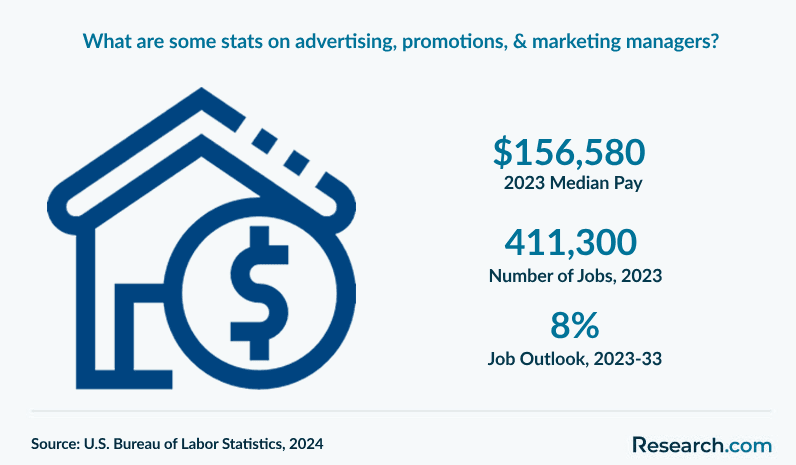
As shown in the graphic below, in 2023, the median annual salary for advertising, promotions, and marketing managers was $156,580, or $75.28 per hour. These professionals typically hold a bachelor's degree and may require related work experience. There were 411,300 jobs in this occupation in 2023, with an expected employment growth of 8% from 2023 to 2033, which is faster than the average for all occupations. This growth is expected to result in 31,100 new job opportunities. The data indicates a strong demand for these roles, reflecting the increasing importance of marketing and promotions in driving business success.
The job market for social media managers remains strong, driven by the increasing importance of digital marketing. Professionals who stay current with industry trends and develop specialized skills will find ample opportunities.
What subspecialties and career paths are available for social media managers?
Social media managers can specialize in various areas, leading to diverse career paths. Specialization allows for deeper expertise and higher earning potential.
- Social media advertising specialist: Focuses on paid social media campaigns and advertising strategies.
- Social media analytics specialist: Analyzes social media data to provide insights and recommendations.
- Content marketing manager: Develops and manages content strategies across various platforms.
- Community manager: Focuses on building and engaging with online communities.
- Social media strategist: Develops and implements comprehensive social media strategies.
- Influencer marketing manager: Manages partnerships with social media influencers.
- Digital marketing manager: Oversees all aspects of a company’s online marketing efforts.
Career paths for social media managers can lead to specialization, management roles, or broader digital marketing positions. The field offers opportunities for growth and advancement based on expertise and experience.
What emerging trends are reshaping social media management?
Rapid technological shifts, evolving platform algorithms, and data privacy regulations are redefining industry practices. Social media managers are increasingly leveraging artificial intelligence for predictive analytics, automated content curation, and real-time engagement tracking. Concurrently, immersive experiences such as augmented reality and interactive video formats are driving new consumer expectations. As these trends accelerate, professionals are turning to targeted, accelerated educational paths—such as online 1 year MBA programs—to acquire strategic, analytical, and leadership skills that directly address this dynamic environment.
How do you measure social media campaign ROI effectively?
Social media managers can optimize campaign outcomes by establishing clear performance metrics, such as engagement rates, conversion rates, and click-through statistics. Leveraging quantitative methods—including A/B testing and customer journey mapping—enables precise adjustments in real time, aligning digital efforts with broader business targets. Integrating these approaches with thorough financial analysis promotes more strategic resource allocation and sustained growth. For additional insights on aligning business and marketing strategies, explore an affordable AACSB accredited online MBA.
How can project management strategies enhance social media effectiveness?
Integrating structured project management methodologies into social media strategies can streamline campaign planning, execution, and post-campaign analysis. Leveraging agile techniques and clear milestone tracking helps ensure that creative initiatives are delivered on time and within scope. This approach facilitates optimal resource allocation across cross-functional teams and refines workflow processes for improved performance. For professionals looking to deepen their expertise in managing both digital campaigns and project timelines, exploring the fastest online project management degree programs can provide the necessary tools and methodologies to drive strategic digital engagement.
How can building your personal brand accelerate your career as a social media manager?
Building a strong personal brand is essential for distinguishing yourself in a competitive digital landscape. Demonstrating expertise through a curated online presence can attract valuable networking opportunities and high-level responsibilities. Leveraging consistent messaging across professional channels not only reinforces credibility but also showcases strategic insight and creative innovation. Moreover, supplementing your experiential knowledge with focused academic credentials, such as pursuing an online MBA program, further refines leadership skills and strategic vision, reinforcing your standing as an industry leader.
What challenges should you consider as a social media manager?
Social media managers face various challenges in their daily work. These challenges require adaptability, problem-solving skills, and a proactive approach.
- Constant platform updates: Social media platforms are constantly evolving, requiring continuous learning.
- Managing negative feedback: Responding to negative comments and complaints professionally.
- Measuring ROI: Demonstrating the impact of social media efforts on business goals.
- Combating misinformation: Addressing false or misleading information on social media.
- Maintaining consistent brand voice: Ensuring that all content aligns with the brand’s messaging.
- Dealing with algorithm changes: Adapting strategies to changes in social media algorithms.
- Managing time and resources: Balancing multiple projects and deadlines effectively.
Social media managers must be prepared to navigate a dynamic and challenging environment. Addressing these challenges effectively is crucial for success in this field.
Support staff for social media managers encompasses various media and communication-related occupations, as shown in the graph below. Technical writers command the highest average salary at $80,050, followed by editors at $75,020, and writers and authors at $73,690. Public relations specialists also earn a relatively high average salary of $66,750, while film and video editors and camera operators earn $65,070. Interpreters and translators, as well as reporters, correspondents, and broadcast news analysts, show similar average salaries, at $57,090 and $57,500, respectively. Broadcast and sound engineering technicians earn an average salary of $54,160. Photographers have the lowest average salary within this group, at $40,760.
This data demonstrates that technical writing and editorial roles generally offer the highest average salaries within the media and communication sector, while more technical or artistic roles like photography and broadcast engineering tend to have lower average earnings. This suggests a potential correlation between specialized technical writing and editing skills and higher compensation.
Here’s What Graduates Say About Their Social Media Manager Careers
Being a social media manager has opened doors I never imagined. I get to unleash my creativity every day and connect with people all over the world, which is incredibly fulfilling, and I've seen firsthand how a great social strategy can boost a brand's success. This career has given me purpose and excitement. Joey
The fast pace and constant evolution of social media keep me on my toes, and I love it. It's thrilling to see a campaign I created go viral and drive real results for my clients, plus the flexible work environment allows me to balance my personal life. I feel empowered and valued in my role. Pedro
I've always been passionate about storytelling, and social media management allows me to share compelling narratives with a global audience. The ability to shape brand perceptions and foster meaningful conversations is incredibly rewarding, and I've built strong relationships with clients who trust my expertise. This career has exceeded my expectations. Wren
How can a human resources perspective boost your social media management performance?
Integrating human resources principles into your social media management practice can refine leadership, enhance team collaboration, and improve internal accountability. By embracing strategies like structured feedback, targeted skills development, and efficient talent utilization, you can streamline campaign workflows and foster innovative decision-making. These practices enable a more cohesive operational approach, ensuring that creative and analytical efforts align with organizational goals. Review how long does it take to get a human resources degree to gain further insights on leveraging HR concepts for sustained career advancement in digital marketing.
Can an advanced business degree drive strategic innovation in social media management?
Integrating advanced business education can refine strategic decision-making and elevate digital campaign leadership. Pursuing further academic credentials equips social media managers with robust analytical frameworks, enabling them to align marketing tactics with overarching business objectives. This advanced knowledge fosters enhanced crisis management, resource optimization, and long-term innovation within digital initiatives. For those considering academic advancement, exploring options like the online DBA can further consolidate leadership acumen and drive sustainable growth.
Key findings
- Growing Demand for Marketing Expertise: The projected faster-than-average job growth in advertising, promotions, and marketing management suggests a strong and expanding job market for professionals in this domain, including social media managers.
- Social Media Platform Reach: YouTube, with 2.53 billion users, and Facebook, with 2.28 billion users, represent the platforms with the largest potential advertising reach for social media managers to consider (February 2025).
- Influencer Marketing Relevance: The increasing investment in influencer marketing, reaching $7.02 billion in the U.S. in 2023 and projected to hit $9.29 billion by 2025, highlights a key strategy for social media managers to leverage.
- Social Media Manager Salary: Social media managers earn an average salary of $114,340, positioned between higher-earning roles like website content managers ($139,566) and lower-earning roles like social media specialists ($74,150) (Salary.com, 2025).
- Marketing Management Opportunities: With a median annual salary of $156,580 in 2023 and an expected job growth of 8% from 2023 to 2033, the broader field of advertising, promotions, and marketing management presents potential career advancement for social media managers.
- Support Staff Collaboration: Social media managers may collaborate with support staff whose salaries range from an average of $40,760 for photographers to $80,050 for technical writers.
- Platform Selection Strategy: Social media managers should prioritize platforms like YouTube and Facebook, given their extensive reach, while also considering niche platforms based on target audience (February 2025).
- Career Advancement Potential: The higher average salaries in marketing management roles indicate potential career growth opportunities for experienced social media managers (Salary.com, 2025).
References:
- Bureau of Labor Statistics. (2024, April 17). Advertising, promotions, and marketing managers. U.S. Department of Labor.
- Bureau of Labor Statistics. (2024, August 29). Media and communication occupations. U.S. Department of Labor.
- DataReportal. (2025, January 25). Global social media statistics. DataReportal.
- Salary.com. (2025). Brand Manager Salary. Salary.com.
- Salary.com. (2025). Community Manager Salary. Salary.com.
- Salary.com. (2025). Content Manager Salary in the United States. Salary.com.
- Salary.com. (2025). Digital Marketing Manager Salary in the United States. Salary.com.
- Salary.com. (2025). Marketing Communications Manager Salary in the United States. Salary.com.
- Salary.com. (2025). Public Relations Manager Salary in the United States. Salary.com.
- Salary.com. (2025). Social Marketing Manager Salary in Major Cities. Salary.com. Salary.com. (2025). Social Media Manager Salary, Hourly Rate (January, 2025) in the United States. Salary.com.
- Salary.com. (2025). Social Media Specialist Salary in the United States. Salary.com.
- Salary.com. (2025). Website Content Manager Salary in the United States. Salary.com.
- Wall Street Journal. (2025, January 3). Influencer Marketing's M&A Streak Continues With Mavely Sale. The Wall Street Journal.
Other Things You Should Know About Becoming a Social Media Manager
In 2027, a social media manager should possess qualifications like a degree in marketing, communications, or related fields. Essential skills include data analytics, content strategy, communication proficiency, and familiarity with social media platforms and tools. Practical experience through internships or freelance work can enhance prospects.
The average salary for a social media manager in 2027 is approximately $65,000 annually, though it can vary based on experience, location, and the specific demands of the industry or company.