
2027 How to Become an Ultrasound Technician in Massachusetts

Co-Founder and Chief Data Scientist
In Massachusetts, many prospective students face uncertainty about pursuing a career in ultrasound technology. Employment for diagnostic medical sonographers is projected to grow 18% from 2022 to 2032, surpassing national averages and reflecting rising demand for diagnostic imaging in healthcare.
This article, prepared by career planning experts, outlines Massachusetts’s education, certification, and career pathways, offering clear guidance for aspiring ultrasound technicians.
Key Things to Know About Becoming an Ultrasound Technician in Massachusetts
- Massachusetts ultrasound technicians need a CAAHEP-accredited associate or bachelor’s degree with clinical rotations, coursework, and ARDMS exam eligibility.
- Options include OB/GYN, abdominal, vascular, cardiac, breast, musculoskeletal, and pediatric sonography, supported by ARDMS, ARRT, or CCI certifications.
- With salaries averaging $107,326 and 11% projected growth, advancement comes through specialization, certifications, leadership, and higher education despite workplace challenges.
Table of Contents
- What education is required to become an ultrasound technician in Massachusetts?
- What specialties can ultrasound technicians choose from in Massachusetts?
- Which certification exams are required to become an ultrasound technician in Massachusetts?
- Is a license required to practice as an ultrasound technician in Massachusetts?
- What to expect during ultrasound technician clinical training in Massachusetts?
- How much does it cost to become an ultrasound technician in Massachusetts?
- What is the average salary for ultrasound technicians in Massachusetts?
- Can ultrasound technicians transition into radiology roles in Massachusetts?
- How can continuing education and professional development benefit ultrasound technicians in Massachusetts?
- What is the job outlook and demand for ultrasound technicians in Massachusetts?
- What are the career advancement steps for ultrasound technicians in Massachusetts?
- What are the common challenges ultrasound technicians face in Massachusetts?
What education is required to become an ultrasound technician in Massachusetts?
In Massachusetts, becoming an ultrasound technician requires completing accredited education and extensive hands-on training. These programs ensure students are prepared for certification and professional employment in healthcare settings. Below are the key educational requirements:
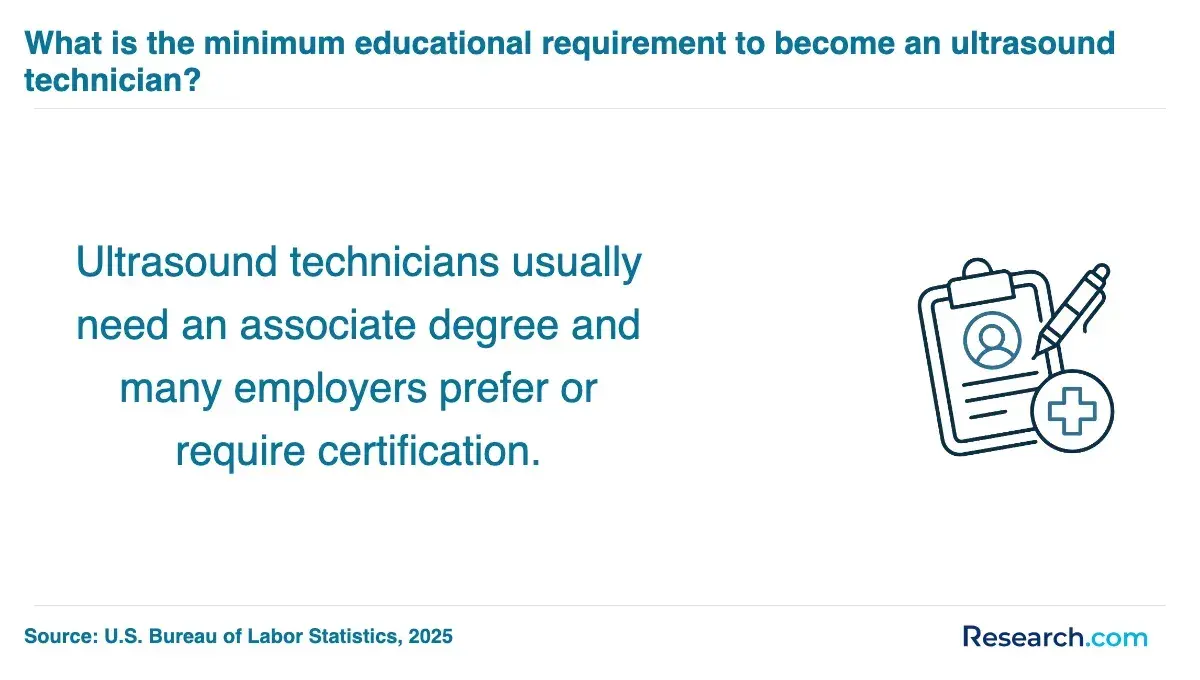
- Minimum Degree Requirement: At least an Associate of Science in Diagnostic Medical Sonography is required, though bachelor’s degrees and accelerated options are available.
- Accreditation: Students must complete a program accredited by CAAHEP or JRC-DMS to meet national standards and certification eligibility.
- Clinical Experience: Supervised clinical rotations provide hands-on patient care and ultrasound practice, building confidence and competence.
- Program Duration: Programs typically last two to four years, depending on degree type, with accelerated bachelor’s programs offered.
- Prerequisites: A high school diploma or GED is necessary before enrollment.
- Background Checks: CORI and SORI background checks are required by law before beginning clinical placements.
- Certification Preparation: Graduates of accredited programs qualify for national exams such as ARDMS, preferred by most employers.
- Coursework: Core subjects include anatomy, ultrasound physics, scanning techniques, and laboratory practice to develop technical skills.
Prospective students should also consider the required skills for ultrasound technicians alongside formal education, as employers value a combination of theoretical knowledge and practical ability.
What specialties can ultrasound technicians choose from in Massachusetts?
Ultrasound technicians in Massachusetts may pursue a variety of specialties that align with statewide healthcare needs and national certification standards. Below are the primary specialties available in the state.
- Abdominal Sonography: Focuses on imaging abdominal organs such as the liver, kidneys, and pancreas, supporting the diagnosis of common internal conditions.
- Obstetric and Gynecologic Sonography: Specializes in reproductive health and fetal monitoring, a consistently high-demand field in Massachusetts healthcare facilities.
- Vascular Sonography: Examines veins and arteries to detect circulation problems, with many Massachusetts programs offering vascular-focused training.
- Cardiac Sonography (Echocardiography): Provides detailed imaging of the heart’s structure and function, supported by dedicated academic and clinical programs.
- Breast Sonography: Offers precise breast tissue imaging to detect cysts, tumors, or cancers, increasingly important in preventive health initiatives.
- Musculoskeletal Sonography: Targets muscles, tendons, and joints to diagnose injuries, often connected to sports medicine and orthopedic care.
- Pediatric Sonography: Involves imaging infants and children, requiring specialized training to meet the unique needs of younger patients.
For those interested in becoming ultrasound technicians, exploring the pathways to become an Xray technician provides useful insights into the required training and specialization choices available in Massachusetts.
Which certification exams are required to become an ultrasound technician in Massachusetts?
Certification exams are crucial for ultrasound technicians in Massachusetts, ensuring compliance with national standards and confirming readiness for patient care. Although the state does not require licensure, employers strongly prefer recognized credentials. Below are the main pathways.
- SPI Exam – ARDMS: The Sonography Principles and Instrumentation exam, offered by the American Registry for Diagnostic Medical Sonography, covers ultrasound physics, equipment, and safety. Passing this exam is a prerequisite for specialty certifications.
- Specialty Exams – ARDMS: After the SPI, candidates may pursue specialties such as Abdomen, OB/GYN, or Vascular Technology. These exams evaluate expertise in specific clinical areas and are supported by Massachusetts training programs.
- RDMS Credential – ARDMS: Achieving Registered Diagnostic Medical Sonographer status requires passing both the SPI and one specialty exam. This credential is widely recognized in Massachusetts and often required by healthcare employers.
- Alternative Certifications – ARRT, CCI: Some facilities accept the American Registry of Radiologic Technologists Sonography credential or Cardiovascular Credentialing International certifications, such as Registered Cardiac Sonographer. While valid, these are less common than ARDMS in Massachusetts.
Together, these certifications not only establish professional credibility but also influence the types of facilities where technicians can work, as shown in the following chart on employment sectors for ultrasound professionals.
Is a license required to practice as an ultrasound technician in Massachusetts?
Massachusetts does not require a state license to practice as an ultrasound technician. Instead, the pathway to professional recognition relies on national certification and employer expectations, which serve as the primary standards for competency and quality care. Below are the main requirements for ultrasound technicians in Massachusetts:
- No State Licensure: Massachusetts has no laws or agencies mandating licensure for ultrasound technicians.
- Regulatory Oversight: The Department of Public Health licenses radiologic technologists in certain fields, but sonography is not included.
- National Certification: Credentials through ARDMS, ARRT, or CCI are essential to meet employer and industry standards.
- Accredited Education: Candidates must graduate from a CAAHEP-accredited program to qualify for certification exams.
- Certification Exams: Passing the ARDMS Sonography Principles and Instrumentation (SPI) exam and at least one specialty exam, such as Abdomen or OB/GYN, is mandatory for certification.
- Professional Advantage: Certification ensures employability, validates expertise, and provides credibility in the state’s competitive healthcare market.
What to expect during ultrasound technician clinical training in Massachusetts?
Clinical training in Massachusetts is a vital stage of sonography education, combining theoretical knowledge with supervised, hands-on experience. It equips students with the technical skills, professional judgment, and patient care abilities required for certification and future employment. Below are the key components of this training:
- Hands-On Patient Care: Students perform supervised scans while developing communication and patient management skills in varied settings.
- Supervised Use of Imaging Equipment: Trainees operate ultrasound machines under expert oversight, focusing on image quality and patient safety.
- Specialty Rotations: Clinicals cover OB/GYN, abdominal, vascular, and cardiac sonography, providing broad diagnostic exposure.
- Mentorship from Licensed Professionals: Credentialed sonographers provide instruction, feedback, and professional role modeling.
- Competency Evaluations: Regular assessments confirm technical proficiency, clinical judgment, and readiness to progress.
- Program-Specific Clinical Hours: Accredited programs typically require several hundred to more than 1,000 supervised hours of training.
- Compliance with Health Requirements: Students must complete immunizations, TB testing, and health screenings to begin rotations.
- CORI/SORI Background Checks: Massachusetts requires criminal and sex offender checks to ensure patient safety.
- Travel to Multiple Clinical Sites: Training often involves rotations at different hospitals or clinics, requiring flexibility and reliable transportation.
- Preparation for Certification Exams: Clinical experiences build eligibility and readiness for ARDMS certification, a key step toward employment.
How much does it cost to become an ultrasound technician in Massachusetts?
The total cost of becoming an ultrasound technician in Massachusetts varies based on program level, institution type, and whether a student is in-state or out-of-state. Below are the main categories to consider.
- Tuition and Fees: Associate degree programs at community colleges average $10,000 to $16,000 for in-state students, while bachelor’s programs at universities or private schools may range from $22,000 to $30,000 or more.
- Clinical Training Expenses: Students typically pay $800 to $1,500 for uniforms, lab fees, liability insurance, and transportation to externship sites.
- Certification and Exam Fees: ARDMS exams cost about $225–$250 per specialty, with added fees for retakes or multiple certifications.
- Licensing or State Fees: Massachusetts does not currently require state licensure for ultrasound technicians, so no extra licensing costs apply.
- Books and Materials: Textbooks, imaging software, and supplies generally total $500 to $1,200 for the duration of the program.
- Living Expenses: Housing, meals, transportation, and personal costs usually range from $12,000 to $18,000 annually, depending on location and lifestyle.
Costs for an ultrasound technician program in Massachusetts vary depending on the program type and whether you attend a public or private institution. Students frequently offset expenses with financial aid, scholarships, or employer tuition assistance. Those seeking faster completion may also consider the best accelerated online sonography and ultrasound degree options for added flexibility.
What is the average salary for ultrasound technicians in Massachusetts?
The average annual salary for ultrasound technicians in Massachusetts is about $107,326, well above the national average of $91,770. Hourly wages average $51.60 compared to the national $44.12, though exact figures vary by role and location. Below are the main factors that shape salaries in Massachusetts.
- Experience Level: Entry-level technicians earn less, while senior sonographers in metropolitan areas like Boston can make over $109,000 annually.
- Education and Certifications: Advanced degrees and credentials such as RDMS, especially with specialties, increase earning potential.
- Work Setting: Large hospitals and diagnostic centers typically offer higher salaries and stronger benefits than outpatient clinics or physician practices.
- Geographic Location: Boston and other urban centers pay more than rural areas, reflecting differences in cost of living and healthcare demand.
- Specialization: OB/GYN, cardiovascular, and abdominal sonography specialties command higher pay because of the advanced skills required.
Can ultrasound technicians transition into radiology roles in Massachusetts?
Ultrasound technicians seeking expanded responsibilities can leverage their clinical skills to enter radiology fields by acquiring specialized training and certifications tailored to imaging technologies beyond ultrasound. This pathway involves targeted clinical practice, aligning competencies with radiography standards, and potentially enrolling in accredited bridging programs. For comprehensive guidance on certification prerequisites and transitioning steps, see how to become a radiology technician in Massachusetts. Strategic career diversification in this manner can enhance professional opportunities and adapt to evolving healthcare demands.
How can continuing education and professional development benefit ultrasound technicians in Massachusetts?
Staying current with industry innovations is essential for ultrasound technicians in Massachusetts. Engaging in continuing education programs, professional workshops, and accredited online courses helps practitioners refine diagnostic skills, learn new imaging modalities, and understand evolving regulatory standards. Participation in professional associations also supports networking, mentoring, and cross-disciplinary learning that can enhance clinical effectiveness. Additionally, exploring allied health roles—such as how to become a nurse midwife in Massachusetts—can further inform career pathways and foster interprofessional collaboration.
What is the job outlook and demand for ultrasound technicians in Massachusetts?
Employment for ultrasound technicians in Massachusetts is projected to grow by 11% through 2032, slightly below the national average of 14.3%. While growth is more modest, the state continues to provide consistent opportunities due to demographic changes, healthcare expansion, and technology adoption. Below are the leading factors shaping demand.
- Population Growth and Aging: An increase in older adults and chronic conditions fuels greater reliance on diagnostic imaging services.
- Healthcare Expansion: New hospitals, clinics, and outpatient facilities generate openings, though growth may be concentrated in specific regions.
- Technological Advancements: Progress in 3D/4D and portable ultrasound equipment creates specialized niches, particularly in cardiac, vascular, and pediatric imaging.
- Preventive Care Trends: Greater emphasis on early detection enhances ultrasound’s importance in screening and routine diagnostics.
- Regional Demand Variations: Metropolitan areas such as Boston offer more abundant opportunities, while rural regions may face workforce shortages.
To better understand how these employment trends translate into real job settings, the following chart highlights the industries where ultrasound technicians in the U.S. are most commonly employed.
What are the career advancement steps for ultrasound technicians in Massachusetts?
Ultrasound technicians in Massachusetts can advance their careers through specialization, certifications, and leadership opportunities. Below are the primary advancement steps:
- Specialization: Concentrating on OB/GYN, vascular, or cardiac sonography enhances clinical expertise and access to advanced roles. Additional training and certifications often support this transition.
- Advanced Certifications: Credentials from ARDMS, CCI, or ARRT significantly improve job prospects, with many Massachusetts employers requiring ARDMS certification as a standard qualification.
- Higher Education: Pursuing a bachelor’s or master’s degree in medical imaging, healthcare administration, or related fields prepares technicians for leadership, research, or academic positions. These degrees broaden career scope and influence. For those weighing their options, exploring what is the easiest medical degree program might help guide their educational path.
- Leadership Roles: Experienced sonographers may assume supervisory or administrative positions, managing clinical teams and ensuring compliance with healthcare standards while gaining higher responsibility and pay.
- Education and Training: Becoming a program instructor or clinical trainer allows professionals to mentor students and strengthen workforce quality across Massachusetts healthcare institutions.
- Research and Technology Development: Contributing to clinical research or imaging technology projects supports medical innovation and enhances ultrasound practices statewide.
What are the common challenges ultrasound technicians face in Massachusetts?
Ultrasound technicians in Massachusetts face a variety of challenges that influence both their daily work and long-term career paths. Recognizing these obstacles helps professionals prepare strategies that support resilience, career growth, and overall well-being. Below are the most common challenges encountered in the state.
- Physical Strain and Ergonomics: Repetitive scanning motions and awkward postures during long shifts often lead to musculoskeletal issues, which are heightened in facilities with limited ergonomic support.
- Emotional Stress: Assisting patients through serious or uncertain diagnoses requires strong emotional resilience, adding pressure beyond technical responsibilities.
- Workload and Staffing Shortages: Increasing demand for diagnostic imaging, combined with staff shortages, results in heavier caseloads and fewer breaks, raising stress levels.
- Certification and Continuing Education Requirements: Maintaining ARDMS and other credentials requires ongoing education, which can be difficult to balance with full-time clinical duties.
- Technology Adaptation: Rapid advancements in imaging technology demand continuous learning, yet outdated tools or inconsistent training can make adaptation challenging.
- Job Market Competition: Urban centers often have high competition for desirable positions, while rural areas face staffing shortages, creating uneven career opportunities across the state.
Understanding these ergonomic risks faced by ultrasound technicians in Massachusetts not only highlights physical health considerations but also the complexity of their professional landscape. Prospective and current sonographers can benefit from exploring the ranking of most affordable online associates degrees in radiology to find educational paths that accommodate these challenges effectively.
What do ultrasound technicians in Massachusetts say about their careers?
- Working as an ultrasound technician in Massachusetts has given me career stability and growth. The diverse cases keep me engaged, and meaningful patient interactions remind me how rewarding and important this profession truly is. Lorie
- This career in Massachusetts allows me to balance technical expertise with compassion. The demand for skilled sonographers ensures stability, while specialization opportunities inspire continuous advancement and lasting contributions to community health outcomes every day. Marti
- Becoming an ultrasound technician in Massachusetts has been fulfilling and motivating. The variety of cases strengthens my skills, and the respect from patients confirms the meaningful impact of this rewarding healthcare profession. Nash
Related Articles for Nearby States
- 2027 How to Become an Ultrasound Technician in Rhode Island
- 2027 How To Become an Ultrasound Technician in Connecticut
- 2027 How to Become an Ultrasound Technician in New Hampshire
- 2027 How to Become an Ultrasound Technician in New York
- 2027 How to Become an Ultrasound Technician in Vermont
- 2027 How to Become an Ultrasound Technician in New Jersey
- 2027 How to Become an Ultrasound Technician in Maine
- 2027 How to Become an Ultrasound Technician in Pennsylvania
- 2027 How to Become an Ultrasound Technician in Delaware
- 2027 How to Become an Ultrasound Technician in Maryland
References:
- Bunker Hill Community College. (n.d.). General sonography. Retrieved from BHCC
- Bureau of Labor Statistics. (n.d.). Diagnostic medical sonographers and cardiovascular technologists and technicians: Occupational outlook handbook. Retrieved from BLS
- CHCP - College of Health Care Professions. (n.d.). Is sonography a good career? Retrieved from CHCP
- Dreambound. (2025). How to become a medical sonographer in Massachusetts. Retrieved from Dreambound
- HealthJob.org. (n.d.). How to become an ultrasound technician in Massachusetts. Retrieved from HealthJob.org
- H&C Travel Nursing. (n.d.). Exploring sonography job demand and career growth. Retrieved from H&C Travel Nursing
- MCPHS University. (n.d.). Diagnostic medical sonography (general fast track BS). Retrieved from MCPHS
- Regis College. (n.d.). Earning a degree to become an ultrasound and vascular technologist. Retrieved from Regis College
- Sonio. (n.d.). Understanding sonographer burnout: 7 causes and risk factors. Retrieved from Sonio
- Ultrasound Schools Info. (n.d.). Ultrasound technician – career overview and education guide. Retrieved from Ultrasound Schools Info
Other Things You Should Know About Becoming an Ultrasound Technician in Massachusetts
In 2027, ultrasound technicians in Massachusetts can expect positive job prospects due to growing healthcare demands. With increasing emphasis on non-invasive diagnostic techniques, ultrasound technicians are in higher demand, particularly in hospitals and diagnostic laboratories. Growth is driven by technological advancements and an aging population requiring diagnostic imaging.
Yes, you can become an ultrasound technician in Massachusetts through an accredited online program that includes supervised clinical training. Coursework may be completed virtually, but in-person clinical practice is mandatory. Programs should prepare students for certification exams such as ARDMS, which Massachusetts employers typically require for employment.
Yes, freelance and travel ultrasound technician opportunities exist in Massachusetts. Freelancers may contract with multiple facilities, while travel technicians accept assignments in different locations, sometimes across states. Maintaining ARDMS certification and meeting Massachusetts licensure requirements are essential to pursue these roles successfully while ensuring compliance with healthcare standards.
To become an ultrasound technician in Massachusetts in 2027, complete an accredited program in diagnostic medical sonography. Then, pass the ARDMS certification exam. Pursue licensure, which may involve additional state-specific requirements. Continuing education is vital for maintaining credentials.


