
2027 How to Become an Ultrasound Technician in North Dakota

Co-Founder and Chief Data Scientist
Many individuals seeking a reliable healthcare career in North Dakota face uncertainty about the path to becoming an ultrasound technician. The state’s healthcare sector is growing, with employment for diagnostic medical sonographers projected to increase by approximately 23% through 2030, reflecting strong local demand. Additionally, ultrasound technicians in North Dakota earn competitive salaries compared to other allied health roles, highlighting the profession’s appeal.
This article, crafted by seasoned career planning experts, offers a detailed guide on required education, certification, and job prospects. It helps readers navigate choices effectively while considering alternate routes and market realities within the state.
Key Things to Know About Becoming an Ultrasound Technician in North Dakota
- Complete an accredited diagnostic medical sonography program, typically requiring 1-2 years; accreditation ensures eligibility for certification and quality training.
- Obtain certification through the American Registry for Diagnostic Medical Sonography (ARDMS), a key credential favored by North Dakota employers.
- Consider the job market: North Dakota’s employment for ultrasound technicians is smaller but expected to grow 12% over the next decade, reflecting steady demand in rural and urban healthcare settings.
- What education is required to become an ultrasound technician in North Dakota?
- What specialties can ultrasound technicians choose from in North Dakota?
- Which certification exams are required to become an ultrasound technician in North Dakota?
- Is a license required to practice as an ultrasound technician in North Dakota?
- What to expect during ultrasound technician clinical training in North Dakota?
- How much does it cost to become an ultrasound technician in North Dakota?
- What is the average salary for ultrasound technicians in North Dakota?
- What is the job outlook and demand for ultrasound technicians in North Dakota?
- What are the career advancement steps for ultrasound technicians in North Dakota?
- What are the common challenges ultrasound technicians face in North Dakota?
- Are there ongoing certification and education requirements for ultrasound technicians in North Dakota?
- How Can Mentorship and Networking Empower Your Career as an Ultrasound Technician in North Dakota?
What education is required to become an ultrasound technician in North Dakota?
Meeting the north dakota diagnostic medical sonography degree requirements involves completing structured education combined with practical experience. Accredited ultrasound technician programs in North Dakota provide the framework necessary for qualification and certification.
- Minimum Degree Requirement: Most candidates complete an associate’s degree in diagnostic medical sonography, typically a two-year program; some options also include certificates or bachelor's degrees, but the associate's degree remains the most direct route.
- Accreditation: Programs must be accredited by CAAHEP or JRC-DMS to ensure compliance with national standards and eligibility for certification exams.
- Credit Hours & Coursework: For example, an Associate of Applied Science degree generally requires around 91 credit hours combining general education and specialized sonography classes.
- GPA Standards: A minimum GPA of 2.75 is often required along with passing grades in prerequisites such as anatomy, physiology, algebra, and medical terminology.
- Clinical Internship/Practicum: Hands-on clinical training is integral, with documented observation hours—usually a minimum of four hours shadowing registered sonographers—required to develop practical skills.
- CPR Certification: Proof of current healthcare provider CPR certification (AHA or BLS approved) is mandatory before clinical participation.
- Certification Exam Eligibility: Graduates become eligible to sit for the ARDMS Sonography Principles & Instrumentation exam, a necessary step often preferred or required by North Dakota employers and the state licensure board.
While there are multiple pathways, enrolling in fastest way to become a radiology technician programs that are accredited can better ensure both compliance with standards and readiness for the workforce.
What specialties can ultrasound technicians choose from in North Dakota?
Ultrasound technicians in North Dakota have access to a variety of diagnostic medical sonography specialties, each emphasizing unique clinical skills and patient care approaches. These ultrasound specializations in North Dakota reflect both the evolving healthcare demands and opportunities within the state’s medical facilities.
Below is a concise overview of the primary specialties available to sonographers pursuing diverse career paths.
- Abdominal Sonography: Addresses imaging of key abdominal organs like the liver and kidneys, forming a foundation in most accredited programs given its broad clinical applications.
- Obstetric and Gynecologic (OB/GYN) Sonography: Concentrates on fetal development and reproductive health, and is typically the introductory specialty encountered during training, fundamental to prenatal care services.
- Vascular Sonography: Involves examination of blood vessels and flow, critical in diagnosing vascular diseases, with most programs integrating this specialty to enhance graduates’ employability.
- Small Parts Sonography: Focuses on smaller structures such as the thyroid and breast, supporting diagnostic precision especially in cancer detection.
- Cardiac (Echocardiography) Sonography: Specializes in heart imaging to assess cardiac function and structure, often working alongside cardiology professionals in hospitals.
- Musculoskeletal Sonography: Examines muscles and joints, increasingly relevant due to rising sports medicine needs and orthopedic diagnostics in the region.
Those interested in exploring diverse paths within sonography may benefit from reviewing the radiology career options available nationwide, which complement the regional specializations. Given the positive job growth projections, understanding these specialties can guide students and professionals toward informed decisions about career development in North Dakota’s sonography landscape.
The chart below highlights the most common skills ultrasound technicians rely on in 2025, reinforcing how specialized knowledge—whether in patient care, vascular ultrasound, or ARDMS certification—directly supports the diverse sonography specialties available in North Dakota.
Which certification exams are required to become an ultrasound technician in North Dakota?
Certification exams play a vital role in confirming that ultrasound technicians in North Dakota meet the professional and ethical standards expected by employers and regulators. These exams assess both technical knowledge and practical skills, ensuring patient safety and quality care. State rules also emphasize certification as part of licensure and employment eligibility.
- Sonography Principles & Instrumentation (SPI) Exam (ARDMS): This exam, offered by the American Registry for Diagnostic Medical Sonography (ARDMS), tests foundational knowledge in ultrasound physics, instrumentation, and safety protocols. Candidates must typically graduate from a CAAHEP-accredited sonography program or have equivalent clinical experience to qualify. In North Dakota, students usually take the SPI exam during their final semester as a prerequisite for advanced certification.
- Abdomen (AB) and Obstetrics/Gynecology (OB/GYN) Specialty Exams (ARDMS): Following the SPI, candidates may pursue specialty exams focusing on specific clinical areas such as abdomen or OB/GYN sonography. These exams evaluate specialized skills required for each field and are necessary for obtaining the Registered Diagnostic Medical Sonographer (RDMS) credential. Passing the SPI and fulfilling ARDMS clinical prerequisites are mandatory, and North Dakota employers often favor applicants with these specialty certifications.
- Conditional State License (North Dakota State Board of Medical Imaging and Radiation Therapy): North Dakota mandates licensure for sonographers, requiring proof of certification, typically via an active ARDMS registry. New graduates can apply for a two-year conditional license while completing exam requirements. The state board regulates licensing, enforcing compliance and continuing education to maintain standards specific to the state.
- Other Certification Exams (CCI and ARRT): Although ARDMS certifications are predominantly recognized, some North Dakota employers accept credentials from Cardiovascular Credentialing International (CCI), such as the Registered Cardiac Sonographer (RCS), or the American Registry of Radiologic Technologists (ARRT) sonography credential. These alternatives cover cardiac or vascular sonography and provide varied pathways but are less commonly required.
Successfully passing these exams not only boosts credibility and trust with patients and employers but also aligns professionals with North Dakota’s regulatory framework. Certified sonographers typically access superior job prospects and contribute effectively to meeting the state’s increasing healthcare demands.
Is a license required to practice as an ultrasound technician in North Dakota?
Yes, a state license is required to practice as an ultrasound technician in North Dakota. This requirement ensures that professionals meet state standards for patient safety and quality care before performing sonography independently. Without this legal authorization, working in the field is unlawful and could limit employment opportunities.
North Dakota is one of only four states that mandates licensure for sonographers, regulated by the North Dakota Board of Medical Imaging and Radiation Therapy. Applicants must complete an accredited ultrasound program and demonstrate national certification or eligibility from bodies like the ARDMS, ARRT, or CCI. The state also offers a two-year Conditional License for recent graduates working toward full certification, bridging the gap between education and full licensure.
Certification exams, including the Sonography Principles and Instrumentation (SPI) exam and specialty exams such as Abdomen or OB/GYN, are integral to meeting North Dakota’s licensing standards. Ongoing continuing education and adherence to national and state regulations support both legal practice and professional credibility. Compliance with these requirements not only maintains licensure but also improves career prospects in a competitive healthcare environment.
When I spoke with an ultrasound technician from North Dakota who graduated locally, he shared that navigating the licensing process felt daunting at first. “Passing the SPI and specialty exams was challenging, but having the Conditional License gave me confidence while I prepared,” he explained. He emphasized that understanding state-specific regulations early helped avoid unnecessary delays. “Licensing isn’t just paperwork—it validated my skills and reassured patients.” His experience underlines how licensing fosters professional growth and trust in the sonography field.
What to expect during ultrasound technician clinical training in North Dakota?
Clinical training in North Dakota is essential for preparing ultrasound technician students to meet both state and national certification standards. It bridges theoretical knowledge with practical skills through real-world patient care and supervised clinical experiences. This phase ensures that students gain the competence required for professional employment and regulatory compliance.
- Hands-On Patient Care: Students engage in direct patient interactions, learning proper communication, safe positioning, and adapting to various clinical scenarios in healthcare settings.
- Supervised Use of Imaging Equipment: Trainees operate ultrasound machines under licensed professionals’ guidance to master correct transducer use and imaging protocols for accurate diagnostics.
- Exposure to Specialty Rotations: Clinical experiences typically cover abdominal, obstetric/gynecologic (OB/GYN), vascular, and occasionally cardiac sonography, fostering broad clinical competence.
- Mentorship from Licensed Professionals: Experienced sonographers provide feedback, model best practices, and support professional development and clinical judgment.
- Program-Specific Clinical Hour Requirements: Accredited programs require completion of several hundred clinical hours to ensure thorough exposure to diverse patient populations and diagnostic cases.
- Competency Evaluations: Formal assessments, image reviews, and case studies are used to verify skill proficiency before students are eligible for graduation and certification exams.
- State-Specific Licensing Steps: Graduates may pursue a two-year Conditional License unique to North Dakota, facilitating early work experience while completing national registry certification.
- Prerequisites and Safety Certifications: Students must complete observation hours, prerequisite coursework, and maintain active CPR certification before clinical entry.
These structured clinical experiences are critical for passing certification exams like the RDMS, enhancing technical and communication skills, and building confidence necessary for successful integration into healthcare roles.
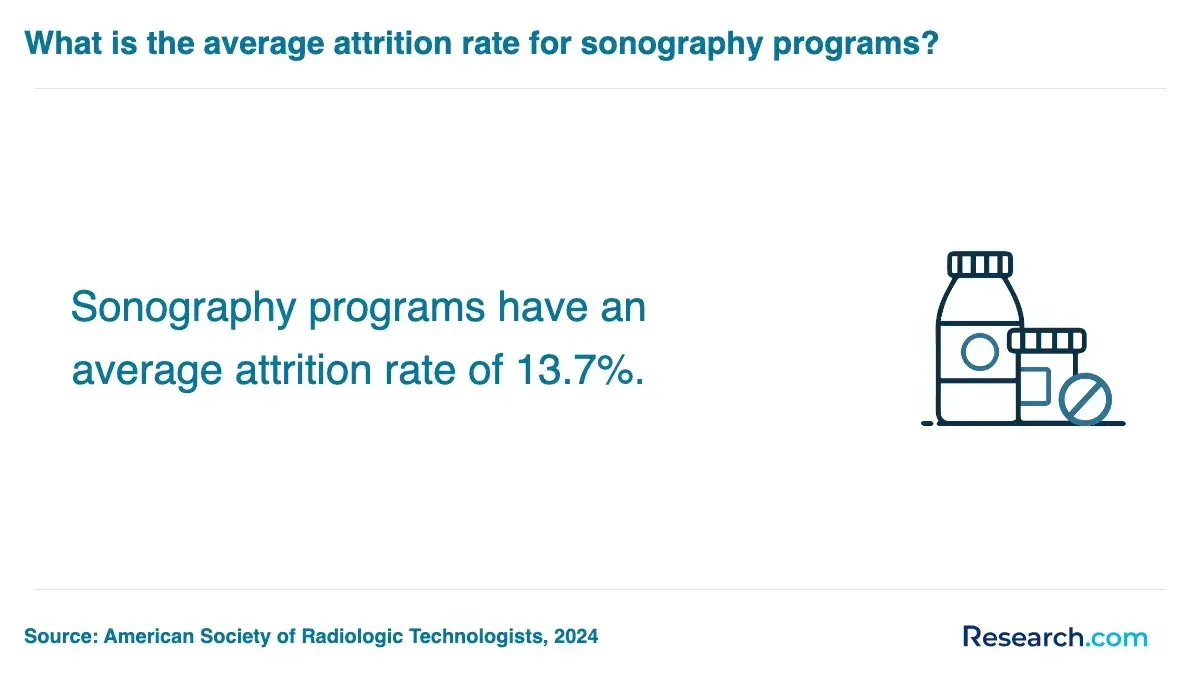
While clinical training provides essential preparation, it’s also a demanding phase where persistence is key. The chart below shows that sonography programs average a 13.7% attrition rate, underscoring the importance of resilience and commitment during this stage.
How much does it cost to become an ultrasound technician in North Dakota?
Getting trained as a sonographer in North Dakota typically runs $10,000 to $20,000 per year for accredited associate-level programs—take Bismarck State College at the lower end, and the more comprehensive University of Mary at the higher end. If you're chasing a Bachelor’s degree—the type offered via Sanford Health in partnership with NDSU expect costs to edge upward, with nationwide bachelor’s programs often priced between $30,000 and $48,000.
Beyond tuition, don’t forget ancillary costs: textbooks (say $200–$1,000), uniforms, lab fees, drug testing, and ARDMS registration might tack on several hundred extra dollars. Financial aid options—including scholarships, grants, and loans—can significantly soften the blow.
If you're wondering what are the best online sonography programs that might save you some costs and time while still delivering quality training—those options do exist, but always verify that they’re CAAHEP-accredited before committing.
While costs are an important factor, potential earnings also vary by education level. The chart below illustrates how degree attainment—associate, bachelor’s, or master’s—directly impacts annual salary for ultrasound technicians, helping prospective students weigh tuition expenses against long-term income potential.
What is the average salary for ultrasound technicians in North Dakota?
The average annual salary for ultrasound technicians in North Dakota is around $103,981, which is slightly below the national average. This ranking reflects the state’s rural character and unique economic factors that influence local pay scales.
- Experience Level: Entry-level sonographers earn less, while experienced technicians can make over $110,000 annually, showing a wide salary range based on proficiency.
- Education and Certifications: Advanced degrees and specialty certifications tend to increase earnings, as employers value heightened expertise and skills.
- Work Setting: Hospitals often offer higher wages compared to outpatient clinics or physician offices; travel sonographers in hospitals may earn significantly more weekly.
- Geographic Location: Urban areas like Bismarck provide higher pay than smaller towns such as Valley City, affected by local demand and cost of living.
- Specialization: Focused fields like OB/GYN or cardiovascular sonography generally command better salaries due to high demand.
What is the job outlook and demand for ultrasound technicians in North Dakota?
The employment growth rate for ultrasound technicians in North Dakota is projected at about 20%, which is roughly double the national average of 10%. This suggests an above-average demand in the state, though it is important to consider how various regional factors contribute to this trend.
- Population Growth and Aging: The increasing number of older adults in North Dakota drives higher demand for diagnostic imaging as chronic and age-related conditions become more common.
- Healthcare Expansion: New clinics, hospitals, and outpatient centers are emerging, requiring more ultrasound technicians to fill roles in these growing healthcare facilities.
- Technological Advancements: Innovations in imaging, including vascular and 3D ultrasound, create specialized job opportunities but also require ongoing training and adaptability from technicians.
- Preventive Care Trends: A stronger emphasis on early detection has integrated ultrasound more widely into routine screenings, boosting technician demand especially in preventive health settings.
- Regional Demand Variations: While urban areas like Fargo and Bismarck offer more job openings, rural regions face shortages due to fewer healthcare workers willing to practice outside cities.
Ultrasound technology offers a promising and stable career path in North Dakota, though opportunities can vary by location and specialization. A local graduate shared that while demand was strong around Fargo, she often had to stay flexible and consider smaller communities.
She emphasized that keeping up with evolving technology beyond initial certification was challenging but rewarding, as it allowed her to provide advanced patient care. Her experience highlights that success in North Dakota’s healthcare landscape requires both adaptability and commitment.
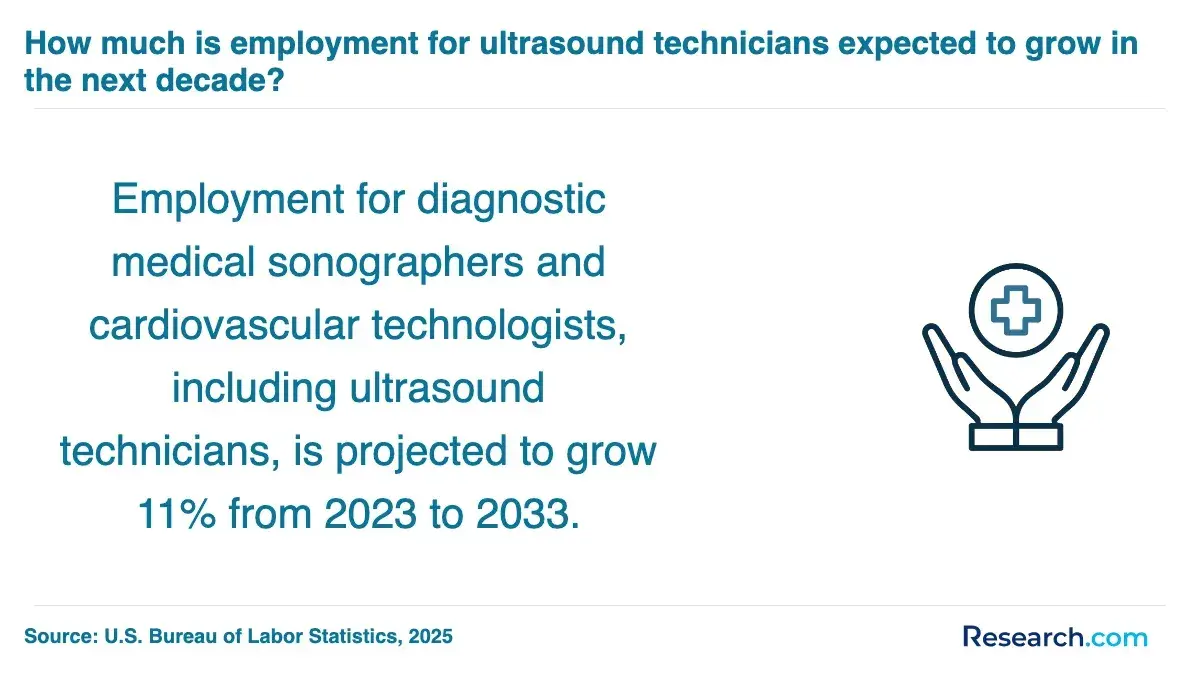
National projections also reinforce this outlook. As shown below, employment for diagnostic medical sonographers, including ultrasound technicians, is expected to grow 11% from 2023 to 2033. This aligns with North Dakota’s strong demand, underscoring steady long-term opportunities for trained professionals.
What are the career advancement steps for ultrasound technicians in North Dakota?
Ultrasound technicians in North Dakota can enhance their careers through various advancement steps, including specialization, obtaining advanced certifications, and pursuing leadership roles. These paths offer opportunities for broader responsibilities and improved professional standing. Exploring career advancement opportunities for ultrasound technicians in North Dakota involves understanding these options and their implications.
- Specialization: Focusing on specific areas such as OB/GYN, vascular, or cardiac sonography requires additional training and expertise, making technicians more competitive for specialized roles in hospitals, outpatient centers, or specialty clinics.
- Advanced Certifications: Earning credentials from recognized bodies like ARDMS, CCI, or ARRT is often essential for career growth, as many employers prefer or require certification to ensure higher standards of clinical competency.
- Higher Education: Pursuing a bachelor’s or master’s degree in medical imaging or related fields can open doors to advanced clinical, research, or administrative roles, providing a platform for greater influence within healthcare organizations.
- Leadership Roles: Experienced sonographers may progress to supervisory or administrative positions where they manage teams, streamline operations, and implement new imaging technologies, sharpening organizational and managerial skills.
- Education and Training: Becoming an instructor or clinical trainer in accredited programs allows technicians to contribute to shaping future practitioners, requiring both clinical expertise and often further educational qualifications.
- Research or Technology Development: Engaging in research projects or collaborating with equipment manufacturers supports innovation in medical imaging, advancing diagnostic techniques and patient care quality.
For those seeking how to become a lead sonographer in North Dakota, combining these steps strategically can significantly impact career trajectory. Additionally, considering the easiest medical degrees may help professionals select educational paths that align with their goals. These advancement strategies not only improve earning potential but also enable ultrasound technicians to expand their professional impact across the state’s healthcare system.
What are the common challenges ultrasound technicians face in North Dakota?
Recognizing the challenges for ultrasound technicians in North Dakota is key to navigating the profession successfully. Awareness allows technicians to develop strategies for managing workplace demands and maintaining both physical and emotional well-being. Addressing these obstacles thoughtfully can improve job satisfaction and career longevity.
- Physical Strain and Ergonomics: Repetitive scanning motions and long hours standing can cause musculoskeletal issues, leading to chronic pain over time.
- Emotional Stress: Handling sensitive patient situations demands resilience and strong interpersonal skills, which can be emotionally taxing.
- Workload and Staffing Shortages: Fluctuating patient volumes and reliance on temporary staff often create heavy caseloads and limited support.
- Certification and Continuing Education Requirements: Balancing ongoing education to maintain licensure with work commitments presents a persistent challenge.
- Technology Adaptation: Rapid advancements in ultrasound technology require continuous learning to ensure diagnostic accuracy.
- Job Market Competition: Despite projected growth, regional disparities in openings can increase competition for desirable roles.
By understanding ultrasound technician job difficulties North Dakota presents, professionals can proactively seek resources and prioritize self-care. For those interested in training pathways, exploring the easiest online ultrasound tech school options may help balance education with these real-world challenges.
What do ultrasound technicians in North Dakota say about their career?
- Completing my ultrasound technician program at Dakota State College truly opened doors for me right here in North Dakota. The hands-on training was exceptional and grounded me well for real-world work, which made transitioning into my role at a local school seamless. I find great joy in using my skills to support student-athletes’ health and watching them thrive. The community-oriented spirit here adds a rewarding dimension to my job that I hadn’t expected but now deeply appreciate. Justin
- Pursuing an ultrasound technician career in North Dakota has been a journey of meaningful growth and discovery. After graduating from Bismarck Technical Institute, I began working in a local academic setting and quickly realized how vital my role is in diagnosing and aiding young patients. The state's unique rural environment sometimes presents challenges, but it also allows me to make a significant difference where resources can be limited. Professionally, the steady demand for skilled technicians here provides long-term stability that reassures me every day. Shane
- Attending Northern Plains Medical School for ultrasound technology was an excellent decision for my career. North Dakota’s healthcare community offers unique opportunities for advancement, especially in educational institutions where collaboration and research are encouraged. I value the chance to continually develop my expertise while contributing to student wellness programs, which aligns with my passion for health education. Working here enriches both my professional skills and personal dedication to positively impacting others. Demi
Are there ongoing certification and education requirements for ultrasound technicians in North Dakota?
Ultrasound technicians in North Dakota must adhere to structured continuing education and license renewal protocols to maintain professional competence and compliance with regulatory standards. Periodic training sessions and acquiring designated continuing education units (CEUs) are essential for keeping pace with technological advancements and evolving clinical practices. Practitioners should monitor renewal deadlines and ensure that all educational activities are accredited and aligned with state-specific requirements. For additional guidance on expanding your scope in imaging careers, refer to how to become a radiology technician in North Dakota.
How Can Mentorship and Networking Empower Your Career as an Ultrasound Technician in North Dakota?
Establishing a strong network and securing mentorship are critical for career growth in the ultrasound field. Engaging with experienced professionals through industry associations, local meetups, and digital platforms provides invaluable insights into best practices, emerging technologies, and career opportunities. Participation in professional networks also facilitates tailored guidance from mentors who can share strategies for overcoming regional challenges and navigating regulatory changes. Moreover, cross-disciplinary interactions enhance exposure to allied health fields, such as how to become a nurse midwife in North Dakota, contributing to a broader understanding of healthcare delivery and potential career pivots.
Related Articles for Nearby States
- 2027 How to Become an Ultrasound Technician in South Dakota
- 2027 How to Become an Ultrasound Technician in Minnesota
- 2027 How to Become an Ultrasound Technician in Montana
- 2027 How to Become an Ultrasound Technician in Nebraska
- 2027 How to Become an Ultrasound Technician in Wyoming
- 2027 How to Become an Ultrasound Technician in Iowa
- 2027 How to Become an Ultrasound Technician in Wisconsin
- 2027 How to Become an Ultrasound Technician in Colorado
- 2027 How to Become an Ultrasound Technician in Kansas
- 2027 How to Become an Ultrasound Technician in Illinois
References:
- Bismarck State College. Diagnostic Medical Sonography (Ultrasound).
- Dakota College at Bottineau. Diagnostic Medical Sonography.
- Dreambound. How to Become a Medical Sonographer in North Dakota (2024).
- Explore Medical Careers. Ultrasound Technician Schools in North Dakota (Sonography).
- HealthJob. How to Become an Ultrasound Technician in North Dakota.
- NurseJournal.org. Here Are The Steps To Becoming An Ultrasound Technician.
- RUReadyND. Explore Programs and Majors.
- Sanford Health. Sonography Program at Sanford Medical Center Fargo.
- Trinity Health. How to Apply to the Sonography Program.
- Ultrasound Schools Info. Find Accredited Ultrasound Technician Schools in North Dakota.
Other Things You Should Know About How to Become an Ultrasound Technician in North Dakota
To become an ultrasound technician in North Dakota in 2027, you need to complete an accredited sonography program, typically an Associate's Degree. After graduation, certification through ARDMS or a similar organization is recommended. Hands-on clinical training is essential, which may not be fully provided through online programs alone.
Freelance and travel ultrasound technician opportunities in North Dakota are relatively limited compared to more populous states, due to the state's smaller healthcare market and rural setting. However, some facilities may contract with traveling sonographers to fill short-term staffing needs, especially in larger cities like Fargo or Bismarck.
Ultrasound technicians interested in freelance work should be prepared to network extensively and may need credentials that allow for flexible employment arrangements. Overall, while not as common as permanent positions, travel and freelance roles are possible with the right certifications and a willingness to be mobile across the region.


