
2027 How to Become an Ultrasound Technician in Oklahoma

Co-Founder and Chief Data Scientist
Many Oklahoma residents struggle to find clear guidance on becoming a certified ultrasound technician. The state’s demand for diagnostic medical sonographers is growing, with employment projected to increase by 20% over the next decade, well above the national average. This demand reflects Oklahoma’s expanding healthcare sector and an aging population needing advanced imaging services. Pursuing a career in this field offers strong job security and above-average wages.
This article, prepared by career planning experts, outlines the necessary educational steps, certification requirements, and practical advice to help readers navigate the pathway to becoming an ultrasound technician in Oklahoma.
Key Things to Know About Becoming an Ultrasound Technician in Oklahoma
- Complete an accredited ultrasound technician program, usually 1-2 years, focusing on clinical experience essential for Oklahoma certifications.
- Obtain certification through the American Registry for Diagnostic Medical Sonography (ARDMS) to improve job prospects and meet Oklahoma employers’ expectations.
- Consider Oklahoma’s median ultrasound technician wage of approximately $72,000 annually and job growth of 12% over the next decade, reflecting strong local demand.
- What education is required to become an ultrasound technician in Oklahoma?
- What specialties can ultrasound technicians choose from in Oklahoma?
- Which certification exams are required to become an ultrasound technician in Oklahoma?
- Is a license required to practice as an ultrasound technician in Oklahoma?
- What to expect during ultrasound technician clinical training in Oklahoma?
- How much does it cost to become an ultrasound technician in Oklahoma?
- What is the average salary for ultrasound technicians in Oklahoma?
- How can ultrasound technicians in Oklahoma stay updated with industry advancements?
- What is the job outlook and demand for ultrasound technicians in Oklahoma?
- What are the career advancement steps for ultrasound technicians in Oklahoma?
- What are the common challenges ultrasound technicians face in Oklahoma?
- How are emerging technologies shaping ultrasound technician practices in Oklahoma?
What education is required to become an ultrasound technician in Oklahoma?
The path to becoming an ultrasound technician in Oklahoma involves completing specific educational steps designed to build both theoretical knowledge and clinical skills. Here are the essential requirements you need to meet:
- High School Diploma or GED: Candidates must possess a high school diploma or GED to enroll in accredited ultrasound technician programs in Oklahoma.
- Minimum Degree Requirement: An Associate of Science in Diagnostic Medical Sonography (DMS) is the standard minimum, typically completed in two years; some schools also offer bachelor’s degrees.
- Program Accreditation: Enroll in a program accredited by the Commission on Accreditation of Allied Health Education Programs (CAAHEP) to ensure quality training and eligibility for certification exams.
- Prerequisite Coursework: Complete required courses like anatomy, physiology, math, and physics with a grade of “C” or higher, and meet any GPA or ACT score standards set by the program.
- Clinical Practicum Hours: Finish at least 1,000 supervised clinical hours in healthcare settings to gain hands-on experience essential for employment.
- Background Screening: Pass criminal background checks, immunizations, and drug screenings to qualify for clinical placements without delays or issues.
- Certification Preparation: Although Oklahoma does not mandate licensure, most employers require Registered Diagnostic Medical Sonographer (RDMS) certification; graduation from a CAAHEP-accredited program fulfills the prerequisites.
For a deeper understanding of medical career paths with similar requirements, consider reviewing the requirements to become a radiologist, which parallels some of the educational demands found in diagnostic sonography.
What specialties can ultrasound technicians choose from in Oklahoma?
Ultrasound technicians in Oklahoma have access to multiple focused career paths that align with specific patient needs and anatomical expertise. These diagnostic medical sonography specializations in Oklahoma programs emphasize practical skills in areas with consistent job demand. Below is an overview of key ultrasound technician specialties in Oklahoma to consider when planning your career trajectory.
- Abdominal Sonography: Concentrates on imaging organs like the liver and kidneys to detect diseases and abnormalities, forming a core part of accredited sonography training in Oklahoma.
- Obstetric and Gynecologic (OB/GYN) Sonography: Focuses on monitoring pregnancies and female reproductive health, with strong demand in maternity wards and women's health clinics statewide.
- Vascular Sonography: Evaluates blood vessels and flow to identify circulatory issues, supporting critical cardiovascular care in diverse medical settings.
- Adult Cardiac (Echocardiography): Involves detailed heart imaging to diagnose and monitor cardiac conditions, crucial in emergency and cardiology departments.
- Neurosonography: Specializes in brain and nervous system imaging across pediatric and adult populations, offered through advanced training routes.
When choosing a specialty, consider that most accredited programs in Oklahoma require proficiency in abdominal, OB/GYN, adult cardiac, and vascular sonography to graduate, which supports strong employment outcomes. For those assessing alternative directions within radiologic professions, exploring alternative careers for radiographers might also be a practical step.
As shown in the chart below, ultrasound techs in 2025 rely on a wide mix of skills—from patient care to specialized procedures. These core competencies complement the specialty paths in Oklahoma programs, ensuring graduates are well-rounded and job-ready.
Which certification exams are required to become an ultrasound technician in Oklahoma?
Certification exams are essential for ultrasound technicians in Oklahoma to verify their skills and meet employer expectations. Although the state does not mandate licensure, most healthcare facilities require nationally recognized credentials to maintain high patient care standards and enhance job prospects.
- ARDMS Sonography Principles & Instrumentation (SPI) Exam: This foundational exam, administered by ARDMS, covers ultrasound physics, instrumentation, and safety. Candidates usually must complete a CAAHEP-accredited program or meet alternate education and clinical experience requirements. In Oklahoma, graduating from one of the state’s approved programs qualifies candidates to take the SPI exam.
- ARDMS Specialty Exams (e.g., Abdomen, OB/GYN, Vascular Technology): After passing the SPI, technicians must pass a specialty exam in a focused clinical area like Abdomen or Obstetrics & Gynecology. These tests evaluate detailed knowledge and practical skills specific to the specialty. Eligibility generally includes completing a CAAHEP-accredited program with required clinical hours in Oklahoma.
- Registered Diagnostic Medical Sonographer (RDMS) Credential: Achieving this credential involves successfully passing both the SPI and a specialty exam. It is the most widely accepted certification for general sonographers in Oklahoma and is strongly preferred by employers despite a lack of state licensure mandates.
- Registered Vascular Technologist (RVT) and Registered Diagnostic Cardiac Sonographer (RDCS) Credentials: For those focusing on vascular or cardiac sonography, these credentials follow the same exam sequence with specialized testing. Oklahoma programs offer curriculum and clinical experience geared toward these certifications.
- American Registry of Radiologic Technologists (ARRT) Sonography Certification: This credential offers an alternative to ARDMS certification and covers patient care, imaging procedures, and equipment operation. Qualification requires completing an accredited program; some Oklahoma employers accept this certification.
- Cardiovascular Credentialing International (CCI) Exams: CCI provides certifications such as Registered Cardiac Sonographer (RCS) and Registered Vascular Specialist (RVS), recognized particularly for cardiovascular sonographers. Candidates must complete accredited education or have equivalent clinical experience.
Passing these exams enhances professional credibility, opens doors to more job opportunities, and aligns with the standards expected by Oklahoma healthcare employers. Holding recognized credentials confirms readiness to provide safe, high-quality ultrasound services throughout the state.
Is a license required to practice as an ultrasound technician in Oklahoma?
Oklahoma does not require a state license to work as an ultrasound technician, but having national certification is highly recommended and typically expected by employers. This distinction matters because, without licensure, the focus shifts toward recognized national credentials to validate skills and competence. The absence of state licensing means candidates must prioritize certification to enhance their job prospects and ensure clinical compliance.
The state relies primarily on national certification bodies such as ARDMS, the American Registry of Radiologic Technologists (ARRT), and Cardiovascular Credentialing International (CCI). Oklahoma has no specific laws or agencies that issue or regulate sonographer licenses, though clinical employers require background checks and CPR certifications.
To become certified, candidates usually graduate from a program accredited by CAAHEP, qualify to take the ARDMS Sonography Principles & Instrumentation (SPI) exam, and then pass a specialty exam to earn credentials like the RDMS.
Meeting these certification standards ensures not only legal and ethical practice but also boosts employability and professional credibility within Oklahoma’s healthcare environment. Holding recognized credentials demonstrates clinical competency and aligns with most employers’ expectations, easing career advancement.
An ultrasound technician from Oklahoma, who graduated from a local school, shared that “Although the state doesn’t require a license, passing the ARDMS exams was a major hurdle that felt essential to getting hired.” He noted the process was “challenging but worthwhile,” emphasizing that employers clearly valued the certification over any state-issued license. Reflecting on his early career, he appreciates that national credentials opened doors and provided a sense of professional pride despite the lack of formal state licensure.
What to expect during ultrasound technician clinical training in Oklahoma?
Clinical training is essential for ultrasound technician students in Oklahoma, offering the hands-on experience needed to earn certification and succeed in healthcare roles. This phase bridges classroom learning and real-world application, preparing students to handle imaging equipment and patient interactions confidently.
- Hands-On Patient Care: Students perform patient positioning, safety checks, and communicate effectively to ensure patient comfort and professionalism.
- Supervised Use of Imaging Equipment: Trainees operate advanced ultrasound machines under direct supervision, learning scanning protocols and equipment maintenance.
- Specialty Rotations: Clinicals include rotations in OB/GYN, vascular, abdominal, and cardiac sonography, giving broad exposure to key practice areas.
- Mentorship from Licensed Professionals: Students work closely with experienced sonographers who provide guidance, feedback, and skill development.
- Required Clinical Hours: Most programs require a minimum of 1,000 supervised clinical hours in hospitals or diagnostic labs to meet national standards.
- Competency Evaluations: Students must pass structured assessments demonstrating proficiency in scanning techniques and patient care skills.
- Program and State-Specific Requirements: Admission to clinical training typically requires a minimum GPA of 2.5, prerequisite coursework, background checks, immunizations, drug screening, and orientation. Documentation like CPR certification and health insurance may also be needed.
- Exposure to Real-World Healthcare Settings: Clinical rotations occur in major Oklahoma hospitals and imaging centers, familiarizing students with diverse patient populations.
- Networking and Career Development: Interaction with clinical staff often leads to professional connections and potential job opportunities post-graduation.
These clinical experiences build the technical skills and confidence necessary to pass national certification exams such as the ARDMS SPI and specialty tests, while ensuring students are ready to meet the demands of Oklahoma’s healthcare employers.
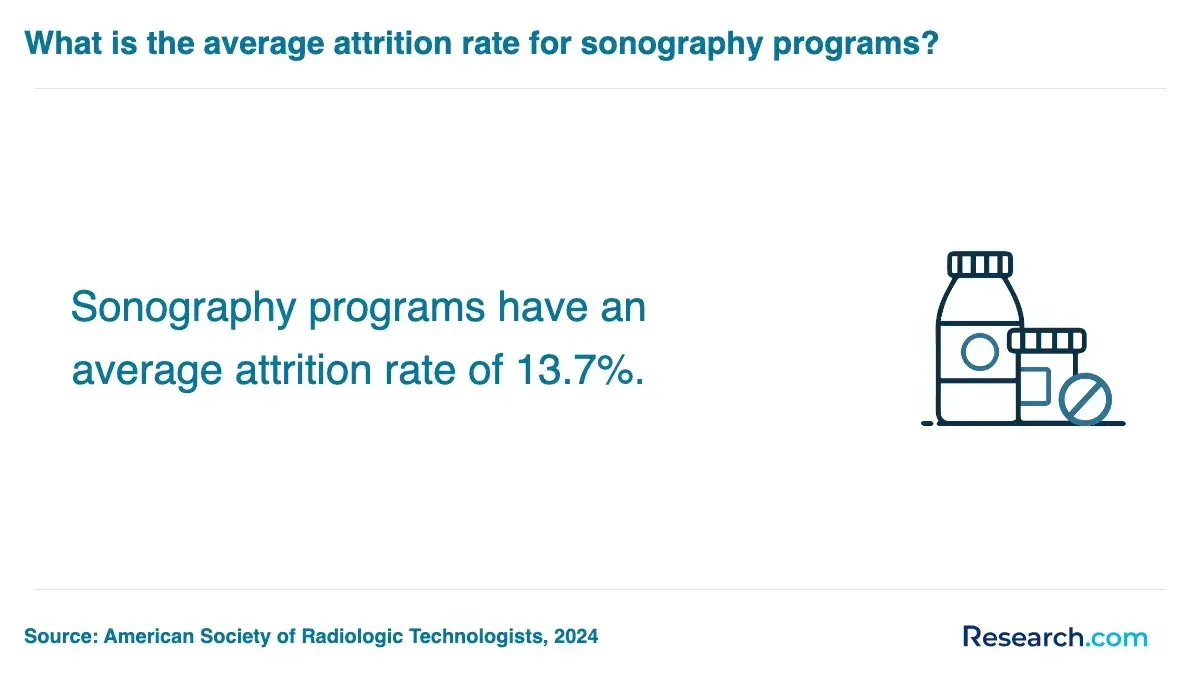
While clinical training builds vital skills, it’s not without challenges. As shown in the chart below, sonography programs report an average attrition rate of nearly 14%. This highlights the rigor of training and the dedication required to complete certification successfully.
How much does it cost to become an ultrasound technician in Oklahoma?
The cost of ultrasound technician programs in Oklahoma generally ranges from $7,000 to $30,000, covering tuition and various necessary expenses. This total includes more than just tuition fees, with additional costs for clinical training, certification, books, and living expenses playing a significant role in the overall investment.
- Tuition and Fees: Associate’s degrees typically cost between $7,000 and $14,000 for residents, while bachelor’s programs may reach $30,000 or more. For instance, some public universities in Oklahoma charge around $2,685 per semester for full-time undergraduate students, excluding extra college-specific fees.
- Clinical Training Expenses: Lab fees, uniforms, liability insurance, and transportation for clinical rotations usually add $500 to $1,500 throughout the program.
- Certification and Exam Fees: Professional certification exams like those from the ARDMS cost about $200 to $300 per test to complete your credentials.
- Licensing or State Fees: Oklahoma does not require state licensure for ultrasound technicians, so no state licensing fees apply.
- Books and Materials: Textbooks, software, and supplies can cost between $500 and $1,000 over the course of study.
- Living Expenses: Full-time students should budget $8,000 to $15,000 annually for housing, food, and personal costs depending on living arrangements.
The total cost fluctuates based on program type and whether you attend public or private institutions in Oklahoma. Many students find assistance through financial aid, scholarships, or employer tuition programs to manage ultrasound technician tuition and fees Oklahoma effectively. For a detailed comparison of available programs, explore this list of the best diagnostic medical sonography programs.
While tuition and related expenses shape the initial investment, long-term earning potential also depends on education level. The chart below shows how ultrasound technician salaries vary by degree, with higher credentials like a master’s often leading to significantly greater annual income compared to associate or bachelor’s degrees.
What is the average salary for ultrasound technicians in Oklahoma?
The average annual salary for ultrasound technicians in Oklahoma ranges from about $75,000 to $95,000, which is slightly below or near the national median of $84,470. Urban areas like Tulsa offer higher wages, averaging around $85,200 per year.
- Experience Level: Entry-level technicians typically earn closer to $73,000 annually, while senior sonographers with more experience can make nearly $90,000.
- Education and Certifications: Advanced credentials and certifications, such as those from ARDMS, boost earning potential.
- Work Setting: Hospitals and specialized outpatient centers generally pay more than smaller clinics or physician offices.
- Geographic Location: Urban areas like Tulsa and Oklahoma City tend to offer higher salaries compared to rural regions.
- Specialization: Focusing on OB/GYN, cardiovascular, or abdominal sonography typically leads to increased compensation.
How can ultrasound technicians in Oklahoma stay updated with industry advancements?
Ultrasound technicians in Oklahoma can enhance their expertise and maintain certification standards through targeted continuing education and professional development opportunities. Accredited courses, specialty workshops, and industry conferences offer practical updates on evolving imaging technologies and safety protocols. Many healthcare employers also provide on-site training and subsidized learning modules that address new techniques and regulatory changes. These initiatives not only support certification renewal but also improve patient care quality and career longevity. For professionals seeking complementary pathways, exploring opportunities in related imaging fields can further broaden skill sets; consider reviewing how to become a radiology technician in Oklahoma for additional insights.
What is the job outlook and demand for ultrasound technicians in Oklahoma?
Employment for ultrasound technicians in Oklahoma is expected to grow steadily, with about 110 new jobs added annually through 2030. This pace is reliable but slightly below the national 10% growth rate projected for diagnostic medical sonographers, reflecting steady statewide demand.
- Population Growth and Aging: Oklahoma’s older population is driving more frequent ultrasound exams as chronic health issues increase, fueling demand for imaging services.
- Healthcare Expansion: New hospitals, outpatient centers, and clinics in urban areas are creating job openings to support growing patient volumes.
- Technological Advancements: Innovative tools like portable and 3D/4D ultrasound machines require technicians with specialized skills, broadening career opportunities.
- Preventive Care Trends: Greater focus on early diagnosis leads to wider use of ultrasound screening, increasing the need for qualified technicians.
- Regional Demand Variations: Urban centers offer more jobs due to larger medical networks, while rural areas, often underserved, present opportunities for those open to relocation.
These combined factors create a career path with steady employment and room for advancement, particularly for those who pursue advanced training or consider opportunities outside metropolitan hubs. An ultrasound technician from Oklahoma, who graduated from a local accredited program, shared that after completing her studies, she regularly received calls from hospitals and clinics seeking help as they expanded services.
Working in a smaller town, she found demand to be high but sometimes uneven, describing it as “being on call for job opportunities.” She explained that adapting to new ultrasound technologies and earning additional certifications kept her competitive when openings fluctuated, adding that it was rewarding to know her skills met a real need and gave her the ability to plan her career with confidence despite market shifts.
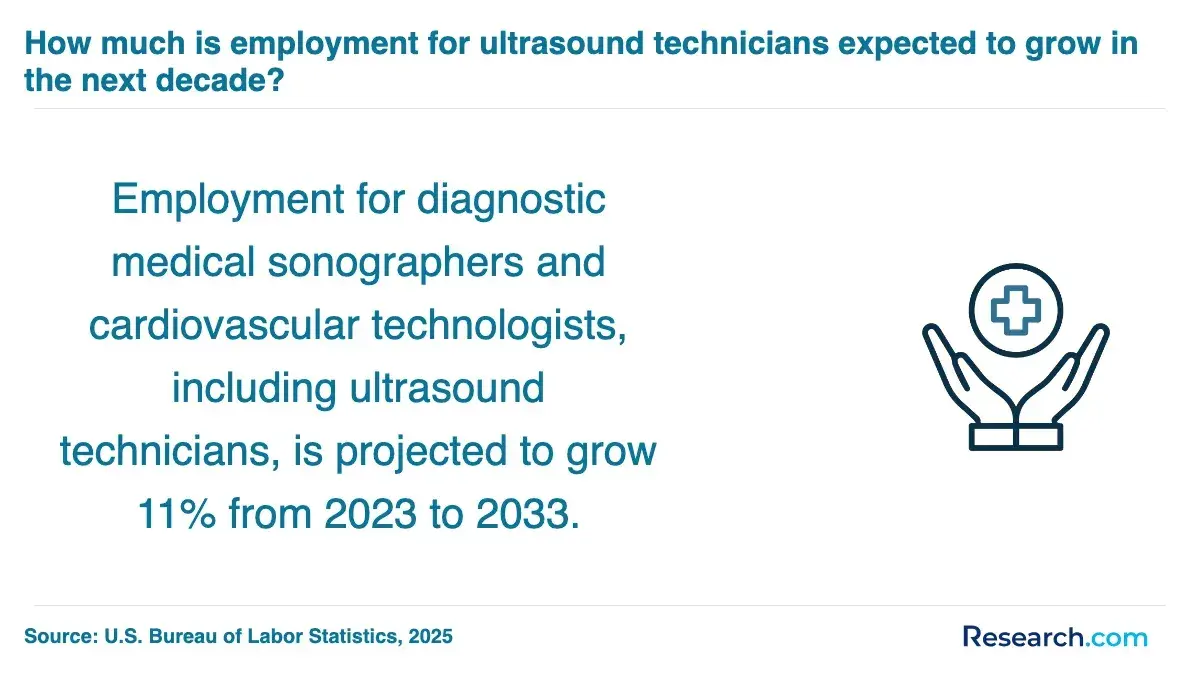
National trends support this outlook, with the U.S. Bureau of Labor Statistics projecting an 11% employment growth for ultrasound technicians between 2023 and 2033. The chart below highlights this demand, reinforcing why Oklahoma graduates can expect consistent opportunities in a growing healthcare field.
What are the career advancement steps for ultrasound technicians in Oklahoma?
Ultrasound technicians in Oklahoma can enhance their careers by focusing on specialization, earning advanced sonography certifications in Oklahoma, or stepping into leadership roles. Each path offers practical ways to increase expertise, job opportunities, and salary potential in a competitive healthcare market.
- Specialization: Focusing on areas like OB/GYN, vascular, abdominal, or cardiac sonography enhances your expertise and makes you more valuable to employers. Programs at Tulsa Community College and OU-Tulsa provide training for multiple concentrations, preparing you for credentialing exams in these specialties.
- Advanced Certifications: Obtaining credentials from organizations such as ARDMS, CCI, or ARRT validates your advanced skills. These certifications unlock higher-level roles and increase your responsibilities in clinical settings.
- Higher Education: Pursuing a bachelor’s or master’s degree, like the Bachelor of Science in Medical Imaging and Radiation Sciences at OU-Tulsa, equips you for advanced clinical or administrative positions. Higher degrees also offer flexibility and broaden your career reach beyond Oklahoma, especially when combined with knowledge about the easiest radiology programs to get into.
- Leadership Roles: Experienced sonographers can move into supervisory, managerial, or administrative roles, managing staff and shaping healthcare policies. These positions improve your impact on patient care and operational efficiency.
- Education and Training: Becoming an instructor or clinical trainer allows you to share your expertise by teaching at colleges or guiding new technicians in clinical environments. This path supports workforce development within the field.
- Research or Technology Development: Contributing to medical imaging advancements through research or collaborating with device manufacturers draws on clinical experience to foster innovation. These roles can include product development, marketing, or technical education.
What are the common challenges ultrasound technicians face in Oklahoma?
Ultrasound technicians in Oklahoma face several work-related challenges that impact both their well-being and job performance. Recognizing these obstacles early helps manage ultrasound technician burnout rates in Oklahoma and develop long-term career strategies.
- Physical Strain and Ergonomics: Repetitive scanning motions and prolonged equipment handling can cause work-related musculoskeletal disorders in Oklahoma sonographers. Proper ergonomics and regular exercise are essential to reduce injury risk.
- Emotional Stress: Technicians often handle sensitive patient situations, requiring a strong balance between empathy and professionalism to maintain emotional resilience.
- Workload and Staffing Shortages: Increased imaging demand leads to heavier caseloads and fewer staff, resulting in longer shifts and heightened pressure to maintain quality care.
- Certification and Continuing Education Requirements: Maintaining credentials through ongoing education is mandatory but can be challenging when balancing busy work schedules.
- Technology Adaptation: Continuous learning to operate new ultrasound equipment and digital systems is critical for staying current and effective.
- Job Market Competition: Regional differences affect job availability and advancement opportunities, requiring strategic planning to find the best openings.
Being aware of these challenges allows technicians to adopt proactive solutions and pursue professional growth. For those seeking guidance on training options, exploring a list of the best schools for ultrasound technician can be a helpful first step.
What do ultrasound technicians in Oklahoma say about their career?
- Completing my ultrasound technician program at Tulsa Community College was a rewarding experience that laid a strong foundation for my career. Starting work as an ultrasound technician in a local school has allowed me to blend academic support with healthcare in a way that feels truly impactful. Every day, I get to contribute to the health and well-being of young people, which motivates me immensely. The stability in this field here in Oklahoma makes it a smart choice for anyone considering a healthcare career. Tyron
- Attending Oklahoma City Community College gave me hands-on training and exposure to the latest ultrasound technologies, which proved invaluable when I began my career serving students at a local academic institution. This role pushes me to grow professionally while allowing me to connect deeply with my community. The unique challenges here, like serving diverse rural populations, have shaped my approach and strengthened my problem-solving skills. I take pride in advancing diagnostics and care in an educational environment that values growth and compassion. Jenna
- Graduating from Rose State College opened doors to a profession where I can make a direct difference in Oklahoma’s healthcare landscape. Working as an ultrasound technician, I appreciate the chance to develop professionally while engaging with the state’s rich cultural milieu. Helping patients and students alike navigate their health journeys is deeply fulfilling, especially in a state that blends urban and rural healthcare needs. This career offers tremendous potential for advancement and meaningful personal growth. Devin
How are emerging technologies shaping ultrasound technician practices in Oklahoma?
Ultrasound technicians in Oklahoma are experiencing a shift in diagnostic practices driven by advanced imaging equipment and AI-powered tools. New ultrasound systems offer enhanced image resolution and real-time analytics that improve diagnostic precision while streamlining workflow. Clinical training programs are increasingly incorporating simulation-based modules and virtual reality environments, providing hands-on experience with these innovative technologies. This integration not only prepares technicians for evolving clinical demands but also opens pathways to diverse healthcare roles. For insights on expanding interdisciplinary expertise, review how to become a nurse midwife in Oklahoma.
Related Articles for Nearby States
- 2027 How To Become an Ultrasound Technician in Texas
- 2027 How to Become an Ultrasound Technician in Kansas
- 2027 How to Become an Ultrasound Technician in Arkansas
- 2027 How to Become an Ultrasound Technician in Missouri
- 2027 How to Become an Ultrasound Technician in Colorado
- 2027 How to Become an Ultrasound Technician in New Mexico
- 2027 How to Become an Ultrasound Technician in Nebraska
- 2027 How to Become an Ultrasound Technician in Louisiana
- 2027 How to Become an Ultrasound Technician in Iowa
- 2027 How to Become an Ultrasound Technician in Mississippi
References:
- ATA College. Tulsa's Diagnostic Medical Sonography | Enroll Today.
- HealthJob.org. How to Become an Ultrasound Technician in Oklahoma.
- Moore Norman Technology Center. Sonography School Oklahoma.
- Oklahoma State University. Cardiovascular Sonography.
- OU Health Sciences Center. BS in MIRS - Sonography.
- OU-Tulsa. Bachelor of Science in Medical Imaging and Radiation - Sonography.
- Tulsa Community College. Diagnostic Medical Sonography, A.A.S.
- TLC Travel Staff. Ultrasound Endorsement License Procedures in Oklahoma.
- UltrasoundSchoolsInfo.com. Find Accredited Ultrasound Technician Schools in Oklahoma.
- Washburn University. Diagnostic Medical Sonography.
Other Things You Should Know About How to Become an Ultrasound Technician in Oklahoma
To become an ultrasound technician in Oklahoma, you'll need an Associate's Degree in Diagnostic Medical Sonography or a related field. Some employers may also prefer candidates with a Bachelor's Degree. Accredited programs typically include both classroom instruction and clinical training.
Becoming an ultrasound technician in Oklahoma through an online program is possible but requires careful consideration of accreditation and clinical training components. While theoretical coursework can often be completed online, the clinical hands-on experience must typically be completed in person at an approved healthcare facility to meet state licensing and certification requirements.
Completing an accredited online program that offers these hybrid learning options can help candidates qualify for certification exams such as the ARDMS, which are essential for employment. Therefore, prospective students should ensure their chosen program is accredited and provides adequate in-person clinical experience to fulfill Oklahoma’s professional standards.


