
2027 Licensed Vocational Nurse (LVN) vs. Licensed Practical Nurse (LPN): Explaining the Difference?

Co-Founder and Chief Data Scientist
Nursing includes a variety of roles and titles, which can sometimes be confusing, especially when it comes to terms like licensed vocational nurse (LVN) and or licensed practical nurse (LPN). Both represent entry-level positions for licensed nurses who provide essential patient care under the supervision of registered nurses (RNs) and doctors. However, there are slight differences depending on where you plan to work. This guide breaks down what each role involves, helping you better understand the responsibilities and decide whether a career as a vocational or practical nurse is the right path for you.
What are the benefits of becoming an LVN or LPN?
- Fast Entry into the Workforce: LVN/LPN programs typically take about 12 to 24 months to complete, allowing students to begin a healthcare career quickly compared to longer RN or BSN programs.
- Stable Job Opportunities: With the growing demand for healthcare services—especially in long-term care and home health—LVNs and LPNs enjoy strong job security and consistent employment prospects across the country.
- Stepping Stone to Advanced Nursing Roles: Many LVNs and LPNs use their role as a foundation to pursue RN or BSN degrees through bridge programs, gaining experience and income while advancing their careers over time.
- What is an LVN?
- What is an LPN?
- What education is required to become an LVN or LPN for 2027?
- Do LVN and LPN programs have the same curriculum?
- Is there a difference in licensing between LVN and LPN by state?
- How long does it take to become an LVN or LPN?
- Do LPNs make more than LVNs?
- Do LVNs have more patient care responsibilities than LPNs?
- Can LPNs and LVNs Transition Directly to Advanced Nursing Roles?
- How Can LPNs and LVNs Accelerate Their Transition to Nurse Practitioner Roles?
- How Can LPNs or LVNs Accelerate Their Transition into Registered Nursing Roles?
- Can LPNs or LVNs Benefit from Advanced Degrees?
- Are mental health specialties a viable pathway for LPNs and LVNs?
- What factors should I consider when choosing an advanced nursing degree program?
- Can specialized advanced degrees further enhance career prospects for LPNs and LVNs?
- Are there better career advancement opportunities for LPNs or LVNs?
- Can LPNs and LVNs Advance to RN Roles Through Non-Clinical Programs?
- What are the pros and cons of becoming an LPN or LVN?
What is an LVN?
A Licensed Vocational Nurse, or LVN, is a healthcare professional who provides basic nursing care under the supervision of registered nurses and doctors. LVNs are trained to perform essential duties such as monitoring vital signs, administering medications, assisting with personal hygiene, and documenting patient care. They work in a variety of healthcare settings, including nursing homes, hospitals, and clinics, and are a critical part of the patient care team.
Many choose this career path for its relatively quick entry into the healthcare field and potential to later advance into registered nursing roles.
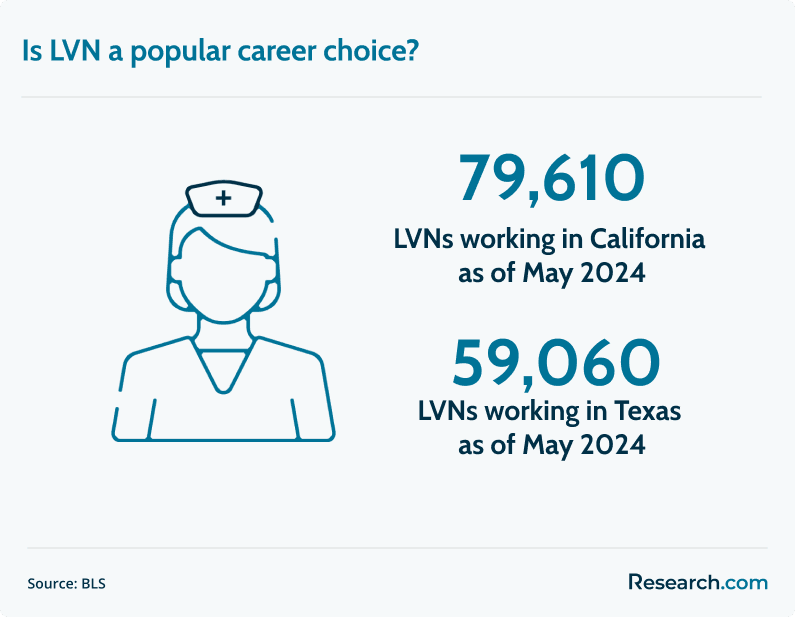
The title LVN is used specifically in California and Texas. According to the U.S. Bureau of Labor Statistics (BLS), there are 79,610 LVNs employed in California and 59,060 in Texas as of May 2024.
What is an LPN?
A Licensed Practical Nurse, or LPN, is a trained healthcare provider who delivers direct patient care in hospitals, nursing homes, rehabilitation centers, and home health settings. LPNs assist with tasks such as taking vital signs, administering medications, changing dressings, and providing basic comfort to patients. They work closely under the supervision of RNs and physicians to ensure high-quality, compassionate care.
The LPN title is used in 48 U.S. states, excluding California and Texas. The most current BLS employment data shows that the states with the most number of working LPNs are New York (40,720), Florida (36,470), and Ohio (36,440).
This role is an excellent starting point for individuals interested in nursing, offering a fast-track into the workforce with opportunities to gain experience, job stability, and further career advancement through LPN-to-RN bridge programs. If you are interested in this pathway, check out 2 semester LPN to RN program online options.
What education is required to become an LVN or LPN for 2027?
The educational requirements to become an LVN or LPN are quite similar and generally include the following steps:
- High School Diploma or GED: The first requirement is to have a high school diploma or equivalent with a focus on science and math courses to build a strong foundation for nursing studies.
- Complete an Accredited LVN/LPN Program: Prospective LVNs/LPNs must enroll in and graduate from an accredited vocational or practical nursing program. These programs typically last between 12 to 18 months for full-time students, though some part-time or extended programs may take up to 24 months. If you have previous medical experience, you can check alternate pathways, such as medical assistant to LPN programs.
- Additional Requirements: Some programs and states may require background checks, immunization records, and CPR certification before program completion or licensure.
LVN and LPN programs are typically offered at community colleges, vocational schools, and technical schools. After completing a vocational or practical nursing program, graduates will receive a certificate or diploma.
Due to a growing demand for more flexible nursing education pathways, many postsecondary institutions also offer online LPN programs. This will hopefully encourage more individuals to pursue nursing careers and enroll in LVN or LPN programs.
The most current available data from the National Council of State Boards of Nursing (NCSBN) reveals that 82% of licensed vocational nurses and licensed practical nurses had an LVN or LPN certificate when they were first licensed in the United States.
Additionally, 10.1% had a nursing diploma, but this was more common among LVNs and LPNs in the U.S. who were 40 to 54 years old. The chart below provides additional details on the type of nursing education of licensed vocational nurses and licensed practical nurses upon receiving licensure.
Do LVN and LPN programs have the same curriculum?
LVN and LPN programs generally have the same curriculum, as they both prepare students for the same national licensing exam. The core components of the curriculum are generally very similar and aim to equip graduates with the fundamental knowledge and skills needed for providing safe and competent basic nursing care. These common areas typically include:
- Basic Nursing Skills: This covers essential hands-on skills like taking vital signs, assisting with personal care (bathing, dressing), safe patient transfers, wound care, and basic medical procedures.
- Anatomy and Physiology: Understanding the structure and function of the human body is foundational for providing care.
- Pharmacology: This section focuses on medication administration, including routes, dosages, side effects, and legal considerations.
- Nutrition: Understanding basic nutritional needs and the role of diet in health and illness.
- Infection Control: Principles and practices to prevent the spread of infections.
- Clinical Practice: An aspiring licensed practical nurse or licensed vocational nurse will need to complete about 500 to 750 clinical hours of hands-on training in real healthcare settings. This allows students to apply classroom knowledge while working directly with patients under professional supervision. LPN online programs will typically also require students to complete their clinical requirements in person at approved healthcare facilities.
The main differences in curricula of LVN or LPN programs, if any, might stem from:
- State-specific regulations: Each state's Board of Nursing sets its own requirements for nursing education, which could lead to slight variations in curriculum content or the number of clinical hours required.
- Program focus: Some programs might have a slightly greater emphasis on certain areas based on the needs of the local healthcare facilities or the program's specific goals.
- Prerequisite requirements: Individual programs might have different prerequisite courses, which could indirectly influence the content covered in the core curriculum.
- Program length and structure: Accelerated programs might cover the same core content in a condensed timeframe, potentially affecting the depth of coverage in certain areas.
Thus, aside from the LVN or LPN program cost, aspiring nurses should also consider if the curriculum will help them meet the licensing requirements for the state where they want to practice and if it matches the course workload and delivery format that best suits their schedule and learning needs.
Is there a difference in licensing between LVN and LPN by state?
The core prerequisites and the process for licensing are very similar across all states for a licensed vocational nurse or licensed practical nurse. The fundamental requirements are completing an accredited program and passing the National Council Licensure Examination for Practical Nurses (NCLEX-PN).
The NCLEX-PN is a standardized, computer-adaptive test that assesses the candidate's competency to provide safe and effective entry-level practical nursing care. It covers the same content areas for all candidates, regardless of the state in which they plan to practice or whether they will become a licensed vocational nurse or licensed practical nurse.
While the fundamentals for licensing are the same, there can be minor state-specific variations in the details of the licensing process.
- Specific Requirements for Program Approval: Each State Board of Nursing sets its own criteria for approving LPN or LVN programs within its jurisdiction. While accreditation from national bodies like the Accreditation Commission for Education in Nursing (ACEN) or the National League for Nursing Commission for Nursing Education Accreditation (NLN CNEA) is widely recognized and often a component of state approval, specific state boards might have additional requirements for program content, clinical hours, or faculty qualifications.
- Application Processes and Fees: The exact steps involved in applying for licensure after passing the NCLEX-PN, along with the associated fees, will vary by state. You must apply directly to the Board of Nursing in the state where you intend to practice.
- Criminal Background Checks: All states require criminal background checks, but the specific procedures (e.g., fingerprinting methods, review processes) can differ.
- Continuing Education Requirements: Once licensed, LPNs and LVNs must typically complete a certain number of continuing education hours to maintain their licenses. The specific number of hours, the accepted types of continuing education, and the reporting frequency vary significantly between states. Some states may also have specific topics that must be included in the continuing education.
- Nurse Licensure Compact (NLC): The NLC allows nurses with a multistate license to practice in other compact states without obtaining additional licenses. As of this writing, 43 states have enacted the NLC, and several others have pending legislation or are waiting to enact the compact. California is currently the only state that has taken no action to become a member of the Nurse Licensure Compact. If you plan to practice in multiple states, understanding the compact and your state's participation is crucial.
- Endorsement (License Transfer): If you are already a licensed vocational nurse or licensed practical nurse in one state and wish to obtain a license in another, you will need to apply for licensure by endorsement. The specific requirements for endorsement (e.g., verification of original licensure, work experience) can vary. If you obtained licensure from an NLC-member state, you can skip this step if you are planning to practice in another compact state. However, certain exceptions apply, such as changing your primary state of residence or transferring to a non-compact state for work.
In summary, the core licensing requirements are the same for both LPNs and LVNs across the US. However, the specific details of the application process, fees, continuing education, and participation in the Nurse Licensure Compact can vary from state to state.
As states continue to work on improving their legislation and rules pertaining to nursing licensure, I strongly recommend consulting the specific Board of Nursing in the state where you intend to become licensed for the most accurate and up-to-date information. Hopefully, current initiatives to make multistate practice easier for nurses will encourage more individuals to pursue a nursing career.
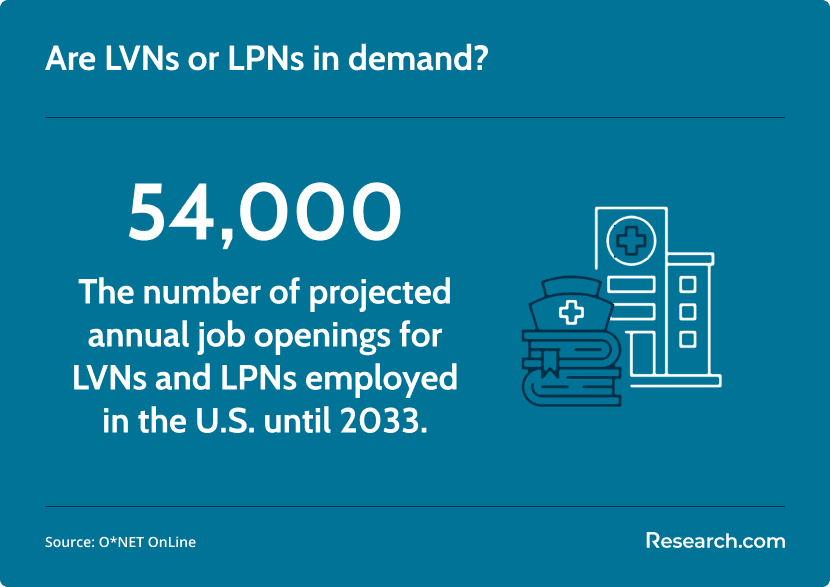
According to O*NET OnLine, there were 657,800 licensed practical nurses and licensed vocational nurses employed in the U.S. as of 2023. The employment of LPNs and LVNs is expected to reach 674,700 by 2033, which translates to 54,000 annual job openings in the same period.
How long does it take to become an LVN or LPN?
Becoming an LVN or LPN typically takes under two years. This timeframe includes:
- Completing an accredited LVN or LPN program: They usually take one year to complete when attending full-time. There are also accelerated LPN programs that take about six to nine months to complete. However, these may require previous medical experience, and students tend to have heavier and faster-paced workloads.
- Passing the NCLEX-PN exam: After completing your program, you must pass the National Council Licensure Examination for Practical Nurses. The time it takes to schedule and receive results for this exam can vary but is typically within a few weeks to a couple of months. If you do not pass on your first try, there is a mandatory waiting period of 45 days before you can retake it.
- Applying for licensure: Once you pass the NCLEX-PN, you need to apply for licensure with your state's Board of Nursing. The processing time for applications can vary by state but generally takes a few weeks to a couple of months.
This relatively short training period allows individuals to enter the nursing workforce more quickly compared to registered nursing programs.
Do LPNs make more than LVNs?
LPNs and LVNs typically earn the same salary, as the job roles, responsibilities, and qualifications are nearly identical. The only real difference is the job title based on location.
According to 2024 national salary data from BLS, the annual median wage for both LPNs and LVNs is $62,340. However, earnings can range from $47,960 to $80,510, depending on factors like experience, employer type, location, and shift differentials.
For example, LPNs in states with a higher cost of living, like Alaska, may earn more than LVNs in Texas or California despite having the same qualifications. However, when looking into geographical salaries within states, a licensed vocational nurse in San Jose, California earns $92,840 a year while a licensed practical nurse in the nonmetropolitan Alaska region pockets $81,300. So while there is no built-in pay difference between an LPN and an LVN, individual salaries can vary based on regional demand and healthcare setting—not the title itself.
Using 2024 salary data from BLS, here are the states that offer the highest annual median wages for a licensed practical nurse or licensed vocational nurse.
Do LVNs have more patient care responsibilities than LPNs?
No, LVNs do not have more patient care responsibilities than LPNs since they generally have the same scope of practice. Any differences in job duties are more likely to be influenced by facility policies or state regulations than by the LVN or LPN title itself.
Each state usually abides by the Nurse Practice Act, which defines what each level of nurse is legally allowed to do. Some states may have more permissive regulations than others regarding tasks like administering certain medications or managing specific types of medical equipment.
In conclusion, you should not expect LVNs to inherently have more patient care responsibilities than LPNs or vice versa. Their core duties are the same. Any perceived differences would likely be due to the specific regulations within the state they are practicing or the policies of their individual employer, rather than the title itself. I suggest referring to the State Board of Nursing for the definitive scope of practice in a given location.
Can LPNs and LVNs Transition Directly to Advanced Nursing Roles?
For experienced LPNs and LVNs seeking to broaden their clinical authority and impact, targeted bridge programs offer a structured path to advanced practice. These programs leverage existing clinical expertise and integrate advanced coursework to prepare nurses for roles that typically require higher education credentials. For instance, pursuing an RN to NP bridge program can facilitate a transition into nurse practitioner responsibilities, enabling professionals to take on more complex patient care and leadership functions. Evaluating program prerequisites, aligning long-term career goals, and assessing workload expectations are essential steps in determining the most efficient pathway toward advanced nursing roles.
How Can LPNs and LVNs Accelerate Their Transition to Nurse Practitioner Roles?
Leveraging accelerated programs can streamline the advancement from an LPN or LVN role to that of a nurse practitioner. These specialized pathways build on existing clinical experience while integrating advanced coursework and clinical mentoring, reducing the time needed to meet additional licensure requirements. Structured curricula and flexible online formats allow experienced nurses to balance work and study effectively while enhancing their clinical competencies. For a comprehensive look at these opportunities, consider reading about fast track to nurse practitioner options available online.
How Can LPNs or LVNs Accelerate Their Transition into Registered Nursing Roles?
Experienced LPNs and LVNs often seek streamlined pathways to expand their clinical responsibilities and enhance career prospects. One effective strategy involves enrolling in specialized bridge programs that integrate practical experience with advanced coursework, allowing seamless progression to registered nursing. For nurses aiming to leverage their existing credentials with minimal academic downtime, pursuing an RN to BSN online 9 months program can provide the necessary educational acceleration while maintaining flexibility. This pathway not only elevates clinical practice but also opens doors to diverse leadership and specialized care opportunities without compromising work commitments.
Can LPNs or LVNs Benefit from Advanced Degrees?
For many LPNs and LVNs, pursuing advanced degrees can provide specialized skills, broaden clinical responsibilities, and increase earning potential. Advanced programs offer streamlined pathways that integrate clinical experience with rigorous academic coursework. Prospective students should evaluate program accreditation, curriculum relevance, and clinical placement opportunities, as these factors directly impact career advancement. Additionally, cost-effective options such as cheapest direct entry MSN programs allow professionals to transition swiftly into roles requiring a higher level of nursing expertise.
Are mental health specialties a viable pathway for LPNs and LVNs?
The expanding mental health sector creates unique opportunities for LPNs and LVNs looking to diversify their clinical expertise. Specialized training in mental health care can broaden practice scope and address the growing demand for psychiatric services. Transitioning into a psychiatric role involves targeted coursework, hands-on clinical experience, and obtaining the appropriate certifications. For cost-effective educational options that combine flexibility with rigorous standards, explore the cheapest online psychiatric nurse practitioner programs. This pathway offers a focused skill set that aligns with emerging trends in patient care while opening new avenues for career advancement.
What factors should I consider when choosing an advanced nursing degree program?
When evaluating advanced education options, it is crucial to verify program accreditation, review curriculum relevancy, and assess clinical practicum opportunities that align with your career goals. Consider institutions with strong partnerships in the healthcare industry, competitive licensure exam pass rates, and comprehensive career support services. Additionally, weigh financial planning, scheduling flexibility, and the mode of program delivery to ensure compatibility with your current professional commitments. For nurses exploring a streamlined transition into higher roles without prior RN experience, research programs such as direct entry NP programs for non-nurses online for further insights.
Can specialized advanced degrees further enhance career prospects for LPNs and LVNs?
Specialized advanced degree programs offer a focused pathway to expand clinical expertise and distinguish professionals in a competitive healthcare landscape. By pursuing niche pathways such as advanced women’s health nursing, LPNs and LVNs not only deepen their clinical competencies but also position themselves for leadership roles and higher salaries in specialized care settings. Programs designed with flexible online formats make it easier for working nurses to integrate advanced coursework into their busy schedules. For instance, exploring affordable online women's health NP programs can provide targeted training that aligns with emerging trends in patient-centered care while enhancing long-term career growth.
Are there better career advancement opportunities for LPNs or LVNs?
The career advancement opportunities for licensed practical nurses and licensed vocational nurses are equally robust, as both roles share the same scope of practice and licensing requirements. Since LVNs are specific to California and Texas, any differences in advancement opportunities are more related to regional healthcare market dynamics rather than the title itself.
Additionally, both LPNs and LVNs can pursue similar pathways to expand their careers and move into higher-paying, more specialized, or leadership roles within the nursing field.
Here are some common career paths and options for LPNs and LVNs looking to grow:
- LPN-to-RN Bridge Programs: Many schools offer accelerated programs that allow a licensed vocational nurse or licensed practical nurse to earn an Associate Degree in Nursing (ADN) or Bachelor of Science in Nursing (BSN) and become a Registered Nurse. One such pathway is an LPN to BSN online program.
- Specialization Certificates: LPNs or LVNs can pursue certifications in areas like IV therapy, wound care, geriatrics, or pediatrics to expand their skills and job options.
- Supervisory Roles: With experience, some LPNs or LVNs become charge nurses or team leaders in long-term care facilities or clinics.
- Health Administration or Case Management: Those interested in leadership or coordination roles can transition into non-clinical paths through further education or experience.
- Military or Government Nursing Roles: Some LPNs or LVNs choose to work in federal healthcare systems like the Veterans Affairs or military services, which often offer structured advancement tracks.
Your career trajectory will depend more on your individual drive, the healthcare landscape in your location, and your willingness to pursue further education and specialization rather than the specific title of your license.
The chart below presents several roles in the nursing field and healthcare industry that are currently expecting employment growth. This data can help you determine which career path you should consider when planning your LPN or LVN journey.
Can LPNs and LVNs Advance to RN Roles Through Non-Clinical Programs?
Experienced LPNs and LVNs with substantial hands-on experience may benefit from bridge programs designed to transition them into Registered Nurse roles without additional clinical lab requirements. These non-clinical pathways focus on advanced theoretical foundations and leadership competencies, enabling professionals to upgrade their qualifications while managing current work commitments. Evaluating program accreditation, curriculum rigor, and student resources is crucial to ensure the course aligns with career goals. For instance, exploring options like online RN to BSN no clinical required can offer a structured, efficient route to expanded clinical responsibilities and improved career prospects.
What are the pros and cons of becoming an LPN or LVN?
As you consider a career as a licensed practical nurse or licensed vocational nurse, it is important to weigh the advantages and potential drawbacks. Below is a quick overview of the pros and cons of each path to help you decide if it’s the right fit for your goals.
Pros and Cons of Becoming an LPN
Becoming an LPN offers a fast and affordable entry into nursing, typically requiring just under two years of training and a few more months to obtain licensure. LPNs enjoy strong job demand, especially in long-term care and home health, and the role can serve as a stepping stone to more advanced nursing careers. However, LPNs may face limitations in their scope of practice compared to RNs, and advancement often requires additional education and licensure.
Pros and Cons of Becoming an LVN
Like LPNs, LVNs benefit from a short training timeline, solid job stability, and meaningful work in patient care. The role provides a reliable path into healthcare, especially in California and Texas where the title is used. On the downside, LVNs may earn less than other nursing roles, have fewer responsibilities in some settings, and may need to pursue further education to access broader career options.
Whether as a licensed vocational nurse, licensed practical nurse, RN, or otherwise, being a nursing practitioner comes with its own set of perks and challenges. For example, you can earn higher salaries compared to other professions, but you will also face staffing issues due to a shortage of nurses across the country. This can lead to burnout and emotional exhaustion. In fact, 64% of nurses say they experience “a great deal of stress because of their job”, according to the American Nurses Foundation 2023 mental health and wellness survey.
To combat burnout and staffing shortages, prioritize self-care through regular breaks, healthy habits, and seeking support from colleagues or mentors. Address the need for career advancement and licensure maintenance by proactively planning continuing education, exploring bridge programs for further schooling, and staying informed about state-specific requirements. Effective time management, setting boundaries, and advocating for better working conditions can also help mitigate these challenges.
Here’s What Graduates Have to Say About Their LPN/LVN Careers
- “Becoming an LPN gave me the chance to start making a difference in patients’ lives just a year after high school. The hands-on experience I get every day has deepened my passion for nursing and given me a real sense of purpose.” – Mindy
- “As an LVN in Texas, I’ve built a stable career that supports my family while doing work that truly matters. The flexibility and demand in this role have allowed me to grow professionally without needing a four-year degree.” – Josh
- “I started as an LPN in a long-term care facility, and the relationships I’ve built with patients and their families have been incredibly rewarding. Every day, I feel like I’m part of something meaningful, and it’s inspired me to pursue my RN next.” – Latasha
Key Findings
- A licensed vocational nurse and a licensed practical nurse generally have similar education requirements, responsibilities, training, and licensure processes. The main difference lies in where the titles are specifically used based on which region in the U.S. you obtain a license and practice.
- The minimum education requirement to become a licensed vocational nurse or a licensed practical nurse is a diploma or certification from an LVN or LPN program.
- Many nursing schools offer online LVN or LPN programs, as well as accelerated or part-time pathways.
- LVN or LPN training typically includes 50 to 500 hours of in-person clinical training.
- According to the most current data from O*NET OnLine, the projected employment growth for LVNs and LPNs is 3% in 2023-2033, translating to 54,000 annual job openings within that period.
- As of 2025, the majority of states in the U.S. have enacted the National Licensure Act (NLC), which allows LPNs and LVNs to transfer their licenses and practice in other territories with more ease.
References:
- American Nurses Association (November 2023). The American Nurses Foundation Says Action is Still Needed to Address Serious Nursing Workforce Challenges. https://www.nursingworld.org/news/news-releases/2023/the-american-nurses-foundation-says-action-is-still-needed-to-address-serious-nursing-workforce-challenges
- National Council of State Boards of Nursing (2023). The 2022 National Nursing Workforce Survey. Journal of Nursing Regulation. https://www.journalofnursingregulation.com/article/S2155-8256(23)00047-9/pdf
- O*NET OnLine (n.d.). National Employment Trends, 29-2061.00 - Licensed Practical and Licensed Vocational Nurses. https://www.onetonline.org/link/localtrends/29-2061.00?st=
- O*NET OnLine (n.d.). O*NET OnLine Help. https://www.onetonline.org/help/online/find_occ Data Retrieved on April 2025
- U.S. Bureau of Labor Statistics (n.d.). Occupational Employment and Wage Statistics (OEWS) Profiles, May 2024 OEWS Profiles. https://data.bls.gov/oesprofile Data retrieved April 2025
Other Things You Need to Know About LPNs and LVNs
LVNs primarily work in California and Texas, providing basic nursing care under RNs or doctors. LPNs serve in other states with similar responsibilities but may have varied tasks depending on state regulations, including medication administration and patient records.
In 2027, the training for LVNs and LPNs remains largely similar, typically requiring a one-year program at a vocational school or community college. Both pathways include classroom instruction and clinical practice. The key difference is largely geographical, with LVNs practicing in California and Texas, while LPNs work in other states.


