
2027 Nursing Continuing Education (CE) Requirements by State

Co-Founder and Chief Data Scientist
Nurses make up the largest segment of the healthcare workforce, with over 4 million employed across the U.S. They serve in diverse roles, supporting broader healthcare teams. To deliver safe, effective care, nurses must continually sharpen their knowledge and skills. This makes lifelong learning through nursing continuing education an essential part of the profession.
While CE is often viewed as a compliance requirement for license renewal, it offers much more. Continuing education enhances nurses’ clinical expertise, reinforces ethical practices, helps them keep pace with evolving standards of care, and opens doors to leadership or advanced practice roles.
In this guide, I'll break down the CE requirements by state. I'll also explore key details about tracking, renewal cycles, and other considerations to guide nurses as they pursue professional growth.
Key Things to Know About Nursing CE Requirements by State
- CE requirements vary by state, with most boards mandating renewal every two to three years.
- CE activities also differ across locations. Common accepted options include completing nursing courses or earning specialty certifications.
- Nursing continuing education can help professionals pursue advanced or leadership roles. Positions like nurse practitioners and medical managers earn more than $100,000 annually.
- What are nursing continuing education requirements by state? Requirements by State
- What is the difference between contact hours, CEUs, and CEs? Contact Hours, CEUs, CE
- Why is continuing education important for nurses? Why is continuing education important for nurses?
- What other ways can nurses get continuing education units? Getting CE Units
- How often do nurses need to renew their licenses? How often do nurses need to renew their licenses?
- How do nurses track continuing education hours for license renewal? How do nurses track continuing education hours for license renewal?
- Are there nurses who are exempt from continuing education requirements? Exemption
- How much do nursing continuing education courses cost? CE Cost
- Can nurses complete continuing education online? Can nurses complete continuing education online?
- What is the fastest way to complete nursing continuing education requirements? Fast Options
What are nursing continuing education requirements by state?
Each state board of nursing sets its own rules for how many continuing education hours nurses must complete to renew their license. The information below provides a detailed breakdown of nursing continuing education requirements. Nurses exploring fully fully online EdD programs no residency may also find it helpful to understand these requirements, as some programs can count toward continuing education or professional development credits.
While we make every effort to provide accurate and current information, it remains each nurse’s responsibility to stay informed and ensure compliance with the specific requirements of their license.
Note that Section 1263 of the Consolidated Appropriations Act of 2023 mandates that all practitioners, including APRNs across all states, seeking a new or renewed Drug Enforcement Administration (DEA) registration must complete at least 8 hours of training on opioid or other substance use disorders, one-time only.
Alabama
RN: Every 2 years
- 24 contact hours
APRN/NP: Every 2 years
- 24 contact hours, including 6 in pharmacology
LVN/LPN: Every 2 years
- 24 contact hours
Alaska
RN: Every 2 years
Two of the following:
- 30 contact hours
- 30 hours professional activities/volunteer work
- 320 hours nursing employment
APRN/NP: Every 2 years
- 60 contact hours
Note: APRNs with prescriptive authority or are DEA-registered must complete hours in advanced pharmacology and clinical management of drug therapy, pain management, and opioid use and addiction
LVN/LPN: Every 2 years
Two of the following:
- 30 contact hours
- 30 hours professional activities/volunteer work
- 320 hours nursing employment
Arizona
RN: Every 4 years
One of the following in the past 5 years:
- 960 active practice hours
- Earn a nursing or an advanced nursing degree (LPN to RN, RN to BSN, master's, or doctorate)
- Complete a board-approved refresher course
APRN/NP: Every 4 years
- 960 active practice hours in the past 5 years
- Maintain an active Arizona RN license or multi-state privileges
- Maintain national certification
Note: APRNs who are DEA-registered must complete hours in opioids, substance abuse/use disorder, or addiction
LVN/LPN: Every 4 years
One of the following in the past 5 years:
- 960 active practice hours
- Earn a nursing or an advanced nursing degree (LPN to RN, RN to BSN, master's, or doctorate)
- Complete a board-approved refresher course
Arkansas
RN: Every 2 years
One of the following:
- 15 contact hours
- Certification/recertification
- Complete at least 1 college credit hour course in nursing
APRN/NP: Every 2 years
One of the following:
- 15 contact hours
- Certification/recertification
- Complete at least 1 college credit hour course in nursing
Note: APRNs with prescriptive authority must complete hours in pharmacotherapeutics
LVN/LPN: Every 2 years
One of the following:
- 15 contact hours
- Certification/recertification
- Complete at least 1 college credit hour course in nursing
California
RN: Every 2 years
- 30 contact hours
Note: new licensees must complete a one-time 1-hour implicit bias training
APRN/NP: Every 2 years
- 30 contact hours
Note: APRNs with prescriptive authority must complete hours on Schedule II controlled substances while APRNs working with the elderly must include hours in gerontology or the care of older patients
LVN/LPN: Every 2 years
- 30 contact hours
Colorado
RN: September 30 of odd- or even-numbered years
- None required
APRN/NP: September 30 of odd- or even-numbered years
- Maintain RN license
- Maintain national certification
Note: APRNs with prescriptive authority must complete hours in substance use prevention
LVN/LPN: August 31 of even-numbered years
- None required
Connecticut
RN: Every 6 years
- 1 contact hour in training or education on screening for PTSD conditions, risk of suicide, depression and grief
- 1 contact hour in suicide prevention training
APRN/NP: Every 2 years
- 50 contact hours, including 5 hours in pharmacotherapeutics and at least 1 hour each in infectious diseases, risk management, sexual assault, domestic violence, cultural competency, and substance abuse
Once on the first renewal and every 6 years thereafter:
- 2 contact hours on mental health conditions common to veterans and their families and screening for PTSD conditions, risk of suicide, depression and grief, and suicide prevention training
- 2 contact hours in diagnosing and treating cognitive or mental health conditions, including Alzheimer's disease, dementia, delirium, related cognitive impairments and geriatric depression
LVN/LPN: Every 6 years
- 1 contact hour in training or education on screening for PTSD conditions, risk of suicide, depression and grief
- 1 contact hour in suicide prevention training
Delaware
RN: Every 2 years
- 30 contact hours, 3 of which must be in substance abuse and 1 in sexual abuse, physical abuse, exploitation, trafficking, or domestic violence
- Attest to either at least 1,000 practice hours in the past five years or 400 practice hours in the past two years
APRN/NP: Every 2 years
- Maintain RN license
- Attest to one of the following:
- 1,500 practice hours over the past five years in the specialty
- 600 practice hours over the past two years in the specialty
- Graduation from the specialty program within the past two years
Note: APRNs with prescriptive authority must complete hours in controlled substances prescribing practices, treatment of chronic pain, or related topics per the Uniform Controlled Substances Act
LVN/LPN: Every 2 years
- 24 contact hours, 3 of which must be in substance abuse and 1 in sexual abuse, physical abuse, exploitation, trafficking, or domestic violence
- Attest to either at least 1,000 practice hours in the past five years or 400 practice hours in the past two years
District of Columbia
RN: Every 2 years
- 24 contact hours, 2 of which are in LGBTQ topics or cultural awareness and 3 in HIV/AIDS or in the Director’s public health priority topics
APRN/NP: Every 2 years
- 24 contact hours, 15 of which are in pharmacology, 2 in LGBTQ topics or cultural awareness, and 3 in HIV/AIDS or in the Director’s public health priority topics
LVN/LPN: Every 2 years
- 18 contact hours, 2 of which are in LGBTQ topics or cultural awareness and 3 in HIV/AIDS
Florida
RN: Every 2 years
- 16 hours, including 2 in medical error prevention, 2 in nursing laws, and 2 in human trafficking
Note: Including 2 hours in workplace impairment every other renewal, additional 2 hours in domestic violence every third renewal, and a one-time only 1-hour course on HIV/AIDS before first renewal
APRN/NP: Every 2 years
- 16 general hours
- 2 hours in medical error prevention, 2 in nursing laws, 2 in human trafficking
- 2 hours in workplace impairment every other renewal, additional 2 hours in domestic violence every third renewal, and a one-time only 1-hour course on HIV/AIDS before first renewal
- Autonomous APRNs: 10 additional hours in NP-level courses
Note: APRNs who are DEA-registered must complete hours in controlled substances prescription
LVN/LPN: Every 2 years
- 16 hours, including 2 in medical error prevention, 2 in nursing laws, and 2 in human trafficking
Note: Including 2 hours in workplace impairment every other renewal, additional 2 hours in domestic violence every third renewal, and a one-time only 1-hour course on HIV/AIDS before first renewal
Georgia
RN: Every 2 years
One of the following:
- 30 contact hours
- Certification/recertification
- Complete a nursing course from an accredited program
- Provide verification of competency by a health care facility or a physician’s office with at least 500 practice hours
- Complete a board-approved reentry program or graduation from a nursing program
APRN/NP: Every 2 years
One of the following:
- 30 contact hours
- Certification/recertification
- Complete a nursing course from an accredited program
- Provide verification of competency by a health care facility or a physician’s office with at least 500 practice hours
- Complete a board-approved reentry program or graduation from a nursing program
LVN/LPN: Every 2 years
One of the following:
- 20 contact hours of continuing education
- Complete a board-approved reentry program or graduation from a nursing program
Hawaii
RN: Every 2 years
- 30 contact hours or other options outlined in Hawaii's Continuing Competency Guidance and Information Booklet
APRN/NP: Every 2 years
- 30 contact hours, including 22 CEs in specialty area and 8 in pharmacology
LVN/LPN: Every 2 years
- 30 contact hours or other options outlined in Hawaii's Continuing Competency Guidance and Information Booklet
Idaho
RN: Every 2 years
- None required
APRN/NP: Every 2 years
- Maintain certification
- Provide proof satisfactory to the Idaho Board of Nursing (Section 54-1411, Idaho Code)
LVN/LPN: Every 2 years
- None required
Illinois
RN: Every 2 years
- 20 contact hours, including 1 hour in implicit bias awareness, 1 in sexual harassment prevention topics, and 1 in the diagnosis, treatment, and care of Alzheimer’s disease/dementia types (RNs who provide care to adults aged 26+)
- Every 6 years: Mandated Reporter training (nurses who work with children in their professional or official capacities)
APRN/NP: Every 2 years
- 80 contact hours, including 20 hours in pharmacotherapeutics (10 of which must be in safe opioid prescribing or substance abuse education), 1 in implicit bias awareness, 1 in sexual harassment prevention topics, and 1 in the diagnosis, treatment, and care of Alzheimer’s disease/dementia types (RNs who provide care to adults aged 26+)
- Every 6 years: Mandated Reporter training (nurses who work with children in their professional or official capacities)
LVN/LPN: Every 2 years
- 20 contact hours, including 1 hour in implicit bias awareness, 1 in sexual harassment prevention topics, and 1 in the diagnosis, treatment, and care of Alzheimer’s disease/dementia types (RNs who provide care to adults aged 26+)
- Every 6 years: Mandated Reporter training (nurses who work with children in their professional or official capacities)
Indiana
RN: Every 2 years
- None required
APRN/NP: Every 2 years
- 30 contact hours
Note: APRNs with prescriptive authority must complete hours in pharmacology
LVN/LPN: Every 2 years
- None required
Iowa
RN: Every 3 years
- 36 contact hours and Mandatory Reporter Training
APRN/NP: Every 3 years
- 36 contact hours and Mandatory Reporter Training
Note: APRNs who are DEA-registered must complete CE on opioids prescription
LVN/LPN: Every 3 years
- 36 contact hours and Mandatory Reporter Training
Kansas
RN: Every 2 years
- 30 contact hours
APRN/NP: Every 2 years
- 30 contact hours
LVN/LPN: Every 2 years
- 30 contact hours
Kentucky
RN: Every year
One of the following:
- 14 contact hours
- Work evaluation covering at least 6 months plus 7 contact hours
- Certification/recertification
- Complete nursing courses
- Preceptorship
- Presentation of a nursing CE course
- Publication of a nursing article
- Complete a nursing research project
- One-time only: 1 hour in Alzheimer’s Disease or other forms of dementia training, 2 hours in suicide prevention, 3 hours in domestic violence, 1.5 hours in pediatric abusive head trauma
APRN/NP: Every year
- 14 contact hours every year, including 5 hours in pharmacology
- One-time only: 1 hour in Alzheimer’s Disease or other forms of dementia training, 2 hours in suicide prevention, 3 hours in domestic violence, 1.5 hours in pediatric abusive head trauma
Note: APRNs who are DEA-registered must complete hours in pain management or addiction disorders. Moreover, APRNs with Authorization to Provide Written Certification for the use of Medicinal Cannabis must complete 3 hours in diagnosing and treating with medicinal cannabis and cannabis use disorder
LVN/LPN: Every year
One of the following:
- 14 contact hours
- Work evaluation covering at least 6 months plus 7 contact hours
- Certification/recertification
- Complete nursing courses,
- Preceptorship
- Presentation of a nursing CE course
- Publication of a nursing article
- Complete a nursing research project
- One-time only: 1 hour in Alzheimer’s Disease or other forms of dementia training, 2 hours in suicide prevention, 3 hours in domestic violence, 1.5 hours in pediatric abusive head trauma
Louisiana
RN: Every 2 years
- 30 contact hours or 900 practice hours
APRN/NP: Every 2 years
- 30 contact hours or 900 practice hours
- Maintain national certification
Note: APRNs with prescriptive authority must complete 6 hours in pharmacotherapeutics every year
LVN/LPN: Every 2 years
- None required
Maine
RN: Every 2 years
- None required
APRN/NP: Every 2 years
- 50 contact hours, including 30 in Category I and 20 in Category II
Note: APRNs with prescriptive authority must complete 3 contact hours in prescribing opioid medication
LVN/LPN: Every 2 years
- None required
Maryland
RN: Every 2 years
One of the following:
- 1,000 active practice hours within the 5 previous years
- Board-approved nursing education program within 5 years preceding renewal
- 30 CEUs within 2 years immediately preceding renewal
- College or university coursework
APRN/NP: Every 2 years
- Maintain national certification
- One of the following:
- 1,000 active practice hours within the 5 previous years
- Board-approved nursing education program within 5 years preceding renewal
- 30 CEUs within 2 years immediately preceding renewal
- College or university coursework
LVN/LPN: Every 2 years
One of the following:
- 1,000 active practice hours within the 5 previous years
- Board-approved nursing education program within 5 years preceding renewal
- 30 CEUs within 2 years immediately preceding renewal
- College or university coursework
Massachusetts
RN: Every 2 years
- 15 contact hours
APRN/NP: Every 2 years
- 15 contact hours
- Maintain national certification
LVN/LPN: Every 2 years
- 15 contact hours
Michigan
RN: Every 2 years
- 25 contact hours, including 2 in pain and symptom management and 1 in implicit bias training (annually)
- One-time only: human trafficking module
APRN/NP: Every 2 years
- 25 contact hours, including 2 in pain and symptom management and 1 in implicit bias training (annually)
- Maintain national certification
- One-time only: human trafficking module
LVN/LPN: Every 2 years
- 25 contact hours, including 2 in pain and symptom management and 1 in implicit bias training (annually)
- One-time only: human trafficking module
Minnesota
RN: Every 2 years
- 24 contact hours
APRN/NP: Every 2 years
- 24 contact hours (RN renewal)
- Maintain national certification
LVN/LPN: Every 2 years
- 12 contact hours
Mississippi
RN: Every 2 years
- None required
- 20 contact hours if out of practice for more than five 5 years
APRN/NP: Every 2 years
- 5 contact hours directly related to prescribing controlled substances
- Maintain national certification
LVN/LPN: Every 2 years
- None required
- 20 contact hours if out of practice for more than five 5 years
Missouri
RN: Every 2 years
- None required
APRN/NP: Every 2 years
- Maintain RN license
- Maintain national certification
LVN/LPN: Every 2 years
- None required
Montana
RN: Every other year
- None required
APRN/NP: Every other year
- None required
LVN/LPN: Every other year
- None required
Nebraska
RN: Every 2 years
- 20 contact hours
- 500 practice hours
APRN/NP: Every 2 years
- 20 contact hours (RN renewal)
- Maintain national certification
Note: APRNs with prescriptive authority or are DEA-registered must complete 3 hours on prescribing opiates
LVN/LPN: Every 2 years
- 20 contact hours
- 500 practice hours
Nevada
RN: Every 2 years
- 30 contact hours
- One-time 4-hour CE in bioterrorism
APRN/NP: Every 2 years
- 45 contact hours, including 15 hours on APRN specialty
- 4 CEs in suicide prevention every 4 years
- One-time 4-hour CE in bioterrorism
Note: APRNs with prescriptive authority on opioids/controlled substances must complete 2 hours on prescribing opiates
LVN/LPN: Every 2 years
- 30 contact hours
- One-time 4-hour CE in bioterrorism
New Hampshire
RN: Every 2 years
- 30 contact hours
APRN/NP: Every 2 years
- 60 contact hours, including 30 in the APRN specialty certification and 5 hours in pharmacology
LVN/LPN: Every 2 years
- 30 contact hours
New Jersey
RN: Every 2 years
- 30 contact hours, including 1 hour in the prescription of opioid drugs
APRN/NP: Every 2 years
- 30 contact hours, including 1 hour in the prescription of opioid drugs
LVN/LPN: Every 2 years
- 30 contact hours, including 1 hour in the prescription of opioid drugs
New Mexico
RN: Every 2 years
- 30 contact hours
APRN/NP: Every 2 years
- 50 contact hours, including 10 in pharmacology and 5 in specialty area
Note: APRNs who are DEA-registered must complete 5 hours in non-cancer pain management
LVN/LPN: Every 2 years
- 30 contact hours
New York
RN: Every 4 years
- Infection control training
- One-time 2-hour CE on Mandated Reporter
APRN/NP: Every 4 years
- Maintain national certification
- Infection control training
- One-time 2-hour CE on Mandated Reporter
LVN/LPN: Every 4 years
- Infection control training
North Carolina
RN: Every 2 years
One of the following:
- 15 contact hours and 640 practice hours
- 30 contact hours
- Certification/recertification
- Complete a board-approved refresher
- Complete at least 2 semester hours of post-licensure nursing education
- 15 contact hours and completion of a nursing project as a principal or co-investigator
- 15 contact hours and authoring or co-authoring a nursing-related publication
- 15 contact hours and 5 hours developing and conducting a nursing CE presentation
APRN/NP: Every 2 years
One of the following:
- 50 contact hours, including 20 hours related to the nurse’s certification
- 1 hour in controlled substances topics yearly
LVN/LPN: Every 2 years
One of the following:
- 15 contact hours and 640 practice hours
- 30 contact hours
- Certification/recertification
- Complete a board-approved refresher
- Complete at least 2 semester hours of post-licensure nursing education
- 15 contact hours and completion of a nursing project as a principal or co-investigator
- 15 contact hours and authoring or co-authoring a nursing-related publication
- 15 contact hours and 5 hours developing and conducting a nursing CE presentation
North Dakota
RN: Every 2 years
- 12 contact hours
APRN/NP: Every 2 years
- 12 contact hours
Note: APRNs with prescriptive authority must complete 15 contact hours in pharmacology
LVN/LPN: Every 2 years
- 12 contact hours
Ohio
RN: Every 2 years
- 24 contact hours, 1 of which must be directly related to the laws and rules of the Ohio Nurse Practice Act
APRN/NP: Every 2 years
- 48 contact hours, 24 of which are toward the RN license renewal and 12 in advanced pharmacology
LVN/LPN: Every 2 years
- 24 contact hours, 1 of which must be directly related to the laws and rules of the Ohio Nurse Practice Act
Oklahoma
RN: Every 2 years
One of the following:
- 520 active practice hours
- 24 contact hours of continuing education
- Certification/recertification
- Complete a board-approved refresher
- 6 semester hours of nursing education at the current level or higher
APRN/NP: Every 2 years
One of the following:
- 520 active practice hours
- 24 contact hours of continuing education
- Certification/recertification
- Complete a board-approved refresher
- 6 semester hours of nursing education at the current level or higher
Note: APRNs with prescriptive authority must complete 15 hours or 1 academic credit in pharmacology and 2 hours in pain management or opioid use and addiction
LVN/LPN: Every 2 years
One of the following:
- 520 active practice hours
- 24 contact hours of continuing education
- Certification/recertification
- Complete a board-approved refresher
- 6 semester hours of nursing education at the current level or higher
Oregon
RN: Every 2 years
One of the following:
- 400 nursing practice hours
- Graduate from board-approved nursing program
- Complete an approved re-entry program
Note: Additional mandated 1 hour in pain management, 2 hours in cultural competence, and 3 hours in suicide prevention training
APRN/NP: Every 2 years
- Maintain RN license
- Maintain national certification
- 400 hours at the APRN level
LVN/LPN: Every 2 years
One of the following:
- 400 nursing practice hours
- Hraduate from board-approved nursing program
- Complete an approved re-entry program
Note: Additional mandated 1 hour in pain management, 2 hours in cultural competence, and 3 hours in suicide prevention training
Pennsylvania
RN: Every 2 years
- 30 contact hours, including 2 hours in child abuse recognition and reporting training
APRN/NP: Every 2 years
- 30 contact hours, including 2 hours in child abuse recognition and reporting training
Note: APRNs with prescriptive authority must complete 2 hours in pain management, the identification of addiction or in the practices of prescribing or dispensing of opioids
LVN/LPN: Every 2 years
- 2 hours in child abuse recognition and reporting training
Rhode Island
RN: Every 2 years
- 10 contact hours, including 2 hours in substance abuse and 1 hour in Alzheimer’s disease
APRN/NP: Every 2 years
- 10 contact hours, including 2 hours in substance abuse and 1 hour in Alzheimer’s disease
LVN/LPN: Every 2 years
- 10 contact hours, including 2 hours in substance abuse and 1 hour in Alzheimer’s disease
South Carolina
RN: Every 2 years
One of the following:
- 30 contact hours
- Certification/recertification
- Complete a nursing academic program
- Verification of competency and employment
APRN/NP: Every 2 years
One of the following:
- 30 contact hours
- Maintain national certification
- Complete a nursing academic program
- Verification of competency and employment
Note: APRNs with prescriptive authority must complete 20 of the 30 hours in pharmacotherapeutics, with 2 of those hours in controlled substances
LVN/LPN: Every 2 years
One of the following:
- 30 contact hours
- Certification/recertification
- Complete a nursing academic program
- Verification of competency and employment
South Dakota
RN: Every 2 years
- None required
APRN/NP: Every 2 years
- Maintain national certification
LVN/LPN: Every 2 years
- None required
Tennessee
RN: Every 2 years
Two of the following:
- Copy of a satisfactory employer evaluation
- Letter from a peer providing a satisfactory evaluation of nursing performance
- Copy of a contract renewal or re-appointment to a nursing position
- Written self-evaluation
- National certification
- Document identifying two nursing goals and subsequent development
- Letter where you have volunteered as a nurse or performed service relevant to nursing
- Documentation from a school of nursing stating you have participated in the formal education of nursing
- 10 contact hours
- Copy of a published article relevant to nursing
- Complete a two-week Board-approved nursing refresher or comprehensive orientation program
- Official transcript from an approved/accredited school of nursing leading to licensure during the past five years
- Successfully retaken the NCLEX
APRN/NP: Every 2 years
- Maintain national certification
- 2 contact hours on controlled substance prescription (APRN with Certificate of Fitness only)
- One option from the RN license renewal list
LVN/LPN: Every 2 years
Two of the following:
- Copy of a satisfactory employer evaluation
- Letter from a peer providing a satisfactory evaluation of nursing performance
- Copy of a contract renewal or re-appointment to a nursing position
- Written self-evaluation
- National certification
- Document identifying two nursing goals and subsequent development
- Letter where you have volunteered as a nurse or performed service relevant to nursing
- Documentation from a school of nursing stating you have participated in the formal education of nursing
- 10 contact hours
- Copy of a published article relevant to nursing
- Complete a two-week Board-approved nursing refresher or comprehensive orientation program
- Official transcript from an approved/accredited school of nursing leading to licensure during the past five years
- Successfully retaken the NCLEX
Texas
RN: Every 2 years
- 20 contact hours, including mandatory CE requirements on nursing jurisprudence, ethics, geriatric care, human trafficking, and forensic collection
APRN/NP: Every 2 years
- 20 contact hours, including mandatory CE requirements on nursing jurisprudence, ethics, geriatric care, human trafficking, and forensic collection
Note: APRNs with prescriptive authority or are DEA-registered must complete additional 5 contact hours of pharmacotherapeutics. Moreover, APRNs with prescriptive authority on controlled substances must complete additional 4 contact hours of continuing education related to prescribing controlled substances
LVN/LPN: Every 2 years
- 20 contact hours, including mandatory CE requirements on nursing jurisprudence, ethics, geriatric care, human trafficking, and forensic collection
Utah
RN: Every 2 years
One of the following:
- 30 contact hours
- 200 practice hours and 15 contact hours
- 400 practice hours
- Mandatory suicide prevention training
APRN/NP: Every 2 years
One of the following:
- Certification/recertification
- 400 hours in the past 2 years and 30 CEs (for APRNs licensed before July 1, 1992)
LVN/LPN: Every 2 years
One of the following:
- 30 contact hours
- 200 practice hours and 15 contact hours
- 400 practice hours
- Mandatory suicide prevention training
Vermont
RN: Every 2 years
One of the following:
- 400 active practice hours in the last 2 years
- 960 active practice hours within the last five years
- 20 CE hours within the last 2 years
- Hold a national certification
APRN/NP: Every 2 years
- Maintain RN license
- Maintain national certification
- 400 hours of APRN practice
LVN/LPN: Every 2 years
One of the following:
- 400 active practice hours in the last two years
- 960 active practice hours within the last five years
- 20 CE hours within the last 2 years
- Hold a national certification
Virginia
RN: Every 2 years
One of the following:
- Hold a national certification
- Complete a minimum of 3 credit hours of post-licensure nursing education relevant courses
- Complete a board-approved refresher course in nursing
- Complete a nursing-related, evidence-based practice project or research
- Author or co-author a nursing publication
- Teach or develop a nursing-related course resulting in no less than three semester hours of college credit/15-week course/specialty certification
- Teach or develop a nursing-related CE course for up to 30 contact hours
- 30 contact hours workshops, seminars, conferences, or courses relevant to the practice of nursing (or 15 contact hours of these workshops plus 640 hours of active practice)
APRN/NP: Every 2 years
- Maintain national certification or 40 contact hours in specialty areas
- Additional 8 hours in pharmacology
LVN/LPN: Every 2 years
One of the following:
- Hold a national certification
- Complete a minimum of three credit hours of post-licensure nursing education relevant courses
- Complete a board-approved refresher course in nursing
- Complete a nursing-related, evidence-based practice project or research
- Author or co-author a nursing publication
- Teach or develop a nursing-related course resulting in no less than three semester hours of college credit/15-week course/specialty certification
- Teach or develop a nursing-related CE course for up to 30 contact hours
- 30 contact hours workshops, seminars, conferences, or courses relevant to the practice of nursing (or 15 contact hours of these workshops plus 640 hours of active practice)
Washington
RN: Every year
- 8 contact hours, including 2 hours on health equity
- 96 practice hours
- One-time 6-hour CE on suicide prevention
APRN/NP: Every 2 years
- 30 contact hours in specialty area
- Maintain RN license
- Maintain national certification
Note: APRNs with prescriptive authority must complete additional 15 hours in pharmacology
LVN/LPN: Every year
- 8 contact hours, including 2 hours on health equity
- 96 practice hours
- one-time 6-hour CE on suicide prevention
West Virginia
RN: Every 2 years
- 12 contact hours
- Newly licensed RNs: 3 hours in safe prescribing and drug diversion within their first licensed year
APRN/NP: Every 2 years
- Maintain RN license
- 24 contact hours (12 hours in pharmacotherapeutics and 12 in clinical management)
Note: APRNs with prescriptive authority must complete 3 CE hours in drug diversion, best-practice prescribing, and opioid antagonist training within the first licensed year
LVN/LPN: Every year (renewal); every other year (CE reporting)
- 24 contact hours, including 2 in the mental health of veterans and their families and 3 in substance abuse
- 400 practical nursing hours
Wisconsin
RN: Every 2 years
- None required
APRN/NP: Every 2 years
- Maintain national certification
- 16 hours in clinical pharmacology or therapeutics relevant to the specialty, including at least 2 contact hours in responsible prescribing of controlled substances
LVN/LPN: Every 2 years
- None required
Wyoming
RN: Every 2 years
One of the following:
- 400 hours of active nursing practice
- 200 hours of active nursing practice plus 15 hours of continuing education
- 30 hours of continuing education if less than 200 hours of active practice
APRN/NP: Every 2 years
One of the following:
- Maintain national certification
- 60+ contact hours in the nurse’s role and population foci plus 400 employment hours of as an APRN
Note: APRNs with prescriptive authority must complete 3 contact hours on the responsible prescribing of controlled substances or treatment of substance abuse disorders
LVN/LPN: Every 2 years
One of the following:
- 400 hours of active nursing practice
- 200 hours of active nursing practice plus 15 hours of continuing education
- 30 hours of continuing education if less than 200 hours of active practice
What is the difference between contact hours, CEUs, and CEs?
When discussing terminologies for nursing continuing education, similar phrases can sometimes seem confusing. Here is a breakdown of the most common terms:
- Continuing Education (CE): Continuing education is a broad term referring to different professional learning activities that qualify for license renewal across professions. This is sometimes also called continuing professional development (CPD). In nursing, CE programs are approved by the American Nurses Credentialing Center (ANCC) and each state’s board of nursing.
- Continuing Education Units (CEUs): A CEU is an academic measurement used to quantify participation in continuing education courses or activities. One CEU is usually equal to 10 contact hours of participation.
- Contact Hours: A contact hour is a unit of time that represents 50 to 60 minutes spent completing a recognized learning activity that counts toward license renewal.
These distinctions are particularly important when exploring programs, as requirements vary not only by state but also by professional role. For example, nurse practitioners weighing advanced study options often encounter both credit-based education and professional development standards. In this situation, questions like should an NP get a DNP fit into a larger discussion about long-term career planning.
Why is continuing education important for nurses?
Beyond meeting licensure and regulatory requirements, nursing continuing education also empowers nurses to grow in their careers and adapt to the needs of healthcare systems. The following are key reasons why nursing CE programs are vital to the profession:
- Enhances Patient Safety: Regular learning ensures that nurses stay informed about the latest evidence-based practices, which can reduce errors and improve patient outcomes.
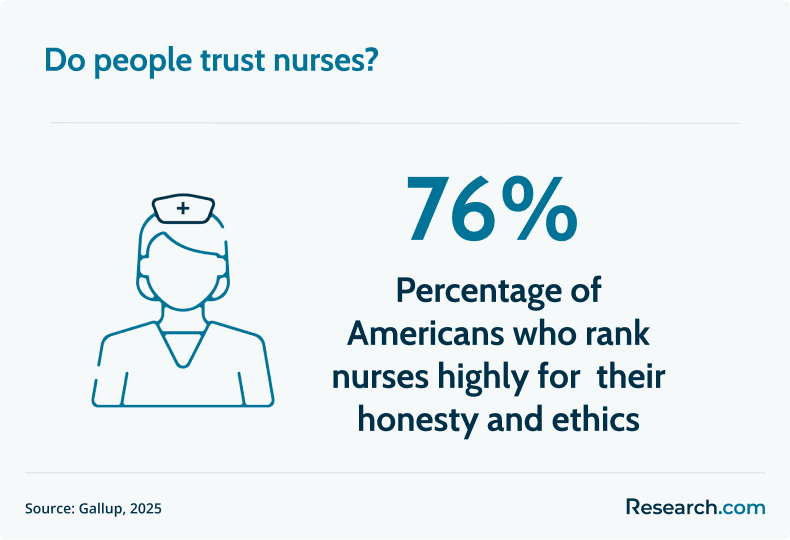
- Supports Professional Competence: It helps nurses strengthen their capacity to provide safe, effective care in different clinical settings. This commitment also enhances confidence and trust from employers, peers, and patients, which is why nursing continues to be recognized as the most trusted profession.
- Job Stability and Growth: Pursuing advanced courses and certifications provides a sense of professional accomplishment and can support long-term employability (Shiri et al., 2023). In addition, it can open doors to leadership positions, specialty roles, and opportunities in academia.
- Encourages Lifelong Learning: Ongoing education fosters curiosity and adaptability. It allows nurses to stay engaged with their field and remain motivated throughout their careers.
By pursuing learning throughout their careers, nurses strengthen their expertise, enhance the quality of patient care, and position themselves to succeed in a rapidly changing healthcare environment.
What other ways can nurses get continuing education units?
Many CE programs involve completing courses or advanced degrees, such as a BSN to MSN, to count for renewal. Exploring multiple avenues to earn nursing continuing education units can make the process more engaging and practical.
Understanding operating room nurse salary by state can also help nurses prioritize which continuing education opportunities might lead to higher-paying positions or specialized roles. From completing courses to participating in community health initiatives, nurses have several options to meet requirements to advance their careers.
Consider the following options:
- Publishing Research: Authoring articles for peer-reviewed journals or giving presentations at professional conferences may be eligible for CEUs. In addition, some states allow time spent reading and answering test questions in scholarly nursing journals to count toward meeting requirements.
- Residency Program: Nursing residency programs provide structured, hands-on training for nurses transitioning into specialized areas of practice. Many state boards and employers recognize the completion of these programs as eligible continuing education credit.
- Volunteer or Community Health Activities: Many states allow CE credit for volunteer service in public health programs or community clinics. This option enables nurses to apply their skills in underserved areas while earning educational credit.
- Continuing Medical Education: Not all states accept CME for nursing requirements, but some, like California, allow nurses to apply Category 1 credits. These courses often cover topics relevant to both physicians and nurses.
- Teaching or Preceptorship: Serving as a clinical instructor or preceptor allows experienced nurses to guide and mentor students or new staff, and this contribution often qualifies for CEUs. States may grant credit hours based on the number of teaching or supervision hours completed.
- Certification and Self-Study: Earning specialty certifications from the American Nurses Credentialing Center (ANCC) and other nationally recognized agencies or completing accredited self-study modules may be accepted as CEUs.
By combining traditional coursework with these alternative approaches, nurses can create a well-rounded strategy for ongoing learning. These options highlight the flexibility of professional development and ensure that continuing education remains both accessible and meaningful throughout a nurse’s career.
How often do nurses need to renew their licenses?
For many states, the license renewal cycle for nurses is every two to three years. However, each state board of nursing sets its own deadlines, so it is best for nurses to confirm with their board. Understanding pharmacist salary can provide additional context for comparing healthcare professions and the potential financial benefits of maintaining licensure and advancing one’s credentials.
Some states also require nurse practitioners to renew their NP certification alongside their RN license, often after completing RN renewal. Although 87% of RNs do not hold APRN credentials, roughly 10% certified as NPs must still comply, underscoring the RN license as the foundation for both general and advanced nursing practice.
The renewal cycle is deliberately kept short to ensure nurses consistently meet current standards of care. Medicine evolves quickly, with new technologies, treatments, and evidence-based practices introduced each year. By requiring regular nursing continuing education, boards protect public health and maintain professional competency.
Another reason for shorter cycles is accountability. Nursing involves high-stakes decision-making that directly affects patient outcomes, so regulators expect all professionals, even those in non bedside nursing jobs, to demonstrate ongoing skill development. Frequent renewal reflects the reality that nursing is a continuously evolving field, reminding practitioners that ongoing learning is essential for both career advancement and safe, high-quality patient care.
This chart displays the share of RNs with APRN credentials.
How do nurses track continuing education hours for license renewal?
Tracking education hours is an important part of the license renewal process, as state boards require accurate records of nursing continuing education to confirm compliance. Nurses across all levels of nursing are generally responsible for keeping documentation of the courses they complete, including certificates, transcripts, or proof of participation.
Many state boards also use a combination of tools to help them stay organized. For instance, many partner with tracking systems or databases where nurses can upload their records directly, reducing the risk of misplaced documents and streamlining the audit process.
Accredited CE providers that use online learning platforms provide digital transcripts or downloadable certificates that can be stored electronically. Moreover, many state boards have downloadable forms that nurses can print or digitally edit to list their progress.
Careful recordkeeping ensures peace of mind during renewal cycles, but beyond this, maintaining clear records supports career planning. By documenting progress over time, nurses can identify patterns in their learning, pursue additional skills, and prepare for specialized roles.
Are there nurses who are exempt from continuing education requirements?
Under certain circumstances, state boards may grant exceptions for nursing continuing education completion. These are usually based on employment status, length of practice, or special conditions that limit a nurse’s ability to participate in courses.
Common exemptions include nurses who hold an inactive or retired license, those who are newly licensed within a state’s initial renewal period, or individuals facing medical or personal hardships.
Military personnel on active duty may also qualify for waivers, depending on state regulations. A few states also allow nationally certified nurses to be exempted from CE. While these relieve nurses of specific requirements, they usually come with conditions, such as meeting other CE requirements or topics.
Even with exemptions, nurses should consider the long-term benefits of ongoing education. The U.S. Bureau of Labor Statistics (BLS) reports that RNs earn a median annual salary of about $98,000, and advanced credentials or specialty training can further increase earning potential.
For example, pursuing advanced roles and certifications that influence factors such as an acute care nurse practitioner salary highlights how continuing education directly contributes to career growth. While waivers may ease immediate requirements, consistent professional development remains a pathway to higher salaries, greater career stability, and expanded opportunities.
This chart displays the average annual salaries of nurses.
How much do nursing continuing education courses cost?
The cost of nursing continuing education courses vary widely based on the provider, subject matter, and format. Generally, short online modules may be offered for free or at a minimal cost, between $20 and $50 for a few hours of instruction.
Multi-hour programs, conferences, or specialty certifications often require higher fees. There are also annual subscription services that provide unlimited access for $100 to $300 per year.
Employers, professional associations, and healthcare organizations sometimes subsidize costs, making it easier for nurses to complete required coursework without significant personal expense.
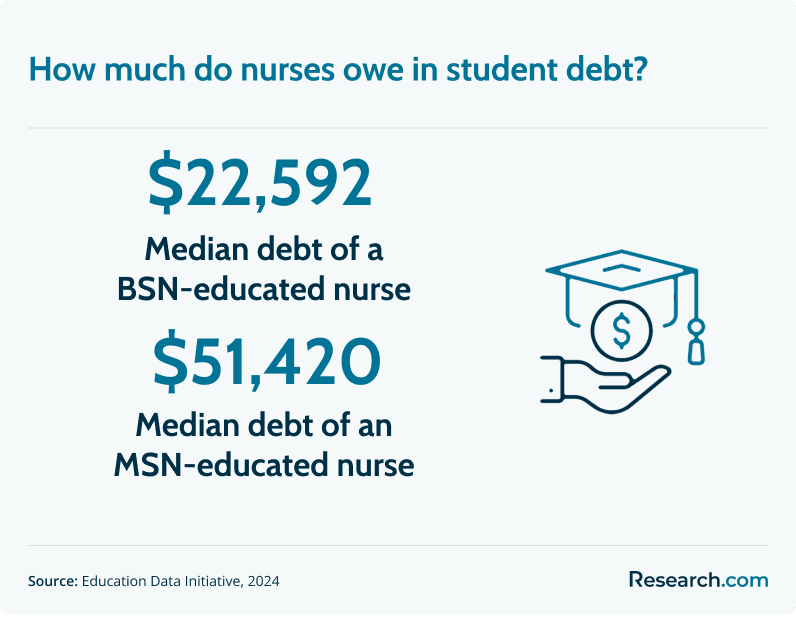
While the cost of continuing education courses is relatively modest, financial planning is still important. Considering that the average debt for nurses completing a BSN is about $22,592 and around $51,420 for those with a master’s degree (Hanson, 2024), even smaller recurring costs can add up over time.
Therefore, nurses must weigh their options carefully, prioritizing CE opportunities that not only fulfill renewal requirements but also add long-term value to their careers.
Can nurses complete continuing education online?
Professionals can pursue nursing continuing education online, and in many states, this option is widely accepted for license renewal. Online platforms provide flexibility, allowing nurses to balance professional responsibilities with ongoing learning. These programs are often accredited, ensuring that the hours earned meet state board requirements.
The variety of courses available online has expanded significantly in recent years. Nurses can choose from self-paced modules, live webinars, or subscription-based libraries that cover topics ranging from clinical skills to healthcare leadership.
In addition to online providers, many higher educational institutions offer advanced academic pathways that can be completed remotely. For instance, an MSN nurse executive leadership online counts not only toward continuing education requirements but also supports career advancement by preparing nurses for leadership and administrative roles.
Online education continues to grow as a practical solution for nurses committed to lifelong learning and career advancement. Choosing accredited providers helps ensure courses meet license renewal standards while offering the flexibility to balance study with demanding work schedules.
What is the fastest way to complete nursing continuing education requirements?
Professionals often seek efficient ways to complete nursing continuing education while managing hectic schedules. The key is to identify strategies that save time without compromising the quality or legitimacy of the coursework.
- Online Self-Paced Courses: These programs allow nurses to complete coursework anytime. Modules are designed to be concise and focused on practical knowledge.
- Bundled Course Packages: Many providers offer package deals that combine multiple topics into one purchase. This setup reduces the hassle of registering for several individual courses.
- Annual Subscription Services: With a flat yearly fee, nurses gain unlimited access to hundreds of approved courses. This option provides flexibility to complete requirements in one sitting or spread them out.
By using these strategies, nurses can complete requirements more efficiently without sacrificing quality. Given that the U.S. Bureau of Labor Statistics projects steady projections for nurses, investing in continuing education positions nurses to take full advantage of expanding opportunities.
Between 2024 and 2034, LPN/LVN employment is expected to grow by 2.6%, while registered nurses are projected to see a 4.9% increase. Nurse practitioners stand out with a remarkable 40.1% growth rate, ranking among the fastest-growing careers across all fields.
However, this means that RNs’ growth rate, though moderate, translates into the highest demand overall, with approximately 189,100 openings each year, while LPNs/LVNs will account for around 54,400 annual opportunities. Meanwhile, even with the rapid expansion of NP roles, the market remains competitive, with about 29,500 openings projected annually.
These figures highlight not only the demand for nursing talent but also the importance of staying competitive. Completing continuing education efficiently allows nurses to strengthen their qualifications, remain adaptable, and seize the expanding career opportunities ahead.
This chart displays the job outlook for nurses.
Here’s What Nurses Have to Say About Completing Their CE Requirements
- Pauline: "As a full-time RN working 12-hour shifts, I was worried about fitting in my CE hours. Thankfully, the online modules were flexible enough to complete on my days off. Completing my renewal felt less like a chore and more like an investment in my career. I now feel more confident in delivering patient care every day."
- Miriam: "As an LVN, my career growth depends on staying current with the basics of bedside care. My CE courses included practical updates on infection control and documentation, which helped me adapt to new policies in my facility. Renewing my license felt like a milestone rather than a hurdle. I’m proud to keep building on my skills while supporting my patients and colleagues."
- Xian: "Balancing my NP certification renewal with my RN license felt overwhelming at first. The advanced pharmacology sessions gave me updated insights into prescribing practices. Knowing that my CEUs directly enhanced my clinical decision-making was motivating. It reminded me why lifelong learning is essential to this profession."
Key Findings
- One CEU is usually equal to 10 contact hours of participation. A contact hour represents 50 to 60 minutes spent completing a recognized learning activity.
- Nursing continues to be recognized as the most trusted profession, with 76% of the public rating nurses highly for their honesty and ethical standards.
- 87% of RNs do not hold APRN credentials, while roughly 10% are certified as NPs.
- The average debt for nurses completing a BSN was about $22,592 and around $51,420 for those with a master’s degree.
- RNs’ growth rate, though moderate, translates into the highest demand overall, with 189,100 openings each year. Meanwhile, even with the rapid expansion of NP roles, the market remains competitive, with about 29,500 openings annually.
References:
- American Association of Nurse Practitioners. (2024). Courses that Meet Drug Enforcement Administration (DEA) Requirements for Licensing. Retrieved September 25, 2025, from https://support.aanp.org/hc/en-us/articles/22097504791963-Courses-that-Meet-Drug-Enforcement-Administration-DEA-Requirements-for-Licensing
- PayScale. (2025, September 11). Average Nursing Manager Salary. Retrieved September 25, 2025, from https://www.payscale.com/research/US/Job=Nursing_Manager/Salary
- Saad, L. (2025, January 13). Americans' Ratings of U.S. Professions Stay Historically Low. Gallup. https://news.gallup.com/poll/655106/americans-ratings-professions-stay-historically-low.aspx
- Smiley, R. A., Kaminski-Ozturk, N., Reid, M., Burwell, P., Oliveira, C. M., Shobo, Y., Allgeyer, R. L., Zhong, E., O’Hara, C., Volk, A., & Martin, B. (2025b). The 2024 National Nursing Workforce Survey. Journal of Nursing Regulation, 16(1), S1–S88. https://doi.org/10.1016/s2155-8256(25)00047-x
- U.S. Bureau of Labor Statistics. (2024). Registered nurses [Interactive data]. Occupational Employment and Wage Statistics (OEWS) Profiles. Retrieved September 25, 2025, from https://data.bls.gov/oesprofile
- U.S. Bureau of Labor Statistics. (2025, August 28). Occupational projections, 2024–2034, and worker characteristics, 2024 (Employment in thousands). Employment Projections. https://www.bls.gov/emp/tables/occupational-projections-and-characteristics.htm
Other Things You Should Know About Nursing CE Requirements by State
In 2027, nursing CE requirements vary by state. Most states require 20-30 hours of CE every renewal period, though specifics can differ. Some states mandate specific courses, such as ethics or state law. It's crucial for nurses to check with their state board for exact requirements.
Free nursing continuing education courses are offered by professional associations, nonprofit organizations, hospitals, and government health agencies. Online providers and state boards of nursing frequently provide accredited modules at no cost. Some employers also sponsor free CEUs to help staff meet renewal requirements.
While many free options are available, it is important to verify that courses are approved by the state board of nursing to ensure credits count toward license renewal.
Failing to complete CEU requirements can lead to serious consequences, including fines, a lapse in license, or disciplinary action from the state board of nursing. Without an active license, nurses cannot legally practice. In some cases, reinstatement requires completing all missed CE hours plus paying additional fees.
Regularly tracking progress and completing courses before deadlines helps nurses avoid penalties and ensures uninterrupted ability to work in their field.


