
2027 What is a Nurse Auditor: Salary & Career Paths?

Co-Founder and Chief Data Scientist
In today’s complex healthcare system, ensuring accurate medical billing and regulatory compliance is more important than ever. This is where nurse auditors play a crucial role. These professionals combine their clinical expertise and analytical skills to review medical records, verify billing accuracy, and prevent financial discrepancies in hospitals, insurance companies, and healthcare organizations.
If you are a registered nurse (RN) looking for a career shift that offers stability, competitive pay, and the opportunity to work in a non-clinical setting, becoming a nurse auditor could be the perfect path. In this guide, we will explore what a nurse auditor does, the required education and certifications, salary expectations, and potential career paths to help you determine if this profession is right for you.
Key Things You Should Know About Nurse Auditor Salary and Career Paths
- A solid foundation in clinical nursing practice is paramount. You will be reviewing medical records, so understanding medical terminology, procedures, and patient care is non-negotiable. Real-world experience as an RN is highly valued.
- Mastering medical coding (ICD-10, CPT, HCPCS) and understanding healthcare regulations (HIPAA, Medicare, Medicaid) is vital. Seek certifications like CPC (Certified Professional Coder) or CCS (Certified Coding Specialist) to boost your credibility.
- Nurse auditing requires meticulous attention to detail and the ability to analyze complex data. You must be able to identify discrepancies, patterns, and potential compliance issues within medical records and billing documents.
- The healthcare industry is constantly evolving, with changes in regulations, coding guidelines, and technology. Aspiring auditors must commit to ongoing education and stay updated on the latest industry trends.
- Nurse auditors play a role in the financial health of healthcare organizations. Knowing the revenue cycle, including claims processing and denial management, will make you a more valuable asset.
- What is a nurse auditor?
- What are the primary responsibilities of a nurse auditor?
- How long does it take to become a certified nurse auditor?
- What are the steps to become a nurse auditor for 2027?
- What degree do you need to become a nurse auditor?
- What are the key skills required to become a successful nurse auditor?
- What certifications are required for nurse auditors?
- What are the entry-level roles that lead to a career in nurse auditing?
- How are emerging technologies reshaping nurse auditing practices?
- What are the common challenges faced by nurse auditors?
- How can you transition from clinical nursing to a nurse auditing role?
- How can mentorship and advanced academic opportunities shape your nurse auditing career?
- What is the average salary of a nurse auditor in the U.S.?
- Will nurse auditor jobs be in demand in the next 10 years?
- How can continuing education advance your nurse auditing career?
- Are nurse auditors equipped to address telehealth challenges?
- Can advanced clinical credentials enhance nurse auditing practice?
- Can accelerated advanced degree programs fast-track your nurse auditing career?
What is a nurse auditor?
A nurse auditor is a specialized healthcare professional who reviews medical records, billing statements, and insurance claims to ensure accuracy, compliance, and cost efficiency. They play a crucial role in preventing billing errors, reducing fraud, and ensuring that healthcare providers are reimbursed correctly for services rendered.
Nurse auditors work for hospitals, insurance companies, government agencies, and private consulting firms, using their clinical knowledge and analytical skills to assess documentation and coding practices. Their work helps maintain financial integrity in the healthcare system while ensuring patient care aligns with regulatory standards.
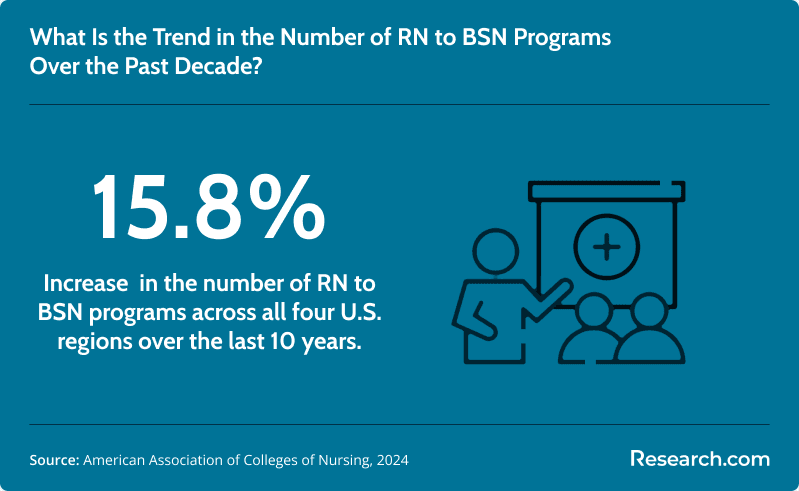
The career path to becoming a nurse auditor typically begins with earning a Registered Nurse (RN) license, followed by gaining experience in clinical settings, medical coding, or healthcare administration. Over the last 10 years, there has been a 15.8% increase in the number of RN to BSN programs across all four U.S. regions.
Many nurse auditors pursue additional certifications, such as the Certified Professional Medical Auditor (CPMA) or Certified Inpatient Coder (CIC), to enhance their expertise.
This field offers various career opportunities, including remote auditing positions, consulting roles, and leadership opportunities in compliance and healthcare finance. With the increasing emphasis on regulatory compliance and cost containment in healthcare, the demand for skilled nurse auditors continues to grow, making it a stable and rewarding career choice.
What are the primary responsibilities of a nurse auditor?
The primary responsibilities of a nurse auditor revolve around ensuring accuracy, compliance, and efficiency in healthcare documentation and billing. This typically involves:
- Reviewing medical records: They meticulously examine patient charts and documentation to verify that services rendered are accurately recorded and supported.
- Auditing coding and billing: Nurse auditors assess medical coding (e.g., ICD-10, CPT) and billing practices to ensure they align with regulations and payer requirements.
- Ensuring compliance: They verify that healthcare providers adhere to legal and regulatory standards, including HIPAA, Medicare, and Medicaid guidelines.
- Identifying discrepancies and errors: Nurse auditors pinpoint discrepancies, errors, and potential fraud or abuse in medical records and billing.
- Providing education and training: They may educate healthcare staff on proper documentation, coding, and billing practices.
How long does it take to become a certified nurse auditor?
The time it takes to become a certified nurse auditor depends on your prior education, nursing experience, and the certification path you choose. Generally, it takes at least four to six years to qualify for a nurse auditing role and earn certification.
- Education (2–4 years): You must first become a Registered Nurse (RN), which requires either an Associate Degree in Nursing (ADN) or a Bachelor of Science in Nursing (BSN). Earning the 2 year medical degrees is a good starting point.
- Clinical Experience (2+ years): Most nurse auditor certifications require at least two years of nursing experience, typically in areas like medical coding, billing, case management, or compliance.
- Certification Exam Preparation (3–6 months): Once eligible, you can pursue a certification such as the Certified Professional Medical Auditor (CPMA) or Certified Inpatient Coder (CIC). Preparing for and passing the certification exam typically takes a few months, depending on study time and prior knowledge.
In total, if you take the ADN route and gain the required experience quickly, you could become a certified nurse auditor in about four years. If you earn a BSN and spend more time in clinical practice before certification, the process may take 6 years or more. Consider the accelerated nursing programs if you want to fast-track the process of earning your degree.
This chart illustrates the U.S. states with the highest employment levels for registered nurses, highlighting key geographic areas of opportunity. Understanding these employment hubs is crucial for those considering the time investment required to become an RN and potentially specialize, as career trajectories and specialization options can be influenced by regional demand.
What are the steps to become a nurse auditor for 2027?
To become a nurse auditor, follow these key steps:
- Earn a Nursing Degree: Obtain an Associate Degree in Nursing (ADN) or a Bachelor of Science in Nursing (BSN). Online nursing programs can be among your options. A BSN is preferred for career advancement.
- Obtain RN Licensure: Pass the NCLEX-RN exam to become a Registered Nurse (RN) and meet state licensing requirements.
- Gain Clinical Experience: Work for at least 2 years in healthcare settings, particularly in medical coding, billing, case management, or compliance, to develop auditing-related skills.
- Learn Medical Coding and Billing: Familiarize yourself with ICD-10, CPT, HCPCS, and DRG coding systems, as well as healthcare reimbursement processes and compliance regulations.
- Pursue Nurse Auditor Certification: Earn a relevant certification such as Certified Professional Medical Auditor (CPMA), Certified Inpatient Coder (CIC), and Certified Coding Specialist (CCS).
- Apply for Nurse Auditor Positions: Look for job opportunities in hospitals, insurance companies, government agencies, or healthcare consulting firms. Some roles may allow for remote work.
- Continue Professional Development: Stay updated with healthcare laws, compliance regulations, and new auditing technologies to advance in the field.
What degree do you need to become a nurse auditor?
To become a nurse auditor, you need at least an Associate Degree in Nursing (ADN) or a Bachelor of Science in Nursing (BSN). Both degrees qualify you to become a Registered Nurse (RN) after passing the NCLEX-RN exam, which is a required step for most nurse auditing positions.
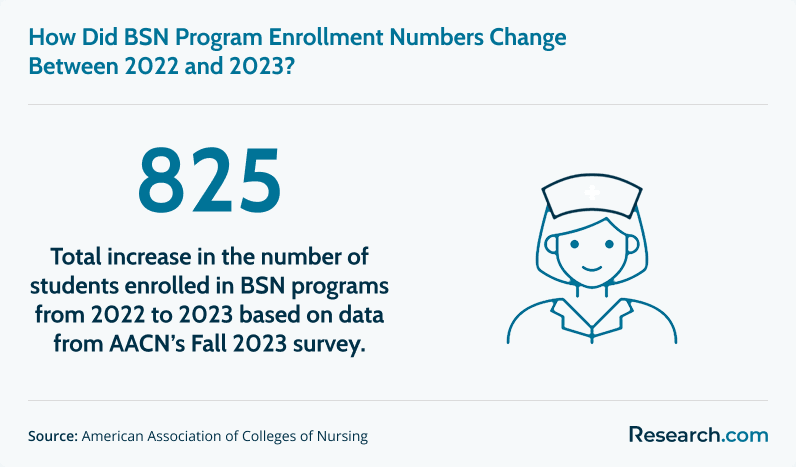
While an ADN is the minimum requirement, a BSN is preferred by many employers because it provides a stronger foundation in healthcare administration, compliance, and leadership. Data from AACN’s Fall 2023 survey show that enrollment in BSN programs increased by 0.3% or 825 students from 2022 to 2023.
Some advanced nurse auditing roles, especially in hospital administration or insurance companies, may even favor candidates with a Master of Science in Nursing (MSN) or a healthcare-related business degree, such as a Master of Healthcare Administration (MHA). Earning healthcare certifications can also strengthen your credentials as it reflects expertise in particular practice areas.
What are the key skills required to become a successful nurse auditor?
To become a successful nurse auditor, you need a combination of clinical knowledge, analytical abilities, and attention to detail. Here are the key skills required:
- Medical Coding and Billing Knowledge: Understanding ICD-10, CPT, HCPCS, and DRG coding systems is essential for reviewing medical records and identifying billing errors.
- Attention to Detail: Nurse auditors must carefully analyze medical documentation, ensuring compliance with regulations and preventing costly mistakes.
- Analytical and Critical Thinking Skills: The ability to assess patient records, identify inconsistencies, and detect fraudulent billing practices is crucial.
- Regulatory and Compliance Knowledge: Familiarity with HIPAA, Medicare, Medicaid, and insurance policies helps ensure audits align with legal and industry standards.
- Strong Communication Skills: Nurse auditors must clearly explain audit findings to healthcare providers, billing staff, and insurance companies.
- Problem-Solving Abilities: Identifying and resolving discrepancies in medical records requires logical thinking and investigative skills.
- Computer and Data Management Skills: Proficiency in Electronic Health Records (EHR) systems, audit software, and spreadsheet applications is necessary for efficient documentation and reporting.
- Time Management: Managing multiple audits while meeting deadlines is key in this role, especially for those working in fast-paced hospital or insurance settings.
- Ethical Judgment and Integrity: Nurse auditors must maintain objectivity and uphold ethical standards when handling sensitive patient and financial information.
- Continuous Learning: Keeping up with changes in healthcare regulations, billing practices, and audit techniques ensures ongoing success in the field. There are various nursing certifications that you can take to continually advance your skills.
What certifications are required for nurse auditors?
Based on ZipRecruiter data, compliance nurse auditors earn between $49,000-$86,500 per year while clinical nurse auditors receive $60,000-$75,000 per year. While certifications are not always required, obtaining one can significantly enhance a nurse auditor’s credibility and career prospects.
Here are the most relevant certifications for nurse auditors:
1. Certified Professional Medical Auditor (CPMA) – AAPC
- Best for: Nurse auditors specializing in medical coding and billing audits.
- Requirements: Medical auditing experience recommended but not mandatory.
- Focus: Compliance, fraud detection, and accurate claim submission.
2. Certified Inpatient Coder (CIC) – AAPC
- Best for: Auditors focusing on inpatient medical record reviews.
- Requirements: Strong knowledge of ICD-10-CM and ICD-10-PCS coding.
- Focus: Auditing inpatient hospital services and ensuring proper reimbursement.
3. Certified Coding Specialist (CCS) – AHIMA
- Best for: Nurse auditors reviewing hospital and physician coding accuracy.
- Requirements: Coding experience or formal education in health information management.
- Focus: Advanced medical coding and healthcare reimbursement processes.
4. Certified Healthcare Auditor (CHA) – AIHC
- Best for: Professionals specializing in compliance and risk management audits.
- Requirements: Healthcare experience, with an emphasis on regulatory compliance.
- Focus: Audit methodologies, fraud detection, and healthcare regulations.
5. Certified Medical Reimbursement Specialist (CMRS) – AMBA
- Best for: Nurse auditors involved in insurance claims and reimbursement auditing.
- Requirements: Knowledge of medical billing, coding, and reimbursement policies.
- Focus: Ensuring compliance with Medicare, Medicaid, and private insurance policies.
This chart visualizes the salary ranges for various nurse auditor specializations, highlighting the impact of experience, certifications, and industry focus on earning potential. Understanding these differences can help aspiring and current nurse auditors identify career paths that align with their financial goals and professional development.
What are the entry-level roles that lead to a career in nurse auditing?
To build a career in nurse auditing, gaining experience in related healthcare roles is essential. Here are entry-level positions that provide the skills and knowledge necessary for transitioning into a nurse auditor role:
1. Registered Nurse (RN)
- Provides foundational clinical experience, patient care knowledge, and exposure to medical records and billing processes.
- Common settings: Hospitals, clinics, long-term care facilities.
2. Medical Coding Specialist
- Develops expertise in ICD-10, CPT, and HCPCS coding, which is critical for reviewing medical claims and ensuring billing accuracy.
- Common settings: Hospitals, insurance companies, physician offices.
3. Medical Billing Specialist
- Teaches skills related to insurance claims, reimbursement processes, and healthcare compliance—all essential for nurse auditing.
- Common settings: Medical billing firms, private practices, hospitals.
4. Case Management Nurse
- Involves reviewing patient records, coordinating care, and ensuring compliance with insurance guidelines, making it a strong foundation for auditing.
- Common settings: Insurance companies, hospitals, home health agencies.
5. Utilization Review Nurse
- Focuses on analyzing patient care data, verifying medical necessity, and ensuring correct billing, closely aligning with auditing responsibilities.
- Common settings: Hospitals, managed care organizations, government agencies.
6. Compliance Nurse
- Provides experience with healthcare regulations (HIPAA, Medicare, Medicaid) and internal audits, which directly translates into nurse auditing.
- Common settings: Healthcare compliance departments, insurance firms.
7. Health Information Management (HIM) Specialist
- Involves managing medical records, analyzing documentation accuracy, and ensuring compliance with coding standards, which are crucial auditing skills.
- Common settings: Hospitals, healthcare consulting firms, insurance companies.
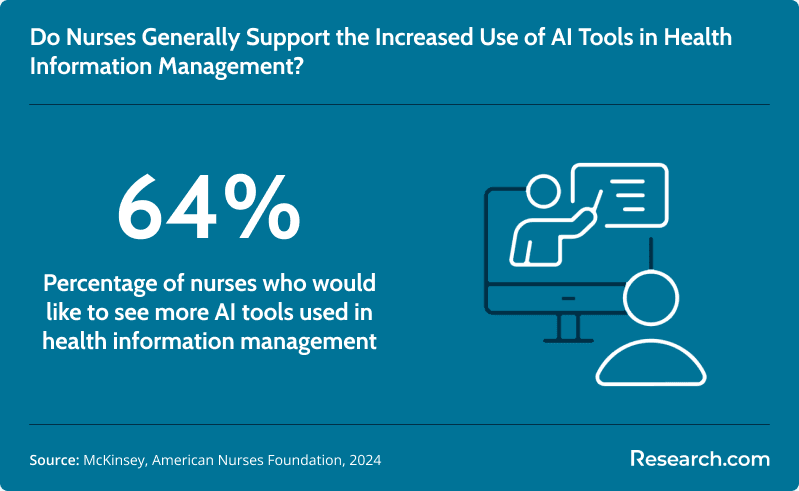
Based on a survey by McKinsey and American Nurses Foundation, 64% say they would like to see more AI tools used in health information management. However, 61% identified accuracy of AI as a top concern, followed by lack of human interaction at 41%.
How are emerging technologies reshaping nurse auditing practices?
Advanced digital solutions and data analytics are redefining the nurse auditing landscape by improving workflow efficiency and ensuring greater compliance accuracy. Integrating automated coding audits, AI-driven data validation, and real‑time monitoring systems can help reduce human error and streamline billing reviews. Additionally, digital literacy is becoming a critical competency; nurses seeking to upgrade their technical skills may consider enrolling in fast track RN to BSN programs that incorporate modern healthcare informatics into the curriculum.
What are the common challenges faced by nurse auditors?
Nurse auditors often encounter challenges stemming from the need to balance clinical expertise with meticulous financial analysis. Key obstacles include navigating evolving regulatory requirements, managing ethical dilemmas in record review, and adapting to rapid technological advancements in automated coding and data analytics. Professionals must also address the complexity of interdepartmental communications to ensure seamless coordination between clinical and administrative teams. To overcome these challenges, many seek continuous skill enhancements through various specialized training opportunities, such as pursuing courses available via FNP programs online.
How can you transition from clinical nursing to a nurse auditing role?
Transitioning to nurse auditing involves strategically leveraging your clinical expertise while acquiring competencies in financial compliance and data analytics. Identify and build upon transferable skills such as meticulous documentation review and adherence to regulatory standards. Enroll in specialized training that covers medical billing, coding, and auditing practices, and consider programs that advance administrative proficiency—for example, exploring RN to BSN with no clinicals. Additionally, engage in professional networking through industry associations and mentorship initiatives to gain insight into best practices and real-world applications. Pursue opportunities such as internships or project-based roles within healthcare compliance to build practical experience during your career shift.
How can mentorship and advanced academic opportunities shape your nurse auditing career?
Leveraging industry mentors and purposeful networking is essential for advancing in nurse auditing. Engaging with experienced professionals through industry conferences, professional associations, and targeted online forums can provide valuable insights that complement technical and regulatory expertise. Additionally, pursuing advanced academic pathways—such as BSN accelerated programs—offers streamlined education and establishes connections with peers and mentors, ultimately fostering leadership skills and expediting career development in healthcare compliance and auditing.
What is the average salary of a nurse auditor in the U.S.?
The average salary of a nurse auditor in the U.S. typically ranges from $70,000 to $90,000 per year. However, several factors can influence this figure, including:
- Experience: Entry-level nurse auditors may earn around $60,000 to $70,000, while those with 5+ years of experience can make between $80,000 and $95,000 or more.
- Location: Salaries tend to be higher in areas with a higher cost of living, such as California, New York, and Massachusetts. In these regions, nurse auditors can earn closer to $100,000 annually.
- Industry: Nurse auditors working for large healthcare organizations, insurance companies, or consulting firms are among the highest paid nurses, especially if they hold advanced certifications.
- Certifications: Holding certifications such as CPMA or CCS can increase earning potential.
Will nurse auditor jobs be in demand in the next 10 years?
The projected 6% growth in registered nurse demand over the next decade, coupled with a recent 1.4% decline in nursing program enrollment reported by the AACN, signals a growing strain on the healthcare system. This shortage directly amplifies the need for specialized roles like nurse auditors.
As fewer RNs enter the workforce, ensuring accurate coding, billing, and compliance becomes even more critical, increasing the demand for experienced nurse auditors to optimize revenue and mitigate risk in increasingly resource-constrained healthcare environments.
Nurse auditor jobs are expected to be in demand over the next 10 years. Several factors contribute to this growing demand:
- Increasing Healthcare Complexity: As the healthcare industry continues to grow and evolve, there will be a greater need for skilled professionals to ensure accurate billing, compliance, and cost control. This complexity is especially true with the expansion of health insurance policies and government programs like Medicare and Medicaid.
- Regulatory Changes: With the constant updates to healthcare regulations, such as the implementation of new coding systems (e.g., ICD-10) and compliance requirements, organizations will require professionals to ensure that all practices align with these regulations.
- Focus on Cost Control: Healthcare providers are increasingly focused on improving operational efficiency and reducing fraud, waste, and abuse. Nurse auditors play a key role in identifying areas of financial inefficiency and ensuring that billing practices are accurate.
- Technological Advancements: The integration of electronic health records (EHRs) and audit software will make auditing processes more efficient, driving the demand for trained nurse auditors to manage and analyze large datasets.
- Aging Population: As the U.S. population ages, there will be more healthcare services needed, creating more opportunities for nurse auditors to oversee billing and compliance in the growing number of healthcare facilities and insurance companies.
Here’s What Professionals Have To Say About Pursuing a Career as Nurse Auditor
Becoming a nurse auditor has been one of the best decisions of my career. Not only do I get to use my clinical knowledge, but I also have the satisfaction of ensuring that healthcare systems are compliant and financially efficient. The stability and growth in this field make it an incredibly rewarding profession. Susie
I love that as a nurse auditor, I can make a real impact on the healthcare industry while enjoying a healthy work-life balance. I appreciate the variety in my job, whether it’s reviewing records or collaborating with insurance companies, it keeps me engaged every day. The certifications and continuous learning also keep me motivated. Marcus
Nurse auditing has allowed me to combine my passion for patient care with a focus on financial and regulatory integrity. The field is growing, and the sense of purpose I get from preventing fraud and ensuring accuracy is unmatched. I’m excited about the future opportunities in this career! Emily
How can continuing education advance your nurse auditing career?
Nurse auditors can enhance their expertise and adaptability through targeted continuing education programs that focus on the latest coding updates, regulatory changes, and emerging auditing technologies. Pursuing advanced coursework not only sharpens technical competencies but also reinforces leadership and strategic decision-making skills vital for long-term career progression. Professionals are encouraged to explore specialized educational opportunities such as accelerated FNP programs online which can complement auditing skills by broadening clinical insights and management capabilities without duplicating existing foundational knowledge.
Are nurse auditors equipped to address telehealth challenges?
The expansion of telehealth services introduces unique verification standards and billing protocols that demand specialized audit procedures. Nurse auditors must now navigate digital documentation and remote care regulations while ensuring compliance with evolving telehealth billing guidelines. Leveraging flexible educational opportunities, such as RN to BSN online self paced, can help professionals update their skills to meet these challenges, maintain audit precision, and support effective healthcare delivery in a digitally driven environment.
Can advanced clinical credentials enhance nurse auditing practice?
Integrating advanced clinical credentials can deepen the understanding of clinical processes and regulatory nuances, ultimately strengthening audit accuracy and compliance management. Professionals who pursue further education gain insights into intricate patient care protocols and current treatment trends, which can inform more precise billing reviews and risk assessments. In addition, interdisciplinary qualifications foster enhanced collaboration between clinical and administrative teams, driving proactive solutions in healthcare management. Exploring options such as a direct entry master's nurse practitioner may offer a valuable perspective that complements the analytical rigor required in nurse auditing without duplicating established audit methodologies.
Can accelerated advanced degree programs fast-track your nurse auditing career?
Accelerated advanced degree programs offer nurse auditors an opportunity to acquire leadership competencies, enhanced data analytics, and sophisticated compliance management skills in a reduced timeframe. These focused curriculums emphasize critical thinking, strategic decision-making, and streamlined coursework tailored to address the unique challenges of healthcare administration. Enrollment in such specialized academic pathways, including options like the shortest DNP program online, empowers professionals to rapidly elevate their expertise and operational efficiency, thereby positioning them at the forefront of industry innovations.
Key Findings
- If you take the ADN route and gain the required experience quickly, you could become a certified nurse auditor in about 4 years. If you earn a BSN and spend more time in clinical practice before certification, the process may take 6 years or more.
- Over the last 10 years, there has been a 15.8% increase in RN to BSN programs across all four U.S. regions.
- While the number of RN to BSN programs offered in a traditional setting has declined significantly, the number of nursing online programs has increased by 25%.
- Data from AACN’s Fall 2023 survey show that enrollment in BSN programs increased by 0.3% or 825 students from 2022 to 2023.
- Based on ZipRecruiter data, compliance nurse auditors earn between $49,000-$86,500 annually while clinical nurse auditors receive $60,000-$75,000.
- The projected 6% growth in registered nurse demand over the next decade, coupled with a 1.4% decline in nursing program enrollment reported by the AACN, signals a growing strain on the healthcare system.
References:
- American Association of Colleges of Nursing. (n.d.). Research data center.
- American Association of Colleges of Nursing. (n.d.). New data show enrollment declines in schools of nursing, raising concerns about the nation's nursing workforce.
- Agency for Healthcare Research and Quality. (2024). 2024 medical office database report.
- McKinsey & Company. (2024). The pulse of nurses: Perspectives on AI in healthcare delivery.
- O*NET OnLine. (n.d.). Registered nurses.
- TruMerit. (2024). Nurse migration rates to the U.S. remained high in 2024.
- ZipRecruiter. (n.d.). Most popular types of nurse auditor jobs.
Other Things You Should Know About Nurse Auditor Salary and Career Paths
To become a nurse auditor in 2027, you typically need an active RN license, a bachelor’s degree in nursing, and experience in clinical nursing or auditing. Certification through bodies like the American Association of Nurse Auditors (AANA) can enhance job prospects.
Nurse auditors typically hold at least a bachelor's degree in nursing. They often have experience in clinical settings. Advanced certifications such as the Certified Professional Medical Auditor (CPMA) credential can enhance qualifications and opportunities in 2027.
In 2027, a nurse auditor’s earning potential is influenced by their level of experience, location, certification, education level, and the type of healthcare facility they work in, such as hospitals or private organizations. Additional factors include the demand for their expertise in regulatory compliance and healthcare cost management.


