
2027 School Counseling Licensing, Certification & Renewal Requirements by State

Co-Founder and Chief Data Scientist
Pursuing a career as a school counselor is both rewarding and impactful, but the path to licensure can be complex. While a master’s degree from a regionally accredited institution is a universal requirement, specific coursework, fieldwork, and exams like the Praxis or NCE vary by state. This system means a license in one state may not transfer to another, complicating career mobility.
According to the Bureau of Labor Statistics, about 376,300 school and career counselors were employed in 2024, each navigating their state’s unique rules. This article simplifies the process by breaking down school counseling licensing, certification, and renewal requirements across states, helping you understand what it takes to launch and sustain a successful school counseling career.
Key things you should know about school counseling licensing
- Licensure generally requires earning a master's degree in school counseling or a related field, completion of practicum/internship experiences, and passing a state or national comprehensive exam.
- States differ on experience requirements prior to certification; many states require documented hours of supervised counseling experience. For example, nearly 40 states mandate some level of school counseling experience before full licensure, while some states do not require it at all.
- License renewal often involves continuing education requirements focused on professional development. For instance, Michigan requires renewal every five years including 50 professional development hours, and Washington requires completion of 100 continuing education hours and service during the certification period for renewal.
- What is the difference between school counseling licensure and certification? Licensure vs Certification
- Are there specific undergraduate degrees recommended for aspiring school counselors? Are there specific undergraduate degrees recommended for aspiring school counselors?
- How do school counseling licensure requirements differ state by state? Licensure Requirements
- Is it easier to get a school counseling license in some states compared to others? Is it easier to get a school counseling license in some states compared to others?
- What is a reciprocal license and how do I get one in a new state? Reciprocal License
- What is the cost of the school counseling licensure exams by state? Exam Cost
- What are the continuing education requirements to renew my school counseling license? Continuing Education
- How many clock hours of professional development do I need for my school counselor certification renewal? Clock Hours
- How Can I Stay Updated on Changing Licensure Requirements? How Can I Stay Updated on Changing Licensure Requirements?
- What is the average salary for a school counselor in each state? Average Salary
- Which states have the highest and lowest demand for school counselors? Job Demand
What is the difference between school counseling licensure and certification?
Licensure refers to a state-issued authorization to practice a profession. It is a mandatory, legal requirement that allows an individual to work as a school counselor within a specific state's public school system.
The state board of education or a similar governing body grants a license after the applicant has met a series of rigorous, state-defined standards, which typically include earning a master's degree in school counseling, completing a certain number of practicum and internship hours, and passing a state-specific or national examination like the Praxis.
Certification, on the other hand, is a voluntary credential awarded by a professional organization, such as the National Board for Certified Counselors (NBCC), to an individual who has met a set of national standards.
While not legally required to practice in most states, a certification like the National Certified School Counselor (NCSC) credential demonstrates a higher level of professional expertise and a commitment to meeting national best practices. This can enhance a counselor's credibility, provide a professional advantage in the job market, and often makes it easier to transfer a license between states through reciprocity agreements.
This distinction is not unique to counseling; many professions, particularly those with diverse pathways, have similar credentials. For instance, the communication management career paths often distinguish between academic degrees and professional certifications in areas like public relations or project management, where voluntary credentials can validate specialized skills and open new opportunities beyond the standard degree.
In essence, licensure is about meeting the minimum legal requirements to practice, while certification is about exceeding those requirements and showcasing professional excellence.
Are there specific undergraduate degrees recommended for aspiring school counselors?
While there isn't a single mandatory undergraduate major for school counseling licensing, certain degrees are highly recommended because they provide a strong foundation for the required graduate-level studies. The most beneficial majors are in fields focused on human behavior and education.
- Psychology is a common choice because it provides a comprehensive understanding of human development, behavior, and counseling theories. It equips you with the foundational knowledge of how people think, feel, and learn, which is essential for a career in counseling.
- Education majors offer invaluable insight into the school environment, classroom dynamics, and curriculum. This background can be particularly useful for counselors who will be working closely with teachers, administrators, and students on academic and behavioral issues.
- Sociology focuses on social structures, cultural dynamics, and group behavior. A degree in this field helps you understand the societal factors that influence students' lives and academic performance, such as family background, socioeconomic status, and cultural diversity.
- Social Work is another excellent option as it combines elements of counseling, sociology, and psychology. It often includes practical experience in helping professions and provides a holistic perspective on assisting individuals and communities.
While these degrees are the most common and relevant, many graduate programs will consider applicants with a bachelor's degree in any field, provided they have completed prerequisite courses in psychology or related social sciences.
The key is to demonstrate a strong academic record and a genuine interest in the field.
How do school counseling licensure requirements differ state by state?
School counseling licensing requirements vary significantly from state to state, creating a diverse regulatory landscape. While a master's degree in school counseling or a related field is a near-universal prerequisite, the specific curriculum and accreditation standards for that degree can differ.
Some states, for instance, mandate that the program must be accredited by the Council for Accreditation of Counseling and Related Educational Programs (CACREP), while others do not have this requirement.
Beyond academics, there are key variations in practical experience and examination requirements. The number of supervised practicum and internship hours needed can range from a few hundred to over a thousand. Similarly, the required licensure exams differ. While many states use national exams like the Praxis or the National Counselor Examination (NCE), some have their own state-specific tests.
Additionally, some states may require an ethics or jurisprudence exam, a criminal background check, or even prior teaching experience. These differences underscore the importance of thoroughly researching the specific requirements of the state where an aspiring or practicing school counselor intends to work.
An interesting parallel can be seen if you want to learn more about what can you do with a communication disorders degree. Just like the regulations for school counseling, the jobs available—from speech-language pathologist to audiologist to special education teacher—are highly dependent on state-specific licensing and certification rules, highlighting the complex and varied nature of specialized education careers.
Is it easier to get a school counseling license in some states compared to others?
States that do not require an applicant's master's program to be CACREP-accredited might be considered "easier" for someone who has a degree from a non-CACREP-accredited program. Similarly, some states have more forgiving requirements for supervised experience hours, or they may not require prior teaching experience, a prerequisite that can be a significant barrier for some.
On the other hand, states that have adopted the Counseling Compact may offer a much smoother path for already-licensed counselors seeking to transfer their credentials. The Compact, which is an interstate agreement, allows counselors licensed in one participating state to practice in another without going through the entire licensing process again.
This can be a huge advantage for professional mobility, making it "easier" for those who are already licensed in a compact state.
What is a reciprocal license and how do I get one in a new state?
A reciprocal license, often referred to as "licensure by endorsement" or "licensure by credentials," is a process that allows a licensed school counselor from one state to obtain a license in a new state without repeating all of the initial requirements.
This license is an agreement or a pathway that recognizes the substantial equivalency of a counselor's education, experience, and licensure from their home state. This process is crucial for counselors who are moving and wish to continue practicing their profession.
The process for getting a reciprocal license varies by state, but it generally involves several key steps. First, you must hold a valid, unrestricted school counseling license in your current state.
The new state's licensing board will then evaluate your credentials to determine if they meet their own standards. This typically involves submitting official transcripts, proof of your out-of-state license, and documentation of your supervised experience hours. You may also need to pass a state-specific jurisprudence or ethics exam to demonstrate knowledge of the new state's laws and regulations.
What is the cost of the school counseling licensure exams by state?
The cost of school counseling licensing exams can vary based on the specific exam required by the state and any additional fees associated with the application process.
While a standardized, state-by-state list of costs is difficult to find due to fluctuating fees and state-specific regulations, here's a general breakdown of the most common exams and their associated costs:
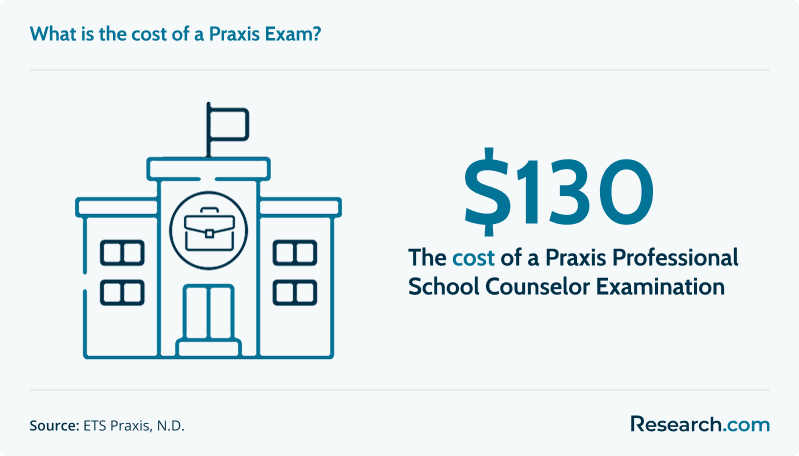
- Praxis Professional School Counselor (5421/5422): The Praxis exam is widely used for school counseling licensure across many states. The cost for this specific exam is generally around $130. However, it's essential to check the official ETS Praxis website for the most current fee, as prices can change and may include a slight surcharge depending on the testing location or specific state.
- National Counselor Examination (NCE): This exam is a requirement for state licensure in many jurisdictions. The exam fee for the NCE is typically around $275, which is paid directly to the National Board for Certified Counselors (NBCC). If you are also applying for the National Certified Counselor (NCC) credential at the same time, the application fee can be bundled with the exam cost.
- National Clinical Mental Health Counseling Examination (NCMHCE): The NCMHCE is another national exam administered by the NBCC and is sometimes used for school counseling licensure, particularly in states that require it for broader professional counseling credentials. The fee for the NCMHCE is also around $275.
It's important to note that these costs are for the exams themselves and do not include other potential fees. These could include application fees for the state board fees for fingerprinting or background checks, and fees for official transcript reviews.
This financial planning is similar to the decisions families face when researching early childhood education programs, which also involve a complex set of costs including tuition, registration fees, and materials, none of which are standardized from one program to the next.
What are the continuing education (CE) requirements to renew my school counseling license?
Like school counseling licensing requirements, continuing education (CE) requirements for school counselors are not standardized across all states and can differ significantly in the number of hours, renewal cycles, and topics of focus. The purpose of these requirements is to ensure that counselors maintain up-to-date knowledge and skills in their profession.
While a specific number of CE hours varies, a common renewal period is two to five years, which can open jobs for humanities majors. For example, some states may require 30 hours every two years, while others, like Michigan, require a total of 150 hours of professional development over a five-year period, with specific hours dedicated to topics like college and career preparation.
State-Specific Requirements and Focus Areas
Each state's licensing board determines its own CE guidelines. Many states require a certain number of hours in specific, mandated topics to address current educational priorities. These can include:
- Ethics: A common requirement, with many states mandating a minimum number of hours in professional ethics or legal considerations.
- Suicide Prevention: In response to growing concerns about mental health, many states now require CE hours in suicide assessment, prevention, and referral.
- Diversity and Equity: Some states, like Illinois, have specific requirements for training in topics such as implicit bias and cultural competency.
Acceptable Forms of Continuing Education
Continuing education credits can be earned through various approved activities, not just traditional classroom learning. Acceptable activities typically include:
- Formal Education: Taking graduate-level courses from an accredited college or university.
- Workshops and Conferences: Attending professional development workshops, seminars, or conferences hosted by approved providers, such as the American School Counselor Association (ASCA) or the National Board for Certified Counselors (NBCC).
- Online Learning: Completing online courses, webinars, or self-study programs from board-approved providers.
- Professional Activities: Some states may grant CE credit for activities like publishing research, presenting at conferences, supervising interns, or taking on leadership roles in professional organizations.
It's crucial for counselors to check their state's specific school counseling licensing requirements, including the types of activities that are accepted and the number of hours that can be earned from each category. The most accurate and up-to-date information is always available on the official website of the state's department of education or professional licensing board.
How many clock hours of professional development do I need for my school counselor certification renewal?
A state might require a set number of professional development hours every two to five years. Some states, like Delaware, require 90 clock hours of professional development every five years for their educators.
In contrast, Michigan requires 150 hours of education-related professional learning over a five-year period for a school counselor license renewal, with a specific focus on certain topics like college and career preparation. Colorado has a different system, requiring 90 contact hours of professional learning every seven years.
These hours can typically be earned through a variety of activities, including attending workshops, conferences, or online courses, and some states may even count professional activities like presenting at a conference or supervising a practicum student.
It's crucial for school counselors to check their specific state's official licensing board website for the most accurate and up-to-date information on the required number of hours, the renewal cycle, and the types of professional development activities that are accepted.
This commitment to ongoing learning and professional growth is a common thread among various fields that require advanced expertise, paralleling the question of what jobs can you get with a doctorate in organizational leadership.
Individuals with this highly specialized degree often pursue top-tier roles such as university dean, chief executive officer (CEO), or management consultant, where continuous development is not just a requirement but a fundamental part of the job.
How Can I Stay Updated on Changing Licensure Requirements?
Regularly monitoring official state education department websites and licensing board announcements is essential for keeping abreast of evolving licensure standards. Subscribing to newsletters from recognized professional associations and utilizing verified online platforms can provide timely updates on policy revisions, exam modifications, and continuing education mandates. Leveraging these trusted sources ensures that school counselors remain compliant with state-specific regulations and are well-prepared to navigate procedural changes without disruption to their professional practice.
What is the average salary for a school counselor in each state?
The average salary for a school counselor varies significantly by state, reflecting differences in cost of living, state budgets for education, and demand for counseling services.
As of 2025, the nationwide median salary for school counselors is approximately $61,710 per year. States with higher average salaries include Washington with about $80,260, California at $77,640, and Massachusetts around $76,880 annually.
On the lower end, states like South Dakota average around $48,640, and Missouri about $49,460 per year. Most states fall within the $50,000 to $65,000 range, with considerable variation in the top and bottom 10% of earners within each state.
These figures provide a useful benchmark for understanding regional compensation differences for school counselors across the U.S. in 2025. This can also open paths to further your education and think of other ways on what can you do with a graduate certificate in early childhood education.
Which states have the highest and lowest demand for school counselors?
Highest Demand States
The highest demand for school counselors is often found in states with large student populations, high counselor-to-student ratios, and a strong push for improved mental health support in schools. California, Texas, and New York consistently have the highest total employment numbers for school counselors.
While these states employ a large number of counselors, they also have very large student populations, so the demand remains high to meet recommended ratios.
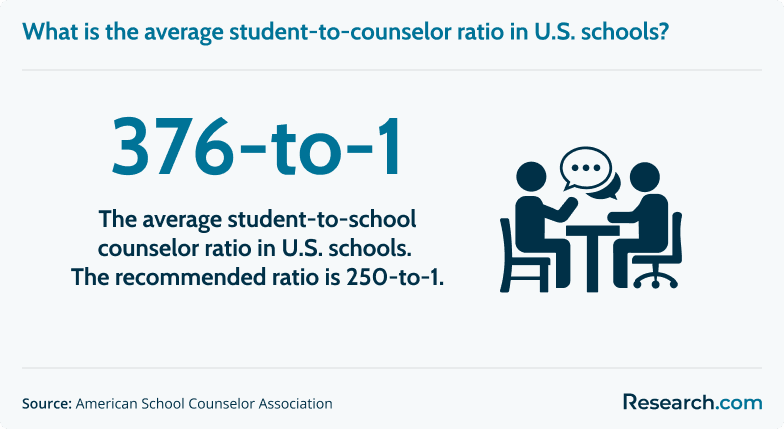
States that have a high demand relative to their size are often those with a significant shortage based on the American School Counselor Association's (ASCA) recommended ratio of one counselor for every 250 students. For instance, states like Arizona and Michigan have some of the most significant shortages, making them areas of high demand.
Lowest Demand States
Conversely, states with the lowest demand are typically those that already meet or are very close to the recommended counselor-to-student ratios. Vermont and New Hampshire are often cited as the only two states that consistently meet or even exceed the ASCA's recommended ratio.
As a result, the job market in these states is more competitive, and there may be fewer open positions. However, this also means that school counselors in these states are often able to work with smaller caseloads, which can lead to better job satisfaction and more impactful work.
It's important to remember that while a state may have lower overall demand, a specific school district within that state might still have a high need for counselors. A school's demand for counselors can be influenced by local factors like funding, student demographics, and administrative priorities.
Here's what graduates have to say about their school counseling licensing, certification & renewal
- Blaire: "The licensing process felt daunting at first, but with clear state guidelines, I navigated the requirements for my master's and exams efficiently. Holding my official license now is more than a document; it's a profound validation of years of hard work and my dedication to helping students thrive. "
- Vida: "Getting my national certification was a game-changer. It not only affirmed my professional competence but also gave me the confidence to apply for positions in multiple states, opening up new career possibilities and making my qualifications more portable. "
- Olivia: "The renewal process was a powerful reminder of my growth as a counselor. The continuing education hours pushed me to explore new areas like trauma-informed care, ensuring I stay current and can provide the best support possible for my students' evolving needs."
Key Findings
- The nationwide median salary for school counselors is approximately $61,710 per year.
- The Praxis exam is widely used for school counseling licensure across many states. The cost for this specific exam is generally around $130.
- A state might require a set number of hours every two to five years. Some states, like Delaware, require 90 clock hours of professional development every five years for their educators.
- The fee for the NCMHCE is also around $275.
- Michigan requires 150 hours of education-related professional learning over a five-year period for a school counselor license renewal, with a specific focus on certain topics like college and career preparation.
References:
- American Psychological Association (2022, October 1). Student mental health is in crisis. Campuses are rethinking their approach. American Psychological Association
- BLS (2024, April 3). 21-1012 Educational, Guidance, and Career Counselors and Advisors. BLS
- BLS (2024, August 29). School and Career Counselors and Advisors. BLS
- Mulhern, C. (2020, May 5). Better School Counselors, Better Outcomes. Education Next
- Zippia (2025, January 8). School Counselor Education Requirements. Zippia
Other Things You Should Know About School Counseling, Licensing, Certification and Renewal Requirements by State
To transfer a school counseling license to a different state in 2027, counselors must typically meet the new state's education and exam requirements, which may vary. Many states offer reciprocity if the original licensing requirements are similar; however, additional coursework or assessments might still be necessary, depending on specific state regulations.
In 2027, school counselors typically need to complete 20–40 hours of continuing education every renewal cycle, which varies by state. Some states may require specific courses in mental health or diversity training to maintain licensure.
When moving to a new state, whether you have to retake exams or coursework for school counseling certification depends on the state’s regulations. Some states require candidates to pass that state's specific exams or take additional coursework to meet local standards, while others may accept credentials from another state through reciprocity agreements or endorsement processes.
Many states also require background checks and may have differing mandates on supervised experience. It’s important to check the licensing board or department of education in the new state to understand exact requirements before making a transition, as regulations vary and can include retesting, additional coursework, or simply applying for licensure by endorsement.
In 2027, some states require the Praxis exam for school counseling certification, while others may have different requirements. It's essential to check the specific requirements for the state where you wish to be certified, as they can vary significantly across the country.


