
2027 Steps to Become a Registered Dietitian in Arizona

Co-Founder and Chief Data Scientist
Arizona is experiencing steady demand for dietitians and nutritionists, with about 160 projected annual job openings through 2033. This growing need highlights the state’s expanding healthcare and wellness sectors, where dietitians play an essential role in improving community health through evidence-based nutrition care.
In this guide, I will walk you through the steps to become a registered dietitian in Arizona, from completing an accredited degree to earning licensure. I will also discuss career growth, salary expectations, and the importance of staying current with professional standards to thrive in this rewarding field.
Key Things to Know About Becoming a Registered Dietitian in Arizona
- In Arizona, you will need an ACEND-accredited Didactic Program in Dietetics, a supervised dietetic internship of approximately 1,200 hours, and a passing score on the CDR Registration
- Examination to become a registered dietitian. Licensure through the Arizona Board of Dietetic Practice is required to legally practice in the state.
- Dietitians in Arizona earn an average annual salary of $70,824, with opportunities for higher pay depending on city, experience, and work setting.
- What degree is required to become a registered dietitian in Arizona?
- How many supervised practice hours are needed to become a registered dietitian in Arizona?
- What are the eligibility requirements for the dietetic registration exam in Arizona?
- How can you get a license after passing the dietetic registration exam in Arizona?
- What types of dietitian specializations can you pursue in Arizona?
- What is the average salary of a registered dietitian in Arizona?
- How does telehealth influence dietetic practice in Arizona?
- What are the financial implications of becoming a registered dietitian in Arizona?
- What do you need to keep your dietitian registration active in Arizona?
- How long does it take to become a registered dietitian in Arizona?
- Can international students qualify to become registered dietitians in Arizona?
- What career paths can registered dietitians pursue in Arizona?
What degree is required to become a registered dietitian in Arizona?
Exploring the educational paths to become a registered dietitian in Arizona reveals a few well-defined degree options. Each offers unique preparation aligned with the state's standards and the broader expectations of registered dietitians nationwide.
Here are the key degrees that satisfy onsite and the best online masters in dietetics degree program requirements for a registered dietitian in Arizona:
- Master’s Degree in Nutrition or Dietetics: This is the most direct route, often completed through accredited dietetics programs in Arizona, providing comprehensive coursework and practical experience tailored to dietetics.
- Master’s Degree in Food Science or Public Health: Suitable if the program includes dietetics-related coursework and supervised practice, aligning with credentialing requirements.
- Master’s Degree in Clinical or Community Nutrition: Focuses on applying nutrition knowledge in healthcare or community settings, meeting educational standards for dietitian certification.
- Master’s Degree in Related Health Sciences: Degrees in fields like biochemistry or health education can qualify if supplemented with required dietetics coursework and internships.
If you’re curious about what the best career to pursue with a master's degree is, understanding these degree options helps you chart a clear course toward becoming a registered dietitian in Arizona.
How many supervised practice hours are needed to become a registered dietitian in Arizona?
To become a registered dietitian in Arizona, a candidate must complete at least 1,000 supervised practice hours, following both state law and national credentialing standards. Most accredited programs in Arizona require around 1,100 hours, slightly surpassing the minimum to ensure comprehensive training. These requirements align closely with national expectations and involve supervised experience under credentialed professionals.
Key details about these supervised practice hours and their standards are summarized below:
- Minimum Required by Law: Arizona mandates a minimum of 1,000 supervised practice hours under a registered dietitian nutritionist (RDN) credentialed by the Commission on Dietetic Registration to maintain national standard alignment.
- ACEND-Accredited Program Baseline: Accredited dietetic internships, like those at Arizona State University, usually require approximately 1,100 hours, reflecting a slightly higher threshold than the state minimum to meet Accreditation Council for Education in Nutrition and Dietetics (ACEND) expectations.
- Supervision Standards: Supervised practice must be under qualified preceptors, generally RDNs, ensuring exposure to diverse areas such as medical nutrition therapy, food service management, and community nutrition.
- State-Specific Differences: Arizona’s requirements mirror national ACEND and Commission on Dietetic Registration standards, with no additional state-imposed supervised practice hour mandates.
- Recent Educational Updates: Starting January 1, 2024, candidates must also hold a master’s degree to be eligible for the RDN exam, reflecting updated national educational standards.
- Program Variability: While programs meet the minimum hour requirement, some may require extra hours or specific competencies to ensure full professional readiness.
What are the eligibility requirements for the dietetic registration exam in Arizona?
Embarking on the path to becoming a registered dietitian in Arizona involves meeting several key eligibility requirements for the dietetic registration exam. These steps ensure candidates are well-prepared and qualified to succeed on the national stage while reflecting Arizona’s specific standards.
- Graduate Degree Requirement: Since January 1, 2024, candidates must hold at least a graduate degree from a USDE-recognized accredited institution or an equivalent foreign degree, regardless of major, to qualify for the exam.
- Arizona ACEND-accredited dietetics program: Completion of required nutrition and dietetics coursework through an ACEND-accredited program, such as a Didactic Program in Dietetics (DPD), Coordinated Program (CP), or Graduate Program (GP), is mandatory to build foundational knowledge.
- Verification of Eligibility Submission: The program director must submit official confirmation of the candidate’s eligibility to the Commission on Dietetic Registration before the exam application can proceed.
- Registration and Passing the National Exam: Candidates must register for and pass the CDR’s Registration Examination for Dietitians, administered at Pearson VUE testing centers located in Tempe, Phoenix, Chandler, and Tucson.
- Arizona-Specific Credentialing: Unlike many states, Arizona does not require a state license to practice dietetics; earning the national RD credential is sufficient for professional recognition and employment.
How can you get a license after passing the dietetic registration exam in Arizona?
Ready to pursue a career as a registered dietitian in Arizona? Understanding the state’s specific requirements is key to a successful journey.
Here are the essential steps that guide you toward professional practice.
- Earn the CDR Credential: After conquering the national dietetic registration exam, you receive the RD or RDN credential, the key to legal practice in Arizona.
- Maintain Your Registration: Keep your status active by completing continuing education; this ongoing commitment ensures you stay at the forefront of nutrition science.
- Skip State Licensing: Unlike many states, Arizona does not require a separate dietitian license application—your CDR credential is your professional pass.
- Adhere to National Standards: Follow the ethical guidelines and scope defined by the CDR and the Academy of Nutrition and Dietetics to maintain excellence in practice.
- Consider Professional Networks: Joining groups like the Arizona Academy of Nutrition and Dietetics is optional but offers valuable growth and advocacy opportunities.
- Stay Informed on Policy: Legislative shifts can happen, so keep an eye on state updates to anticipate any future licensing changes.
When I spoke with a registered dietitian from Arizona who graduated locally, she shared how the absence of state licensure felt both freeing and challenging. "Not needing a state license simplified my start—it was like a breath of fresh air after years of study," she said. Yet, she also noted that without reciprocity, moving to another state required re-licensure steps, which she had to navigate carefully.
She appreciated Arizona’s streamlined process but advised newly credentialed dietitians to stay vigilant about national credential maintenance and potential changes. Her journey reflects a balance of opportunity and responsibility, highlighting that while the path may differ from other states, the commitment to professional growth remains universal.
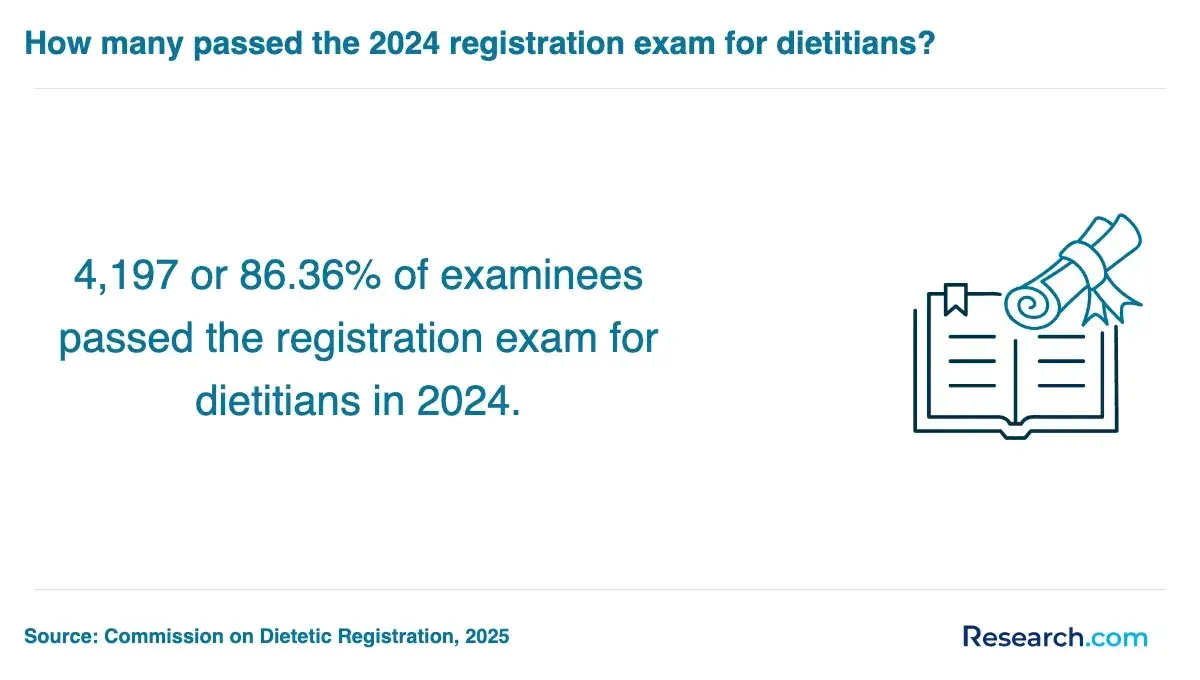 Number of examinees who passed the 2024 dietitian registration exam" width="1200" height="680" loading="lazy">
What types of dietitian specializations can you pursue in Arizona?
Arizona offers a vibrant landscape of dietitian specializations, allowing professionals to tailor their careers to diverse health and nutrition challenges. Exploring these areas reveals opportunities to impact clinical care, community wellness, and food service management with expertise and innovation.
Below is an overview of key specializations online dietetics degree graduates can pursue in the state.
- Clinical Nutrition: Focuses on nutrition therapy in healthcare settings to manage diseases like diabetes and cardiovascular conditions, often within multidisciplinary teams.
- Community Nutrition: Designs programs targeting public health improvements, addressing food insecurity, and nutrition education in schools and nonprofits.
- Nutrition Counseling and Education: Provides personalized or group guidance to encourage healthy eating habits and lifestyle changes in private or wellness settings.
- Food Service Systems Management: Oversees institutional food operations, including menu planning, budgeting, and ensuring food safety in hospitals and schools.
- Medical Nutrition Therapy (MNT): Develops nutrition care plans for patients with specific medical conditions, plays a crucial role in chronic disease management, and insurance reimbursement.
- Pediatric Nutrition: Specializes in the nutritional needs of infants and children, including those with chronic illnesses or developmental challenges.
- Geriatric Nutrition: Addresses dietary needs unique to older adults, focusing on malnutrition, osteoporosis, and chronic disease support.
- Sports Nutrition: Offers dietary guidance to athletes and active individuals to enhance performance, recovery, and overall health.
- Dietetic Technician, Registered (DTR): Supports registered dietitians by completing an associate degree and supervised practice, working in various nutrition-related areas.
What is the average salary of a registered dietitian in Arizona?
The average annual pay for a dietitian in Arizona is $70,824, which works out to approximately $34.05 per hour, $1,362 per week, or $5,902 per month. Salaries can vary by location and role, with Fort Defiance dietitians earning around $78,368 annually and outpatient dietitians reaching up to $83,678.
- Location and Urban vs. Rural: Salaries tend to be higher in metropolitan areas like Phoenix and Tucson due to demand and cost of living, while rural areas may offer lower pay but sometimes add incentives.
- Experience and Credentials: Advanced certifications and years of experience can boost earnings, with top earners making above $93,000 annually.
- Work Setting: Hospitals and large healthcare systems often pay more than smaller clinics or community health organizations.
- Market Demand: Specialized roles in clinical and pediatric nutrition show stronger compensation and job stability even in a less active Arizona job market.
- Regional Trends: Phoenix consistently reports the highest salaries statewide, reflecting its population size and concentration of major employers.
- Salary Growth Outlook: Despite lower averages, salary ranges are broad, indicating growth potential through experience, credentials, or management roles.
The chart below from the Bureau of Labor Statistics shows the largest employers of dietitians and nutritionists in the United States.
How does telehealth influence dietetic practice in Arizona?
Telehealth is emerging as a pivotal component of dietetic practice in Arizona, allowing registered dietitians to extend their expertise beyond traditional settings through secure digital platforms. This approach facilitates remote monitoring, virtual consultations, and enhanced follow-up procedures—all while complying with applicable privacy and data security regulations. By adopting telehealth, professionals can expand their client base, reduce geographic constraints, and offer real-time, tailored nutritional guidance. Moreover, integrating digital solutions may open avenues for alternative service delivery models and career diversification. For professionals interested in further exploring digital pathways in nutrition, refer to how to become a nutritionist in Arizona.
What are the financial implications of becoming a registered dietitian in Arizona?
Prospective dietitians should consider the full spectrum of financial investments required to establish their careers. These include tuition expenses for accredited degree programs, fees for the registration exam, state licensing costs, and expenses associated with accumulating the necessary supervised practice hours. Evaluating these costs alongside potential scholarship opportunities and financial aid options helps in creating a realistic budget. Additionally, weighing the initial investment against long-term salary prospects and career growth is essential for informed decision-making. For professionals exploring alternative paths within healthcare, you might also review our post on how to become a medical assistant in Arizona.
What do you need to keep your dietitian registration active in Arizona?
Keeping your dietitian registration active in Arizona is a dynamic commitment that ensures you're always ready to deliver exceptional care. Staying current not only preserves your legal ability to practice but also sharpens your expertise in a constantly evolving field.
Here’s what you need to stay on track:
- Biennial License Renewal: Renew your license every two years by August 31 of even-numbered years to maintain good standing.
- Continuing Professional Education (CPE): Complete at least 30 approved hours every two years, including a minimum of 3 hours focused on ethics or Arizona-specific laws.
- Renewal Fees: Pay a $180 fee biennially, with a $100 late penalty if overdue; failure to renew within 30 days leads to suspension.
- Documentation & Audit: Keep your CPE records for five years for possible random audits by the Board.
- Good Standing Declaration: Report any legal or disciplinary issues honestly and maintain good moral character.
When I spoke with a registered dietitian from Arizona who graduated locally, he reflected on the challenges of maintaining registration. “I found the process straightforward but rigorous,” he said.
Since Arizona doesn’t offer license reciprocity, he had to carefully meet all state-specific requirements despite holding national credentials. “It was a bit daunting at first, managing both national CDR and state requirements,” he admitted, “but aligning my continuing education helped me stay efficient and prepared.” This dual focus ultimately deepened his professional confidence and connection to Arizona’s unique dietetic community.
How long does it take to become a registered dietitian in Arizona?
Embarking on the path to become a registered dietitian in Arizona is an exciting journey that typically spans several years of focused study and practical experience. The overall timeframe to earn the dietetic registration credential usually ranges from six to seven years, starting from undergraduate education. This timeline reflects the evolving national standards that now require candidates to complete a graduate degree before taking the registration exam.
The registered dietitian education timeline Arizona involves first completing a bachelor’s degree in dietetics or a related field, which generally takes four years. Following this, students pursue a graduate degree, often paired with a dietetic internship, adding about two more years to their training. While some may find ways to accelerate this process, most will spend a solid six to seven years refining their knowledge and skills before sitting for the national exam.
For those exploring flexible options, there are online dietetics programs that can complement traditional studies, potentially easing some logistical challenges. However, securing internships and completing supervised practice remain critical steps that influence how many years to become a registered dietitian in Arizona. Individual pacing and program availability also play a role in this adventurous educational timeline.
Can international students qualify to become registered dietitians in Arizona?
International students have a clear pathway to becoming registered dietitians in Arizona, provided they navigate a series of specific requirements tailored to their unique educational backgrounds. With determination and proper guidance, these steps open doors to rewarding careers in nutrition.
- Foreign Degree Evaluation: Your non-U.S. degree must be officially evaluated to confirm equivalency with a degree from a U.S. regionally accredited institution. This evaluation is essential before enrolling in any U.S.-based nutrition and dietetics programs.
- Completion of ACEND-Accredited Programs: Regardless of prior education, you need to complete coursework and supervised practice through an ACEND-accredited program. In Arizona, Didactic Programs in Dietetics (DPD) are available at Arizona State University and the University of Arizona, though Coordinated Programs are not yet offered.
- Graduate Degree Requirement: Starting January 2024, a master’s degree is mandatory to take the Registered Dietitian Nutritionist (RDN) exam. This degree can be in any field but must come from a recognized U.S. institution or its foreign equivalent as validated through evaluation.
- Visa and Work Authorization: Maintaining valid visa status throughout your studies and internship is crucial. You may need Optional Practical Training (OPT) or other work authorization to complete supervised practice and seek employment.
- English Language Proficiency: Proof of English proficiency, such as TOEFL or IELTS scores, is typically required to gain admission to dietetics programs and graduate studies.
- CDR Exam Eligibility: After fulfilling educational and supervised practice requirements, passing the Commission on Dietetic Registration (CDR) exam is the final step to becoming an RDN.
For those looking to expand their educational horizons, exploring options like the anchors part-time Ph.D. in economics can offer flexible pathways to advanced degrees while pursuing professional goals.
What career paths can registered dietitians pursue in Arizona?
Exploring career opportunities for registered dietitians in Arizona reveals a vibrant landscape filled with diverse roles and settings. Whether you thrive in clinical environments or prefer the flexibility of private practice, the state offers promising paths with competitive salaries.
- Clinical Dietitian: Working in hospitals and outpatient clinics, these professionals provide medical nutrition therapy.
- Community/Public Health Dietitian: Serving public health departments and nonprofits, they design nutrition programs, benefiting from positive job growth and average state salary levels.
- Food Service Management Dietitian: Overseeing operations in schools and healthcare facilities, experienced managers can earn $89,630 or more, reflecting higher earning potential.
- Private Practice or Consulting Dietitian: Offering flexibility by running their own businesses or consulting, these dietitians can command top salaries in metropolitan areas.
- Health and Wellness Coach: Growing in demand, especially remotely, these roles focus on preventive care with competitive pay comparable to other RD positions.
- Nutrition Educator or Academic: Teaching in universities or schools, they enjoy regular hours and salaries aligned with education scales.
- Research Dietitian: Conducting nutrition studies in academic or industry settings, these roles often require advanced degrees and offer incomes above the state average.
- Industry and Corporate Dietitian: Advising food companies or wellness firms, these dietitians enjoy lucrative salaries as the sector expands.
- Long-Term Care and Geriatric Dietitian: Focused on elder nutrition in care facilities, they see steady demand driven by an aging population and earn average state salaries.
For those seeking to deepen their expertise, pursuing an online master's in nutrition can open doors to advanced roles and specialized opportunities in Arizona’s dynamic nutrition field.
What do registered dietitians in Arizona say about their careers?
- Completing my dietetics program at Arizona State University was a transformative experience that prepared me thoroughly for my career. Starting work as a registered dietitian in a local school has allowed me to directly influence the health and nutrition habits of young students, which is incredibly fulfilling. Arizona’s diverse population and unique agricultural resources provide a rich environment for creating culturally relevant meal plans that truly resonate with the community. The job stability and opportunities for growth here have given me confidence in my professional future. I feel privileged to contribute positively to children’s well-being every day. - Donna
- Arizona's blend of desert climate and multicultural communities presents unique challenges and rewards for a registered dietitian. After finishing my studies at the University of Arizona, I began my career in a local school, where I quickly learned the importance of tailoring nutrition education to meet diverse needs. This role has fostered tremendous personal growth, as I constantly adapt and develop creative strategies to engage students from all backgrounds. Being part of this vibrant community inspires me to keep pushing for better health outcomes for our youth. It’s a deeply rewarding profession that connects me to both my cultural roots and my passion for education. - Leslee
- My professional journey started after graduating from Northern Arizona University, where I gained strong foundational skills that prepared me for the complexities of working in Arizona schools. The career advancement opportunities here are promising, with plenty of chances to specialize and lead initiatives focused on student wellness. I appreciate the professional environment that encourages continuous learning and collaboration with other educators and health professionals. Working as a registered dietitian in Arizona’s school system allows me to make a meaningful impact on children’s health while advancing my expertise in a supportive setting. - Ranver
Related Articles for Nearby States
- 2027 Steps to Become a Registered Dietitian in New Mexico
- 2027 Steps to Become a Registered Dietitian in Nevada
- 2027 Steps to Become a Registered Dietitian in California
- 2027 Steps to Become a Registered Dietitian in Utah
- 2027 Steps to Become a Registered Dietitian in Colorado
- 2027 Steps to Become a Registered Dietitian in Texas
- 2027 Steps to Become a Registered Dietitian in Oklahoma
- 2027 Steps to Become a Registered Dietitian in Kansas
- 2027 Steps to Become a Registered Dietitian in Wyoming
- 2027 Steps to Become a Registered Dietitian in Idaho
References:
- O*NET OnLine (n.d.). Arizona Employment Trends 29-1031.00 - Dietitians and Nutritionists. Retrieved from https://www.onetonline.org/link/localtrends/29-1031.00?st=AZ
- US BLS (2025). Dietitians and Nutritionists. Retrieved from https://www.bls.gov/ooh/healthcare/dietitians-and-nutritionists.htm#tab-3
- Zippia (2025). Registered dietitian education requirements. Retrieved from https://www.zippia.com/registered-dietitian-jobs/education/
- ZipRecruiter (2025). Dietitian Salary in Arizona. Retrieved from https://www.ziprecruiter.com/Salaries/Dietitian-Salary--in-Arizona#
Other Things You Should Know About Being a Registered Dietitian in Arizona
To become a registered dietitian in Arizona in 2027, earn a bachelor's degree in a program accredited by the Accreditation Council for Education in Nutrition and Dietetics (ACEND), complete a supervised practice dietetic internship, pass the Registered Dietitian Nutritionist (RDN) exam, and obtain state licensure.
In Arizona, you do not need to major specifically in dietetics or nutrition to qualify for dietetics prerequisites, as long as you complete the required coursework mandated by the Commission on Dietetic Registration. Many students choose majors such as biology, chemistry, or health sciences and then take the necessary dietetics-related classes to meet eligibility requirements.
However, majoring outside of dietetics means you must carefully plan your courses to cover core subjects like food science, human metabolism, and medical nutrition therapy, which are essential for becoming a registered dietitian. This flexibility allows students from diverse academic backgrounds to pursue dietetics, but they must ensure their coursework aligns precisely with the prerequisites to be accepted into accredited dietetics programs in Arizona.
To become a registered dietitian in Arizona, you must complete coursework accredited by the Accreditation Council for Education in Nutrition and Dietetics (ACEND), including classes in biochemistry, medical nutrition therapy, and food service management, as part of a nutrition or dietetics program.
Scholarships and financial aid are available for dietetics students in Arizona, helping to ease the cost of education for those pursuing a career as a registered dietitian. Many Arizona universities with accredited dietetics programs offer merit-based scholarships specifically for nutrition and dietetics students, while organizations such as the Arizona Dietetic Association provide additional scholarship opportunities.
Federal and state financial aid options, including grants and loans, are also accessible through the Free Application for Federal Student Aid (FAFSA). Prospective students are encouraged to explore both institutional scholarships and professional organization awards to maximize their funding opportunities throughout their studies.


