
2027 What Does a Clinical Research Scientist Do: Responsibilities, Requirements, and Salary
As a career planning and education expert, I often meet students and professionals drawn to the complex, high-impact world of clinical research science. Yet, finding clear and trustworthy information about this career path can be surprisingly difficult. Job titles, qualifications, and salary data vary widely between institutions, and online sources often mix research associate and scientist roles, creating confusion. This guide is designed to clarify what a Clinical Research Scientist actually does in the United States, outline realistic expectations, and help you identify credible information to plan your next step in this demanding but rewarding field.
What are the benefits of getting an online graduate certificate in clinical research science?
- Career Advancement: Equips professionals for mid- and senior-level roles such as Clinical Trial Manager, Regulatory Affairs Specialist, or Protocol Scientist.
- Earning Potential: With an online graduate certificate in clinical research science, salaries range from $95,000 to over $190,000, depending on role and experience.
- Flexible Learning: Online format allows balance between education, full-time work, and clinical responsibilities.
What can I expect from an online graduate certificate program in clinical research scientist?
- Focused Advanced Topics: Intensive curriculum covering clinical trial design, biostatistics, regulatory affairs (GCP/FDA), and ethical patient oversight.
- Applied Strategic Knowledge: Emphasis on solving real-world research challenges through protocol development, data analysis, and risk-based trial management.
- Structured Curriculum: Combines recorded video lectures, live online sessions, case studies, and team-based research projects.
- Condensed Timeline: Typically 8–12 months of part-time study for rapid career advancement.
- Networking Opportunities: Connect with industry-leading faculty and professional peers from pharmaceutical companies and Contract Research Organizations (CROs).
Where can I work with an online graduate certificate in clinical research science?
- Pharmaceutical and Biotechnology Firms: Join sponsor companies (e.g., Pfizer, Genentech) in Clinical Development or Regulatory departments.
- Contract Research Organizations (CROs): Work with global CROs (e.g., IQVIA, Syneos Health) managing and monitoring sponsor trials.
- Academic Medical Centers/Hospitals: Serve as a Protocol Scientist or Research Manager on investigator-initiated studies.
- Government Agencies: Contribute to FDA or public health agencies auditing trials and setting data standards.
- Specialized Consulting Firms: Advise clients on regulatory strategy, trial optimization, and GCP compliance.
How much can I make with an online graduate certificate in clinical research science?
- Clinical Research Scientist (CRS) Average: Typically $105,000–$125,000 annually.
- Management-Level Roles: Clinical Trial Managers earn $115,000–$145,000, depending on location and certification.
- Senior & Specialized Roles: Principal Investigators or Medical Monitors (MD/PharmD) often earn $190,000+ annually.
- Entry/Transition Roles: Senior Clinical Research Associates (CRAs) generally earn $95,000–$120,000.
- What does a clinical research scientist do? CRS job roles
- What is the average cost of an online clinical research scientist graduate certificate? Cost
- What are the financial aid options for an online clinical research scientist graduate certificate? Financial aid
- What are the prerequisites for enrolling in an online clinical research scientist graduate certificate program? What are the prerequisites for enrolling in an online clinical research scientist graduate certificate program?
- What courses are typically in an online clinical research scientist graduate certificate program? Courses
- What types of specializations are available for clinical research scientist graduates? Specializations
- How do you choose the best online clinical research scientist graduate certificate program? How do you choose the best online clinical research scientist graduate certificate program?
- What career paths are available for graduates of online clinical research scientist graduate certificate programs? Career paths
- How much can I earn with an online clinical research scientist graduate certificate? Salaries
- What is the job market for graduates with an online clinical research scientist graduate certificate? Jjob market
- What are some current and future trends in clinical research science? Trends
What does a clinical research scientist do?
A Clinical Research Scientist (CRS) is a highly skilled professional with a strong background in the biological sciences and is responsible for the scientific design, execution, and analysis of clinical trials for new drugs, devices, or treatments. Their work ensures that research is conducted ethically and in compliance with stringent regulatory standards to determine a product's safety and efficacy.
- Protocol Development: Designing the detailed study plan, including objectives, methodology, participant selection criteria, and statistical analysis plans.
- Scientific Data Review: Analyzing emerging clinical data from studies to identify trends, interpret results, and ensure data quality and integrity.
- Regulatory Compliance: Ensuring all research activities adhere to ethical guidelines, Good Clinical Practice (GCP), and relevant national/international regulations.
- Collaboration and Liaison: Working closely with physicians, biostatisticians, clinical operations teams, regulatory affairs, and external vendors like Contract Research Organizations (CROs).
- Clinical Study Reporting (CSR): Writing and reviewing comprehensive study reports that summarize trial findings for regulatory submission and publication.
- Safety Monitoring: Collaborating with the medical monitor to track, evaluate, and report adverse events and patient safety data throughout the trial.
- Investigator Support: Providing scientific expertise and training to clinical investigators and site staff involved in the execution of the trial.
- Literature Review: Maintaining expert knowledge of the relevant therapeutic area and competitive landscape to inform study design and strategy.
- Grant and Funding Proposals: Contributing scientific content to proposals to secure funding for research studies, especially in academic or government settings.
- Trial Management Oversight: Providing scientific input and oversight for the day-to-day progress of the trial, resolving scientific and protocol-related issues.
These are quite different from bedside roles such as medical assistant clinical duties. The CRS plays a pivotal role as the scientific bridge between early research and full-scale clinical development, guiding a promising compound from the lab bench to patient access. Their expertise is fundamental to advancing medical knowledge and bringing critical new therapies to market.
What is the average cost of an online clinical research scientist graduate certificate?
The cost of an online graduate certificate in clinical research can vary significantly based on the university, the number of required credits, and whether it is offered through a traditional graduate school or a professional extension program. Estimates generally represent the tuition and fees for the entire certificate, which is typically shorter and less expensive than a full master's program.
- Estimated Range: The total cost typically falls between $8,000 and $20,000 for the entire program.
- Per-Credit Cost: Many programs charge a per-credit rate, which can range from approximately $500 to over $1,200 per graduate credit.
- Program Length: Most certificates require between 12 and 16 graduate credits, which directly impacts the total tuition cost.
- University Status: Programs from prestigious or private universities generally have a higher tuition rate compared to those offered by public or state institutions.
- Additional Fees: Students should budget for non-tuition costs, including technology fees, application fees, and fees for required course materials or texts.
- In-State vs. Out-of-State: For some public universities, online certificate costs may still reflect a distinction between in-state and out-of-state residency, though this is less common for fully online offerings.
- Professional Extension Programs: Certificates offered through a university's extension or continuing education division are sometimes priced differently than those from the main graduate school.
- Scholarship Impact: The net cost for some students can be lower, as certain programs offer specific scholarship funding for certificate-seeking students.
Prospective students should always check the detailed tuition schedule directly on the program's website, paying close attention to the total number of credits required. Comparing the per-credit-hour cost and factoring in all fees is essential for determining the accurate total investment.
What are the financial aid options for an online clinical research scientist graduate certificate?
While financial aid options are generally more limited for non-degree certificate programs compared to full master's degrees, several avenues exist for students pursuing an online clinical research scientist graduate certificate. Eligibility for federal loans often requires specific enrollment criteria, but other external and institutional funding sources are commonly available.
- Federal Direct Unsubsidized Loans: Students enrolled in a minimum of 6 credits (half-time status) in an aid-approved graduate certificate program may qualify for these federal loans.
- Private Education Loans: Many private lenders offer loans that can cover educational expenses for graduate certificate students, often regardless of matriculation status, but these require credit approval.
- Scholarship Funding: Some universities automatically consider certificate program applicants for institutional scholarships to offset a portion of the tuition cost.
- Employer Tuition Reimbursement: Professionals already working in the pharmaceutical, biotechnology, or healthcare industry may have access to employer-sponsored programs that cover tuition costs.
- Lifetime Learning Credit: Eligible taxpayers can claim this federal tax credit for qualified tuition and expense payments made for degree courses, including those taken as part of a graduate certificate.
- Veteran and Military Benefits: Service members, veterans, and their families can often utilize military-specific funding, such as the Post-9/11 GI Bill or Tuition Assistance programs.
- External and Professional Scholarships: Numerous non-profit organizations and professional associations related to clinical research offer scholarships specifically for continuing education and advanced training.
- Payment Plans: Many institutions offer interest-free, installment-based payment plans to break the total tuition cost into more manageable monthly payments over the semester.
- Federal Work-Study: Though less common for online-only programs, students enrolled at least half-time in an aid-approved program may occasionally be eligible for federal work-study funds.
Students should complete the Free Application for Federal Student Aid (FAFSA) to determine their eligibility for federal loans and consult with the specific program's financial aid office for certificate-specific scholarships. Thorough research into both internal and external funding is crucial for minimizing out-of-pocket expenses.
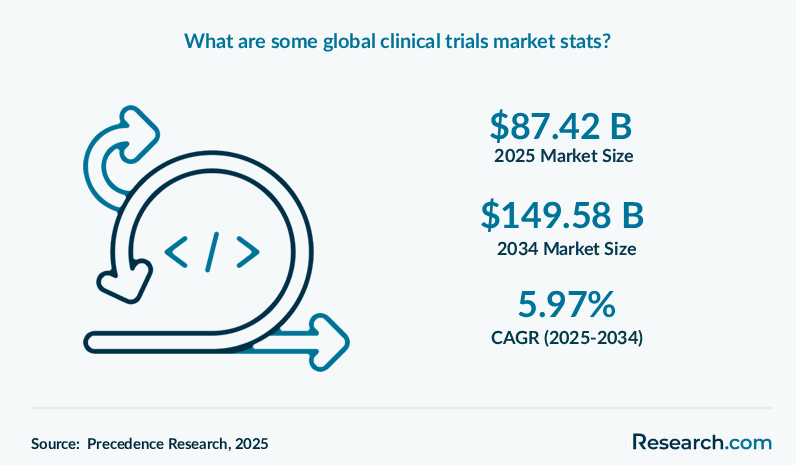
Clinical research scientist graduates will enter a lucrative market. The global clinical trials market is projected to grow from $87.42B in 2025 to $149.58B by 2034 at a 5.97% CAGR (Precedence Research, 2025), as shown in the graphic below. North America led in 2024 with the Asia Pacific market emerging as the fastest-growing region; the market is expected to rise steadily from $91.66B in 2026 to nearly $150B by 2034, reflecting strong global investment in medical R&D.
What are the prerequisites for enrolling in an online clinical research scientist graduate certificate program?
Admission to an online graduate certificate program in clinical research is designed to ensure applicants possess the foundational scientific knowledge and professional background necessary for graduate-level coursework. These requirements often aim to attract current healthcare professionals or those with a degree in a relevant scientific field.
- Bachelor's Degree: A baccalaureate degree from a regionally accredited institution is universally required, with biological sciences strongly preferred.
- Relevant Major: Preference is often given to degrees in science, technology, engineering, mathematics (STEM), or a health-related field (e.g., biology, nursing, public health, pharmacy).
- Minimum GPA: Most programs stipulate a minimum undergraduate Grade Point Average, commonly 3.0 or higher on a 4.0 scale.
- Statement of Purpose: A well-written essay detailing the applicant's career goals and why they are seeking the certificate is typically required.
- Letters of Recommendation: Two to three professional or academic letters of recommendation are often requested to vouch for the applicant’s suitability for rigorous study.
- Professional Experience: While not always mandatory, programs often prefer or require applicants to have some prior experience in a clinical, research, or healthcare setting.
- Advanced Degrees: For some specialized programs (e.g., Global Clinical Scholars), an advanced degree like an MD, PharmD, PhD, or DNP may be a requirement.
- Resume or CV: A current curriculum vitae or resume documenting educational history and all relevant work experience must be submitted.
- TOEFL/IELTS Scores: International applicants whose native language is not English must provide official scores from the Test of English as a Foreign Language or International English Language Testing System.
- Transcripts: Official transcripts from all postsecondary institutions attended are necessary to verify degree and GPA requirements.
Candidates should carefully review the requirements for each specific program, as criteria can vary significantly, especially regarding the desired level of prior clinical or research experience. Meeting the prerequisites strengthens the application and prepares the student for the technical nature of the advanced curriculum.
For those who may not like the clinical aspect of the profession, some non clinical careers in healthcare are also available to choose from.
What courses are typically in an online clinical research scientist graduate certificate program?
The curriculum for a graduate certificate in clinical research is concentrated, focusing on the core scientific, ethical, and regulatory principles necessary to design and manage clinical trials. Courses are designed to quickly equip students with practical skills applicable to pharmaceutical, device, and academic research settings.
- Principles of Clinical Research: Covers fundamental concepts of the research process, study designs (e.g., randomized controlled trials), and different phases of clinical development.
- Biostatistics and Data Analysis: Focuses on statistical methods, power calculations, and software used for managing, analyzing, and interpreting clinical trial data.
- Research Ethics and Regulatory Affairs: Explores the history of human subject protection, the role of the Institutional Review Board (IRB), and compliance with FDA regulations.
- Good Clinical Practice (GCP): Provides in-depth training on the international ethical and scientific quality standards required for designing, conducting, recording, and reporting trials.
- Protocol and Grant Writing: Teaches the skills necessary to develop a clear, scientifically sound, and complete research protocol and to write competitive grant proposals.
- Epidemiology for Clinical Trials: Covers the study of disease distribution and determinants, which is crucial for identifying risk factors and designing effective intervention studies.
- Clinical Trial Operations and Management: Focuses on the logistical and administrative aspects of running a trial, including site selection, monitoring, and financial management.
- Data Management Systems: Introduces the use of electronic data capture (EDC) systems, data quality assurance, and the processes for cleaning and locking a clinical database.
- Scientific Communication: Develops skills in communicating trial results effectively through final reports, journal publications, and professional presentations.
- Pharmacology and Drug Development: Offers an overview of the drug discovery and development pipeline, including pharmacokinetics, pharmacodynamics, and toxicology.
These core courses, in addititon to the biological sciences, provide a robust and efficient foundation, preparing graduates to immediately contribute to a research team in a scientifically informed capacity. The certificate structure ensures concentrated learning, making it ideal for working professionals seeking a career pivot or advancement.
What types of specializations are available for clinical research scientist graduates?
Clinical Research Scientist graduates often pursue career paths or training in addition to the biological sciences that lead to specialization in a specific therapeutic area, research methodology, or regulatory function within the broader clinical development pipeline. These specializations allow scientists to deepen their expertise and focus their contributions in highly demanded niches.
- Therapeutic Area Focus (e.g., Oncology/Cardiology): Specializing in the research and development of drugs and treatments for a specific disease area, requiring deep medical and scientific knowledge of that field.
- Biostatistics and Data Science: Focusing on the advanced statistical design of trials, modeling complex data, and using machine learning to derive insights from patient data.
- Regulatory Affairs (RA): Concentrating on the strategic preparation, submission, and maintenance of regulatory applications (e.g., IND, NDA) to global health authorities like the FDA.
- Pharmacovigilance/Drug Safety: Specializing in the continuous monitoring, detection, assessment, and prevention of adverse effects or any other drug-related problems after a product is marketed.
- Clinical Trial Monitoring (CRA): Focuses on quality control and site management, ensuring trial sites adhere to the protocol, SOPs, and regulatory requirements.
- Medical Writing: Specializing in the clear, accurate, and ethical documentation of scientific data, including protocols, clinical study reports, and manuscripts for publication.
- Biotechnology and Device Research: Concentrating on the unique regulatory pathways and development challenges specific to medical devices, diagnostics, and novel biologics.
- Health Outcomes/Real-World Evidence (RWE): Focusing on research that uses real-world data sources (e.g., electronic health records, patient registries) to evaluate a treatment's effects in routine clinical practice.
- Pediatric or Rare Disease Research: Specializing in the ethical and logistical challenges of conducting trials in small, vulnerable, or specialized patient populations.
- Related Fields: Higher degrees in related fields can also be an option, such as nursing; clinical nurse leader MSN online programs can help you get there.
By focusing on a specialization, clinical research scientists become essential subject matter experts, which significantly enhances their value to pharmaceutical companies, CROs, and academic institutions. This focused expertise is key to navigating the increasing complexity of global clinical trials.
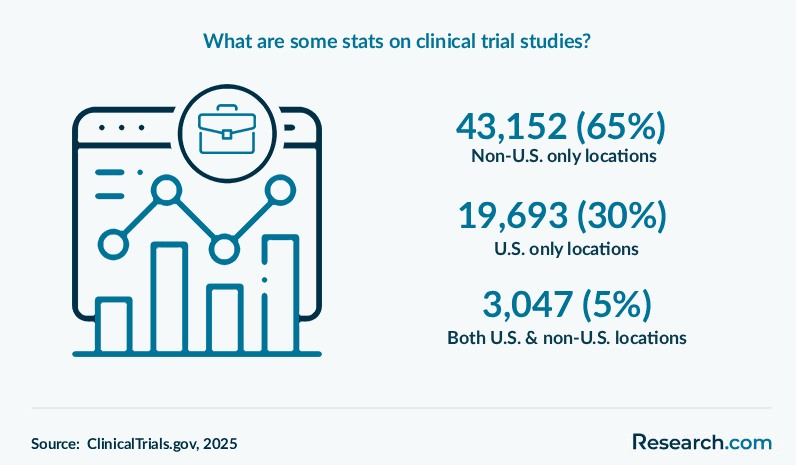
As of November 6, 2025, ClinicalTrials.gov listed 65,892 recruiting studies. Of these, 43,152 (65%) were conducted outside the United States, 19,693 (30%) took place only in the U.S., and 3,047 (5%) recruited participants in both U.S. and non-U.S. locations. These figures, shown in the graphic below, show a clear shift toward global research, with about two-thirds of all active trials now relying solely on international sites for participant recruitment—underscoring the growing importance of non-U.S. regions in advancing medical research.
How do you choose the best online clinical research scientist graduate certificate program?
Choosing the best online graduate certificate program requires careful consideration of personal career goals, the institution's reputation, and the program's structure and alignment with industry demands. A strategic evaluation of several key factors ensures the educational investment will maximize professional return.
- Accreditation: Ensure the program is offered by a regionally accredited university, which is critical for the acceptance of credits and employer recognition.
- Curriculum Focus: Compare course lists to ensure the program includes key areas like GCP, biostatistics, biological sciences, and regulatory affairs, which are in high industry demand.
- Faculty Expertise: Research the instructors' backgrounds to verify they have current, relevant industry or clinical experience, not just academic credentials.
- Program Flexibility: Evaluate the online format—synchronous (live class times) versus asynchronous (self-paced)—to determine which best fits your professional schedule.
- Cost and Financial Aid: Thoroughly compare the total tuition cost, fees, and the availability of financial aid or scholarships specific to certificate students.
- Industry Recognition: Look for programs that emphasize or prepare you for professional certifications from organizations like SOCRA or ACRP.
- Career Services Support: Assess whether the university provides online students with access to career counseling, professional development workshops, and networking opportunities.
- Prerequisite Fit: Choose a program whose admission requirements align well with your existing educational background and professional experience level.
- Alumni Network: Investigate the strength and activity of the program's alumni in the clinical research field, which is valuable for future networking and job seeking.
- Student Reviews/Reputation: Seek feedback from current or former students on the quality of instruction and the overall virtual learning experience.
By performing this comprehensive due diligence, you can select a program that not only fits your budget and lifestyle but also provides the specific skills and credentials valued by top employers in the clinical research industry. The ideal program should directly enhance your professional marketability and expertise.
What career paths are available for graduates of online clinical research scientist graduate certificate programs?
A graduate certificate in clinical research provides the focused, technical skills needed to enter or advance within a diverse range of roles across the drug, device, and public health sectors. Graduates are prepared for specialized technical and management positions in both private industry and academic settings.
- Clinical Research Coordinator (CRC): Managing the day-to-day operations of a clinical trial site, including patient recruitment, data collection, and regulatory documentation.
- Clinical Research Associate (CRA): Monitoring the execution of clinical trials at investigator sites to ensure compliance with the protocol and regulatory standards.
- Regulatory Affairs Specialist: Ensuring all trial documentation and submissions (e.g., to the FDA) meet global regulatory requirements for approval.
- Clinical Trial Manager (CTM): Overseeing the operational and logistical aspects of an entire clinical study or multiple trials on behalf of a sponsor or CRO.
- Data Manager/Clinical Data Analyst: Designing case report forms, ensuring the quality and integrity of clinical trial data, and preparing databases for analysis.
- Biostatistics Assistant: Supporting lead biostatisticians with data cleaning, exploratory analysis, and preparing statistical programming documentation.
- Research Quality Assurance (QA) Specialist: Auditing clinical trial processes and documents to verify compliance and identify areas for process improvement.
- Scientific Writer/Medical Writer: Preparing high-level scientific and regulatory documents, such as protocols, consent forms, and final Clinical Study Reports (CSRs).
- Institutional Review Board (IRB) Administrator: Managing the ethical review process for human subject research protocols within an academic or hospital setting.
- Alternative career paths: Related occupations such as clinical social worker are also viable careers.
Medical scientists held approximately 165,300 jobs in 2024 (BLS, 2025). The largest share worked in R&D for physical, engineering, and life sciences (34%), followed by hospitals (24%), colleges and universities (11%), medical labs (5%), and pharmaceutical manufacturing (3%). Most work in offices and labs with strict safety protocols due to exposure risks. Employment is concentrated in research-driven settings across industry, academia, and healthcare.
How much can I earn with an online clinical research scientist graduate certificate?
While a graduate certificate is a stepping stone rather than a full degree, it significantly increases earning potential, especially for those transitioning into specialized research roles from lower-paying positions or for those who lack formal clinical research training. The salary is primarily determined by the specific job title, prior experience, and geographic location.
- Average Clinical Research Scientist Salary: The estimated average annual salary for a professional with a Clinical Research Scientist title is approximately $100,314 to $125,000.
- CRC/Entry-Level Salary Boost: For individuals moving into roles like Clinical Research Coordinator (CRC) or entry-level Clinical Research Associate (CRA), the certificate often leads to a starting salary in the $60,000 to $85,000 range.
- Advanced Role Earning Potential: Graduates who secure roles such as Clinical Trial Manager or Regulatory Affairs Specialist can expect salaries starting from $95,000 to over $130,000.
- Experience Factor: For professionals with 5+ years of prior experience, the certificate serves as a credential to move into higher-level, higher-paying management or scientific oversight roles.
- Industry Sector: Salaries are typically highest in the biopharmaceutical/biotechnology sector, followed by Contract Research Organizations (CROs) and then academic/hospital settings.
- Geographic Premium: Major clinical research hubs (e.g., California, Massachusetts, New Jersey) offer a significant salary premium, often exceeding the national average by 10–25%.
- Bonus and Benefits: Total compensation often includes substantial performance bonuses, stock options (in the private sector), and comprehensive benefits packages, which can add tens of thousands to the base salary.
The average salary for a clinical research scientist in the United States is $100,742 per year, with the majority of pay falling within a range of $88,737 to $113,795 (Salary.com, 2025). Salaries clearly increase with professional advancement, starting at an entry level of $95,367 and reaching an expert level compensation of $108,149, comparable to clinical informatics specialist salary ranges.
Geographically, pay varies, with the District of Columbia reporting the highest average salary at $111,542, closely followed by California at $111,118 and Massachusetts at $109,638. Conversely, states like Arkansas report a lower average near $91,010, showing a clear trend where salaries are highest in the District of Columbia and coastal metropolitan hubs. These figures, shown in the graph below, demonstrate that both experience level and high cost-of-living areas significantly influence earning potential in this scientific role.
What is the job market for graduates with an online clinical research scientist graduate certificate?
The job market for clinical research professionals is highly positive, characterized by strong demand, a talent shortage, and significant projected growth, making the graduate certificate a highly valued and timely credential. This robust market reflects the rapid and sustained expansion of global clinical trials.
- High Demand: The U.S. clinical research workforce is struggling to keep pace with the surge in clinical trial activity, leading to a persistent talent gap and strong demand for qualified professionals. Stable careers in clinical research are expected in the coming years.
- Projected Growth: The healthcare and social assistance sector, which includes clinical research, is projected to be one of the fastest-growing employment sectors, outpacing all others through the next decade.
- Increased Complexity: As trials become more complex (e.g., in gene therapy and personalized medicine), the demand is rising for professionals with the specialized scientific knowledge gained from formal training like a graduate certificate.
- Role Competition: While competition is strong for certain senior roles, the sheer volume of open positions, particularly for Clinical Research Associates and Coordinators, indicates abundant opportunities.
- Turnover Rate: High turnover in roles like CRAs (often exceeding 25% annually at major CROs) creates a constant need for new hires and opportunities for rapid advancement.
- Focus on Data: There is booming demand for roles focused on biostatistics, data management, and real-world evidence (RWE), skills directly taught in certificate programs.
- Employer Willingness to Train: Due to the talent shortage, many employers are open to hiring entry-level candidates with aptitude and enthusiasm, with the certificate demonstrating foundational knowledge and commitment.
- Geographic Spread: Opportunities are plentiful in major metropolitan areas with biotech hubs, but the rise of decentralized trials is also creating roles in diverse geographic locations.
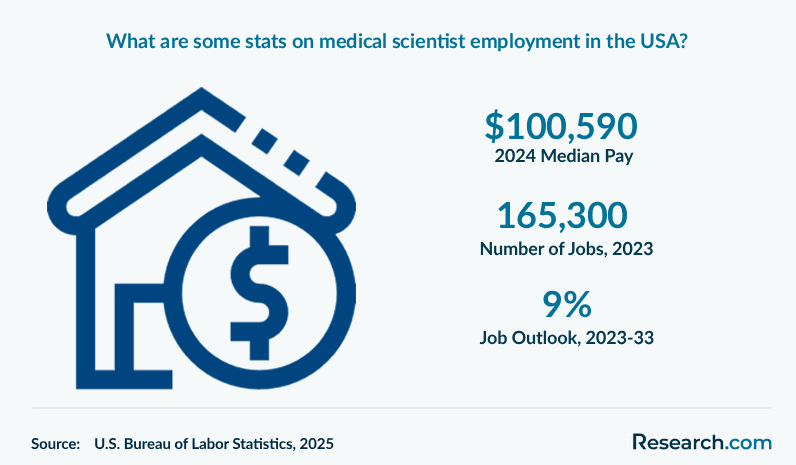
In 2024, medical scientists held approximately 165,300 jobs across the USA, earning a median annual pay of $100,590 (U.S. Bureau of Labor Statistics, 2025), as shown below. The employment outlook for this occupation is projected to be very strong, with a growth rate of 9% between 2024 and 2034, a pace considered much faster than the average for all occupations.
Overall, the job market is a vibrant field full of opportunity, where the focused expertise of a graduate certificate significantly improves a candidate's marketability and potential for multiple job offers. Organizations across the industry are eager to hire individuals with current, formal training in clinical research principles.
What are some current and future trends in clinical research science?
Clinical research science is undergoing a fundamental transformation driven by technological advancements, regulatory focus on patient diversity, and the need for greater efficiency in drug development. These trends are redefining how trials are designed, executed, and monitored.
- Decentralized Clinical Trials (DCTs): Utilizing remote monitoring, telemedicine, and home-based services to reduce the burden on patients, increase participation, and improve trial accessibility.
- Integration of AI and Machine Learning: Applying artificial intelligence to optimize study design, predict patient enrollment success, improve site selection, and analyze complex genetic data sets.
- Real-World Evidence (RWE): Increasing reliance on data gathered outside of traditional clinical trials (e.g., from electronic health records and patient registries) to supplement and inform regulatory decisions.
- Patient-Centricity: A growing emphasis on actively engaging patients throughout the entire research process, from protocol development to results dissemination, to improve retention and experience.
- Adaptive Clinical Trials: Designing trials that are flexible and can be modified mid-study based on accumulating data, making them more efficient and often reducing the time needed to reach a conclusion.
- Personalized Medicine and Genomics: Conducting trials that are highly targeted based on a patient's genetic profile, requiring specialized expertise in integrating genomic data into trial design.
- Remote Monitoring and Virtual Oversight: The permanent shift to hybrid or fully remote monitoring models, allowing sponsors and CROs to oversee trial conduct from a distance.
- Diversity in Clinical Trials: A strong regulatory push, including FDA requirements, to ensure clinical trial populations are diverse and reflective of the disease population being studied.
- Digital Endpoints (ePRO/eCOA): Utilizing digital tools, wearables, and mobile apps to collect electronic patient-reported outcomes (ePRO) and other continuous data directly from participants.
- Blockchain for Data Integrity: Exploring the use of blockchain technology to create secure, immutable records of clinical trial data, enhancing security and transparency.
These transformative trends mean that clinical research professionals must be technologically adept and capable of navigating increasingly complex, hybrid trial environments. The future of clinical research will be faster, more patient-friendly, and highly reliant on advanced data science.
Here's What Graduates Say About Their Clinical Research Scientist Careers
- Bobby: "My PhD in Biomedical Engineering was finally put to its best use when I became a Clinical Research Scientist, allowing me to translate complex science directly into trial design. The constant challenge of solving intricate protocol issues for our oncology therapies brings an immense feeling of professional purpose every single day. The competitive US salary and stock options package truly acknowledge the high level of scientific expertise we contribute to patient care."
- Emily: "Transitioning from a clinical nursing role into a Clinical Research Scientist position was the perfect blend of patient focus and intellectual depth. I now enjoy a superb work-life balance, working remotely and focusing on data analysis, which has eliminated the physical burnout of the hospital floor. Knowing that my regulatory guidance helps bring an average of three new treatments per year to market is deeply fulfilling."
- KC: "I thrive on the collaborative, fast-paced nature of the biotech industry, and my CRS role puts me right at the center of global development teams. I am always at the forefront of innovation, working with artificial intelligence tools to optimize trial sites, which has broadened my technical skills dramatically. The high earning potential, with salaries often exceeding the national average, is a great benefit that reflects the value of my specialized scientific contributions."
Key Findings
- Global Market Growth: The global clinical trials market is forecast to grow substantially, from $87.42 billion in 2025 to $149.58 billion by 2034, representing a Compound Annual Growth Rate of 5.97% (Precedence Research, 2025).
- USA Job Market Size: Medical scientists, a category closely related to clinical research scientists, held approximately 165,300 jobs in 2024, with a median annual pay of $100,590 (U.S. Bureau of Labor Statistics, 2025).
- Job Outlook Trend: Employment for medical scientists is projected to grow 9% between 2024 and 2034, indicating a strong job outlook that is much faster than the average for all occupations (U.S. Bureau of Labor Statistics, 2025).
- Average Salary and Range: The average annual salary for a clinical research scientist in the United States is $100,742, with the majority of pay ranging from $88,737 to $113,795 (Salary.com, 2025).
- Salary Progression by Level: Compensation clearly increases with experience, starting at an entry level of $95,367 and rising to an expert level compensation of $108,149 (Salary.com, 2025).
- Geographic Salary Premiums: Highest salaries are reported in the District of Columbia at $111,542, followed by California at $111,118 and Massachusetts at $109,638, showcasing a trend where high cost-of-living areas command salary premiums (Salary.com, 2025).
- Recruitment Globalization: The vast majority of ongoing medical research is non-U.S. based, with 65% of all recruiting studies on ClinicalTrials.gov located in non-U.S. only sites, compared to only 30% in the U.S. only (ClinicalTrials.gov, 2025-11-06).
- Employment Concentration: The largest share of medical scientists work in research and development in the physical, engineering, and life sciences at 34%, followed by hospitals at 24%, indicating a concentration in research-driven settings (BLS, 2025).
References
- Precedence Research. (2025). Clinical trials market. Precedence Research.
- Salary.com. (2025). Scientist - Clinical Research salary. Salary.com.
- U.S. Bureau of Labor Statistics. (2024, April 17). Medical scientists. U.S. Bureau of Labor Statistics.
- U.S. National Library of Medicine. (2025). ClinicalTrials.gov trends, charts, and maps. ClinicalTrials.gov.
Other Things You Should Know About Clinical Research Scientist Careers
In 2027, clinical research scientists typically need a bachelor's degree in life sciences, complemented by a master's or Ph.D. in a related field. Essential qualifications also include strong analytical skills, experience in clinical trials, and knowledge of regulatory guidelines like GCP (Good Clinical Practice).
Clinical research scientists must comply with regulations set by bodies like the FDA and EMA in 2027. This includes maintaining Good Clinical Practice (GCP) certifications and adhering to ethical guidelines in research studies. Regular updates on regulations are essential for compliance.
In 2027, having only a graduate certificate is typically not sufficient to become a clinical research scientist. Most positions require a minimum of a bachelor's degree in a relevant field, with many employers preferring a master's or Ph.D., along with practical experience in clinical research.


