
2027 Best Nursing Schools in Madison, WI – Accredited Nursing Degree Programs Online

Co-Founder and Chief Data Scientist
Choosing a nursing school in Madison is not just about finding the closest campus. You need a program that fits your current education level, budget, schedule, licensure goals, and long-term career plans. Madison is one of Wisconsin’s biggest cities with a population exceeding 200,000, and its healthcare sector gives nursing students access to major employers, clinical training sites, and advanced practice pathways.
This guide is for prospective nursing students, licensed practical nurses, registered nurses, paramedics, and career changers comparing nursing schools in Madison and nearby Wisconsin options. You will learn how entry-level, bridge, accelerated, and advanced nursing programs differ; what costs and outcomes to compare; how accreditation affects licensure; and which questions to ask before enrolling. The mean annual wage for registered nurses in Madison is $96,080 (BLS, 2024), but your return on investment will depend on the credential you choose, the school’s outcomes, and how well the program aligns with your career goals.
Best Nursing Schools in Madison, WI Table of Contents
- Nursing education and employment in Madison
- Reasons to study nursing in Madison
- Top entry-level nursing programs in Madison for 2027
- Bridge nursing programs in and near Madison
- Accelerated nursing options for career changers
- Advanced nursing programs in Madison for 2027
- Why accreditation and outcomes matter
- Student support and nursing resources in Madison
- Nurse practitioner programs and career advancement
- Admissions requirements and alternative pathways
- Financial aid and scholarship options for nursing students
- Improving career prospects after graduation
- Nursing shortages in rural and underserved Wisconsin communities
- Nursing certifications and advancement
- Online transition programs for working nurses
Quick Answer: Is Madison a Good Place to Study Nursing?
Madison can be a strong choice for nursing students who want access to established healthcare employers, public and private nursing schools, clinical training opportunities, and pathways from entry-level nursing to advanced practice. The city employs 9,330 nurses (BLS, 2024), and registered nurse salaries in Madison range from $68,500 at the low end to $108,000 among top earners (ZipRecruiter, 2026).
The best option depends on your starting point. New students may compare ADN and BSN programs. LPNs, paramedics, and working RNs may benefit from bridge programs. Nurses seeking leadership, specialty, or advanced practice roles may consider MSN, DNP, or nurse practitioner pathways. Before choosing a school, confirm accreditation, NCLEX outcomes, clinical placement quality, cost per credit, transfer policies, and whether the program meets Wisconsin licensure requirements.
The State of Nursing in Madison
Madison’s nursing market is shaped by large healthcare systems, specialty care centers, community clinics, long-term care providers, and public health needs across south-central Wisconsin. Major institutions such as the University of Wisconsin Hospitals and Clinics, also known as UW Health, and St. Mary’s Hospital provide clinical environments where nurses may work in acute care, surgery, emergency care, intensive care, rehabilitation, outpatient services, education, research, and care coordination. There are 9,330 nurses employed in Madison (BLS, 2024).
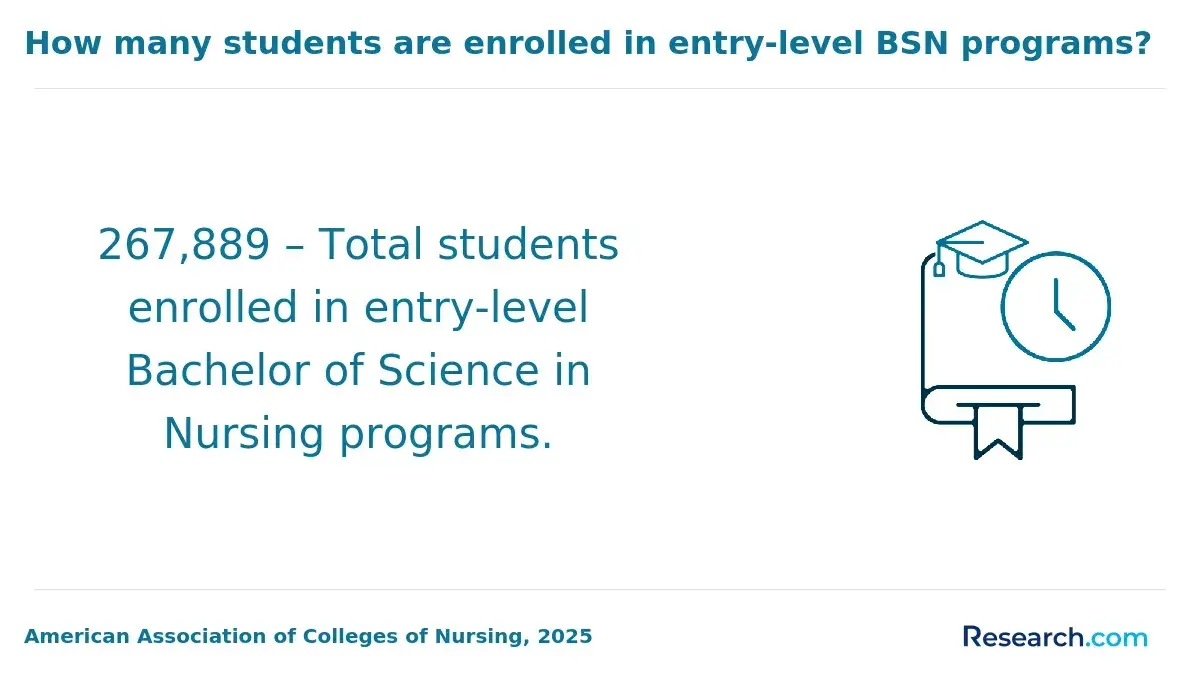
Nursing education in Madison is closely tied to this healthcare ecosystem. Programs such as those offered by the University of Wisconsin Madison emphasize evidence-based practice, clinical judgment, research-informed care, and collaboration across healthcare disciplines. For students, that matters because nursing is a hands-on profession: classroom learning is only one part of preparation, and clinical placement quality can affect both competence and confidence. In terms of cost, a public, four-year higher education program for an in-state student in Wisconsin costs approximately $9,079 on average (NCES, 2024).
Madison may also appeal to students who are interested in healthcare but still comparing clinical and nonclinical career paths. Nursing is patient-facing and licensure-based, while healthcare administration can lead to roles in operations, policy, finance, quality improvement, and management. If you are still deciding between direct care and administrative leadership, reviewing healthcare administration degree paths can help you compare alternatives before committing to a nursing program.
Why Become a Nurse in Madison?
Madison offers a combination that many nursing students look for: healthcare employment, respected education options, clinical access, and a livable mid-sized city environment. For graduates of nursing schools in Madison, local employers may offer opportunities in hospital nursing, outpatient care, public health, long-term care, advanced practice, and leadership. Annual salaries for registered nurses in Madison range from $68,500 at the low end up to $108,000 among top earners, placing Madison among the highest-paying metropolitan areas for registered nurses (ZipRecruiter, 2026).
The city’s quality of life is another practical factor. Madison is known for lakes, parks, bike-friendly neighborhoods, and access to both urban amenities and outdoor recreation. Students should still build a realistic budget that includes tuition, fees, transportation, housing, books, uniforms, exam fees, and lost work hours during clinical rotations. When it comes to the cost of living, the index value for Wisconsin is 97.4, meaning that the cost of living in Wisconsin is just below the national average (BestPlaces, 2025).
Which Nursing Pathway Fits Your Starting Point?
| Student profile | Common pathway | Best fit when | Key trade-off |
| First-time college student | ADN or BSN | You want to become eligible for RN licensure and start building clinical experience. | ADN programs may be shorter and lower cost, while BSN programs may offer broader preparation for advancement. |
| LPN | LPN-to-ADN or LPN-to-RN completion pathway | You already have practical nursing experience and want to become a registered nurse. | You must confirm credit transfer, clinical requirements, and NCLEX-RN preparation. |
| Paramedic | Paramedic-to-nursing bridge | You have emergency medical experience and want to transition into registered nursing. | Your prior healthcare experience helps, but nursing scope, care planning, and licensure expectations are different. |
| RN with an ADN | RN-to-BSN, ADN-to-MSN, or RN-to-MSN | You want to move toward leadership, specialty practice, graduate study, or broader employment options. | Online flexibility may help, but clinical or practicum requirements can still affect your schedule. |
| Experienced nurse | MSN, DNP, NP, educator, or executive leadership pathway | You want advanced clinical, leadership, teaching, or systems-level roles. | Graduate programs require more time, cost, and career planning before enrollment. |
Top-Ranked Entry-Level Nursing Programs in Madison for 2027
Entry-level nursing programs are designed for students who are not yet registered nurses. The main choices are usually an Associate Degree in Nursing (ADN) or a Bachelor of Science in Nursing (BSN). A substantial portion of registered nurses hold an associate’s degree, with 33.3% of them holding the degree, though a bachelor's degree is now the most common qualification (National Nursing Workforce Survey, 2024). Students who want a broader healthcare business or management direction may also compare nursing with affordable selective colleges for healthcare management.
Entry-Level Program Comparison
| School | Location | Credential | Format | Program length | Cost per credit | Credits required | Accreditation |
| Edgewood College | Madison, WI | BSN | On-Campus | 4 Years | $1,087 | 120 | Commission on Collegiate Nursing Education |
| Madison Area Technical College | Madison, WI | ADN | On-Campus | 2-3 Years | $153 | 65 | Accreditation Commission for Education in Nursing |
| University of Wisconsin Madison | Madison, WI | BSN | On-Campus | 4 years | $357 | 124 | Commission on Collegiate Nursing Education |
| Waukesha County Technical College | Waukesha, WI | ADN | On-Campus | 2-3 Years | $155 | 65 | Accreditation Commission for Education in Nursing |
Edgewood College
Madison, WI
Edgewood College’s Henry-Predolin School of Nursing undergraduate nursing program offers a Bachelor of Science in Nursing pathway for students preparing for registered nursing practice. The four-year BSN combines classroom instruction, lab-based learning, and clinical application. Students study nursing theory, assessment, pharmacology, and patient care while gaining experience in healthcare and community settings. This program may fit students who want a traditional campus-based BSN with faculty-guided learning and service-oriented clinical preparation. Students who already hold RN licensure or want a flexible completion pathway may also compare online RN to BSN programs.
- Format: On-Campus
- Program Length: 4 Years
- Tracks/Concentrations: BSN
- Cost per Credit: $1,087
- Required Credits to Graduate: 120
- Accreditation: Commission on Collegiate Nursing Education
Madison Area Technical College
Madison, WI
Madison Area Technical College’s Associate Degree Nursing program prepares students for registered nursing through a two-year pathway that includes classroom learning, campus laboratory practice, and required clinical experience through affiliated healthcare organizations. Because the program offers full-time and part-time options, it may be practical for students who need a more flexible route than a traditional four-year BSN. Prospective students should ask how clinical schedules are assigned, whether evening or weekend options are available, and how graduates perform on licensure exams.
- Format: On-Campus
- Program Length: 2-3 Years
- Tracks/Concentrations: ADN
- Cost per Credit: $153
- Required Credits to Graduate: 65
- Accreditation: Accreditation Commission for Education in Nursing
University of Wisconsin Madison
Madison, WI
The University of Wisconsin Madison traditional BSN program is a four-year Bachelor of Science in Nursing pathway that combines academic coursework, modern learning resources, clinical partnerships, and hands-on preparation. The program may appeal to students who want a research-connected public university environment and access to a broad healthcare network. Admission is competitive, and students who meet prerequisite and GPA standards are considered. The program admits up to 80 qualified students each Fall and Spring Semester. Graduates of the program are well-prepared to take the NCLEX-RN exam, with 93% passing on their first attempt.
- Format: On-Campus
- Program Length: 4 years
- Tracks/Concentrations: BSN
- Cost per Credit: $357
- Required Credits to Graduate: 124
- Accreditation: Commission on Collegiate Nursing Education
Waukesha County Technical College
Waukesha, WI
Waukesha County Technical College’s Associate Degree Nursing program is a nearby Wisconsin option for students willing to study outside Madison. The ADN curriculum is designed to prepare students for the NCLEX-RN and nursing practice in community-based healthcare settings. A distinctive feature is that the program also prepares students for the Wisconsin Licensed Practical Nurse exam, which may help students pursue LPN work earlier while continuing toward RN preparation.
- Format: On-Campus
- Program Length: 2-3 Years
- Tracks/Concentrations: ADN
- Cost per Credit: $155
- Required Credits to Graduate: 65
- Accreditation: Accreditation Commission for Education in Nursing
List of Bridge Programs for Nursing in Madison
Bridge programs are built for students who already have healthcare education or experience. They can reduce repetition, recognize prior learning, and help students move from one credential level to the next. The right bridge program depends on your current license or background, not just your target degree.
Bridge Program Comparison
| School | Bridge pathway | Designed for | Timeframe stated | Delivery notes |
| Edgewood College | ADN-MSN pathway | Associate degree nurses seeking graduate-level nursing preparation | 21 months | Full-time, part-time, and online options are available for working nurses. |
| Madison Area Technical College | Nursing Completion LPN-ADN program | LPNs who want to become registered nurses | About two years | Focuses on the transition from practical nursing to RN-level practice. |
| Waukesha County Technical College | Paramedic to Nursing Bridge program | Paramedics moving into registered nursing | Not stated | Builds on emergency medical knowledge while adding nursing theory and clinical practice. |
Edgewood College
Madison, WI
Edgewood College offers an ADN-MSN pathway for nurses with an associate degree who want to continue toward a master’s-level nursing credential. The pathway can be completed in 21 months and is structured around an accelerated BSN format that incorporates 12 master’s of science in nursing credits into the BSN portion. Because it includes classroom and clinical requirements, working nurses should compare schedule options carefully. Students who want a broader national view can also review online RN to MSN programs before deciding whether a Madison-based option is the best fit.
Madison Area Technical College
Madison, WI
Madison Area Technical College’s Nursing Completion LPN-ADN program is intended for licensed practical nurses who want to qualify for registered nursing practice. The program takes about two years and covers areas such as medical-surgical nursing, growth and development, pharmacology for nurses, and related nursing content. The pathway emphasizes independent learning and professional transition, making it a practical option for LPNs who want to expand their scope of practice.
Waukesha County Technical College
Waukesha, WI
Waukesha County Technical College’s Paramedic to Nursing Bridge program gives paramedics a route into registered nursing. Students build on emergency care experience while learning nursing theory, patient-centered care planning, clinical judgment, and hands-on nursing skills. This option may fit paramedics who are comfortable in high-pressure medical settings but want a broader nursing role across inpatient, outpatient, long-term care, or community healthcare environments.
What Opportunities Exist for Accelerated Learning in Nursing?
Accelerated nursing programs are typically designed for students who already hold a degree in another field and want to move into nursing without completing a second traditional undergraduate timeline. These programs typically take 12-18 months to complete and are highly intensive. They usually compress classroom instruction, lab work, simulation, and clinical rotations into a demanding schedule.
An accelerated program can be worthwhile if you can reduce outside work hours, handle a fast academic pace, and meet prerequisite science requirements before starting. It may be a poor fit if you need a lighter course load, have limited availability for clinical shifts, or are still unsure whether bedside nursing is the right career. Students comparing fast-track options can use Research.com’s guide to affordable accelerated nursing programs to understand cost and completion considerations.
Best Advanced Nursing Programs in Madison for 2027
Advanced nursing programs are designed for nurses who want to move beyond entry-level RN practice. These pathways may lead to executive leadership, advanced clinical practice, nurse practitioner roles, education, policy, quality improvement, or systems-level healthcare work. Before enrolling, nurses should confirm whether the curriculum, practicum requirements, and specialization align with the role they want after graduation.
Edgewood College
Madison, WI
Edgewood College’s Doctor of Nursing Practice Executive Leadership program is built for experienced nurses preparing for senior leadership in healthcare organizations. The curriculum focuses on strategic planning, healthcare policy analysis, financial management, quality improvement, and organizational change. This path may be most relevant for nurses who want to influence care delivery at the department, system, or executive level rather than move into a direct patient-care advanced practice specialty.
The program uses online and on-campus components, which can help working professionals continue employment while pursuing doctoral education. Students should still ask about residency expectations, project requirements, faculty mentorship, and how leadership projects are connected to real healthcare organizations. Nurses comparing doctoral formats may also review online DNP programs.
University of Wisconsin Madison
Madison, WI
The University of Wisconsin Madison offers a Doctor of Nursing Practice program for nurses preparing for advanced clinical and leadership roles. Students can choose from specializations that include Adult-Gerontology Clinical Nurse Specialist, Pediatric Primary Care Nurse Practitioner, and Psychiatric Mental Health Nurse Practitioner. This program may fit nurses who want advanced practice preparation supported by evidence-based practice, research, quality improvement, and interprofessional collaboration.
Prospective DNP students should verify clinical placement support, state authorization, certification exam alignment, and specialty-specific requirements. These details matter because advanced practice roles are tied to licensure, certification, and scope-of-practice rules.
How Do Accreditation and Program Outcomes Impact Nursing Education Success in Madison?
Accreditation is one of the first things prospective nursing students should verify. An accredited program has been reviewed against recognized academic and clinical standards. For nursing students, this affects more than reputation. It may influence licensure eligibility, transfer credit acceptance, graduate school admission, employer confidence, and access to certain funding opportunities.
Program outcomes are equally important. NCLEX pass rates, clinical placement quality, graduation patterns, faculty support, and graduate employment information can help you judge whether a program delivers on its promises. Students planning a long-term route from associate-level nursing into advanced practice may also compare structured pathways such as an ADN to NP program or other bridge options that reduce duplicated coursework.
Questions to Ask Before Choosing a Nursing Program
| Question | Why it matters |
| Is the nursing program accredited by a recognized nursing accreditor? | Accreditation can affect licensure, graduate school options, and employer confidence. |
| What is the most recent NCLEX-RN pass rate? | Licensure exam performance helps show how well the program prepares graduates for RN practice. |
| Where do students complete clinical rotations? | Clinical sites influence exposure to specialties, patient populations, and potential employers. |
| Are clinical placements arranged by the school or the student? | Placement responsibility can significantly affect stress, scheduling, and completion risk. |
| What fees are not included in tuition? | Books, uniforms, immunizations, background checks, testing fees, supplies, and transportation can raise total cost. |
| Does the program meet Wisconsin licensure requirements? | Students must confirm that the curriculum supports their intended license and state of practice. |
| How are transfer credits evaluated? | Transfer policy affects time to completion and total cost. |
Community Support and Resources for Nursing Students in Madison
Madison nursing students can benefit from healthcare partnerships, professional organizations, faculty networks, and school-based support services. UW Health and St. Mary’s Hospital are examples of local institutions that may provide clinical exposure, mentorship opportunities, internships, and professional connections through school partnerships. These experiences can help students understand specialty areas and begin building a local employment network before graduation.
Students can also look to nursing organizations such as the Wisconsin Nurses Association and Sigma Theta Tau's Honor Society of Nursing for networking, scholarships, leadership development, and continuing education. School-based funding and advising resources at institutions such as the University of Wisconsin’s School of Nursing and Edgewood College may also help students identify scholarships, application support, and career planning services.
If you may relocate after graduation, make sure you understand licensure rules in the state where you plan to practice. For example, students considering mobility can compare Wisconsin pathways with guides such as how to become an RN in Maine to see how requirements may differ by state.
Are Nurse Practitioner Programs in Madison a Viable Option for Career Advancement?
Nurse practitioner programs can be a viable advancement route for registered nurses who want more advanced clinical responsibility, specialty preparation, and greater autonomy in patient care. Madison institutions offering advanced nursing education may include clinical mentorship, simulation-based learning, interprofessional collaboration, and specialty-focused coursework. However, NP education is not the right next step for every nurse. It is best suited for nurses who are committed to graduate-level study, direct patient management, certification requirements, and ongoing clinical accountability.
Cost is also a major factor. Nurses who want to compare lower-cost routes beyond Madison can review affordable online nurse practitioner programs while confirming whether any program meets their state licensure and clinical placement needs.
What Are the Admission Requirements and Alternative Pathways for Nursing Programs in Madison?
Admission requirements vary by school and pathway. Entry-level nursing programs may require prerequisite courses, a competitive GPA, background checks, health documentation, standardized assessments, essays, interviews, or proof of clinical readiness. Bridge and graduate programs often require an active nursing license, prior college credits, professional references, work experience, or specialty-specific prerequisites.
Alternative pathways can help applicants who do not fit the traditional first-year BSN model. LPN-to-ADN, paramedic-to-nursing, ADN-to-MSN, RN-to-BSN, and accelerated second-degree programs all serve different student groups. If your academic record is uneven, compare admission policies carefully rather than assuming all nursing schools evaluate applicants the same way. Research.com’s guide to the easiest nursing schools to get into can help you understand how accessible admissions may differ across programs.
What Are the Financial Aid and Scholarship Options Available for Nursing Students in Madison?
Nursing students in Madison may use a mix of institutional scholarships, merit-based aid, need-based aid, federal grants, state grants, loans, employer tuition assistance, and workforce-focused funding when available. The most affordable program is not always the one with the lowest tuition. Total cost depends on credit requirements, fees, commuting, clinical travel, supplies, lost work time, and how many credits transfer.
Working nurses should also compare flexible bridge options that allow them to keep earning while studying. For example, RN-to-BSN pathways can help registered nurses continue their education without leaving the workforce. Research.com’s guide to online RN to BSN bridge programs can help students compare flexible completion routes.
Ways to Reduce the Cost of Nursing School
- Complete prerequisites strategically: Ask whether lower-cost prerequisite credits transfer before enrolling.
- Compare total program cost: Look beyond tuition and include fees, supplies, testing costs, transportation, and clinical expenses.
- Ask about employer partnerships: Some healthcare employers may support education for current or future employees.
- Apply early for scholarships: Nursing scholarships can have separate deadlines from general admission.
- Choose the right credential level: An ADN may be a faster entry route, while a BSN may align better with long-term advancement goals.
- Avoid unnecessary retakes: Confirm transfer and prerequisite policies before paying for courses you may not need.
Enhancing Career Prospects After Graduation
Graduating from nursing school is only one step toward a strong career. New nurses in Madison can improve their prospects by treating clinical rotations, licensure preparation, networking, and early specialty exposure as part of the job search process.
- Use clinical rotations as professional auditions: Build a reputation for preparation, reliability, communication, and safe patient care at sites such as UW Health and St. Mary’s Hospital.
- Seek varied clinical exposure: Rotations in pediatrics, geriatrics, critical care, rehabilitation, or community health can help you choose a specialty and discuss your interests in interviews.
- Prepare early for licensure: Do not wait until graduation to understand NCLEX requirements, application timelines, and state board procedures.
- Consider specialty certifications when appropriate: Credentials such as critical care nursing (CCRN), pediatric nursing (CPN), or gerontological nursing (RN-BC) may support advancement after you have the required experience.
- Join professional organizations: Groups such as the Wisconsin Nurses Association or the American Nurses Association can provide continuing education, networking, and policy awareness.
- Use school career services: Resume reviews, mock interviews, employer events, and alumni contacts can make the transition from student to RN smoother.
- Develop nontechnical skills: Communication, emotional intelligence, teamwork, prioritization, and conflict resolution are essential in fast-moving care environments.
- Stay current with healthcare technology: Telehealth, AI-supported workflows, electronic health records, and patient-centered care models continue to affect nursing practice.
Job Opportunities for Nurses in Madison
Nurses in Madison can pursue employment across multiple healthcare environments. The right setting depends on your temperament, preferred pace, specialty interest, schedule needs, and tolerance for high-acuity care.
| Work setting | Common nursing responsibilities | Best fit for nurses who |
| Acute care | Emergency care, critical care, surgery, intensive care, medication administration, monitoring, and care coordination. | Prefer fast-paced clinical environments and complex patient needs. |
| Outpatient clinics | Primary care support, specialty care, patient education, triage, chronic disease management, and follow-up care. | Want more predictable schedules and ongoing patient relationships. |
| Public health and community nursing | School health, health education, immunization programs, outreach, prevention, and community-based care. | Are interested in population health and prevention-focused work. |
| Long-term care | Care planning, medication management, chronic condition monitoring, family communication, and coordination with providers. | Value continuity of care and working with older adults or patients with ongoing needs. |
Additional opportunities may exist in nursing education, clinical research, oncology, pediatrics, geriatrics, nurse practitioner practice, nurse anesthesia, and nurse education. Nurses who want to move into advanced roles may compare graduate options, including affordable MSN programs, to evaluate cost, flexibility, and career alignment.
How Does Madison Address the Nursing Shortage in Rural and Underserved Areas?
Madison’s healthcare and education systems are connected to broader workforce needs across Wisconsin, including rural and underserved communities. Nursing schools, healthcare systems, community clinics, and state-based incentives can help direct talent where staffing needs are most urgent.
- Rural clinical rotations: Some nursing programs expose students to rural healthcare settings so they can better understand access challenges, smaller care teams, and community-based practice.
- Loan forgiveness programs: Wisconsin offers loan repayment programs for nurses who work in underserved areas, which can help reduce the financial burden of education.
- Telehealth expansion: Madison-based healthcare organizations use telehealth to extend care access for patients who live far from major medical centers.
- Community clinic partnerships: Partnerships between nursing programs and clinics can help students gain experience while supporting areas with staffing needs.
- Advanced nursing preparation: Nurses pursuing graduate credentials may focus on rural health, primary care, behavioral health, or other areas tied to access gaps. Those comparing doctoral options can review affordable online BSN to DNP programs.
Are Nursing Certifications Essential for Career Advancement in Madison?
Nursing certifications are not always required for entry-level RN employment, but they can become important as nurses specialize. A certification can signal focused competence in an area such as critical care, pediatrics, geriatrics, oncology, informatics, or leadership. It may also support promotion, specialty-unit hiring, or eligibility for certain responsibilities.
Certifications are most useful when they match your clinical experience and career target. Before paying for an exam or review course, confirm eligibility requirements and ask whether local employers value that credential. Research.com’s guide to nursing certifications can help you compare options by career goal.
Can Online Transition Programs Offer a Strategic Advantage for Nursing Career Advancement?
Online transition programs can help working nurses upgrade credentials while keeping their jobs. They are especially useful for nurses who need flexible coursework, live far from campus, or want to continue earning income while studying. However, online does not mean fully remote in every case. Nursing programs may still require clinical hours, labs, simulations, campus visits, or approved local placements.
Before enrolling in an online bridge program, verify accreditation, state authorization, clinical placement support, tuition structure, and whether the curriculum supports your licensure or career goal. LPNs exploring faster advancement routes can compare online LPN to ADN programs and confirm whether any option fits Wisconsin requirements.
Current Trends Affecting Nursing Students in Madison
Nursing education and employment are changing quickly. Students entering programs now should pay attention to several practical trends that may affect their training and job search.
- Technology is becoming part of everyday nursing work: Electronic health records, telehealth, remote monitoring, and AI-supported tools can affect documentation, patient triage, and workflow.
- Employers continue to value clinical readiness: Strong simulation, lab practice, and clinical placements can help graduates transition into practice with more confidence.
- Credential progression remains important: ADN, BSN, MSN, DNP, and certification pathways can all serve different career stages, so students should plan beyond the first license.
- Rural and underserved care remains a workforce priority: Students willing to work in access-limited communities may find meaningful roles and potential funding incentives.
- Flexibility matters more for working nurses: Bridge and online programs can help nurses continue their education, but students must verify clinical and licensure requirements before enrolling.
Common Mistakes to Avoid When Choosing a Nursing School in Madison
| Mistake | Why it can hurt you | Better approach |
| Choosing a program without checking accreditation | Accreditation can affect licensure, graduate school, and employer recognition. | Confirm nursing-specific accreditation before applying. |
| Looking only at tuition | Fees, supplies, clinical travel, and lost work hours can change the real cost. | Calculate total attendance cost and compare financial aid packages. |
| Assuming online programs have no in-person requirements | Nursing education often includes labs, simulations, clinicals, or practicums. | Ask exactly where and when in-person requirements occur. |
| Ignoring NCLEX outcomes | Weak licensure exam preparation can delay your ability to work as an RN. | Review the most recent NCLEX-RN pass rate and support services. |
| Not asking about clinical placement | Clinical access can affect graduation timelines and learning quality. | Ask whether the school arranges placements and which sites are used. |
| Assuming salary outcomes are guaranteed | Pay varies by employer, specialty, schedule, experience, and credential. | Use salary data as a planning tool, not a promise. |
| Choosing based only on rankings | A highly ranked program may not fit your schedule, budget, or career path. | Compare outcomes, cost, accreditation, location, and support services together. |
Nursing Amid Beautiful Nature in Madison
Madison can offer nursing students a strong mix of healthcare access, academic options, and quality of life. Students may train near major institutions such as UW Health and St. Mary’s Hospital while studying in a city known for lakes, parks, cultural activity, and community engagement. Still, the best nursing school is not simply the most recognizable name. It is the program that matches your starting point, prepares you for licensure, provides meaningful clinical learning, fits your budget, and supports your next career step.
Key Insights
- Madison is a strong nursing education market because it combines major healthcare employers, clinical learning opportunities, and multiple nursing pathways.
- The mean annual wage for registered nurses in Madison is $96,080 (BLS, 2024), but salaries vary by role, employer, specialty, experience, and schedule.
- ADN programs may offer a shorter entry route, while BSN programs may provide broader preparation for long-term advancement.
- Bridge programs can be valuable for LPNs, paramedics, and ADN-prepared nurses because they build on prior education and experience.
- Accreditation, NCLEX outcomes, clinical placement support, and total program cost should matter more than name recognition alone.
- Advanced pathways such as MSN, DNP, and nurse practitioner programs are best for nurses with clear career goals and readiness for graduate-level clinical or leadership preparation.
- Online and accelerated programs can save time or improve flexibility, but students must verify clinical requirements, state authorization, and licensure alignment.
- The smartest decision is to compare programs by fit: your current credential, budget, schedule, learning format, clinical access, and intended nursing role.
References:
- AACN. (2025). 2024-2025 Enrollment and Graduations in Baccalaureate and Graduate Programs in Nursing. https://www.aacnnursing.org/news-data/all-news/schools-of-nursing-enrollment-increases
- Carson-Newman. (2025). By the Numbers: Nursing Statistics 2025. https://onlinenursing.cn.edu/news/nursing-by-the-numbers
- NCSBN. (2025). 2024 National Nursing Workforce Study. https://www.ncsbn.org/workforce
- U.S. Bureau of Labor Statistics. (2025). Occupational Employment and Wages, May 2024. Occupational Employment and Wage Statistics, Madison, WI Metropolitan Statistical Area. https://www.bls.gov/oes/current/oes_29180.htm
- ZipRecruiter. (2026). *Registered Nurse Salary in Madison, WI*. Retrieved January 18, 2026, from https://www.ziprecruiter.com/salaries/registered-nurse-salary/madison-wi
- BestPlaces. (2025). *Cost of Living in Wisconsin*. Retrieved January 18, 2026, from https://www.bestplaces.net/cost_of_living/state/wisconsin
- Smiley, R. A., Lauer, M. B., Bienemy, C., Glembocki, R. R., & Malcolm, P. A. (2024). The 2022 National Nursing Workforce Survey. *Journal of Nursing Regulation*, *14*(4), 4-15. https://www.journalofnursingregulation.com/article/S2155-8279(24)00002-X/fulltext
Other Things You Should Know About Nursing Schools in Madison, WI
Yes, many online nursing programs in Madison are accredited by organizations like the CCNE or ACEN. Accreditation ensures that programs meet rigorous academic standards and are recognized by employers and licensing boards nationwide.
Yes, accredited online nursing programs in Madison require students to complete supervised clinical experiences in healthcare settings. These placements provide essential hands-on experience to apply nursing knowledge in real-world situations.
Some online nursing programs in Madison allow credit transfer for students pursuing advanced degrees. Transfer policies vary by institution, so it is important to review the school’s articulation agreements before enrolling.
Yes, prospective students interested in nursing programs in Madison should be aware of application deadlines. Typically, deadlines for programs starting in the fall semester are around early to mid-spring, but exact dates can vary. Always check individual program websites for the most current information.


