
2027 Certification vs. Degree for Paralegals: Which Path Should You Choose?

Co-Founder and Chief Data Scientist
Embarking on a career as a paralegal requires a solid educational foundation, and aspiring legal professionals often choose between pursuing a dedicated paralegal degree or obtaining a specialized paralegal certificate.
The distinction is critical, as the U.S. Bureau of Labor Statistics (BLS) reports the median annual wage for paralegals and legal assistants was $61,010 in May 2024, and many certified paralegals report even higher earnings, highlighting the financial incentive to choose the most advantageous credential.
This discussion will explore the key differences between a paralegal degree and a third-party professional certification, examining factors like eligibility requirements, curriculum depth, and impact on job market competitiveness, ultimately guiding you toward the educational path best suited for your career goals
Key things you should know about paralegal certifications and degrees
- A paralegal degree or certificate is an academic credential earned through an educational institution, demonstrating completion of a legal studies program that equips the individual with foundational knowledge and practical skills necessary for paralegal work.
- Paralegal certification, unlike a certificate or degree, is a professional credential earned by passing a standardized exam administered by third-party organizations such as the National Association of Legal Assistants (NALA). Certification validates a paralegal's expertise, competency, and ongoing education in the field, potentially boosting credibility, job prospects, and salary, but it generally requires prior education or experience to qualify for the exam.
- While obtaining a certificate or degree is often the first step to entering the paralegal profession and is typically required by employers, certification is an additional professional recognition pursued after gaining foundational education and some work experience. The certificate or degree serves as the educational foundation, whereas certification serves as a competency benchmark validated by an external body.
- What is the fundamental difference between a paralegal certificate and a paralegal degree? Certification vs. Degree
- How long does it take to become a paralegal through a certificate versus a degree program? Program Length
- What is the average total cost of a paralegal degree compared to a paralegal certificate program? Average Cost
- What core legal skills are taught in a paralegal certificate and degree? Core Legal Skills
- Which credential offers better long-term career advancement for paralegals? Which credential offers better long-term career advancement for paralegals?
- What is the starting paralegal salary difference between degree holders and certificate holders? Starting Salary
- What are the best strategies for a paralegal certificate holder to gain practical work experience? What are the best strategies for a paralegal certificate holder to gain practical work experience?
- How does continuing legal education (CLE) work for both paralegals with certificates and bachelor's degrees? How does continuing legal education (CLE) work for both paralegals with certificates and bachelor's degrees?
- How can I use my paralegal education for alternative legal careers outside of a traditional law firm? Alternative Legal Careers
- What are the best strategies for a paralegal certificate holder to gain practical work experience? Work Experience
What is the fundamental difference between a paralegal certificate and a paralegal degree?
The fundamental difference between a paralegal certificate and a paralegal degree lies in the scope of the curriculum, the time commitment, and the inclusion of general education coursework.
A paralegal degree, such as an Associate of Science (A.S.) or a Bachelor of Science (B.S.) in Paralegal Studies, is a comprehensive academic program typically lasting two to four years. It includes extensive coursework in both specialized legal subjects, like legal research, ethics, and civil litigation, alongside general education that contributes to broader career development, including the possibility of a non-traditional progression in the bailiff career path or a transition from that field.
A certificate, on the other hand, is a shorter, highly focused program designed for individuals who already hold a degree and want to acquire job-specific paralegal skills quickly. It strips away the general education requirements and concentrates almost exclusively on the practical, job-specific legal specialty courses.
A degree provides a broader, more in-depth educational background and is suitable for those starting their higher education, while a certificate is ideal for career-changers who already possess an associate's or bachelor's degree in another field and only need to acquire the essential legal skills to enter the profession quickly.
How long does it take to become a paralegal through a certificate versus a degree program?
Becoming a paralegal through a certificate program typically takes a few months to about one year to complete, depending on whether the program is full-time or part-time.
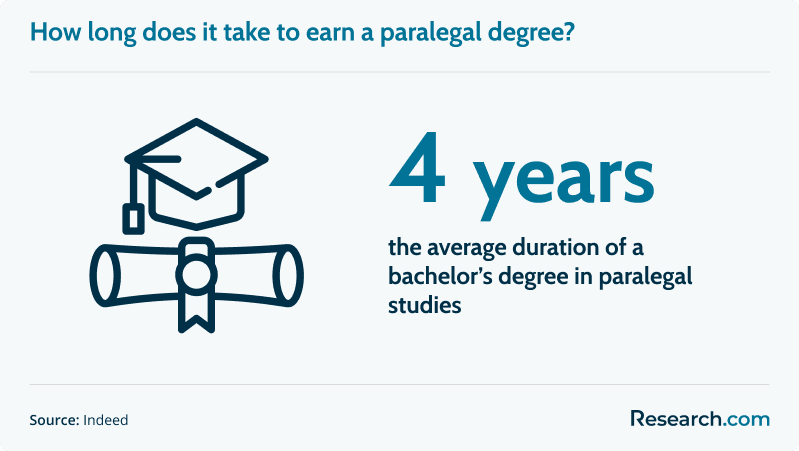
Certificate programs focus on essential paralegal skills and legal knowledge, offering a quicker pathway to enter the profession. In contrast, earning a paralegal degree, such as an associate's degree, generally requires two years of full-time study, while a bachelor's degree in paralegal studies or legal studies can take about four years.
Degree programs include both general education and specialized paralegal courses, requiring a longer time commitment but providing a more comprehensive education.
However, for those seeking a quicker path, the shortest public relations master's degree online can sometimes be completed in as little as 12 months for full-time, accelerated programs, offering a fast-track to a graduate-level credential.
What is the average total cost of a paralegal degree compared to a paralegal certificate program?
The average total cost of a paralegal degree program, such as an associate's or bachelor's degree, typically ranges from around $20,000 to $25,000 for the entire program, including tuition, books, and fees, depending on the institution. For example, an affordable bachelor's degree program may require about $21,000 in tuition and mandatory costs over four years.
In contrast, paralegal certificate programs are significantly less expensive, often costing between $1,200 and $6,500 total. Some certificate programs, especially online or career institute offerings, may cost as little as around $1,200 to $1,500, covering all materials and tuition for completion within a year or less.
Wondering what can you do with an interdisciplinary studies degree? The broad analytical and communication skills from this type of degree pair well with specialized training like a paralegal certificate.
Paralegal degree programs require a larger financial investment due to their longer and more comprehensive nature, while a certificate program offers a cost-effective, quicker route into the paralegal profession, allowing you to leverage your interdisciplinary background with a targeted legal skill set.
What core legal skills are taught in a paralegal certificate and degree?
Paralegal certificate and degree programs are designed to equip students with a robust set of practical, substantive, and ethical legal skills necessary to support attorneys effectively. Both certificates and degrees focus on these core skills, but degree programs often provide a more comprehensive and in-depth study alongside general education courses.
- Legal Research and Analysis: Learning to prepare and carry out legal research plans, locate statutes, cases, and other legal materials from print and electronic sources, evaluate and apply legal authority, and properly cite sources.
- Legal Writing and Document Preparation: Drafting legal documents such as pleadings, motions, demand letters, contracts, affidavits, discovery documents, and memos with clarity and accuracy.
- Legal Ethics and Professionalism: Understanding ethical guidelines for paralegals, including confidentiality, unauthorized practice of law, conflicts of interest, attorney-client privilege, courtroom conduct, and ongoing professional development.
- Legal Procedures and Litigation Support: Familiarity with civil procedure rules, evidence rules, jury selection techniques, legal interviewing, investigation, and case management fundamentals.
- Communication and Organizational Skills: Developing strong communication abilities for client interaction and teamwork, as well as skills to manage multiple tasks, prioritize work, and work under deadlines.
Understanding these competencies also helps differentiate between specialized roles, much like the difference between data security and cyber security, where both fields share core principles but focus on distinct professional applications.
Which credential offers better long-term career advancement for paralegals?
The paralegal degree offers better long-term career advancement compared to a paralegal certificate. A degree provides a more comprehensive education and is often preferred by employers for higher-level positions, offering broader opportunities for career growth and higher earning potential.
Degree holders may also pursue advanced credentials and specializations or further education, such as bachelor's or master's degrees, which facilitate upward mobility in the legal profession.
Paralegal certificate programs mainly prepare individuals for entry-level work and foundational skills, making them ideal for career starters or those changing careers.
While certificates allow quicker entry into the profession, they generally offer fewer advancement opportunities compared to degree holders. In the legal field, a more advanced educational background, even one as versatile as in what can you do with a communication management degree, can be highly beneficial.
What is the starting paralegal salary difference between degree holders and certificate holders?
The starting salary difference between paralegal degree holders and certificate holders tends to vary, but degree holders generally have access to higher starting salaries. Entry-level paralegals with a certificate might start with salaries around $40,000 to $50,000 annually, depending on location and employer.
In contrast, paralegals with degrees—especially associate or bachelor's degrees—often start closer to $50,000 to $63,000 per year at mid-sized or larger firms.
Degree holders in education, particularly those with a Masters in Reading and Literacy, have an advantage in accessing higher-paying positions like Literacy Coach or Instructional Coordinator, which frequently require or prefer an advanced degree.
The potential salary increase for teachers with a master's degree can range significantly, often providing a median annual increase over a bachelor's degree. Additionally, experience and any specialized certifications, such as a Reading Specialist endorsement, can further increase earning potential in this in-demand field.
Certificates provide a faster and less costly entry into certain literacy support roles, but may have somewhat lower starting salaries on average compared to Master's in Reading and Literacy salary prospects for degree holders who qualify for leadership and curriculum-focused positions.
Likewise, salary gaps in the legal field mirror those seen in other professional sectors—for example, the CCMA vs CMAA salary difference reflects how credentials and educational depth affect earning potential across industries.
What are the best strategies for a paralegal certificate holder to gain practical work experience?
The best strategies for a paralegal certificate holder to gain practical work experience involve accepting entry-level legal roles, seeking out internship or externship opportunities, and volunteering with legal organizations.
These methods allow you to apply your theoretical knowledge, build a professional network, and demonstrate your value to potential employers.
- Accept Entry-Level and Related Positions: Don't limit your initial job search strictly to "paralegal" titles. Many law firms and legal departments will hire certificate holders for other roles, which are excellent stepping stones to a paralegal position.
- Pursue Internships, Externships, and Temporary Work: Check with your paralegal program's career services, as many programs offer or require an internship component. Meanwhile, legal staffing or temporary agencies are a time-tested way to get initial experience.
- Employ Proactive Job Search Strategies: You can create a portfolio with samples of your best work from your certificate program, such as legal memos, research assignments, or draft pleadings. Bring this to interviews to demonstrate your skills.
- Tailor Your Resume and Applications: Highlight the functional and practical skills you gained in your certificate program. You can also write a compelling cover letter that directly addresses your lack of experience by framing your certificate training and transferable soft skills as immediate assets.
Like a general studies degree, a paralegal certificate equips you with broad, transferable skills—critical thinking, organization, and research—that are valuable across many industries, including law. Therefore, gaining hands-on experience is the key to launching your specific career.
If you're wondering what can you do with a general studies degree (or a paralegal certificate), the answer is to leverage these initial opportunities to specialize and climb the professional ladder.
How does continuing legal education (CLE) work for both paralegals with certificates and bachelor's degrees?
Continuing legal education (CLE) for professionals with paralegal certification or a paralegal degree generally involves ongoing training to stay current with legal developments, enhance skills, and maintain professional competence.
- CLE requirements vary by jurisdiction and certifying organizations. For example, in California, paralegals must complete 8 hours of CLE every two years, including 4 hours in legal ethics and 4 hours in general or specialized law. Other states and organizations may have different standards, but emphasize legal ethics and substantive law.
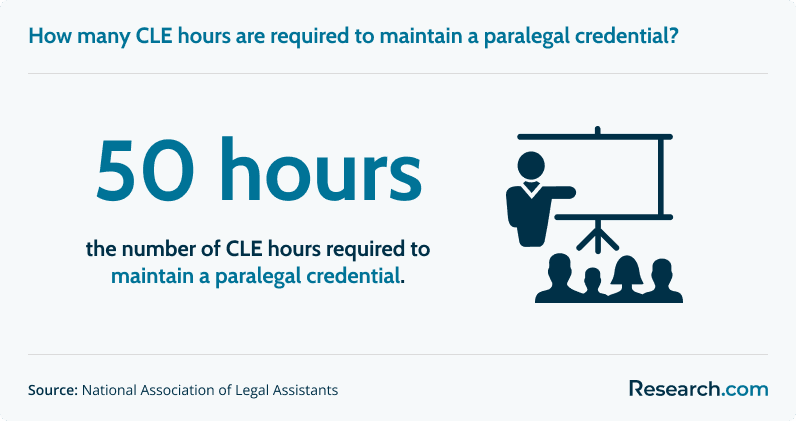
- Certified paralegals typically need to complete a set number of CLE hours within a certification renewal period (e.g., 50 hours every 5 years for some certifications), including mandatory legal ethics credits. CLE credits can be earned through approved courses, webinars, conferences, teaching, or advanced certifications.
- Both certificate and degree holders are encouraged to engage in CLE to maintain expertise and competitiveness regardless of initial credentials. CLE strengthens professional skills, supports career advancement, and ensures compliance with ethical standards in the evolving legal field.
Professionals in other disciplines, like those analyzing PharMD vs PhD in pharmacy credentials, face similar ongoing education requirements to stay updated with research and practice standards.
How can I use my paralegal education for alternative legal careers outside of a traditional law firm?
Paralegal education offers many opportunities for alternative legal careers outside traditional law firms by leveraging transferable skills and legal knowledge. Here are some of the best options:
- In-House Legal Departments: Many corporations have legal teams where paralegals help with contract review, compliance, due diligence, and internal investigations. This role focuses on serving a single "client" (the company), often with less pressure than law firms.
- Legal Technology and Operations Roles: Paralegals with tech skills can work in implementing legal software, e-discovery, or legal project management, supporting legal teams by improving efficiency and technology adoption.
- Nonprofit and Advocacy Work: Paralegals can work with nonprofit organizations, helping with regulatory compliance, legal aid, immigration, civil rights, or community outreach. Such roles can be fulfilling by contributing to social causes.
- Contract and Compliance Management: Paralegals familiar with legal documents and regulations can transition into roles such as contracts analyst, compliance manager, or officer in many industries, including healthcare, finance, and real estate.
- Human Resources and Project Management: Skills in organization, communication, and legal knowledge make paralegals well-suited for HR roles focusing on policy, employee relations, or managing projects involving legal components.
Alternative paths often appeal to professionals seeking stability and fulfillment—raising similar questions many educators face when weighing is teaching worth it as a long-term career.
What are the best strategies for a paralegal certificate holder to gain practical work experience?
The best strategies for a paralegal certificate holder to gain practical work experience involve targeting entry-level legal roles, actively seeking out structured work placements, and volunteering in legal settings.
- Be open to entry-level opportunities beyond titled paralegal roles. Starting as an administrative assistant, receptionist, file clerk, or in litigation support can build foundational skills and expose you to legal work while expanding your resume and network.
- Pursue law-related internships or volunteer positions. Internships provide hands-on training, real-world experience, and chances to demonstrate work ethic and ambition. Volunteering with legal aid organizations or community programs also helps gain relevant skills and contacts.
- Highlight academic excellence and transferable skills. Present your strong organization, attention to detail, communication, and computer skills, and relate your classroom learning to the legal tasks you can perform. Mention GPA and attendance as indicators of commitment if applicable.
- Join paralegal associations and network. Attend professional development seminars and networking events to build relationships in the field, learn about job openings, and gain soft skills like interpersonal effectiveness important to employers.
- Adapt to workplace technology and document management. Be willing to learn specific legal software and office systems on the job, demonstrate good time management, and practice professional communication with clients and attorneys.
Here's what graduates have to say about their paralegal career
- Melanie: "My paralegal studies program was the perfect foundation; I walked into my first firm with the legal research and drafting skills to contribute right away. The focused, practical training gave me the confidence to handle complex assignments, making me feel like a valued part of the legal team from day one. I love knowing that I’m making a real impact on our cases."
- Victor: "After years in an unfulfilling job, my paralegal certificate completely changed my life. I was able to pivot into a new career in under a year and now work in a challenging and rewarding environment. There's an incredible sense of professional fulfillment that comes from working alongside attorneys to seek justice for our clients."
- Heather: "Studying to become a paralegal opened up a host of professional possibilities I didn't have before. The legal field offers so much variety and opportunity for specialization, whether it's litigation or corporate compliance, and my background gave me the versatility to pursue the path that interests me most. I’m excited about my long-term growth potential."
Key Findings
- Entry-level paralegals with a certificate might start with salaries around $40,000 to $50,000 annually.
- The average total cost of a paralegal degree program, such as an associate's or bachelor's degree, typically ranges from around $20,000 to $25,000 for the entire program.
- Paralegal certificate programs are significantly less expensive, often costing between $1,200 and $6,500 total.
- Certified paralegals typically need to complete a set number of CLE hours within a certification renewal period (e.g., 50 hours every 5 years for some certifications), including mandatory legal ethics credits.
- An affordable bachelor's degree program may require about $21,000 in tuition and mandatory costs over four years.
References:
- Bureau of Labor Statistics (BLS). (2023). 23-2011 Paralegals and Legal Assistants. Occupational Employment and Wages, May 2023. https://www.bls.gov/oes/current/oes232011.htm
- National Association of Legal Assistants (NALA). (2023). 2022 National Utilization & Compensation Survey Overview. https://nala.org/wp-content/uploads/2023/02/2022-NALA-Compensation-Utilization-Survey-Summary.pdf
- Northwest Career College (2023). How Do I Become A Paralegal Without A Law Degree? Retrieved from: https://www.northwestcareercollege.edu/blog/how-do-i-become-a-paralegal-without-a-law-degree/
- Paralegal Institute. (2025). Tasks Paralegals Generally CAN NOT Perform. https://paralegal-institute.com/tasks-paralegals-generally-can-not-perform/
- Zippia. (2024). Paralegal Demographics and Statistics in the US. https://www.zippia.com/paralegal-jobs/demographics/
Other Things You Should Know About Certification vs. Degree for Paralegals
Yes, paralegal degree programs in 2027 often offer more chances for specialization compared to certificate programs. Degrees typically provide a broader curriculum, allowing students to focus on areas such as litigation, family law, or corporate law, which can enhance employability and career advancement opportunities.
To enroll in a paralegal certification program in 2027, candidates typically must have a high school diploma or GED. Some programs might also require prior college credits or relevant work experience. Check with individual institutions for specific entry requirements.
Law firms generally prefer paralegal degree holders over those with only a certificate, especially for full-time or higher-level positions. Degree programs, particularly those approved by the ABA, provide a more comprehensive education that includes general education and specialized legal coursework, which many employers value.


