
2027 Management Accounting Degree Concentration: Benefits, Courses & Careers

Co-Founder and Chief Data Scientist
Behind every major business decision lies more than just instinct—it’s data, analysis, and strategy. That’s where management accountants step in, bridging financial insight with business planning. If you’ve been wondering whether a management accounting degree is worth pursuing, this guide will answer your questions.
We’ll cover what the degree is, its benefits, typical courses, career opportunities, salaries, job outlook, and the skills employers want today. By the end, you’ll know exactly how this degree can shape your career path in 2027.
Key Things You Should Know About Management Accounting Degree
- A management accounting degree focuses on preparing students to analyze financial data for internal decision-making, unlike financial accounting, which centers on external reporting. It trains graduates to provide insights that help organizations plan budgets, cut costs, and boost efficiency.
- The curriculum combines core accounting courses with business management, economics, and strategic analysis. This mix equips graduates with both technical accounting expertise and the leadership skills necessary to guide organizational decisions in real-world settings.
- Career opportunities are broad, spanning corporate finance, consulting, and government roles. Management accountants often advance into senior positions such as financial analysts, controllers, or CFOs, with strong salary potential and steady job growth projections in the coming years.
- What is management accounting degree? Degree Overview
- What are the benefits of getting a management accounting degree? Degree Benefits
- What courses and subjects are part of a management accounting degree curriculum? Courses & Subjects
- What skills will I develop in a management accounting degree concentration? Skills Learned
- What are the admission requirements and prerequisites for a management accounting degree? Admission Requirements
- What career paths can you pursue with a management accounting degree? Career Paths
- What is the earning potential for roles in management accounting? Earning Potential
- Is obtaining certification (e.g. CMA, CPA) important after completing the degree? Is obtaining certification (e.g. CMA, CPA) important after completing the degree?
- How long does it take to complete a management accounting degree, and what are the costs involved? How long does it take to complete a management accounting degree, and what are the costs involved?
What is management accounting degree?
A management accounting degree is an academic path designed for students who want to go beyond basic bookkeeping and financial reporting. Unlike general accounting, which often emphasizes compliance and external statements, management accounting zeroes in on internal decision-making and strategic planning. Students learn how to interpret financial data, assess costs, and provide insights that guide leaders in shaping budgets, operations, and long-term business strategies.
Just as COAMFTE accreditation assures quality and professional readiness in counseling programs, a management accounting degree signals that a graduate has the analytical and strategic expertise to support an organization’s financial health. The degree typically blends accounting fundamentals with courses in economics, statistics, and business management, equipping students to turn raw financial information into actionable recommendations for executives and department heads.
For those considering a specialization in accounting, management accounting stands out as a field that combines financial expertise with strategic influence. Graduates are positioned for careers in corporate finance, consulting, and even executive leadership roles, where their skills in cost control and financial forecasting make them invaluable.
What are the benefits of getting a management accounting degree?
Pursuing a management accounting degree offers more than just technical know-how—it positions graduates at the intersection of finance and strategy. This degree prepares professionals to not only record numbers but to interpret them in ways that influence high-level business decisions. Compared to other pathways, such as MBA vs MS accounting, management accounting emphasizes actionable insights and organizational efficiency.
Key benefits include:
- Diverse career opportunities: Graduates can enter fields like corporate finance, consulting, government, or even advance to executive positions such as controller or CFO.
- Strong salary potential: Management accountants consistently earn competitive wages, with top earners surpassing six figures as they gain experience and credentials.
- Strategic impact: Unlike external auditors, management accountants shape internal decision-making by guiding budgeting, cost control, and financial planning.
- Flexibility across industries: Skills are transferable to healthcare, technology, manufacturing, and virtually any sector requiring financial leadership.
- Foundation for certification: The degree provides an excellent stepping stone for professional designations like CMA or CPA, which further increase credibility and advancement opportunities.
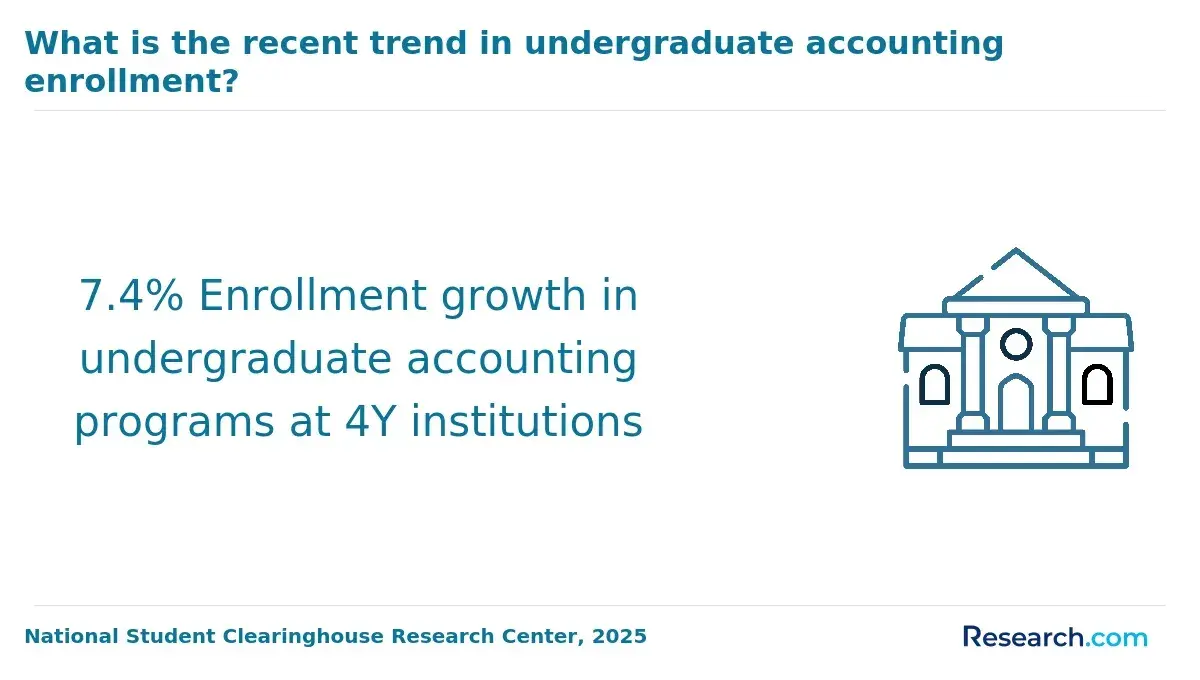
The reach of this degree is also reflected in student demand. The infographic below highlights the latest enrollment numbers, underscoring how many students are actively pursuing accounting programs nationwide.
What courses and subjects are part of a management accounting degree curriculum?
A management accounting degree balances financial expertise with business strategy, ensuring students graduate ready to support organizations in making informed decisions. While every program differs slightly, most cover a blend of accounting, management, and analytical courses that reflect both theory and practice.
Just as factors like education and experience influence a licensed professional clinical counselor salary, the depth and focus of your coursework can shape your earning potential in management accounting. Core subjects often include cost accounting, financial analysis, managerial economics, budgeting, and performance management—each designed to strengthen your ability to analyze financial data and contribute to strategic business decisions.
For students who wonder is bookkeeping the same as accounting, the curriculum makes the distinction clear by focusing not just on recording numbers but also on analyzing them for strategic use.
Key courses and subjects often include:
- Cost Accounting: Examines methods of tracking, analyzing, and controlling costs within organizations.
- Managerial Accounting: Focuses on providing financial data to managers for decision-making and performance evaluation.
- Financial Reporting: Covers preparation and interpretation of financial statements for both compliance and internal use.
- Business Economics: Introduces economic principles that shape corporate decision-making and market behavior.
- Corporate Finance: Explores investment decisions, capital structure, and funding strategies for businesses.
- Strategic Management: Teaches frameworks for long-term business planning and performance monitoring.
- Data Analytics for Accounting: Emphasizes the use of software and analytical tools to interpret financial data effectively.
Through this well-rounded curriculum, students build both technical proficiency and business acumen, ensuring they are prepared for diverse roles after graduation.
What skills will I develop in a management accounting degree concentration?
A management accounting degree concentration builds both technical and soft skills that are directly applicable in the workplace. Unlike general accounting, which often emphasizes compliance and reporting, this concentration trains students to transform numbers into insights that drive business strategies. Whether pursued on campus or through an accounting degree online, the focus remains on preparing graduates for roles that require analytical precision and managerial influence.
Key skills developed include:
- Financial Forecasting: Anticipating future revenues, costs, and financial risks.
- Reconciliation and Balance Sheet Management: Ensuring accurate, consistent financial records and understanding company assets, liabilities, and equity.
- Analytical Thinking: Turning raw data into actionable insights that guide decisions.
- Communication: Explaining complex financial concepts clearly to non-financial stakeholders.
- Budget Management: Creating and monitoring budgets to control organizational costs.
- Technical Proficiency: Gaining expertise in Excel, accounting software, and accrual accounting methods.
- Attention to Detail: Spotting errors and ensuring accuracy in financial documents.
- Variance Analysis: Identifying discrepancies between projected and actual financial performance.
The following chart highlights the skills most frequently requested by employers, underscoring the practical alignment between this degree and real-world job demands. It illustrates how what you learn directly matches workforce expectations.
What are the admission requirements and prerequisites for a management accounting degree?
Before starting a management accounting degree, applicants need to meet specific requirements that ensure readiness for both the technical and analytical nature of the program. While criteria can vary between institutions, most universities expect candidates to have a strong academic foundation and demonstrate basic quantitative skills. Meeting these requirements helps ensure students can handle the mix of accounting, business, and management courses that define the concentration.
Just as factors like accreditation and experience can affect a master of science in clinical mental health counseling salary, your academic preparation can influence your success in management accounting. Typical admission requirements and prerequisites include a high school diploma or equivalent, prior coursework in mathematics or economics, and a minimum GPA—often around 2.5 to 3.0. Some programs may also require standardized test scores, essays, or interviews to assess readiness for advanced business study.
Typical admission requirements and prerequisites include:
- High School Diploma or Equivalent: Completion of secondary education with a focus on math, economics, or business courses.
- Minimum GPA: Many programs require at least a 2.5–3.0 GPA, though competitive schools may expect higher.
- Standardized Test Scores: Some universities request SAT or ACT scores, though test-optional policies are increasingly common.
- Prerequisite Courses: Prior coursework in algebra, statistics, or introductory business is often required.
- Application Materials: Submission of transcripts, letters of recommendation, a personal statement, and sometimes an application fee.
- English Proficiency: International students may need TOEFL or IELTS scores.
These prerequisites ensure students enter the program prepared for its challenges.
What career paths can you pursue with a management accounting degree?
A management accounting degree opens doors to a wide range of career options across industries. Unlike traditional accounting, which focuses heavily on compliance, management accounting emphasizes internal strategy, planning, and decision support. Graduates can pursue roles that combine financial expertise with leadership responsibilities, with opportunities for advancement into senior positions. For those considering graduate-level specialization, pairing this degree with options such as a Masters in Forensic Accounting can further expand career prospects.
Common career paths include:
- Management Accountant: Prepares internal financial reports to guide company decisions.
- Financial Analyst: Assesses investments, performance, and market trends for businesses.
- Budget Analyst: Develops, reviews, and monitors organizational budgets.
- Controller: Oversees all accounting activities within a company.
- Chief Financial Officer (CFO): Leads financial strategy and planning at the executive level.
- Consultant: Advises organizations on cost management, efficiency, and profitability.
- Internal Auditor: Evaluates internal processes, controls, and compliance.
The chart below highlights industries employing the largest number of management accountants. This data illustrates how graduates can align their career paths with sectors that offer the greatest demand for their skills.
What is the earning potential for roles in management accounting?
Earning potential for management accountants is consistently strong, reflecting the profession’s central role in guiding financial strategy. According to recent labor data, the median annual wage for accountants and auditors was $84,180 in 2024, with higher salaries for those in industries like finance and insurance.
Much like professionals who pursue an MBA in construction management to boost their earning power and leadership opportunities, management accountants who gain advanced education or certifications—such as the CMA (Certified Management Accountant)—tend to command higher salaries. Those in senior roles, including financial managers or controllers, can earn well above $152,040 annually in 2024, particularly in corporate or consulting settings.
Salaries rise further with certifications such as CMA or CPA, and many professionals eventually transition into leadership positions like controller or CFO, where median earnings typically exceed $208,000 annually in 2024. For those considering graduate studies, reviewing the differences in Masters in Accounting salary outcomes can provide a useful perspective.
Factors that influence income include industry, geographic location, and experience. States such as New York, California, and Texas tend to offer higher wages due to cost of living and demand, while specialized roles in finance or corporate management often provide above-average pay.
The chart below highlights the median annual wages across top employing industries, giving a clear picture of where management accountants can expect to earn the most. It underscores how career choices and industry alignment significantly affect earning potential.
How strong is the job market and demand for management accounting professionals this 2027?
The job market for management accounting professionals remains stable and promising in 2027. Organizations in every sector—from healthcare to technology—depend on management accountants to analyze financial data, optimize budgets, and support long-term strategic planning. This universal demand ensures steady opportunities for graduates entering the field.
According to labor market data, employment of accountants and auditors is projected to grow by 5% between 2024 and 2034, a rate faster than the average for all occupations. Growth is driven by globalization, evolving regulations, and the increasing complexity of financial systems. Additionally, the expansion of data analytics in finance has boosted the need for professionals skilled at interpreting numbers into insights.
Demand is particularly high for individuals with professional certifications such as CMA or CPA, as employers prioritize candidates who demonstrate advanced expertise. This suggests that students who pair their degree with certification can expect stronger career security and advancement potential.
The infographic below highlights the job outlook data, giving a clear snapshot of projected growth in management accounting and how it compares to broader labor market averages.
Is obtaining certification (e.g. CMA, CPA) important after completing the degree?
Earning a management accounting degree provides a strong foundation, but certifications like the CMA (Certified Management Accountant) or CPA (Certified Public Accountant) can significantly increase career opportunities. These credentials validate specialized skills, demonstrate professional commitment, and set candidates apart in a competitive job market. Many employers consider certification a preferred or required qualification for senior roles, especially in corporate finance, auditing, or consulting.
The CMA, for instance, is globally recognized and emphasizes management accounting and strategic decision-making, making it a direct complement to this degree. The CPA, while broader, opens doors to roles in auditing, tax, and compliance that often overlap with management accounting functions. Professionals holding either certification generally report higher salaries, faster promotions, and more flexibility in career paths compared to non-certified peers.
Ultimately, while certification is not mandatory to enter the field, it acts as a career multiplier. For students and graduates aiming for leadership positions, investing in a CMA or CPA credential is often the next logical step after earning the degree.
How long does it take to complete a management accounting degree, and what are the costs involved?
A management accounting degree typically requires four years of full-time study at the bachelor’s level, similar to most undergraduate business programs. During this period, students complete general education requirements alongside accounting and management-focused coursework. Some institutions also offer accelerated tracks that can shorten completion time, while part-time or online programs may extend the timeline depending on course load. Graduate-level study, such as a master’s degree, generally adds one to two years.
The cost of earning this degree varies widely based on institution type and residency. On average, tuition and fees for an undergraduate accounting program are around $22,000 annually, though public in-state schools may charge considerably less. Private institutions and out-of-state tuition often increase expenses, and students must also account for additional costs such as textbooks, technology fees, and living expenses. Financial aid, scholarships, and employer tuition assistance can help offset the overall investment.
Overall, completing a management accounting degree requires both time and financial commitment. However, the long-term payoff in terms of salary potential, career advancement, and professional stability makes it a worthwhile investment for many students.
Key Findings
- Median annual wage for accountants and auditors was $73,402, as of January 2026.
- Employment of accountants and auditors is projected to grow 4% through 2032.
- 266,507 undergraduate accounting students were enrolled in Spring 2025 across U.S. colleges.
- Top skills employers seek include forecasting (16.5%) and reconciling (15.65%).
- Average undergraduate tuition for accounting programs is about $22,000 per year.
- The largest share of accountants work in accounting, tax preparation, bookkeeping, and payroll services (51.84%).
Here's What Graduates Have To Say About Their Management Accounting Degree Program
- Elara: "Studying management accounting online gave me the flexibility to work full-time while earning my degree. The program’s focus on forecasting and cost control directly improved my performance at work, leading to a promotion within a year. It was truly career-changing."
- Corvin: "I was skeptical about online learning at first, but the management accounting curriculum was engaging and practical. Courses in financial reporting and data analysis sharpened my problem-solving skills, and I loved applying concepts immediately in real business scenarios."
- Michael: "The online format made it possible for me to balance family responsibilities with school. I especially valued the emphasis on strategic planning and variance analysis, which prepared me to step confidently into a senior analyst role after graduation."
References:
- AICPA-CIMA. Accounting enrollment increased 12% for spring semester.
- AICPA-CIMA. Pool of accounting graduates continues to shrink in U.S. AICPA report finds.
- Indeed Editorial Team. (2024, March 22). How long does it take to get a bachelor's degree? Indeed.com. https://www.indeed.com/career-advice/career-development/how-long-to-get-bachelors-degree
- Indeed Editorial Team. (2024, March 22). How long does it take to get a bachelor's degree? Indeed.com. https://www.indeed.com/career-advice/career-development/how-long-to-get-bachelors-degree
- U.S. Bureau of Labor Statistics. (2025, September 4). Top executives: Occupational outlook handbook. U.S. Department of Labor. https://www.bls.gov/ooh/management/top-executives.htm
- U.S. Bureau of Labor Statistics. (2025, September 4). Financial managers: Occupational outlook handbook. U.S. Department of Labor. https://www.bls.gov/ooh/management/financial-managers.htm
- U.S. Bureau of Labor Statistics. (2025, September 4). Accountants and auditors: Occupational outlook handbook. U.S. Department of Labor. https://www.bls.gov/ooh/business-and-financial/accountants-and-auditors.htm
- ZipRecruiter. Management accountant resume keywords and skills.
Other Things You Should Know About Management Accounting Degree
Yes, many universities offer fully online management accounting programs. These are designed to deliver the same curriculum as on-campus options while providing greater flexibility for working professionals or those with family responsibilities. Online programs often include interactive projects, case studies, and remote collaboration tools to mirror real-world business environments.
Graduates with a management accounting degree concentration in 2027 can explore careers in budgeting, financial analysis, risk management, and performance evaluation. They may also pursue roles such as management accountants, financial controllers, cost analysts, and internal auditors, across various industries.
Internships are not always mandatory, but they are highly recommended. They provide valuable real-world exposure, allow students to practice skills like forecasting and variance analysis, and make graduates more competitive in the job market. Many employers prefer candidates with hands-on internship experience in accounting or finance settings.


