
2027 Most Affordable Online Construction Trades Programs

Co-Founder and Chief Data Scientist
Choosing an affordable online construction trades program is usually about more than finding the lowest tuition. You need training that fits your schedule, prepares you for real jobsite expectations, and supports the credential or license path required in your state or trade. For students who cannot relocate, stop working, or commit to a full-time campus schedule, online and hybrid construction programs can make entry into the skilled trades more realistic.
This guide explains what online construction trades programs cover, how long they take, what they cost, which schools offer affordable options, and how to compare programs before enrolling. It is designed for career changers, recent high school graduates, working tradespeople seeking advancement, and adults comparing short-term certificates with associate, bachelor’s, or master’s-level construction credentials.
Quick Answer: Are online construction trades programs worth considering?
Yes, online construction trades programs can be worth considering if you need flexible coursework and understand that most construction careers still require hands-on practice, supervised field experience, apprenticeships, or state-specific licensing steps. They are often strongest for construction fundamentals, blueprint reading, safety training, estimating, project management, home inspection, construction management, and certification preparation. For highly hands-on trades such as electrical, HVAC, welding, plumbing, and carpentry, the best online options include labs, apprenticeships, employer partnerships, simulations, or local practical training.
- The construction trades field is projected to grow by 7% from 2023 to 2033, outpacing many other industries and signaling high demand for skilled workers (BLS, 2024).
- ZipRecruiter reports a median annual salary of $52,333 for construction worker roles, showing that trade careers can offer meaningful earnings without a four-year degree.
- Online programs are best for students who can manage independent study and arrange or complete the hands-on components required for their target role.
What can I expect from an online construction trades program?
An online construction trades program usually combines digital coursework with applied assignments, safety training, trade-specific concepts, and, in stronger programs, some form of practical experience. The online format works well for teaching codes, drawings, estimating, construction math, terminology, project planning, and inspection standards. It is less complete when a program does not provide a clear path to tool-based practice or field learning.
Most programs include some or all of the following elements:
- Construction fundamentals: Students study materials, jobsite safety, basic building systems, tools, construction methods, and the terminology used by contractors and tradespeople.
- Technical skill development: Programs may use video demonstrations, virtual labs, simulations, project-based assignments, and tool tutorials to help students understand jobsite tasks before practicing them in person.
- Certification preparation: Some curricula align with credentials such as Occupational Safety and Health Administration (OSHA) 10/30, National Center for Construction Education & Research (NCCER), or Environmental Protection Agency (EPA) Section 608, depending on the trade and program.
- Hybrid or local training options: Stronger programs may connect students with workshops, field experiences, apprenticeships, employer sites, or local partners so students can apply what they learn online.
- Career-focused coursework: Many programs cover blueprint reading, cost estimating, jobsite communication, code awareness, scheduling, subcontractor coordination, and documentation.
- Instructor and student support: Depending on the school, learners may receive instructor feedback, online tutoring, discussion boards, academic advising, or career support.
Where can I work after completing an online construction trades program?
Graduates can pursue opportunities in settings that match their trade, credential level, experience, and local licensing rules. A short certificate may help with entry-level support roles, while an associate or management-focused degree may be more useful for supervisory, estimating, inspection, or project coordination roles.
| Work Setting | Common Opportunities | What to Check Before Enrolling |
| Residential construction | Home building, remodeling, repair, framing, electrical support, HVAC support, or general contracting work | Whether your state requires licensure, apprenticeship hours, or supervised field experience |
| Commercial and industrial construction | Work on offices, warehouses, hospitals, factories, and specialized building systems | Whether the program covers commercial codes, safety standards, and trade-specific equipment |
| Government and public works | Roads, bridges, schools, utilities, and infrastructure projects through public agencies or contractors | Whether employers require union apprenticeship, OSHA training, or specific certifications |
| Facilities and maintenance | Repair, preventive maintenance, building systems support, and property operations | Whether the program includes troubleshooting, documentation, and safety procedures |
| Self-employment or contracting | Independent trade services, home inspection, small contracting businesses, or subcontracting | Business registration, insurance, bonding, local permits, and licensing requirements |
How much can I make with an online construction trades program?
Your income depends on the trade, location, union or nonunion setting, licensure, experience, overtime, employer type, and whether you move into supervisory work. An online program alone does not guarantee a salary, but it can help you build the knowledge needed to qualify for apprenticeships, entry-level roles, certification exams, or advancement.
According to ZipRecruiter (n.d.), construction worker earnings are reported as follows:
- Top Earners – $59,000/year: Workers with stronger experience, specialized skills, or in-demand trade knowledge may reach this level.
- 75th Percentile – $48,500/year: This range may reflect workers with solid credentials, steady field experience, or higher-demand local markets.
- Average – $52,333/year: ZipRecruiter reports this figure across construction worker salary data.
- 25th Percentile – $36,000/year: Entry-level workers or those still building field experience may start closer to this range.
- Affordable online construction trades programs for 2027
- How long does an online construction trades program take?
- What financial aid is available for online construction trades students?
- Online vs. on-campus construction trades programs: which is better?
- What prerequisites do online construction trades programs require?
- What courses are included in an online construction trades program?
- What construction trades specializations can you study online?
- How should you choose the best online construction trades program?
- Are online construction trades programs accredited and industry-approved?
- How is technology changing online construction trades training?
- What challenges should online construction trades students expect?
- What is the ROI of an online construction trades program?
- What career paths are available after an online construction trades program?
- What is the job market for online construction trades graduates?
Affordable Online Construction Trades Programs for 2027
How we evaluated schools
Research.com created this guide to help students compare affordable online construction trades programs with more than tuition in mind. Cost matters, but so do accreditation, credential type, program length, curriculum relevance, flexibility, and whether the program supports the career path you actually want.
Our evaluation draws on institution-reported and publicly available information from the IPEDS database, Peterson’s database, including its Distance Learning Licensed Data Set, the College Scorecard database, and the National Center for Education Statistics. These sources help verify institutional details, costs, delivery formats, and student-related data where available.
For more information about how Research.com reviews and organizes education data, see our methodology page.
Program comparison at a glance
| School | Program or Focus | Program Length | Estimated Cost | Accreditation |
| Penn Foster College | Construction Trades | 3 months | $839 | Distance Education Accrediting Commission (DEAC) |
| Louisiana State University - Shreveport | Home Inspection Certificate Course | 12 months | $2,495 | Southern Association of Colleges and Schools Commission on Colleges (SACSCOC) |
| Miller-Motte College | Construction and Trade Management | 18 months | $7,313 | Accrediting Commission of Career Schools and Colleges (ACCSC) |
| California State University - Chico | Construction and Trades | 3-18 months | $7,972 | Western Association of Schools and Colleges Senior College and University Commission (WSCUC) |
| Texas State Technical College | Electrical Construction | 12 months | $8,352 | Southern Association for Colleges and Schools Commission on Colleges (SACSCOC) |
| South Dakota - School of Mines and Technology | Construction Engineering and Management | 2 years | $8,928 | Higher Learning Commission (HLC) |
| Purdue University - Polytechnic Institute | Construction Management | 2 years | $24,750-$29,898 | Higher Learning Commission (HLC) |
| Ashworth College | Construction Management | Up to 4 years | $1,449-$1,959 | Distance Education Accrediting Commission (DEAC) |
| Southern New Hampshire University | Construction Management | 10 weeks | $1,911 | New England Commission of Higher Education (NECHE) |
| Ivy Tech Community College | Building Construction Management | 12-24 weeks | $4,200-$8,500 | Higher Learning Commission (HLC) |
1. Penn Foster College
Penn Foster College offers a self-paced online Construction Trades program for students interested in foundational building skills, code awareness, design concepts, and practical preparation for hands-on trades. The program may fit learners seeking a low-cost, short-format introduction before pursuing entry-level work, further training, or an apprenticeship.
- Program Length: 3 months
- Tracks/concentrations: Construction Trades
- Estimated Cost: $839
- Accreditation: Distance Education Accrediting Commission (DEAC)
2. Louisiana State University - Shreveport
Louisiana State University – Shreveport offers a Home Inspection Certificate Course focused on inspection procedures, building systems, and reporting standards. The 11-module course covers areas such as HVAC, plumbing, electrical systems, roofing, siding, and foundations, and it can support students preparing for initial education, continuing education, or the NIBI Certified Inspector credential path.
- Program Length: 12 months
- Tracks/concentrations: Home Inspection Certificate Course
- Estimated Cost: $2,495
- Accreditation: Southern Association of Colleges and Schools Commission on Colleges (SACSCOC)
3. Miller-Motte College
Miller-Motte College offers an online Associate’s Degree in Construction and Trade Management for graduates of its approved Combination Welding, Electrical, HVAC, and Basic Refrigeration programs. The curriculum is designed for students who already have technical trade training and want to add business, supervision, and management skills for construction-related leadership roles.
- Program Length: 18 months
- Tracks/concentrations: Construction and Trade Management
- Estimated Cost: $7,313
- Accreditation: Accrediting Commission of Career Schools and Colleges (ACCSC)
4. California State University - Chico
California State University – Chico provides online Construction and Trades Career Training for students who want career-focused instruction connected to construction industry needs. The program options cover multiple construction-related areas and may be useful for learners seeking flexible preparation paired with industry-recognized credentials.
- Program Length: 3-18 months
- Tracks/concentrations: Construction and Trades
- Estimated Cost: $7,972
- Accreditation: Western Association of Schools and Colleges Senior College and University Commission (WSCUC)
5. Texas State Technical College
Texas State Technical College offers an Electrical Construction Program that teaches residential, commercial, and industrial wiring, electrical planning, estimating, electrical theory, and OSHA construction regulations. This option is most relevant for students looking for structured electrical construction preparation and who understand that electrical licensing and apprenticeship requirements vary by state.
- Program Length: 12 months
- Tracks/concentrations: Electrical Construction
- Estimated Cost: $8,352
- Accreditation: Southern Association for Colleges and Schools Commission on Colleges (SACSCOC)
6. South Dakota - School of Mines and Technology
South Dakota - School of Mines and Technology offers an online master’s program in Construction Engineering and Management for working professionals pursuing higher-level construction leadership. The non-thesis format includes coursework such as Construction Contracts, Estimating, Project Scheduling, and Performance Management & Leadership.
- Program Length: 2 years
- Tracks/concentrations: Construction Engineering and Management
- Estimated Cost: $8,928
- Accreditation: Higher Learning Commission (HLC)
7. Purdue University - Polytechnic Institute
Purdue University - Polytechnic Institute offers a fully online Master of Science in Construction Management (MSCM) for professionals moving from project-level responsibilities toward senior management. The program is taught by industry professionals and focuses on strategic, operational, and company-level construction management skills.
- Program Length: 2 years
- Tracks/concentrations: Construction Management
- Estimated Cost: $24,750-$29,898
- Accreditation: Higher Learning Commission (HLC)
8. Ashworth College
Ashworth College offers an online Associate Degree in Construction Management that introduces students to construction leadership, estimating, safety planning, blueprint interpretation, surveying, and jobsite coordination. The flexible timeline may suit working adults who need a longer completion window.
- Program Length: Up to 4 years
- Tracks/concentrations: Construction Management
- Estimated Cost: $1,449-$1,959
- Accreditation: Distance Education Accrediting Commission (DEAC)
9. Southern New Hampshire University
Southern New Hampshire University offers an online Master of Science in Management with a concentration in Construction Management. The program is aimed at students who want to strengthen management, regulatory, team leadership, and project execution skills in construction settings.
- Program Length: 10 weeks
- Tracks/concentrations: Construction Management
- Estimated Cost: $1,911
- Accreditation: New England Commission of Higher Education (NECHE)
10. Ivy Tech Community College
Ivy Tech Community College offers a Building Construction Management program that covers project planning, estimating, drawings, business operations, and construction leadership. It can be a practical option for students who want shorter-format training connected to management and jobsite coordination.
- Program Length: 12-24 weeks
- Tracks/concentrations: Building Construction Management
- Estimated Cost: $4,200-$8,500
- Accreditation: Higher Learning Commission (HLC)
How long does it take to complete an online construction trades program?
Program length depends on the credential level and the amount of hands-on preparation required. Short certificates can help students build basic knowledge quickly, while associate, bachelor’s, and graduate programs take longer because they cover broader technical, management, or engineering topics.
According to Penn Foster (n.d.) and Indeed (2025), career certificates can often be completed in as little as 6 months. Diploma or associate degree programs commonly range from 6 to 11 months. Online trade school programs generally take between 8 months and 2 years, while bachelor’s degrees usually require around 4 years.
| Program Type | Typical Duration | Best Fit |
| Career Certificate | 6 months | Students seeking fast foundational training or entry-level preparation |
| Diploma or Associate's Degree | 6-11 months | Learners who want a deeper credential for technical or early supervisory roles |
| Trade School Programs | 8 months-2 years | Students preparing for applied trade careers, apprenticeships, or certifications |
| Bachelor’s Degree | 4 years | Students targeting construction management, supervision, or long-term advancement |
Sources: Penn Foster, n.d.; Indeed, n.d.
What are the financial aid options for students enrolling in an online construction trades program?
Financial aid availability depends on the school, credential type, accreditation status, enrollment level, and whether the program is eligible for federal or institutional aid. Before enrolling, ask the school whether the program qualifies for federal financial aid, payment plans, employer reimbursement, workforce funding, military benefits, or scholarships.
Students comparing cost across technical fields may also want to review flexible options such as affordable CNC machining online programs, especially if they are exploring multiple skilled-trade pathways.
- Mike Rowe WORKS Foundation Scholarship: Supports students pursuing skilled trades careers, including construction-related fields.
- Associated General Contractors (AGC) Workforce Development Scholarship: Offers up to $1,500 annually for students in construction-related education.
- National Association of Women in Construction (NAWIC) Scholarships: Provides financial aid of over $250,000 for women pursuing construction and trade careers.
- American Postal Workers Union (APWU) Vocational Scholarship: Provides $3,000 for qualifying dependents of APWU members pursuing vocational training.
- Welder Training Scholarship, sponsored by the American Welding Society: Awards $1,000 to students in welding-related programs for tuition, fees, books, or supplies.
Questions to ask about cost before enrolling
- Is the listed tuition the total cost, or are tools, books, exam fees, software, labs, and certification fees separate?
- Does the program qualify for federal financial aid or only private payment plans?
- Are there local workforce grants or employer tuition benefits for construction training?
- Will credits transfer if I later pursue a higher credential?
- Does the credential meet the requirements for apprenticeships, licensure, or promotion in my state?
How does an online construction trades program compare to an on-campus program?
The right format depends on the trade you want, how much hands-on practice you need, and how much schedule flexibility you require. Online programs are often convenient for theory-heavy or management-oriented coursework. Campus programs are usually stronger for immediate access to tools, labs, and instructor-supervised practice. Hybrid programs can offer a useful middle ground.
| Factor | Online Program | On-Campus Program | Best Choice When... |
| Hands-on training | May use simulations, videos, projects, or local field requirements | Provides direct access to labs, tools, shops, and supervised practice | Choose campus or hybrid if the trade requires extensive tool-based practice |
| Schedule | Often self-paced or asynchronous | Usually follows fixed class and lab schedules | Choose online if you work irregular hours or cannot commute regularly |
| Instructor access | Delivered through messages, virtual office hours, recordings, and feedback | Allows immediate correction during physical tasks | Choose campus if you learn best through real-time demonstration |
| Networking | May include online forums, virtual events, or career services | Often has local employer, union, and apprenticeship connections | Choose campus if local industry relationships are central to your job search |
| Career preparation | Strong for codes, estimating, safety theory, drawings, management, and inspection | Strong for applied skills, shop practice, and supervised equipment use | Choose based on the daily tasks of your target role |
Students researching trade school careers should compare not only pay potential but also the required training format, licensing pathway, and apprenticeship expectations for each occupation.
What are the prerequisites for enrolling in an online construction trades program?
Admissions requirements vary by school and credential level. Short career certificates often have fewer requirements, while associate, bachelor’s, and graduate programs may require transcripts, prior coursework, technical background, or professional experience.
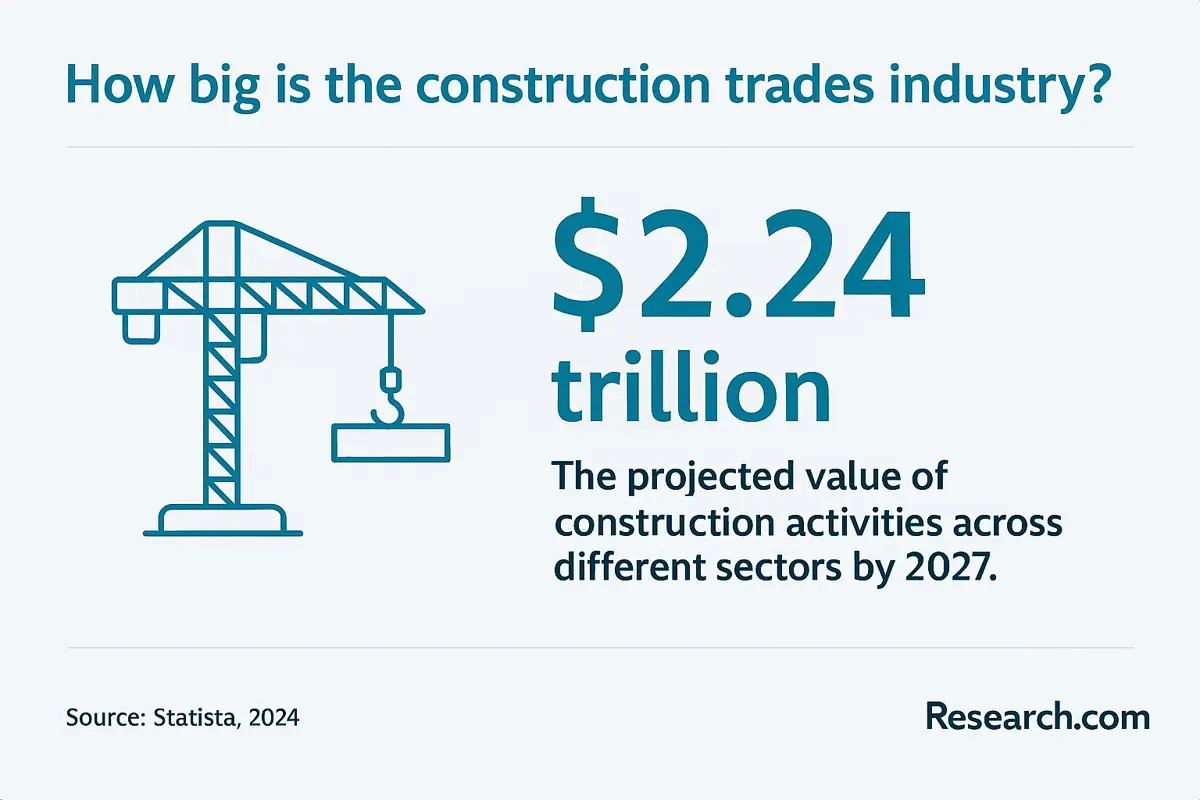
The broader construction market is substantial: the U.S. construction sector was valued at nearly $2 trillion in 2023 and is projected to reach $2.24 trillion by 2027. That scale helps explain why many students are exploring flexible construction training. Students comparing online education across fields may also encounter programs such as cheapest online doctorate in behavioral health programs, but construction trades programs typically emphasize applied math, safety, technical reading, and physical job readiness rather than clinical or administrative leadership.
- High school diploma or GED: Most programs expect students to have the reading, writing, and math foundation needed to understand technical manuals, safety procedures, and construction documents.
- Basic math ability: Construction work requires measurements, fractions, geometry, algebra, material calculations, and estimating.
- Computer literacy: Students must be comfortable using learning platforms, digital files, email, video tools, and sometimes CAD or project management software.
- Reliable internet access: Online coursework often includes video demonstrations, interactive modules, discussion boards, exams, and instructor communication.
- Physical readiness for field work: Even when coursework is online, many construction careers require stamina, coordination, tool use, and the ability to work safely in physical environments.
- State or employer requirements: Some trades require age minimums, driver’s licenses, background checks, drug screening, apprenticeship registration, or proof of eligibility to work on jobsites.
What courses are typically in an online construction trades program?
Curriculum varies by trade, school, and credential level, but most online construction trades programs combine safety, drawings, materials, construction math, building systems, and jobsite procedures. Management-oriented programs add estimating, scheduling, contracts, leadership, and business operations.
- Construction fundamentals: Covers tools, materials, trade terminology, building methods, and the sequence of construction work.
- Blueprint reading and drafting: Teaches students how to interpret construction drawings, symbols, dimensions, and specifications so work matches project plans.
- Safety and OSHA compliance: Focuses on hazard recognition, safe work practices, personal protective equipment, and regulatory expectations.
- Electrical basics: Introduces building electrical systems, installation concepts, maintenance, and troubleshooting. Students interested in this pathway can compare electrician trade schools for more specialized preparation.
- Carpentry and framing: Explains structural framing, wood construction, layout, joinery, and residential building methods.
- Construction math: Applies measurement, geometry, materials estimation, area, volume, angles, and unit conversion to real construction tasks.
- Project management: Covers scheduling, budgets, documentation, resource coordination, and communication across teams.
- Green building and sustainability: Introduces energy efficiency, sustainable materials, and environmentally responsible building practices.
What types of specializations are available in online construction trades programs?
Specialization matters because construction is not one job. A student preparing for home inspection needs different training than someone pursuing HVAC, electrical work, carpentry, or construction management. Online programs can help with the academic and technical knowledge behind these areas, but students should confirm whether the program also supports required hands-on experience.
- Carpentry: Focuses on framing, finish work, cabinetry, layout, structural support, and wood-based construction.
- Electrical systems: Covers residential, commercial, and industrial wiring concepts, electrical theory, troubleshooting, and code-related knowledge. Licensing requirements vary by state.
- Plumbing and pipefitting: Introduces water, waste, gas, and piping systems, along with installation concepts, safety practices, and code awareness.
- HVAC: Prepares students to understand heating, ventilation, air conditioning, refrigeration concepts, maintenance, and system troubleshooting. Students comparing this pathway can review online HVAC training options.
- Construction management: Emphasizes scheduling, estimating, budgeting, contracts, leadership, risk management, and project coordination.
- Masonry: Covers brick, stone, concrete, layout, reinforcement, and structural durability.
If you are still comparing broad academic interests with career-focused training, resources such as the cheapest online degree in humanities can help clarify how liberal arts pathways differ from skilled-trade credentials in cost, timeline, and employment goals.
How to choose the best online construction trades program
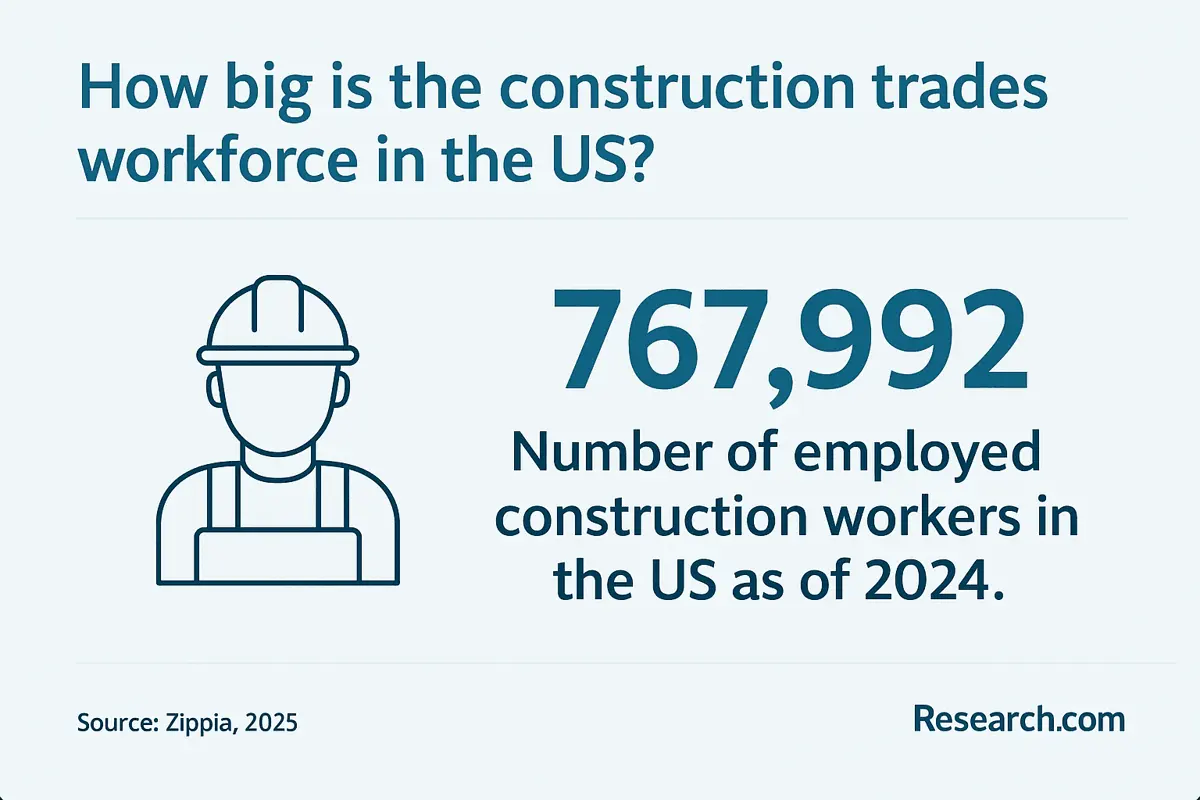
There are over 767,992 construction workers currently employed in the US, but training quality varies widely. The best program for you is not automatically the cheapest or fastest one. It is the program that matches your target trade, state requirements, budget, schedule, and need for hands-on practice.
Use this checklist before enrolling
- Confirm accreditation: Make sure the institution is accredited by a recognized accreditor and that the credential will be accepted by employers, licensing boards, or transfer schools when relevant.
- Match the program to your career goal: A construction management program is not the same as electrician, plumbing, HVAC, welding, or carpentry training.
- Ask about hands-on requirements: Find out whether the program includes labs, fieldwork, apprenticeships, local partnerships, simulations, or employer-supervised practice.
- Check certification alignment: Ask whether coursework prepares students for OSHA 10/30, NCCER, EPA Section 608, home inspection credentials, or other trade-specific certifications.
- Review total cost: Compare tuition with fees, tools, books, technology, exam costs, travel for labs, and missed work time.
- Evaluate flexibility carefully: Self-paced programs can be convenient, but students need discipline and a realistic study plan.
- Ask about support services: Look for advising, instructor access, tutoring, technical support, career counseling, and job placement assistance.
- Look at outcomes: Ask for completion rates, job placement information, apprenticeship connections, employer partners, and graduate satisfaction data when available.
For students seeking accessible entry points, Research.com also covers easy trades to learn, but “easy” should never mean unregulated or low-skill. Even shorter trade programs require safety awareness, practice, and commitment.
Common mistakes to avoid
| Mistake | Why It Can Hurt You | Better Approach |
| Choosing only by lowest tuition | A cheap program may not include tools, certifications, field training, or employer recognition | Compare total cost and career value, not tuition alone |
| Ignoring accreditation | Credits may not transfer, and employers or licensing bodies may not recognize the credential | Verify institutional accreditation and industry approval before paying |
| Assuming online means no hands-on work | Many construction roles require practical skill, supervised hours, or apprenticeship training | Ask exactly how the program supports hands-on competence |
| Overlooking state licensing rules | Electrical, HVAC, plumbing, contracting, and inspection requirements vary by state | Check your state board or licensing agency before enrolling |
| Relying only on rankings | A highly ranked program may not fit your trade, schedule, or location | Use rankings as a starting point, then verify fit with your career plan |
Are online construction trades programs accredited and industry-approved?
Some online construction trades programs are accredited and industry-aligned, but students must verify this before enrolling. Institutional accreditation speaks to the school’s overall educational quality, while industry approval or certification alignment shows whether the curriculum supports recognized trade standards.
Accreditation may affect credit transfer, financial aid eligibility, employer recognition, and future education options. Industry credentials may affect employability, exam readiness, or licensing pathways. Students seeking faster credential timelines can also compare options such as an accelerated associates degree online, but speed should not come at the expense of accreditation or field readiness.
How to verify a program
- Check the school’s accreditor on the institution’s website and confirm it through an official accreditor or education database.
- Ask whether the program prepares students for OSHA 10/30, NCCER, EPA Section 608, home inspection credentials, or other trade-specific exams.
- Contact your state licensing board to confirm whether online coursework counts toward required education hours.
- Ask employers, unions, or apprenticeship offices in your area whether they recognize the program.
- Request written information about labs, apprenticeships, job placement, and certification exam preparation.
How does technology drive innovation in online construction trades programs?
Technology has made online construction education more practical than it used to be. Learning management systems, video demonstrations, digital plan sets, simulations, estimating software, virtual collaboration tools, and project management platforms can help students practice decision-making before they enter a jobsite.
Still, technology should support hands-on learning, not replace it entirely. Augmented demonstrations and simulations can improve understanding of sequencing, hazards, code issues, and workflow, but students pursuing tool-heavy trades should still look for programs with practical labs or field partnerships. Students comparing flexible degree formats in other areas may also review accelerated online bachelor degree programs to understand how online pacing differs across credential levels.
What are the potential challenges of online construction trades programs?
Online construction trades programs can be convenient, but they are not ideal for every student or every trade. The main risk is enrolling in a program that teaches concepts but does not provide enough practical preparation for the work you want to do.
- Limited tool access: Students may need to arrange local practice to develop confidence with physical equipment and materials.
- Less immediate instructor correction: Online feedback can be useful, but some skills are easier to learn when an instructor can observe and correct technique in real time.
- Employer recognition may vary: Local contractors, unions, and licensing bodies may prefer or require specific training pathways.
- Self-paced programs require discipline: Flexible scheduling can lead to delays if students do not set weekly study goals.
- Licensure may require extra steps: Online coursework may not satisfy apprenticeship hours, practical exams, or state-required field experience.
One way to strengthen an online credential is to pair it with recognized certifications. Research.com’s guide to certification for high paying jobs can help students compare credentials across career fields.
What is the return on investment of an online construction trades program?
The ROI of an online construction trades program depends on the total cost, time to completion, whether you keep working while studying, and whether the credential helps you qualify for better jobs, apprenticeships, certifications, or promotions. A low-cost certificate can offer strong value if it leads to field experience quickly. A higher-cost management degree may make sense for experienced workers seeking advancement, but it may not be necessary for someone just entering the trades.
| ROI Factor | Why It Matters | What to Ask | What to Ask |
|---|---|---|---|
| Total program cost | Tuition alone may not include tools, books, exams, or lab expenses | What is the full out-of-pocket cost from enrollment to completion? | |
| Time to workforce entry | Shorter programs may help students start earning sooner | How soon can graduates realistically qualify for entry-level work or apprenticeships? | |
| Credential recognition | Employers may value some certificates, schools, or certifications more than others | Which employers, unions, or licensing boards recognize this credential? | |
| Hands-on readiness | Jobsite performance depends on applied skill, not just online coursework | Does the program include labs, fieldwork, simulations, or apprenticeship connections? | |
| Advancement potential | Management or specialized credentials may support promotions | Does this program align with supervisory, inspection, estimating, or contractor roles? |
Experienced professionals considering a shorter graduate credential can compare options such as 1 year masters programs USA, but they should weigh the cost against their current experience, employer requirements, and promotion goals.
What career paths are available for graduates of online construction trades programs?
Career options depend on your specialization, location, credentials, and field experience. Entry-level graduates may begin as helpers or apprentices, while experienced workers may use online education to move toward inspection, estimating, supervision, or construction management.
- Construction laborer or helper: A common entry point involving site preparation, cleanup, material movement, and support for skilled tradespeople.
- Carpentry assistant or apprentice: Supports framing, layout, measuring, cutting, and installation tasks under supervision.
- Electrical helper or apprentice: Assists with wiring, conduit, fixtures, troubleshooting, and electrical installation under licensed supervision where required.
- HVAC helper or technician trainee: Supports installation, maintenance, and troubleshooting of heating, ventilation, air conditioning, or refrigeration systems.
- Home inspection trainee: Applies knowledge of building systems, reporting, and inspection standards, subject to state rules.
- Sheet metal worker: Installs and repairs ducts, roofing elements, drainage systems, and other metal components.
- Structural steel ironworker: Works on steel frameworks for buildings, bridges, and other structures, often in physically demanding environments.
- Construction estimator or project coordinator: Uses drawings, schedules, budgets, and documentation to support project planning and execution.
- Construction manager or supervisor: Coordinates teams, budgets, schedules, safety, subcontractors, and project delivery.
Some students also compare construction pathways with adjacent mechanical careers. If you are interested in vehicle systems rather than buildings, review Research.com’s guide to automotive trade schools.
What is the job market for graduates of online construction trades program?
The labor market for construction laborers and helpers is supported by continued building activity, infrastructure work, maintenance needs, and replacement openings as workers retire or change occupations. However, job prospects still vary by region, trade, union presence, economic conditions, and licensing requirements.
According to the US Bureau of Labor Statistics (2024):
- Faster-than-average growth: Employment of construction laborers and helpers is projected to grow 7% from 2023 to 2033.
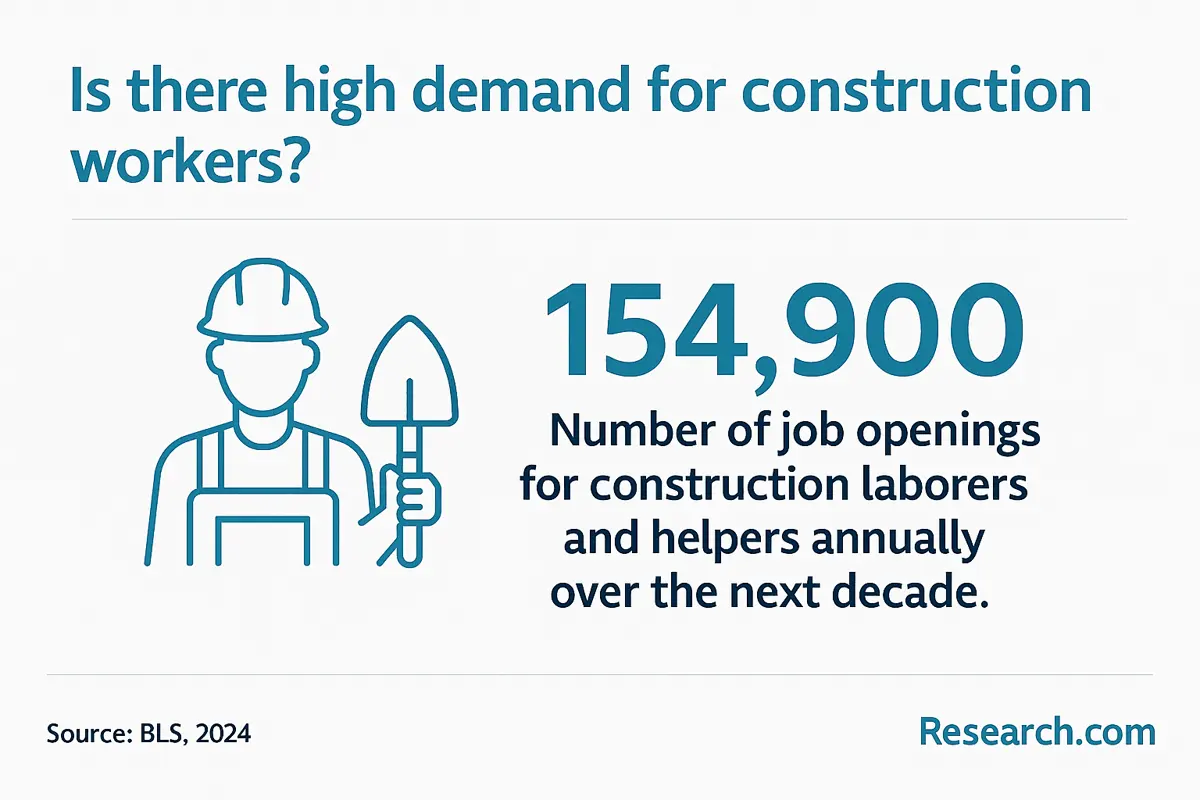
- Large annual opening volume: An estimated 154,900 job openings for construction laborers and helpers are expected annually over the next decade.
- Replacement needs create opportunity: Many openings are expected because workers retire, transfer, or leave the occupation.
Students comparing flexible online education for high-demand fields may also research options such as the cheapest post master's FNP certificate programs online, but construction trades require a different decision process: local labor demand, apprenticeship access, licensing rules, and hands-on training quality matter more than online convenience alone.
For students who choose carefully, an online construction trades program can be a practical first step into a resilient field. The strongest outcomes usually come from pairing online coursework with field experience, recognized credentials, and a clear plan for licensure or apprenticeship when required.
Key Insights
- Online construction trades programs are most useful when they combine flexible coursework with a clear path to hands-on practice, certification preparation, or apprenticeship opportunities.
- Program length varies widely: career certificates can take 6 months, online trade school programs generally take between 8 months and 2 years, and bachelor’s degrees usually take 4 years.
- Affordability should be measured by total cost, not tuition alone. Tools, exam fees, labs, software, books, and travel can change the real price.
- Accreditation and industry recognition are essential. Always confirm whether the credential is accepted by employers, licensing boards, apprenticeship programs, or transfer schools.
- The U.S. construction sector was valued at nearly $2 trillion in 2023 and is projected to reach $2.24 trillion by 2027, supporting continued interest in skilled construction training.
- There are over 767,992 construction workers currently employed in the US, but local demand and licensing rules vary significantly by state and trade.
- Employment of construction laborers and helpers is projected to grow 7% from 2023 to 2033, with an estimated 154,900 job openings expected annually over the next decade.
- The best program is the one that matches your target role: electrical, HVAC, plumbing, carpentry, home inspection, and construction management each require different preparation.
References:
- AGC Education and Research Foundation. (n.d.). Scholarship program. Agc.org. Retrieved 16 June 2025.
- American Postal Workers Union. (n.d.). Vocational scholarship. Apwu.org. Retrieved 16 June 2025.
- Ashworth College. (n.d.). Associate degree in construction management. Ashworthcollege.edu. Retrieved 10 June 2025.
- Career Training. (n.d.). Home inspection training program. Careertraining.lsus.edu. Retrieved 10 June 2025.
- Ivy Tech Community College. (n.d.). Building construction management. Iivytech.edu. Retrieved 10 June 2025.
- Indeed. (n.d.). Construction trades: Definitions and examples. Indeed.com. Retrieved 10 June 2025.
- Indeed. (n.d.). Trade school requirements. Indeed.com. Retrieved 10 June 2025.
- Miller-Motte College. (n.d.). Construction trades management program. Miller-motte.edu. Retrieved 10 June 2025.
- Mike Rowe Works Foundation. (n.d.). Work ethic scholarship program. Mikeroweworks.org. Retrieved 16 June 2025.
- National Association of Women in Construction. (n.d.). NFSF scholarships. Nawic.org. Retrieved 16 June 2025.
- Penn Foster. (n.d.). Construction technology associate degree. Pennfoster.edu. Retrieved 10 June 2025.
- Penn Foster. (n.d.). Construction trades career diploma curriculum. Pennfoster.edu. Retrieved 10 June 2025.
- Purdue University. (n.d.). MS in construction management online. Polytechnic.purdue.edu. Retrieved 10 June 2025.
- San Diego State University. (n.d.). Construction engineering and management (MS). Sdsmt.edu. Retrieved 10 June 2025.
- SNHU. (n.d.). Master’s in construction management online. Snhu.edu. Retrieved 10 June 2025.
- Statista. (2024). Construction industry in the U.S. Statista.com. Retrieved 10 June 2025.
- The American Welding Society. (n.d.). Welder training scholarship. Aws.org. Retrieved 16 June 2025.
- TSTC. (n.d.). Electrical construction program. Tstc.edu. Retrieved 10 June 2025.
- US Bureau of Labor Statistics. (2024). Construction laborers and helpers. Bls.gov. Retrieved 10 June 2025.
- Zippia. (2025). Construction worker job trends. Zippia.com. Retrieved 10 June 2025.
- ZipRecruiter. (n.d.). Construction worker salary. Ziprecruiter.com. Retrieved 10 June 2025.
Other Things You Need to Know About Online Construction Trades Program
In 2027, some of the most affordable online construction trades programs include those offered by community colleges such as Ivy Tech Community College and Eastern Gateway Community College. These programs are known for their competitive tuition rates, financial aid options, and quality instruction in construction trades.
In 2027, online construction trades programs typically include safety training modules on OSHA regulations, personal protective equipment (PPE), site hazard identification, and emergency response procedures. These programs ensure students understand crucial industry safety standards and practices.
Yes, many affordable online construction trades programs in 2027 offer self-paced options. These programs allow students to progress according to their schedule, balancing personal and professional commitments while ensuring they master key skills and knowledge.


