
2027 What Degree Do You Need To Be a Social Worker: Education Requirements in Florida

Co-Founder and Chief Data Scientist
Many aspiring social workers in Florida face uncertainty navigating the exact education pathway required to enter the profession. With Florida hosting over 66,000 social workers, the demand for qualified professionals is rising amid complex social challenges. Earning the correct degree not only meets state licensure mandates but also enhances career prospects and salary potential.
This article breaks down essential education requirements for social workers in Florida, exploring future trends like advanced certifications and online degree options. Prepared by career planning experts, it provides clear guidance to help prospective students fulfill educational criteria and position themselves for success in this evolving field.
Key Things to Know About Social Work Education Requirements in Florida
- A Bachelor of Social Work (BSW) from a CSWE-accredited program is the minimum for entry-level positions in Florida’s public and private sectors.
- Advanced roles increasingly require a Master of Social Work (MSW) with clinical training, aligning with Florida’s rising demand for licensed clinical social workers.
- Continuing education and certifications are vital as Florida tightens licensing standards to address evolving mental health and substance abuse challenges.
- What is the minimum degree required to become a licensed social worker in Florida?
- What courses are covered in a social work degree program in Florida?
- How long does it take to complete a social work degree program in Florida?
- How much does a social work degree cost in Florida?
- What degrees are required for different social work specializations in Florida?
- What financial aid options are available to social work students in Florida?
- What are the alternative pathways to become a social worker in Florida?
- How do I transition from my social work degree to professional licensure in Florida?
- Are online social work degrees recognized in Florida?
- What organizations accredit social work degree programs in Florida?
- What are the top institutions offering social work degree programs in Florida?
- What career opportunities do social work degrees unlock in Florida?
What is the minimum degree required to become a licensed social worker in Florida?
The pathway to becoming a licensed social worker in Florida is distinctly shaped by evolving professional standards and educational criteria. As the field adapts to future demands, understanding the minimum education requirements for social worker in Florida becomes increasingly important.
- Bachelor’s Degree in Social Work (BSW): This credential allows entry into the social work profession under supervision, yet it does not suffice for independent licensure or advanced clinical roles within the state.
- Master’s Degree in Social Work (MSW): An accredited MSW degree Florida social work license holders typically require, this advanced qualification enables eligibility for independent practice as a Licensed Clinical Social Worker (LCSW) or Certified Master Social Worker (CMSW). Programs must be accredited by the Council on Social Work Education to meet state licensure standards.
Looking ahead, there is a potential shift toward integrating emerging technologies and interdisciplinary knowledge into social work education, possibly influencing future credentialing requirements. Given this trajectory, those considering their options may explore the broad opportunities linked to advanced degrees, including the diverse career paths detailed in what can you do with an MSW. Preparing for the most rigorous standards may provide the greatest professional flexibility as social work roles become more specialized and complex in meeting Florida’s societal needs.
What courses are covered in a social work degree program in Florida?
Choosing the right coursework in a social work degree program shapes the ability to address evolving social challenges and community needs effectively. Florida’s programs reflect a balance of established knowledge and emerging issues, equipping students with diverse skills through targeted classes. Key core courses and state-specific requirements include:
- Introduction to Social Work: Introduces the profession’s ethics, history, and societal roles, grounding students in foundational perspectives.
- Human Behavior and the Social Environment: Examines behavioral theories and environmental influences across individuals and communities.
- Social Welfare Policy and Programs: Analyzes policies at state and federal levels, highlighting impacts on service delivery systems.
- Social Work Practice with Individuals, Families, and Groups: Focuses on core practice skills such as interviewing and intervention across various populations.
- Diversity in Social Work Practice: Explores cultural competence and social justice, including specialized topics like trauma-informed care and Latino/a communities.
- Field Education/Field Practicum: Provides supervised, real-world experience in agencies, essential for integrating theory with practice.
- Senior Seminar/Capstone: Encourages synthesis of program knowledge preparing students for professional or graduate pursuits.
- Electives and Special Topics: Covers areas like child welfare, aging, and human trafficking aligned with Florida’s workforce needs.
- State-Specific Requirement: Some universities require a sustainability course; others offer certificates like Child Welfare, addressing local service gaps.
How long does it take to complete a social work degree program in Florida?
Timeframes for completing social work degrees in Florida play a critical role in how students plan their education alongside personal and professional responsibilities. Degree length can vary widely depending on program level, pace of study, and prior academic credits, with emerging trends potentially reshaping future completion times.
Understanding these variables helps aspiring social workers navigate their educational journey efficiently while staying aligned with licensing requirements and workforce demands.
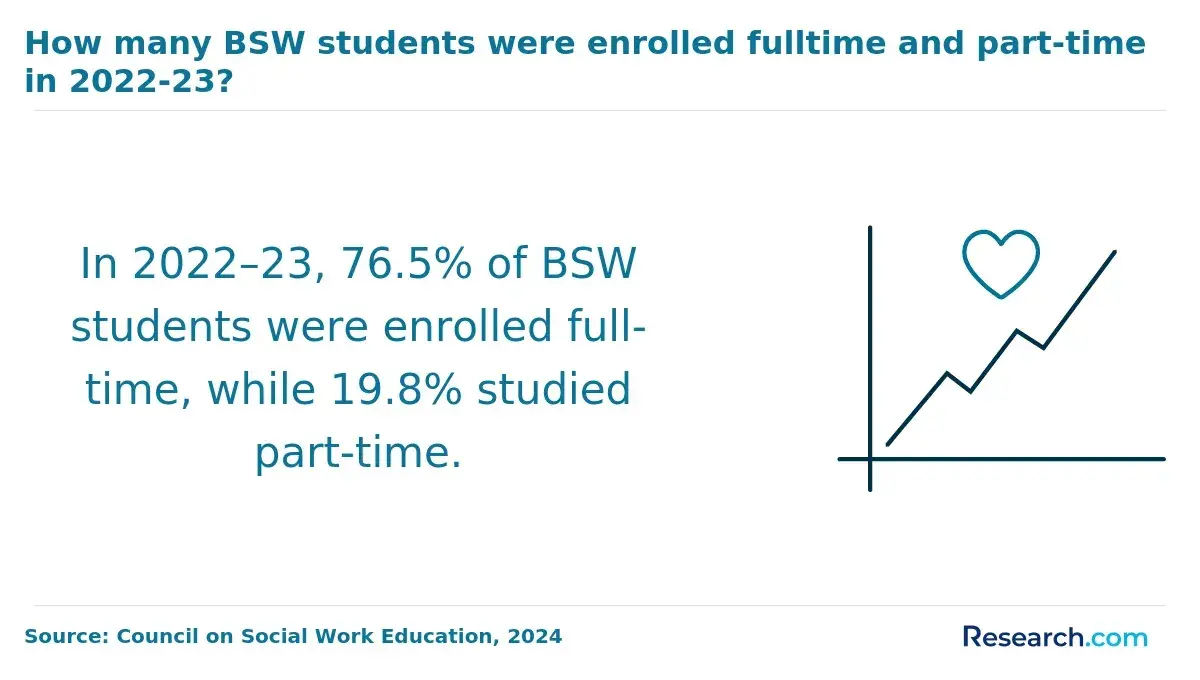
- Bachelor of Social Work (BSW): Typically takes about 4 years full-time, with part-time students extending to 5–6 years; accelerated pathways exist for those with prior college credits.
- Master of Social Work (MSW) – Regular Standing: Full-time study usually requires 2 years, whereas part-time can take 3 to 4 years due to extensive field internships totaling around 900 hours.
- MSW – Advanced Standing: Students holding a recent BSW from an accredited institution can complete this track in 1 year full-time or 2 years part-time, as it reduces required coursework and practicums.
- Doctor of Social Work (DSW): Typically a 2–3 year full-time commitment, with part-time options stretching up to 4 years focusing on leadership and clinical expertise.
- PhD in Social Work: Completion ranges from 3 to 5 years full-time, often longer when balancing dissertation research and teaching responsibilities.
- Full-Time vs. Part-Time Study: Full-time enrollment accelerates completion but may challenge those balancing work or family, while part-time schedules extend timelines by 1–2 years.
- Advanced Standing Opportunities: Accelerated MSW tracks significantly reduce duration for BSW graduates, anticipating more students leveraging this in the future.
- Fieldwork Demands: Required supervised internships, such as those at Florida universities, necessitate in-person commitments that can slow progress for working students.
- Delivery Formats: Online and hybrid options offer scheduling flexibility without necessarily shortening degree times due to essential on-site practicum hours.
When speaking to a social worker from Florida who completed her MSW at a local university, she reflected, “Balancing work and school was a test of commitment; it took me closer to four years because I studied part-time and had to coordinate my internship hours around my job.”
She emphasized the importance of realistic planning, adding, “The field experience was intense but invaluable—I wouldn’t trade those hours for a quicker finish.” Her journey underscores how personal circumstances and program requirements intertwine, shaping the pace at which social work education is completed in Florida.
How much does a social work degree cost in Florida?
Financial planning is essential when considering the cost of a social work degree in Florida, helping students balance tuition, fees, and living expenses against future career earnings. Evaluating tuition for BSW/MSW programs alongside advanced degrees ensures informed decisions amid evolving educational models and growing online options.
- Bachelor of Social Work (BSW) Tuition: In-state students at Florida public universities typically pay between $6,000 and $7,000 per year, while out-of-state tuition ranges from $20,000 to $23,000 annually; private colleges may charge $25,000 to $35,000.
- Master of Social Work (MSW) Tuition: Public in-state MSW tuition falls between $8,000 and $12,000 per year, with total costs of $16,000 to $24,000, but private and out-of-state rates can exceed $30,000 annually. Online programs may offer tuition parity or slight savings compared to on-campus options.
- Doctorate in Social Work (DSW) Tuition: Less common and often designed for working professionals, DSW programs charge $20,000 to $35,000 per year, with flexible formats potentially impacting overall costs.
- PhD in Social Work Tuition: PhD candidates at public universities pay $7,000 to $10,000 in-state or up to $25,000 out-of-state annually; private schools have higher rates but may provide stipends or assistantships for research-focused students.
Differences between public versus private institution costs and the emergence of online degrees contribute to the complex picture of Florida social work program tuition and fees. Students might also explore funding opportunities or federal aid, especially if pursuing roles with public child welfare after graduation. For comparisons with counseling fields, consider this LPC vs LCSW resource.
What degrees are required for different social work specializations in Florida?
Different social work roles in Florida demand varied educational backgrounds due to the specific skills, responsibilities, and regulatory standards involved in each specialization. These degree requirements for social work specializations in Florida help shape a career aligned with licensure and professional development.
- Clinical Social Work: An MSW from a CSWE-accredited program is required, followed by two years of supervised clinical experience and passing the ASWB clinical exam; this pathway typically spans about eight years of education and practice.
- School Social Work: A master’s or higher degree in social work with at least 300 hours of field placement in K–12 settings from a CSWE-accredited program is needed to address the distinct challenges within educational environments.
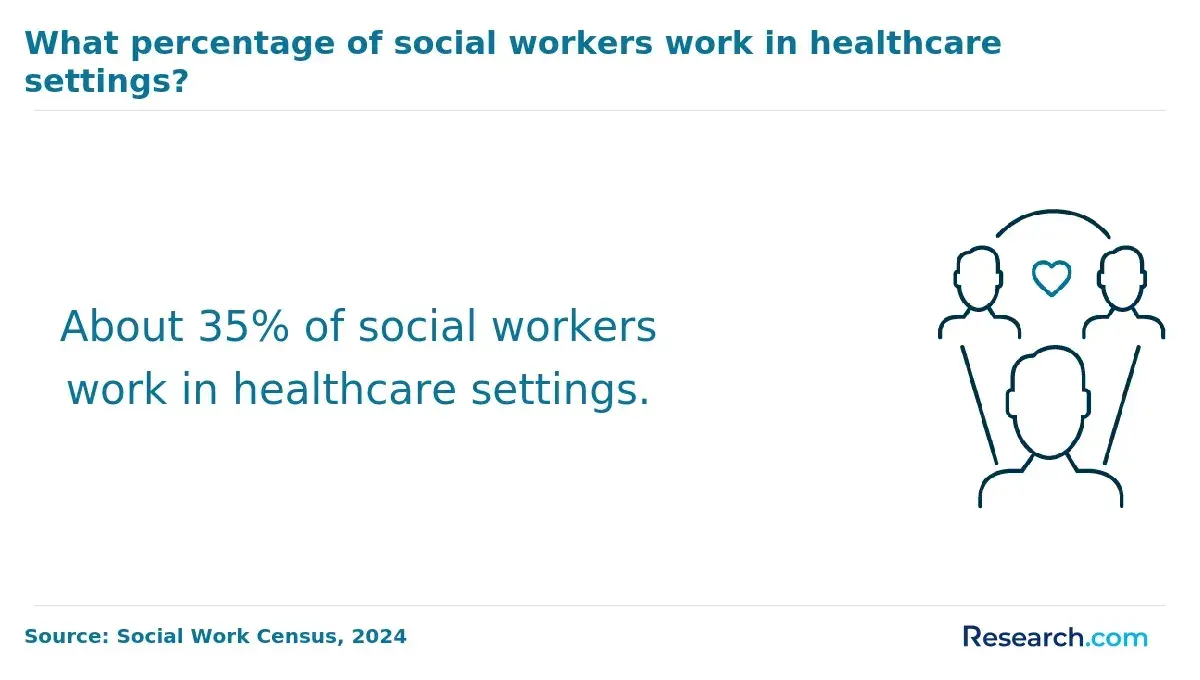
- Healthcare Social Work: A BSW serves as the minimum entry point, though advanced leadership roles often require an MSW; candidates must be prepared for interdisciplinary care and clinical interventions.
- Child and Family Services: While entry-level positions accept a BSW, clinical and supervisory roles generally demand an MSW plus additional supervised experience, with certifications like CMSW requiring extensive post-master’s practice.
- Social Work Administration and Supervision: The CMSW credential requires an MSW, three years of field experience, including two post-master’s under supervision, and passing the ASWB advanced generalist exam.
To illustrate how these advanced degrees translate into the professional landscape, the chart below highlights the many employment opportunities available for PhD in Social Work graduates.
What financial aid options are available to social work students in Florida?
Financial aid plays a vital role for students pursuing social work degrees by easing the financial burden of tuition and related educational expenses. Access to financial aid for social work students in Florida can make these programs more attainable and reduce long-term debt concerns.
- Federal Grants: The Federal Pell Grant provides significant need-based aid, offering up to $6,345 annually without requiring repayment, based on FAFSA eligibility.
- State Scholarships: Florida offers various merit-based and need-based scholarships for social work students, including university-specific awards like the Light the Way Scholarship at UCF, supporting BSW and MSW programs.
- Work-Study Programs: Federal work-study enables eligible students to earn income through part-time campus or community service jobs, helping offset education costs while gaining experience.
- Student Loans: Federal subsidized and unsubsidized loans help cover tuition gaps, with subsidized loans offering interest relief during enrollment to reduce financial strain after graduation.
- Professional Organization Scholarships: Groups such as the NASW Foundation provide scholarships and fellowships targeting academic excellence and commitment to the social work profession.
- Employer-Sponsored Assistance: Public agencies and healthcare employers may offer tuition aid or stipends for employees pursuing accredited social work degrees, particularly for high-need practice areas.
- External Scholarship Resources: National databases like Scholarships.com and FastWeb list numerous social work funding options, supplementing institutional offerings with additional opportunities for students.
Looking ahead, emerging trends in financial aid for social work students in Florida may include expanded funding for online degree options and interdisciplinary program support. Students interested in exploring affordable pathways might consider cheapest online MSW programs to further reduce costs while maintaining program quality.
What are the alternative pathways to become a social worker in Florida?
Individuals with degrees in related fields or those transitioning from other professions can avoid starting from scratch when becoming social workers in Florida by leveraging several alternative pathways. These options create flexible routes to enter the profession while recognizing prior education and experience.
- Traditional MSW Track: For those without a BSW, a two-year full-time Master of Social Work program provides foundational training required for licensure.
- Advanced Standing MSW Programs: BSW graduates from accredited programs can complete the MSW in about one year, accelerating their entry into practice.
- Related Degrees as Foundations: Degrees in psychology, sociology, or human services often meet MSW prerequisites, with relevant work experience strengthening applications.
- Post-Bachelor’s Certificates or Bridge Programs: These programs offer transitional education for non-social work bachelors, preparing students for MSW study or supervised roles.
- State-Specific Alternative Licensure: Florida’s provisional licenses and exemptions help professionals under unique circumstances work in social services while completing standard requirements.
A social worker from Florida shared how transitioning from a psychology background wasn’t straightforward but rewarding. Graduating from a local university’s bridge program, he recalled the initial uncertainty of adapting theoretical knowledge to practical social work. “It felt like relearning my purpose,” he said, emphasizing the challenge of balancing coursework with part-time fieldwork.
Yet, he appreciated how the alternative pathways respected his prior skills, making the journey efficient and purposeful. This approach gave him not only the credentials but a deeper understanding of community needs, illustrating how these routes support meaningful career shifts within Florida’s dynamic social services landscape.
How do I transition from my social work degree to professional licensure in Florida?
Graduates should complete all requirements of a CSWE-accredited program and meet the mandated supervised fieldwork hours before applying for state licensure. Following these academic and practical experiences, candidates must submit their documentation and fees to the Florida licensing board, then prepare for and pass the designated licensure exam. In addition, reviewing detailed career pathways and application procedures can streamline this transition; consult how to become a social worker in Florida for comprehensive guidance on advancing from an academic setting to professional practice.
Are online social work degrees recognized in Florida?
Online Bachelor of Social Work (BSW) and Master of Social Work (MSW) programs have surged in popularity, driven largely by working professionals and career changers seeking flexible paths into social work. Recognition of these degrees matters deeply, as it affects students’ ability to qualify for state licensure and gain meaningful employment. Without proper recognition, graduates may encounter significant obstacles in taking licensing exams or securing roles within agencies that mandate credentials from accredited programs.
In Florida, recognition depends on accreditation by the Council on Social Work Education (CSWE), the exclusive accrediting authority for social work programs. The Florida licensing board requires a CSWE-accredited master’s degree for social work licensure, applying equally to online and on-campus options.
Employer attitudes have shifted substantially; a 2022 survey found over 71% of employers hold no preference between online and traditional degrees when accreditation is confirmed. With more than 20,000 students enrolled in online MSW programs nationwide in 2024, this trend highlights growing acceptance within the profession.
Prospective students must also weigh supervised fieldwork, which all CSWE-accredited programs require, typically completed locally despite the online coursework. Hybrid program options, blending virtual learning with occasional in-person engagement, are increasingly appealing. Verifying accreditation is essential not only for licensure but also to enhance employment opportunities in Florida’s expanding social work workforce.
What organizations accredit social work degree programs in Florida?
Accreditation plays a pivotal role in assuring the quality of social work degree programs in Florida, directly impacting licensure eligibility and employer recognition. As the profession evolves, maintaining accreditation standards ensures graduates remain competitive and prepared for future challenges in the social work field.
- Council on Social Work Education (CSWE): Serving as the essential accreditor for social work education in the U.S., CSWE approval is mandatory for Bachelor of Social Work (BSW) and Master of Social Work (MSW) programs. Graduates from CSWE accredited social work programs in Florida gain eligibility for state licensure and access to national career opportunities.
- Southern Association of Colleges and Schools Commission on Colleges (SACSCOC): This regional body evaluates overall academic quality and institutional integrity for Florida colleges and universities. Enrollment in a SACSCOC-accredited institution is often required for federal aid and supports program-level accreditation like CSWE.
- Florida Department of Education (FLDOE): While not a program-specific accreditor, FLDOE recognition ensures public institutions meet state standards, facilitating credit transfer and qualification for state-funded scholarships or grants.
For those exploring future educational paths, considering recognized and accredited programs, including various online MSW programs, may enhance flexibility and access. Embracing accreditation trends today strengthens readiness for an expanding workforce and reflects the dynamic nature of social work education accreditation florida.
What are the top institutions offering social work degree programs in Florida?
Choosing the right accredited program lays the groundwork for a successful career as a social worker in Florida, balancing rigorous academics with essential licensure eligibility. As education evolves, the best social work schools in Florida increasingly offer innovative formats and specialization tracks that respond to shifting community needs and workforce demands.
Looking ahead, flexible online options and interdisciplinary dual degrees may become more common, helping students blend clinical expertise with broader public health or legal knowledge. This approach not only optimizes time and financial investment but also prepares graduates to tackle complex social challenges with diverse skill sets.
- Florida State University (FSU): Known for its strong academic reputation since 1928, FSU delivers rigorous BSW and MSW programs with over 500 hours of supervised field experience and accelerated options for advanced standing students.
- University of Central Florida (UCF): UCF offers adaptable full-time, part-time, and online CSWE-accredited degrees, featuring advanced clinical practice concentrations and unique certificates like Military Social Work to fit diverse career aspirations.
- Florida International University (FIU): FIU emphasizes advanced clinical skills and dual degrees, allowing students to combine their MSW with a Master’s in Public Health or Juris Doctor, supported by 1,000 hours of field practice.
- Barry University: Celebrated for its trauma-informed clinical focus, Barry provides flexible program formats suitable for working professionals and an advanced standing track to accelerate career progress.
- Florida Gulf Coast University (FGCU): FGCU’s MSW program features a comprehensive clinical curriculum with a distinctive Medical Social Work certification, scheduling classes one day per week to prioritize extensive fieldwork experiences.
For those exploring the best social work schools in Florida, confirming CSWE accreditation is vital, and many programs now incorporate emerging trends like online flexibility or cross-disciplinary studies. Prospective students looking for options to pursue a social worker degree online can find robust, accredited social work programs in Florida uniquely positioned to meet future educational and career needs.
What Do Social Workers in Florida Say About Their Degree
- Completing my social work degree at Florida State University truly opened doors I hadn’t imagined. The program was rigorous but the faculty’s dedication made the experience rewarding. Starting my career in a local school allowed me to immediately apply my knowledge and see the direct impact I could have on children’s lives. I am passionate about helping students navigate their challenges and contributing to a positive learning environment. Florida’s diverse population has taught me so much about cultural sensitivity and inclusive practices. Aries
- My journey through the University of Central Florida’s social work program was transformative, marking a period of profound personal growth. The curriculum challenged me to expand my understanding of community dynamics specific to Florida, such as dealing with its multilingual and multicultural groups. Working locally in a school setting right after graduation gave me a practical platform to develop my professional skills while making a measurable difference. I find great satisfaction in empowering young people and witnessing their progress firsthand. Kimberly
- The University of Florida provided an excellent foundation for my career, blending academic excellence with a focus on Florida’s unique environmental and social challenges. Florida’s blend of urban and rural communities has offered me rare opportunities to work on diverse cases and develop a versatile skill set. The professional development support from both my program and local schools has positioned me well for future advancement. It’s rewarding to contribute to a community so rich in culture and to help foster resilience among its youth. Roel
What career opportunities do social work degrees unlock in Florida?
Social work degrees in Florida serve as a gateway to a broad spectrum of career paths across governmental agencies, non-profit organizations, healthcare institutions, and private practices. Graduates are well-equipped to pursue roles such as clinical social workers, case managers, community program directors, and policy advocates, each demanding specialized competencies and adaptability in addressing complex social issues. Emerging positions in integrated mental health services and school-based social work also highlight the evolving nature of the field. For those seeking a streamlined pathway into counseling roles, consider the fastest way to become a counselor in Florida. Continuous professional development, including targeted certifications and specialized training, further enhances career trajectories within Florida's dynamic social service landscape.
Related Articles for Nearby States
- 2027 What Degree Do You Need to Be a Social Worker: Education Requirements in Georgia
- 2027 What Degree Do You Need To Be a Social Worker: Education Requirements in Alabama
- 2027 What Degree Do You Need To Be a Social Worker: Education Requirements in South Carolina
- 2027 What Degree Do You Need To Be a Social Worker: Education Requirements in Mississippi
- 2027 What Degree Do You Need To Be a Social Worker: Education Requirements in Tennessee
- 2027 What Degree Do You Need To Be a Social Worker: Education Requirements in North Carolina
- 2027 What Degree Do You Need to Be a Social Worker: Education Requirements in Louisiana
- 2027 What Degree Do You Need to Be a Social Worker: Education Requirements in Kentucky
- 2027 What Degree Do You Need To Be a Social Worker: Education Requirements in Arkansas
- 2027 What Degree Do You Need To Be a Social Worker: Education Requirements in Virginia
References:
- How to Become a Social Worker in Florida. Social Work License Map.
- Social Work Degree Pathway | Valencia College
- What Is The Fastest Way To Become A Social Worker? | Psychology.org
- Licensed Clinical Social Worker - Florida Board of Clinical Social Work, Marriage & Family Therapy and Mental Health Counseling. Florida's Metal Health Professions.
- MSW Overview | College of Social Work
- How to Become a Social Worker in Florida in 2025 - Master of Social Work Degrees.
- Florida MSW Programs - Social Work Education Center
- Social Work MSW | University of West Florida
- How to Become a Licensed Social Worker. Florida State University.
- Becoming a Social Worker in Florida, License, Certification, Careers | CareersinPsychology.org
Other Things You Need to Know About Education Requirements in Florida
To enroll in a Bachelor of Social Work program in Florida in 2027, students typically need a high school diploma or GED, along with meeting any specific GPA requirements set by the institution. Some programs may require completion of prerequisite courses in general education.
In Florida, becoming a social worker without a degree in social work is challenging. Typically, employers require a Bachelor of Social Work (BSW) or a related field for entry-level roles. For clinical social work, a Master of Social Work (MSW) is essential. Some positions may accept degrees in related disciplines, coupled with relevant experience.
To become a clinical social worker in Florida in 2027, you need at least a Master's in Social Work (MSW) from an accredited program. A doctorate is not required for licensure, but obtaining an MSW is essential for clinical practice.


